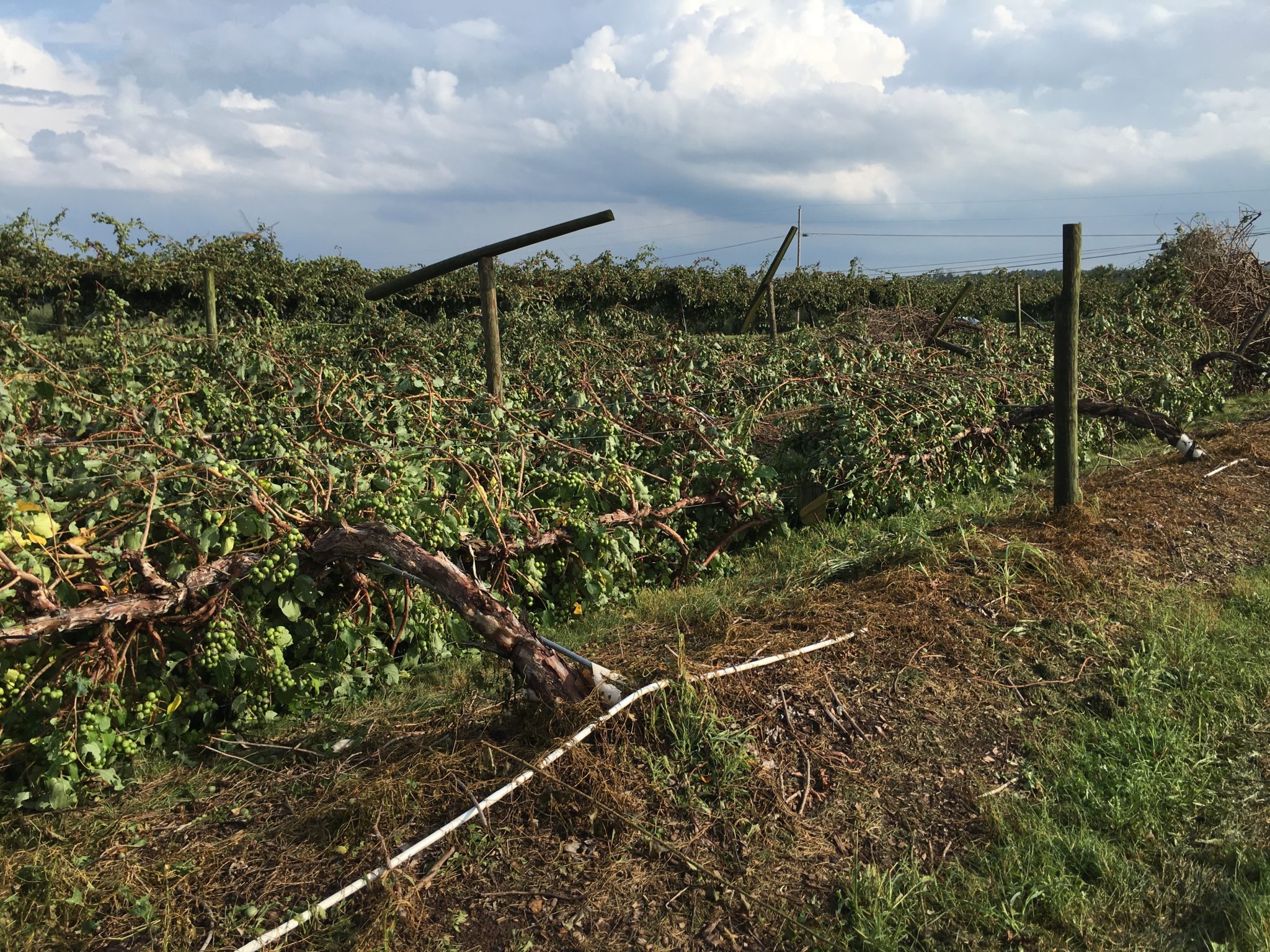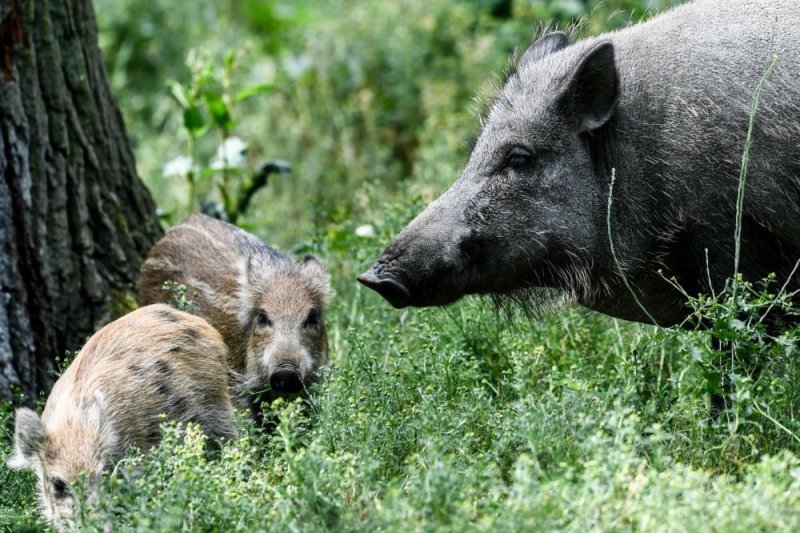
As if those in the agriculture industry don't have enough frustrations, wild pigs are making life harder for farmers throughout the South and other parts of the nation by causing excessive crop loss, inflicting death and spreading disease.
With no natural predators that will control them, the non-native wild pigs can weigh up to 300 to 400 pounds, and they uproot plants, eat newly planted seeds and trample crops.
Farms and ranches are ideal locations for wild pigs to live and reproduce, Texas Farm Bureau communications director Gary Joiner told UPI.
The feral swine need water, cover and a food source, all of which they often find on or near farms and some other choice locations, Joiner said.
"It's not just farms and ranches," Joiner said. "It's golf courses, residential neighborhoods, cemeteries -- any plots of land are vulnerable to feral hogs when those animals are present."
Farms and ranches are especially vulnerable, and about half of the nation's feral hogs live in Texas.
"They do not have a natural predator that they are vulnerable toward," Joiner said. "So, they are at the top of that [food] chain, and they do a lot of damage to other wildlife species."
Joiner said the pigs arrived in the New World with European explorers and colonizers, who either released them intentionally to create a familiar food source or did so by accident.
The U.S. Department of Agriculture says feral hogs are found in 35 states from as far west as Hawaii and California and as far east as Georgia and Florida. All Southern states have them.
Steep financial losses
The USDA says about 6 million wild pigs in the United States cause $1.5 billion in annual losses for the nation's farmers and ranchers.
A farmer often won't see wild pigs for months, but as soon as seed goes into the ground, Joiner said, they show up to dig them up and eat them.
"You can imagine a farmer putting forward the expense of preparing ground, purchasing seed, fuel and equipment -- all that's needed to plant that crop -- and then to turn around and have that field just completely rooted," Joiner said.
"They will go from row to row and eat the seed that has been planted," he said. "They can smell and sense it and will go through and completely uproot that crop at the seed level in just a matter of hours. It's very frustrating."
In nearby Alabama, farmer Garret Dixon tills 1,000 acres of farmland in Russell, Lee and Macon counties, where he grows cotton and peanuts.
Wild pigs have "been a big problem" in some areas for a long time and are especially fond of the peanuts he grows, Dixon told UPI.
"They root up and eat the peanuts," Dixon said. "They don't eat cotton that much, but they'll still root the fields up and make a mess."
He said that even when the pigs are eating plants, they still damage the crops.
"They kind of come in waves and then slack off" after the initial planting, but return to root up the peanuts when they grow in the ground, Dixon said.
"It's kind of a cycle," he added. "We work through it the best we can."
The financial toll adds to the aggravation when a farmer spends money on seed and fuel and takes the time to plant seeds that feral hogs root up while also digging up large tracts of land in just one night.
The wild pigs cause more than $500 million in annual crop damage in Texas, plus loss of livestock due to diseases and other reasons, Joiner said.
He said the economic effect on livestock inflicts about another $100 million in losses for farmers and ranchers.
"It's serious," Joiner said, "and the approach that farmers and ranchers and those in the wildlife community are taking are in turn serious to deal with this."
Counteracting feral hogs
Common efforts to control or eradicate wild pig populations include hunting them at night with the help of dogs that often wear Kevlar vests to protect against boar tusks, using helicopters to spot and shoot invasive hogs, and trapping hogs for removal, Joiner said.
Technology is helping farmers and ranchers trap relatively large numbers of hogs using sensors on automated trapping systems that work around the clock.
Dixon said the number of pigs he encounters varies from one season to the next.
"We trap and shoot them -- whatever it is we need to do to try to lessen the amount of damage that they inflict," he said.
Dixon said he sometimes has hunters cull the wild pigs on his farmland. He'll also use six-panel metal traps with automated gates that can hold multiple pigs.
"We have the most success by shooting them because most of the pigs have been trapped for quite some time," Dixon said. "So they are educated to the traps, which makes it difficult to trap them."
Unfortunately, the pigs also reproduce quickly, with a female sow capable of having piglets when only 6 months old.
These pigs can produce three litters a year, Joiner and Dixon said. Each litter has between eight and 10 piglets, which adds up to as many as 30 new pigs every year from one sow.
Since February, Joiner said a new intoxicant designed for feral hogs called Kaput has been available to bait the hogs into eating it, and that kills them.
"They've done extensive studies and work to make sure non-target species and others can't get into that bait and that there's no residual impacts," Joiner said.
Using all available means, an attempt in one of Texas' 254 counties managed to eradicate wild hogs.
Joiner said ranchers, landowners and federal wildlife officials worked together to eradicate them in Dallam County, which is in the far northwest corner of the Texas panhandle, about 90 miles northwest of Amarillo.
"They can now say they eradicated wild hogs from Dallam County," Joiner said. "But that's one success story out of 254."
More dangerous than sharks
Wild pigs harm more than farms and livestock. Feral swine also can cause serious injuries or death when encountering people, and they cause more deaths than sharks, bears or wolves, according to the U.S. Department of Agriculture.
Feral pigs from 2014 through 2023 caused an average of 19.7 fatalities a year globally versus 5.8 for sharks.
USDA researchers say wild pigs attacked 1,532 people in 29 nations from 2000 through 2019, resulting in 172 deaths. Nearly all of the attacks involved one pig with an average weight of 240 pounds.
Farm workers account for about 38% of those attacked, and blood loss accounts for 77% of deaths, figures show.
Most attacks occur during daylight hours when humans are more active and more likely to encounter wild pigs.
The wild pigs also spread 30 diseases and 40 parasites and can render water sources useless by defecating in or near water and contaminating it with E. coli or by spreading anthrax they pick up while rooting up fields and carrying the disease other locations.
Source - https://www.upi.com