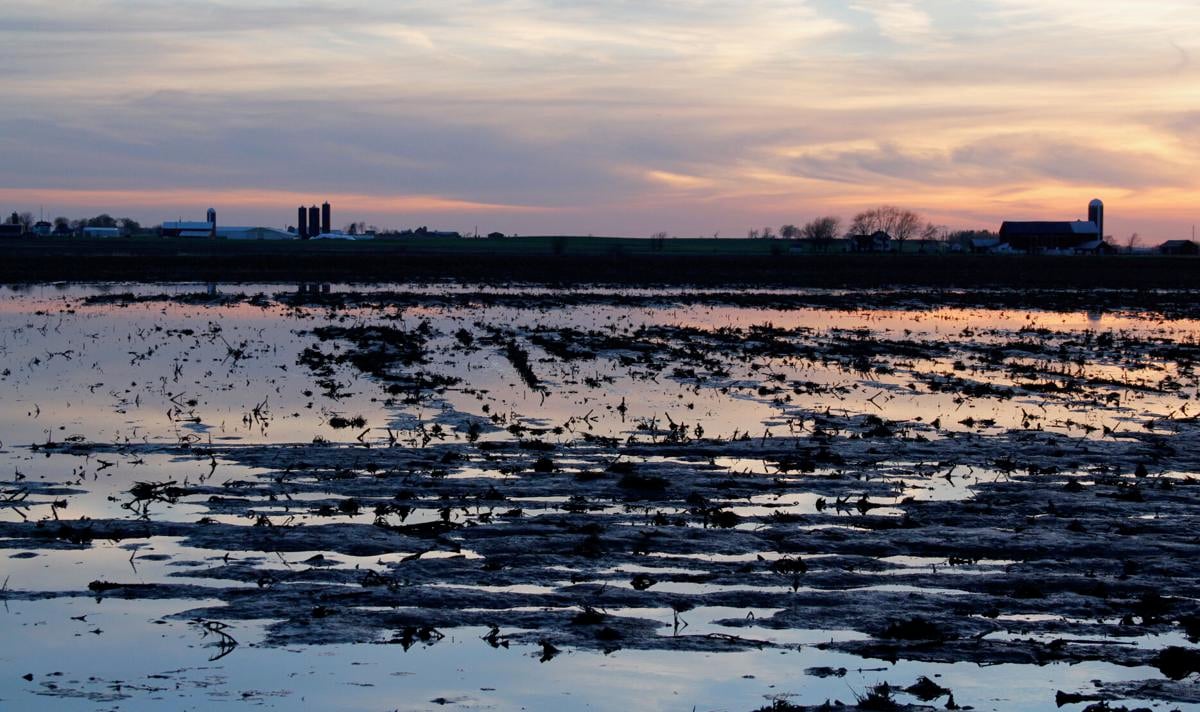
Channels of water snaking between rows of soybeans along the I-90 corridor.
Bales of hay collapsed after torrential rain in northern Minnesota meadows.
A biofuels refinery forced to shut down as an upriver dam threatened to break.
Such scenes are dotting the rural Minnesota landscape following torrential rainfall across the state, stretching from the Canadian to the Iowa border, over the last week. Small towns have flooded, compelling Gov. Tim Walz to call in the National Guard to sandbag around homes and main streets. The deluge has also dumped on the state's mighty agricultural industry, dashing hopes for a great season for many grain farmers and cattle producers after years of drought.
"We are looking at some real agony with all the lost acres," said Jim O'Connor, a corn farmer from Blooming Prairie in Steele County.
On Monday, city officials in Mankato estimated flood damage has already reached $5 million. It's not yet known what the toll from crop loss and washed-out roads or bridges will be on the bottom line for farmers in southern Minnesota's bread basket, who were already staring down low commodity prices on corn and soybeans.
Even before the recent rainfall, worries abounded about the state's row crops, as 93% of the state's corn crop had yet emerged from soggy soil conditions, lagging typical years.
Heavy rain can wash out fertilizer for farmers and also send nutrients rushing into rivers and streams. The Minnesota Pollution Control Agency has asked feedlot permit holders to divert water from manure storage facilities and report any overflow immediately.
By midday Tuesday, an MPCA official reported that more than a dozen manure ponds had overflowed, leaking into nearby farm fields.
Minnesota Department of Public Safety Commissioner Bob Jacobson noted that while flood waters are receding across southern Minnesota, other waterways, including the Mississippi, remain on the rise.
"We think that some of the cresting of some of our more major rivers in southern Minnesota may not occur until Friday or Saturday — again, weather-dependent," Jacobson said.
Walz said his administration is on track to submit a federal disaster declaration, and many farmers have already started keeping receipts. Farmers were also encouraged to report losses to the federal agriculture agencies in their county.
Sen. Amy Klobuchar reiterated that a federal disaster declaration is triggered at $10.5 million in damages. She said the totality of the losses continues to pile in.
"We have dozens of counties affected, and we don't even know that it's done yet," Klobuchar said.
On the state side, Walz said he remained open to convening a special session to provide funding for flood-ravaged areas of the state.
On Monday, as floodwater spread over the southern half of the state, many cattle producers gathered at a hockey arena in Thief River Falls for a beef industry conference. Producers from across the state swapped stories of inundated pastures and waterlogged facilities.
After three years of drought, leading to dry pastures and frantic searches for hay, the summer of 2024 looked promising, with many producers seeing high prices for beef cattle.
Peter Bakken, a cattle producer from Beaver Creek, Minn., near Sioux Falls, said even though the cattle market has been "pretty good," he and his fellow ranchers and feedlot operators are at the mercy of the flooding, drenching livestock's food source and pastures. "Mother Nature always wins."
When water rises quickly, cattle can get stranded on pasture. That's what happened this week on Bakken's land. "It just tugs at our heartstrings that there's nothing I can do for that cow-calf pair out on pasture with the water rising," he said.
According to the U.S. Department of Agriculture crop conditions report posted on Monday, 54% of fields saw surplus moisture in the topsoil before the weekend rains.
"We have ground that just cannot hold any more water," said Rachel Gray, who develops bred heifers on Little Timber Farms outside Blackduck in northern Beltrami County. "Typically, I would hope to have 1,000 bales put up and stored by now. I'm at 100."
As water skirted the debris-laden Rapidan Dam on the winding Blue Earth River on Monday, officials at the CHS soybean crush plant closed the facility, which sits just downstream from the imperiled dam.
On Tuesday afternoon, Walz, Klobuchar, and other state officials toured flooded sites in south-central Minnesota by helicopter. They observed the Rapidan Dam and noted that the sheer breadth of the flooded ag lands was clearly visible from the air. "It's hard to wrap your mind around what we saw," said Minnesota Department of Agriculture Commissioner Thom Petersen, who was also on the aerial tour.
Other regional infrastructure has been upended, with main interstates used to move livestock closed in South Dakota and a collapsed railroad bridge on a river dividing Iowa and South Dakota.
The weekend rain in southwestern Minnesota derailed beef cattle producer and feedlot owner Glen Graff in Cottonwood County.
"The biggest problem we're having right now is trying to keep the pens clean and dry," Graff said. After rains earlier this season, Graff had already re-planted a corn crop to feed his cattle. "Now it's drowned out again."
The rainfall also comes as the farm bill remains stalled in Congress. While a lion's share of the proposed $1.5 trillion legislation goes to nutrition, the program also funds crop insurance, which aids farmers who lose crops in extreme climactic events.
Back in Blooming Prairie, the corn farmer O'Connor emphasized that the federal program will "make bearable thinking of next year."
Source - https://www.startribune.com