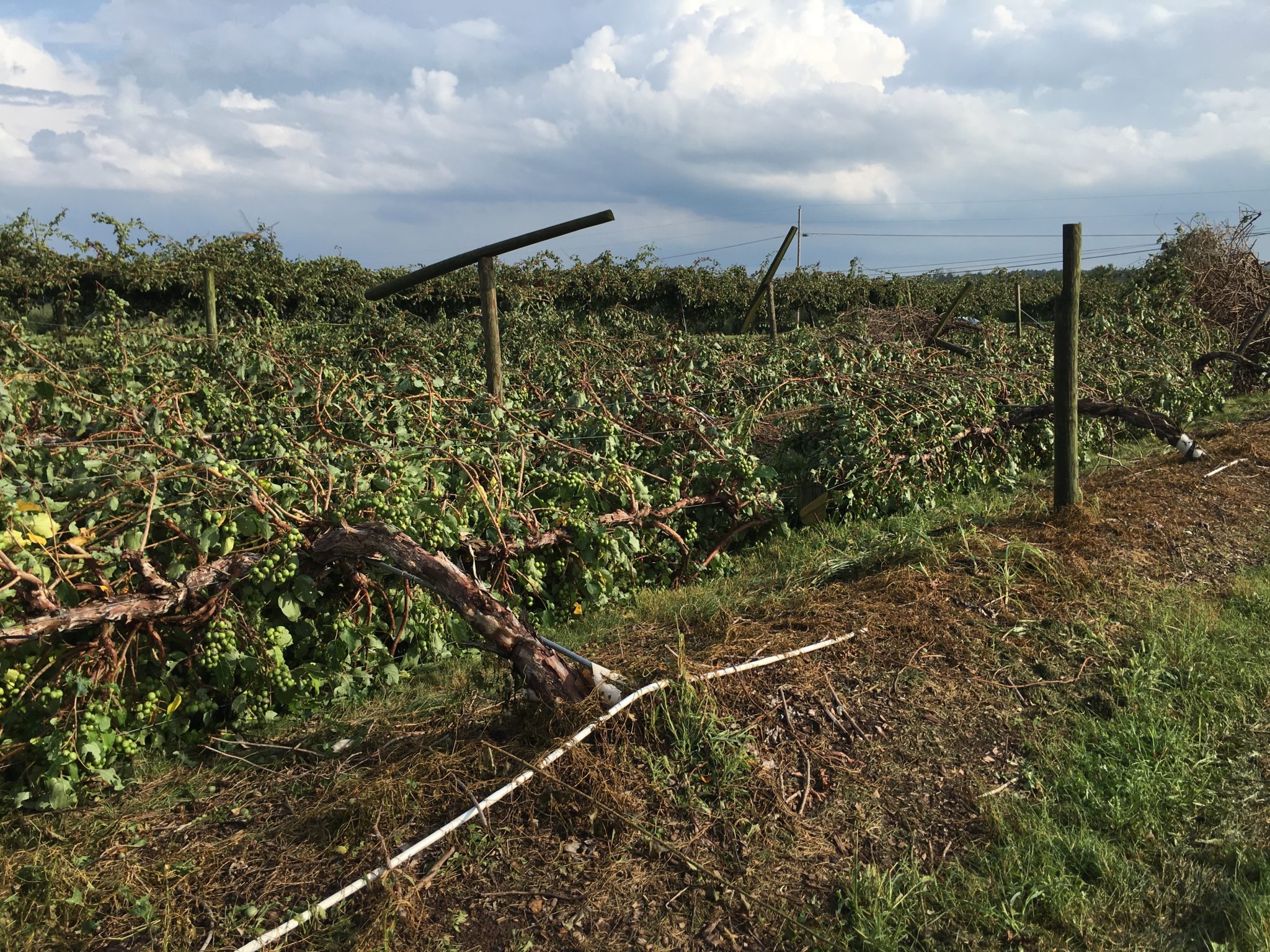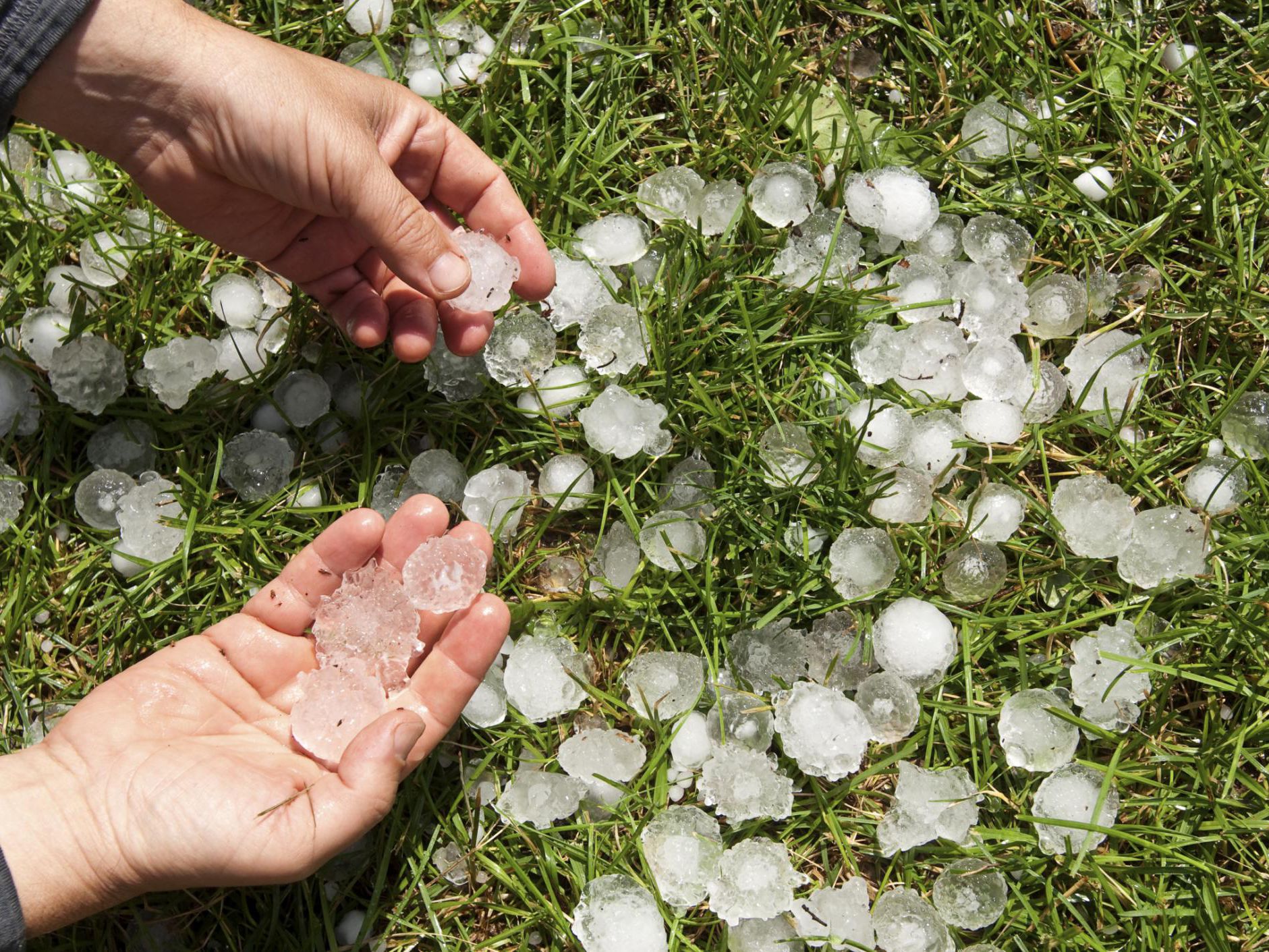
As a result of severe weather on August 13, a storm which produced heavy rains and hail of various sizes, local farmers have had to deal with the fallout of affected crops.
Local farmer Dennis Snarr of Snarr Farms near Roberts reported significant damage to his crops following the storm. With a 90-95 percent estimated loss of unharvested barley, about a 50 percent loss of wheat, another significant loss in potato crops and a ruined third crop of Alfalfa, Snarr said this was the worst storm he’d ever seen.
“We’ve had storms before,” he said, “but this one by far was the biggest, it affected more acres than ever.”
The Aug. 13 storm being the largest seen in several years was a sentiment echoed by Andrew McKaughn with the National Weather Service in Pocatello. McKaughn called this severe thunderstorm a “supercell thunderstorm,” a long-lasting storm which can travel several miles while producing other dangerous weather conditions such as strong winds and hail.
According to McKaughn, western areas of the region, out near the INL reported quarter-sized hail with large accumulations back to the NWS. There were pictures sent in of low hanging clouds, not impressive enough to be considered a funnel cloud he said, but definitely suspicious looking.
Areas east of Butte City and Arco reported power outages, but as the storm moved into more populated areas, it started to die down, producing less sizeable hail and lesser winds.
The damage was already done, however near the Roberts area at Snarr’s farm.
The last large storm Snarr recalled took place in 2016; this event produced hail large enough to damage vehicles and equipment.
“We got a warning from the weather service, so we went out and watched for the storm. When we saw it was coming in our direction, everyone moved as fast as we could to put things away, into some shelter to keep it safe,” Snarr said.
However, while this most recent weather phenomenon did not damage much of Snarr’s equipment, the 2016 storm didn’t come close to the amount resulting crop damage.
“The wheat and barley,” Snarr stated, “there’s nothing to do about it. It was even loosened up from the ground pretty bad, so any more strong winds could just blow it away. All we can do is speed up the harvest and try to capture what’s left before it scatters away.”
While wheat and grain seem to not be salvageable this year, Snarr said he’s started taking steps to salvage what’s left of his potato fields; friends and neighbors have called in to his aid and have offered to help apply fungicides and antibacterial to the remaining potato crops to keep them healthy until harvest.
While his third crop of alfalfa was lost, he said, he is hopeful for more growth from which he may be able to harvest a little more.
Monetary recovery from catastrophic loss comes in the form of insurance, Snarr said, though it will not cover the total loss, so he expects to still come up short.
After an event like this one, he stated, farmers meet with adjusters who go through and count every grain and kernel to judge against what would have been the year’s crop totals had the storm never happened. From there, they determine coverage.
“Insurance is expensive,” Snarr said. “You only need it periodically, when all is said done,” which is why he indicated they tend to stay on the lesser side; being wiped out like he was this week, even insurance will leave him short.
While Idaho may be famous among residents as being prone to unpredictable weather, storms with effects such as this one are rare, and according to Snarr there aren’t many precautionary measures a farmer can take to prevent crop loss when nature takes the reins outside of maintaining insurance.
“The nice thing,” he said, “is the community coming out to help.”
Source - https://www.postregister.com