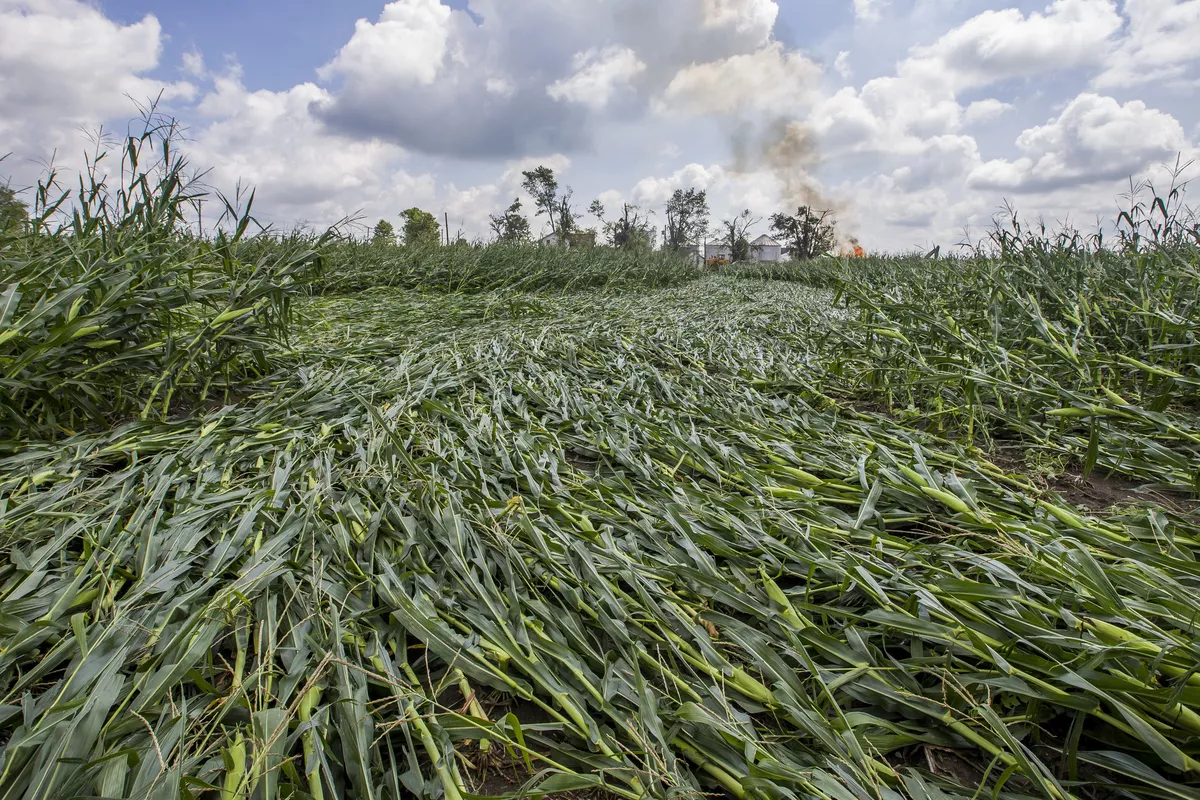
After a dry start to the growing season, farmers in western Kentucky are being impacted by flash floods, resulting in some crop loss.
Keith Lowry, a corn, wheat and soybean farmer in Pilot Oak, Kentucky, says that his rain gauge measured 11.6 inches of rain on his farm in just 24 hours on Wednesday, July 19. “Never have I ever seen that much rain in that short of a period,” Lowry, who’s been farming for 50 years, says.
Lowry says that he didn’t believe the forecasts when they began expecting flash floods after the dry weather they’d been having. Shortly after midnight on Wednesday, though, he says he woke up to a hail storm that turned into rain falling until about 4 a.m. At 5 a.m., Lowry says the rains started back up and continued until noon, causing it to flood.
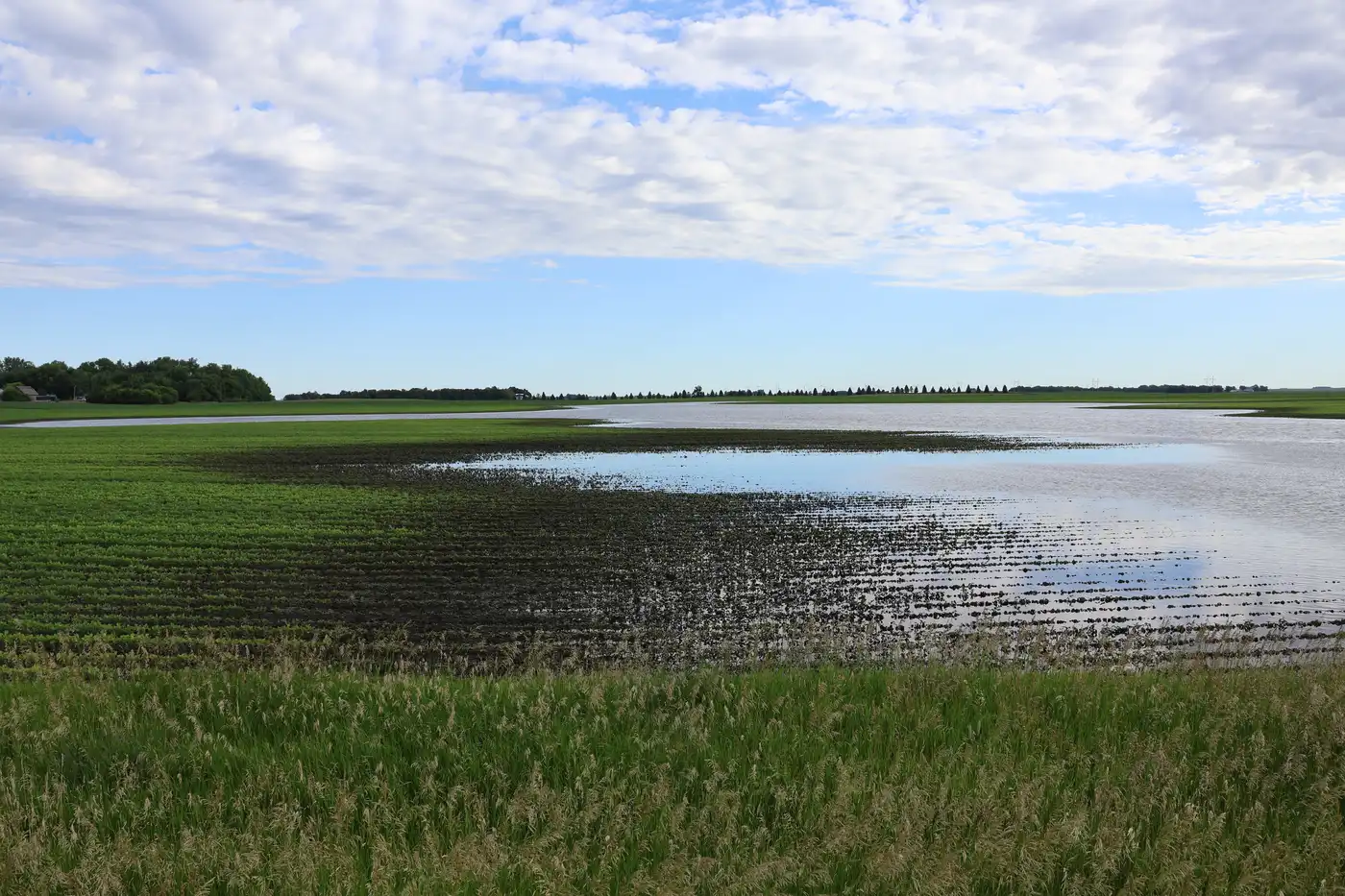
The flash floods caused water to come up to 6 feet high on some of the corn, Lowry says. His corn crop is currently 12 feet tall. Lowry says some of his soybeans were submerged in water for 12 hours and will likely not survive.
Lowry says his biggest concern will be when he harvests his soybeans because the overflowing creek might have washed debris into the fields. “They will be a mess,” Lowry says. “They’ll be dirty and dusty.”
Lowry adds he’s worried about getting debris, like logs, caught up in the combine during harvest.
Overall, though, Lowry says his crop is looking good compared to his neighbors that grow tobacco. Lowry says there’s likely a 100% loss on his neighbor’s tobacco crop.
When it comes to the crops that he does lose, Lowry says he’s grateful for having crop insurance to recover costs. “The most important tool that I have isn’t my combines, tractors or big trucks,” Lowry says. “It’s my crop insurance.”
Lowry urges all farmers to invest in crop insurance, especially young farmers just starting out. “A younger farmer can’t take a six or seven figure hit on a crop,” he says.
The lower elevations were hit the hardest, Lowry says. Those areas are still recovering from a devastating tornado that swept through on December 10, 2021, killing 57 people and injuring an estimated 530. “We can’t seem to get a break here,” Lowry says.
Jonathan Reynolds, a corn, soybean, canola, and cereal rye farmer in Clinton, Kentucky, says over 8 inches of rain fell on his farm in a 36-hour period. He says his own crops are faring well despite the excessive moisture.
“I think the corn was hurting a little bit early on,” Reynolds says, “but I think we’ll have a decent crop.” In fact, Reynolds says that his soybeans are fantastic right now.
Reynolds does anticipate a loss of about 40 acres of his crops that were at lower elevations, but expects the rest of the farm to do okay.
The rains come after the growing season started off with dry weather from May through the end of June, Reynolds says. “A month ago we were thinking we might have to pull the plug on everything, but then the rain started coming,” he says. “I guess when it rains, it pours.”
The latest drought monitor map shows that almost 73% of Kentucky is drought free. Almost 2% of the state is in D2 severe drought, 9% is in D1 moderate drought, and 17% of the state is abnormally dry. Both Hickman County and Graves County, where Reynolds and Lowry farm are in D1 moderate drought.
Reynolds says that his biggest concern is not getting enough sunlight following the storms that have passed through. Another concern, he says, is the possibility of having 100 degree temperatures and zero rain for the next two weeks. “We would be hurting and in a drought again,” Reynolds notes.
As long as the temperatures don’t get too hot, Reynolds says that the moisture they’ve received will carry them through the rest of the season. “That’ll really help us have a good crop, and maybe a bumper crop,” he says.
Source - https://www.agriculture.com