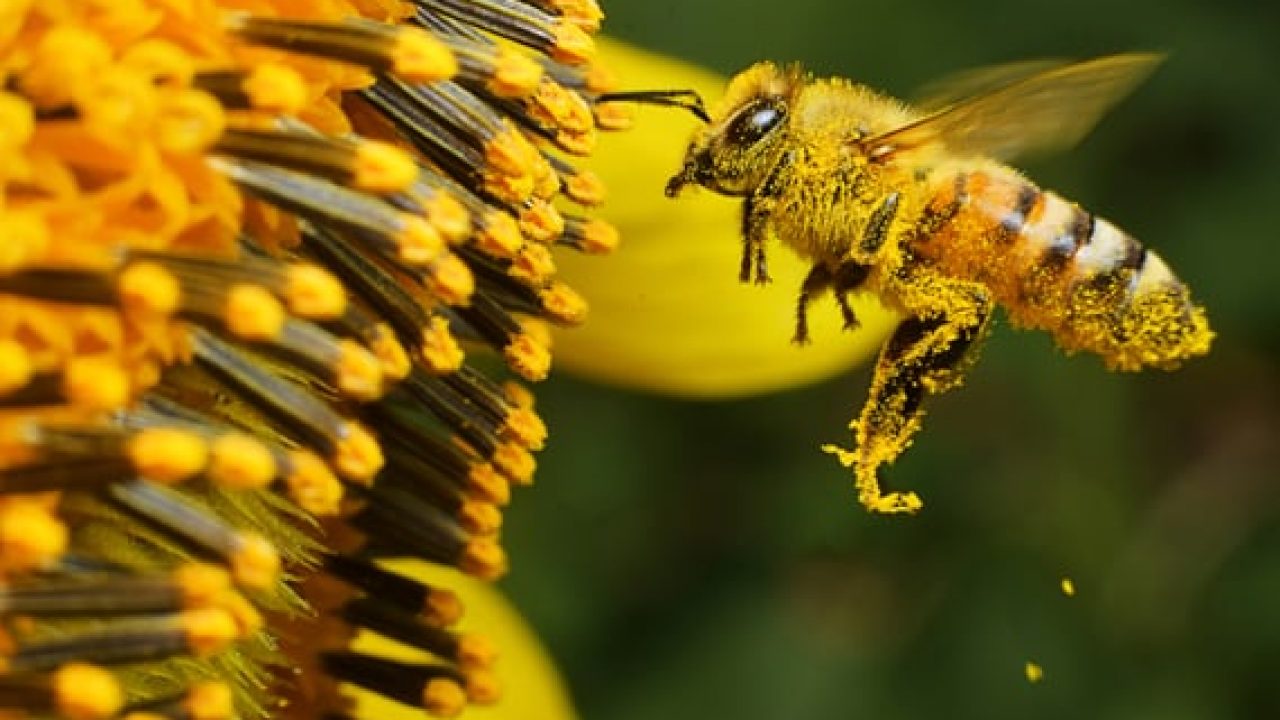
Over a six-year period in southcentral Pennsylvania, measures of biodiversity among wild bee communities declined and one-third of species experienced decreases in abundance, according to a Penn State-led team of researchers.
Findings from their recently published study, the researchers contend, demonstrate the value of standardized, season-wide sampling across multiple years for identifying patterns in bee biodiversity and monitoring population trends among species.
“Pollinators facilitate the reproduction of more than 80% of flowering plants and increase the yield of about three-fourths of crop species,” said study lead author Nash Turley, postdoctoral scholar in entomology in Penn State’s College of Agricultural Sciences.
“Bees are one of the most important groups of pollinators, but previous research has found troubling declines among wild bees,” he said. “For example, the range and abundance of some species have shrunk substantially, especially bumble bees in North America and Europe. Tracking changes in bee biodiversity is important for developing pollinator management plans that can help sustain wild plant communities and maximize crop yields.”
In this study, the research team set out to characterize changes in bee community biodiversity and changes in abundance of specific species, both during individual years and from year to year, covering the period from 2014 to 2019. The study took place in and around Penn State’s Fruit Research and Extension Center, near Biglerville in Adams County.
The researchers sampled bees at eight locations adjacent to four active apple orchards, collecting bees continuously from April through October each year and removing specimens from traps weekly for species identification.
“These orchards are in a landscape that has high diversity and abundance of native plants and pollinators,” said study co-author David Biddinger, tree fruit research entomologist and professor of entomology at the Fruit Research and Extension Center. “Only about 8% of the landscape is active orchards, and all of them are successfully pollinated only by wild pollinators.”
The researchers, who recently reported their results in Ecology and Evolution, examined more than 26,700 individual bees representing five bee families, 30 genera and 144 species. “We collected 33% of the total number of bee species that have been found in Pennsylvania,” Turley said.
Ten species had more than 1,000 individuals collected, while over half of the species had five or fewer individuals. “It is typical in nature for there to be a few, very abundant species and many rare species,” Turley explained.
The largest number of specimens and species collected came from the family Apidae — which includes bumble bees, honey bees, carpenter bees and other commonly seen species — followed by Halictidae, often called sweat bees.
Source - https://www.freshplaza.com