Cotton production has been decimated by drought and extreme heat this year, costing Texas High Plains farmers and other agricultural industries at least $2 billion, according to one estimate.
“There’s just not much crop out there,” said Brad Heffington, a cotton farmer in Littlefield. “A lot of cotton burned up and a lot of it never even made it up to begin with.”
Heffington’s farm is about 40 miles northwest of Lubbock in the state’s High Plains, an area that stretches from Lubbock to the tip of Panhandle and covers 42 counties. The region produces an abundance of cotton and cottonseed, accounting for 66% of the state’s total yield. It’s more than a third of the nation’s total crop. It’s 4% globally.
In a good year, cotton production can net $4 billion to $5 billion for the High Plains economy alone. The International Center for Agricultural Competitiveness at Texas Tech University estimates cotton production in the High Plains will be down by $2 billion this year.
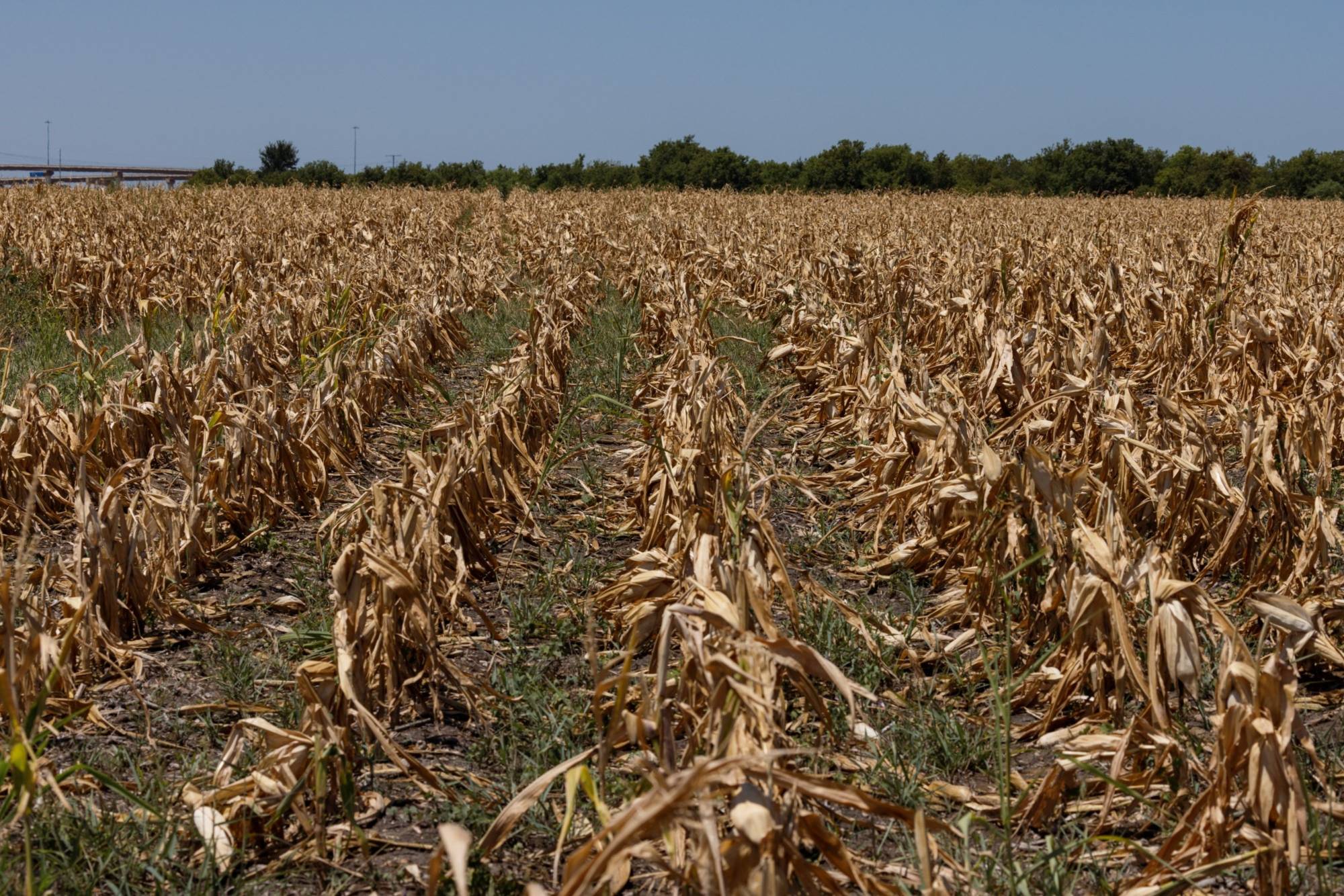
As nearly the entire state — 95% — faces drought conditions, farms have been forced to cut their losses. Cotton is just one of many crops suffering under the drought. According to the U.S. Department of Agriculture’s Crop Progress report, 29% of Texas corn is in very poor condition and 39% of the state’s range lands are as well. This has greatly affected livestock, as cattle sales increased this summer due to dry pastures and low hay supply to feed the cattle.
“They’ve had to liquidate their cattle herds due to the fact that there’s nothing for the cattle to eat without supplemental feeding,” said Brant Wilbourn, associate director of commodity and regulatory activities at Texas Farm Bureau.
A bad year for cotton spells disaster for the state, which leads the nation in cotton production. As the state’s largest agricultural export, cotton is responsible for thousands of jobs in other sectors, such as ginning companies, warehouses and oil mill processing plants.
It won’t be only those in agriculture who feel the impact of this year’s loss. Without the disposable income from producers in the area, restaurants, small businesses, car dealerships and more will also be hurt from the sudden economic downturn in the unstable economy.
And as demand for cotton rises due to low supply, consumers also will see a rise in products or apparel with cotton.
“The biggest earner in the South Plains is the agriculture industry, so it’s a serious deal when your whole economy feels that,” Heffington said.
These problems have been caused largely by environmental conditions, including the ongoing drought that started last year. Scientists have found that climate change has pushed average temperatures higher in Texas, making heat waves and droughts worse and offering less relief at night.
Costly damage from drought is a recurring problem in Texas. Data from the National Oceanic and Atmospheric Administration’s National Centers for Environmental Information shows that since 2010, seven drought events have cost Texas at least $1 billion. Taken together, it’s an estimated $10 billion to $20 billion, not including this year’s damage.
While much of Texas has seen rain during the last two weeks, it is two months too late for this year’s crops.
“You can drive from here to Amarillo to Seminole to Midland down the Rolling Plains and see it’s hard to gain crop anywhere,” Heffington said. “It’s astonishing.”
What Heffington has on his farm now isn’t promising. It’s one of his worst crops in the 35 years he’s been farming. The cotton that did manage to grow has a bloom at the top the size of a small acorn — half of its typical size. Once crop insurance adjusts the value of the fields next month, that cotton likely will be considered a loss.
This year, it’s expected that only 2 million acres of cotton will be harvested in the region, slightly less than half of last year’s yield.
“We will probably get 10,000 bales, and we average 55,000-plus,” said Philip Manske, gin manager at Associated Cotton Growers in Crosbyton.
This will lead to changes in employment, Manske said. Instead of hiring around 40 people as the company did last year, the gin will likely hire only 15 people. Harvest season usually lasts three months, but this year, Manske is expecting only 20 days of work.
“We’re looking at hiring 30 less people, so that’s 30 less families,” Manske said. “Everybody’s going to find out how important agriculture is to West Texas. It’s going to affect everybody.”
According to Darren Hudson, director of the International Center for Agricultural Competitiveness, the estimated $2 billion loss would be before an insurance payout. Even then, crop insurance covers only the producer and not all the other sectors in the processing chain. The center has estimated that ginning companies alone will lose $230 million.
Heffington said that crop insurance is a lot like home insurance, in that customers aren’t 100% covered.
“There’s still easily a gap there that you have to either dig into savings or refinance some equity,” Heffington said.
Making matters worse is that cotton prices are at a level seen once every 10 years, according to Kody Bessent, CEO of Plains Cotton Growers. Cotton is trading for up to $1 for a pound, when the average is 70 cents a pound. This is because of high demand from a short cotton crop nationally, not just in Texas.
“So there’s a lack of supply going into next year, a lot more desire for apparel and a stronger demand for natural-based fibers,” Bessent said. “The challenge is having a supply and having that cotton ready.”
A strong crop next year would help the region recover from some of the agricultural losses this year, but Wilbourn, of the Texas Farm Bureau, said the effects will still be felt.
“A lot of rural communities in Texas depend on agriculture,” Wilbourn said. “Whether it be related to cotton gins, folks that work on farms or just any other economy in general [where] farmers [are] spending their money.”
Source - https://www.texastribune.org