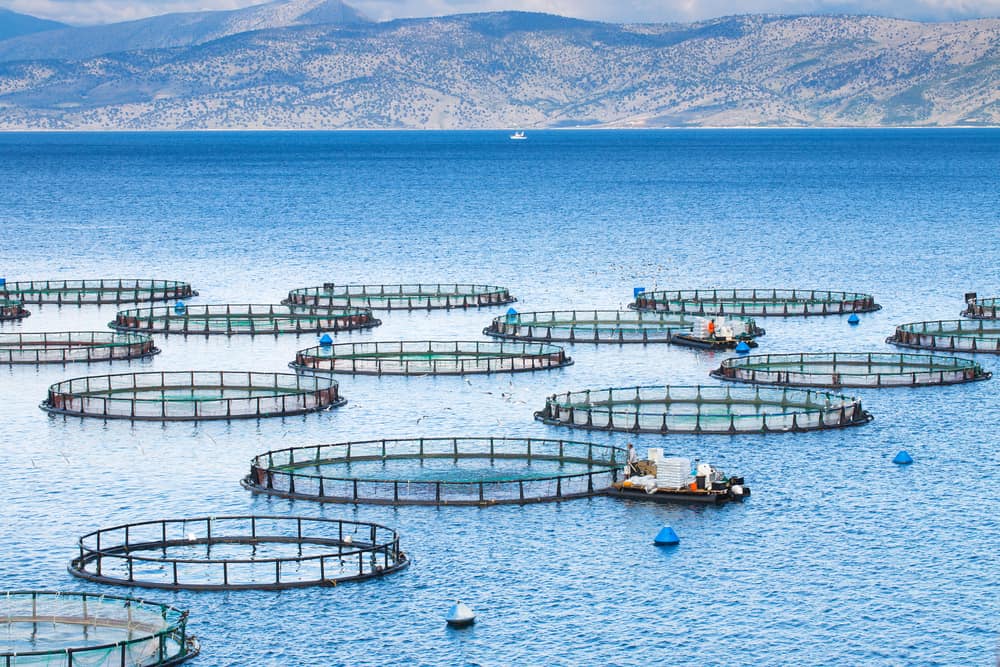
From vibrant tropical fish for aquarium enthusiasts to succulent shellfish served as the center of the plate, Florida’s aquaculture industry serves as an economic powerhouse and a national leader.
In 2022, the state’s tropical fish sales alone totaled $62.4 million, with many other species adding to the industry's $191 million total impact, according to the Florida Department of Agriculture and Consumer Sciences (FDACS).
Despite these contributions, the state’s aquaculture industry faces unique challenges, such as impacts from non-native species that can threaten industry sustainability.
“Impacts can occur from non-natives entering farms and consuming aquaculture stock or from species escaping into the surrounding environment,” said Jeff Hill, a fisheries professor at the University of Florida Institute of Food and Agricultural Sciences.
Such threats make risk assessments an essential and beneficial part of maintaining Florida’s aquaculture industry sustainable.
“Aquaculture is all about controlled environments for aquatic species, whether for food, ornamental trade, recreation or conservation,” said Hill, whose research and team operate out of the UF/IFAS Tropical Aquaculture Laboratory (TAL) in Ruskin. “But Florida’s subtropical climate also makes it conducive for many species to thrive if they escape into the wild, which could disrupt native ecosystems. This is where rigorous risk assessments come into play.”
How does Florida’s aquaculture industry grow responsibly while protecting native ecosystems? Hill dives into complexities of the industry and the role of risk assessments behind the scenes in balancing industry growth with environmental stewardship, as UF/IFAS, state and federal agencies and producers work together to ensure sustainable aquaculture — both in fish tanks and in the wild.
Q: What makes Florida’s aquaculture industry unique?
A: Florida’s aquaculture industry is highly regulated and diverse, covering a wide array of sectors. It includes ornamental fish farming, shellfish cultivation, alligator farming and aquatic plant production. Together, these sectors produce some of the greatest variety of aquatic species in the United States.
Q: How does Florida’s climate and infrastructure support its diverse aquaculture industry?
A: Florida leads the nation in ornamental fish, producing a variety of tropical species for aquariums globally. The state’s subtropical climate, extensive marine and freshwater resources and robust infrastructure contribute to its diversity. The industry involves around 1,000 certified farms producing approximately 1,500 varieties of aquatic organisms for various markets, including ornamental, food, bait, conservation and education.
Shellfish farms, especially for hard clams and oysters, also contribute significantly to the food market, while alligator farming supports not only the hide and meat industries but also tourism. Additionally, aquatic plants grown here support aquarium hobbyists, water garden enthusiasts and wetland restoration projects, reflecting the industry’s commitment to conservation.
Wetland restoration is done mainly through nurseries regulated by the state Division of Plant Industry rather than the Division of Aquaculture. Some aquatic plant producers are regulated by aquaculture and likely contribute to restoration.
This mix supports both economic growth and conservation, making Florida a leader in the U.S. aquaculture industry.
Q: What are risk assessments and are they essential to Florida aquaculture?
A: Risk assessments evaluate the likelihood and potential impact of species establishing outside their intended habitats. This involves not only understanding the species but implementing risk management, which includes avoiding or mitigating risks, often through best management practices (BMPs). Working closely with the industry and state and federal agencies, we help design strategies to contain species within farms and prevent unintended escapes into natural waters.
These BMPs are a hallmark of Florida’s aquaculture regulations, providing a framework that balances industry growth with environmental responsibility. Florida’s approach to aquaculture risk management is unique in that we work with regulatory agencies and producers to create sustainable practices that prevent ecological harm. It’s a collaborative model that safeguards both the industry and our ecosystems. Regulation and industry compliance have resulted in greatly reduced risks. Since the BMP program began in 2000, no additional fish have established in Florida’s environment by escaping from aquaculture stocks.
Q: What does the risk assessment process involve?
A: A risk assessment is a standardized, science-based approach. For non-native species, we assess the likelihood of establishment, potential spread and possible environmental impacts. We obtain information from the literature, databases and our own research. Our lab is one of the leaders in aquatic species risk assessment in the United States and has a large footprint internationally. Related to risk assessment, risk management involves developing strategies to reduce risks.
Q: How does Florida mitigate these risks?
A: Florida’s aquaculture is highly regulated, with agencies like FDACS and the Florida Fish and Wildlife Conservation Commission (FWC) overseeing compliance. UF/IFAS researchers collaborate with these agencies and the industry to improve BMPs that prevent species from escaping. We conduct extensive evaluations on the effectiveness of these practices to minimize environmental impact while allowing the industry to thrive. These BMPs are vital for ornamental fish, for instance, to prevent their escape into local ecosystems. For instance, if a particular species has a high risk of escaping, spreading and causing impacts, we might recommend BMPs to contain it, or, in some cases, agencies may prohibit its use in Florida aquaculture altogether.
Q: How can the public help?
One major issue is aquarium releases — people illegally releasing aquarium fish into natural waters, thinking it’s a harmless act. Unfortunately, some of these fish survive and spread and can impact local ecosystems. It is a global problem. By understanding that these releases are harmful and illegal – thus, not tossing their fish into the environment -- consumers can help protect Florida’s natural resources.
In a state with such ecological diversity, protecting native species while allowing aquaculture to thrive remains a priority. Through continued collaboration and scientific advancements, Florida’s aquaculture sector is poised to grow sustainably, ensuring economic vitality without compromising environmental integrity.
Source - https://www.lakeonews.com