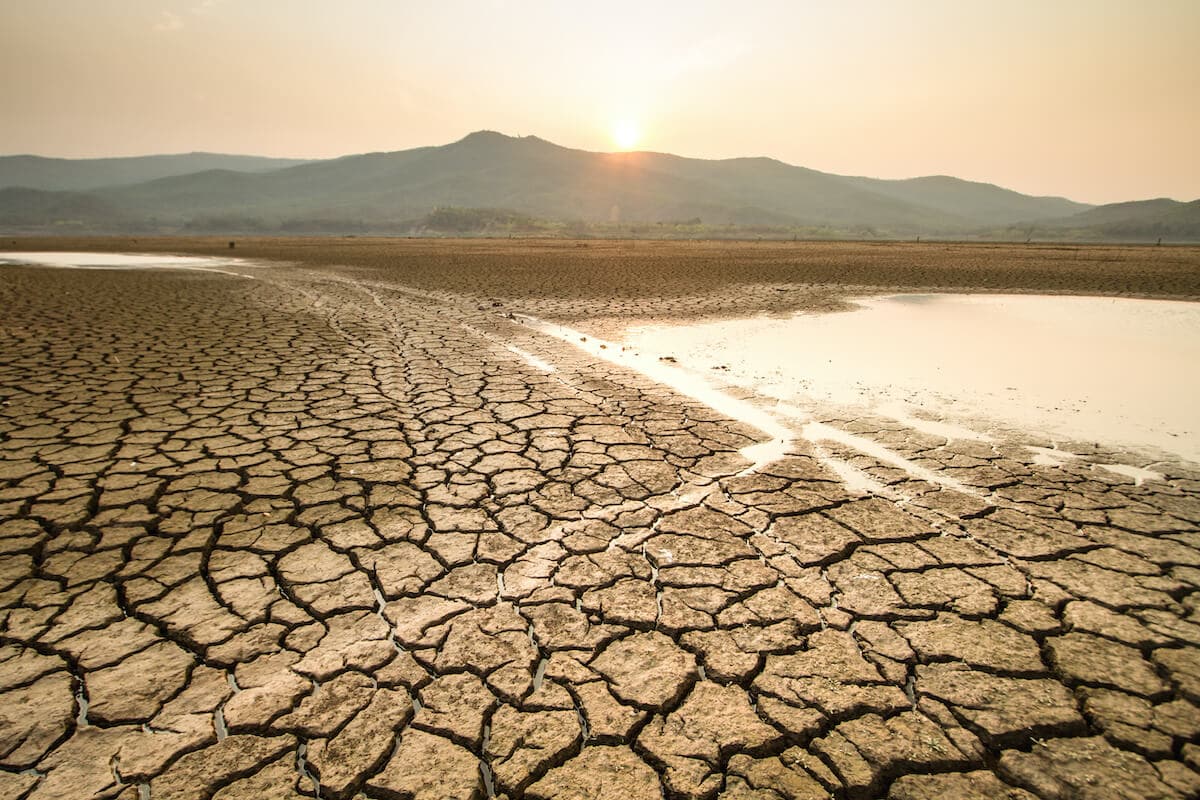
In response to persistent drought conditions, the U.S. Department of Agriculture’s (USDA) Farm Service Agency (FSA) Wednesday announced that 79 Ohio counties are authorized for emergency haying and grazing of Conservation Reserve Program (CRP) acres.
CRP participants in all remaining Ohio counties are also authorized to donate emergency haying and grazing rights to livestock producers affected by severe drought conditions in southeast and southern Ohio.
“We’re experiencing historically significant drought conditions in Ohio, and many livestock producers in drought-impacted counties in our state are in urgent need of access to grazing acres and hay resources to sustain their herds,” said John Patterson, State Executive Director for FSA in Ohio. “If you have CRP acres and want to help our livestock producers, please contact your local FSA office, and we’ll help you navigate available emergency and non-emergency use options.”
Program Flexibilities and Eligibility
FSA, with concurrence from State Acres for Wildlife Enhancement (SAFE) partners, is waiving emergency haying and grazing restrictions for Ohio’s two SAFE projects: Ohio Pollinator & Monarch SAFE project and Ohio Upland Bird SAFE project. This added flexibility increases the number of acres available to livestock producers. FSA is currently evaluating opportunities to authorize emergency haying and grazing of land enrolled in CRP through the Ohio Lake Erie Watershed and Ohio Scioto River Watershed Conservation Reserve Enhancement Program (CREP) agreements.
The following Ohio counties are currently eligible for emergency haying and grazing: Adams, Allen, Ashland, Athens, Auglaize, Belmont, Brown, Butler, Carroll, Champaign, Clark, Clermont, Clinton, Columbiana, Coshocton, Crawford, Defiance, Delaware, Erie, Fairfield, Fayette, Franklin, Fulton, Gallia, Greene, Guernsey, Hamilton, Hancock, Hardin, Harrison, Henry, Highland, Hocking, Holmes, Jackson, Jefferson, Knox, Lawrence, Licking, Logan, Lucas, Madison, Mahoning, Marion, Meigs, Mercer, Miami, Monroe, Montgomery, Morgan, Morrow, Muskingum, Noble, Ottawa, Paulding, Perry, Pickaway, Pike, Portage, Preble, Putnam, Richland, Ross, Sandusky, Scioto, Seneca, Shelby, Stark, Trumbull, Tuscarawas, Union, Van Wert, Vinton, Warren, Washington, Wayne, Williams, Wood, and Wyandot.
CRP emergency haying and grazing eligibility triggers for counties when the D2 (severe drought) level is reached on the U.S. Drought Monitor for at least one week and if the county is outside of the primary nesting season, March 15 through July 15. Additionally, the 2018 farm bill authorized counties with a documented 40% loss of forage production to be eligible for emergency grazing and haying. There is no fee or annual rental payment reduction assessed for emergency haying and grazing.
How to Donate CRP Haying and Grazing Rights
Eligible CRP participants in all Ohio counties are authorized to donate emergency haying and grazing rights to livestock producers affected by severe drought conditions in southeast and southern Ohio until March 15, 2025.
Before the CRP acres are hayed or grazed, participants who want to donate CRP acres for the purpose of emergency grazing and haying must obtain a modified conservation plan, which includes emergency grazing requirements from either USDA’s Natural Resources Conservation Service (NRCS) or the participant’s Technical Service Provider. To ensure emergency haying or grazing of CRP acres is only being utilized by livestock producers adversely impacted by the drought, the livestock producer must file a CCC-576 (Notice of Loss) or provide a written certification, to FSA, to be included in the CRP contract file.
Haying or grazing activities are not authorized if these activities will cause long-term damage to the vegetative cover on the land as determined on a contract-by-contract basis. The CRP participant is responsible for non-compliance with the CRP contract provisions.
Due to privacy laws, FSA cannot release the names of CRP contract holders willing to assist livestock producers in drought-impact areas without their written consent. CRP participants must voluntarily disclose their willingness to assist livestock producers and consent to the disclosure of their personal information before FSA can release the information to livestock producers seeking assistance.
CRP participants who are interested in donating CRP grazing and haying privileges should contact their local USDA Service Center to confirm CRP practice eligibility and obtain approval from FSA prior to grazing or haying eligible CRP acres.
Non-Emergency Haying and Grazing of CRP Acres
Non-emergency grazing and haying activities should comply with the CRP participant’s conservation plan during drought or natural disaster conditions, but the site conditions should be taken into consideration and the plan modified, as needed. Non-emergency harvesting for hay is authorized once during the approved event outside primary nesting season, March 15 through July 15. Participants must leave 25% of the contract acres unharvested or hayed. Non-emergency grazing must not exceed 120 days. During the primary nesting season, there must be a 50% carrying capacity reduction. For both non-emergency grazing and haying, there is a 25% annual rental payment reduction.
CRP participants who are interested in donating CRP grazing and haying privileges or offering or utilizing non-emergency use privileges should contact their local USDA Service Center to confirm CRP practice eligibility and obtain approval from FSA prior to grazing or haying eligible CRP acres.
Additional Drought Recovery Assistance
USDA offers a full suite of programs providing technical and financial assistance to help farmers and livestock producers recover from drought. Impacted producers should contact their local USDA Service Center to report losses and learn more about program options available to assist in their recovery from crop, land, infrastructure, and livestock losses and damages.
Additional USDA disaster assistance information can be found on farmers.gov, including USDA resources specifically for producers impacted by drought. Those resources include the Disaster Assistance Discovery Tool, Disaster-at-a-Glance fact sheet, Loan Assistance Tool, and Natural Disasters and Crop Insurance fact sheet. Additionally, FarmRaise offers an FSA educational hub with LIP and ELAP decision tools as well as farm loan resource videos. For FSA and NRCS programs, producers should contact their local USDA Service Center. For assistance with a crop insurance claim, producers and landowners should contact their crop insurance agent.
USDA touches the lives of all Americans each day in so many positive ways. Under the Biden-Harris administration, USDA is transforming America’s food system with a greater focus on more resilient local and regional food production, fairer markets for all producers, ensuring access to safe, healthy and nutritious food in all communities, building new markets and streams of income for farmers and producers using climate smart food and forestry practices, making historic investments in infrastructure and clean energy capabilities in rural America, and committing to equity across the Department by removing systemic barriers and building a workforce more representative of America.
Source - https://www.peakofohio.com