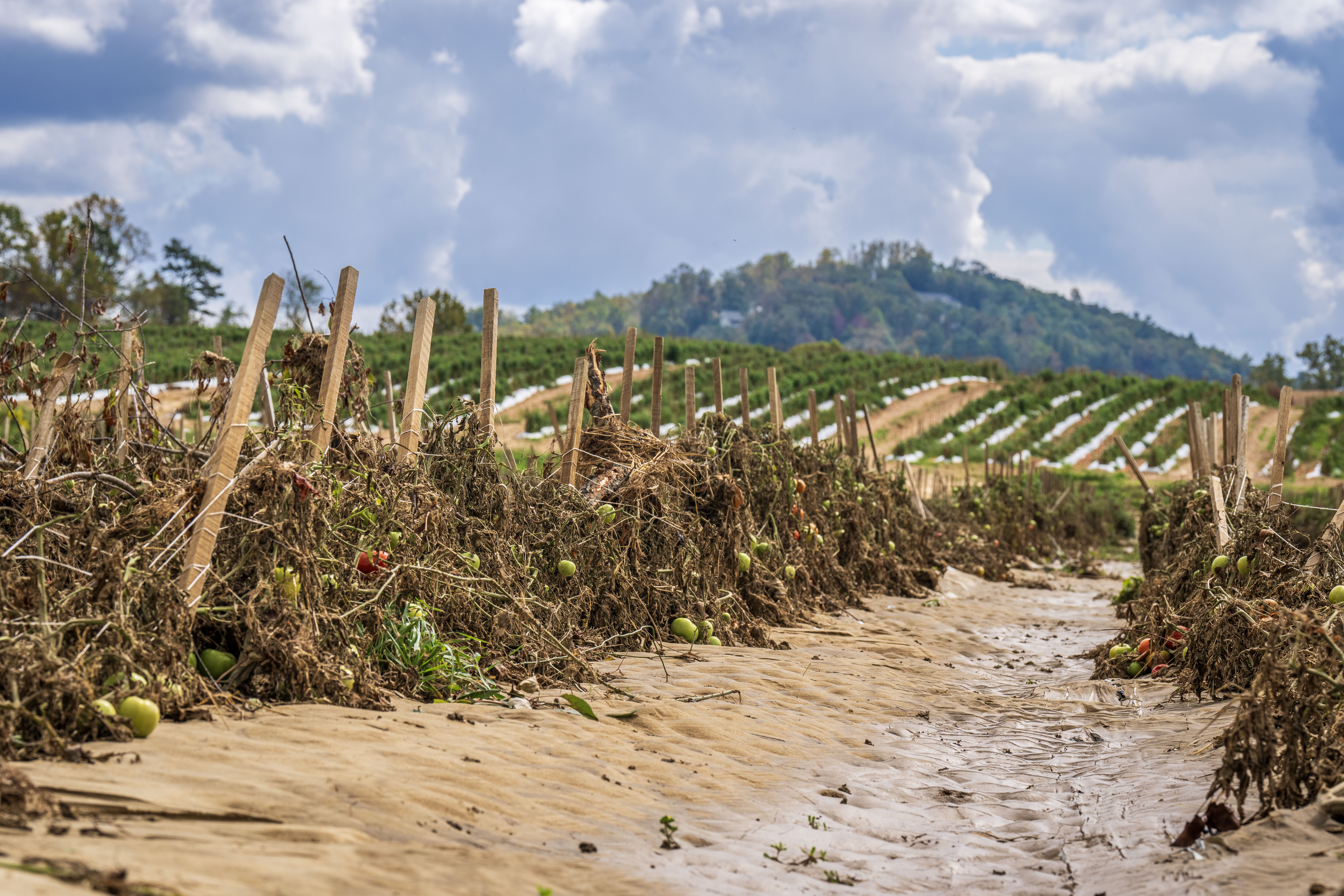
USDA announced Monday it will release additional aid for farmers impacted by disasters during crop years 2023 and 2024. The funding is the second stage of the Supplemental Disaster Relief Program approved by Congress in December. It will partially compensate farmers who suffered crop, bush, vine and quality losses not covered by SDRP stage 1.
“The purpose of Stage 2 is to cover so-called shallow losses, which include non-indemnified losses, uncovered losses and quality losses,” Deputy Agriculture Secretary Steven Vaden said during a Monday call with reporters. “Between the two stages of the Supplemental Disaster Relief Program, USDA will deliver in total more than $16 billion in congressionally approved assistance to America’s farmers, providing much needed cash flow as we head into calendar year 2026 and the new crop cycle.”
Vaden noted this aid is in addition to the $9.3 billion distributed through the Emergency Commodity Assistance Program this year and the more than $1 billion allocated from the Emergency Livestock Relief Program. About $5.7 billion has been distributed so far this year through SDRP Stage 1.
According to Richard Fordyce, USDA undersecretary for Farm Production and Conservation, the additional aid addresses a “clear gap” in previous disaster assistance programs. He noted that the new aid will cover uninsured losses and, for the first time, shallow losses.
“If a producer suffered a loss that did not exceed their crop insurance deductible, they will now be indemnified for their loss and receive the same crop insurance premium and fee refund as producers did in SDRP 1,” Fordyce said.
The undersecretary also noted aid will not be tied in any way to race or ethnicity. This is a change from previous USDA policies that often aimed to assist historically disadvantaged communities through funding programs.
Notably, Connecticut, Hawaii, Maine and Massachusetts have opted to administer their own crop loss programs through state block grants. Consequently, producers in those states will not be eligible for SDRP program payments.
USDA will begin accepting applications for SDRP Stage 2 on Nov. 24. The agency will continue accepting applications for both SDRP stages through April 30. However, the majority of available SDRP Stage 1 funds have already been doled out. More information may be found on USDA’s SDRP webpage.
Dairy assistance announced
USDA announced two new programs to dairy producers impacted by natural disasters in 2023 and 2024. Up to $1.65 million will be made available through the Milk Loss Program for dairy operations forced to dump milk without compensation due to natural disasters in 2023 or 2024.
Farmers who suffered losses of certain commodities stored in on-farm structures will be eligible for up to $5 million in aid from the On-Farm Stored Commodity Loss Program.
Enrollment for the Milk Loss Program and the On-Farm Stored Commodity Loss Program begins Nov. 24 and runs through Jan. 23. Farmers are advised to visit USDA’s Farm Service Agency website for more information.
Assistance for 2025 still up in air
Before the Oct. 1 government shutdown, USDA was reportedly finalizing a plan to help farmers impacted by harsh economic conditions this year. Vaden, blaming Democrats, said USDA was unable to proceed with that plan while the shutdown was ongoing. He also noted changes that occurred during the 43-day shutdown, highlighting progress in trade negotiations with China, Pakistan and Japan among others.
“These have resulted in major commitment to buy American commodities, and UISDA now needs to take into account the effect that those commodity purchases will have on the market as we see going into 2026,” Vaden said. “Rest assured that the undersecretary and his team are very busy crunching those numbers now, and we’ll let you know when we have an announcement.”
Vaden added that an announcement would have come sooner if not for the shutdown.
Source - https://www.farmprogress.com