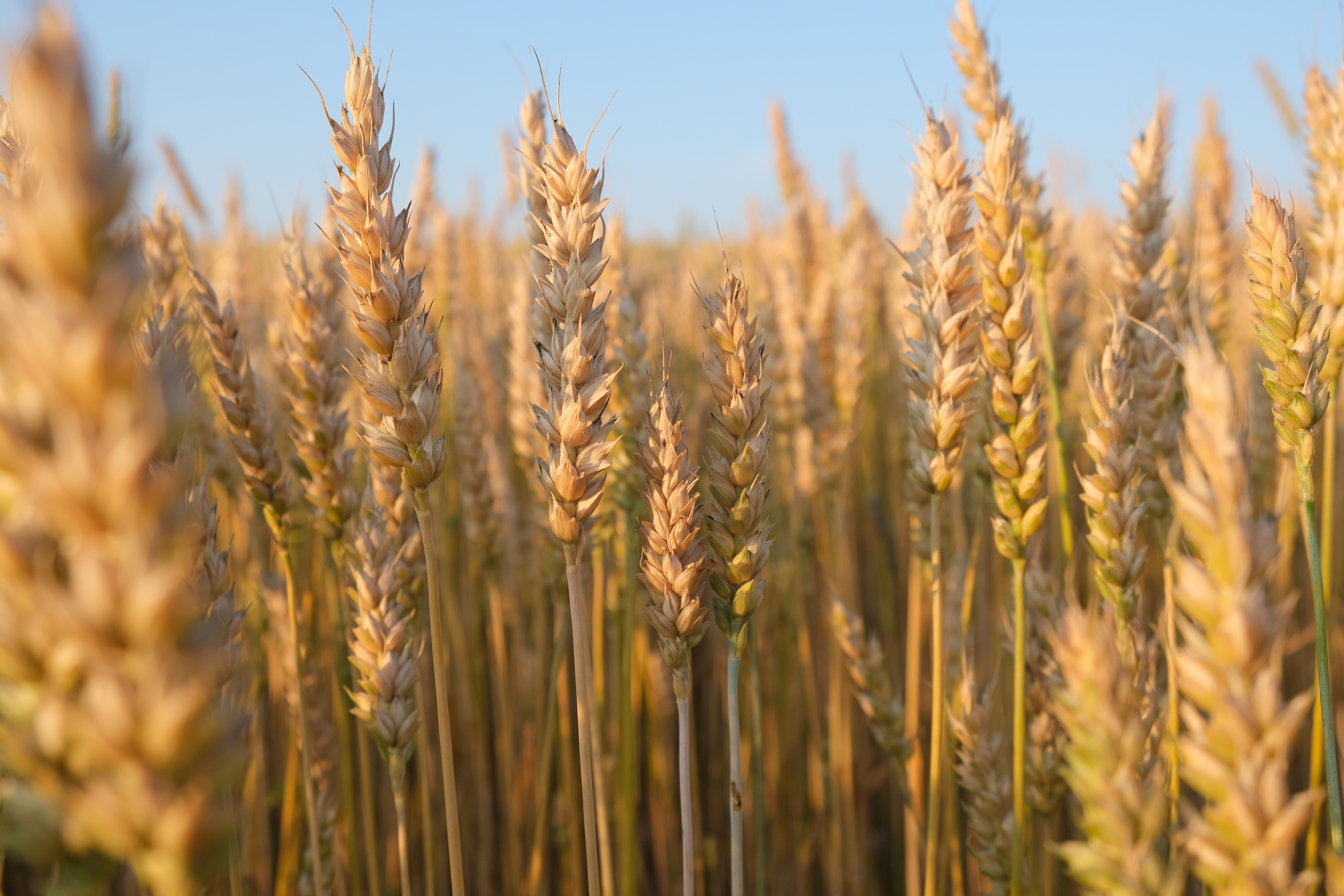
USA - Va.’s Winter Wheat Acreage Drops Drastically as Growers Pivot to Planting Cover Crops

28.10.2024 413 views

Low commodity prices and high input costs have Virginia’s winter wheat growers exploring other options to sustain farm profitability.

The state’s farmers harvested 47% less winter wheat this summer, according to a recent report from the U.S. Department of Agriculture National Agricultural Statistics Service. Virginia growers harvested 5.61 million bushels of winter wheat during the summer of 2024, compared to 10.2 million bushels in 2023.

Virginia has been steadily losing wheat acreage for 20 years, said Robert Harper, grain marketing specialist for Virginia Farm Bureau Federation.

“But this headline got everybody’s attention,” Harper said. “Forty-seven percent was a dramatic, fall-off-the-face-of-a-cliff drop.”

Farmers sowed 50,000 fewer acres during last fall’s planting season. Land harvested for grain totaled 85,000 acres, with 65,000 dedicated to other uses.

Those “other uses” included planting cover crops like barley, rye or wheat, which are proven to reduce nitrogen and runoff, protecting the Chesapeake Bay. Cover crops also don’t require expensive inputs like fertilizer and protectants.

Farmers can receive federal and state cost-share incentive payments to sow cover crops in the winter, based on the crop species and dates of sowing and termination.

“Cover crops are cheaper to manage than a wheat crop through the growing season, with little input costs and no management costs,” said Joseph Oakes, superintendent of the Eastern Virginia Agricultural Research and Extension Center in Warsaw. “The combination of the low price of wheat, high input costs, with cover-crop incentives tied in, is the main reason we are seeing this drop in acreage.”

It takes the most efficient Virginia growers about $600 to sow and manage an acre of wheat for nine months, Harper said. That amount has “super exceeded” the winter wheat futures price currently projected by the Chicago Board of Trade, at $6.25 per bushel for next July’s delivery.

“Harvesting an above-average 80 bushels per acre, you would need $7.50 per bushel at the farm to break even,” Oakes explained. “The cost of land, and the cost to sow it, harvest it, going over it four or five times with protectants like growth regulators, insecticides, fungicides, fertilizer and nitrogen—all costs a fortune to spoon-feed the crop. So, the incentive programs are a safety net, bringing agronomic benefits and some income.”

But when the going gets tough, farmers adapt.

“From a production aspect, we’re seeing a shift,” Oakes continued.

Farmers who previously grew winter wheat are expressing interest in pushing soybean plantings earlier than usual, to plant behind a cover crop. The AREC’s researchers are studying how early in spring this can be accomplished.

Growers may pivot back to sowing more winter wheat if prices improve, Harper added.


Source - https://www.morningagclips.com

16.04.2026

USA - Forecast Performance of RMA Expected Yields: Comparison of Yield Projection Methods

Building upon the analyses discussed in the Farmdoc Daily articles of Jan. 27, 2026 and April 1, 2026, this study finds that the current method used by USDA’s Risk Management Agency (RMA) provided the least accurate projection of actual RMA county yields across the five crops and four projection methods examined in this study. 

16.04.2026

Philippines - DAR orients agrarian beneficiaries on crop insurance

The Department of Agrarian Reform (DAR) facilitated an orientation workshop for the agrarian reform beneficiary organizations (ARBOs) from the provinces of Surigao del Norte and Dinagat Islands to strengthen their access to crop insurance and equip them to become authorized underwriters of the Philippine Crop Insurance Corporation (PCIC). 

16.04.2026

Estonia - AgriFi Brings Agricultural Real-World Assets On-Chain with $AGF on Polygon

Agriculture remains one of the largest and most complex industries in the global economy, contributing over $3 trillion annually to global GDP and supporting the livelihoods of billions of people worldwide, according to data from the Food and Agriculture Organization and World Bank.

16.04.2026

USA - Aid Available for Nebraska Wildfire Victims

Just over one month ago, Nebraska experienced the worst series of wildfires in history, burning nearly 950,000 acres. Since then, assistance for farmers and ranchers affected has been rolling in.

16.04.2026

Thailand - Storm batters Si Sa Ket durian orchards, losses hit B39m

A summer storm caused extensive damage to durian plantations in Kantharalak district, toppling hundreds of trees and wiping out tonnes of Thailand’s economic crop just days before harvest, local officials said on Thursday.Following the storm, district chief Somkuan Singkham ordered an urgent survey in tambon Phu Ngern, where strong winds and thunderstorms hit five villages, damaging durian orchards belonging to 110 farmers.The affected fruit is a geographical indication (GI) product known as “Sisaket Volcanic Area Durian,” grown in Khun Han, Kantharalak and Si Rattana districts. Popular varieties include Monthong, Chanee and Kanyao, prized for their creamy texture, mild aroma and relatively dry flesh.

16.04.2026

Cropshader approved for organic farming in Europe

Cropshader, developed by Lumiforte, has been verified as suitable for use in organic farming under the control of Ecocert in Europe. The product complies with the requirements for inputs used in organic production in accordance with applicable European regulations.

15.04.2026

USA - Federal aid programs aim to help Southeast Texas farmers recover from losses

Southeast Texas farmers grappling with crop losses due to extreme weather are turning to federal aid.

15.04.2026

India - Landowners waive lease payments after crop damage

Farmers with large landholdings are doing their part to ease the burden on small and marginal farmers whose crops were damaged by the April 4 storm.