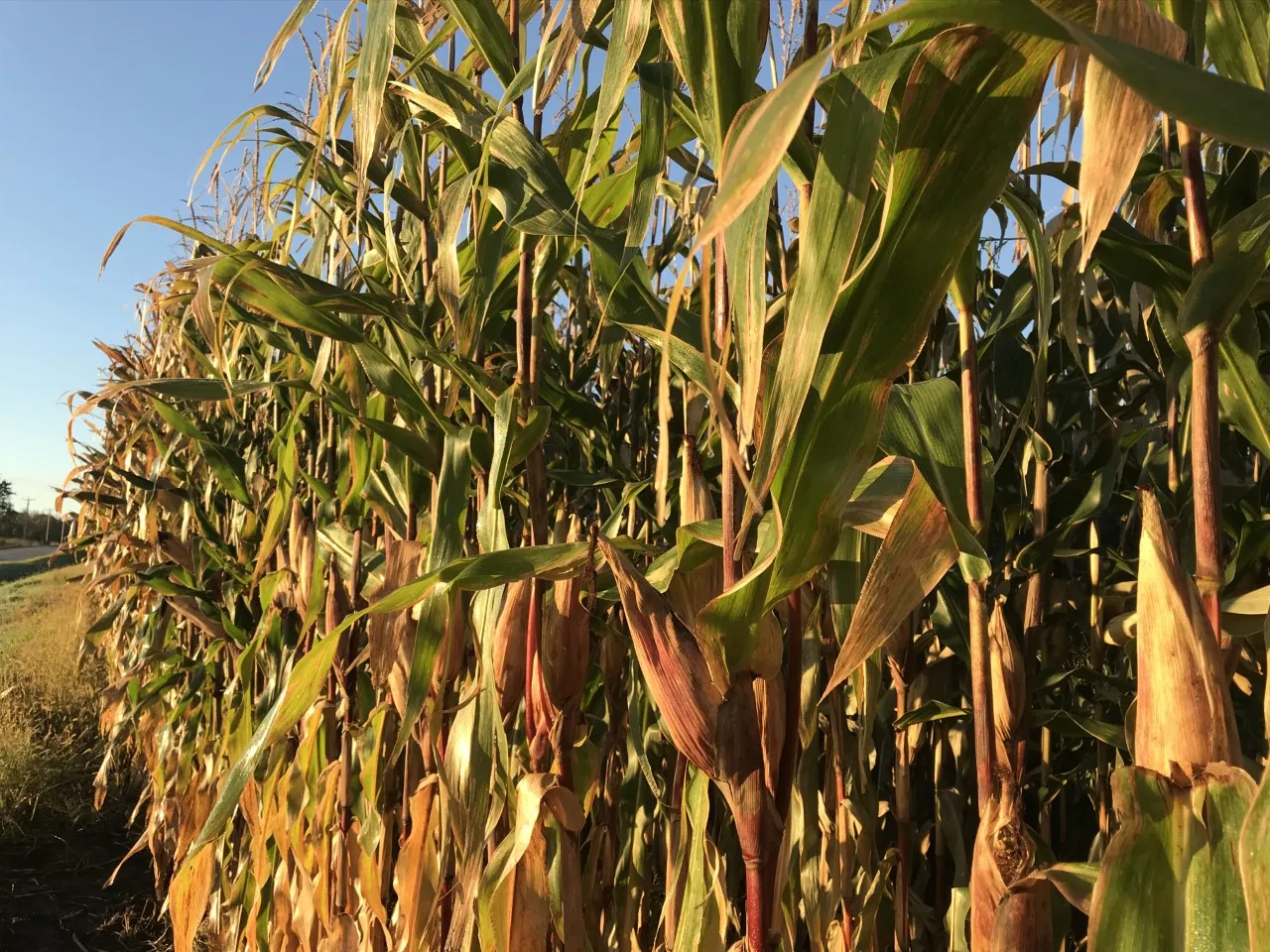
In Ohio, October usually brings our first fall freeze. On October 11, USDA reported that 15% of Ohio’s corn grain had been harvested (week ending 10/09/2022, full report here). In the same report, 96% of corn was at the dented stage, and 71% was mature. With additional sub-freezing temperatures possible this week, the potential for yield losses due to frost damage exists for any standing crop that has not matured yet (i.e., not reached physiological maturity).
Sub-freezing temperatures (<32°F) were reported at numerous sites across the state during the early morning hours of October 8-9. This includes the Western Research station (located in Clark County, Ohio), as documented by the CFAES Ag Weather System. Temperatures that can cause frost damage to non-mature corn are:
- Temperatures close to 32°F for a few hours
- Temperatures close to 28°F for a few minutes
At Western, the air temperature dropped below 32°F for more than 6 hours over the two nights, with more than 2 hours spent below 30°F. What damage can one expect from freezing conditions on a standing crop that has not yet matured?
Frost damage symptoms to corn are shown in Figure 1. These symptoms can be seen a few days after freezing takes place. However, it is recommended to wait 5-7 days to assess the damage and have a clearer view of what was damaged by frost versus what was not. Premature assessments have the risk of underestimating the magnitude of damage and loss.

Figure 1a. Non-mature frost-damaged corn. Pictures: Jenny Rees, University of Nebraska, 2022.

Figure 1b.
Research has estimated yield losses in corn (Table 1, using 80- and 105-day hybrids); Afuakwa and Crookston (1984) reported:
Early dent stage (R5): if leaves and stalks are frost damaged, a 40% yield loss can result. If only leaves are frost damaged, a 25% yield loss can result.
Half milk-line stage (R5.5): if leaves and stalks are damaged, a 12% yield loss was observed. If only leaves were damaged, a 5% yield loss was observed.
Table 1. Potential grain yield losses after frost. Adapted from Afuakwa and Crookston (1984).
|
Corn Development |
Killing frost |
Light frost |
|
percent of yield loss (%) |
||
|
R4 (Dough stage) |
55 |
35 |
|
R5 (Dent stage) |
40 |
25 |
|
R5.5 (Half milk line) |
12 |
5 |
|
R6 (Physiological Maturity) |
0 |
0 |
In a corn crop with frost damage, a black (or brown) layer will eventually form on the kernels when there is no more movement of nutrients. Frost damage corn can result in lower test weight, sometimes called chaffy ears. Low test weights can reduce storage life; additional steps can be taken to minimize further losses (e.g., more/better aeration, gentle drying, careful and timely handling).
Kernels undergoing the natural maturation process will contract and harden their coat after maturity, but this process can be disrupted by early death. The coats may be more prone to breakage and could produce more fines during harvest from broken kernels.
Due to the premature disruption to proper crop growth and development, early terminated corn will have higher kernel moisture content and take longer to dry, partly due to natural senescence being disrupted and disrupted husk leaf maturation. Ears with loose husks dry more rapidly than those with tight or normal husks; forced death from cold can impede the natural senescence process of husk leaves. Plans for grain drying and delivery should account for that extra time.
Besides low temperatures, situations that can be conducive to frost damage include fields that were planted (or replanted) late and fields that were planted to longer or full-season hybrids. If frost damage is a concern, consider to:
1) monitor crop standability
2) scout for stalk rots
3) watch for the potential of ear drop
If the latter is happening, one may need to consider harvesting the field earlier (although at higher moisture) and explore alternative market opportunities if necessary.
Source - https://www.agfax.com