When in drought, most farmers will look to the sky for relief, but Joe Lawler is able to look to his soil.
Lawler grows corn and soybeans along with cover crops and perennial forages just east of Rochester, where his family has farmed for six generations.
And while the amount of water banked in his soil was able to sustain his crops through a dry spell that put Olmsted County in the extreme drought category on the U.S. Drought Monitor for the first time in nearly 20 years, that wouldn't couldn't save them from hail this past weekend.
Ryan Miller, University of Minnesota Extension educator, said it's typically not the case for southeast Minnesota to be one of the driest places in the state. The area actually contends more with the wettest, he said.
Miller compiled state climate reports to tally the rainfall for Minnesota's most southeast division, for May 1 to July 24. He said there was a precipitation deficit of about 6 inches.
From the beginning of May to Mother's Day, the region had almost 5 inches of rainfall. Then from that point on, it got only about 2.5 inches.
"So not very much rainfall, and a lot of it has come recently, including this last weekend, when we had about an inch here," Miller said as he stood at one of two University of Minnesota Extension plots in the Rochester area, less than a mile from Joe Lawler's farm. "That unfortunately, came along with quite a bit of hail."
Water in the bank
The soil types that can be found at the Extension plot east of Rochester and at Lawler's farm are seen as a hedge against drought.
"Silt loam, which holds a lot of available water so it can produce some phenomenal yields and great years," Miller said. "Less drought stress, even when we get droughty like we are this year."
When Lawler — who along with his father, Steve, and uncle, Tim, all who farm in the Silver Creek watershed — went to scout some of his corn on the third week of July, he expected to find it in worse condition than he did.
"For the amount of rain that we had since early May, they looked surprisingly well," Lawler said on July 24 from Mankato, where his full-time job is located.
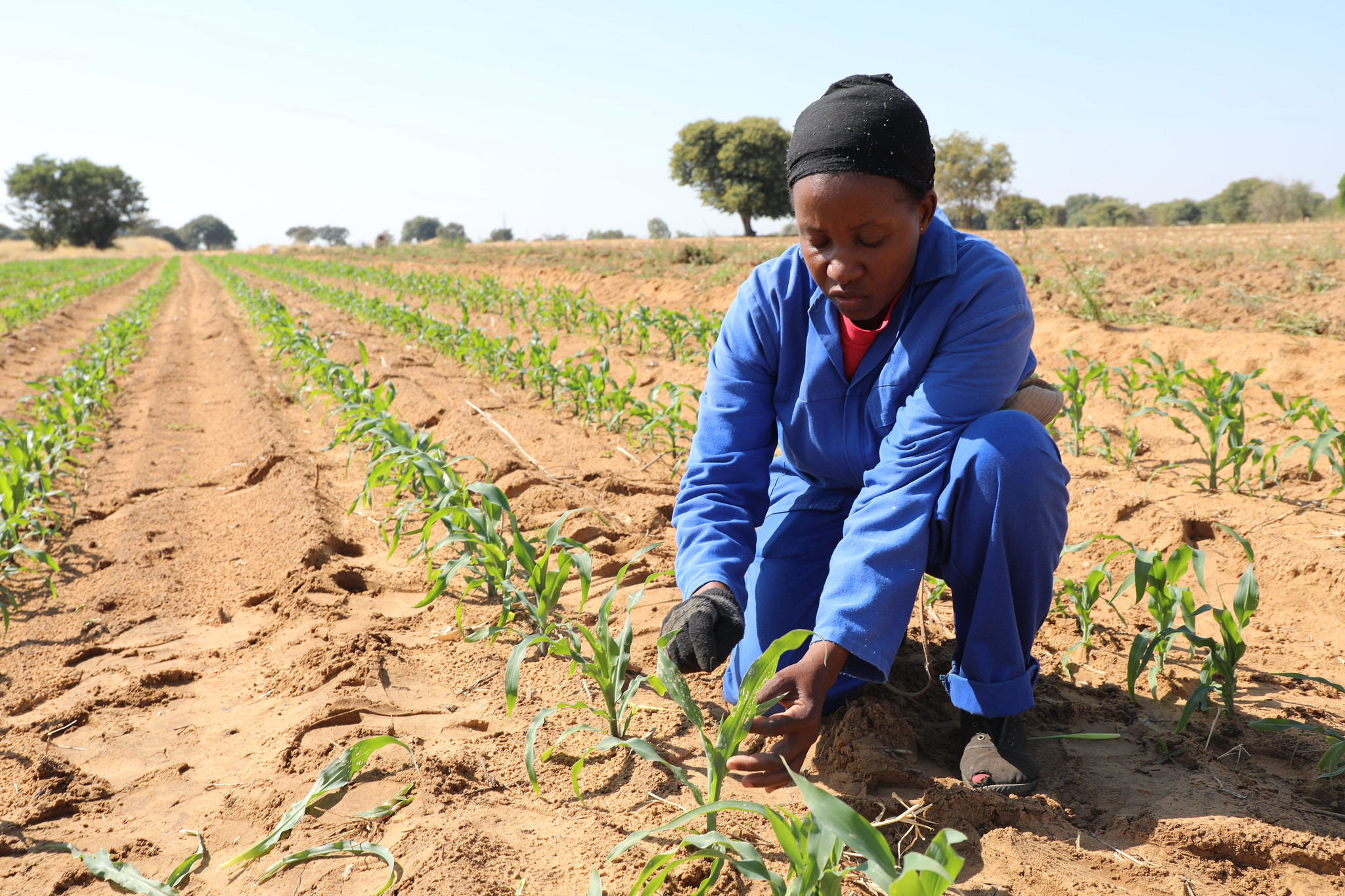
Lawler is known to be on the cutting edge of conservation practices and uses a personally modified corn detassler as a cover crop seeder, which he's demonstrated at field days in the past. But even he was surprised to find more corn with deep roots, and just a slight sign of nitrogen deficiency.
"We weren't curling for moisture," he said. "The corn looked good."
Lawler credited the fertile land more than his own practices.
"Right up on the ridge here, we have some of the most beautiful soil in the world, really," Lawler said. "We've never seen a drought like this, even in my Dad's lifetime. I guess we didn't realize how good (the soil) was, until we saw what it could do with this little amount of rain."
From good to gone
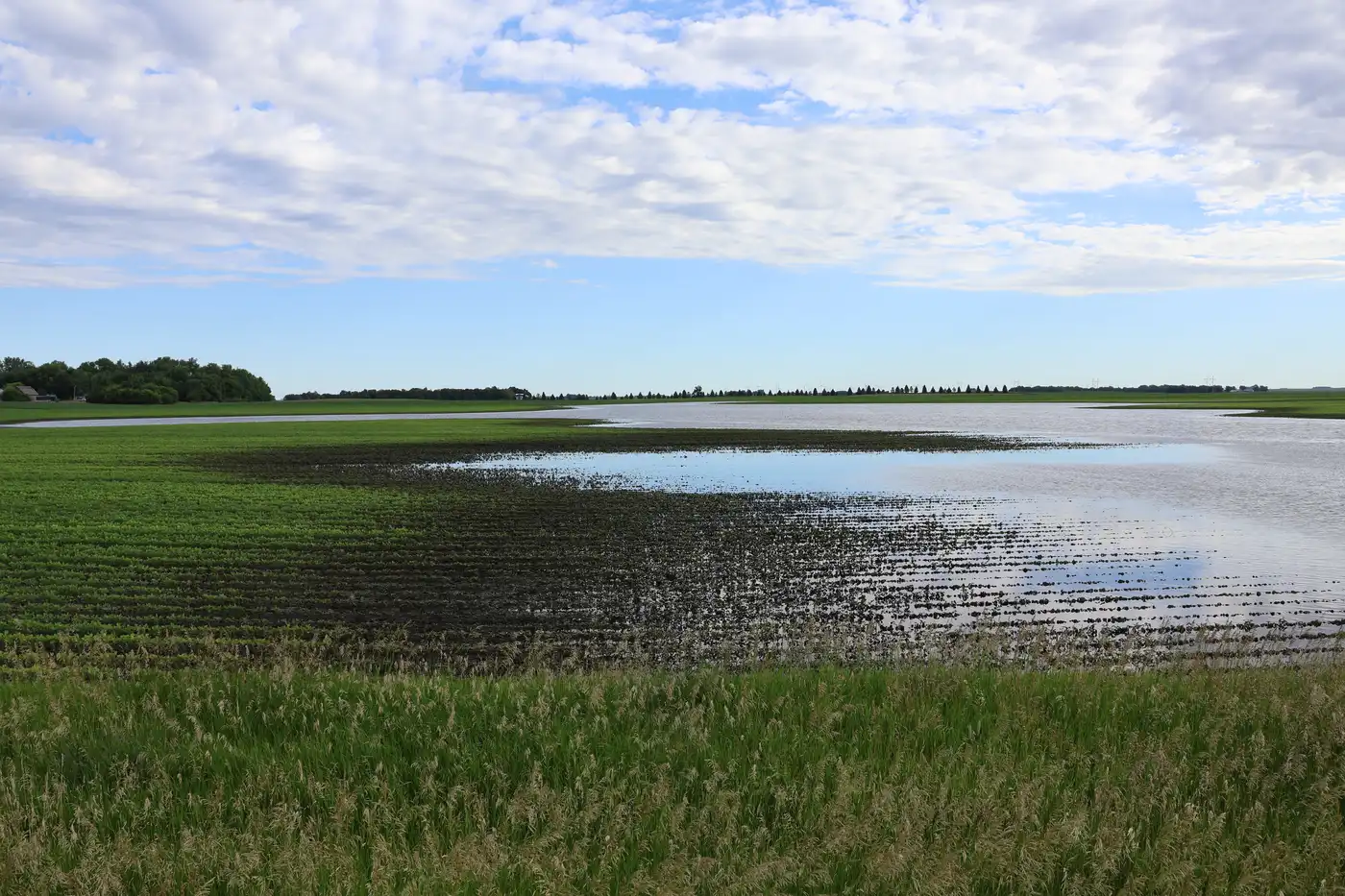
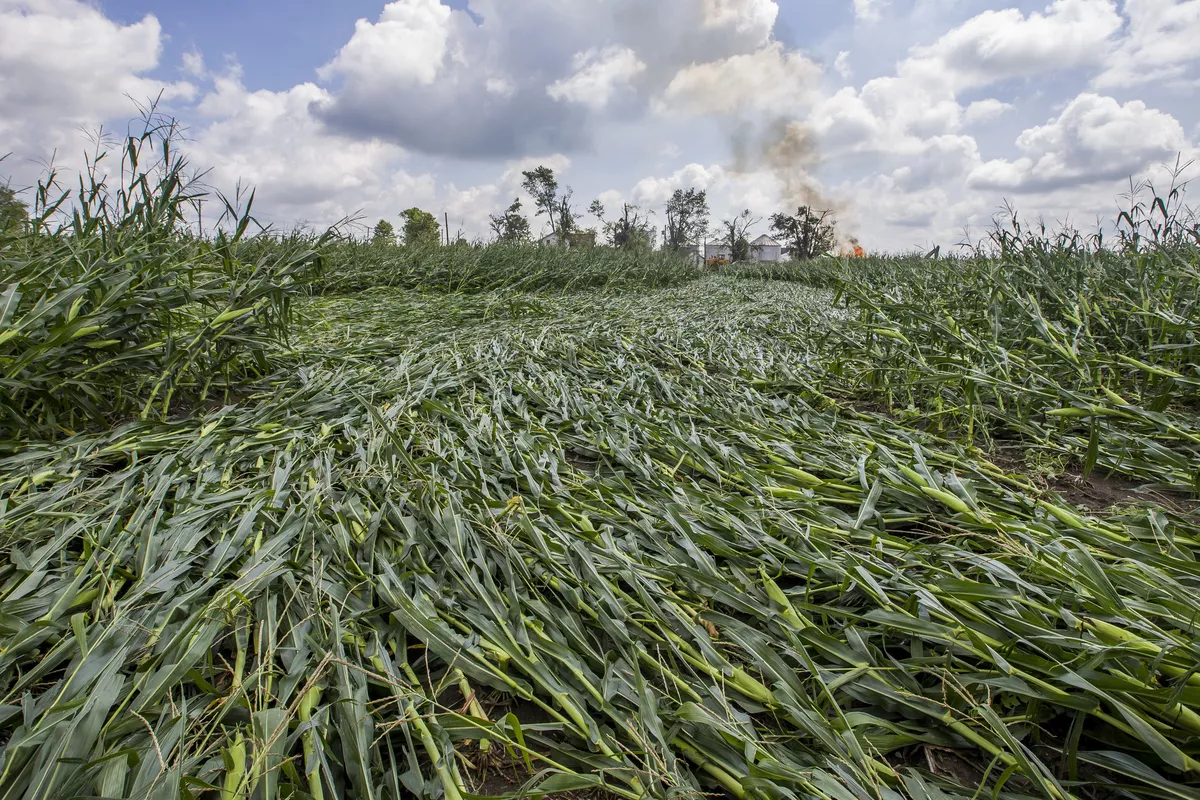
On Saturday, July 22, for the first time in months, a storm rolled from the north to the south of Olmsted County with most of the region getting rainfall . The storm only lasted about 45 minutes, Lawler said, and respite from getting about 2 inches of rain was erased by the hail that caused significant damage to his crops.
An organic corn field was one of Lawler's most damaged, in which he said the corn was getting close to tasseling.
"It was fully tasseled after the storm," he said. "When the upper leaves were taken off."
In another field that looked to be one of his most promising, Lawler said plants were mangled from hail.
"A conventional corn field that we went in last week, and the first ear I grabbed had 20 rows on it," Lawler said. "That's a bumper crop."
What happens next in those fields will depend on what his insurance adjuster says.
"If we have any other complete losses on fields other than the cornfields, they'll be probably chopped for silage," Lawler said. "Then we'll go in with cover crops."
That wasn't something he was preparing for, but on July 24, Lawler started going over the options in his head.
"We're early in the season yet, so it's a good time to get some warm season grasses to put in there," Lawler said, but any cover crop would first need approval by his insurance. "If they allow us to, put some sorghum sudangrass, or other warm season grasses or legumes, and see if we can get some forage off of it."
Hail damage could also be found throughout the Extension plot, which Miller said he visited that Sunday to do some preliminary estimates, and to see if the rest of the year's research could go on as planned. He left feeling skeptical of that.
"Certainly this is one of the worst times to get hail," Miller said, as much of the corn was in VT (tassel) to R1 stage. "Leaf loss can cause severe yield penalties at that point, because the plant is essentially vegetatively done."
Loss of an entire leaf area will result in "100% reduction in yield," said Miller, but plants in the Extension field are not quite there. Extension's small grains plot next to the corn fared much worse.
"We have an oat and barley trial here, and a lot of that grain was knocked off at the heads, and so we won't be harvesting that for yield at this location," Miller said.
Soybeans saw "significant defoliation" from the hail, said Miller, but unlike corn , soybeans continue to produce leaves and tissue while in the reproductive phases.
"These soybeans are in the R2 to R3 phase, so right about that beginning pod," he said. "They've lost significant leaf tissue which is bad given the year, certainly, but really, there's opportunity for some of those leaves to grow back and for the plant to kind of be flexible and adjust to the conditions."
However, Miller said soybeans first need to have enough moisture, which they won't get from southeast Minnesota soils anymore. He said now that both crops are in their reproductive phases, they will need to use about a third of an inch of water per day.
"So you can think when the soil dries out, and if we're not getting continual rainfall, we can start to see those deficits really take a toll on the potential for crop yield," Miller said. "This is an absolutely critical time to keep getting rainfall."
He said it would be ideal to see "at least an inch" of rain a week. The historical trends don't show that kind of precipitation for this time of year, though.
"Certainly that's within the realm of reality that we can pick up an inch, but oftentimes, in normal years, this is the time of year when we start to dry out and see the distance between rainfall events increase," Miller said.
After that, the crop relies on the soil reserves.
"The soil reserves have, unfortunately, been somewhat depleted this year," Miller said. "Now we're in that scenario where we're going to need to catch rain to make rain."
Source - https://www.postbulletin.com