

Last winter, Tensas Parish farmer Will Ratliffe was optimisticabout this year's harvest. Commodity prices were up, and his 3,500 acres of soybeans, cotton and corn appeared set for a banner year.
"This thing was set up back in January for a farmer to have the best year ever with the prices," he said.
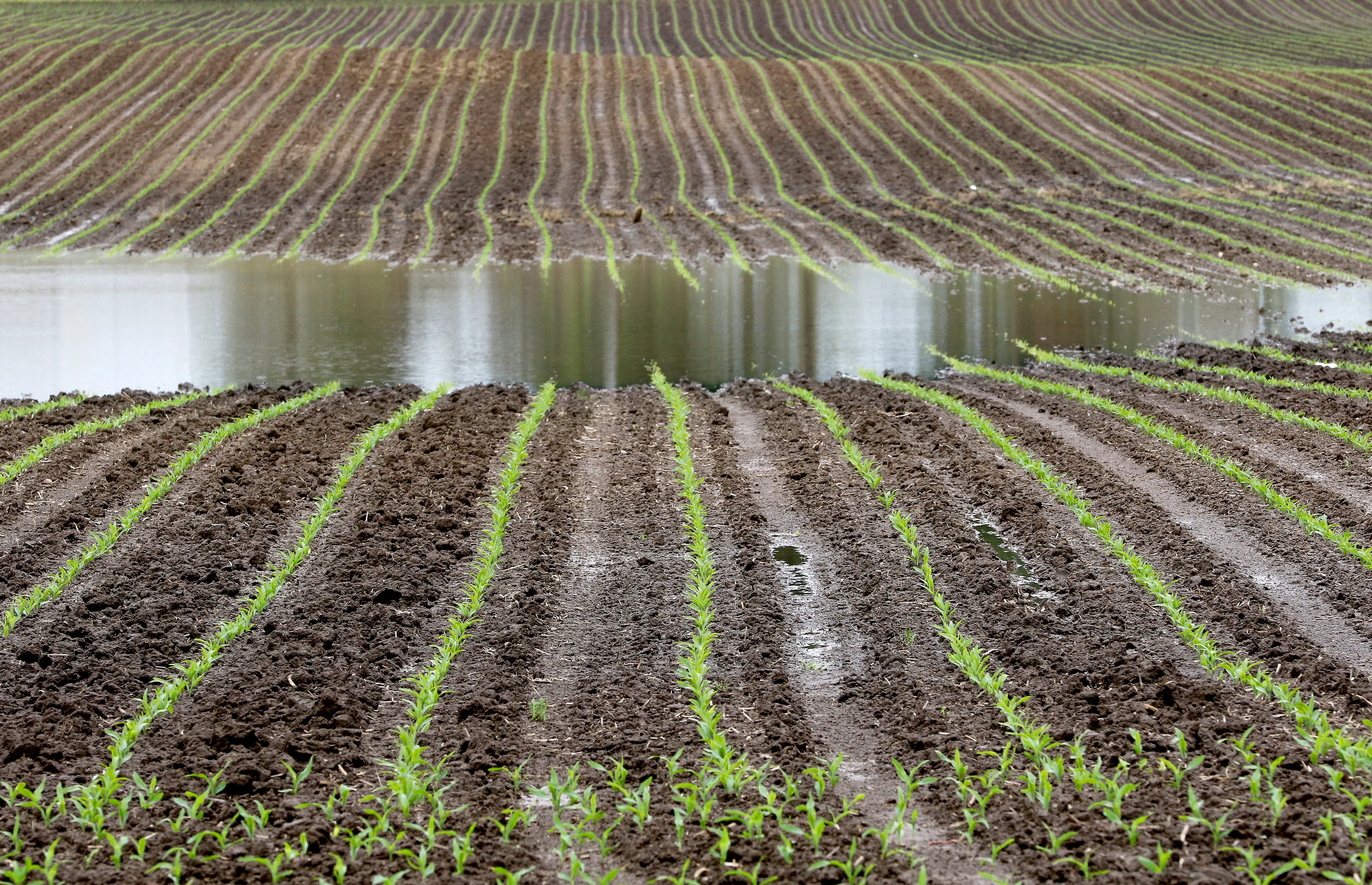
But soon after, prices for fertilizer, fuel and other supplies climbed to unprecedented levels. A long, dry summer meant some plants didn't grow as well as they could have. And then, just before the harvest began in August, weeks of torrential rains damaged thousands of acres of Louisiana crops.
Tuesday, Ratliffe spoke by phone from the seat of his cotton picker, which he was driving in an attempt to salvage some of his 1,100 acres of cotton. Some bolls had rotted, others had hardened and fell to the ground. He estimates his cotton yield will be down by about a third.
"Things got pretty rough," Ratliffe said. "We are financially stretched."
Devastating rains
Ratliffe's plight is one shared across the state after what was expected to be a bumper season went bust, mostly due to the rainy weather. Earlier this month, U.S. Rep. Julia Letlow, R-Monroe and others asked Gov. John Bel Edwards to request that the U.S. Department of Agriculture declare a disaster to free up emergency aid for the state's farmers.
Soybeans — one of Louisiana's biggest crops by acreage — was especially hard hit, as the rains came just as many farmers were getting set to start their harvest.
With 1.2 million acres planted, and prices hovering around $14 per bushel, soybeans could have brought in nearly $900 million for Louisiana's farmers, a significant jump from the $500-700 million the crop garnered in previous years, according to David Moseley, the LSU AgCenter's soybeans specialist.
Augusts rains laid waste to those hopes.
"We are hearing that roughly 30-40% of the acres look to be affected," Moseley said.
Starting around Aug. 18, some parts of the state got rain for 18 of the next 20 or 21 days, he said. Rainfall measured 5 inches in some areas, 17 inches or more in others, he said.
Damaging discounts
Not every soybean plant in every affected acre was damaged, he noted. But when damaged soybeans are harvested with good soybeans, elevators that buy the crops often pay a discounted price or reject the loads altogether.
Ratliffe, who has harvested some of his 900 acres of soybeans, said the elevator that bought them declined to pay market price due to potential damage.
"I harvested a 300-acre block," he said. "Because of the damage, I was faced with a $3.50 per bushel (discount)."
But he still considers himself lucky. Some farmers haven't been able to harvest their soybeans at all due to bad conditions or elevators refusing to purchase them, he said.
Many farmers had increased their soybean acreage this year to compensate for high nitrogen fertilizer costs. Soybeans don't require nitrogen, like corn and cotton do, so that made planting them more attractive. But late in the growing season, the constant moisture caused many plants to sprout or rot, Moseley said.
Seeking federal aid
Letlow, whose district includes the agriculture-dense northeastern corner of the state, wrote to Edwards on Sept. 2 to request that he petition the USDA to issue a disaster declaration. Such a declaration would release some federal aid to affected farmers.
That aid could include emergency loans, payment deferrals for existing loans with the USDA's Farm Service Agency, or disaster assistance for some crops without crop insurance.
"Our farmers in the Fifth (Congressional) District are now facing a catastrophic crop failure, and losses likely will exceed 50% for many," Letlow wrote. "The concerns also extend to our cotton crop that has yet to be harvested."
Others, including Louisiana Farm Bureau and state Rep. Jack McFarland, the chairman of the Louisiana House of Representatives' Committee on Agriculture, Forestry, Aquaculture and Rural Development, have written similar letters to Edwards.
A spokesperson for Edwards said his administration planned to make the request once more data on the damage to the harvest has been collected.
"The Governor’s Office has been in constant communication with (state Agriculture) Commissioner (Mike) Strain about the relief that may be awarded to Louisiana farmers by a declaration of emergency by USDA Secretary Vilsack," Edwards spokesperson Eric Holl said.
The USDA issues hundreds of such declarations for counties each year to help farmers in hard-hit areas. For instance, earlier this year, Vilsack approved disaster declaration for eight Louisiana parishes — mostly in the northern part of the state — related to drought.
In other parts of the country, similar declarations for freezes, high winds, heavy rains and other weather events have been issued.
Source - https://www.nola.com










