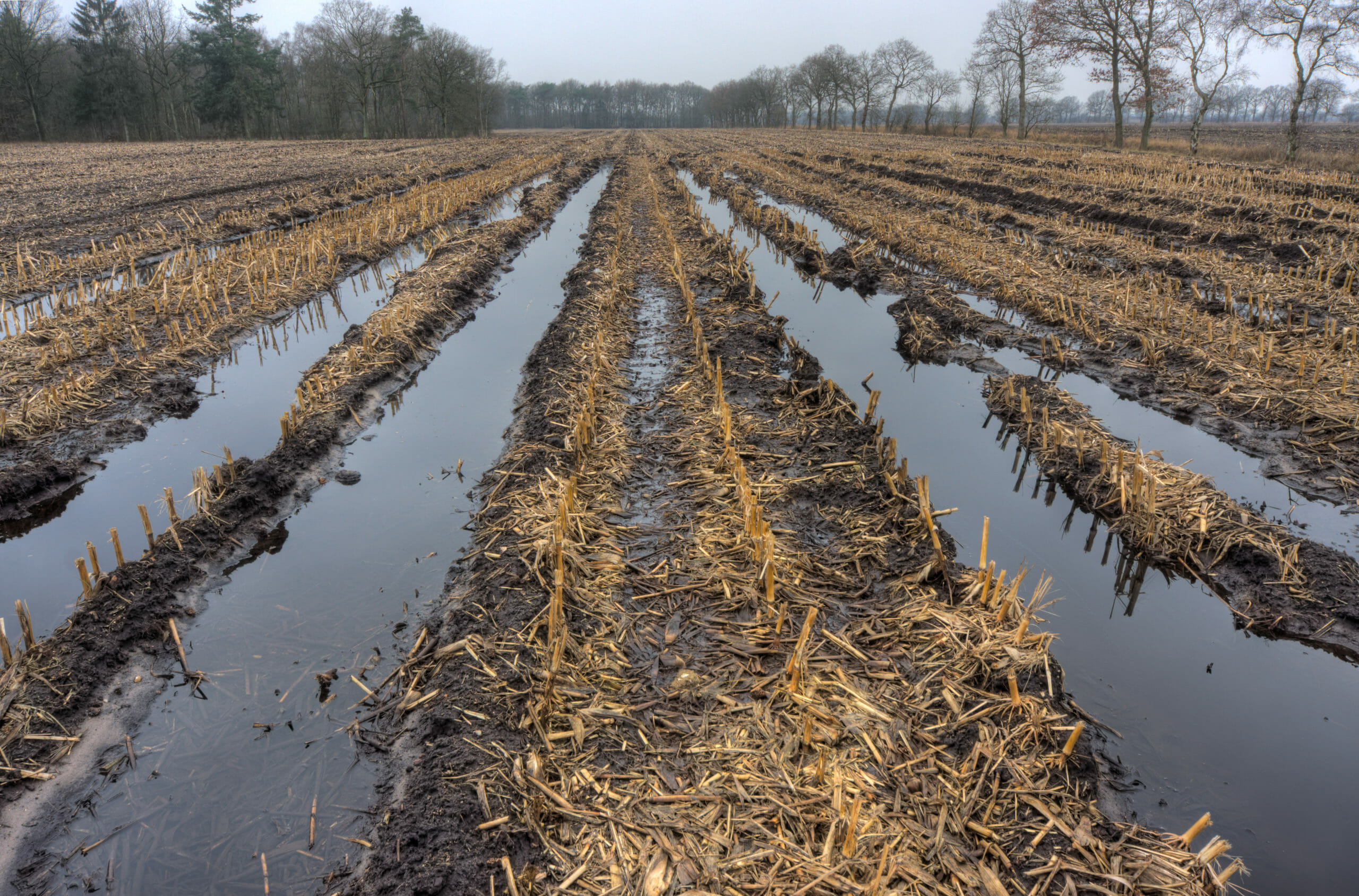
Rain, snow and sleet increased in almost all midwestern counties between 2001 and 2020. Along with that additional precipitation came increased federal crop insurance payments to farmers whose crops failed due to “excess moisture,” said a report Wednesday by the Environmental Working Group.
“In the overwhelming majority of the Midwest, we’re seeing wetter weather linked to the climate crisis — and it’s happening in the same places where crop insurance costs are surging,” said Anne Schechinger, EWG’s Midwest director and author of the analysis, in a statement. “The trend is clear, alarming and extremely expensive.”
The federal government’s crop insurance program pays indemnities to farmers for losses to crop yield or revenue, and taxpayers provide a portion of these funds. The program is managed by the Agriculture Department.
A less costly solution, Schechinger said, would be for the federal government to encourage midwestern farmers to adapt to these wetter conditions. Planting cover crops, for instance, can help farmers prevent or avoid many of the worst effects of the extreme weather by soaking up extra moisture, holding soil in place, and slowing the velocity of runoff from rainfall and snowmelt. But as an EWG analysis released in May showed, farmers have little incentive to take such steps when crop loss is mostly covered by crop insurance.
For this new analysis, EWG used data from the National Oceanic and Atmospheric Administration to determine that 683 midwestern counties in Illinois, Indiana, Iowa, Michigan, Minnesota, Missouri, Ohio and Wisconsin had increased annual precipitation between 2001 and 2020.
Over the same period, the federal crop insurance program paid out $12.9 billion for excess moisture claims in 661 of those counties, fully one-third of all indemnities in those counties, according to the report. Across all 738 counties in the eight states, excess moisture indemnity payments totaled nearly $14.5 billion.
Excess moisture also drove up the costs of other crop insurance program components by hiking premium subsidies, the number of policies and the number of acres that received a payment.
“If current trends continue, this program will only keep getting more expensive, which will fall on the shoulders of both taxpayers and farmers,” Schechinger said. “Congress must make changes in the Farm Bill to the Crop Insurance Program to encourage farmers to alter how they farm, in order to alleviate the worst effects of the climate crisis.”
Source - https://www.agriculture.com