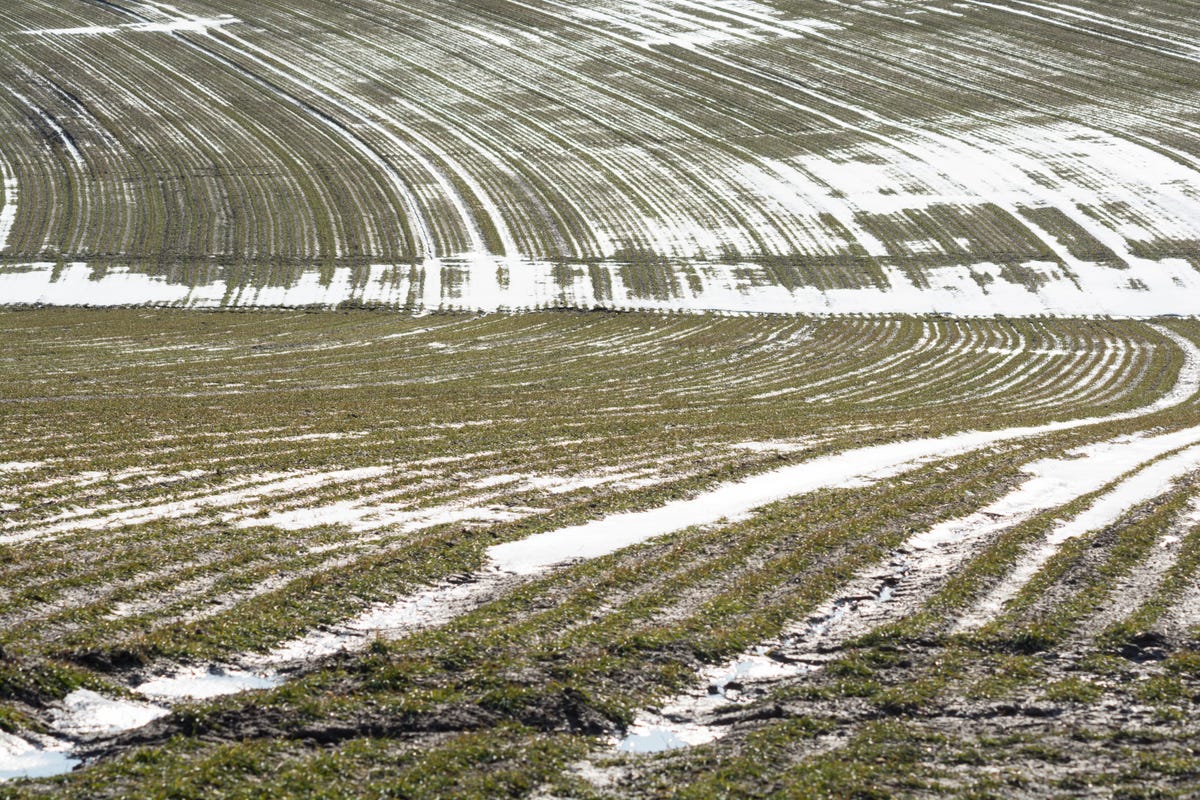
The U.S. winter wheat crop is in terrible shape as 2022 draws to a close, but that is not necessarily a precursor of what’s to come in 2023, says an analyst.
An estimated 34 percent of the crop was rated good to excellent as of Nov. 29, down from 44 percent the same time one year ago.
It is the second worst score dating back to 1987 for this time of year.
The poor rating stems from the fact that there is still extreme to exceptional drought in much of the central and southern plains regions of the U.S.
Aaron Harries, vice-president of research and operations with Kansas Wheat, said the U.S. Department of Agriculture’s poor crop ratings are accurate.
“If anything, the conditions are going downhill,” he said.
Wind gusts of 80 to 100 km-h are not helping matters.
Crop conditions are the worst in western Kansas, eastern Colorado and western Nebraska.
A lot of winter wheat in the western third of Kansas has not emerged.
“Essentially, you’re creating a spring wheat crop, and spring wheat doesn’t do very well in Kansas because our temperatures get too hot too quickly,” said Harries.
Anthony Speight, senior analyst with the British organization AHDB Cereals and Oilseeds Market Intelligence, wonders if drought and poor ratings at this super-early stage of the growing season really matter that much.
“Based on historic data, there is not an absolute positive link between winter wheat crop condition scores and final winter yields,” he said.
For example, the worst score ever recorded for the same point in the crop year was 33 percent good to excellent in November 2012.
But U.S. winter wheat yields averaged 47.3 bushels per acre during the 2013 harvest, which was about par for the course for that time period.
The best rating ever recorded was 76 percent good to excellent in November 2004. The crop averaged 44.3 bu. per acre in harvest 2005, which again was right on the trend line.
“Although these reports are good at providing an insight into the current crop conditions, it’s not the end of the world if conditions are not the best, as there is a lot of weather to play out in springtime that will ultimately drive yields,” said Speight.
The Nov. 29 report was the USDA’s last weekly Crop Progress report for 2022. The first report for 2023 will be released on April 3.
So, this is the last impression the market will have of crop condition ratings for a while.
The U.S. is expected to account for 10 percent of global wheat exports in 2022-23, which is why the poor crop rating is helping prop up wheat futures prices.
Speight wonders if the current market support provided by the dismal conditions report might be creating an opportunity for pricing that could dissipate as spring unfolds.
Harries agrees that the fate of the crop could change in a heartbeat if there is ample moisture in March and April.
U.S. farmers are hoping that La Nina will fade over the next couple of months, bringing better weather in its wake, and that is what is in the forecast.
But he also noted that it is hard to completely discount the current dismal crop ratings because the wheat that hasn’t emerged yet is likely destined to have lower than normal yields for the reasons outlined above.
Source - https://www.producer.com