At least nine districts in the eastern region have been invaded by African armyworms in the past week, leaving more than 10,000 acres of cereals, mostly millet, sorghum and maize destroyed.
Dr Stephen Byatwale, the commissioner in-charge of crop protection department and acting director of crop resources at the Ministry of Agriculture, confirmed the invasion at the weekend.
“It is true we have an invasion of the African armyworm in several districts, including Busia, Tororo, Pallisa, Kumi, Soroti, Bukedea, Lira, Iganga and Bugweri, and this [Sunday] morning, we have reports coming in from Wakiso District,” Mr Byatwale said.
He described the invasion as massive.
“In one week, the armyworms have caused huge crop loss, especially cereals, although I can’t ascertain how many acres have been destroyed over the past week,” Mr Byatwale said.
He added: “But hundreds of acres of crops have been destroyed; we, however, have teams on the ground who are working with the affected district authorities to give us the exact figures of how much has been destroyed.”
In Busia, for example, five sub-counties, including Masaba, Masafu, Masinya, Dabani, and Namugondi have been affected, according to Mr Aggrey Mirembe, the senior district agriculture officer in-charge of crop husbandry.
He, however, warned that the armyworms are spreading fast and will soon cover all the 20 sub-counties in the district.
In Dabani, the worst-hit parishes are Nangwe and Busia that lie on the border with Kenya where the invasion is said to have come from.
Affected farmers
Mr Esau Wandera, a farmer in Mudaya Village, said: “I saw some black caterpillars two days ago in my garden, but when I returned the following morning, they had multiplied and destroyed all the millet in the garden.”
Mr Moses Wabwire, a farmer in Dabani, said the invasion had also left pasture land in ruins.
“The caterpillars have eaten up all the grass and we fear we may have no pasture left for our livestock in the coming weeks,” he said
In Namugondi Town Council, all the 18 villages have been affected, according to Mr Stanley Wejuli, the area councillor.
In Kumi, Mr Rajab Ogogol, the district production officer, told Daily Monitor that Mukongoro, Ogino and Nyero sub-counties were the most affected and estimated the loss of cereal crops in a week to be between 100 and150 acres.
About the armyworm
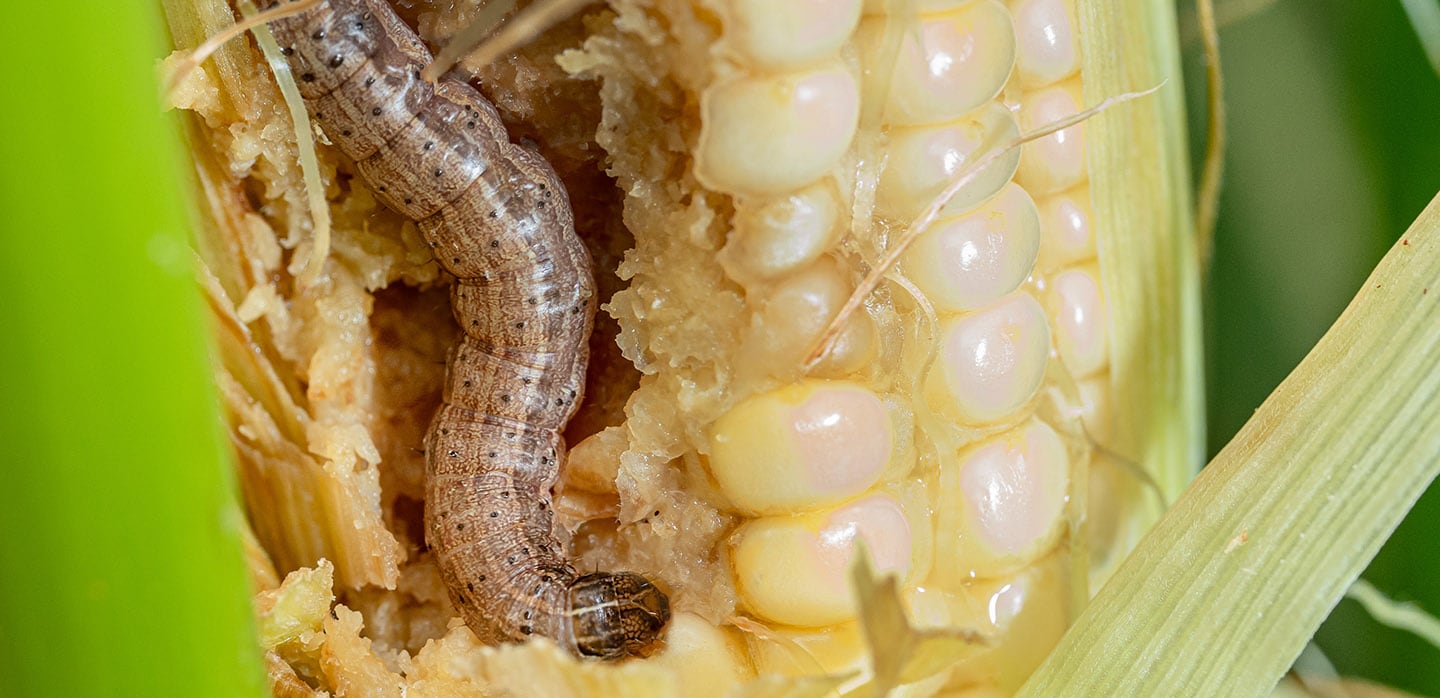
According to Dr Stephen Byatwale, the commissioner in-charge of crop protection department, the African armyworm is a migratory moth, whose larvae stage is pest, which causes a lot of losses to cereals. He said the insects usually move in large numbers, attacking filed-after-field, with invasions mostly common on the onset of the wet season.
“The prolonged dry spells, which are followed by early season rains, provide conducive ground for the moth to lay and hatch eggs which develop into larvae and feed on the growing grass and crops planted at the onset of the rains,” he said. The worst outbreak of the armyworm was reported in neighbouring Kenya and Tanzania in 2001, where at least 157,000 hectares of cereals were destroyed.
Source - https://www.monitor.co.ug