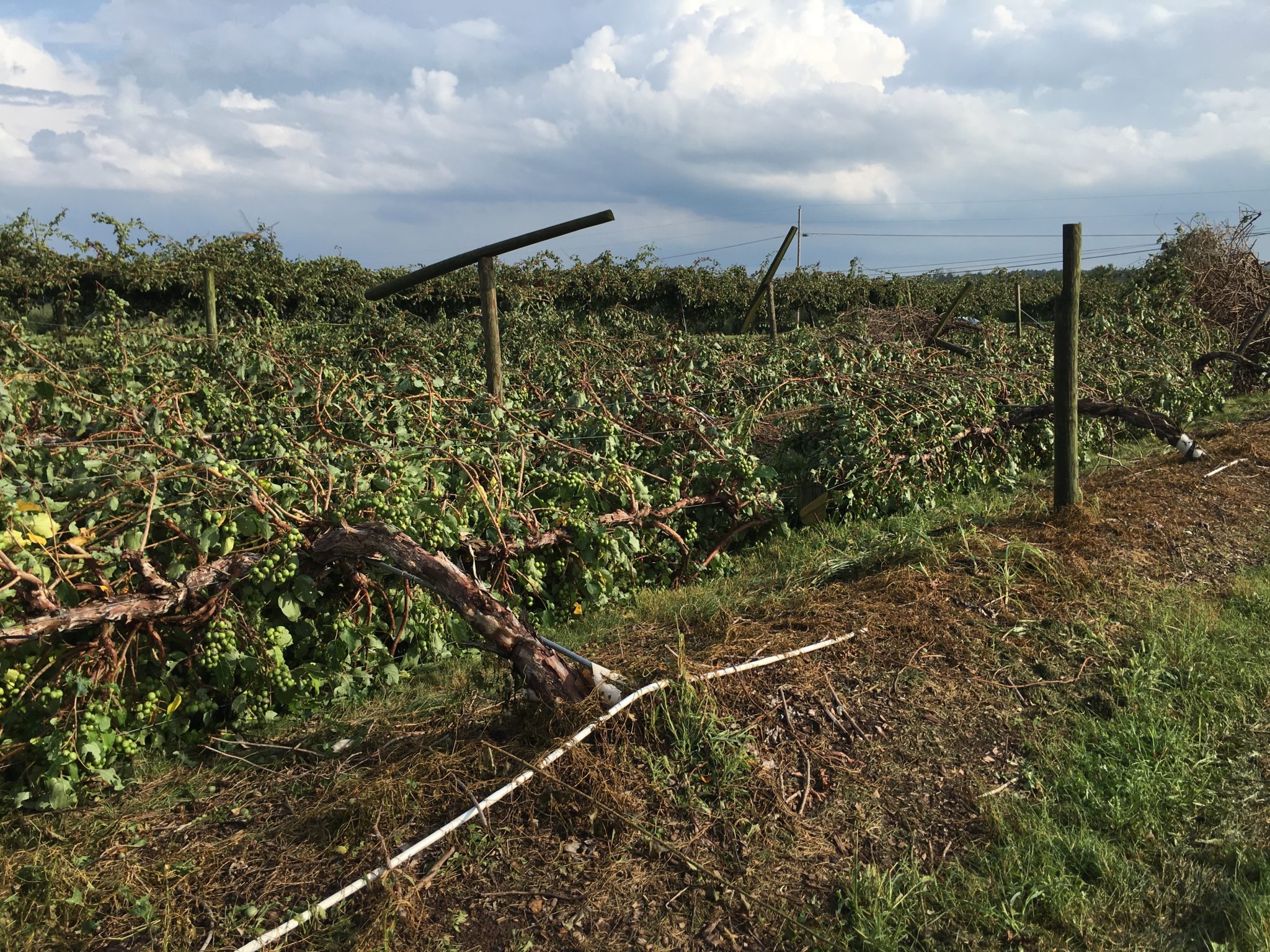
The past spring frosts could have a significant impact on Ukraine's apple production, says Volodymyr Gurzhiy of Ukrainian apple exporter USPA Fruit: "This year, the spring brought several surprises in Ukraine at once; an early spring, simultaneous and long-lasting flowering, late frosts, inactive pollination of flowers by bees due to low temperatures. Of course, all these factors did not occur at the same time in all orchards throughout the territory of Ukraine, but nevertheless these circumstances led to a certain negative impact on the harvest and its quality. In general, orchards sometimes observed many strange phenomenon during the same day, such as a hot day, frosts at night, flowers and apples with a diameter of 20 mm are on one tree."
The timing of these spring frosts couldn't have been worse, as the blooming happened earlier than usual as well, Gurzhiy explains. "The apple trees began to bloom quite actively a few weeks earlier than normal, so the frost damaged the ovary, not the flowers, which definitely affects the quantity and quality of the harvest in such regions. In central Ukraine and Podillya, the weather was colder and more humid, which did not encourage the bees to actively fly and, accordingly, pollinate. Thus, frosts occurred under the least favorable conditions and led to the maximum level of damage compared to other regions."
Gurzhiy emphasizes not all regions are as heavily affected as some, but overall production will see a notable reduction: "Frosts were not observed in all regions and their intensity was different in the various areas. Orchards in central Ukraine and Podillya are the most affected. We forecast the greatest losses here, in some places up to 30 or 40 percent. Bukovyna, which is a bit more on South-West, suffered smaller losses, especially the orchards located on the hills. The Transcarpathian region, which is on the West of Ukraine, is still going through the season with almost no losses. Of course, it's still too early to talk about harvest forecasts, because there will still be a natural fall of apples in June, and other cataclysms, such as hail, are possible. However, under stable, standard conditions, we can already see that the harvest may be 10 to 20 percent lower than usual."
Some varieties have more damages than others, and especially those with heavy skin issues will be sent to the processing industry instead of being exported. Gurzhiy: "The export potential will also depend heavily on the quality of the apples, as frost may have affected some of the apples that will remain on the trees until harvest. There will also be differences in varieties. We observe that the apples of the Royal Gala variety suffered the least, part of the Golden may have russeting on the skin, some varieties will have frost rings. Such damaged apples will immediately be sent for processing."
Looking ahead, there could be more frosts and damages on the horizon, but Gurzhiy states that's not the only thing to worry about, as some regions are still heavily impacted by the war with Russia: "The weather forecasts are still unfavorable. Unfortunately, frost is still possible in some regions. In this phase of fruit development, frosts are more damaging than in the flowering phase, so we hope that another wave of frosts will pass us by.
"According to my observations, many producers in Ukraine applied chemical and mechanical thinning of the fruits, and therefore things are not too bad. Apart from the frosts, we cannot forget about the war in Ukraine. As a result, there are great risks due to a lack of workers for a timely harvest. It is clear that the war zones in the east and south of Ukraine suffer the most."
"In conclusion, based on information about active frosts that took place in Poland, the Czech Republic and Germany, as well as taking into account the forecast of a certain fall in the harvest in Ukraine, we forecast high world prices for apples in the 2023-2024 season."
Source - https://www.freshplaza.com