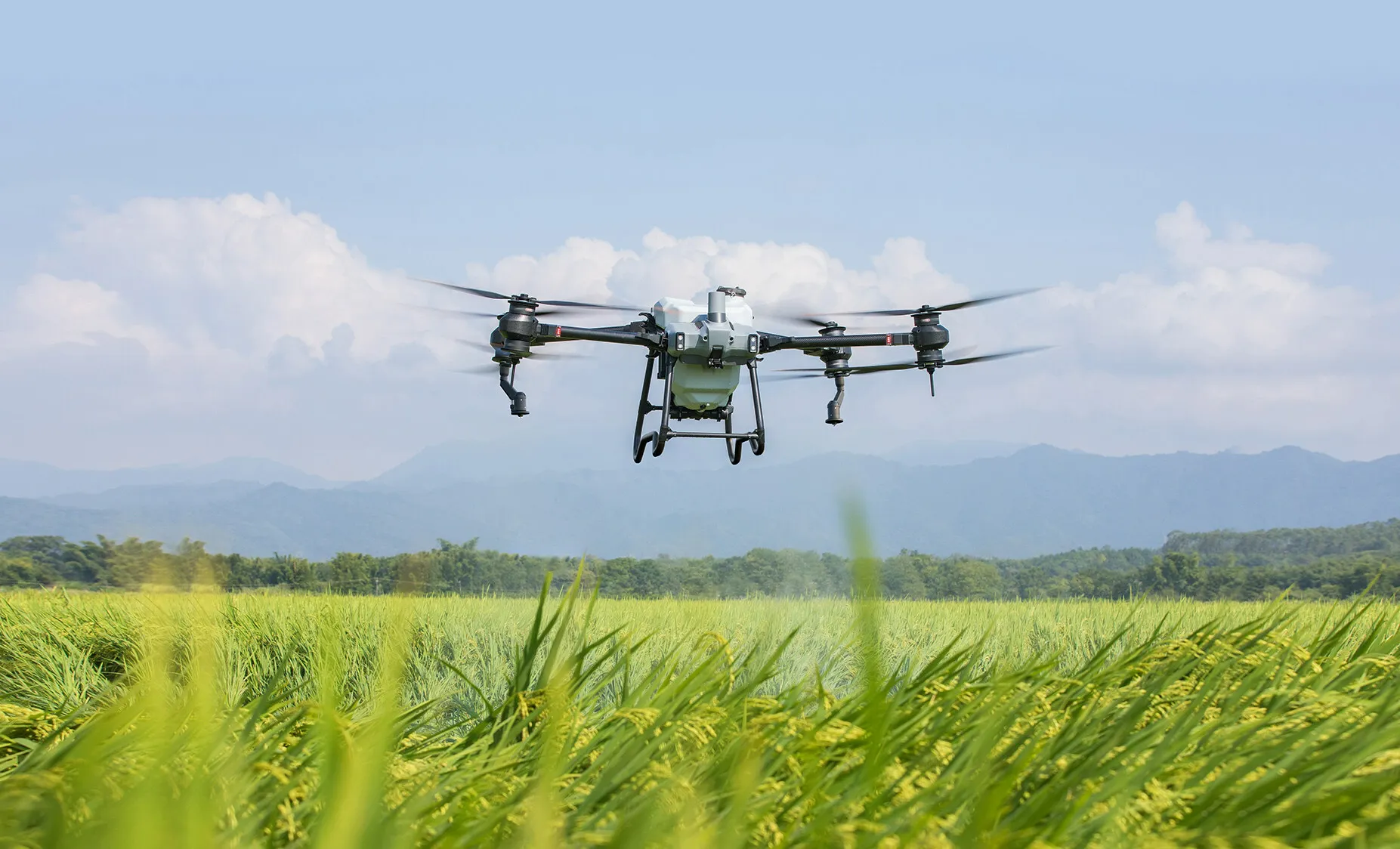
The convergence of Artificial Intelligence and drone technology is racing towards creating a technological renaissance in Indian agriculture, one of the mainstays of the country’s economy and people’s livelihood. This will transform farming with never-before efficiency, sustainability, and profitability levels.
What was once regarded as toy drones is now an inseparable part of agriculture: drones. Equipped with AI, it goes beyond the flying camera aspect to smart airborne platforms that redesign the way farmers grow, track, and manage their crops.
Probably the most significant contribution AI-powered drones can make is in crop health assessment. These flying scouts patrol large fields, taking high-resolution images and videos for sophisticated AI algorithms to analyze and detect crop health problems such as nutrient deficiencies, pest infestation, or diseases at an early stage. Early identification of these issues allows farmers to take proactive measures that reduce crop loss and ensure maximum yield.
Equipped with multispectral or hyperspectral sensors, AI-powered drones raise crop monitoring to a new level. These sensors identify small changes in plant reflectance, which indicates the first signs of stress or disease—quite invisible to the naked eye. This early warning system allows farmers to apply precision spraying techniques, covering only the affected areas and decreasing the dispersion of pesticides in the environment. This, therefore, not only minimises environmental impact but also enhances the sustainability of the farming practices.
By combining predictive AI algorithms with historical yield data, weather patterns, and real-time crop health information, farmers can accurately predict yields. That knowledge helps them work out the best harvesting strategies while optimally allocating their resources vis-à-vis the right decisions regarding crop marketing and, in the process, achieving maximum profitability.
AI-powered drones are changing the way farms are managed. They can build detailed maps of fields, monitor irrigation systems, and even track animal movements. Such data, captured by a drone and integrated into any other farm management software, allows a farmer to get an overall view of the operations. This holistic view lets one recognise inefficiencies, make optimum use of resources, and make informed decisions to improve overall productivity.
Real-life examples prove that AI-driven drones can actually transform Indian agriculture. In Maharashtra, farmers are using them to survey vast fields of sugarcane, track down the pesky Fall Armyworm, and develop irrigation schedules. In the northern state of Punjab, drones help farmers gauge the health of their rice crop and make yield predictions with a reasonable degree of accuracy. Such stories prove that AI-driven drones do have a positive impact on Indian farms.
While AI-powered drones do show vast potential, several challenges persist. Beginning investment cost in drone technology and the skilled drone operators to be involved, much-needed regulatory frameworks—these are all very careful considerations. Nevertheless, increasing affordability and the Indian government’s interest in digital agriculture have gradually overcome such challenges.
The marrying of AI with drone technology in Indian agriculture opens new perspectives toward intelligent precision farming. This synergistic partnership empowers farmers with insights based on data, precision tools, and the capability of making informed decisions toward better productivity, sustainability, and profitability. There can hardly be any denying the potential of these evolving, more available technologies to create a better future in Indian agriculture—they will be the pathway for when innovation and technology come together to nourish a rising nation without depreciating its natural resources. The AI-powered drone is much more than a technological wonder; it enables agricultural transformation and drives in an era of smart farming that would pretty much define the next generation’s future of India’s agricultural landscape.
Source - https://etedge-insights.com