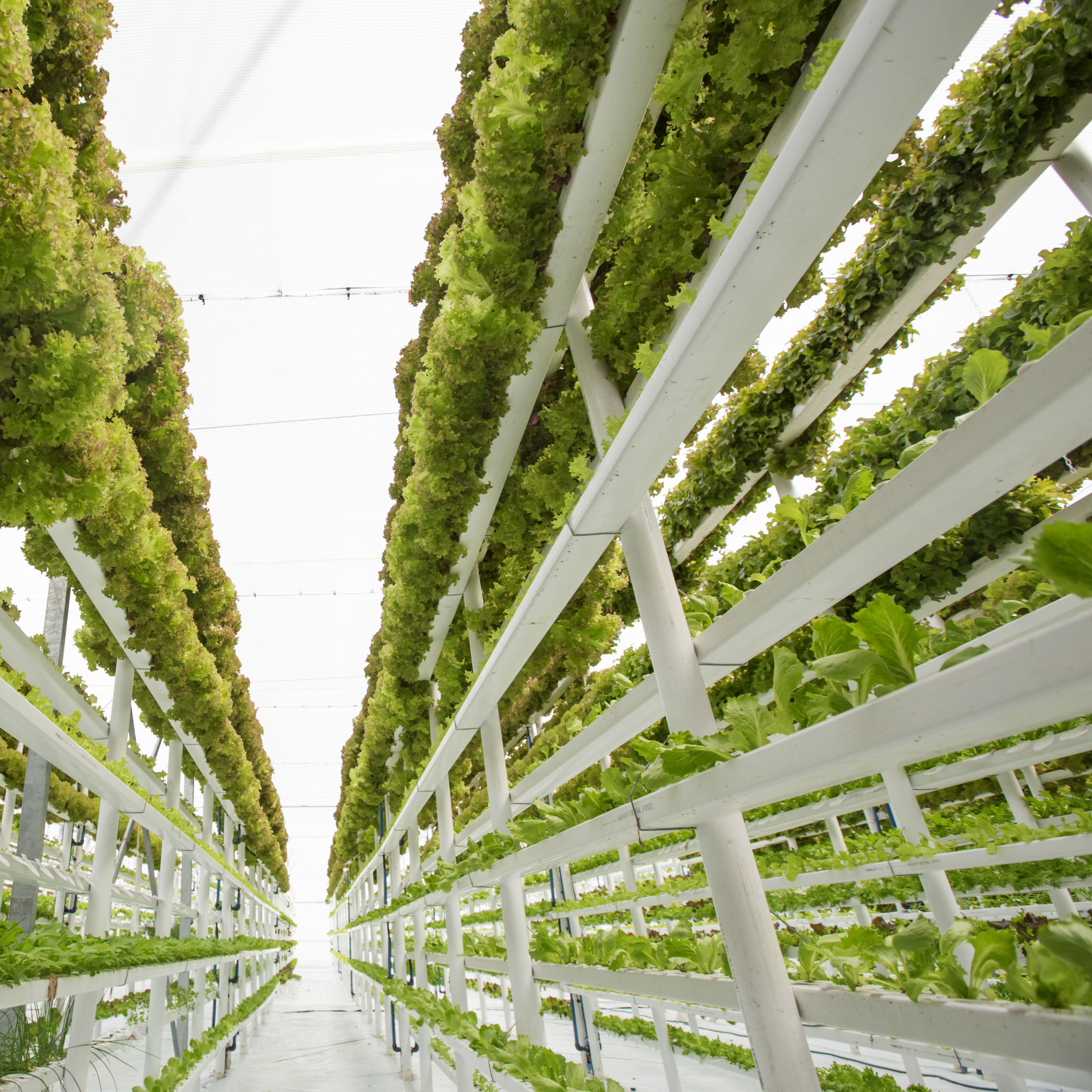
Urban Crop Solutions, based in Beveren-Leie in West Flanders, Belgium, develops technology for growing crops in fully controlled indoor environments. At the initiative of POM West-Vlaanderen, the company took part in a visit to SIAL Paris, one of the world's leading food industry trade fairs. For CEO Jean-Pierre Coene, the visit offered several insights into how food is produced, processed and distributed.
Preservation and logistics
One clear takeaway was the technological progress in food preservation and logistics. Food products are frozen, transported over long distances, and then moved back into refrigerated distribution chains.
"The food industry has become extremely innovative in extending the shelf life of products," says Jean-Pierre. "But at the same time, we have to ask ourselves whether we are investing too much in storing and transporting food for longer, when certain products could also be produced closer to the consumer."
Despite growing attention to sustainability, plastic and tin cans still play a prominent role in the food industry. Cost, shelf life and logistical efficiency remain decisive factors. According to Jean-Pierre, local food production can offer an alternative for certain products. Shorter distances can mean less transport, less need for long-term storage and potentially less packaging.
Food waste as a source of innovation
A second key trend at SIAL was the growing focus on turning residual streams into new food ingredients. Raw materials that were once lost or had few applications are increasingly being processed into valuable ingredients, including for protein-rich food products.
"It's not only about producing more food, but also about handling what we already produce more intelligently," says Jean-Pierre. "That is an important development. The food industry is looking more and more for ways to get the maximum value out of existing raw materials."
Vertical farming as insurance against crop failure
In Jean-Pierre's view, the most important insight concerns supply security in the food industry. Extreme weather and crop failures can seriously disrupt the supply of fresh raw materials. For food manufacturers that depend on a steady supply, the economic consequences can be significant.
He says the discussion around vertical farming is still too often limited to production cost per kilogram. "In many cases, indoor-grown products will be more expensive than crops from conventional agriculture," says Jean-Pierre. "But what if a food company suddenly runs short of raw materials because of a failed harvest? Then the question is no longer just what a kilogram costs, but what it is worth to be able to keep production running."
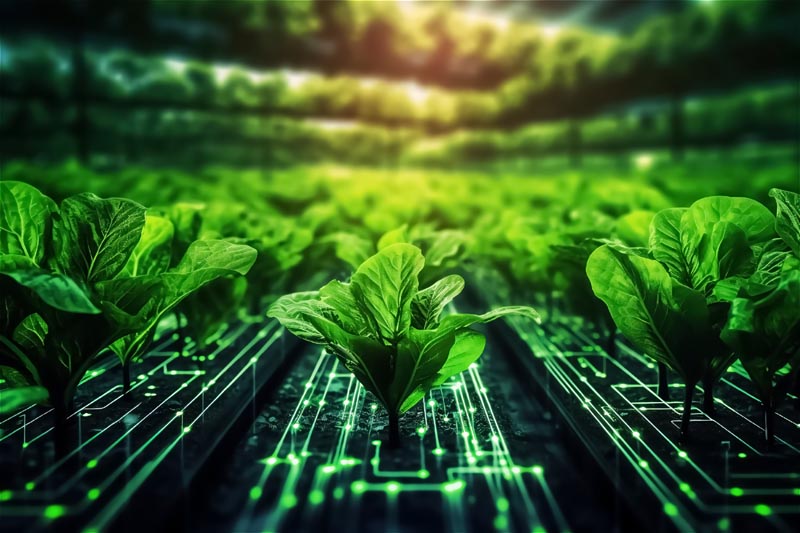
Urban Crop Solutions sees an additional application for its technology here. By growing crops in a fully controlled environment, indoor farming can provide extra production capacity for suitable crops when conventional growers are temporarily unable to deliver.
"We don't believe vertical farming should replace conventional agriculture," Jean-Pierre emphasizes. "On the contrary. We see the future in a combination of conventional farming, greenhouse horticulture and indoor farming. Each technology should be used where it creates the most value."
Complementary to farming
According to the company, this view can also change how indoor farming is assessed economically. For a food manufacturer, a temporarily more expensive raw material can turn out cheaper than an idle production line, missed deliveries or lost customers. In that scenario, vertical farming is not a competitor to the conventional grower but an additional link in a more resilient food chain.
"The question is not whether we should grow all vegetables indoors from now on. The question is where controlled, local production can solve a problem that the conventional food chain cannot always absorb," Jean-Pierre concludes.
The main conclusion Urban Crop Solutions takes from SIAL is that the future of the food supply lies not exclusively in globalization or local production, but in a smart combination of the two. And sometimes the biggest innovation is to make the distance between producer and consumer shorter again.
Source - https://www.verticalfarmdaily.com