

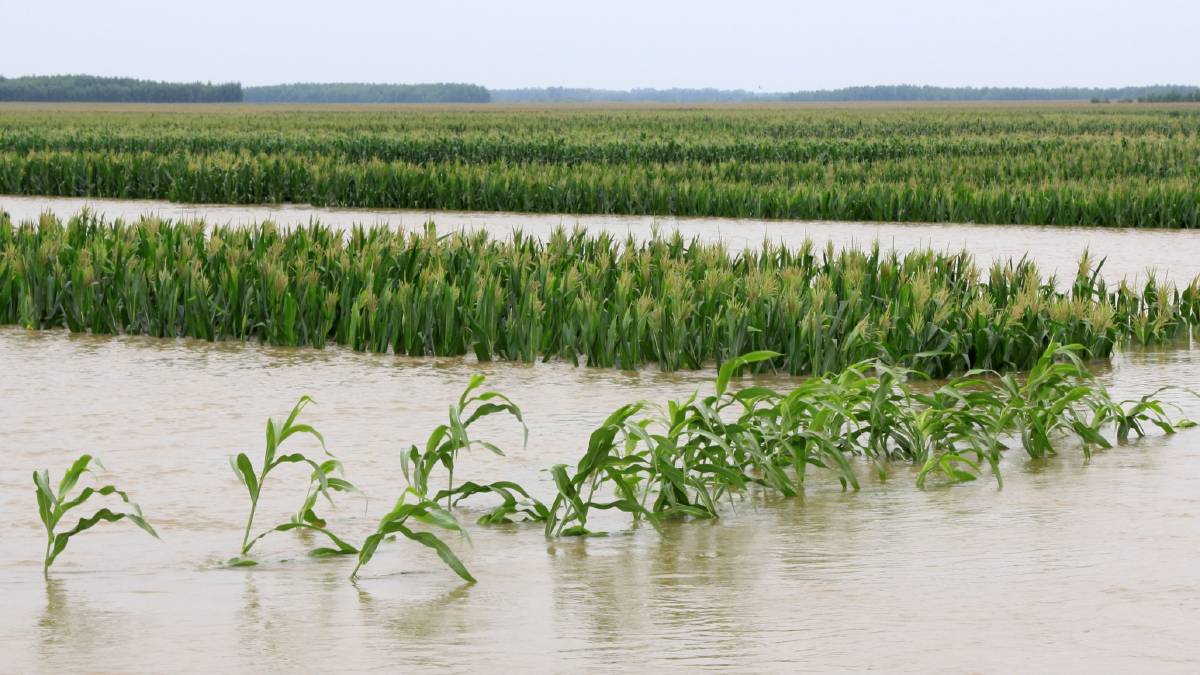
It is not a secret that regular rain is vital for crops to properly grow. Yes, too much or too little rainfall, can be harmful and even devastating to crops.
All serious agriculturists will agree with me that consistent rain is vital for healthy plants while drought can kill both crops and livestock and at the same time increase the soil's susceptibility to erosion.
And, although plants need various amounts of rain to survive, the fact still remains that overly wet soils can cause harmful growth and fungus.
The rains that have been pounding most parts of the country in recent days have naturally triggered various sentiments among stakeholders in the agriculture industry on the backdrop of growing fears that numerous and complex consequences might befall crops and ruin the expected yields.
Farms situated in different parts of the country have in recent days received exceptional amounts of rainfal,l with places like Mvurwi in Mashonaland Central and Karoi in Mashonaland West recording above 35mm in 24 hours.
It will therefore not require rocket science for the discerning individual to acknowledge that excessive rains and the accompanying flooding will initiate a variety of problems for farmers.
In cases of extreme flooding crops have ended up submerged in water resulting in potentially devastating losses. Naturally, the foliage of submerged plants will quickly begin to die because submerged leaves are not able to exchange atmospheric gases (mainly carbon dioxide and oxygen). Crops will not be able to photosynthesise, which leaves them suffocated and starved of vital nutrients.
Flooded or insistently saturated soils tend to have a negative impact on root ability to absorb nutrients. In some cases, root loss can occur as root cells in saturated soils are unable to exchange gases, which can cause them to die.
Levels of root loss differ depending on the period the soil remains completely saturated with total root loss causing plant death and total crop failure. Fractional root loss causes low crop performance and consequently, low yields.
On another front, abnormally high amounts of rain can also trigger leaching of nutrients, for instance, nitrogen that is added to the soil in the form of granular fertiliser.
This makes it vulnerable to leaching. In the event that leaching occurs, farmers will face the costly task of securing extra fertilisers for reapplication or else they experience reduced crop yields associated with nutrient deficiency.
In general, excessive rainfall naturally affects crop productivity in various ways that may include direct physical damage, delayed planting and harvesting, restricted root growth, oxygen deficiency and nutrient loss.
There is also the high possibility of the heavy and persistent rains coming with hailstones that can damage crops like maize and tobacco to disastrous levels. Such an unfortunate development would require the farmer to have insured the crop so that the insurer absorbs the shock and saves the farmer from total losses.
It is, however, unfortunate that the bulk of smallholder farmers here in Zimbabwe and even globally, do not have insurance policies for different reasons.
This therefore leaves them extremely vulnerable to the vagaries of nature that include flooding and excessive rains that end up destroying both crops and sometimes livestock.
The problem is restricted to leaching. The farmer will need to apply top dressing fertiliser as quickly as possible to correct nitrogen deficiencies.
Split application of the fertiliser can also help to keep nitrogenous nutrients available in the soil even in scanty amounts without being totally washed away. The farmer will also need to employ soil and water conservation strategies, for instance, potholing or even introducing tied ridges in worst case scenarios to improve water infiltration and drainage.
Meanwhile, research findings have since demonstrated that although all plants and crops in general need rains, excessive quantities can affect yield as much as excessive heat and drought can do. Excessive rains and drought are equally dangerous to crops, as both can cause total loss when they occur.
In fact, there is an ideal amount of rainfall in any given growing season for most crops and if the average rainfall is much lower or higher than the ideal, this can create significant problems ranging from drowned crops to lower yields.
Usually, when there is a flooding crisis or drought, the farmers' focus is on finding ways to mitigate the harsh effects of the two on the crops.
The soil is in most cases the last to get that concerted attention except in cases when it would have been ripped apart to the point of needing to be patched up.
The reality of the ground is that the soil is also not spared by excessive rains, as nutrients can run off if it is too wet or too dry, which leaves plants unable to access them causing poor growth and overall health.
It will also need to be rehabilitated immediately to salvage the crops that would survived the calamity.
Physically, flooded or wet conditions can prevent farmers from accessing the fields with necessary equipment, which may trigger dramatic drops in yields if the required crop care cannot be administered.
Activities such as weeding and chemical spraying will not be possible at the time they are direly needed, which impacts negatively on the yield.
Farmers with flood damaged crops need to scout their fields for weed and disease problems and make a cost-benefit analysis as soon as fields are accessible to determine the economic feasibility of corrective action.
Of course, persistent flooding will cause disruptions in activities such as scouting and the timely application of pest control measures, leading to increased pest and disease pressure.
It also comes with increased seed and seedling diseases leading to poor and uneven stand establishment and additional disease pressure in crops.
But working on wet soil is not advisable as it results in compaction of soil, leading to shallow-rooted, low-vigour crops that may be less resistant to other types of stress.
Working wet fine-textured soil may be useful at a particular moment but normally has significant, long-term, negative consequences that are difficult to reverse. This can compromise the soil structure and lead to compaction.
Compacted soils are infamous for their numerous follow-on effects that include additional energy costs, limited internal drainage, minimal aeration, smaller root systems and, more importantly, low yields.
In extreme cases of disease or pest infestation yet the weather cannot allow the application of crop protectants using ground equipment, farmers with the resources can even consider aerial applications.
However, insecticide applications should not be made without having done some scouting to ascertain the presence of the pest to be controlled. The scouting can even be restricted to the edges of the field to ensure the right chemical is used for the correct pest.
At times heavy rains are a blessing in disguise, as they can eliminate pests such as aphids, mites, thrips, and small exposed caterpillars such as young maize stalk borer larvae.
The advantages of damp weather do not end there, as it creates conducive conditions for the emergence of diseases such as Beauveria that can infect and kill insect pests.
Source - https://www.herald.co.zw










