Zimbabwe launches digital livestock tracking system to boost transparency and national food security

25.06.2025 278 views

Each livestock owner will receive a physical card embedded with a unique identification code linked to a digital database.

The Government of Zimbabwe has officially introduced a new digital livestock tracking system designed to modernise animal record-keeping, improve disease surveillance and support national food security efforts. This is reported by The Herald, a partner of TV BRICS.

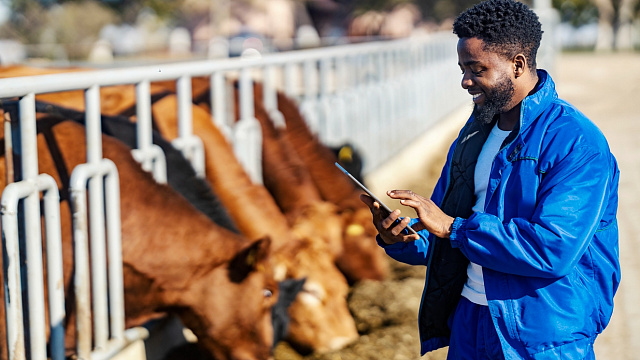
The innovative platform combines a physical stock card with a digital interface to offer real-time insights into livestock populations and movements across the country.

The initiative, led by the Directorate of Veterinary Services, is set to replace the outdated manual livestock registry with a secure and efficient solution. Each livestock owner will receive a physical card embedded with a unique identification code linked to a digital database.

This system is accessible via both mobile and web-based applications, allowing farmers, veterinary professionals and relevant stakeholders to access and manage livestock information remotely. It will record key data, including animal identification and ownership, health history, breeding details, movement permits and sales records.

According to the source, the digital system is also aligned with Zimbabwe’s Vision 2030 goals, aimed at driving economic growth and enhancing national well-being through technological innovation. Key features of the new card include a unique serial number, an anti-counterfeiting watermark, and the capacity to record comprehensive demographic data on cattle, goats, sheep, poultry, dogs and donkeys.

Furthermore, in preparation for the national rollout, the DVS has initiated training programmes to equip veterinary personnel with the knowledge and tools needed to manage the digital registration process and assist farmers.


Source - https://www.thezimbabwean.co

23.08.2026

USA - Pennsylvania Opens $10M Aid Program for Freeze-Hit Growers

Pennsylvania will open a $10 million disaster-relief program Aug. 24 for fruit growers facing an estimated $150 million to $200 million in losses from a spring freeze, Gov. Josh Shapiro reported Thursday during a visit to an Adams County orchard.

23.08.2026

A year of change in Polish agriculture

Minister Krajewski highlights support for farmers and stronger agricultural resilience.

23.08.2026

Nepal - Hunting permits issued to protect crops from wildlife in Arghakhanchi

Amid growing damage to crops and increasing human-wildlife conflict, a system allowing the legal hunting of certain wild animals has been introduced in Arghakhanchi.

23.08.2026

Spain - Barrachina highlights 35.3 million in agricultural insurance for 21,000 professionals in the field

The Generalitat allocates 35.3 million to agricultural insurance in the Valencian Community to support 21,000 farmers and ranchers against increasing risks.

23.08.2026

India - Sodiem locals seek FIR against WRD over paddy crop damage

The Siolim-Sodiem gram sabha on Sunday resolved to initiate criminal action against the Water Resources Department (WRD) over damage to ready-to-harvest paddy crops allegedly caused by leakage and seepage from the Tillari canal.

23.08.2026

India - Bhilwara farmers face crop loss as yellow mosaic virus hits pulses

Farmers in Bhilwara district are in distress due to an outbreak of yellow mosaic, commonly known as yellow disease, affecting their pulse crops. 

20.08.2026

Philippines - Farm damage from ‘habagat’ and serial storms hits ₱1.7B

The agricultural damage caused by the recent typhoons has soared to more than P1.7 billion, affecting over 50,000 farmers and fisherfolk, according to the Department of Agriculture (DA).

20.08.2026

India - Tech Guard For Farms: MIT Muzaffarpur Students Develop AI Device To Protect Crops From Nilgai

For years, farmers in Bihar have relied on scarecrows, fencing and constant vigilance to protect their crops from nilgai, wild animals and birds. But these measures often lose their effectiveness as animals gradually learn to ignore them.