NEWS
820
of 1225
News
15.12.2016

Kenya - Tea estates in Nandi face Sh150m annual loss after protesting workers burn farms

Multinational tea companies in Nandi County stand to lose Sh150 million annually for the next four years after protesting workers set 70 acres of tea bushes on fire following a pay row. The managements of the affected tea plantations have disclosed that the burning of the two farms last week has impacted negatively on their revenue generation and operations. “The two tea plantations generate an average of Sh12.5 million monthly translating to Sh150 million yearly and it will take four years before the burnt tea bushes regenerate,” said a senior manager who requested not to be named since is not authorised to speak to the media. The companies are still assessing the damaged tea plantations to determine whether they will be uprooted and replaced with fresh crop or they will be left to regenerate. However, normal tea picking and processing have resumed at Kapsumbeiwo Tea Factory that was hard hit by the protests by the workers who were demanding the implementation of a 30 per cent salary increment. The workers were awarded the pay rise six months ago by the Industrial court in Nairobi. The pay rise was to be implemented in two phases of 15 per cent each. But some tea companies moved to court to challenge the pay rise arguing that it will lead to increased operational costs and subject them to losses. Independent sources indicated that over 700 workers were sacked at Kapsumbeiwo Tea Estate for participating in the strike and absconding from duty. More than 2,000 permanent and casual workers were sacked by the tea companies and ordered to vacate company houses. But the workers' union obtained orders from the Industrial court restraining the tea companies from sacking more workers. REINSTATE SACKED WORKERS The court further ordered the tea companies to reinstate the over 2,000 sacked workers and restrained them from evicting the employees from company houses. Justice Njagi Marete stopped Eastern Produce Kenya (EPK) from dismissing more workers. The Kenya Plantation and Agricultural Workers Union (KPAWU) moved to court last week after Kapsumbeiwo Tea Estate sacked some of the workers who participated in two-day protest to demand pay rise. The union’s national deputy secretary general Thomas Kemboi and Nandi branch secretary Eliakim Ochieng sought the court orders after the tea companies summarily dismissed some the permanent and casual employees for participating in the strike. Kenya - http://www.nation.co.ke
15.12.2016

Australia - Satellites and scanners to boost mango harvest

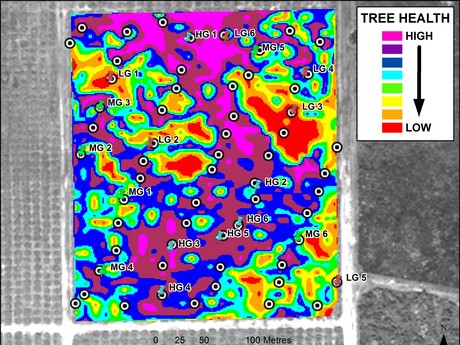
Researchers and Northern Territory mango growers are combining high-resolution satellite imagery with data from hand-held fruit-scanning guns to better map variations in tree health, crop yield and fruit maturity. If successful, the results could help growers more easily determine optimum picking times, and ensure the most efficient use of labour. The trial research, which is supported through Horticulture Innovation Australia as part of the Federal Government’s Rural R&D for Profit program, is taking place across two Northern Territory farms. Horticulture Innovation Australia Chief Executive, John Lloyd, said the application of the Near Infrared Spectroscopy (NIRS) gun – which measures fruit dry matter content, and therefore maturity – with satellite imagery is an exciting prospect. “Now the Top End mango season is in full swing, researchers are gathering vital ground and satellite data that could make future harvests a little easier in the not-too-distant future.” he said. Mr Lloyd said crop monitoring tools such as the NIRS gun and satellite technology are evolving rapidly. As such, this trial provides a unique opportunity to not only integrate these technologies for more comprehensive results, but also to ensure the Australian mango industry ‘keeps up with the Jones’s’ in terms of evaluating and adopting new technologies. “There’s a huge potential for efficiencies through this research. Growers could save time and money by easily directing pickers to the most mature, highest yielding areas of their farms just by looking at a map,” he said. “The potential is also there to more accurately predict yields weeks before harvest to help guide marketing decisions and address any weak spots in crops prior to the season kicking off.” Grower Tou Saramat Ruchkaew, who has had the researchers on her farm the past three weeks, said the potential for efficiencies is exciting: “If we could predict our production we would be able to plan everything: ordering boxes, transport, telling suppliers and organising labour. At the moment we have to respond on the spot.” Fellow grower and trial site owner Martina Matzner said she is highly supportive of bringing new ideas to horticultural research on farms: “Using this sort of modern technology could make farming a more attractive business to work in – and I want to be part of that.” The research combines the collaborative efforts of co-investors the University of New England (UNE) and Central Queensland University (CQU), with input from the Northern Territory Government, growers and the Australian Mango Industry Association. CQU Professor Kerry Walsh, who has conducted extensive work developing the NIRS gun technology, said the research provides a taste of what is yet to come: “We are really only scratching the surface. This latest development is an easy-to-review data map that hasn’t previously been available to farmers. Next, we’ll look to relate differences to field variables and expand into other crops, including avocados.” Project leader, UNE Associate Professor Andrew Robson, said this trial complements a national initiative that is investigating a range of technologies, including satellite imagery, as accurate tools for mapping tree health, yield, quality, pest and disease across a number of tree crops including mango, avocado, macadamia and banana. ”We’re happy to arm Australian horticulture growers with NIRS satellites and guns if we can demonstrate that these technologies can improve productivity as well as on-farm efficiencies,” he said. Source - http://www.freshplaza.com

15.12.2016

India - Farmers upset over delay in settlement of insurance claims

Resentment prevails among apple growers over delay in settlement of claims under the Weather-Based Crop Insurance (WBCI) scheme for the financial year 2015-16. Farmers rue the claims finalised by the insurance companies were negligible despite poor crop yield. The state produced 2.10 cartons of apple this year. Sources said as many as 1.28 lakh farmers had sought insurance claims under the WBCI scheme in 2015-16, for which the state government had engaged the AIC, HDFC, ICICI Lombard and IFFCO. Lakshman Thakur, chairman, Ecohort Society of Farmers, Nandpur, said, “It is shocking we are not getting even half of the premium paid to the companies this year under the WBCI scheme. It was one of the leanest crop years as the weather remained dry from December 2015-July 2016.” Farmers claimed lack of mandatory chilling hours, rains and snowfall along with high velocity winds and hailstorms damaged apple trees in Shimla, Kullu, Mandi and Kinnaur districts. They rued the claims finalised by the insurance companies were too little. They further maintained damage due to fire was not covered under the WBCI scheme despite the fact that dry weather conditions led to outbreak of wild fires. BS Guleria, deputy director, Horticulture Department, said the claims would be paid by December end and the list was being finalised. “We covered the risk of crop loss due to high velocity winds, but not wild fire”, he said. He said the claims were finalised on the basis of weather data, adding, the policy aimed to cover the risks, notified by the government, the loanee farmers suffered due to adverse weather.Meanwhile, the Agricultural Insurance Company Ltd has blamed the state government for delay in settlement of claims stating it has not paid 50 per cent of its share to the company. Jaspal Singh, regional manager, AIC, Chandigarh, said, “The state government has not sent any information about the claims finalised by the other private insurance companies engaged by the state for the year 2015-16 so far.” The state government has asked farmers to pay the premium for FY 2016-17. Its deadline expires on December 20. Source - http://www.tribuneindia.com

15.12.2016

USA - System to detect CBS in citrus groves

The Citrus Black Spot (CBS), caused by fungus Guignardia citricarpa, was detected in Florida, near Immokalee, in the spring of 2010. It is a disease that affects both quality and yield, so much so that it is considered the most destructive citrus fruit fungus in the world. The symptoms are the black spots and lesions on the skin, and that is why fruit affected cannot be sold on the fresh market. In addition, the most serious infections could lead to drops, thus drastically reducing yields. Even the fruit that does not show symptoms when harvested can still develop the disease during transport or storage. CBS lesions often appear during ripening, as early as two months before harvesting. In addition, warm temperatures and sunlight can increase the number of lesions. The two main sources of inoculum are infected decomposing leaves left in the grove and lesions on branches, fruit and leaves. The disease can be transmitted to healthy plants through wind and water. In order to monitor the disease, infected trees should be identified, preferably during the first stages of the infection, so specific effective treatments can be employed. Image sensor (5-band cameras). (a): two mirrorless Canon M10 cameras on a bracket and shutter controller. (b): 5-band imaging system mounted on a robot for autonomous field inspections. Researchers at the University of Florida introduced a detection system based on a multi-spectral NIR imaging system that can identify fruit with CBS lesions directly at the grove. In the lab, the system identified infected citrus fruit with a 100% precision using only information on colour. An image analysis algorithm was developed to distinguish potential spots and confirm whether they are CBS lesions. Morphological characteristics were taken from potential spots in all their colour components. The algorithm can determine whether a fruit is CBS negative or positive. This method can diagnose CBS directly in groves and it is not only effective but also economically accessible. Source - http://www.freshplaza.com

15.12.2016

USA - Insurance industry expanding drone use

The use of drones is enhancing the ability to spot issues developing in farm fields. Country Financial is among the insurance companies looking for the most ways to benefit from the capabilities of drones, also known as unmanned aerial vehicles or UAV's. The company held a seminar Tuesday at the Macon County Farm Bureau office in Decatur to update area farmers on its latest uses for drone technology and possible changes to crop insurance coverage. The ability to use drones is helping to identify issues in fields more quickly than traditional scouting methods from the ground and share the gathered information with customers, said Todd Manning, a Country crops claims coordinator. “We're still going to have boots on the ground,” Manning said. “What we see will ease the peace of mind that everything is being looked at. It keeps getting better but it won't replace people in the field.” Manning said drones have been used to see areas of damage in the middle of corn fields that can't readily be spotted from the road and guide those interested to that area for further inspection. “We didn't see any of this,” Manning said while showing a photo of a field with evidence from the air of grain snap and wind damage. “It looked like a healthy corn field.” It's not always easy to reach some areas on the ground, as hazards such as flooding could get in the way, he said. Besides agriculture, Manning said other potential uses of drones for insurance companies include inspections on roofs of buildings. Drones in general are increasing in usage as regulations of who can operate the systems has changed, Manning said. New regulations allow for system operators for commercial purposes to pass a test and receive a certificate rather than being a licensed pilot. As the use of technology used in identifying claims expands, farmers also have more information to consider when choosing amounts crop insurance coverage. Farmers have been protected by the ability to choose higher levels of coverage, said Doug Yoder, Country crop agency manager. More insurance plans now can be based on an enterprise level rather than relying on county numbers, Yoder said. That allows for farmers to benefit from more cost savings, Yoder said. “We know we need the coverage,” Yoder said. “We don't lose a third of the crop very often in this area. Farmers shouldn't voluntarily lower coverage levels. We're going to need every dollar we can get.” Farmers have until March 15 to buy crop insurance for the next growing season. Yoder said crop insurance will once again be in question as discussion on the next Farm Bill begins. The Farm Bill enacted in 2014 is due to expire in 2018. Source - http://herald-review.com

14.12.2016

Peru - Drought threatens mangos and avocados in Casma

A water shortage has jeopardized the mango and avocado Hass seasons in the province of Casma, said the mayor of this jurisdiction, Joseph Perez Mimbela. He said that the delay in the rains had affected at least 12,000 hectares of mango and 6,000 hectares of hass avocado. Perez Mimbela stated that the crops where drying due to the lack of water, which put the investment made by rural men in this part of the region at risk. "Not all farmers have access to irrigation technology," he said. He also said that 11 districts had formed the Commonwealth of Municipalities of the Casma River Basin. Source - diariocorreo.pe

14.12.2016

Zimbabwe and climate change

As climate change is looking to cause major problems around the world in the distant future, a village in Zimbabwe is already feeling the impact. Chibuwe receives the least amount of rainfall in the country, with levels ranging from 300mm to 500mm per year. This is causing droughts in the area and is leading to difficulties farming. At present, some can get by farming bananas but that isn't a long term solution. Bananas are also susceptible to the ever increasing droughts, making for an unreliable crop. All is not without hope, however. There is a multi-million dollar strategy from the government looking to aid affected areas. Climate Change Director in the Ministry of Environment, Water and Climate, Mr Washigton Zhakata has applied to the green climate fund for funding of $80 million. The funds are to go towards a project which is planned to begin in 2018. It boasts the potential to benefit 1.5 million people directly, once in full motion. The plan is to increase the climate resistance for farmers by retrofitting existing irrigation systems and building new ones to create more dependable water access for farmers. They also hope the project will increase the number of small, self-run farms in the area and increase food surplus. By doing this they hope to increase the well being of selected communities. Source - herald.co.zw

14.12.2016

USA - SC Peanut Growers, Buying Stations Talk Crop Loss After Hurricane

Hurricane Matthew created a second year of tough harvest conditions for South Carolina farmers. Producers say the damage in the northeastern part of the state was mostly concentrated in cotton and peanuts. A new batch of runner peanuts are disappearing into the pit unloading at Pee Dee Peanut, a buying station in Mullins, S.C. It’s a sight co-owner Dupree Atkinson is thankful he’s seeing, considering tough back-to-back harvests for peanut growers. “This is probably the most historic rain event I’ve ever experienced in my lifetime,” said Dupree Atkinson. “This year coupled with last year is a difficult hardship for farmers around here.” The southeast experienced extreme heat as well as a hurricane in 2016. “We didn’t lose a lot of soybeans; we lost peanuts and cotton from this flood,” said Johnson Atkinson, a relationship manager with Arbor One Farm Credit. Growers like Neal Baxley couldn’t dig in time. “It’s really disappointing on the peanuts,” said Baxley. “We had such a promising crop.” In September, Baxley said his area in Marion County received 15 inches of rain. When Hurricane Matthew hit a month later, that same area saw 20 inches in 24 hours. While 2016 hasn’t been easy, the hardships started back in 2015. Growers in northeast South Carolina had too much rain and it didn’t end until December. This year, growers say the rain stopped after Matthew. In 2015, the peanut crop experienced a quality issue, according to Dupree Atkinson. In 2016, the problem was quantity. “30 to 50 percent of our peanuts were going Seg. 2,” said Dupree Atkinson. “Farmers were losing $300 a ton. Whereas this year, farmer who were picking peanuts before the storm were averaging right at 3,800 [pounds] to two tons to the acre.” The two tough years is a reduction for buying stations. Dupree Atkinson said Pee Dee Peanut is experiencing roughly 38 percent loss of peanut volume this year. It was roughly 20 percent loss of volume last year from expected yield. “If you take out last year, this station was buying pretty much two tons of the acre,” said Dupree Atkinson. “This year, we’re going to buy 2,800 pounds of the acre.” As trucks continue to unload, Dupree Atkinson is thankful but hopeful for a new season. “There’s just something different about the breed of a farmer that makes them want to go and do and challenge of trying again,” said Dupree Atkinson. It’s a feat growers continue to tackle year after year and hope Mother Nature cooperates. The area had so many Seg. 2 peanuts last year which were unmarketable, however, China made a huge purchase which helped clean the market out. Atkinson said one peanut loss per square foot is a 40-pound loss per acre of runner peanuts. He said the station saw those losses this year. Source - http://www.agweb.com

14.12.2016

India - Farmers urged to apply for crop insurance

With the government declaring six taluks of the district drought-hit, Deputy Commissioner P. Meghannavar has urged the farmers to apply for crop insurance scheme under the Prime Minister Fasal Bima Yojana. Speaking after inaugurating a seminar on the new scheme here on Monday, he said that the farmers should make use of the scheme to get higher compensation, mainly when the district was facing drought. “The insurance scheme primarily helps the farmers during natural calamities. Therefore, the district which is already reeling under drought, the loss could be recovered to a considerable extent if the farmers apply for the scheme,” he said. He directed revenue officials to hold extensive awareness programmes in all the 198 gram panchayats of the district to bring more farmers under the cover. He said that the officials must hold the meeting like a gram sabha where farmers should be encouraged to participate in large numbers. During the meeting, the farmers should be told how to fill up the form and complete other formalities. Mr. Meghannavar said that already of the targeted 2 lakh hectares, sowing was completed on 1.87 lakh hectares, and said that since it was feared that a significant part of the crop may wither away, it was strongly recommended to the farmers to apply for insurance. He said that for rabi crop, the last date for paying premium was December 31 and for kharif, the date was February 28, 2017. He said that since a limited time left for Rabi season, the officials should not waste time and get on to work to ensure most of the farmers apply for the scheme. He however informed that those who have obtained crop loan, the insurance was mandatory for them. Mr. Meghannavar said that those officials who get at least 500 farmers cover under the scheme in a gram panchayat, would be felicitated in the Republic Day programme. ZP, CEO Vikas Suralkar, JD Agriculture, Ramesh Kumar and other revenue officials were present. Source - http://www.thehindu.com

14.12.2016

Chile - Fruit exporters are worried about the rain

The President of the Association of Fruit Exporters of Chile AG (Asoex), Ronald Bown, said the industry was evaluating the situation in the production areas that were affected by yesterday's rainfall, which lasted until this morning, mainly in the regions of Atacama, Coquimbo, Valparaiso, Metropolitana, and in the northern part of the region of O'Higgins. Bown said that according to the report prepared by the Fruit Development Foundation (FDF) based on data from Agroclima, the rains were moderate and had volumes that ranged between 1 mm and 9 mm in Cabildo, Petorca, Quillota, La Cruz, Quillota, Casablanca, Llay-Llay, and other surrounding areas. Meanwhile, the rainfall reached 10 mm to 21 mm until 10:00 hours in the areas of Putaendo, Calle Larga, Rinconada, Curimon, Santa Maria, San Felipe, and Los Andes,. Moreover, in the Andean foothills of San Esteban, agroclima.cl, recorded 45 mm of rainfall. "The main concern in this region (Valparaiso) focuses on the situation of the first varieties of table grapes that will start being harvested at the end of the year, mainly in the Aconcagua Valley. Hopefully, the rains won't have significantly affected the crops because the harvest hasn't begun. However, the damage will be evaluated during the next few days. In addition, we should check if it's necessary to conduct preventive measures against possible rots, which would mean an additional cost for producers," Ronald Bown said. In the Metropolitan Region, the highest rainfall was concentrated in the residential areas at the foot of the mountains, while the communes of Buin, Paine, Melipilla, and Huelquén, only received 1 mm to 7 mm of rainfall. Pirque, however, recorded 16 mm of rainfall. "The blueberry and cherry harvest is almost complete in this region. Producers of stone fruit, kiwi, and table grapes should also conduct appropriate preventive actions to avoid rots, as these harvests occur in spring and summer," said Bown. In the North The rainfall recorded in the Region of Atacama, specifically in Copiapo, indicates that the rains had a low intensity in the mid-Valley sector and in the fields of Alianza with 0, 6 mm and in Hornitos with near 3.5 mm. Meanwhile, the rainfall in the upper valley was a little more intense, especially in the high mountains where producers also expect snowfalls. As a result, the crops in this area are on hold pending the corresponding applications. According to reports, the rain in the Region of Coquimbo, in the areas where the table grapes are being harvested, such as El Palqui, was not very intense and only averaged 0.5 to 0.6 mm. The rains in the high mountains were stronger, so the sector expects that there will be a greater accumulation of water in the region's irrigation dams. To the South According to Agroclima, the rain in the Southern regions, such as in O'Higgins, were very low and there was a weak drizzle in Rapel, San Francisco de Mostazal, and La Estrella, with recorded levels below 1 mm. South of O'Higgins, the rains didn't affect the fruit producing areas. Source - http://www.freshplaza.com

14.12.2016

Spain - High tech irrigation system a success

The fruit cooperatives of Girona have been adapting to climate change for several years. The reduction of water resources and the rising temperatures have forced the agricultural sector to react to these changes that are directly affecting their activity. One of the sector's adaptations has been to implement the Giroreg irrigation programming system at the plot level, which is based on high frequency measurement of the soil's water content, and that is managed with the criterion of the Internet of things. The system, which is already being increasingly implemented, systematically measures the soil's water content in the most diverse climate, soil, and varietal diversities in 42 pilot farms. This information is then transmitted via GPRS technology to an  expert cloud system called Aquafruit. This system integrates the weather forecast for the next seven days and plans the irrigation schedules of the pilot farms based on data from the probes installed in them. It also creates irrigation schedules for farms that don't have the probes installed, by integrating the information it receives from the pilot farms. In some cases, this expert system automatically programs the farms irrigation system, without the intervention of the farmer. This system allows producers to save more than 20% of their water without affecting the production's quality or quantity.   Anti-hail nets in summer to prevent damage from solar radiation  Producers of sweet fruits from Girona cover their crops with anti-hail meshes during the summer months to significantly reduce the damage that solar radiation has on apples. Currently, nearly 50% of the apple production area the Poma de Girona IGP is under these protective meshes. Source - iagua.es

13.12.2016

India - CropIn improves farmers’ lives with data analytics and digital apps

Ramesh, a farmer in the southern region of Punjab grows potatoes in his farm. Today, he gets accurate information on when to sow the crop, the temperature around his farm, the right mix of chemicals required, how to tackle crop infection, if any, and finally the time when the potatoes will be ready to harvest along with their quality, size and the overall quantity of yield. The application that Ramesh uses is called SmartFarm, a data-driven farming solution created by Bengaluru-based CropIn Technology. For farmers like Ramesh, and other large companies like ITC, Mahindra & Mahindra, McCain etc., the solution is transforming a once cumbersome and unreliable process—into something intuitive and, crucially, effective. Ad: 67% of IT professionals believe mobility will affect businesses as much as the 90s internet boom. Has your business embraced mobility? “There were great developments happening in ICT solutions in the last two decades. However, there was no company that offered solutions for agri business. That’s when we decided to bring cutting-edge technology for every acre of farm and provide access of it to every farmer possible,” says Krishna Kumar, Founder and Chief Executive, CropIn Technology Solutions. Ripe for the picking CropIn created a web and mobile application that includes enterprise resource planning and business intelligence for the agriculture sector. Using geo-tagging, analytics and data science tools, the solution provides insights like field management consultation and technical assistance on agricultural data to farmers, contract farming companies, NGOs and government bodies to help them improve their crop productivity. Ad: India is among the key global cloud markets that is set to be worth $10 billion in 2020. Have you invested in cloud yet? For contract based farming companies or NGOs, there are field managers who constantly assess the produce and the harvest and identify the problems. For example, if there are pests in the farm, the farmer takes picture of the damaged crops, records a voice message and shares it with the experts for diagnosis, who then respond without visiting the farm. “Farmers are now getting better quality and more produce from their farms. Banks and insurers are ready to provide them with crop loans or insurance. For export companies they now have a tool to manage their operations, make crops traceable so that harvested crops meet global quality standards,” says Chittaranjan Jena, CTO, CropIn. With their predictive data analysis to farmers the company has been able to cut down farmer revenue losses by 18 percent. “There is benefit for every player in this ecosystem, be it the farmer, or a contract farming company, or an insurer,” says Kumar who envisages that around 20 million farmers in the next five years will use their technology from the current one million. Ad: Moving to the cloud has helped 82% of enterprises save money! Has it helped yours? CropIn is currently working in 18 states in India and plans to be in around 18 countries in the next 12 months. “Our client retention rate is at 92 percent and is spread across geographies and around 100 varieties of crops. With current solutions of our applications, we are defining the norms of product traceability in India and globally. Our apps can be customized to help small farmers and large corporates intuitive to use,” says Siddhartha Choudhary, Chief Revenue Officer, CropIn Technology. The company is also working on an artificial neural network model for farmers. Ad: 56% of IT workers calling the shots believe BYOD has transformed their work culture. Has your organisation witnessed this change? “We will have enough data for a localized area, for example, last ten years of weather information, crop trends, satellite images etc. This data will get enriched over a period of time, and the model will be self learning. It will provide value to farmers in and around that localized area, and also to others across India and the globe to reap farming benefits,” explains Kumar. Source - http://cio.economictimes.indiatimes.com

13.12.2016

India - New crop insurance policy to help grape growers

A recent change in policy for crop insurance is providing a much needed relief for grape growers in Karnataka, India. The new policy changes crop coverage due to weather related losses, which have recently affected many farmers in the area. According to the amendment, the insurance company would consider the gram panchayat as a base area for assessing the damage, not the taluk. Farmers are also happy to see a smaller premium than usual on the insurance. Normally they would have to pay a much higher premium but this year the number is 5%. The Union government is planning to shoulder the remaining costs on the farmers' behalf.  One farmer said that, till last year, grape farmers had to pay nearly Rs. 25,000 an acre as insurance, but from this year it will be around Rs. 9,000 for around 2.47 acres. He also stated that of the 21,000 hectares in the State under grape cultivation, over 10,000 hectares of land is in Vijayapura. “We hope the new scheme will help grape farmers who have had to grapple with natural calamities for years in the drought-prone north Karnataka region," Source - thehindu.com

13.12.2016

UK - "Cabbage moths" destroying Brussels sprouts crops

Children may want to thank moths this Christmas. An infestation of the so called cabbage moth is ruining crops of Brussels sprouts. However, this is not good news for farmers in the affected area. Supplies of the vegetable are running low and several farmers have had their crops completely decimated. It is feared the insects have arrived in large numbers which could cause further trouble for growers this season. "For this much damage to be caused they must have arrived in large numbers and these farmers appear to have been very unfortunate and unlucky," Charlie Gallichan, of Woodside Farms in Jersey, said. Source - telegraph.co.uk

13.12.2016

India - Karnataka’s rabi crop losses estimated to be around Rs. 10,000 cr

Even as Karnataka is yet to get get Central aid for taking up relief works including compensation towards crop losses due to the failure of south-east monsoon, the loss due to the failure of north-east monsoon has been estimated to be around Rs. 10,000 crore. Revenue Minister Kagodu Thimmappa told reporters here on Monday that crops on eight to 10 lakh acres of land had wilted during the rabi season. The State would submit a memorandum to the Centre sometime in January or February seeking aid to compensate for the crop losses during the rabi season. Taking exception to Prime Minister Narendra Modi not giving an appointment to Chief Minister Siddaramaiah to convince him about the need to release Central aid at the earliest to take up drought-relief measures, the Minister termed this as an insult to people of the State. Answering a query on delay in completing the survey work of farm lands, the Minister said the situation was expected to improve in about three months from now when the process of recruitment of about 1,600 surveyors would be completed. Source - http://www.thehindu.com

13.12.2016

India - Will ensure that crop insurance covers entire loss

“We will ensure that crop insurance is not merely a relief but it covers the entire loss due to destruction of crops,” said rural development minister Gopal Bhargava at a programme organised here to disburse insurance claims amounts to farmers. The audience also watched live the CM addressing a similar programme at Sehore. The programme was organised at Bittan Market Dussehra Maidan on the second day of the International Agri and Horticulture Technology Expo. Around 15,000 farmers persons attended the programme. Bhargava said that a total of more than 20.46 lakh farmers will benefit from the scheme in the state. He also claimed that the state and central governments will bring a new crop insurance scheme providing for 100 per cent compensation to the farmers for their losses. He presented claim documents to more than 50 farmers as token. In total, claims worth Rs 67 crore were disbursed on the occasion. Member of Parliament Alok Sanjar said that the “The farmers of the state can feel relieved. They need not worry about their problems; the CM will”. MLAs Rameshwar Sharma, Vishnu Khatri and district collector Nishant Barwade also addressed the farmers. Automatic milk vending machines Agricultural and horticultural product manufacturing companies, government departments and various local bodies are showcasing advanced farming technologies in the expo. While talking to Free Press the director of the expo, Bharat Baliyan said, “The participant companies are receiving a great response from the visitors. A large variety of products and services, ranging from water pumps, seeds and sowing machines to tractors, organic manure and pesticides to gigantic harvesters are displayed over in 125 stalls.” “The real crowd pullers are ATM-like milk vending machines, manual and automatically operated drip irrigation systems and technologically advanced water pumps.” Source - http://www.freepressjournal.in

820
of 1225