NEWS
821
of 1225
News
13.12.2016

Cambodia - Experts Push for Agricultural Insurance Agricultural insurance is being touted as the panacea to protect farmers against plummeting rice prices

Experts are pushing for agricultural insurance to be employed in the near future to help strengthen the agriculture sector, particularly the rice sector with its plummeting prices and limited access to foreign markets. Sok Puthyvuth, president of the Cambodia Rice Federation (CRF), said on Friday that Cambodian farmers should have agricultural insurance as a tool to ensure a fair price for their products. The agriculture sector needs insurance in the near future, he said, but issues in the sector need to be addressed prior to implementation. “We need to have this insurance in the future,” he said. “But we don’t know how much an insurance package costs because the price depends on information, production situation and planting know-how. Also we have to check many other aspects to ensure the price is acceptable and can protect those [companies].” The CRF and relevant parties have already discussed the possibility of establishing insurance services for agricultural products. “We have discussed with relevant parties about this, but many risks have been found, so some banks and insurance companies don’t dare step in until they’ve collected enough information and have a clearer understanding,” Mr. Puthyvuth added. “If they provide this insurance now, the price of insurance will be too high and won’t be acceptable.” The push for agricultural insurance comes at the same time the Ministry of Agriculture, Forestry, and Fisheries is promoting contract farming with the aim of ensuring a price for farmers near market price. According to the ministry, contract farming is a linkage between three parties including farmers or farmer communities, rice millers and provincial authorities. Chandran Nair, CEO of the Hong Kong-based think tank Global Institute for Tomorrow which just completed a two-week study on rice in Cambodia, said it would be better if Cambodia had agricultural insurance. However, he said insuring agricultural products was difficult and advised the implementation of contract farming ahead of insurance. “Of course it is much better but it is not easy at the moment to get insurance companies to provide this,” Mr. Nair said. “But if you do contract farming and say you have 3,000 farmers together, then a large insurance company is willing to sell insurance products.” Related to agricultural insurance, there are NGOs and an insurance company already offering the service to the agriculture and sub-agriculture sectors. Forte Insurance has offered insurance for agricultural products such as rubber, corn, cassava and rice in Battambang province since early 2015. The Cambodian Center for Study and Development in Agriculture (CEDAC) introduced micro-insurance to help farmers. Under the scheme, farmers pay an insurance fee at the beginning of the growing season depending on land size and CEDAC provides technical consulting on planting. Insurance fees are returned if crops are damaged by drought or climate change. Source - http://www.khmertimeskh.com

12.12.2016

Africa - How satellites and insurance are securing livestock

In many parts of East Africa livestock provide the livelihoods for many herders and pastoralists who, especially with climate change on the rise, are often faced with severe threats from droughts. A particularly bad drought could wipe out most of a herders livestock, leaving them without a source of food or income and with little recourse. It’s a problem that inspired Andrew Mude and his colleagues to launch Index-Based Livestock Insurance, a technology-enabled insurance program to protect herders against the devastating effects of drought. Developed in partnership with International Livestock Research Institute, Cornell University and University of California Davis, IBLI uses data gathered by satellite to create a vegetation index that can be used to track the density of vegetation available to pastoralists. When the available food for livestock falls below an agreed upon threshold, it indicates there is a drought and the IBLI program compensates herders and pastoralists if they suffer a loss. About 15,000 herders have purchased the insurance contracts in Kenya and Ethiopia since its launch in 2010 with about $200,000 paid out on claims thus far. The Kenyan government recently replicated the model and now provides IBLI coverage to about 9,000 households through the Kenya Livestock Insurance Program. Mude was recently presented with the 2016 Norman Borlaug Award for Field Research and Application during the World Food Prize ceremony. He also won the USAID Award for Scientific Excellence from the Board for International Food and Agriculture Development at a separate event in Des Moines, Iowa, in collaboration with his team. But the work is not yet completed. “The research phase continues,” said Mude, during a recent visit to Washington, D.C. The team intends to continue to leverage technology to increase the efficiency of service delivery. Devex sat down with Mude to talk about technology, insurance and his passion for helping secure the livelihoods of rural farmers in East Africa. Here are the highlights of our conversation. How do you explain the concept of insurance and satellites to herders in rural communities? Insurance is a difficult concept across the world. In most places it is mandated — you are forced to have insurance. Explaining what IBLI [is] has been a major challenge. This is a population that hasn't had the experience of insurance much less alone understanding what satellite technology is. But I think we have a ready population here just because they have experienced a lot of loss. Livestock is fundamental to their lifestyle and livelihood. So they were receptive to any idea that would help them reduce the losses that they face. A big part of what we have to do is thinking of innovative ways that we could explain satellite insurance in a way that makes sure that they understand the features. What are some of the other persistent challenges involved in your work? One of the challenges we face is that the satellite tells you the amount of forage on the ground but it doesn’t really tell you how good that green is. Some plants have a lot more nutrients for certain types of livestock. However, the satellite itself doesn’t tell you that. There is a lot of work we are doing [with] crowdsourcing. We are teaching pastoralist themselves to take pictures of the graze land and submit [them]. In the space of about four to five months, they have submitted about 120,000 photos. Working in collaboration with Cornell University’s Institute of Computation Sustainability, we are using big data and other algorithms to develop a filter for the data so that we can get a better sense of how good the green we are seeing is in terms of nutrients. How has the increase in mobile phone penetration in Africa impacted your work? The cost of delivery sales was really high when we started … the point of sales device that an agent required to interact at the point of transaction cost about $12,500. We worked with insurance companies to develop a mobile sales application platform, which is now free. This allows them [to go] from having [less than] 50 agents in an area, to [having] over 350. That increases access for pastoralists. Individuals who are able to interact with mobile phones and are digitally savvy can start using that for other things such as crowdsourcing, disease surveillance, etc. International organizations are scaling up efforts to develop technological solutions for various development challenges. How can African leaders and local NGOs become active partners in the process and encourage more research-based projects on the continent? What we need more of is research or science that is demand-driven. Understand what the key challenges are and key opportunities so that you can orient your research on problems for which once you find the solution you find the ready market. This work is an example of that. We started off by providing livestock life insurance —  asset replacement —  and we moved on to provide livestock health insurance —  asset protection. That came about as a result of closeness with communities. The insurance companies [and] the NGOs that we work with are there on the ground. Partnerships are so central. Not just with clients —  whether it is with the farmer or the livestock herder in the case of an agricultural program —  but also with the suite of organizations needed to deliver across the value chain. It is really important to engage closely with them and have a strong rigorous research capacity within the team so that when you have understood the key challenges and the key opportunities, you will have a sense of the key cutting edge innovation you can research. What motivates you to keep going? I like to consider myself as passionate about the work that I do and oriented towards finding solutions that would leverage technology. I hope that my colleagues would consider me not just passionate but dependable and excited about the work that we do. There are times that perhaps [the] provision of insurance is not a low hanging fruit. When I started it had great promise but we needed to do the work to show that it could actually be sustainable at a large scale. What drives me is solving some of these challenges. Source - https://www.devex.com

12.12.2016

Italy - Weird year for Sicilian citrus fruit

"Citrus fruit production this year is quite low, especially for oranges. Producers not only had to deal with the CTV-Citrus Tristeza Virus, but also with a whole lot of other factors - mild temperatures during the past winters, lower blossoming, wider yield alternance. In addition, it rained a lot in September," reports Corrado Vigo, agronomist and President of the Ordine dei Dottori Agronomi e dei Dottori Forestali in Catania. For what concerns the rain/drought, Vigo explains that "I have noticed these events are cyclical, they occur every 10-11 years. What is weird is that this cycle coincides with the Sun cycle. We are expecting some more rain in December as well." In addition to the weather conditions, there is a series of fungi, pathogens and Phytophthorathat, with the temperatures registered so far, spread. "For example, the persistent rain in September triggered Phytophthora citrophthora, which led to a loss of fruit. In addition, in October, there was a late attack of Ceratitis capitata". There are a lot of drops of yet unripe oranges as well as a lot of mouldy fruit on the trees. The areas of Scordia, Lentini, Palagonia and Mineo were affected by dessicating wind, which damaged both the fruit and the leaves. "We already expected a drop in volumes, but now they will be even lower." Varietal innovation "There are very few innovative varieties. Producers are looking to replace the trees (especially because of the Citrus Tristeza Virus), but costs are high. The last PSR call for bids, for example, ended in 2012 and the new one hasn't opened yet. If we consider that, last year, oranges sold at 4 cents, we can see how it might be difficult to end the year positively, let alone make investments." We must also keep in mind that orchard response times are slow. "We are talking about seven/eight years for a full production cycle. Another problem is the availability of plants. In Sicily, we generate around 1.5/2 million plants. To reconvert the areas affected, 24-25 million plants are needed and it would take 12-13 years." Competition"Just like every year, our citrus fruit is available on the market as well as oranges from Spain and grapefruit from Israel, for example." "I keep thinking about the French, who only buy produce made in France before anything else. Only then do they look for something foreign. In Italy, it seems as if we welcome foreign produce."   Source - http://www.freshplaza.com

12.12.2016

Spain - Rainfall causes damage to horticultural sector

The weather is now starting to improve after almost ten days in a row of rainfall and bad weather which have given no relief to most Valencian growers. They have been most affected by the storm, especially those specialising in citrus and kakis. Berry plantations in Huelva and open field vegetables in Murcia have also been hit. Multimillion losses for citrus growers in Valencia and Castellon The rains have persisted for about ten days in Valencia and Castellon, bringing the harvesting tasks to a halt and interrupting the fruit handling in the packing plants. The fruit cannot be harvested and stored in chambers when it is wet because it increases the chance of rotting. For this reason, almost all stocks that were available until now have already been sold. According to the agricultural organizations AVA and La Unió, the rains have already significantly damaged the skin of the mandarin varieties that have yet to be harvested, especially the Clemenules, whose season is currently in full swing, with about 70% of the production in Castellon and Valencia still to be harvested. The losses are expected to amount to over 100 million Euro, so they are asking for tax breaks and promotional campaigns in order to encourage consumption. For the later varieties, however, these rains will have an influence on the fruit's growth, given that calibres have been rather small due to the prolonged drought. The rains have ceased in Valencia and Castellon and wind gusts could help prevent the situation from getting worse in the coming days because of the excess moisture. Kakis have also been affected and there will be losses in production, although to a lesser extent, since their skin is more resistant than the citrus fruits. Those kaki fields where the proper treatments to combat excess moisture haven't been used will suffer the consequences the most. Losses in the grapes for New Year's Eve in Alicante The famous bagged Aledo grapes for New Year's Eve from the Vinalopó Valley are now in season and, therefore, the constant rainfall has also taken a toll on their quality. It is expected that there will be a reduction of the total volumes and higher handling costs. The sector will surely have to import more grapes from Brazil. The rains will delay the strawberry campaign in Huelva The rains have been accompanied by tornadoes in very specific cases and affected about 30 hectares of crops in Palos de La Frontera and Moguer, causing serious damage to infrastructures. The rains have also caused damage in the areas of Lepe and Cartaya, mainly to strawberry crops, flooding greenhouses and causing erosion damage in the fields which is already being repaired. In some plots of these areas the damage reaches 50%; however, the vast majority of strawberry farms are fortunately insured. In general terms, fruit losses caused by rainfall are not significant for the sector, as the strawberry harvest has not yet started in most production areas; however, the lack of light during these cloudy days, accompanied by lower temperatures, will result in the harvest being delayed by around 10 days.   Murcia interrupts the lettuce harvesting tasks The rains this week and the forecast of more rainfall for the next few days add to the production gap that is expected in the coming weeks ahead of Christmas, given the considerable advance of the harvests. Excessive rainfall prevents the crops from developing normally and the harvest from being carried out at the usual pace, which will have an impact on the volumes available for these weeks. Source - http://www.freshplaza.com

12.12.2016

India - Amended crop insurance scheme a boon for grape growers

The amended weather-based crop insurance scheme introduced this year by the government has come as a saviour for grape farmers of the State, mainly of Vijayapura district which produces 50 per cent of the grapes in Karnataka. Grape farmers been incurring losses owing to adverse natural conditions and have not been receiving adequate crop insurance for years. The new norms are expected to provide considerable relief to them if their crop is damaged because of the vagaries of nature. According to the amendment, the insurance company would consider the gram panchayat as a base area for assessing the damage, not the taluk. Abhaykumar Nandrekar, State president of the Grape Growers' Association, told The Hindu that in the past, the damage was assessed at the taluk level and some affected areas would be randomly selected for this. “Over the years, the climatic conditions have drastically changed. Today, if hailstones fall in one gram panchayat limit, it may not necessarily fall in the neighbouring GP. If the taluk is considered as a cluster for damage assessment, officials will not get a precise figure of loss as some parts may have affected extensively and others not so much. If the GP is treated as a cluster, the area of assessment reduces and we will get a correct figure [of extent of damage]. This in turn helps farmers get more as insurance," he said. Another advantage of the scheme is that from this year farmers will have to pay only a 5 per cent premium, with the State and the Union governments bearing the remaining amount. Mr. Nandrekar said that till last year, grape farmers had to pay nearly Rs. 25,000 an acre as insurance, but from this year it will be around Rs. 9,000 a hectare (i.e.: 2.47 acres). He said that of the 21,000 hectares in the State under grape cultivation, over 10,000 hectares of land is in Vijayapura. “We hope the new scheme will help grape farmers who have had to grapple with natural calamities for years in the drought-prone north Karnataka region," he said. Source - http://www.thehindu.com

12.12.2016

India - Banks asked to disburse crop insurance claims within 2 weeks

The State Government has asked the district central cooperative banks (DCCBs) and commercial banks to credit the crop insurance claims of farmers to their savings bank account within two weeks. Altogether 11.61 lakh farmers across the State will get insurance claims to the tune of Rs 1,776 crore which has been credited to DCCBs and commercial banks concerned. Chief Secretary Aditya Prasad Padhi reviewed the progress of disbursement with district collectors through video conferencing on Friday. An anount of Rs 880 crore has been credited to account of the farmers till yesterday. The Chief Secretary clarified that since the agricultural loan term is up to the month of March, no bank should adjust the insurance money against the loan of current year. The total insurance claims of non-defaulter loanee farmers should be disbursed 100 percent. However, the crop insurance money of those loanee farmers who have defaulted in clearing their past loans will be adjusted. He asked the banks to ensure 100 percent disbursement  within the next 15 days. Agriculture and Cooperation Secretary Manoj Ahuja appraised that this insurance claim is being given against kharif crop loss of 2015 and around 11.61 lakh farmers would get the benefit. The Chief Secretary directed the district collectors to keep close watch and ensure 100 percent disbursement of the compensation money to account of the farmers. The collectors to review the situation on daily basis with commercial and cooperative banks and updated the  Cooperation Secretary through WhatsAap messages. Development Commissioner R Balakrishnan advised the banks to open  savings accounts of the loanee farmers wherever necessary within 2 to 3 days and credit the insurance money to their savings account. The Collectors were also asked to ensure disbursement of draught assistance announced by the state government for 2015 Kharif paddy. Around Rs 83 crore will be distributed to draught affected farmers in 24 districts at the rate of Rs 100 per quintal of paddy. Special Relief Commissioner Pradeep Kumar Mohapatra present in the video conference appraised that the entire money has been placed with the Secretary, Central Cooperative Bank. The state government has received reports that some farmers of a Western Odisha district have paid premium for the same land they have raised paddy crops in different banks. Banks have been asked to disburse their insurance claims first and take suitable action against such farmers thereafter. The delay in disbursement of insurance claims was due to discrepancies in the crop cutting reports by the Agriculture and Revenue departments.  Source - http://www.newindianexpress.com

12.12.2016

Australia - Dusty harvest sparks fire concern

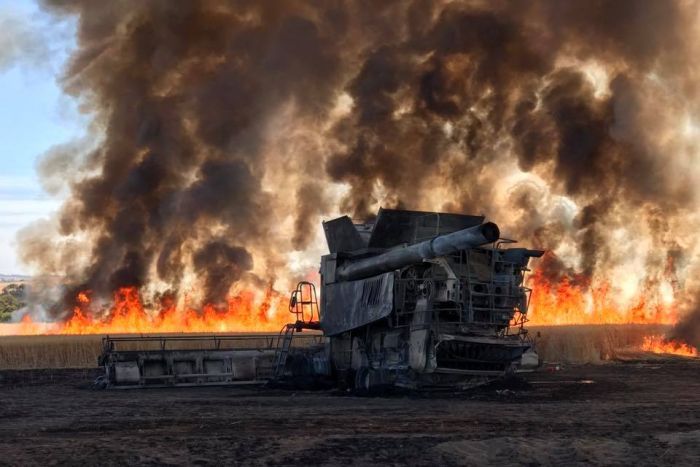
Western Australian farmers are concerned an abnormally dusty crop will increase the risk of header fires this harvest. Only two weeks into harvest in the Great Southern, the Wagin shire has experienced six fires, four of which were started through a header. This compares to an average of two per season on other years, according to East Wagin farmer Sam West. Mr West said although he was not sure if the header fires were caused specifically from dust, he was concerned conditions were going to make matters worse. "I imagine it's going to cause a bit more fire risk because it's flammable, and if it gets on hot parts of the engine it could be a problem," he said. "So we have started blowing the header down twice a day." Mr West said although it took extra time, it was worth being more cautious. Fires not limited to Wagin shire Mr West said he had attended four of the six fires in his region. "It gets you a little bit nervous and on edge at times," he said. "There was one last week where we got home, spent 30 minutes at home and then got another call-out." [caption id="" align="alignnone" width="700"] PHOTO: A blackened header sits in front of a fire after it caught alight during harvest. (Supplied: Farmac and MC)[/caption] The header fires are not constrained to the Wagin shire. On Facebook, a number of farmers told tales of header fires in Pingelly, Quairading, Bruce Rock and Bolgart, in the state's Great Southern and Central Wheatbelt region. Mr West said all fires in the Wagin region had been contained fairly quickly, with the worst fire burning through about 100 hectares. 'Dustiest harvest ever' In the Great Southern region, farmers have described this harvest as the dustiest they have ever seen. Narrogin farmer Ashley Weise said at times it was even difficult to see where he was driving. "There's this very fine dust coming out of the back of the header, which I haven't really seen before," he said. [caption id="" align="alignnone" width="700"] PHOTO: Narrogin farmer Ashley Weise says the dust is like nothing he has ever seen before. (Supplied: Ashley Weise)[/caption] "I know oats dust is itchy enough, but this is really quite unusual and I'm not too sure what's causing it." Mr Weise described the paddock as "an absolute cloud of dust". "The other day I took a photo where I couldn't actually see the end of my comb with the wind coming from behind the header," he said. While it is not clear what is causing the dust, farmers and agronomists have guessed the frost event earlier in the year may have contributed. Another theory that has been flagged by agronomist David Stead on Twitter, alongside other farmers, is that it could be related to bigger canopies and a cool finish. Source - http://www.abc.net.au

09.12.2016

USA - Developer wants robotic apple picker in orchards in 2018

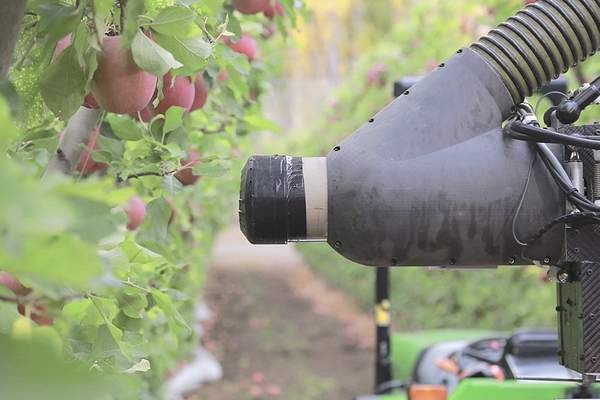
The developer of a robotic apple picker says his goal is to have it ready for commercial use in orchards in the fall of 2018. “It will work at a productivity rate that will be lower cost than human picking,” Dan Steere, CEO of Abundant Robotics of Hayward, Calif., told attendees at the Washington State Tree Fruit Association annual meeting, Dec. 6. That was his response when asked how many bins of apples per day the picker can pick. Steere said he didn’t want to reveal that yet, nor an estimated price per unit. However, he said it will be practical and affordable within the next 10 years. A robot able to pick apples fast enough and gently enough to be economically viable could be a huge boost to the apple industry in labor savings and in meeting labor shortages. Steere and his Abundant Robotics co-founders, Curt Salisbury and Michael Eriksen, are robotic software and hardware engineers, developing a robotic harvester with a $550,000 grant from the Washington Tree Fruit Research Commission in Wenatchee and funding from SRI International in Menlo Park. Abundant Robotics is working with its third prototype in 18 months with improvements made after fall harvest testing in Central Washington and spring harvest testing in the Southern Hemisphere, Steere said. Here’s how it works: A robotic arm and vacuum tube, guided by computer aided by cameras and sensors, detects apples and sucks them off trees at one apple per second and delivers them into bins. Steere showed a video that he said was real-time. He said the picker detects 95 percent of apples and isn’t bothered by leaves or new growth but is obstructed by wood such as limbs. Leaves were stripped from part of a tree in one test, leaving 21 apples. Six of the 21 were not detected because of limbs, he said. The system isn’t built to work on large old trees, but new high-density spindle or V-trellis plantings where the plane of the fruiting wall is 2 to 3 feet in depth. “We think we’re good at hardware and software. That’s what we know. We’re not experts on (tree) canopies, so we’ve been trying to talk to growers,” Steere said. He said he’s eager to hear from a cross section of growers and that there are probably multiple best canopies. The robot was tested this fall in several varieties and orchards with the fruit graded on packing lines. Gala ran at 5.3 percent cuts, punctures and bruises, just slightly above 4 percent of conventional hand picking, Steere said. Granny Smith was high at over 20 percent and Fuji also at 16, but Steere said he thinks he knows ho the damage occurred and how to bring it down. “We’re definitely on a path to production rather than figuring out from a blank page of R&D (research and development) if it’s possible or not,” he said. The key, he said, is unobstructed access to the apple. He said he’s staying focused on apples and not yet thinking of pears or cherries. Source - http://www.capitalpress.com

08.12.2016

Vietnam - Elephants destroy crops

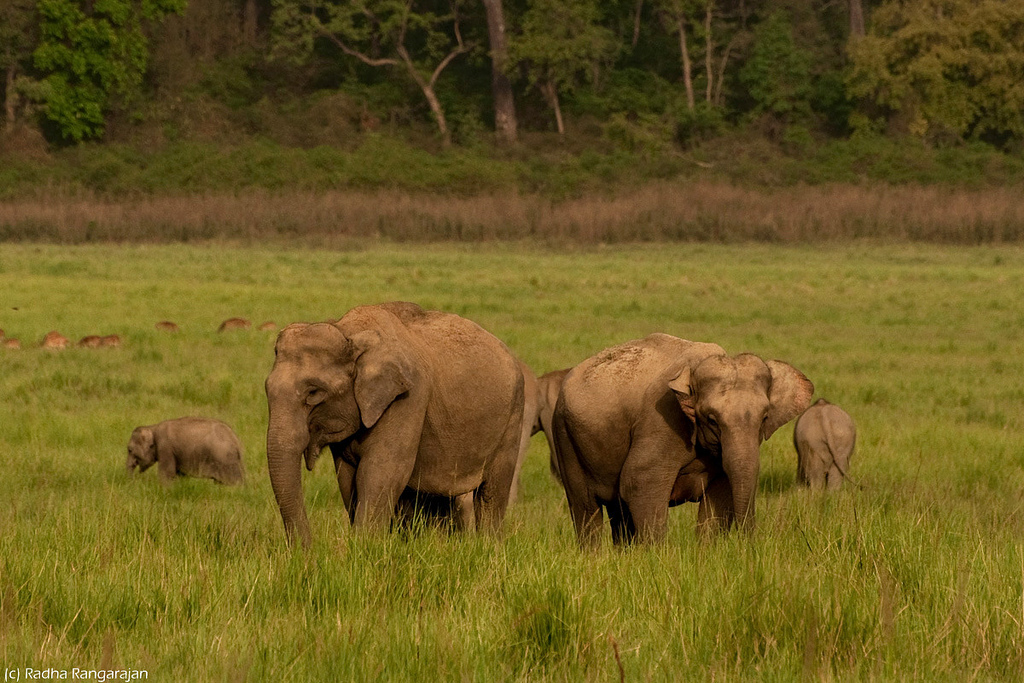
In certain parts of Vietnam farmers are having to deal with a peculiar pest, much larger than the usual a farmer has to deal with. According to the Quick-reaction Task Force in the Phu Ly commune of Vinh Cuu district, from January to April 2016, wild elephants entered residential quarters 69 times and caused 71 cases of crop damage. They damaged 4.7 hectares of cassava, 2.1 hectares of sugarcane and 22 tons of fruits. Hoang Thi Thuy from Phu Ly commune complained that elephants ‘visited’ her house several times. They not only ate mango, but damaged 20 10-year-old trees that had brought a stable income. Thuy said that each mango tree produces 100 kilos of fruit. With the average price of VND5,000 per kilo, Thuy can earn VND500,000 each crop. As such, Thuy loses about VND10 million a year, the main source of income of her family. In 2008-2013, the people’s committees of Vinh Cuu and Dinh Quan districts had to spend VND12 billion to support people in the areas attacked by elephants. Source - english.vietnamnet.vn

08.12.2016

USA - Grain indemnity voting period coming to a close

Friday is the last day for farmers to cast ballots in Texas' grain indemnity fund referendum, a measure that would use fees to provide additional crop insurance for some producers. This is the second time such a referendum has been put to a vote in the state - in 2012, a similar measure was presented to voters but did not pass. A member of the referendum's governing board previously said that misinformation was to blame. If enacted, the referendum would create a fund to repay producers of some commodities in the event of grain buyer failure, such as bankruptcy or legal trouble. However, the insurance protection would come at an additional cost to corn, sorghum, wheat and soybean farmers, who would pay to grain elevators fees that later would be forwarded to the state. Only producers who have grown those crops in the past three years may vote. Experts say the impetus for the measure is high-profile grain elevator failures, such as an incident in which a Sherman commodity buyer went belly-up in 2009. But cash-strapped farmers may have reservations about voting for the measure; earlier this year, wheat crops specifically sold for about $2 below the cost of production, and farmers may err on the side of riskier business deals to avoid an additional insurance fee. Voting on the referendum began Monday and will be concluded Friday. Ballots may be cast at the Texas A&M AgriLIfe Extension Office in Wichita Falls, 600 E. Scott St. Source - http://www.timesrecordnews.com

08.12.2016

Spain - Rainfall causes damage to Vinalopo grapes

The rainfall recorded in recent days (and weeks) in the region of Medio Vinalopó is proving very beneficial for its agriculture after the severe drought it had been suffering for years. However, according to the agricultural union La Unió de Llauradors, the abundance and persistence of rainfall is also taking a "very negative toll" on table grape crops in Vinalopó, where the harvest of the Aledo variety, the one eaten in Spain as part of the New Year's Eve celebrations, is currently underway. The grapes are starting to crack due to an overexposure to moisture and many kilos will be lost, although those in charge of La Unió say it is still too early to evaluate the extent of the damage. This will add to the production costs for the growers, who will have to clean the grapes, which will entail an increase in the handling and packaging costs of the most precious fruit of Vinalopó. Given this situation, it has been decided to organise a meeting next Monday in order to address the crisis. The decision has been made by the Asaja union, the Regulatory Board of the PDO Vinalopó Bagged Table Grape and the Federation of Exporters. All parties involved have been invited to this unprecedented meeting, including irrigation communities. To all this, and as previously announced, it should be added that the table grape harvest will suffer a 25% reduction this campaign because of the impact of the prolonged drought in the vineyards; a paradoxical circumstance in these weeks of continuous rains. The loss in volume has been estimated at about five million kilos, so the total Aledo production is expected to drop from the 22,000,000 kilos of the previous season to 17,000,000 kilos in the current campaign. Source - diarioinformacion.com

08.12.2016

Philippines - 6 Luzon LGUs awarded for climate change adaptation programs

Ten local government units (LGUs) received a maiden Climate-Adaptive and Disaster-Resilient (CLAD) Awards for cities and municipalities for their exemplary programs to mitigate the impact of climate change. The CLAD Awards is a project of the Climate Change Commission (CCC) as conceptualized with the UN Office for Disaster Risk Reduction (UNISDR) and Senator Loren Legarda, UNISDR Global Champion for Resilience. The winning LGUs, which were awarded during the Climate Change Consciousness Week concluding program on November 25, were Canaman, Camarines Sur; Carmona, Cavite; Dumangas, Iloilo; Hinatuan, Surigao del Sur; Legazpi City, Albay; Malolos, Bulacan; New Lucena, Iloilo; Palompon, Leyte; Sorsogon City, Sorsogon; and Tublay, Benguet. Each awardee was given a plaque and cash prize of P500,000. Legarda lauded the 10 winners of the inaugural CLAD awards as she urged other LGUs to adopt and replicate their best practices in order to strengthen community resilience to disasters and climate change. She cited Canaman’s Crop Insurance Program, which helps restore the livelihood of farmers affected by disasters by providing crop insurance; and the Farmers Field School, which provides farmers with knowledge on climate change impacts and adaptation such as storm surge and drought, as well as practical hands-on training on seed selection, water management, among others. The town of Tublay, Benguet was awarded for its Carbon Stock and Greenhouse Gas (GHG) Sequestration Enhancement, as well as its coffee-based agroforestation program, which empowers the community to participate in environmental conservation, climate change adaptation and disaster mitigation initiatives while gaining economic benefits from it. Legazpi City, Albay also made it to the top 10 for its efforts in establishing organic gardens and planting of mangrove and fruit-bearing trees. The mangroves serve as buffers or coastal defense from the effects of storm surge and tsunami while providing a rich habitat for marine life and sequestering carbon effectively. Malolos, Bulacan was awarded for its outstanding psychological program which involves the conduct of traumatic and/or psychological debriefing for evacuees and victims of disasters. Sorsogon, Sorsogon has been recognized for its Climate-Resiliency Field School where farmers and fisherfolks undergo actual practice on new farming technologies adaptable to climate change. Another noteworthy project of this municipality is their reforestation (mangrove and upland) project which aims to minimize soil erosion and prevent storm surge in mangrove areas. Carmona, Cavite was awarded for its Solid Waste Management and 3Rs Program (reduce, reuse, recycle) and installation of LED lights in the municipality, an initiative that not only saves electricity but also lessens greenhouse gas emissions. Source - http://news.mb.com.ph

08.12.2016

India - Rabi crop loss survey to be taken up after Dec. 15

Krishna Byre Gowda, Minister for Agriculture, has said that a survey to assess crop loss due to extended severe drought condition during rabi this year would be taken up after December 15. “This year, the State was reeling under severe drought. As many as 139 taluks in the State have been declared drought-hit due to the failure of monsoon causing huge crop loss. The severe drought has also extended to rabi due to failure of post-monsoon rain. We have instructed the officials of the Agriculture Department to submit the crop position. After that, survey would be carried out to assess the extent of loss of crops and submit a detailed report along with a memorandum to the Union government seeking financial assistance,” he said. Mr. Krishna Byre Gowda was here to participate in the demonstration of Drill Sown Rice (DSR) and mechanised bailing of paddy fodder at Charakunta village in Ballari taluk on Tuesday. He said that the State government has submitted a memorandum to the Union government seeking financial assistance of Rs. 4,702 crore to compensate the loss of crop during this year’s kharif season and the Union government was yet to take a decision and release the required funds. “Chief Minister Siddaramaiah will be meeting Prime Minister Narendra Modi very soon to prevail upon him to release funds. Once we get the funds, steps would be taken to transfer them directly to farmers,” he added. To a question, the Minister said that the proposal to set up paddy procurement centres and also announce minimum support price would be decided by the Cabinet sub-committee. Admitting that demonetisation of currency had severely affected trading in APMC yard by 40 per cent besides bringing down the price of agricultural produces, he said that the government was committed to establishing procurement centres and make the payment through bank transfers. Source - http://www.thehindu.com

08.12.2016

India - C'Garh implements PM crop insurance scheme

The Prime Minister Crop Insurance Scheme has been implemented for the Rabi season 2016-17 in the entire State, officials informed. The crops covered are wheat, (irrigated) wheat (unirrigated), Alsi, potato and 'Tiwda' and several other crops. Agriculture Minister Brijmohan Agrawal directed the Department officials to spread awareness among the farmers regarding the Prime Minister Narendra Modi's Crop Insurance Scheme during the current Rabi season. Notably, the Chhattisgarh government has set a target of distributing six lakh metric tonnes of fertilizers during the current Rabi season. Agriculture Minister Brijmohan Agrawal stated that last year four metric tonnes of fertilizers were distributed during the Rabi season. The Minister said that a sowing target in 18 lakh hectares had been set for the ongoing Rabi season. He said that farmers in the State are taking interest in using bio fertilizers and the Government had also been promoting use of bio fertilizers. The Chhattisgarh Government has also launched schemes to develop Dantewada, Bijapur, Sukma and Gariaband as ‘complete organic farming districts’, officials informed. This apart, one development block from each of the other districts will be included under ‘Organic Farming Mission Scheme’. The State Government operates several social welfare schemes through the medium of Co-Operatives. The institutions provide short-term and long-term loans, fertilizers, high-breed seeds and farm equipment, Public Distribution System, housing, fisheries, dairy, forest produce, weavers, mining and horticulture activities are operated, they informed. The socio-economic condition of weaker sections of the society, Dalits, socially and economically oppressed citizens had improved dramatically during the past 16 years. There is visible prosperity  in the lives of poor, rural citizens and farmers, officials stated. Earlier, the farmers had been provided with loans at huge rates of interest. The State Government provides loans at Zero per cent interest rate which brought happiness and transformation in the lives of farmers and artisans. Primary Agriculture Credit Co-Operative Societies had been computerized to make payment as soon as possible. All the 1986 kendras had been computerized. About 59. 28 lakh metric tonnes of paddy had been procured from the 11.10 lakh farmers during the current Kharif season. The State Government had been sanctioning large-scale loans to farmers through these District Co-Operative Central Banks, District Co-operative Agriculture and Rural Development Banks. The capital of the banks had been increased. Long-term credits are provided for the farmers and others for horticulture, fish rearing, silk industry, agriculture forestry, biogas plant and other non-agriculture activities. Source - http://www.dailypioneer.com

07.12.2016

USA - Silicon Valley’s Next Disruption Is on the Farm

Technology doesn’t make farming easier, according to Jay Hill, a New Mexico grower whose 1,000 acres near Las Cruces are planted with vegetables and commodity crops. “It makes farming possible.” Self-driving tractors, flying drones, and smartphone-controlled drip irrigation systems have kept him competitive, he says. Robotic lettuce harvesters are next. Thanks to technology, “I’m 20 times larger than when I started 15 years ago,” he says, and only one of four survivors out of what had been dozens of neighboring farms. So far, the higher costs haven’t led to higher profits. Technology has improved productivity for many farmers, but resulting bumper crops undercut prices. U.S. farm incomes in 2015 were down 36 percent from the prior year, the lowest since 2006. Hill’s profits are stuck where he started when he was in high school. The next wave of farm technology—big data—is supposed to fix that by cutting costs and minimizing environmental stress from farming. At least that’s the hype. “Interpreting farm data is the key to the agricultural revolution,” says Paul Noglows, executive producer of the Forbes AgTech Summit, Silicon Valley’s foremost agriculture conference. “This is a shift to increased efficiency, rather than just jamming out more crops.” Parts of the big data play are simple. Powerful cloud-based computer programs are fed decades of weather and soil data. Terabytes of imagery are collected by satellites, airplanes, and drones and layered into the computer analysis. Combined with field-level data gathered by sensors attached to tractors, dropped down water wells, and embedded in smartphones—yes, the lauded “internet of things”—software will deliver the personalized farming prescriptions directly to smartphones in the hands of individual farmers. This is the dawn of the digital age in farming, says Josette Lewis, who tracks agriculture industry progress as director of the World Food Center at the University of California, Davis. In every other industry, however, it is more like high noon. “Agriculture is one of the last major economic sectors to integrate data technology into operations.” So expect a rapid rollout. Silicon Valley saw this coming and has pumped tens of millions of dollars into Farm Link, Farm Business Network, Granular, Farmers Edge, and Conservis. These data services help growers make better economic decisions, says Lewis, which include reducing applications of fertilizer, pesticides, and herbicides. “We could see substantial reductions in farming’s environmental footprint.” More efficient farms will also reduce demand for land and thus reduce global deforestation, a major contributor to climate warming. Grower investments in technology will have doubled during the five years ending in 2019, with data analysis topping the shopping list, according to a recent report by Robert Hill of Caledonia Solutions. Big data is being used to reduce food insecurity. Launched in 2012, Global Open Data for Agriculture & Nutrition, an international group of more than 380 governments, agriculture companies, universities, and research organizations, is using cloud-based data services to give subsistence farmers around the world access to weather forecasts, market information, and crop insurance through their cell phones. “Agriculture is playing catch-up,” says Tim Shaw, who advises food company clients at Teradata. But while big data services have been overhyped in other industries, they could genuinely transform agriculture. Better use of weather data is critical for an industry susceptible to drought, floods, and the ravages of climate change. At this early point, The Climate Corporation has the most refined and complete platform, although it is focused on commodity crops such as corn and soy. Google data scientist David Friedberg launched the company in 2006 on a hunch that weather prediction might be useful to many businesses; he identified the agriculture industry as his target market and raised $100 million in venture funding for a weather-sensitive crop insurance company. [caption id="" align="alignnone" width="568"] The Climate Corporation's Climate Fieldview monitoring app uses satellite mapping technology to track and show field health. (Photo: Courtesy Climate.com)[/caption] In a billion-dollar deal that dwarfs every ag-tech transaction before or since, St. Louis–based agrochemical giant Monsanto bought The Climate Corporation in 2013. It sold off the insurance service and pivoted to a digital platform that it hopes every farmer in the world will use. German company Bayer’s recent purchase of Monsanto for $56 billion guarantees that The Climate Corporation’s services will serve farmers around the world. “There are 90 million acres of corn planted in the U.S.,” says Mike Stern, CEO of The Climate Corporation. (Friedberg has since left the company.) “Some farmers get 170 bushels an acre. Others harvest 520 bushels. We bridge that gap so more farmers have higher yields. Our tools allow farmers to monitor their fields meter by meter and alter their farming accordingly. We make it easy for data to go from tractor to cloud.” [caption id="" align="alignnone" width="569"] The Climate Corporation's Nitrogen monitoring app can determine the smartest amount of Nitrogen to apply and the best time to do it. (Photo: Courtesy Climate.com)[/caption] Farmers have uploaded 100 million acres of crop data to The Climate Corporation’s platform through a free weather and soil information service. Paying customers represent 15 million acres of crop data on The Climate Corporation, an average of 2,000 acres per farmer, and receive Monsanto’s customized analytics. The world’s largest seed company, Monsanto has a global customer base, giving The Climate Corporation an edge over its competition, says Stern. A recent announcement by Monsanto that it has opened The Climate Corporation’s platform to outside app developers—in much the same way that Facebook hosts Zynga games or Snapchat hosts a Vice channel—could further broaden its appeal and accelerate innovation. [caption id="" align="alignnone" width="634"] Satellite mapping technology allows the tractor driver to plot growing and harvesting pathways in The Climate Corporation's CabView field monitoring app. (Photo: Courtesy Climate.com)[/caption] “We are bringing outside innovators in to expand our services,” says Mark Young, The Climate Corporation’s chief technology officer. Getting new ideas in front of farmers on the platform will support fledgling services that otherwise might not make it to market. “A lot of smart people are working on the new data platforms,” says Jonathan Mi of Brightpath Capital Partners, a technology venture fund. “It is too early to say if there will be one or many” farm data platforms and how they will function. So far, farmers are hanging back, nervous about disclosing their data, even though it will be anonymous when crunched into a giant database. “This sector has been driven by Silicon Valley. They don’t necessarily have experience in farming,” says UC Davis’ Lewis. These programmers don’t understand how sensitive farmers are about sharing data. Ken Dalenberg signed up with The Climate Corporation six years ago to try to control costs on his 3,300-acre corn and soy farm, and he now uses it every day—just as he uses several of the other ag-data platforms. In his combine while he harvested corn recently, “I looked at yields trying to determine what hybrids we should plant where next year. It helps with new decisions, verifies decisions we made a year ago,” says the Champaign, Illinois, grower. All the platforms crunch the same data, he says, but no one platform is the best at everything, and they can’t talk to one another. “Too much money is backing too many platforms. Consolidation will take the best of each and put them into a new model,” he predicts. If you own an iPhone, Dalenberg says you can handle the technology, and he isn’t worried about sharing data. He says everyone with a smartphone already puts personal data on a central server, so what’s the big deal? Google sends more ads to him than Monsanto ever has, he says. “As the farm economy improves, which it always does, the people who use the data platforms are the ones who will be in business for the long term.” In New Mexico, ag-tech enthusiast Jay Hill gets it. But he is staying on the sidelines for now. Sharing operating data with other farmers still feels to him like sharing trade secrets. “Agriculture is a competitive business,” he says. Source - http://www.takepart.com

07.12.2016

USA - Drone technology hitting new heights

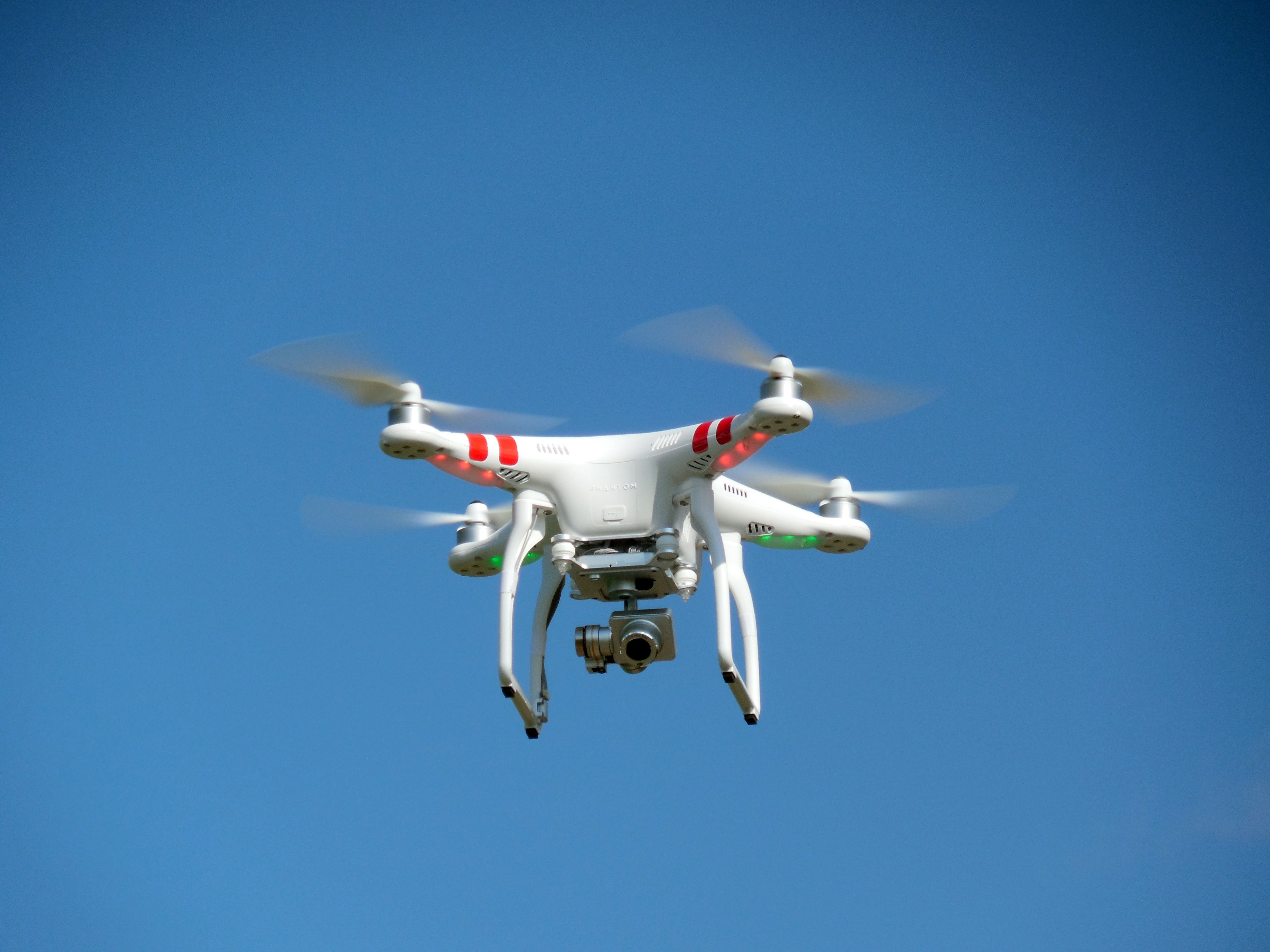
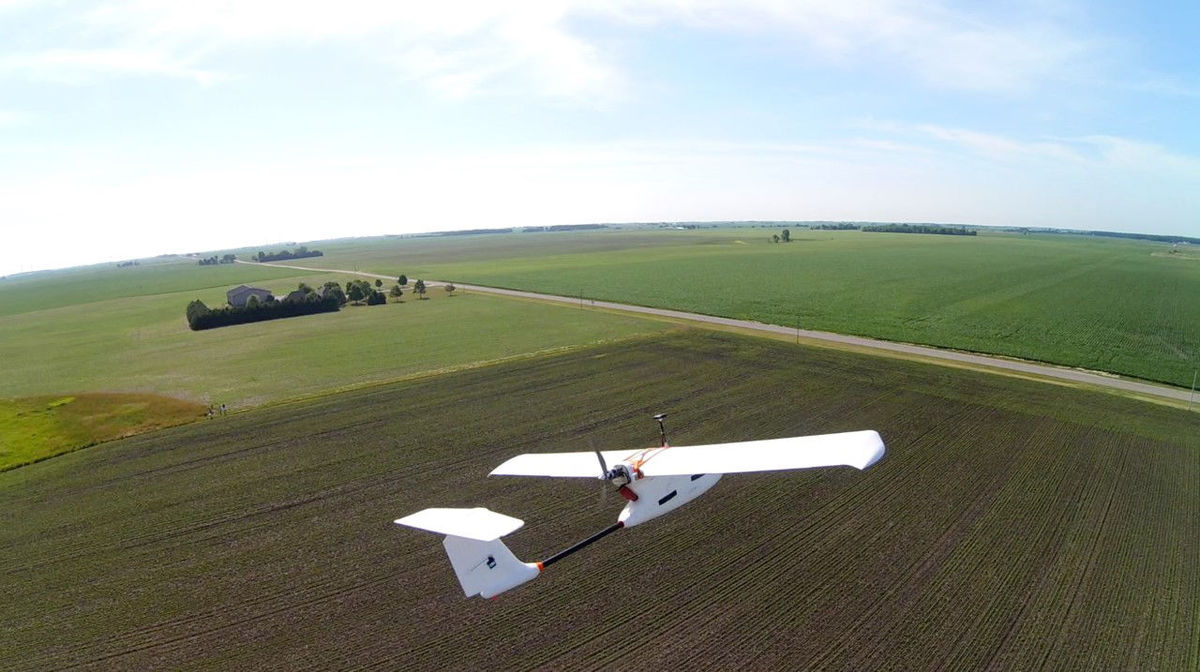
UAVs, unmanned aerial vehicles, aren’t new technology by any means. Now, however, thanks to robust investments and a somewhat more relaxed regulatory environment, it appears their time has arrived — especially in agriculture. Prior to the use of so-called drones, crop adjusters could have walked fields for hours and sometimes not discover problem areas at all. Drones can locate hot spots faster, so the crop insurance company can better assess how much damage a farmer really has. A scout now can determine if a field has been damaged within a matter of minutes, said Eric Vanasdale, COUNTRY Financial senior loss control representative. “Drone technology is advancing rapidly. Some would argue that the technology is outpacing regulations,” he said in an interview at the Illinois Farm Bureau annual meeting in Chicago. But commercial drone regulations released by the Federal Aviation Administration at end of August provide clarity about what farmers can and can’t do — clearing the sky for agricultural drones to take flight. “I think it’s a great first step from the FAA. They’ll continue to improve them and make it easier for our farmers to use,” Vanasdale said. “There’s been a lot of great advancements on things we can do on our farms, whether it’s NDVI technology for plant health, using it to detect livestock out on the pastures. We’re using them a lot to check crop damage with our claims area.” In simple terms, he explained, if farmers get their drone pilot’s license, they can fly up to 400 feet high, they have to keep the drone in their line-of-sight and they must fly in uncontrolled airspace. “The regulations did clarify a lot of those perceived gray areas. It provided a pathway for farmers to use these with reasonable regulations,” Vanasdale said. “Over the winter is a great time to figure out what technology best suits your operation. It’s a great time to study for the exam, to take the test, to get your remote pilot certificate and go ahead and figure that out over the winter so come spring, you’ve got the equipment, you’ve got the license, you meet the regulations and you’re ready to go.” He expects the FAA will continue to refine its regulations. The biggest issue remaining for farmers is they have to be able to see their drone the entire time they are flying it. “That works in a 60- or 80-acre field, but once you get in larger fields, it’s more difficult to do that,” Vanasdale said. “But the FAA will continue to improve that regulation — as technology improves and makes these safer, they’ll fly them out of your line-of-sight.” So is the sky the proverbial limit for drones in agriculture? “It’s a great scouting tool. I think it’ll get to the point where a majority of farmers have them. Not everybody is going to get one. There’s some farmers that just don’t embrace technology as much as others do, so not everyone will have one,” Vanasdale said. “But those that are wanting to do more of their own agronomy work, that are doing more of their own crop and field scoutings, those people, if they don’t already have one, certainly will here soon.” “The technology is out there. It’s been proven by the early adopters,” he added. “Now that you don’t have those regulatory concerns that we used to have, there’s really nothing holding farmers back from embracing this and adding it to their operations.” Want to fly a drone on your farm? Here’s what you need to know before takeoff: Farmers using unmanned aircraft in their own farming operations are classified as commercial users and must adhere to Federal Aviation Administration Part 107 Regulations for small commercial unmanned aircraft systems. The regulations create a new class of pilot’s license called a Remote Pilot Certificate. The Pilot in Command, or PIC, must hold this document, which requires them to be at least 16 years old and pass an initial aeronautical knowledge exam — which costs about $150 and consists of 60 multiple-choice questions — and Transportation Security Administration background check. Individual aircraft must be registered with the FAA for commercial use. Registration — done at registermyuas.faa.gov — is $5 per aircraft and lasts three years. Operations must adhere to specific airspace and operational limitations. In particular, unmanned aircraft and attachments must not exceed 55 pounds, and the PIC must keep the aircraft in their visual line-of-sight. Do not fly over people or from a moving vehicle. Only fly during the day. Yield right of way to manned aircraft, such as crop dusters. And fly under 400 feet unless operating above structures such as wind turbines.  Source - http://www.agrinews-pubs.com

821
of 1225