NEWS
822
of 1225
News
07.12.2016

Australia - Total crop losses on some Mary Valley farms as growers count cost of massive storms

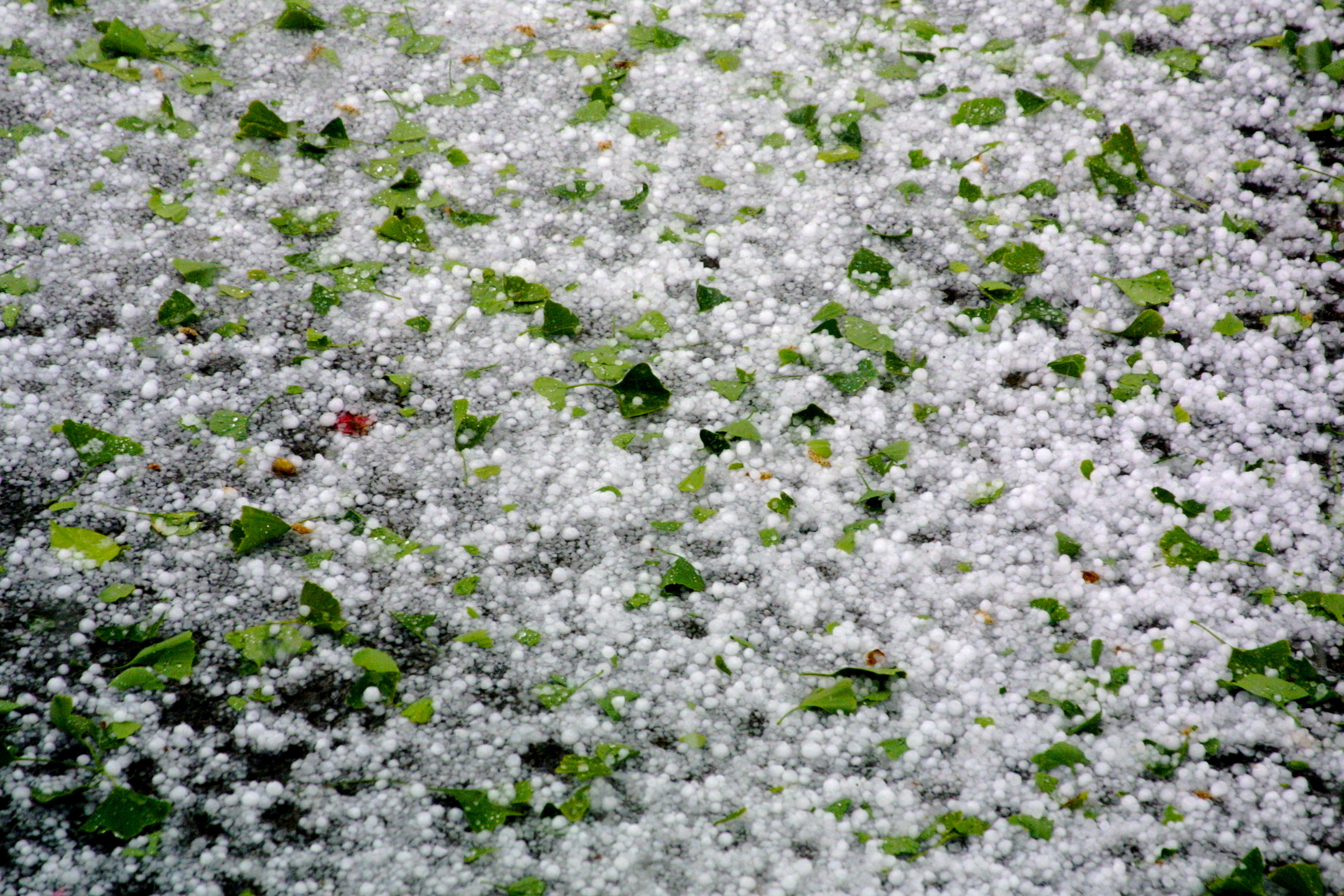
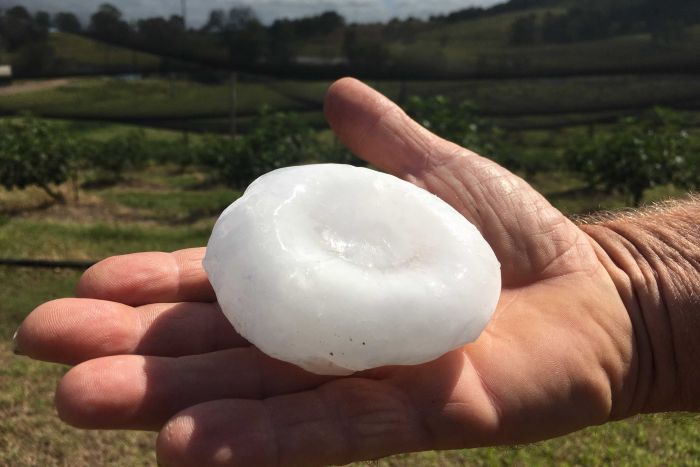
Farmers in Queensland's Mary Valley are reporting total crop losses after the region was battered by a series of violent storms since Wednesday that brought hail stones the size of tennis balls. Imbil passionfruit and avocado growers Rob and Cecily Price said they had lost $500,000 in fruit after being hit by three hail storms in three days. "Any passionfruit and avocados left on the tree are too bruised to be able to sell commercially, so it is a 100 per cent wipe out," Mr Price said. The couples grow passionfruit and avocados to ensure they have an income in the summer and winter months, but now will have no money for the next 18 months and might need to look for other jobs. "We have been through hard times before, although never quite as disastrous as this, but we were younger then and could get other jobs, but right now that's a little difficult," Ms Price said. "Robert and I are a bit too old for anyone to want to employ, so I don't really know what will happen." [caption id="" align="alignnone" width="700"] PHOTO: Imbil farmers Cecily and Rob Price are optimistic, despite losing 100 per cent of their avocado and passionfruit crop. (ABC Rural: Marty McCarthy)[/caption] Mr Price said without an income, he was now having to spend money he did not have to protect his trees from diseases and infections. "There is so much work we have got to do now. At the moment we are spraying copper on the trees to stop diseases getting in," he said. "When the bark is bruised it opens the tree up, and if you don't try and protect it, then disease can get in under the bark and do more damage to the trees." Mr Price expected it would take six to eight years to make up the lost income, but accepted storms as a reality of farming. "Any farmer worth his salt just weathers these disasters when they come. You don't go around crying about how hard you've been done by," he said. [caption id="" align="alignnone" width="700"] PHOTO: Small avocados have been damaged by hail. (ABC Rural: Marty McCarthy)[/caption] Hail nets help weather storm Kandanga fig and citrus farmer Jim Olsen said a long-term investment in netting had helped him to protect his figs from tennis ball-sized hail on Friday. Mr Olsen installed the nets two decades ago to protect his crop from bats and birds, but said they had recently proved a formidable barrier against hail. "I have never seen hail that big before, and if [the net] wasn't there we wouldn't be picking this season, that's for sure," he said. "It has done a really good job." [caption id="" align="alignnone" width="340"] PHOTO: The hail took 48 hours to melt. (Supplied: Suzette Olsen)[/caption] Despite having the nets, Mr Olsen said he had still received up to 50 per cent damage to his crops because not all of his trees were covered. Mr Olsen said netting an orchard was expensive, and farmers needed to weigh up if netting to protect against the occasional storm was worth it. "These nets cost around $25,00 to $30,000 just to do this one patch, but today a farmer told me it would cost up to $40,000 an acre to put that type of netting in," he said. "The value of the crop under this paddock is $15,000 per year, so over four or five years it will cover it. "In a situation like this one it was good, but over 20 years maybe you are better off without it and putting up with losing crop once in a while." Small crop farmers' produce 'shredded' Elaine Bradley, from the Mary Valley Country Co-op, said the weather had been challenging for growers in the region, especially small crop farmers. "On some of the farms I've seen the lettuces have just been totally shredded, and plants like capsicums and eggplants have had the flowers wiped totally off them," she said. "We were getting hail about tennis ball to baseball size and it just shredded everything — trees, fruits, the whole lot. It's just caused so much damage." Ms Bradley said hail nets were fairly common, but more to do with orchards rather than small crops. "It is very expensive to put up the hail nets on that, so we haven't really seen it with the small crops happening in any of these areas," she said. [caption id="" align="alignnone" width="700"] PHOTO: Nets protected some crops at an orchard at Kandanga in Queensland's Mary Valley. (Supplied: Suzette Olson)[/caption] Ms Bradley said as well as netting to protect against hail, farmers in the area were also considering shading to protect crops against heatwaves. "I think that's something that we are going to be looking at, the double benefit of heat protection as well," she said. "We've got temperatures of 60 to 70 degrees at ground level with some of those vegies, so it will stop them growing and flower and pollination. "I think we are moving in to a situation where we have to look at protected cover in a lot of our crops to enable things to grow through over these months." Source - http://www.abc.net.au

07.12.2016

India - Crop insurance should be made hassle-free for farmers

Minister of state (MoS) for cooperatives (independent charge) Vishwas Sarang has said that the receipts of crop insurance given to the farmers, must have all necessary information related to insurance. Physical verification after reaping of crop should be done so that there is no problem faced in taking insurance claim by farmers. Sarang was addressing the meeting of departmental advisory committee here on Tuesday. Sarang said recruitment process to keep trained staff in all district banks will begin soon. The recruitment will be made by Indian Banking Personnel Selection Board (IBPSB). He said around 2300 employees will be recruited. Source - http://www.freepressjournal.in

07.12.2016

India - Disappointed cotton, soybean and paddy farmers of Vidarbha expect govt. to fulfill their 10 months’ old promise

In February this year, the Maharashtra government, and specifically C.M. Devendra Fadnavis had announced aid of Rs. 1,012 crores to Vidarbha farmers who had suffered huge crop damage due to insufficient rains. Cotton, Soyabean and Paddy, the three major crops of the area, had not yielded expected results when rains suddenly stopped. We are all aware that there is very little irrigation facility for farmers when rains fail – Vidarbha is still largely monsoon-dependent agriculturally. Government had aknowledged the crisis and granted aid. Or made the announcement granting it. Now 10 months have passed – there have been two sessions of Maharashtra Assembly in Mumbai, the budget session and Monsoon session. No provision was made for implementation of the aid in both these sessions. Farmers were hopeful that the Winter session would at least yield some result as it is held in Vidarbha. But they have been disappointed again. On the first day of the Vidhan Sabha itself supplementary allocations of 9500 crores was announced but there was nothing for the hapless farmers. Demonitization has already taken a toll on farming income this year as it was announced just as cotton and soyabean came into the market for sale. Paddy harvest will also soon be finished and that too will be hit it seems clear. In such a scenario if aid announced at the beginning of the year had come through there would have been some relief for farmers. Not just Vidarbha, about 22 districts of the state had deficient rain fall last monsoons. As a result 15 thousand and 747 villages had suffered 50% over crop loss in the Kharif season. Almost 54 lakh hectares of agricultural land is under these crops in the affected areas. Last December some damage compensation had been announced and handed over to the farmers growing fruits but cotton, soyabean and paddy farmers had been omitted. This led to wide spread condemnation and criticism of this partiality which prompted the government to declare that aid would be given to these farmers also. That announcement was made in February but it has remained an empty promise. Farmers have not received crop protection insurance either. This inaction coming on the heels of Rabi market for vegetables being completely sabotaged and destroyed as a result of the sudden demonitization decision on 8th November has already put farmers under great financial hardship. If the neglect continues the specter of farmer suicides will again loom large. How long are we going to be moot spectators? Source - http://www.nagpurtoday.in

07.12.2016

Africa - Insurance for climate protection

People still doubt whether the private sector still has a role to play in insuring their property. The private sector has a role to play and can venture into the unknown territory of climate protection. Investors and the cross-section of the business sector need to communicate the vital information on the need to protect the assets they are investing in, as well as those projects that that have a strong bearing on the people’s livelihoods. The majority of Africans, Zimbabweans included, are reeling under the effects of energy poverty in the presence of very vital, but scarce resources. They are also faced with uncertainties of the grim effects of climate change and destruction. Therefore, how do those insurance companies communicate the provision of risk management and guidance to a number of energy-producing companies and their subsidiaries? People need to be convinced that insurance can still play a vital role, as it used to do, with the provision of financial protection after a disaster. Local farmers still need to be assisted in recovering some of the crops or costs they would have incurred due to climate-induced drought. After disasters strike, the private sector, through its insurance arms, needs to help businesses recover from the aftermath of extreme weather events. In Zimbabwe, at national level, the government needs to invest in insurance schemes that enable people to respond sustainably to floods or droughts, the major scourges that are synonymous with the African continent. Climate change is going to pose the greatest risks to businesses due to its unpredictable impact. Issues of businesses’ risk and resilience should be communicated appropriately to all stakeholders. The insurance gaps that were created in the past by insurance companies in this country, should be communicated in such a way that the beneficiaries no longer associate the insurance sector with the monster they once imagined it was. Insurance companies need to lead the way and play a pivotal role in helping people to recover, as well as reducing the impact of global warming. There is need for insurance companies to invest in risk communication and awareness in terms of climate protection so that prospective beneficiaries are sufficiently conscientised in terms of climate protection. Insurance companies should also explore sustainable land uses in order to prevent land degradation and carbon emissions that are contributing enormously to global warming. A new wave of climate insurable awareness, which can assist present and prospective clients in proficiently articulating risk management skills should dominate the insurance industry’s discourse. This would empower people with risk management skills that will sufficiently prevent unsustainable practices and environmental damage. Some insurance companies should also lead the way in demonstrating that they are serious about reducing their own carbon footprints. Without insurance, properties and businesses cannot function, and insurance policies that are aimed at protecting those engaged in green energy technologies need to be revitalised. With green commercial buildings the way to go, insurance companies are also expected to move in that direction of offering green commercial building insurance policies. Source - https://www.newsday.co.zw

06.12.2016

Australia - Mary Valley farmers suffer losses after massive storms

Farmers in Mary Valley, Queensland have suffered huge losses of their crops after a storms passed through their area since Wednesday. The storms brought with them hail the size of tennis balls which decimated crops. Imbil passionfruit and avocado growers, Rob and Cecily Price, said they had lost $500,000 in fruit after being hit by three hail storms in three days. "Any passionfruit and avocados left on the tree are too bruised to be able to sell commercially, so it is a 100 per cent wipe out," Mr Price said. "I think we are moving into a situation where we have to look at protected cover for a lot of our crops to enable things to grow through over these months," one farmer said, noting ways they could prevent this type of loss in the future. Source - abc.net.au

06.12.2016

Australia - Ag Robots tested for field and horticulture crops (photo)[:ru]Австралия - Роботы для полевых и садовых работ (фото)

06.12.2016

Australia - Wild weather destroys Southern Downs crops

FREAK hailstorms that ripped through the region over the past week have wreaked havoc on producers, with one farmer losing $30,000 worth of barley. Emu Vale's Les Kable was left devastated by the unusual weather event. "It was Sunday, November 27 and it was the storm that went through Killarney,” he said. "It got to us about 4pm and I think it was a bit worse here. "I've never seen anything like it in my time, and I've been here all my life. "The mountains up from me were covered in a blanket of white and the hail was inches thick on the ground here. "A couple of farmers out here were saying the same thing as well. It was unbelievable.” When the hail had settled, Mr Kable estimated he had lost about 200 tonnes of barley. "It was just annihilated,” he said. "Completely ruined, in parts it was chopped right back to the ground, nothing left. "My rain gauge was even smashed as well, and the same thing happened to a lady up the road.” The amount of time and money lost due to a freak hailstorm is staggering. Mr Kable estimated the loss of barley alone to be about $30,000. "The wheat copped it as well, but I'm not sure of the extent of the damage,” he said. "I'm about to take the header down there now, so I'll find out pretty shortly how bad it is. "The wheat is a bit tougher than the barley but I can see parts where it's been affected pretty badly. "It's definitely bad at the top end of the paddock, more than half is gone.” Mr Kable said he usually had his crop insured. "I generally do, but not this year, the premiums are pretty high,” he said. "It was all ready to go to, it happened right on harvest time. "I'd already started the harvest and had to go away to help a bloke with a paddock of oats and got back late on Saturday. "On Sunday I started harvesting and the bloody storm came through and I had to get the header into the shed quick smart.” As well as his winter crops of barley and winter, Mr Kable also had some summer sunflowers in. "They're at about a foot high, so they saved them a bit, being so small,” he said. "We've had a few good drops of rain since the storm as well, and that's helped to spark them back up a bit.” Mr Kable said there was little he could have done. "There's really nothing you can do,” he said. "It's a lot of time and money down the drain. "We would have started preparing the ground for this crop in January and then planted in June/July, there's all the spraying and it gets taken out right when it's ready to go. "You're at the mercy of the storms, it's the way of God isn't it? We'll just have to try it all again next year and hope for the best. "You've just got to soldier on...or make your overdraft bigger.” Source - https://m.warwickdailynews.com.au

06.12.2016

Canada - Area farmers battle wettest year since the 1990s

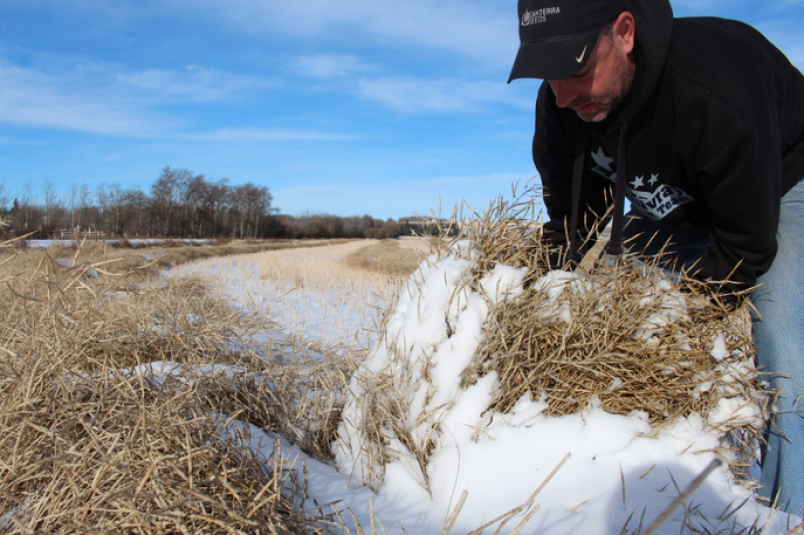
Rick Kantz with the BC Grain Producers Association says he hasn’t seen a year like this since the 1990s. With crops still on the field, he says producers are in a lurch. “We are still dealing with the fall. About 20 per cent of yields are still on fields and this isn’t going to be positive,” he says. “Cereals will likely be flattened and not sellable. Canola that would normally have been pulled in has been snowed under.”   He said this season was not what the agriculture sector needed. “We are all used to uncertainty to a point, but we’re still trying to salvage this year,” he said. Dawson Creek rancher Larry Fossum, past president of the B.C. Cattlemen’s Association, said earlier this fall that the situation has him having to do more with less. “Ranchers with full-time income coming off the ranch would be (earning) roughly 40 per cent less right now if they sold their cows,” he said.  According to a Country Life in B.C. report, Anne Wasko told the B.C. Association of Cattle Feeders the U.S. was solely to blame for the over correction in price. Wasko said the cow inventory in that country has come on so strong that the market hasn’t had time to catch up.   Shaun Grant, general manager of the South Peace Grain Cleaning Co-op, said he knows of one mid-size producer who’s pegged his losses at $1 million. “There wasn’t time to complete the harvest,” he said. “The ground conditions have been very wet and soft, and then it started to rain and that delayed harvest. Then the snow came right behind it.” Kantz agrees. “If it hasn’t been cold, it has been raining,” he said. “There has been nothing like this since the 90s crops on the field rolling past mid November is certainly an odd year.” B.C.’s Peace Region accounts for about 80 per cent of the province’s field crop production, with main crops being wheat, barley and canola. Kantz says the 20 per cent of crops left on the fields is many producers’ margin.  “And then when the crop on the field is of less quality, more of a feed level, then income goes down. Cattle were down this year too. We need an early spring to get this year’s work done—to get the crops off before new planting.” He admits it doesn’t look promising and that early spring chances are slim. “Right now it doesn’t look like an early spring is in the cards.” Source - http://www.alaskahighwaynews.ca

06.12.2016

India - Massive crop failure stares at state

The State Government is expecting crop failure on a massive scale this year on account of the acute drought situation, Agriculture Minister V S Sunil Kumar said on Monday. “As we enter December, 1000 hectares of farm land in Palakkad and Thrissur have already dried up. Many panchayats in Wayanad are faced with severe drought and crop loss,” the minister said, inaugurating the World Soil Day celebrations organised by the State Soil Survey and Soil Conservation Department. The Kerala Agricultural University and the Soil Survey and Soil Conservation Department are examining the mass appearance of earthworms and large-scale fleeing of frogs in three panchayats in Wayanad, both apparent indicators of drought, he said. The study in Wayanad has also revealed the appearance of flora and fauna common to desert regions, he said. In October, the State Government had declared all 14 districts of the state as drought-hit. The announcement was made by Revenue Minister E Chandrasekharan in the Assembly.The Agriculture Department intends to equip all farmers in the state with soil health cards within five years, the Agriculture Minister said. The challenge before good agriculture management is ensuring profitability in farming with minimal impact on the environment, Planning Board Vice- Chairman V K Ramachandran said. Additionally, good management of soil health, Ramachandran said, was imperative to sustainable crop production. A UN Food and Agriculture Organisation campaign, the World Soil Day is observed every year on December 5 to highlight the importance of soil in people’s daily lives. This year the theme is ‘Soils and Pulses, a Symbiosis for Life.’ Sunil Kumar released a postage stamp on the importance of soil issued by India Post. K Muraleedharan MLA presided over the function. Mayor V K Prasanth, Soil Survey and Soil Conservation director J Justin Mohan, Agriculture Production Commissioner Raju Narayana Swami, Environment Department director Padma Mohanty and Agriculture director Biju Prabhakar spoke. Source - http://www.newindianexpress.com

06.12.2016

Pakistan - Crop loss management

THE country’s apex agricultural research body is evolving strategies to enhance adoption of harvest and post-harvest management technologies through public-private community partnerships. The Pakistan Agricultural Research Council (Parc) has before it two strategies: making agri-food systems more knowledge-intensive and strengthening strategic partnerships and networking. These strategies are focused on devising innovative, best practices applied and integrated for reduced harvest and post-harvest losses and wastage and developing technical competency expertise in different aspects of post-harvest management. Currently, the magnitude and nature of geographical spread of research activities in post-harvest loss management is quite meagre as compared to the challenges and efforts needed. The success of strategies will largely depend on effective partnerships and cooperation among research and development organisations, and other stakeholders engaged in harvesting, post-harvesting and marketing of agricultural commodities and products. Parc’s aim should be to help stakeholders and partners not only to engage in collaborative efforts but also to mobilise partnership support from its sister organisations To forge such an effective partnership, Parc needs to rigorously launch a series of awareness campaigns about the importance and scope of networking among stakeholders. The aim should be to help stakeholders and partners not only to engage in collaborative efforts but also to mobilise partnership support from Parc’s sister organisations. Losses of fresh fruits and vegetables in developed countries range from 2pc for potatoes to 23pc for strawberries, with an average of 12pc losses between production and consumption in general. On an average, the losses at the retail, food service and consumer levels are about 10pc in developed countries and 20pc in developing countries. Pakistan’s post-harvest losses are estimated at Rs134bn annually. Data collected for fiscal year 2014-15 showed that 7.25m tonnes of vegetables and 6.80m tonnes of fruits were produced having a total value of Rs537bn. At least 25pc losses of horticultural crops means 3.5m tonnes are lost. If post-harvest losses are cut by 1pc, horticultural products worth more than Rs5bn could be saved. Adequate post-harvest treatments not only minimise post-harvest losses, but also maximise the producer’s profits, and result in better-appearing, more nutritious fruits and vegetables on consumer’s plates. In post-harvest management, technical competency needs to be developed in areas like preserving quality (especially for the exportable commodities), pre-storage treatments, crop storage, pest management, packaging, primary and secondary crop processing, qualitative and quantitative loss assessments, and adoption of best international practices. Currently, four federal and six provincial institutions are engaged in conducting post-harvest management-related research activities. Their focus on research includes variety screening, packaging, storage, grading, fruit processing, fruit handling and preservation through dehydration. The commodities focused are mango, citrus, apple, peach, apricot, dates, plum, pomegranate, persimmon, guava, grapes, lemon, potato and onion. Source - https://www.dawn.com

05.12.2016

USA - What is crop insurance, really?

A lot of you want to see more family farms and ranches and more businesses in our rural communities. You also care about healthy food and clean water. But if you’re not a farmer, and I say the words “crop insurance,” those words might just go in one ear and out the other. Well, guess what — crop insurance has everything to do with the viability of family farms, the health of rural communities, production of healthy food and stewardship of clean water. But how? What is crop insurance and how is it connected to the kinds of decisions farmers make, with the kinds of farms we have on the landscape? First, we have to understand why we have crop insurance. We know farming is risky for many reasons: weather and markets can be unpredictable and they have huge impacts on annual profits. With crop insurance, farmers can manage this risk by filing a claim and getting a payment at the end of a bad season. This risk is generally regional. If one farmer in an area battles drought, probably all the neighbors do too. When everyone brings in a claim at the same time, the insurance company faces steep payouts. The federal government decided it was important to help farmers and insurance companies manage some of this risk, so it subsidizes crop insurance by supporting insurance companies and paying a portion of farmers’ crop insurance premium. Cap benefits to make things even Still with me? Unfortunately, there’s a major problem with this setup: the nation’s largest and wealthiest farms can insure against a greater level of production risk than smaller farmers can, giving the largest producers a financial advantage. Even though other federal programs have payment limits, there aren’t any limits to what the government will pay on crop insurance premiums. Right now, if one operation farmed the entire state of Iowa and wanted to buy crop insurance to cover all of it, the federal government would cover 62 percent of their crop insurance premiums for every single acre. This undermines the financial health of our nation’s small and mid-size farmers. We believe a change in policy is needed to level the playing field for small and large farmers. There are a variety of ways to tackle this, such as capping subsidies, or reducing the amount of subsidy for higher levels of coverage. These measures could make crop insurance accessible to all farmers while removing the advantage that unlimited subsidies offer to some. Incentivize conservation Another issue with crop insurance: it represents a huge missed opportunity to encourage farming practices that are good for our soil, water and other natural resources. We know that practices such as planting alternative crops or implementing diverse crop rotations can build soil health, which improves crop outcomes, like increasing drought tolerance and reducing nutrient loss. It would be fiscally and environmentally responsible to structure crop insurance to encourage conservation practices. At present, most crop insurance policies discourage common-sense conservation practices like crop rotation or crop diversity. We believe this should be reversed. Crop insurance that works for all Finally, there are a lot of producers who would like to be able to use crop insurance but aren’t able to access policies that work for them. Crop insurance is very well set up for certain commodity crops — 70 percent of acres protected under crop insurance are planted in corn, cotton, soybeans and wheat. But producers who grow unique crops, who raise organic crops or who are highly diversified often have a hard time finding crop insurance. USDA’s Risk Management Agency has been expanding its offerings in these areas. There are more organic policies, and a program called Whole Farm Revenue Protection is designed for diversified operations. But we believe there’s opportunity to improve and expand these programs so they work better and for more farmers. Small producers and historically under-served producers are more likely to raise crops for which there aren’t robust crop insurance offerings. Ensuring that these producers have access to robust crop insurance will help them establish and grow their businesses. Their financial health and presence in rural areas contribute to the strength of rural communities. We believe that making crop insurance available to all producers will be an important step in our work of supporting small and mid-size farms and fighting for vibrant rural communities. So that’s how you fix crop insurance: cap benefits to the largest farms, incentivize conservation and expand access to all producers and all crops. Source - http://magicvalley.com/

05.12.2016

Kenya - Climate change hurting small farmers

Rising temparatures, crop failure, loss of livelihoods and destitution in millions of households impact smallholder farmers across Africa’s agro-ecological landscapes. To illustrate the unfolding crisis, let us consider the case of Malawi, one of the few countries to have achieved a fair deal of agricultural success but is now facing the worst drought in over three decades. As is the case with many countries in southern Africa, Malawi has experienced widespread crop failures due to a devastatingly strong El Niño. The country witnessed late on-set of rains, erratic rainfall, floods and prolonged dry spells. As a result, the production of maize is estimated at just over 2.5 million tonnes in 2016. This is 16 per cent lower than the reduced harvest in 2015 and 34 percent below the previous five year average, leaving 39 percent of the population dependent on national and international food aid to survive. In the hardest hit areas, harvest declined by 70 per cent while farmers in some areas simply couldn’t plant as the rains didn't come. Dealing with this challenge in the future will require both efforts to reduce climate change and, most importantly, strategies to enable farmers to adapt to its effects. All eyes are now on the meeting taking place in Marrakesh of the world’s climate change experts and policy makers, which is seeking to set the world on track to reducing greenhouse gas emissions. Last year, the experts met in Paris and reached a welcome agreement that seeks to limit the rise in global temperatures above pre-industrial levels by 2?. However, the emissions of greenhouse gases are not yet falling and the effects of climate change are worsening. Nowhere else is the imperative to act more urgent than in Africa, where 70 per cent of the population is dependent on rain-fed, smallholder agriculture. As the case of Malawi demonstrates, rising temperatures often signal drought. This reality is here with us today, and far beyond Malawi and southern Africa. For this reason, those of us from the African continent hope that this will give the first post-Paris meeting a greater sense of urgency. Inaction will be catastrophic. Although Africa emits less than 3 per cent of the climate change inducing greenhouse gases, it will suffer its effects disproportionately. Mean temperatures will rise faster than the global average, exceed 2°C and may reach as high as 3°C to 6°C by 2100. For every year our global leaders fail to make progress against their commitments, it is Africa’s families that will pay the greatest price. This is not to leave everything in the hands of global leaders, as the prosperity of Africa and its farmers will also depend on how well farmers, especially smallholders, are able to adapt to the changing climate. This is much more within our control. Indeed, the work of AGRA and our partners has shown that African farmers are not powerless in the face of climate change. There are many ways in which they can survive and even thrive despite the dramatic shifts in growing conditions. For instance, farmers in some parts of Malawi, who are planting more drought-tolerant crops — cassava, sweet potato and pigeon pea — and using better agricultural practices are not only surviving the drought, they are expecting to generate a good income on this year’s harvest. The insurance and finance sectors have also stepped up to the plate by designing innovative products that are minimising the effects of climate shocks to farmers. Still in Malawi, tens of thousands of farmers in the worst hit areas south of the country will now have access to credit from a microfinance institution that has protected these loans with a yield insurance that covers the crops against the impact of floods and drought. Overall, to achieve food security under climate change, the resilience of communities and individual farmers needs to be strengthened through pro-active and longer-term adaptation actions. Although a lot more is yet to be accomplished, the continent has invested in the development and adoption of many new agriculture innovations and technologies which should be scaled up. We cannot put off further action on mitigating and adapting to climate change without expecting even greater pain for smallholder farmers and others around the world. From Marrakesh to all countries’ capitals and decision-making tables around the world, I hope world leaders will seize the moment to take action and continue to put us on a path toward a better future. A future where African smallholder farmers can fully exploit their potential to deliver food security, contribute to poverty reduction and achieve inclusive economic growth and development. Source - https://www.standardmedia.co.ke

05.12.2016

Rwanda - $13 million invested into irrigation system for farmers

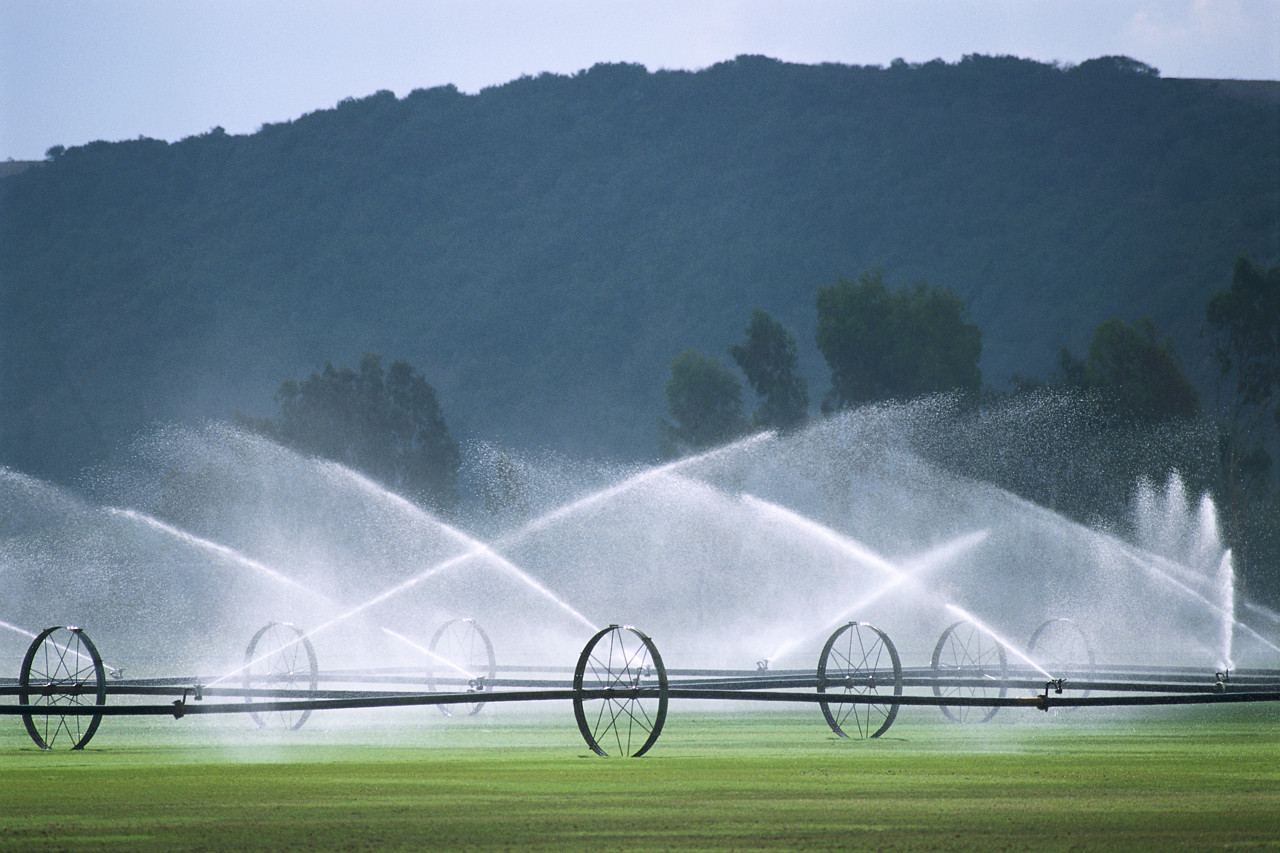
In a new scheme the government has invested $13 million into a new irrigation system to benefit farmers and boost production in the country. This new solar powered irrigation system is planned to promote climate resilient agriculture and sustain production through droughts which some regions of the country are known for. This follows a partnership between Japan international Co-operation Agency and the Government of Rwanda. The system is aimed at helping farmers of vegetables and fruit in Rurenge and Remera.  According to Hiroyuki Nakada, the chief representative of JICA, the agriculture sector employs over 72 percent of the population and generates 33 percent of the national gross domestic product. Source - exchange.co.tz

05.12.2016

Australia - Farmers affected by hail storm offered Concessional Loans

A hail storm raged through Sunraysia last month and is reported to have wiped out over 10 per cent of the nation's table grapes. It also devastated stone fruit, almond, dried fruit and wine grape crops. The total damage caused by the brutal storm was estimated to be between $77 and $150 million. Farmers affected by the storm however are being offered Concessional Loans to recoup some of the losses incurred. Source - abc.net.au

05.12.2016

USA - The effect of low commodity prices on crop insurance

In my previous two articles, I addressed the effect of low commodity prices on Title 1 Farm Bill programs specifically Agriculture Risk Coverage — County (ARC-CO) and Price Loss Coverage (PLC). Title 11 crop insurance programs are considered to work hand-in-hand with the Title 1 commodity programs to form the farm bill safety net. In 2014 Revenue Protection (RP) Insurance covered 88 percent of all insured corn acres and 85 percent of all insured wheat acres in the U.S. As revenue based insurance program, RP policies will make indemnity payments when either reduced prices and/or yields result in actual revenue that is lower than guaranteed revenue. The guaranteed revenue is determined by multiplying the projected price by the APH yield by the coverage level. The projected price is determined by the futures prices during a one month discovery period. For corn the December futures contract during the month of February is used. Winter wheat uses the September contract from Aug. 15 to Sept. 14. Actual Production History (APH) yields are specific to a producer's farm or individual field. Finally, producers can choose coverage levels from 50 percent to 85 percent. The discovery period for winter wheat has been completed and the projected price for the 2016-17 crop has been determined to be $4.74/bu. If we multiply the projected price ($4.74) by a common dryland APH (30) by the highest coverage level available (85 percent) we get guaranteed revenue of $120.87/acre. According to the winter wheat budget for northeast Colorado posted to the CSU ABM website, http://www.coopext.colostate.edu/abm/, the total direct cost of producing one acre of winter wheat is $206.70. In this example, the RP policy would cover 58 percent of the cost of production. Corn that will be produced during the 2017 crop year has not completed the RP discovery period. If we use last year's projected price of $3.86 multiplied by a reasonable APH of 170 bu./acre multiplied by the highest coverage level available (85 percent) we get guaranteed revenue of $557.77/ acre. The CSU ABM budget for corn lists the total direct costs at $658.04/acre, resulting in coverage of 85 percent of the cost of production. Source - http://www.journal-advocate.com

02.12.2016

USA - DC Federal Court Dismisses Crop Insurer’s Claims Against the Federal Crop Insurance Corporation

A DC federal court had before it a dispute between a crop insurer and the federal insurance provider that operates under the Federal Crop Insurance Act through a standard reinsurance agreement. The dispute was about the actuarial methodology allegedly modified and altering the premiums for several crops. The issue was handled administratively, resulting in a decision upholding the action of the government insurer. This action was brought on claims allegedly outside the scope of the administrative board’s jurisdiction and a declaration that the board erred. The government insurer moved to dismiss the complaint and the court granted the motion. The case is useful for its analysis of a challenge to this type of administrative proceeding and the jurisdictional issues involving the federal crop insurance program. Claims for promissory estoppel and unjust enrichment were dismissed because of the existence of a binding contract – the standard reinsurance agreement. The case demonstrates the difficulty in challenging determinations under the standard reinsurance agreement in the federal crop insurance program. Source - http://www.lexology.com

822
of 1225