

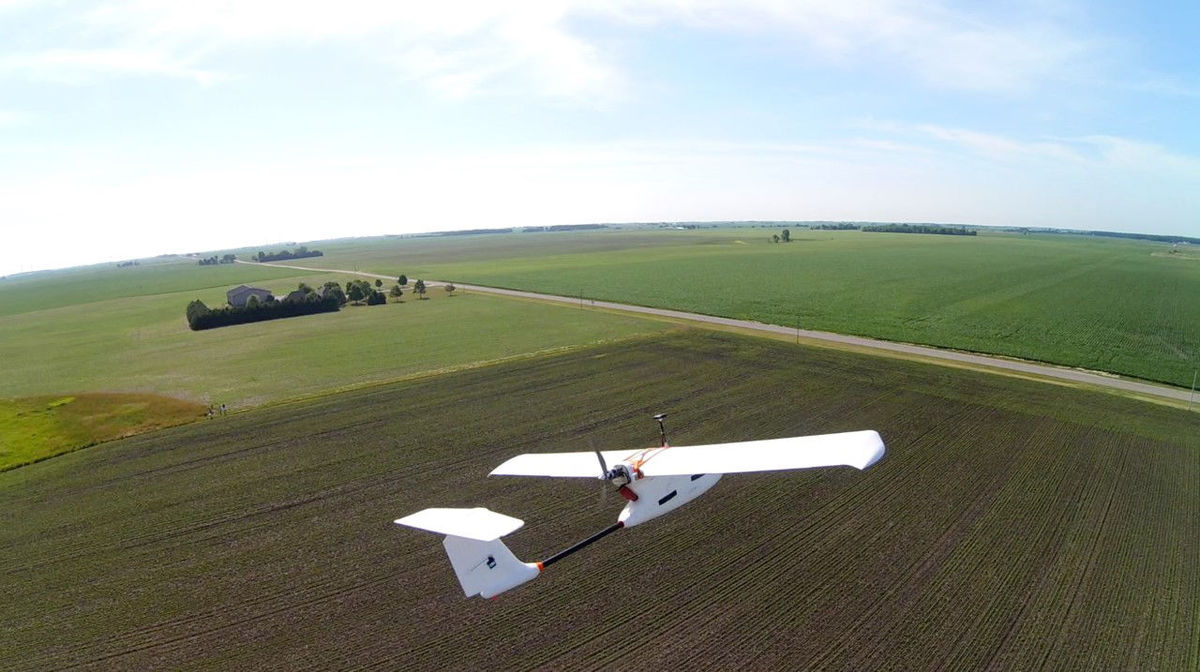
UAVs, unmanned aerial vehicles, aren’t new technology by any means. Now, however, thanks to robust investments and a somewhat more relaxed regulatory environment, it appears their time has arrived — especially in agriculture.
Prior to the use of so-called drones, crop adjusters could have walked fields for hours and sometimes not discover problem areas at all. Drones can locate hot spots faster, so the crop insurance company can better assess how much damage a farmer really has.
A scout now can determine if a field has been damaged within a matter of minutes, said Eric Vanasdale, COUNTRY Financial senior loss control representative.
“Drone technology is advancing rapidly. Some would argue that the technology is outpacing regulations,” he said in an interview at the Illinois Farm Bureau annual meeting in Chicago.
But commercial drone regulations released by the Federal Aviation Administration at end of August provide clarity about what farmers can and can’t do — clearing the sky for agricultural drones to take flight.
“I think it’s a great first step from the FAA. They’ll continue to improve them and make it easier for our farmers to use,” Vanasdale said.
“There’s been a lot of great advancements on things we can do on our farms, whether it’s NDVI technology for plant health, using it to detect livestock out on the pastures. We’re using them a lot to check crop damage with our claims area.”
In simple terms, he explained, if farmers get their drone pilot’s license, they can fly up to 400 feet high, they have to keep the drone in their line-of-sight and they must fly in uncontrolled airspace.
“The regulations did clarify a lot of those perceived gray areas. It provided a pathway for farmers to use these with reasonable regulations,” Vanasdale said.
“Over the winter is a great time to figure out what technology best suits your operation. It’s a great time to study for the exam, to take the test, to get your remote pilot certificate and go ahead and figure that out over the winter so come spring, you’ve got the equipment, you’ve got the license, you meet the regulations and you’re ready to go.”
He expects the FAA will continue to refine its regulations. The biggest issue remaining for farmers is they have to be able to see their drone the entire time they are flying it.
“That works in a 60- or 80-acre field, but once you get in larger fields, it’s more difficult to do that,” Vanasdale said.
“But the FAA will continue to improve that regulation — as technology improves and makes these safer, they’ll fly them out of your line-of-sight.”
So is the sky the proverbial limit for drones in agriculture?
“It’s a great scouting tool. I think it’ll get to the point where a majority of farmers have them. Not everybody is going to get one. There’s some farmers that just don’t embrace technology as much as others do, so not everyone will have one,” Vanasdale said.
“But those that are wanting to do more of their own agronomy work, that are doing more of their own crop and field scoutings, those people, if they don’t already have one, certainly will here soon.”
“The technology is out there. It’s been proven by the early adopters,” he added. “Now that you don’t have those regulatory concerns that we used to have, there’s really nothing holding farmers back from embracing this and adding it to their operations.”
Want to fly a drone on your farm? Here’s what you need to know before takeoff:
Farmers using unmanned aircraft in their own farming operations are classified as commercial users and must adhere to Federal Aviation Administration Part 107 Regulations for small commercial unmanned aircraft systems.
- The regulations create a new class of pilot’s license called a Remote Pilot Certificate. The Pilot in Command, or PIC, must hold this document, which requires them to be at least 16 years old and pass an initial aeronautical knowledge exam — which costs about $150 and consists of 60 multiple-choice questions — and Transportation Security Administration background check.
- Individual aircraft must be registered with the FAA for commercial use. Registration — done at registermyuas.faa.gov — is $5 per aircraft and lasts three years.
- Operations must adhere to specific airspace and operational limitations. In particular, unmanned aircraft and attachments must not exceed 55 pounds, and the PIC must keep the aircraft in their visual line-of-sight. Do not fly over people or from a moving vehicle. Only fly during the day. Yield right of way to manned aircraft, such as crop dusters. And fly under 400 feet unless operating above structures such as wind turbines.
Source - http://www.agrinews-pubs.com










