NEWS
825
of 1225
News
25.11.2016

Costa Rica - Hurricane Otto threatens pineapple production

The National Hurricane Center´s latest report at 07.00 am local time (14.00 CET), was that Hurricane Otto was moving towards the Nicaraguan coast with windspeeds up to 165 km per hour. At time of publishing there was no information on whether the hurricane was becoming more intense in the hours before reaching land. As much 30-40 cm of rain could fall in Costa Rica and Nicaragua. There are also warnings of rising sea levels, as much as 120-180 cm above normal tide levels in areas. The hurricane was expected to make landfall at around 16.00 CET Thursday. A pineapple producer from Costa Rica said on Wednesday evening that there is indeed a code red for the whole Nothern part of Costa Rica. "People have been evacuated from the coastal areas. At that point they were expecting the hurricane to hit land at 6pm Wednesday local time, however this was not the case." He explains that the country is checking all regions, where which rivers may burst their banks and trees could which are a potential danger to nearby buildings were cut down yesterday. The producer also explained that all staff have been told to stay at home. He goes on to say that it's just a case of waiting to see what the effect will be in the short and long term. "Floods would definitely have an impact on our pineapple production." The storm has already cost the lives of 7 people in Panama, according to information received last night (European time). The producer explained that because of the quick reaction and organisation, no people have been injured yet in Costa Rica. However, he did say the worst part still had to come. Source - http://www.freshplaza.com

25.11.2016

EU MEP calls for more crop insurance, more associations

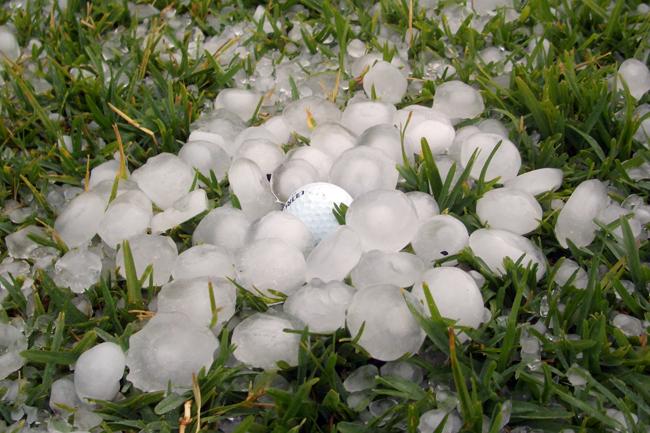
A Member of European Parliament has pointed to several shortcomings in the old continent compared to the U.S. in terms of agricultural policy, but also believes Italy’s South Tyrol region can serve as a successful model for efficient and productive fruit production through associations. The region is playing host to biennial international apple industry event Interpoma in Bolzano this week, which has attracted participants from over 70 countries. During the event this morning, MEP Herbert Dorfmann drew particular attention to measures that may change the face of European fruit production through a simplification of the Common Agricultural Policy (CAP) known as the “Omnibus Regulation”. “With the latest reform the incentive for insurance is moved to the second pillar of the CAP so it can be included in rural development programs,” said Dorfmann, who belongs to the Christian Democrats and is a member on the EU Committee on Agriculture and Rural Development. “At the moment there are few European countries exploiting these opportunities,” he said, mentioning in fruit industry there were examples of anti-hail insurance for example. “So far it’s only Italy and Spain that are using this insurance.” He said the reforms contemplate reducing the industry share in insurance programs from 30% to 20%, while bolstering the role of consortia or associations for the defense of farmers. “There we would have the opportunity to put together difference insurance programs with the help of the European Union,” he said, highlighting there were still many parts of Europe, such as Poland, where very few sector associations existed. “I am convinced we can get a better system.” Dorfmann said he hoped South Tyrol could serve as a model for the formation of new associations throughout the European Union. Another key element for the EU fruit industry’s future is sustainability, and to achieve this Dorfmann said faster processes were needed for the approval of biopesticides. He said it was difficult for crop protection countries and growers when it took five to seven years to get products approved. “The Americans are better than us,” he said, referring to the U.S. Food and Drug Administration’s (FDA) risk assessment procedures where a product is first determined as low risk or high risk, and if it’s low risk the approval process takes a maximum of three years. “In Europe we would like to do the same,” he said, mentioning the issue would be voted on in the EU Parliament early next year. “I’m fully convinced that alternative natural pesticides are an advantage not only for organic farming but also conventional farming.” Source - http://www.freshfruitportal.com

24.11.2016

Kenya -This Is What a Climate-smart Farm Looks Like

[caption id="attachment_185465" align="aligncenter" width="411"] Purity Gacaga’s small dairy farm in Embu, Kenya, is a model of climate change adaptation. All photos by Tim McDonnell.[/caption] The highway from Nairobi to Purity Gacaga’s dairy farm runs through the croplands of central Kenya: hundreds of square miles of maize and vegetables, interrupted halfway along by the country’s largest rice plantation sprawling toward the horizon like a glassy green sea. The rice is industrially irrigated, hence the green; in contrast, the maize and vegetable plots are rainfed, and with this year’s rainy season weeks late, the hills are brown, dusty, and denuded. The highway leads to Embu, a hub of a half-million farmers and traders, where the produce of this region is gathered to be sent south to Nairobi or north to the pastoral drylands. Purity’s farm is a bumpy 15-minute drive out of town and, compared to the farms leading up to it, is scarcely recognizable as a farm. It looks more like a miniature rain forest: four acres of dense trees and shrubs nestled in a valley that in the early morning captures a low-slung mist. It’s only when you get closer, under the tree cover, that you see the dazzling array of tomatoes, coffee, kale, and napier grass, and the hand-built corral that houses three cows and a motley herd of goats. Purity’s homestead is an anomaly that emerged over the last few decades through a combination of luck, foresight, scientific curiosity, and a willingness to gamble on experimental approaches to farming. Once as barren and degraded as the farms alongside the Nairobi highway, it’s now the highly productive envy of the neighborhood. It’s also living proof of the efficacy of agroforestry: the strategic use of trees on farms to improve soil health and insulate crops from drought. The practice has lingered for years outside the mainstream of Kenyan agriculture, but some scientists see it as a low-tech, low-cost, readily available weapon for farmers against climate change. Temperatures in Kenya are steadily climbing, up nearly 2 degrees Fahrenheit since the 1960s on average. And while total rainfall has increased marginally during that period, the distribution is increasingly unpredictable—mistimed rainy seasons and stretches of drought punctuated by downpours. With less than one percent of the country’s cropland under irrigation, the brown fields en route to Embu are now the rule, not the exception. That’s a bad sign given that one-fifth of the Kenyan population is already considered food insecure by the United Nations Food and Agriculture Organization, and the population is growing at a rate twice the global average. And there are broader implications for the economy: Agriculture is by the far the country’s biggest employer, the primary income source for some 11 million people, mostly on small farms like Purity’s. In other words, small-scale farmers here need all the help they can get. There are countless solutions on the table, from drought-resistant seeds to hyper-local crop insurance to daily market information delivered via SMS to farmers’ cellphones. But trees might offer the lowest-hanging fruit. “Anything with deep roots is going to be much more resilient,” said Dennis Garrity, a senior agronomist at the World Agroforestry Centre in Nairobi. “For small-scale farmers on the edge, it’s starkly obvious that trees are the future of agriculture.” Purity’s farm wasn’t always what Garrity calls “just short of heaven for agroforestry.” When Purity inherited this plot of land as a young bride in the late 1970s, it was mostly bare dirt with patches of couchgrass, a fast-growing weed that’s notoriously hard to remove. With her husband often gone looking for work, Purity had to learn how to be a farmer solo, by trial and error. “I started with nothing. I was just a primitive farmer,” she recalls. “But I decided I should do all that I can to work hard to get something for myself and sustain my family.” She started with a few pigs, but they were expensive to feed and didn’t turn a profit fast enough. So she slaughtered them, sold the meat, and bought a few sheep. They took care of the couchgrass, but then chowed through every other plant in sight, and eventually she sold them as well. Things started to turn around when, with the help of a loan from her neighbors, she rustled up the cash to buy a heifer. It bore a bull, which she sold, and also produced milk that made for steadier income than her previous livestock had been able to offer. One of Purity’s cows. After a few years of false starts with pigs and sheep, Purity has found dairy farming to be profitable and sustainable. But feed for the cow continued to be an onerous expense, and by this time Purity was eagerly looking for ways to grow more crops for subsistence (she eventually raised 11 children here) and to slow the steady erosion of her field into a neighboring ravine. Taking a tip from some local government agriculture advisers, in 1980 her husband planted the farm’s first sapling, a macadamia that now towers behind the cow stables. Purity, meanwhile, went looking around the area for calliandra, a leafy shrub in the pea family that she had heard could prevent erosion and make good fodder for the cow. She picked a different plant by accident, and was disappointed by the results. But she didn’t give up, and in the early 1980s signed on to a pilot project with the government and some scientific research groups that aimed to experiment with agroforestry techniques on local farms. “She became a farmer research agent, willing to risk a bit of her land to test different systems,” said Jonathan Muriuki, an agronomist who joined the project a few years later and has remained friends with Purity. “And what we’ve seen in the last few decades is a massive transformation.” Muriuki estimates that Purity’s farm now supports more than 100 species of trees and shrubs (including calliandra, which grows in strategic patches alongside crops), and that at least 45 percent of the land is shaded. Purity has transformed, too: Where she once had never heard the word “agroforestry,” this farmer who never attended high school now rattles off the scientific names of plants like a biology professor: “These nitrogen-fixing shrubs, like tephrosia, crotalaria, and desmodium, they make the soil biodiverse by putting nitrogen into the soil, so you can make the soil fertile even without using manure or fertilizer.” Aside from restoring soil nutrients, trees can provide other important services to climate-vulnerable farmers. They prevent soil erosion, help the soil store more rainfall, and shade crops from direct exposure to the sun. They provide alternate means of earning income, should crops fail: Trees can be trimmed for fuelwood or construction materials, or produce fruits of their own (Purity’s farm, in addition to macadamias, has several large avocado trees). Perhaps most importantly for farmers with livestock, trees provide free fodder that’s often more nutritious than store-bought dairy meal. And the nutrient-rich manure from the animals can be recycled back onto the trees and crops, instead of store-bought fertilizer. “I think you have seen my animals, they look healthy,” Purity says. “You see, instead of going to buy dairy meal, you have enough fodder trees in the farm to just harvest, every morning and every evening. [If] you go and buy dairy meal, and if you count the transport, and time wasted there, you save money. And you get enough milk, at a good quality.” Garrity and other leading scientists and environmentalists in Kenya are trying to replicate Purity’s success on hundreds of thousands of other small farms. The Environment Ministry recently committed to restore 12.6 million acres of degraded forests, watersheds, and other important landscapes by 2030, largely by growing trees on cropland. That plan promises to make farmers more resilient to climate change without needing to invest in high-tech, expensive seeds or equipment. But Garrity cautions that it will require a sea change in how farmers envision the modern farm, which has always been associated with Western-style mono-cropping without a tree in sight. [caption id="attachment_185468" align="aligncenter" width="600"] The farm one scientist calls “just short of heaven for agroforestry.”[/caption] “We’re turning the whole science around,” he said. “More and more we’re turning the corner in terms of realizing that Western agriculture just doesn’t make sense here,” especially in the context of climate change. There’s also the challenge of thinking ahead. Big trees like Purity’s avocados can take more than a decade to mature, and even shrubs like calliandra require farmers to plan further in advance—and wait longer for a return on investment—than they may be accustomed to. And without the support from government agencies and NGOs that Purity has benefited from, neighboring farmers who may be inspired by Purity’s success wouldn’t be able to give their farms the complete agroforestry makeover overnight. In that respect, her farm is like a preview of what much of central Kenya could look like in the future, if more farmers start to follow her lead now. Purity’s children are all grown and most have moved off the farm, a few with their own small businesses in Embu and children of their own. But Purity still wakes up at 5 o’clock every morning to milk the cows and goats. She packages the milk in plastic soda bottles, then hops the matatu (a minibus) into town to make the rounds to a regular series of customers who pay about 60 cents (U.S.) for a litre of cow milk or 45 cents for a half-litre of goat milk. Add to that the money she earns selling coffee and other cash crops, and Purity has one of the neighborhood’s highest incomes. She keeps a well-swept house, adorned with pictures of Jesus and the pope, with a television blaring the local news. She attributes her success to the trees. She regularly travels the region to preach the agroforestry gospel to other dairy farmers, and even joined a delegation from the European Commission to the UN climate summit in Paris last December. She’s keenly aware of the high stakes for her fellow farmers. “If we remain without making farmers aware about climate change, there will be either famine or poverty,” she says. “If we don’t have enough trees to make it better for the crops that we grow on the farm, we find that the land will remain barren, and nothing will grow there. For some time, we shall suffer.” Source - http://voices.nationalgeographic.com

24.11.2016

Australia - Damage bill from devastating Mildura hail storm passes $100 million

The damage bill from the devastating hail storm that hit Mildura recently has passed $100 million and is expected to climb higher. New figures from the Insurance Council of Australia reveal that the storm, which hit Victoria's Sunraysia district and communities in NSW and South Australia, has already generated about 20,000 insurance claims, with insurance losses so far estimated at $115 million across the three states. [caption id="" align="alignnone" width="620"] Wine grape grower Russell McManus with some some severely damaged wine grape vines on his property near Mildura. Photo: Darren Seiler[/caption] But the final toll is likely to be higher, given some damage is not insured. Campbell Fuller from the Insurance Council said it is expected to "take several months for the full extent of the losses to be known". The storm, considered by Mildura locals to be the worst hailstorm to hit the district since the 1970s, destroyed or seriously damaged more than 24,400 hectares of Victorian crops in one of the state's key food-producing districts. It left 21,004 hectares of field crops (including grain and legumes) destroyed or seriously damaged, with other key crop losses being table grapes (1489 hectares of losses), wine grapes (1238 hectares), nuts (226 hectares), dried fruit (168 hectares) and stone fruit (83 hectares). The Australian Table Grape Association estimates that crop losses equate to between 2 million and 2.5 million boxes of table grapes, or about 15 per cent of production. "The export value [of the lost crop], on average prices would be around about $75 million-$100 million," the group's CEO, Jeff Scott, said. "Some growers are reporting 40 per cent, 50 per cent, 60 per cent [crop losses], but there's quite a number of growers who were just wiped out totally." Wine grape grower Russell McManus, who farms with his brother Neville near Red Cliffs, estimates that he has lost about three-quarters of this season's crop, with the grape vines stripped of developing grapes, buds which produce next year's crop and foliage. "I'd say that approximately 75 per cent of our properties are wiped out. The remainder would have damage to a lesser extent, simply because our properties are spread out over an area," he said. "It will have an effect on next year's crop as well, because it's damaged the buds on the canes for the following season." [caption id="" align="alignnone" width="620"] Russell McManus' wine grape property during the storm. Photo: Russell McManus[/caption] The McManus brothers have also incurred a second blow from the storm, because they have contract harvesting deals with other local wine grape growers. "The unfortunate part about that is this year we made a decision to purchase a new grape harvester. So we're committed to go ahead with that deal, but unfortunately we've lost a lot of our work that will help repay it," he said. Mr McManus estimated that the storm will cost him  "hundreds of thousands of dollars". Mildura mayor Glenn Milne said farmers hit badly by the storm needed "cash support from government" and that it would have a "huge impact" on the region. Source - http://www.theage.com.au

24.11.2016

India - 11.61 lakh Odisha farmers to get Rs 1,776 cr crop insurance

A total of 11.61 lakh farmers across the State will receive Rs 1,776 crore as crop insurance for Kharif season of 2015, Chief Minister Naveen Patnaik said today. Addressing a gathering during his visit to Bargarh district, he said more than one lakh farmers in the district will get Rs 276 crop insurance in coming days. While farmers in Sambalpur district will receive Rs 100 crore, cultivators in Kalahandi and Balangir districts will get Rs 166 crore and more than Rs 370 crore respectively, the chief minister noted. Notably, the Odisha government has started the process for disbursal of crop insurance amounts among six lakh farmers of 10 districts located in the western part of the State. The chief minister said with the transfer of special assistance of Rs 100 per quintal of paddy to the bank accounts of the farmers hit by the drought last year, the promises made by the state government have been fulfilled. The Chief Minister said he has directed the district collectors to ensure farmers do not face any difficulties at the procurement centres during the paddy purchase. He mentioned about Odisha’s win of the national award more than once in agriculture sector and said this was possible due to sacrifice and hard labour of the farmers of the State. The chief minister said the BJD government has been working to safeguard the interest of the farmers and the same will continue. He alleged the neighbouring Chhattisgarh has affected interest of the farmers of Odisha by constructing barrages on the upper catchment areas of Mahanadi. Alleging the neighbouring State has conspired to supply water to industries with the establishment of the barrages on Mahanadi, Patnaik said the livelihood of the farmers, fishermen and lakhs of people of Odisha will be hit due to scarcity of water during non-monsoon period due to construction of barrages in the upstream of Mahanadi by the Chhattisgarh government. He stated the Odisha government has demanded before the Centre to form a tribunal to address the issue of river water sharing between States. Besides, the chief minister visited Deogarh and Jharsuguda districts to launch several projects and address public gatherings. Source - http://odishatv.in

24.11.2016

India - Patnaik distributes crop insurance among drought-hit farmers

Odisha Chief Minister Naveen Patnaik today distributed crop insurance benefits among the 2015 drought affected farmers in Bargarh district. The farmers were agitating since a long time demanding crop insurance benefits following massive crop loss due to drought during the 2015 kharif season. Patnaik said a total 11.61 lakh farmers across the state will receive Rs 1,776 crore as crop insurance for Kharif season of 2015. Addressing a meeting at Bargarh, he said more than one lakh farmers in the district will get Rs 276 crore as crop insurance in coming days while highest amount of Rs 370 crore will go to the farmers of Bolangir district. While farmers of Sambalpur will get Rs 100 crore, Rs 166 crore will be distributed among the cultivators in Kalahandi district. The state government started the process for disbursal of crop insurance amounts among six lakh farmers of 10 districts located in the western part of the state, an official release issued by the CMO said. This apart, Patnaik said the state govenrment has transfered Rs 100 per quintal of paddy as the special aid for drought last year. He said the promises made regarding the special aid have been fulfilled. Patnaik said he has directed the district collectors to ensure that farmers do not face any difficulties at the procurement centres during the paddy purchase. "My government has been working to safeguard the interest of the farmers and the same will continue," he said. Referring to Mahanadi water dispute, Patnaik said Chhattisgarh has hurt the interest of the farmers of Odisha by constructing projects on its upstreamr. He alleged that the neighbouring state has conspired to supply water to industries at the cost of farmers of Odisha. Odisha government has asked the Centre to form a tribunal to address the issue of river water sharing between states, he said. Source - http://www.business-standard.com

24.11.2016

Australia - Hail wipes out 10% of national grape crop

Hail, heavy rain and strong winds in north-west Victoria have destroyed table grapes destined for this year's harvest and buds setting for next year, reports abc.net.au. CEO of the Australian Table Grape Association (ATGA), Jeff Scott, said the damage bill was still being counted but the loss would impact the whole Australian market. "We are looking at about 2,000 hectares, about 80 growers [and] around about 2 million to 2.5 million boxes," Mr Scott said. "The value could be anywhere between $75 and $100 million [and] we are predicting round about 10 to 15 per cent damage across the national production. "Look, we've always had supply problems, particularly on the international scene. It just means there's going to be a lot of importers who aren't going to be able to buy a lot of fruit this year. "Growers need some confidence going forward, so they need some announcement made by the State Government in the very near future so they can actually plan and get on with their redevelopment." Viticulturist Ken Evans has lost all of this year's grape crop at his Red Cliffs farm and has sustained damage for next year. Mr Evans said growers would need assistance as they have had crop damage but also infrastructure loss as a result of the storm. He suggested allowing growers to draw down on their superannuation and said help with water and council rates would be useful, but the assistance needed to ensure growers stayed in the industry. "The government could definitely help us but I think straight cash handouts would probably be a bad thing," Mr Evans said. Source - http://www.freshplaza.com

24.11.2016

Canada - Alberta declares state of agricultural disaster amid poor harvest

Two Alberta counties west of Edmonton declared states of agricultural disaster Wednesday following a wet growing season that led to a difficult harvest. The moves came one day after the Alberta government declared a state of agricultural disaster. Yellowhead County and Parkland County made the declarations Wednesday, both saying area farmers still have crops on the field due to excessive moisture this growing season. “There are many years where growing conditions are perfect for farmers to have a highly productive season – this, unfortunately, was not one of them,” Yellowhead County Mayor Gerald Soroka said. “Right now in a significant number of acres across Parkland County, the excess moisture has made it very difficult for farmers to get into the fields and harvest their crops,” Mark Cardinal, manager of Parkland County Agricultural Services, said. “There is simply still too much moisture in the ground. Unless the ground freezes and precipitation is at a minimum, most of these crops will have to remain on the ground until spring.” On Tuesday, the Alberta government declared a state of agricultural disaster, saying “the agriculture industry is experiencing economic hardship resulting from adverse weather conditions leading to damaged crops throughout the province.” The province said declaring the disaster allows the Agriculture Financial Services Corporation (AFSC) to access funding to ensure producers with insurance are compensated for their losses in a timely fashion. “It’s been a real heartbreaker of a year. We understand the wet and snowy conditions are delaying harvest and having an impact on the quality of crops in many parts of Alberta,” Agriculture and Forestry Minister Oneil Carlier said. “The wet harvest season has been challenging for our farmers. Producers are concerned that they will not be able to harvest until spring. We take this issue seriously and our government is continuing to find ways to support our farm families.” According to the most recent Alberta crop report, producers across central and northwest Alberta managed to harvest about 87 per cent of their crop. Yields are above average throughout Alberta, but the quality of the crop is “extremely disappointing” due to the high moisture content. Yellowhead County said about 50 per cent of cereal crops remain in the field and about 21 per cent of oil seeds crops remain standing, “approaching definite disaster thresholds.” Both counties have asked the province for disaster recovery and support programs to help address the issue. Earlier this fall, several other Alberta counties declared states of agricultural disaster, including Lac Ste. Anne County, Brazeau County, Leduc County and Thorhild County. Source - http://globalnews.ca

23.11.2016

Sri Lanka crop insurance held back by farmer ignorance, lack of data

Although some crop insurance programmes are available in Sri Lanka, many farmers are unaware of its benefits or how to use it; and the lack of weather data is a stumbling block for index-based payouts that is gaining ground in other developing countries, a researcher says. "Farmer unawareness seems to be a major barrier for taking up insurance in rural areas," Kanchana Wickramasinghe, a researcher at Sri Lanka's Institute of Policy Studies, a think tank, said. A survey by the IPS in Anuradhapura, a key agricultural district in Sri Lanka's north central area, has found that demand for existing crop insurance schemes is low. Of 750 farmers surveyed, 31 percent said they were not aware of how crop insurance works and 23 percent have doubts about the process of crop insurance. "Most farmers during the discussions highlighted that they do not understand the real benefits that crop insurance brings in for small-scale farmers like them," Wickramasinghe said. Instead of making damage assessments, index-based crop insurance, which makes payouts based on weather, has gained popularity in countries like India, Kenya and Ethiopia, says Wickramasinghe. "In index-based weather insurance, the payout is based on a certain weather index, for instance, rainfall," she said. "The weather index is correlated with the crop yield. Index insurance is characterised by low transaction costs, as it does not require crop damage assessments in the field. "In addition, it lacks moral hazard and adverse selection problems, which are associated with traditional indemnity-based insurance products." In addition to educating farmers on the benefit of index-based crop insurance, Wickramasinghe says the absence of rainfall and yield data is a stumbling block to setting up such schemes. "The lack of weather stations and delays in getting data on a frequent basis are attributed to the unavailability of rainfall data in most cases," she says. The full op-ed is reproduced below: Crop Insurance: Is it Workable in Sri Lanka? By Kanchana Wickramasinghe Farmers have been severely affected by various natural calamities - floods, droughts and excessive rainfalls during the recent years. At macro level, the decrease in paddy production due to unfavourable weather conditions including droughts was 27% in 2014, when compared to production statistics of the previous year. Whilst important, weather related risks are merely one component when it comes to overall risks and uncertainties faced by farmers – which include price risks, market risks, etc. Recent unexpected changes in climate patterns have worsened the situation. When affected by a natural calamity, farmers face numerous additional issues in farming as well as in their household economy. A farmer from Nachchaduwa who was severely affected by floods in 2014 said: “Everything was washed away, Not only rice, our maize cultivations were also destroyed”. Floods and droughts are widespread disasters, which have area-wide implications.  “We did not have any other income. We, farmers tend to work as agricultural labourers in others fields when we face difficulties. But when everyone’s cultivations are destroyed, where can we go?” he added, highlighting their struggle in coping with such events. To this end, promoting effective risk management among farmers is important. In facing the impacts of a natural disaster, there are several ways of ‘risk management’, namely: avoiding risks, reducing risks and sharing risks. Risk sharing has been gaining a lot of consideration – which comes in the form of insurance. Insurance Crop insurance was introduced to Sri Lanka several decades ago. It was first introduced as a pilot project; later, the Crop Insurance Act (No 13 of 1961) was passed in 1961 to provide the required legal framework for the operation of regular crop insurance. The Agricultural Insurance Law No. 27 of 1973 came into operation in 1974 to make provisions for a more comprehensive scheme. The Agriculture and Agrarian Insurance Board (AAIB) was established in 1999, which is the responsible government agency for undertaking the government crop insurance programme now. A private insurance company entered the crop insurance business in 1993, and it is primarily being conducted as a welfare programme along with its other financial services. Both insurance programmes are voluntary and indemnity-based where insurance payout is based on the crop damage. According to the Central Bank Annual Report 2015, when just these two voluntary insurance programmes are taken together, only less than 4% of the paddy-cultivated area (on average) is insured during 2003-2015. In most of the cases, crop insurance is obtained as a requirement in getting agricultural loans. A survey of 750 farmers, conducted as a part of a research study by the Institute of Policy Studies of Sri Lanka (IPS) last year, in selected sites in the Anuradhapura district revealed that the demand for existing insurance schemes is considerably low. Over 31% of the farmers interviewed during the survey mentioned that they are not aware of how crop insurance work. Another 23% of farmers have doubts regarding the process of crop insurance. Most farmers during the discussions highlighted that they do not understand the real benefits that crop insurance bring in for small-scale farmers like them. Farmer unawareness seems to be a major barrier for taking up insurance in the rural areas. There has been a compulsory crop insurance programme introduced in 2013 by the government, which was bundled with the existing fertilizer subsidy programme. A mark-up was added to cover the insurance premium when obtaining fertilizer at a subsidized price. Due to the compulsory nature of the programme, the area percentage insured recorded 72 and 90 during 2014/15 Maha and 2015 Yala, respectively. However, lack of awareness of its intended benefits is also an issue with regard to this scheme. Innovations in Crop Insurance Index-based crop or weather insurance has been receiving much popularity particularly in developing countries (such as in India, Kenya Ethiopia), as a way out for certain inefficiencies of indemnity-based crop insurance. In index-based weather insurance, the payout is based on a certain weather index, for instance, rainfall. The weather index is correlated with the crop yield. Index insurance is characterized by low transaction costs, as it does not require crop damage assessments in the field. In addition, it lacks moral hazard and adverse selection problems, which are associated with traditional indemnity-based insurance products. Sri Lanka has a very short history in this regard. It is vital to implement an effective awareness creation programme to educate farmers on the benefits of index-based crop insurance. However, the discussions with key stakeholders reveal that there are several technical challenges in implementing index-based insurance in Sri Lanka. The absence of required rainfall and yield data are significant in this regard. Lack of weather stations and delays in getting data on a frequent basis are attributed to the unavailability of rainfall data in most cases. What Works for Sri Lanka? As of now, crop insurance is not a popular tool for climate risk management, although both public and private crop insurance schemes have been in place in Sri Lanka for several decades. Given the recent variations in climate patterns, it is important to identify gaps with regard to crop insurance take-up as a risk management strategy. In particular, the aspects of crop insurance demanded by farmers have to be researched in the case of Sri Lanka. IPS is currently conducting a comprehensive research to study risk management strategies of farmers and demand for climate insurance amidst a changing weather pattern. The study aims to bring in suitable policy recommendations to help farmers better manage climate risks and improve adaptation. Source - http://economynext.com

23.11.2016

Belgian top fruit sector hit by hailstorms

Due to the strong hail in the Belgian region of Borgloon, less fruit is expected to come from the area this year. Jackie Boussier, of the eponymous trading company isn’t very optimistic about the coming season. Besides the hail the sector is also suffering from competition from Eastern Europe, says the experienced trader. “I expect 20 to 30 percent less fruit compared to last year,” says Jackie. “The cause of this is the heavy hail which has made the fruit completely worthless. It will be a difficult year. When we spoke to the trader at the start of October he has just returned from a visit to three pear growers. The visits have not cheered him up. “Of the three companies there is only one of them whose fruit we can use,” he says. “The rest can’t be used. We have to watch the quality.” Source - http://www.freshplaza.com

23.11.2016

New Zealand - Over $60k raised for earthquake hit farmers

New Zealanders are getting together to help farmers recover from the devastating earthquake that recently hit the South Island. One farmer donated $10,000 to help earthquake-hit farmers with emergency supplies, farm equipment, essential tools and materials. The anonymous South Island donor gave the money to Federated Farmers Adverse Events trust fund, which has now received more than $21,000. Many of the fundraising efforts are directed at farmers. By Monday 21 Nov., the NZ Farming Facebook page had raised $45,000 through its givealittle campaign.   NZ Farming has organised private planes to take food, water, fuel, and The Press newspapers to farmers who were cut off by last week's earthquake. Top-dressing company Aerowork donated the use of one of their planes for the operation, and NZ Farming contributed to the costs of running the other two. Tyler Fifield, who organised a rescue mission by road from Blenheim, posted to Facebook that he and friends Josh Tomlinson-Nott and and Michael Kerr had come across a couple who had not yet been seen by any civil defence personnel. "Some fresh veges and milk for a tea was like Christmas to them and they were relieved to finally get contact with the outside world." Offers of help logged with the Federated Farmers 0800 FARMING line have topped 300. Source - www.stuff.co.nz.

23.11.2016

EU - EUR 600 Million for Agricultural Subsidies and Rural Development Zones

New EUR 600 million in subsidies to farmers, 60 percent co-insurance of crops and 80 percent cover the cost of installing the system "drop by drop" announced on Tuesday the leader of VMRO-DPMNE and the carrier of the electoral unit 4, Nikola Gruevski in front of the residents of Mogila. On the gathering in this municipality, Gruevski said that the electoral program for the period 2016-2020 has been prepared a long time and in consultation with experts and people from municipalities in order to meet the needs of citizens and to resolve the main priorities in every town. We do not want to deceive people, we want to be realistic in our promises. We made an accurate filigree estimate of what is possible and what is impossible.The possible is what we promised and for those things for which we were not sure if can happen,w e did not promised anything. Many times when the conditions are created, we know to surprise sometimes with things that we have not promised, but we have accomplished. You know that, and in many places has been done and certainly there will be such a thing - Gruevski said. He pointed out that great part of the election program is dedicated to the development of agriculture and in this context mentioned that for the system "drop by drop" with whom are received higher yields, it is predicted that the state would give support of 80 percent. Also, for those farmers who purchase high-productive cattle are expected to be covered 80 percent of costs for the purchase of such livestock. The funds for these purposes, as Gruevski said, have already been provided with the next year`s budget.

23.11.2016

Centre plans crop insurance scheme for small tea growers

The Centre is planning to roll out a crop insurance scheme for small tea growers. Initially, a pilot will be run in three regions in Assam, West Bengal and Tamil Nadu for one crop-cycle spread over two years commencing 2016-17. The Tea Board would be the nodal agency for the scheme and the cost will be shared between the Centre, the state governments and the growers in the ratio of 75:15:10. However, the growers would have to pick up the state government’s tab in case the government declines to contribute its share. The scheme aims to protect growers from anticipated losses in revenue caused by drop in international/domestic prices, yield loss due to adverse weather or pest attacks or any other reason beyond human control. The Tea Board, which has invited bids from insurance companies for the project, said there are 57,355 small growers in the targeted districts. During the pilot period, the scheme would benefit these growers, covering about 44,223.6 hectares of plantation area. Large growers can also join the scheme, but will have to pay the entire premium. The three regions where the scheme is proposed to be run as a pilot are Golaghat (Assam), Jalpaiguri (West Bengal) and Coonoor (Tamil Nadu) for the crop cycle of March to November for two consecutive years, Tea Board sources said. The small tea growers, who are now an emerging force in the Indian tea industry (accounting for more than 35 per cent of the production), have suffered crop damage due to hale storms, excess rainfall and pest attacks. “There has been a massive crop loss ranging between 30 and 50 per cent due to these factors,” said Bijoy Kumar Chakravarty, president of the Confederation of Indian Small Tea Growers Association. India - http://www.thehindu.com

23.11.2016

Australia - Multi-peril crop insurance: NSW Government premium help

THE NSW Government will soon announce subsidies for multi-peril crop insurance premiums. Sources have said, the NSW Government is close to finalising the subsidies. It would be the first time a state government has underwritten multi-peril crop insurance premiums. It comes after the Federal Government launched a scheme in March offering rebates of up to $2500 for the upfront costs growers pay when they apply for multi-peril crop insurance. According to sources, the NSW Government will implement key recommendations from the recent Independent Pricing and Regulatory Tribunal multi-peril crop insurance review. The review’s draft report, released in July, analysed the impact of a 50 per cent premium subsidy for the first two years, capped at $30,000 per farm business. This is reportedly the package the NSW Government is close to approving. The draft report said implementing the subsidy at the proposed level was “likely to cost the NSW Government about $7 million to $8 million a year”. The report also outlined the high cost of multi-peril premiums — several insurers estimated they ranged from $25,000 to $50,000 a year. The NSW Primary Industries Minister Niall Blair said he was considering the final report that was delivered to him last month. “The NSW Government is committed to supporting our farming sector to be more resilient, and better able to manage risk — that’s why in 2015 we put in place the five-year, $300 million NSW drought strategy,” Mr Blair said in a statement. “One of the key actions in that strategy was to investigate ways the NSW Government could support growth of a commercial multi-peril insurance market, to provide another risk management tool for our farmers.” NSW Farmers’ Association president Derek Schoen said it was supportive of a multi-peril crop insurance subsidy, but it was not a “silver bullet” and government intervention needed to “complement a broader integrated drought policy”. A spokesman for Victorian Agriculture Minister Jaala Pulford said it would monitor any policy changes. Source - http://www.weeklytimesnow.com.au

22.11.2016

USA - Disasters for county farmers create uncertain future

The Double R Farm has produced abundant crops for four generations of Rabon family farmers here, and despite the double whammy of record rains during the October harvest last year and last month’s hurricane, they are determined to weather the hardship. “I’ll do whatever I gotta do, even if it means I’m worn out and broke,” says Ronald Rabon. “But if I make it this year, it will take a miracle from the Lord.” Tropical storm-force winds and 12 inches of rain from Hurricane Matthew battered 700 acres of his cotton just as the bolls began to open, resulting in hardlock that made picking nearly impossible. They were able to salvage about 100 acres, mostly from farm lands tucked among wooded areas protected from the wind. Instead of 1,400 bales of cotton this year, the Rabons will likely end up with about 450 bales. “I’ve lost more money than I made in two years,” Rabon said. The Rabons and farmers across the state were hit by a drought last year, and after months of praying for rain, the heavens opened in early October and dropped about 14 inches in 24 hours. Farmers in Horry County racked up $9 million in damages, while statewide the amount topped $530 million. William Hardee III, Clemson University’s area agronomy agent for Horry County, said farmers were on the path for a perfect crop this year, until Matthew hit. Cotton was hit; soybeans and peanut crops were also severely damaged, Hardee said. “We needed a perfect year to make up for last year, but this took our chance away,” Hardee said. Although the final damage assessment has not been tallied, Hardee said it appears that the hurricane will not exceed last year’s drought and record flood destruction of crops. “It’s not doom and gloom, not the devastation we saw last year, but it was bad for a lot of folks, worse for some others,” Hardee said. Out of 600 acres of cotton planted last year, the Rabons salvaged 200 acres that amounted to less than 350 bales. “Now I’m telling you, it’s been tough,” said the patriarch of the family, 86-year-old Dock Rabon. Gov. Nikki Haley vetoed $40 million in farm aid this spring, calling it an industry bailout, prompting a backlash from farmers and lawmakers who voted to overturn her decision. That funding eventually paid about 25 percent of Rabon’s losses, and he was forced to refinance the 1,200 acre farm. “I expected to make it up this year, but the cotton hit the dirt. And what didn’t fall, hardlocked. It ain’t looking good,” Rabon said. Nearly 800 farmers in Horry County have applied for assistance from the U.S. Department of Agriculture because of damage caused by Hurricane Matthew. However, direct payments for damaged crops were eliminated in the 2014 Farm Bill, so aid is limited to emergency conservation problems, property damage, debris removal, leveling land or repairing fences for livestock. State agriculture officials are still assessing the recent damage and officials are mum on whether any financial assistance will be forthcoming. “Two years in a row is rough,” says Jared Martin, who estimates he lost half of his 300-acre peanut crops due to Hurricane Matthew. “We’ve got to have some help, I can’t handle no more,” said Martin. “Insurance don’t pay nothing, and our government just ain’t helping.” Martin and his father at the D and J Farm managed to pay their bills last year, with only $2,000 left to split between them. This year, Martin says he will break even. “I’m working all year for nothing,” Martin said. Rabon and Martin are uncertain about their future in farming, and Martin isn’t willing to commit to planting crops next year. “All I know is farming, but I guess I could go to Walmart and shake some hands,” Rabon said. Rabon has already reached out to state and federal lawmakers to let them know the severity of the damage, but he’s counting on private refinancing to pull him through to farm another year. “In all the years I’ve farmed, I’ve never had to call my congressperson or governor for help, we’ve always made a living,” Rabon said. Rabon says he’s not looking for a free handout, but unless the Farm Bill is amended, he says farmers won’t be able to survive severe natural disasters, like the back-to-back harvest storms. “When I’m dead, it’s over,” Rabon said. “My kids can’t make a living farming, and I don’t blame them. They watched me go broke and wore out.” And when that happens, he asked, “Who will feed this country?” Source  - http://manninglive.com

22.11.2016

India - Owing to rainfall deficit, 50% of crops lost in Dharwad district

With 50% of the crops damaged owing to scarce rainfall in Dharwaddistrict, the administration has submitted a detailed report to the state government, seeking adequate funds to tackle drought. Out of the 2.97 lakh hectares of sowingarea, crops on about 1.40 lakh hectares have been destroyed. The district has received only 368.3mm of rainfall instead of the expected 497.7mm during monsoon. Farmers are facing severe drought for the second consecutive year and struggling to get sufficient fodder for their livestock. Onion growers in the district are facing 73% of crop loss. Their problem has aggravated as prices have plunged to a nominal amount. Deputy commissioner, S B Bommanahalli informed that rain shortfall in the district during the 2016-17 monsoon is 26%. There has been drastic loss of crops like maize, groundnut, onion, paddy, chili, soya and moong beans. Bommanahalli said that Navalgund taluk is the most affected. "We are waiting for grants to take up drought relief works in the district," he said. Bommanahalli said that the district administration had distributed input subsidy to farmers of all taluks. "Still, Rs 96.63 lakh input subsidy has to be distributed to farmers of Kunadagol and Navalagund taluks," he said. Ronald Reagan's Most Shameful SecretsPressRoomVIP Here's Why You Shouldn't Travel To These CountriesHealthGrove — By Graphiq Recommended By Colombia The DC said that Navalgund taluk is the most affected, registering a crop loss on 58,448 hectares of sowing area. Kalghatagi was least affected in the district with 10,559 hectares of crop loss. "Dharwad taluk has suffered crop loss in 10,947 hectares, Hubballi taluk in 28,548 hectares and Kundagol taluk in 32,120 hectares. We are waiting for grants to take up drought relief works in the district," he added. Bommanahalli said that 1,370 farmers from Navalagunda taluk and 1,713 from Kundagol taluk have not provided their bank account details yet. He advised that farmers not to panic due to crop loss as the district administration will provide adequate compensation to them. "We have also convinced the central drought assessment team on the situation in the district," he said. "Farmers are reeling under financial crisis. We have submitted a detailed report on crop loss and have requested funds of Rs 130 crore to distribute compensation to farmers," said Bommanahalli. "The condition of farmers has worsened due to scanty rainfall. The state and Union governments should release adequate funds for compensation," said Nijalingappa Savadi, a farmer from Ingalagundi village Source - http://timesofindia.indiatimes.com

825
of 1225