NEWS
826
of 1225
News
22.11.2016

India - Insurance firms to reap Rs 232-crore kharif profit

The insurance companies authorised by the state government to insure crops under the Prime Minister Fasal Bima Yojna (PMFBY) will have windfall profits of over Rs 230 crore for this year’s kharif crops. The companies received Rs 252.35 crore as premium, but sources said that the tentative amount they would have to pay as claims to farmers was less than Rs 20 crore. As per the official figures, a total of 11.47 lakh hectares of land belonging to 6,92,029 farmers was covered under the scheme for the kharif crops this year in the state with a total sum insured being Rs 6,723.06 crore. The insurance companies recovered Rs 123.55 crore as premium from farmers, Rs 83.54 crore from the state government and Rs 45.26 crore from the Central government (total Rs 252.35 crore). Of this, Rs 118.61 crore went to the insurance companies as premium for insurance of paddy, Rs 117.11 crore for cotton, Rs 16.39 crore for bajra and Rs 24.59 lakh for maize crop.But when it came to paying claims for the damage caused to crops, the insurance companies are alleged to have whittled down their compensation to less than Rs 20 crore. “The insurance companies are hand in glove with the BJP government and have been denying genuine claims of the farmers on one pretext or the other,” alleged Prahlad Singh Bharukhera, president of the Haryana Kisan Manch.Former Chief Minister Bhupinder Singh Hooda, who had opposed the PMFBY when it was launched in the state, said that farmers would not get even Rs 20 crore because of the lopsided terms and conditions of the insurance companies. “The scheme is not in the interest of the farmers. I have been maintaining from the beginning that the BJP government is working as an agent of the insurance companies. Insurance scheme cannot be forced without the consent of the parties, but the PMFBY has been imposed on farmers without their willingness,” Hooda alleged.Agriculture Minister OP Dhankar, however, maintained that claims were always dependent upon the actual loss and there was nothing unusual in it. “In Madhya Pradesh, insurance companies will have to pay Rs 4,400 crore as claims to farmers this time. In Haryana, farmers have reaped a bumper crop this time as 7 crore quintals of paddy has already arrived in grain markets,” Dhankar maintained. The minister said that in the last two years, the state government paid Rs 1,092 crore as compensation for loss due to hailstorms and Rs 995 crore as compensation for whitefly attack on cotton. He said one out of six crops suffered damage, as per the government’s estimates. Dhankar said that the government would opt for the PMFBY for the upcoming rabi crop, too, for which the farmers would have to pay 1.5 per cent of the sum insured as premium. Source - http://www.tribuneindia.com

22.11.2016

USA - Getting ahead of the game with crop insurance

Years like 2016 stressed the importance of getting ahead of the game when it comes to crop insurance. “As pockets of trouble turn up in the field, we want our farmers to call us or even send us a video from a combine, as one farmer did, showing his field issues and questions on what-if scenarios,” said Jason Alexander, Vice President-Crop Insurance, Farm Credit Mid-America. “Our team thrives on getting farmer input about how harvest is going and how crops look and even if you’ve already completed harvest, it’s often a good idea to meet with your insurance specialist while field conditions are fresh in your mind.” One of the things our Farm Credit crop insurance specialists like to do is ride in the combine with customers. “Not only can we bring the paperwork along and talk though what-if scenarios, we can see firsthand exactly what the crop situation is,” Alexander said. “Time in the combine seat with our farmers gives us a chance to discuss how each field tends to perform in different types of weather and brainstorm about different crop insurance strategies.” Those “what-if” scenarios include variability within fields that may affect both short-term and long-term plans. Short term, a farmer might need to get approval to destroy a crop as a total loss, or to harvest it as silage. Long-term planning might involve helping to decide whether farms should be insuring by optional units or enterprise units. “When in doubt, be proactive and call us,” Alexander said. “Communication with your Farm Credit crop insurance specialist is crucial to helping make sure you have the right insurance and that your claims are submitted properly to be paid at the end of the year.” Source - http://ocj.com

22.11.2016

Israel fund to raise $50m to invest in ag-tech projects

Copia Agro & Food, a two-year-old fund that invests in agricultural and food technologies developed by Israeli research institutes, said it is raising $50 million to expand its investments in Israel to address global challenges like climate change and food shortage. The private fund, co-managed by Ohad Zuckerman, former CEO of Zeraim Gedera, and Eyal Cohen, cooperates with Israeli and international agro/food tech industry partners to create technologies and products aimed at improving the efficiency and sustainability of the food chain and decrease the adverse effects of agriculture on the environment. Its business model is to invest in R&D projects rather than companies and manage the entire process, from research to the commercialization of products. In addition to funding, Copia also matches each project with suitable industrial partners who support and execute the development and marketing of the technologies. The fund said this kind of collaboration helps transform the technologies into products, reduces financial risks and reduces time to market, according to an emailed statement. Global investment in food and agriculture technology startups totaled $4.6 billion in 2015, nearly doubling the levels of 2014, according to the 2015 AgTech Investing Report issued by AgFunder News, an industry news site about agriculture and technology. In June OurCrowd, the Jerusalem-based crowdfunding venture capital platform, set up a new $15 million accelerator fund to finance early stage agricultural technology startups with partners including industrial and agricultural conglomerates Bayer and DuPont. Bridging science and industry “Copia’s vision is to further the rich tradition of Israeli agricultural and food tech R&D and bridge the gap between the need for innovative sustainable solutions in the global agricultural and food sectors and scientific-technological breakthroughs,” said Zuckerman. “Our hands-on involvement from research to commercialization, based on proven processes we developed during our careers, results in smooth cooperation between academia and industry, something in which very few have succeeded.” Israel’s Agricultural Research Organization (Volcani Center) is Copia’s first Israeli research partner, and together with industrial partners they have already set up six operational projects, with three more in the pipeline. One of the projects is the development of a bio-pesticide targeting nematodes, a dangerous kind of worm that causes about 14 percent of all crop damage in agriculture. Agricultural crop damage is estimated to cause a total loss of more than $100 billion, the fund said. The bio-pesticide does not seep into water or plants and uses nematodes to kill other nematodes. Another project involves the invention of a “smart” plant valve, which, using gene therapy, enables plants to hold water longer while decreasing water consumption and costs. The valve allows the plants to grow faster, generating earlier revenues for the agriculture sector, Copia said.

22.11.2016

India - Farmers can use old Rs 500 notes for buying seeds, borrowers get 60-day loan breather

On Monday the familiar queues were back outside banks, and ATMs ran out of cash across the country. Easing norms for cash-strapped farmers, the Finance Ministry on Monday permitted them to use old Rs 500 notes for purchasing seeds from any state or central government outlets and agri universities. Farmers can purchase seeds from the centres, units or outlets belonging to the central or state governments, public sector undertakings, national or state seeds corporations, central or state agricultural universities and the Indian Council of Agricultural Research (ICAR), on production of proof of identity, the finance ministry said in a statement. The government is committed to ensure that farmers are suitably facilitated during the Rabi season, it said. This is in addition to the decision taken earlier for making cash available with the farmers by permitting them to draw up to Rs 25,000 per week from their KYC compliant accounts subject to the normal loan limits and conditions apart from the other facilities announced last week. Besides, the government has also extended the deadline for payment of crop insurance premium by 15 days and permitted APMC-registered traders to withdraw up to Rs 50,000 per week. In another move, in view cash crunch being faced by borrowers, the RBI on Monday provided additional 60 days for repayment of housing, car, farm and other loans worth up to Rs 1 crore. This is applicable to loans payable between November 1 and December 31, the RBI said in a notification. “... it has been decided to provide an additional 60 days beyond what is applicable for the concerned regulated entity for recognition of a loan account as substandard,” it said. The above relaxation is available to entities running working capital accounts with any bank with the sanctioned limit of Rs 1 crore or less. Term loans, whether business or personal, secured or otherwise, the original sanctioned amount of Rs 1 crore or less, on the books of any bank or any NBFC, including NBFC (MFI) would also get benefit of this relaxation. This will also include housing loans and agriculture loans, it said. The apex bank further said that all regulated financial institutions should note that this is a short-term deferment of classification as substandard due to delay in payment of dues arising during the period specified above and does not result in restructuring of the loans. Source - http://millenniumpost.in

21.11.2016

USA - Disasters for county farmers create uncertain future

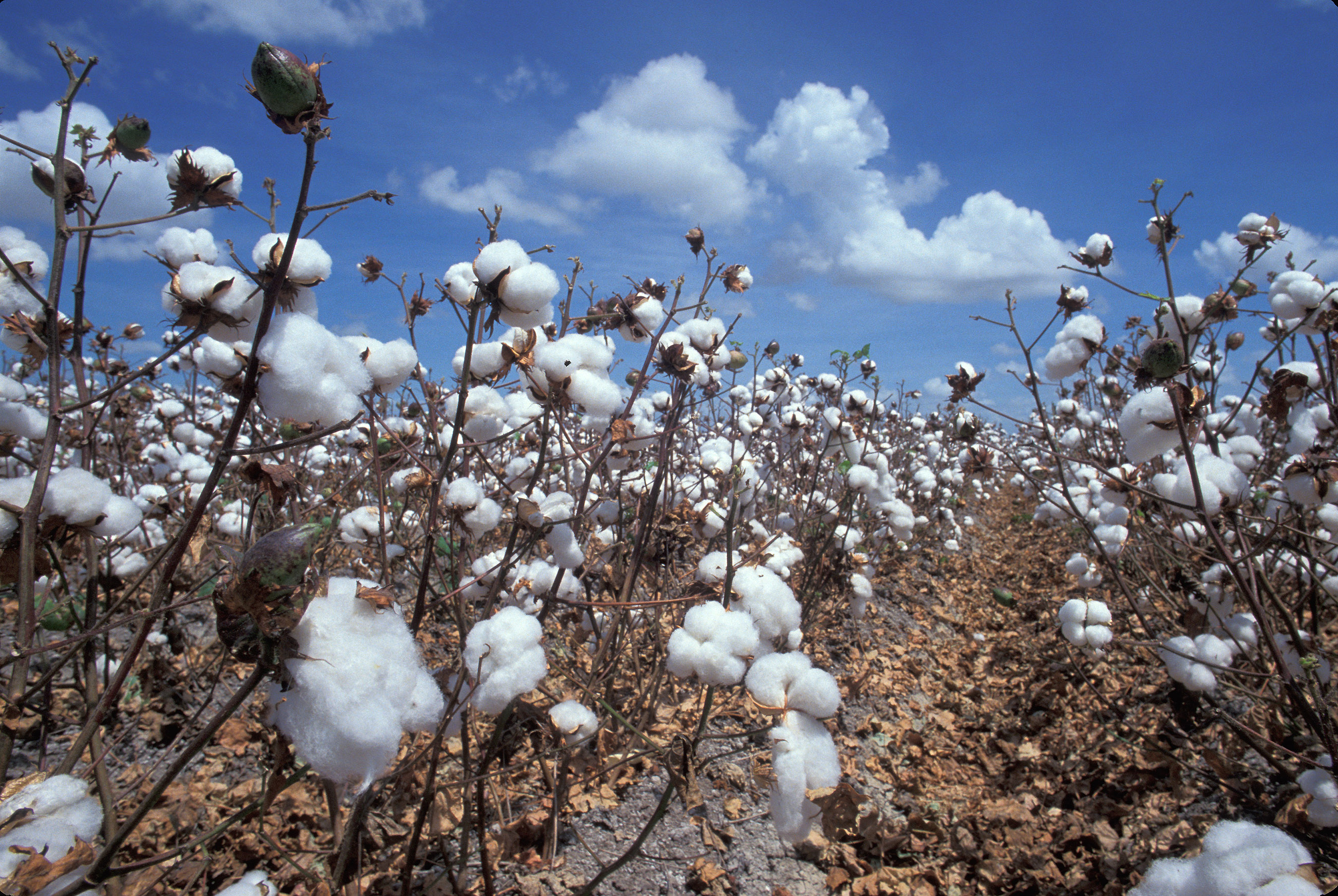
The Double R Farm has produced abundant crops for four generations of Rabon family farmers here, and despite the double whammy of record rains during the October harvest last year and last month's hurricane, they are determined to weather the hardship. "I'll do whatever I gotta do, even if it means I'm worn out and broke," says Ronald Rabon. "But if I make it this year, it will take a miracle from the Lord." Tropical storm-force winds and 12 inches of rain from Hurricane Matthew battered 700 acres of his cotton just as the bolls began to open, resulting in hardlock that made picking nearly impossible. They were able to salvage about 100 acres, mostly from farm lands tucked among wooded areas protected from the wind. Instead of 1,400 bales of cotton this year, the Rabons will likely end up with about 450 bales. "I've lost more money than I made in two years," Rabon said. The Rabons and farmers across the state were hit by a drought last year, and after months of praying for rain, the heavens opened in early October and dropped about 14 inches in 24 hours. Farmers in Horry County racked up $9 million in damages, while statewide the amount topped $530 million. William Hardee III, Clemson University's area agronomy agent for Horry County, said farmers were on the path for a perfect crop this year, until Matthew hit. Cotton was hit; soybeans and peanut crops were also severely damaged, Hardee said. "We needed a perfect year to make up for last year, but this took our chance away," Hardee said. Although the final damage assessment has not been tallied, Hardee said it appears that the hurricane will not exceed last year's drought and record flood destruction of crops. "It's not doom and gloom, not the devastation we saw last year, but it was bad for a lot of folks, worse for some others," Hardee said. Out of 600 acres of cotton planted last year, the Rabons salvaged 200 acres that amounted to less than 350 bales. "Now I'm telling you, it's been tough," said the patriarch of the family, 86-year-old Dock Rabon. Gov. Nikki Haley vetoed $40 million in farm aid this spring, calling it an industry bailout, prompting a backlash from farmers and lawmakers who voted to overturn her decision. That funding eventually paid about 25 percent of Rabon's losses, and he was forced to refinance the 1,200 acre farm. "I expected to make it up this year, but the cotton hit the dirt. And what didn't fall, hardlocked. It ain't looking good," Rabon said. Nearly 800 farmers in Horry County have applied for assistance from the U.S. Department of Agriculture because of damage caused by Hurricane Matthew. However, direct payments for damaged crops were eliminated in the 2014 Farm Bill, so aid is limited to emergency conservation problems, property damage, debris removal, leveling land or repairing fences for livestock. State agriculture officials are still assessing the recent damage and officials are mum on whether any financial assistance will be forthcoming. "Two years in a row is rough," says Jared Martin, who estimates he lost half of his 300-acre peanut crops due to Hurricane Matthew. "We've got to have some help, I can't handle no more," said Martin. "Insurance don't pay nothing, and our government just ain't helping." Martin and his father at the D and J Farm managed to pay their bills last year, with only $2,000 left to split between them. This year, Martin says he will break even. "I'm working all year for nothing," Martin said. Rabon and Martin are uncertain about their future in farming, and Martin isn't willing to commit to planting crops next year. "All I know is farming, but I guess I could go to Walmart and shake some hands," Rabon said. Rabon has already reached out to state and federal lawmakers to let them know the severity of the damage, but he's counting on private refinancing to pull him through to farm another year. "In all the years I've farmed, I've never had to call my congressperson or governor for help, we've always made a living," Rabon said. Rabon says he's not looking for a free handout, but unless the Farm Bill is amended, he says farmers won't be able to survive severe natural disasters, like the back-to-back harvest storms. "When I'm dead, it's over," Rabon said. "My kids can't make a living farming, and I don't blame them. They watched me go broke and wore out." And when that happens, he asked, "Who will feed this country?" Source - http://www.heraldcourier.com

21.11.2016

Asia - Here’s how farmers are starting to adapt to climate-related risks

Saffron is not only the heritage crop of Kashmir but has also been a lucrative agricultural activity in the region for decades. It is considered the world’s costliest spice, and Kashmiri varieties fetch around USD 3,000 per kg although prices have dropped in recent years. In 2011, the fame of Kashmiri saffron was used as an anti-narcotics candidate for weaning Afghanistan’s farmers away from poppy when farmers’ delegations from that country were invited to Kashmir for learning the skills of growing saffron from Kashmiri farmers and agricultural experts. The mountainous Kashmir valley has always had a monopoly in saffron production in India and the production of this high-value crop had reached its peak in the 1990s in the Kashmir region with an annual average of around 15.5 metric tonnes over 5,700 hectares. Impacted by Climate Change  But both saffron land and crop production have declined in recent years. According to Kashmir’s agriculture department, saffron land has got reduced from 5,700 hectares in 1990s to 3,715 hectares in 2016, while per hectare production has come down to 1.88 kilograms. The declining production in recent years, according to the farmers, is forcing them to shift to other crops. For example, Imtiyaz Ahmad Bhat, a farmer in Lethpora-Pulwama, has converted half an acre land out of his 2.50 acre saffron land into an orchard and one-third of an acre into a vegetable farm. “I am planning to convert another kanal (one-eighth of an acre) of saffron land into garlic cultivation because garlic now fetches good money in the market,” Bhat said. He and his fellow farmers said that a  number of others have done so while some others find it more profitable to  sell saffron land to builders or carry out constructions themselves on it despite the Saffron Act , under which changing saffron land for any other use is banned. The farmers said that a few spells of rain, from the month of August to October, play a crucial role in flowering of the saffron crop. “But, in most of the years since late 1990s, we have been witnessing that these months pass off without any rainfall,” said Dilawar Reshi, a farmer in south Kashmir’s Pulwama, where 90 per cent of Kashmir’s saffron is grown. Firdous Nahvi of Kashmir’s Sher-e-Kashmir University of Agricultural Sciences and Technology (SKUAST), who has carried out extensive research on saffron and has been helping farmers rejuvenate the saffron crop though a USD 60 million federal farm ministry project, said that the issue of irrigation is the actual reason why saffron yield is on decline. “Creating sprinkle irrigation facility was the critical part of the project because we have observed in recent years that it doesn’t rain when the crop needs the moisture. In any part of the world, farming is unthinkable without water,” Nahvi said and added that other help for farmers like providing fertilizers and corms (seeds) to them [as part of the project] is useless unless their crop gets sprinkle irrigation. The government project, launched in 2010, was supposed to create the irrigation facility four years back, but is yet to do so. Agriculture and climate change According to the 5th IPCC assessment report, on a global level, climate change could affect food security by the mid-21st century and that most of the food insecure would continue to be in South Asia, where there are currently roughly 300 million undernourished people. “Climate-related declines in food productivity will impact livelihoods and exports, increasing poverty levels. For instance, in Bangladesh, these factors would cause a net increase in poverty of 15% by 2030,” the report said. A report prepared by Climate Action Network South Asia and Asia Pacific Adaptation Network says that agriculture is the mainstay of several countries in South Asia and is also one of the largest sources of employment continuing to be the single largest contributor to the GDP in the region.  As three-fifth of the cropped area is rain-fed, the economy of South Asia, says the report, hinges critically on the annual success of the monsoons, indicative of the well-being of millions. “In the event of a failure, the worst affected are the landless and the poor whose sole source of income is from agriculture and its allied activities,” it said. Farmers’ Response Farmers in south Asia are already struggling with the climate-related changes and have started responding to them. “The common perception of farmers towards the impacts of climate change at least in four states of India — Andhra Pradesh, Telangana, Maharashtra and Karnataka — where I carried out my survey, was rising temperatures, decreasing precipitation and prolonged dry spells,” said Ravi Shankar, Principal Scientist at the Central Research Institute for Dryland Agriculture (CRIDA) in Hyderabad. “The common adaptation measures by farmers towards these changes are buying insurance, change in planting dates and cropping pattern, and planting different crops.” For example,  Shankar  says, staggered sowings, change in planting dates, requiring of drought-resistant crops, and construction of water-harvesting structures are the major adaptation measures followed by farmers toward climate change in Mahbubnagar district of Andhra Pradesh. “Also, the farmers in Mahbubnagar are used to observe the pattern of rainy season,” said Shankar, the lead author of Climate Change and Agricultural Adaptation in South Asia. If the pattern sustains itself, they continue farming, otherwise, they migrate and work as construction labourers at Gangavati, Hyderabad, and Bangalore.” A study carried out in 2015 in three districts of Punjab province of Pakistan, has identified a number of climate-related risks perceived by farm households such as extreme temperature events, insect attacks, animal diseases and crop pests. “Limited water availability, high levels of poverty and a weak role of local government in providing proper infrastructure were the factors that make farmers more sensitive to climate-related risks,” the study says. “Due to these constraints, adaptation in agricultural is self-initiated and varies [in] different socio-economic settings such as level of education, land holdings, tenancy status, access to institutional resources and farm location,” said one of the authors of the study, Muhammad Abid of Centre for Earth System Research and Sustainability, University of Hamburg. “Small farmers, less educated and tenants mainly prefer to adopt short term or low cost adaptation measures such as changing cropping varieties, crop types or planting sowing dates. On the other hand, the adoption of long term or advanced adaptation measures such as crop diversification, soil and water conservation is only considered by either highly educated or large farmers.” Adaptive capacity According to Abid, to enhance the adaptive capacity of farmers and adaptation in the agriculture sector, serious efforts are required in the functioning of local agricultural institutions and their scope. Further, he says, policies need to be designed based on field based research and should be area specific considering local issues and needs. “New adaptation measures need to be developed through research and informed to farmers accordingly through extension.” Using data from a household survey of 2660 farm families in Bihar state of Eastern India, Terai of Nepal and coastal Bangladesh, a study in Current Science  in April 2016  says that late or early planting, adopting new crops or  varieties, introducing legumes in rotations, and planting improved, disease- and pest-tolerant varieties are the most frequently cited changes being made to farming practices in these surveyed areas. “While we did not attempt to isolate climate-resilient practices per se, it does appear that these shifts are related to rainfall and water-related constraints. Other studies show that in certain parts of Nepal’s Terai and India, many households have shifted to rice varieties that require less water and/or that can be sown at a later date to adapt to rainfall variability,” the study has found. The study says that strategies such as adjusting planting dates and new varieties have been found to contribute to climate change adaptation. Drought tolerant According to International Crops Research Institute for the Semi-Arid Tropics (ICRISAT), farmers in Sri Lanka are shifting from annual crops to perennial drought tolerant plantations like cashew, particularly in rain-fed areas where the potential for irrigation is not available. This move is mainly driven by the urge to avoid the risk of crop failure. It says that farmers are also moving towards the use of short duration varieties, hybrids and drought tolerant varieties wherever seed is available. Another important adaptation strategy is diversification of the means of livelihood by marginal and smallholder farmers. Farmers in Sri Lanka, according to the ICRISAT, experience difficulty in accessing inputs and this is probably an impediment to effective adaptation of any improved management practice. It further says that farmers have diversified their incomes into nonfarm sectors and business. “Outward migration and earnings from service are the major sources of diversification. In recent times, income diversification has reduced the risk of rainfall variability through reduced dependence on agricultural incomes.” About Bangladesh, ICRISAT says that the farmers perceive that more efficient and increased irrigation potential through surface and groundwater sources will improve their production sustainability and productivity. “Farmers feel that crop insurance will help them cover the risks, but the present scheme of Crop Insurance is with private players and the farmers perceive that it is not universal in its coverage. A universal Crop Insurance scheme that covers all crops will be of great help to the farmers.” - Source - http://english.onlinekhabar.com

21.11.2016

Australian grapes weather storm

Australian Table Grape Growers Association estimates 10-15 per cent of production lost in recent ‘mini tornado’ The freak storm that swept through Australia’s Mildura and Riverland regions on Friday 11 November has claimed an estimated 10-15 per cent of the country’s table grape crop, according to the latest estimates from the Australian Table Grape Association (ATGA). “There was major damage,” confirmed CEO of the ATGA Jeff Scott. “We estimate losses of around 2m boxes for both domestic and export markets –that equates to around 10-15 per cent of total production.” The Mildura area was hit by winds in excess of 90km per hour, along with heavy rain and hail, on the evening of 11 November. The 'mini tornado' cut a swath through Cardross, Red Cliffs and Paringi, with growers in the path of the hailstorm bearing the brunt of the damage. “The storm just came through and stripped the vines,” Scott told Asiafruit. “Paringi alone lost around 750,000 boxes; it was wiped out. Some growers in Red Cliffs just got wind and rain, but it was the hail that did the damage.” Altogether, ATGA estimates that around 80 growers were affected. “Some growers lost 100 per cent of their crops, others between 40 and 80 per cent,” he said. “To put this into perspective, these were mainly small family farmers with 35-45 acres.” Offsetting the losses Despite the devastating impact for certain growers, the damage was fairly isolated, and Scott believes the losses could be offset by new plantings coming into production this year. “Our production has been increasing the past two or three years on the back of an increase in plantings, so new plantings coming on-stream will compensate for some of the losses,” he said. “Before the hail, growers were looking forward to a really big year, so we might be down slightly on original crop estimates, but not by much.” Many growers in Mildura came through with minimal damage, while nearby Robinvale – the other key production hub – were unaffected, Scott added. Export optimism Australia heads into the new season on the back of a record 2016 export campaign, which saw around 110,000 tonnes exported – and key exporters remain bullish about the upcoming season. “The damage certainly won’t derail the season,” said Ryan Smith of Valleyfresh Australia. “It might push up prices a bit and put pressure on the domestic market to secure fruit, especially with the US dollar exchange rate at 75 cents and export demand being so strong.” The crop losses could, however, eat into the limited amount of fruit that’s likely to be available in time for Chinese New Year this year, he added. With the Australian grape season running around two weeks later, and Chinese New Year falling relatively early, on 28 January, in 2017, making the cut-off, even with fruit shipped by air, will be tight. “The storm will remove a lot of the Ralli Seedless, as a lot of it’s grown in Cardross,” noted Smith. “China also buys a lot of Crimson out of Cardross.” Scott said the industry is still hopeful of building on last year’s record export campaign. China remains the leading destination, followed by Indonesia and Hong Kong, but Japan has rapidly emerged as a very important market. Last year, which marked the second full season of access to Japan, shipments grew three-fold to around 10,000 tonnes. Currently, access is limited to three varieties – Thompson, Red Globe and Crimson – but Scott said the industry is now working to secure access for other varieties. Heading off on a tour of key South East Asian markets this week, Scott described the export market access situation as good entering the new season, with all key markets open for business. “Our main focus now is on getting some improvements to our existing market access protocols,” he said. “We’ll be talking to importers and government agencies to see what we can do.” Growers count costs  John Argiro, president of the Sunraysia Table Grape Growers Association, estimated the crop losses from the storm at some A$80-100m. While his own farms at Merbein just outside Mildura, weathered rain and wind, he said nearby growers in south Merbein, where the hailstorm started, were wiped out. In addition to losing this year’s maturing crops, hail-hit growers also have grave concerns for next year’s production. As well as the canes bearing this year’s fruit, the vines were growing softer canes for next year’s crop. “Some growers have pruned these back hoping they will shoot buds, others are just hoping the canes will survive,” said Argiro. Source - http://www.fruitnet.com

21.11.2016

USA - Drought still grips southern California

[caption id="attachment_251377" align="aligncenter" width="720"] Drought conditions in southern California as of November 8, 2016. Exceptional drought shown in maroon, and extreme drought in red. Image via U.S. Drought Monitor and NASA Earth Observatory.[/caption] While late summer and autumn rains offered some relief to northern California, drought continues in the southern part of the state, said NASA’s Earth Observatory this week. Exceptional drought can bring widespread crop and pasture losses, as well as water emergencies due to low reservoirs, streams, and wells. Meanwhile, the U.S. Forest service said on November 18, 2016 that its latest aerial survey reveals more than 100 million trees dead in California. The map at the top of this page depicts southern California’s ongoing drought according to the classification system of the U.S. Drought Monitor. NASA Earth Observatory said: The map is based on measurements of soil, water, and climate conditions collected by federal, state, and local observers. NASA also provides experimental measurements and models to the drought monitoring effort. [caption id="attachment_251575" align="aligncenter" width="720"] Very low water levels in many reservoirs in Southern California are an indicator of the drought’s severity. This comparison shows Lake Cachuma, which supplies Santa Barbara with drinking water. It has fallen to about 7 percent of capacity. Images acquired by satellite October 27, 2013, and October 26, 2016, via NASA Earth Observatory.[/caption] While the extent and severity of drought has fluctuated over the months and years, the large zone of exceptional drought in southern California has persisted since January 2014. The chart below shows how extreme the current drought has been in comparison to past dry spells. NASA said: While the state has experienced several dry periods since 2000, none pushed any portion of the state into exceptional drought. About 20 percent of California remains in exceptional drought now. Read more from NASA’s Earth Observatory [caption id="attachment_251574" align="aligncenter" width="720"] Based on data acquired via satellite January 4, 2000 – November 8, 2016. Graph via NASA Earth Observatory.[/caption] Here’s more about the November 18 report from the U.S. Forest Service that California now has more than 100 million dead trees: The U.S. Department of Agriculture (USDA) announced today that the U.S. Forest Service has identified an additional 36 million dead trees across California since its last aerial survey in May 2016. This brings the total number of dead trees since 2010 to over 102 million on 7.7 million acres of California’s drought stricken forests. In 2016 alone, 62 million trees have died, representing more than a 100 percent increase in dead trees across the state from 2015. Millions of additional trees are weakened and expected to die in the coming months and years. This massive die-off of tree in California forests increases the risk of catastrophic wildfires and other threats to humans. [caption id="attachment_251580" align="aligncenter" width="800"] Dead trees in Kings Canyon National Park in California, via the Sierra Nevada Conservancy and KCBX.[/caption] Bottom line: While dry spells are not uncommon in southern California, none since 2000 has pushed any portion of the state into exceptional drought. About 20 percent of California remains in exceptional drought now. Source - http://earthsky.org

21.11.2016

Amazing Fruit Harvesting Machines Compilation

Source - https://www.youtube.com

21.11.2016

India - Farmers urge state to pay their crop insurance premium

Demonetization has paralyzed the activities of Primary Agriculture Credit Cooperative Societies (PACCS) across the state, restricting farmers from going about routine business including the remittance of premium for crop insurance. Since PACCS are not accepting the old notes, farmers have appealed to the state government to pay the entire premium for crop insurance on behalf of farmres, irrespective of the crop they have raised. The farming community in the delta region is already in great distress due to the scarcity of water. The depressing situation has already claimed the lives of 11 farmers in the delta region. The only consolation for them is insurance. But due to the scrapping of old notes, farmers are unable even to buy insurance. "Since all PACCSs have temporarily stopped routine transactions as per the government order, we are unable to remit crop insurance premium. Neither can we get a loan from the bank. Even though the government has extended the last date for submitting applications from November 30 to December 15, we have no money to remit the same," said P Kaliaperumal, a farmer from Nanjikottai in Thanjavur. Floods had devastated all the fields in delta districts in 2009, said Swamimalai R Vimalnathan, Secretary, Thanjavur District Cauvery Delta Farmers Protection Association. "During the DMK regime, several appeals had been made by farmers, asking the DMK government to remit the premium amount on behalf of farmers. The government took a note of our appeal and remitted the entire premium to the Centre," he said. Source - http://timesofindia.indiatimes.com

21.11.2016

New Zealand - New advisory group to speed up use of smart ag tech

The Ministry of Primary Industries will soon be advised by a new technical advisory group which is being created to help them accelerate the use of smart agriculture technology. Ministers Amy Adams and Nathan Guy made the announcement earlier this month at the Canterbury A&P Show. "Technology has major potential to support higher productivity and more sustainable use of natural resources in farming," said Primary Industries Minister Nathan Guy. "It can be used in a wide range of applications such as using soil moisture sensors to fine-tune irrigation, monitoring animal health and fertility, and determining the perfect time to harvest fruit and crops. Monitoring and measuring is now an important part of managing natural resources sustainably. "We know there are some exciting advances in agricultural science and technology coming from our CRIs and universities, as well as some great commercial tools already available. But for farmers, it can be difficult to know what tools are right for them, and to judge how much to invest. We want to understand how we can better support farmers to make those decisions." The Government's $2 billion rollout of Ultra-Fast Broadband (UFB) and the Rural Broadband Initiative (RBI) is one of the biggest infrastructure projects ever undertaken in New Zealand, and bringing improved connectivity to New Zealanders. Membership of the group will be confirmed before the end of the year and have broad representation from across the primary industries. Source - http://www.freshplaza.com

18.11.2016

India - Farmers fear loss of crops and income after currency ban

For farmer Buddha Singh, who works a small plot of land in the village of Bajna south of New Delhi, the government's decision to abolish Rs 500 and Rs 1,000 bank notes to crush the shadow economy could hardly have come at a worse time. He and millions of other farmers cannot get enough cash to buy the seeds and fertilisers they need for their winter crops, threatening production of key commodities and hurting rural communities only just recovering after two years of drought. "We can't buy our full requirements of seeds, fertiliser and pesticides on credit. There is a limit," said Singh, a turbaned man in his 50s, who tills a two-acre field near the highway running from the capital to the holy city of Mathura. "We're running out of time as we've only 10-15 days more to plant crops like wheat, mustard and chickpeas," he added, to murmurs of assent from around 30 fellow farmers sitting under a neem tree and discussing their predicament. India's 26.3 crore farmers mostly live in the cash economy, exposing them to the full impact of Prime Minister Narendra Modi's shocking 8-November announcement that larger denomination bank notes would immediately cease to be legal tender. Modi's drive to purge "black cash" from the economy has, at a stroke, wiped out 86 percent of the money in circulation. Delays in printing new Rs 500 and Rs 2,000 notes mean that money could be tight for weeks to come. While city dwellers are still queuing up to exchange or deposit old money at the bank, and to draw new funds, many villagers live miles from the nearest branch and have yet to see the new notes being rushed into circulation. Dragged down Delays to the planting season that began last month threaten to dent agricultural and overall economic growth, wiping out gains for farmers who this year cashed in on decent monsoon rains after being hit by drought in 2014 and 2015. Farmers who have already spent money on ploughing and irrigation to keep the soil moist can ill afford to leave their land fallow. Late sowing typically reduces yields and increases the risk that inclement spring weather could damage crops. "In all likelihood, we'll not be able to recover our cost of cultivation as the prime sowing time has nearly lapsed," said Prakash Chandra Sharma, another local farmer. The farmers said they spent an average of Rs 58,000 per hectare to grow wheat, only to eke out an income of Rs 70,000. That assumes a crop yield of about 3.2 tonnes per hectare. A drop in wheat output would boost local prices that are already near record highs. Stocks are at their lowest level for nearly a decade, and even before the latest cash crunch, private traders were expected to import around 3 million tonnes this year. Devinder Sharma, an independent food and trade policy analyst, said rural communities in particular would suffer from the demonetisation move. "It's a little early to hazard a guess about the extent of crop loss," said Sharma. "But both rural income and demand will take a big hit before things start improving from April next year." Thanks, but no thanks In the latest in a series of ad hoc steps, the government on Thursday allowed farmers to withdraw up to Rs 25,000 a week against their crop loans to ensure that sowing of winter crops "takes place properly". Shaktikanta Das, a top finance ministry official, also said a time limit for farmers to pay crop insurance premiums had been extended by 15 days. But that cuts little ice with farmers, who often rely for their cash not on banks but on money lenders charging annual interest of up to 40 percent. Most farmers have already availed of their farm loan for the previous summer season and, for the handful who can still withdraw, the ceiling is too low," said Tejinder Narang, a New Delhi-based farm expert After selling their rice crop last month, many are stuck with old 500 and 1,000 bills they can no longer spend. They are only allowed to exchange Rs 2,000 into new money, and the rest must be deposited before the notes cease to be accepted by banks after 30 December. "Four banks cater to 200 villages of about 2,000 people each. It's not easy to get your old currency notes converted," said Harbir Singh, another local farmer. Markets idled The breakdown in the cash economy is causing major disruptions to the supply of produce to the cities, with payment alternatives such as plastic cards or digital wallet apps on smartphones yet to gain widespread acceptance. At Delhi's Azadpur Mandi, Asia's largest fruit and vegetable wholesale market, traders said business was at a virtual standstill, and labourers who usually earn between Rs 300 and Rs 500 a day sat idle. "The bosses are giving us Rs 500 bills, but we are refusing to take those notes," said porter Raju Kumar Rathore. "Then they are telling us to collect our money after a week or 10 days. For us that is a big problem." Source - http://www.firstpost.com

18.11.2016

Africa's farmers are among the most hurt by climate change

Experts use many numbers when talking about climate change. However, rising temparatures, the resulting crop failures, and the consequent loss of livelihoods and destitution of millions of households are this year’s most important and urgent development for millions of smallholder farmers across the vastness of the African agro-ecological landscapes. To illustrate the unfolding crisis, let us consider the case of Malawi, one of the few countries to have achieved a fair deal of agricultural success but that is now facing the worst drought in  over three decades.  As is the case with  many  countries  in southern  Africa, Malawi has experienced widespread crop failures due to a devastatingly strong El Niño. The country witnessed late  on-set  of  rains, erratic  rainfall, floods and  prolonged  dry  spells. As a result, the production of maize - the country’s main staple crop - is estimated at just over 2.5 million tonnes in 2016. This is 16 percent lower than the reduced harvest in 2015 and 34 percent below the previous five‑year average. It has left 39 percent of the population dependant on national and international food aid to survive - a 129 percent increase over last year’s vulnerable population. In the hardest hit areas, harvest reduced by 70 percent while farmers in some areas simply couldn’t plant as the rains never came. Dealing with this challenge in the future will require both efforts to reduce climate change and, most importantly, strategies to enable farmers to adapt to its effects. All eyes are now on the meeting taking place in Marrakesh of the world’s climate change experts and policy makers, which is seeking to set the world on track to reducing greenhouse gas emissions that cause climate change. Last year, the same experts met in Paris and reached a welcome agreement that seeks to limit the rise in global temperatures above pre-industrial levels by under 2 degrees Celsius. However, the emissions of greenhouse gases are not yet falling and the effects of climate change are worsening. Much more still needs to be done to address this challenge proactively. Nowhere else is the imperative to act more urgent than in Africa, where 70 percent of the population is dependent on rain-fed, smallholder agriculture. As the case of Malawi demonstrates, rising temperatures in Africa often signal drought and other extreme weather events that put the lives and livelihoods of smallholder farmers at greater risk, increasing their vulnerability to famine and diseases. This reality is here with us today, and far beyond Malawi and southern Africa, with large swathes of the continent currently under the grip of a historical drought. For this reason, those of us from the African continent hope that such a backdrop will give the first post-Paris meeting a greater sense of urgency. Inaction will  be catastrophic. Although Africa emits less than 3 percent of the climate change inducing greenhouse gases, it will suffer its effects disproportinately. Mean temperatures will rise faster than the global average, exceed 2 degrees Celsius and may reach as high as 3 degrees to 6 degrees Celsius by 2100. For every year our global leaders fail to make progress against their commitments, it is Africa’s families that will pay the greatest price. This is not to leave everything in the hands of global leaders, as the prosperity of Africa and its farmers will also depend on how well farmers, especially smallholders, are able to adapt to the changing climate. This is much more within our control.  Indeed, the work of AGRA and our partners has shown that African farmers are not powerless in the face of climate change. There are many ways in which they can survive and even thrive despite the dramatic shifts in growing conditions they are likely to endure. For instance, farmers in some parts of Malawi, who are planting more drought-tolerant crops — cassava, sweet potato and pigeon pea — and using better agricultural practices are not only surviving the drought, they are expecting to generate a good income on this year's harvest. The insurance and finance sectors have also stepped up to the plate by designing innovative products that are minimizing the effects of climate shocks to farmers. In Malawi, tens of thousands of farmers in the worst hit areas south of the country will now have access to credit from a microfinance institution that has protected these loans with a yield insurance that covers the crops against the impact of floods and drought. Overall, to achieve food security under climate change, the resilience of communities and individual farmers needs to be strengthened through pro-active and longer-term adaptation actions. Although a lot more is yet to be accomplished, the continent has invested in the development and adoption of many new agriculture innovations and technologies which should be scaled up. We cannot put off further action on mitigating and adapting to climate change without expecting even greater pain for smallholder farmers and others around the world. From Marrakesh to all countries’ capitals and decision making tables around the world, I hope world leaders will seize the moment to take action and continue to put us on a path toward a better future.  A future where African smallholder farmers can fully exploit their potential to deliver food security, contribute to poverty reduction and achieve inclusive economic growth and development. Source - http://news.trust.org

18.11.2016

USA - How disasters are creating uncertain future for some SC farmers

The Double R Farm has produced abundant crops for four generations of Rabon family farmers here, and despite the double whammy of record rains during the October harvest last year and last month’s hurricane, they are determined to weather the hardship. “I'll do whatever I gotta do, even if it means I’m worn out and broke,” said Ronald Rabon. “But if I make it this year, it will take a miracle from the Lord.” Tropical storm-force winds and 12 inches of rain from Hurricane Matthew battered 700 acres of his cotton just as the bolls began to open, resulting in hardlock that made picking nearly impossible. They were able to salvage about 100 acres, mostly from farm lands tucked among wooded areas protected from the wind. Instead of 1,400 bales of cotton this year, the Rabons will likely end up with about 450 bales. “I’ve lost more money than I made in two years,” Rabon said. The Rabons and farmers across South Carolina were hit by a drought last year, and after months of praying for rain, the heavens opened in early October and dropped about 14 inches in 24 hours. Farmers in Horry County racked up $9 million in damage, while statewide the amount topped $530 million. William Hardee III, Clemson University’s area agronomy agent for Horry County, said farmers were on the path for a perfect crop this year – until Matthew hit. Cotton was hit; soybeans and peanut crops also were severely damaged, Hardee said. “We needed a perfect year to make up for last year, but this took our chance away,” Hardee said. Although the final damage assessment has not been tallied, Hardee said it appears that the hurricane will not exceed last year’s drought and record flood destruction of crops. “It’s not doom and gloom, not the devastation we saw last year, but it was bad for a lot of folks, worse for some others,” Hardee said. Out of 600 acres of cotton planted last year, the Rabons salvaged 200 acres that amounted to less than 350 bales. “Now I’m telling you, it’s been tough,” said the patriarch of the family, 86-year-old Dock Rabon. Gov. Nikki Haley vetoed $40 million in farm aid this spring, calling it an industry bailout, prompting a backlash from farmers and lawmakers who voted to overturn her decision. That funding eventually paid about 25 percent of Rabon’s losses, and he was forced to refinance the 1,200 acre farm. “I expected to make it up this year, but the cotton hit the dirt. And what didn’t fall, hardlocked. It ain’t looking good,” Rabon said. Nearly 800 farmers in Horry County have applied for assistance from the U.S. Department of Agriculture because of damage caused by Hurricane Matthew. However, direct payments for damaged crops were eliminated in the 2014 Farm Bill, so aid is limited to emergency conservation problems, property damage, debris removal, leveling land or repairing fences for livestock. State agriculture officials are still assessing the recent damage and officials are mum on whether any financial assistance will be forthcoming. “Two years in a row is rough,” said Jared Martin, who estimates he lost half of his 300-acre peanut crops due to Hurricane Matthew. “We’ve got to have some help, I can’t handle no more,” said Martin. “Insurance don’t pay nothing, and our government just ain’t helping.” Martin and his father at the D and J Farm managed to pay their bills last year, with only $2,000 left to split between them. This year, Martin said he will break even. “I’m working all year for nothing,” Martin said. Rabon and Martin are uncertain about their future in farming, and Martin isn’t willing to commit to planting crops next year. “All I know is farming, but I guess I could go to Walmart and shake some hands,” Rabon said. Rabon has already reached out to state and federal lawmakers to let them know the severity of the damage, but he’s counting on private refinancing to pull him through to farm another year. “In all the years I’ve farmed, I’ve never had to call my congressperson or governor for help, we’ve always made a living,” Rabon said. Rabon says he’s not looking for a free handout, but unless the Farm Bill is amended, he says farmers won’t be able to survive severe natural disasters, like the back-to-back harvest storms. “When I’m dead, it’s over,” Rabon said. “My kids can’t make a living farming, and I don’t blame them. They watched me go broke and wore out.” And when that happens, he asked, “Who will feed this country?” Source - http://www.thestate.com

18.11.2016

India - Farmers to get crop insurance

After a wait of more than a year, over 21 lakh farmers from the state are going to receive crop insurance . "The government will soon start disbursing crop loan to 11 lakh farmers as both the state and the Centre have sanctioned Rs 800 crore each. This apart, farmers have contributed nearly Rs 150 crore," said chief secretary A P Padhi after here after a meeting of the state agriculture cabinet led by chief minister Naveen Patnaik. Source - http://timesofindia.indiatimes.com

18.11.2016

India - Farmers to get Rs 4,414 cr crop insurance claim in Bhopal

A fund of Rs 4,414 crore received under national crop insurance scheme for 20.45 lakh farmers, who were affected due to drought in Kharif season-2016, will be adjusted in their bank accounts. Chief minister Shivraj Singh Chouhan said it is first time since independence, when any state has received such a big corpus of fund under the scheme. Chouhan said national agricultural insurance scheme was successfully implemented by the state government to compensate the damage caused to farmers due to drought. The said insured amount would be given to 20,45,794 farmers. Rs 2027 crore were given as centre’s share while Rs 2027 crore were state’s share. Due to instant action by the state and the centre, the farmers are able to avail this benefit. Source - http://www.freepressjournal.in

826
of 1225