NEWS
827
of 1225
News
18.11.2016

India - Centre releases Rs 800 crores of Crop Insurance for Odisha Farmers

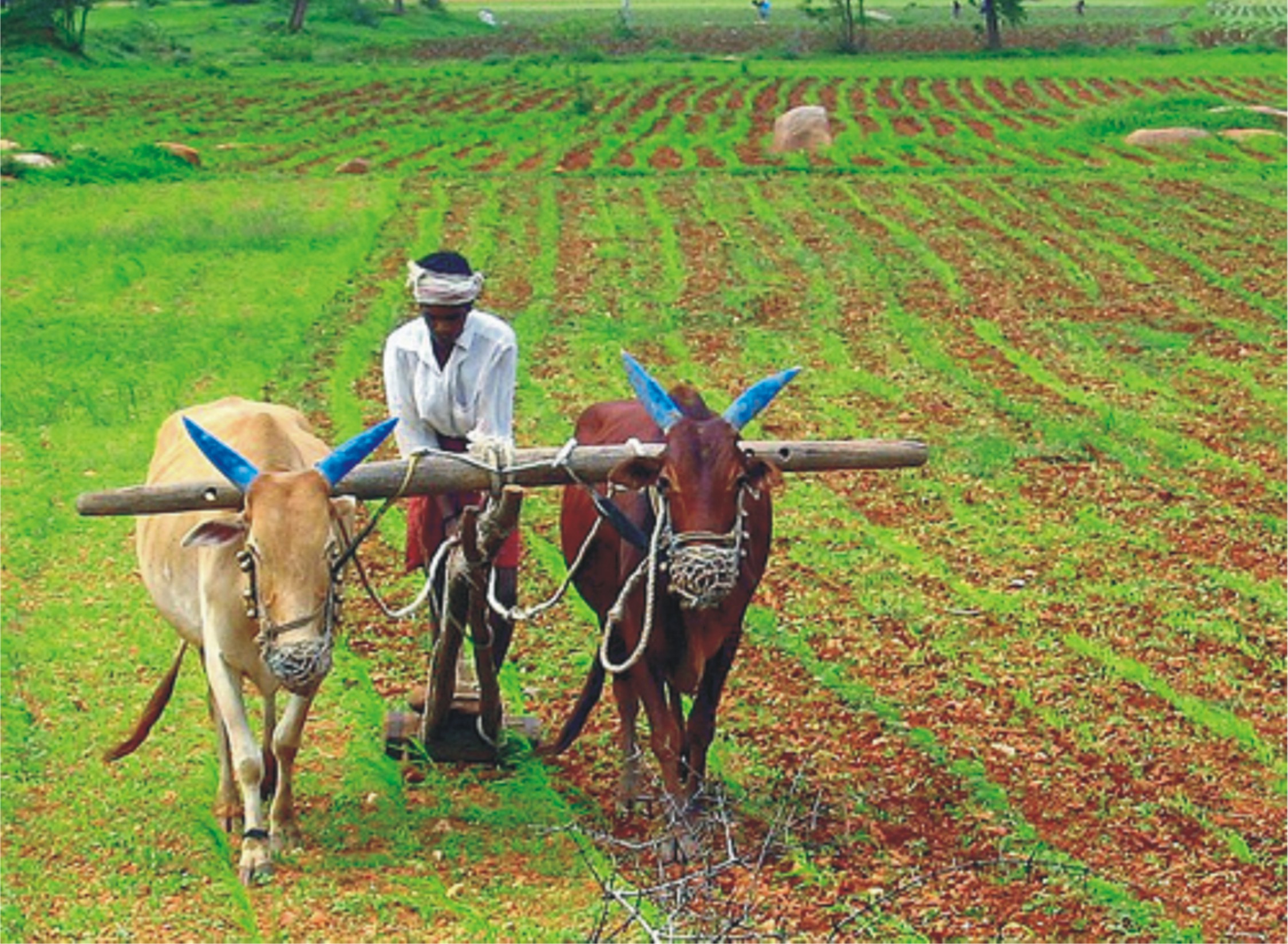
The Chief Secretary, Aditya Prasad Padhi on Thursday informed that the Central Government has provided Rs 800 crores as central assistance in crop insurance to the farmers affected by last year’s drought in Odisha. The received crop insurance will be disbursed to farmers as soon as it possible, said Aditya Padhi. Earlier, the State Government has submitted its crop yield data to the Ministry of Agriculture on September 3, 2016 requested centre to release its share of Rs 795.31 crores for settlement of crop insurance claims of the farmers for 2015 Kharif season. Source - http://www.odishanewsinsight.com

17.11.2016

Asia - Farmers start adapting to climate-related risks

Saffron is not only the heritage crop of Kashmir but has also been a lucrative agricultural activity in the region for decades. It is considered the world’s costliest spice, and Kashmiri varieties fetch around USD 3,000 per kg although prices have droppped in recent years. In 2011, the fame of Kashmiri saffron was used as an anti-narcotics candidate for weaning Afghanistan’s farmers away from poppy when farmers’ delegations from that country were invited to Kashmir for learning the skills of growing saffron from Kashmiri farmers and agricultural experts. The mountainous Kashmir valley has always had a monopoly in saffron production in India and the production of this high-value crop had reached its peak in the 1990s in the Kashmir region with an annual average of around 15.5 metric tonnes over 5,700 hectares. Impacted by Climate Change  But both saffron land and crop production have declined in recent years. According to Kashmir’s agriculture department, saffron land has got reduced from 5,700 hectares in 1990s to 3,715 hectares in 2016, while per hectare production has come down to 1.88 kilograms. The declining production in recent years, according to the farmers, is forcing them to shift to other crops. For example, Imtiyaz Ahmad Bhat, a farmer in Lethpora-Pulwama, has converted half an acre land out of his 2.50 acre saffron land into an orchard and one-third of an acre into a vegetable farm. “I am planning to convert another kanal (one-eighth of an acre) of saffron land into garlic cultivation because garlic now fetches good money in the market,” Bhat said. He and his fellow farmers said that a number of others have done so while some others find it more profitable to sell saffron land to builders or carry out constructions themselves on it despite the Saffron Act , under which changing saffron land for any other use is banned. The farmers said that a few spells of rain, from the month of August to October, play a crucial role in flowering of the saffron crop. “But, in most of the years since late 1990s, we have been witnessing that these months pass off without any rainfall,” said Dilawar Reshi, a farmer in south Kashmir’s Pulwama, where 90 per cent of Kashmir’s saffron is grown. Firdous Nahvi of Kashmir’s Sher-e-Kashmir University of Agricultural Sciences and Technology (SKUAST), who has carried out extensive research on saffron and has been helping farmers rejuvenate the saffron crop though a USD 60 million federal farm ministry project, said that the issue of irrigation is the actual reason why saffron yield is on decline. “Creating sprinkle irrigation facility was the critical part of the project because we have observed in recent years that it doesn’t rain when the crop needs the moisture. In any part of the world, farming is unthinkable without water,” Nahvi said and added that other help for farmers like providing fertilizers and corms (seeds) to them [as part of the project] is useless unless their crop gets sprinkle irrigation. The government project, launched in 2010, was supposed to create the irrigation facility four years back, but is yet to do so. Agriculture and climate change  According to the 5th IPCC assessment report, on a global level, climate change could affect food security by the mid-21st century and that most of the food insecure would continue to be in South Asia, where there are currently roughly 300 million undernourished people. “Climate-related declines in food productivity will impact on livelihoods and exports, increasing poverty levels. For instance, in Bangladesh, these factors would cause a net increase in poverty of 15% by 2030,” the report said. A report prepared by Climate Action Network South Asia and Asia Pacific Adaptation Network says that agriculture is the mainstay of several countries in South Asia and is also one of the largest sources of employment continuing to be the single largest contributor to the GDP in the region. As three-fifth of the cropped area is rain-fed, the economy of South Asia, says the report, hinges critically on the annual success of the monsoons, indicative of the well-being of millions. “In the event of a failure, the worst affected are the landless and the poor whose sole source of income is from agriculture and its allied activities,” it said. Farmers’ Response  Farmers in south Asia are already struggling with the climate-related changes and have started responding to them. “The common perception of farmers towards the impacts of climate change at least in four states of India — Andhra Pradesh, Telangana, Maharashtra and Karnataka — where I carried out my survey, was rising temperatures, decreasing precipitation and prolonged dry spells,” said Ravi Shankar, Principal Scientist at the Central Research Institute for Dryland Agriculture (CRIDA) in Hyderabad. “The common adaptation measures by farmers towards these changes are buying insurance, change in planting dates and cropping pattern, and planting different crops.” For example, Shankar says, staggered sowings, change in planting dates, requiring of drought-resistant crops, and construction of water-harvesting structures are the major adaptation measures followed by farmers toward climate change in Mahbubnagar district of Andhra Pradesh. “Also, the farmers in Mahbubnagar are used to observe the pattern of rainy season, and if gets conspicuous, they will continue farming. Otherwise, they migrate and work as construction labourers at Gangavati, Hyderabad, and Bangalore,” said Shankar, the lead author of Climate Change and Agricultural Adaptation in South Asia, published in Elsevier. A study carried out in 2015 in three districts of Punjab province of Pakistan, has identified a number of climate-related risks perceived by farm households such as extreme temperature events, insect attacks, animal diseases and crop pests. “Limited water availability, high levels of poverty and a weak role of local government in providing proper infrastructure were the factors that make farmers more sensitive to climate-related risks,” the study says. “Due to these constraints, adaptation in agricultural is self-initiated and varies [in] different socio-economic settings such as level of education, land holdings, tenancy status, access to institutional resources and farm location,” said one of the authors of the study, Muhammad Abid of Centre for Earth System Research and Sustainability, University of Hamburg. “Small farmers, less educated and tenants mainly prefer to adopt short term or low cost adaptation measures such as changing cropping varieties, crop types or planting sowing dates. On the other hand, the adoption of long term or advanced adaptation measures such as crop diversification, soil and water conservation is only considered by either highly educated or large farmers.” Adaptive capacity According to Abid, to enhance the adaptive capacity of farmers and adaptation in the agriculture sector, serious efforts are required in the functioning of local agricultural institutions and their scope. Further, he says, policies need to be designed based on field based research and should be area specific considering local issues and needs. “New adaptation measures need to be developed through research and informed to farmers accordingly through extension.” Using data from a household survey of 2660 farm families in Bihar state of Eastern India, Terai of Nepal and coastal Bangladesh, a study in Current Science in April 2016 says that late or early planting, adopting new crops or varieties, introducing legumes in rotations, and planting improved, disease- and pest-tolerant varieties are the most frequently cited changes being made to farming practices in these surveyed areas. “While we did not attempt to isolate climate-resilient practices per se, it does appear that these shifts are related to rainfall and water-related constraints. Other studies show that in certain parts of Nepal’s Terai and India, many households have shifted to rice varieties that require less water and/or that can be sown at a later date to adapt to rainfall variability,” the study has found. The study says that strategies such as adjusting planting dates and new varieties have been found to contribute to climate change adaptation. Drought tolerant According to International Crops Research Institute for the Semi-Arid Tropics (ICRISAT), farmers in Sri Lanka are shifting from annual crops to perennial drought tolerant plantations like cashew, particularly in rain-fed areas where the potential for irrigation is not available. This move is mainly driven by the urge to avoid the risk of crop failure. It says that farmers are also moving towards the use of short duration varieties, hybrids and drought tolerant varieties wherever seed is available. Another important adaptation strategy is diversification of the means of livelihood by marginal and smallholder farmers. Farmers in Sri Lanka, according to the ICRISAT, experience difficulty in accessing inputs and this is probably an impediment to effective adaptation of any improved management practice. It further says that farmers have diversified their incomes into nonfarm sectors and business. “Outward migration and earnings from service are the major sources of diversification. In recent times, income diversification has reduced the risk of rainfall variability through reduced dependence on agricultural incomes.” About Bangladesh, ICRISAT says that the farmers perceive that more efficient and increased irrigation potential through surface and groundwater sources will improve their production sustainability and productivity. “Farmers feel that crop insurance will help them cover the risks, but the present scheme of Crop Insurance is with private players and the farmers perceive that it is not universal in its coverage. A universal Crop Insurance scheme that covers all crops will be of great help to the farmers.” Source - http://indiaclimatedialogue.net

17.11.2016

Australia - Reality of frost damage across Western Australia sets in as farmers begin harvesting

As the 2016 grain harvest kicks off, Western Australian farmers' worst expectations for frost damage are being met, with some experiencing crop losses of up to 90 per cent. Grain growers from around the state were aware the damage from a series of frost events late in the season could be significant, but had continued to hope for the best come harvest time. However the cards have not fallen in their favour. Narembeen farmer and shire councillor, Bevan Thomas, has estimated a loss of 50 to 70 per cent of his barley crop, and 30 per cent of the canola. "It's a mixed bag, but probably towards the bottom end of the bag," Mr Thomas said. And on top of losses due to frost, further quality issues have arisen. "To rub a bit of insult to injury, we're fighting on the weights of the barley as well. "It's bad enough you can not be getting yield, but all of a sudden your quality can change quite dramatically, too." Although much of the district is yet to begin harvesting wheat crops, Mr Thomas is not confident for much improvement. "Say a 100-hectare paddock you go through from one side to the other and you get nothing on your yield monitor. [caption id="" align="alignnone" width="340"] PHOTO: Wheat crop destroyed by frost on Tony York's Tammin property. 26 September 2016 (Supplied: Tony York)[/caption] "But that's not to say the whole paddock is gone," Mr Thomas said. "On that one particular paddock I would say that is 90 per cent [frost damaged]. "But the one next door to it, and lower down into the valley, may be okay. "So hopefully everyone's finding some good, and some bad." Damage felt state-wide In nearby shire, Hyden, long time farmer, Colin Nicholl, has also experienced a "mixed bag". "We've found some of our barley has yielded very well, it's had very little affect from the frost, but other parts of it have been very badly affected," he said. Mr Nicholl said the high expectations for a "bumper harvest" this year had added to the blow. "There's a higher level of disappointment because back in August and the early part of the year we thought we were in for an absolute bumper year, one of the best years ever. "And to have it taken away from us by an event like frost, you find it very hard to accept. "But it's one of the vagaries of frost — the better the crop, the harder it seems to affect it. [caption id="" align="alignnone" width="340"] PHOTO: Branden Gryll's farm 25 kilometres west of Corrigin saw frost cover his farm. (Supplied: Braden Gryll)[/caption] And Mr Nicholl said despite research efforts, at this stage there was very little grain producers could do to prevent the impact. "GRDC (Grains Research & Development Corporation) have come and examined quite a few of the crops in the district, and other parts of the state, with the idea of trying to find causes or solutions to it. "And it's one of the big events that we haven't been able to find a solution to." Reality setting in Although growers had expected the heavy losses, Bevan Thomas said it was now hitting home. "When you get in a header and you see your yield monitor saying zero, that is a little bit more confronting. "I've got a Swiss guy working for me and sometimes it's good that he's driving the header." Despite significant confirmed losses of up to 90 per cent for some growers, there are positives in the mix. "Some people are finding they've got some barley that's going well," Mr Thomas said. "I think it's good to just have a chat in the sample hut or wherever you are and they find you're not the only one having a bit of trouble." If you would like to speak with someone, the Regional Men's Health Initiative can be contacted on (08) 9690 2277, or Lifeline on 13 11 14. Source - http://www.abc.net.au

17.11.2016

India - Officials submit crop loss report to Central team

Severe crop loss has been estimated in 1.98 lakh hectares of land in Ballari district for the kharif season in view of the deficient rainfall. Crops had been sown in 3.69 lakh hectares in the district. In a report submitted to the Central drought assessment team when it visited here recently, the district administration has said that the district recorded deficient rainfall during August, September and October, resulting in loss of standing crop in rainfed areas. Maize was severely affected in 94,430 ha of 1.02 lakh ha, followed by bajra (15,113 ha), jowar (11,864 ha), paddy (2,457 ha), minor millets (1,696 ha), tur (9,314 ha) and horse gram (307 ha). Groundnut (38,051 ha) and sunflower (8,670 ha) were affected among oilseeds, while cotton (13,907 ha) was among the commercial crops hit. As much as 7,947 ha under horticultural crops were hit, with chilli (1,958 ha) and onions (5,874 ha) the most affected. Kudligi taluk was the worst hit, with 75,248 ha severely affected. In Hagari Bommanahalli, 46,491 ha was affected, followed by Hadagali (39,418 ha), Sandur (14,194 ha), Hosapete (9,758 ha), Sirguppa (9,604 ha) and Ballari (5,105 ha). Though the exact quantum of loss is yet to be assessed, the district administration’s estimation of adequate input subsidy to farmers is Rs. 139.98 crore. Source - http://www.thehindu.com

17.11.2016

Australia - Damage inspections underway to shape relief for Riverland growers hit by hail storm

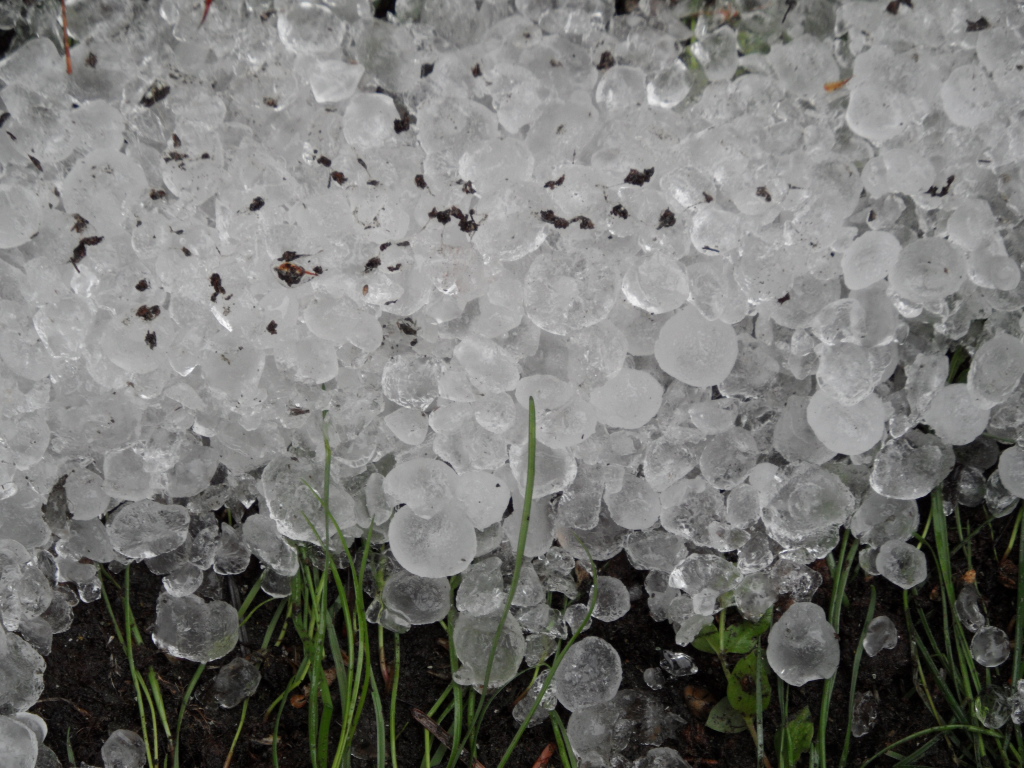
State Government assessors are visiting Riverland properties to witness firsthand the extent of damage from South Australia's devastating hail storm on Friday. They have inspected farms from Taylorville to Yamba in the Riverland and met with growers at informal shed meetings and barbecues this week. A storm recovery hotline (0476 834 530) set up in the wake of the disaster has received calls from 80 primary producers. The damage assessment will form the basis of any government financial relief packages and growers have been encouraged to report all storm damage. "The only estimates we have are some industry estimates around $100 million but we really need to quantify that to move forward," Primary Industries and Regions SA (PIRSA) acting deputy chief executive Will Zacharin said. "[We are] putting the damage picture together and understanding the extent of the storm hail scar so we can provide that to government to tailor an appropriate recovery package." The hail storm on Friday November 11 stripped some stone fruit, almond, grape, vegetable and grain crops. It has also damaged tree buds and vines and may impact on next year's citrus, grape and stone fruit crops. "Damage to wine grapes has been significant, we understand there are over 200 growers affected across the Riverland, those areas include Taylorville, Berri, Barmera and Lyrup in particular," Mr Zacharin said. "We have also had some heavy damage and losses of between 80-100 per cent to stone fruit including nectarines, apricots and also damage to almonds. "It is quite significant although it has been patchy; some people who own multiple blocks have got pretty well smashed on one block and another block half a kilometre away hasn't been touched." Farmers band together after 'catastrophic' storm Growers have been reaching out to support each other, calling up to check in on friends and neighbours amid concerns about the mental health of those facing heavy losses. A gathering of growers was held at Cadell on Wednesday morning and at a barbecue at Lyrup in the evening; impact assessors were present at both events to provide support and technical assistance. One of the first stories to emerge from the storm was that of Yianni Koutouzis, a Berri wine grape grower who watched from his farm shed as golf-ball sized hail stones hit his orchard. "It was catastrophic; we have been farmers for over 40 years we were scared for our lives," said Berri wine grape grower Yianni Koutouzis. "Our farms were totally wiped out, 100 per cent wiped out. Our wine grapes and table grapes all gone. We're shocked, scared and don't know what to do next." The storm caused a power outage that affected more than 2,000 customers. Public libraries at Berri and Barmera were forced to close after flooding and businesses and schools experienced flooding and damage to roofs and sheds. Patients at Barmera Hospital were moved after storm damage and roofing iron was ripped from the Tailem Bend hospital staff accommodation while several hospitals had flooding. Houseboats were damaged at Mannum and hail damage to vehicles left a hefty insurance bill across the Riverland and South Australia. Source - http://www.abc.net.au

17.11.2016

Australia - Freak storm destroys 1000s of banana bunches

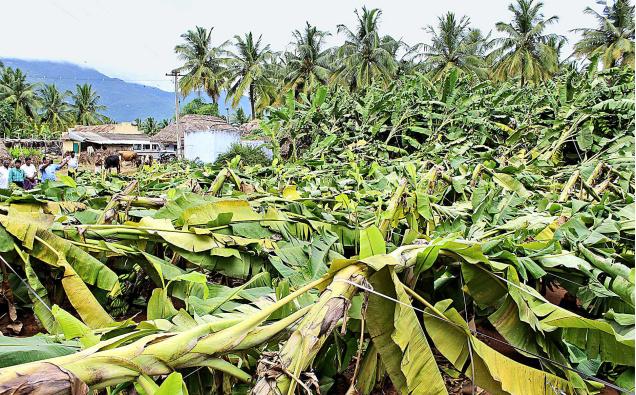
Banana growers of Cassowary Coast are still counting the costs after a wild storm battered crops and left tens of thousands of banana bunches on the ground on Sunday 13 November. Craig Buchanan, from LMB Farms, was right in the firing line as hail and wind gusts of up to 150km/h battered crops in a 15-minute barrage at East Palmerston, west of Innisfail in Queensland, on Sunday afternoon. Mr Buchanan has farmed through severe tropical cyclones and floods, but said he had only experienced a storm like this one a few times. "We've lost probably 30 per cent of the bunches we had hanging on our farm, in 15 minutes." Mr Buchanan and wife Jade were still counting the costs yesterday as 40–50 workers carried out the painstaking task of removing protective bags and chopping up fallen banana bunches. "It's about 15,000 bunches, so probably looking at around 30,000 15-kilo cartons," Mr Buchanan said. "Our bunch size will drop a lot for probably the next three or four months, I'd say. "It's a bit depressing for a few days. Hopefully we don't get too many more [storms]." Growers this year have endured one of the worst banana gluts in memory, and while prices had increased for about six weeks, they were again heading south as weekly production levels exceeded 550,000 cartons. Source - http://www.freshplaza.com

17.11.2016

USA - Major crop loss may mean the end for local organic farm

Major crop loss following one of the wettest summers on record may mean the end for Featherstone Farm in Rushford. The certified organic farm, owned by Jack Hedin since 1997, suffered more than $350,000 in total crop loss in 2016. A majority of the loss came in the form of cabbage, of which the farm relies heavily on to store and sell to retailers in the spring. "We had a big loss in crops all across the board, like tomatoes, melons and squash, carrots, but where we felt the money hit was with the cabbage," Hedin said. A storage cooler usually filled floor to ceiling with crates of cabbage is nearly empty, with only a few crates of carrots and onions inside. "From a risk management standpoint, our management strategy is to have many different crops," he said. "But this year, the one thing we can't control, the weather, cost us 80 percent of our cabbage crop." Hedin said heavy rains in August and September didn't allow his vegetable crops to dry out. As a result, disease overtook the crops. "That period of time is when cabbage is super vulnerable, so nearly all the cabbage we planted in June was wiped out by the persistent rain," he said. As a result of the loss, the farm is turning to the community for help staying alive. It's looking to raise $150,000 by Thanksgiving in order to stay open. "There's no doubt about it, if we don't get the $150,000, and I face the choice between going into the 2017 season weaker than ever, or closing the business, I think we would close the business." Despite the grim outlook, employee Jennifer Breitlow says the staff of 50 is remaining positive. "I believe in Jack's vision and he has been the most energetic and optimistic person I've ever worked for and that is what keeps us believing," she said. Source - http://www.wxow.com

16.11.2016

India - Marketing, crop insurance key to restore farmers’ confidence

Flagging crop insurance and marketing support to the produce as key to restore the confidence of farming community in the agriculture sector, Chief Minister, Mehbooba Mufti today directed the administration to see how these two facilities are ensured to agriculturists even as she suggested use of CDF funds to give a push to rural economy. Chairing a meeting of J&K Board for the Development of Kissans here today, the Chief Minister said over the decades farmers have started losing interest in the trade due to poor or unstable marketing facilities or fear of crop loss in the event of any natural calamity like drought, hailstorm, floods etc. She asked the administration to plug the loopholes in this regard and see how various schemes and programmes meant for marketing agricultural produce and insurance of the crops are effectively and extensively executed on the ground. Likewise, she said, transportation also plays a role in the timely dispatch of the agriculture produce to mandies and directed augmentation of the same. The Chief Minister, who is also chairperson of the board, said rural economy needs to be given a push as other economies have either reached a saturation stage or are not so rewarding. She said agriculture and allied sectors still hold a good scope of employability in rural and semi-urban areas. She said if concerted efforts are made agriculture would see a turnaround in the coming four to five years. Mehbooba Mufti expressed happiness that procurement mandies are being set up in many areas of the State which would enable farmers in stabilization of selling price of their produce. She said also more and more soil testing labs are being set up to advise farmers which land is suitable for which cultivation. She suggested commercial exploitation of wild foods, herbs and mentioned specifically Anar Dana to be promoted for commercial cultivation. The Chief Minister mentioned the demand of flowers in our daily life and asked the Floriculture Department to promote flower cultivation in a big way. She suggested that the Market Intervention Scheme should not be restricted to fruits only but be extended to flowers and other produce. She said funds won’t be a problem in this regard. Mehbooba Mufti suggested that funds under Constituency Development Fund may be used to undertake economic activities in poultry, fisheries, apiculture and other areas of rural economy. She also suggested creating constituency-wise model villages for poultry, milk, fisheries, vegetables, basmati, mushkbudji, sheep etc. where these rural economy sectors would be developed exclusively and extensively. She said Animal & Sheep husbandry sector has a huge potential in strengthening rural economy. Making his intervention, Deputy Chief Minister, Dr. Nirmal Singh complimented the board for its activation and sought increase in the frequency of its meetings. He said the cooperative movement needs to be revived in the State and sought to undertake a data assessment of impact level in the agriculture sector in the State. He said the Agenda of Alliance of the present Government has vowed the growth and development of agriculture in the State. Earlier, Ministers for R&B, Finance, Cooperatives, Agriculture, Rural Development, Food Civil Supplies & Consumer Affairs and Grdens& Floriculture also made their interventions and suggestions for the development of agriculture sector and to make the functioning of the board more vibrant. Vice Chairman, Kissan Board thanked the Chief Minister for closely monitoring the activities of and taking interest in the activities of the board. He said the Chief Minister has restored the trust of kissans and today’s meeting in which she listened to the suggestions of individual farmers keenly is a pointer in this direction. He demanded setting up of permanent mandies for procurement of paddy. Chief Secretary, B. R. Sharma, Chairman, J&K Bank, Mr. Parvez Ahmad, Financial Commissioner, Agriculture Production, Pramod Jain, administrative secretaries of several Departments and members of the board were also present in the meeting. Source - http://www.greaterkashmir.com

16.11.2016

Australia - Grain crops hammered by hail

FARMERS throughout South Australia and north-western Victoria are faced with crop losses tallying in the tens of thousands of tonnes after a freak series of hail storms ripped through the region on Friday. Damage was most intense in the eastern Millewa in Victoria where entire swathes of crop have sustained 100 per cent damage. Merrinee, south-west of Mildura, farmer Chris Hunt estimated there could be up to 50,000 tonnes of lost production in his local area. “On our own place, I’d suggest around 50pc of the wheat is a 100pc wipeout. “It’s different to other storms in terms of how much damage it has done, there will be thousands of hectares around here with heavy damage and then you’d obviously get a bigger area that has a lower degree of crop loss.” He said the majority of grain farmers in the area were covered with crop insurance. “We are a little luckier in that respect than those in horticulture where it can be a bit too expensive to insure.” Yarrara farmer Ron Hards in the central-western Millewa said the worst of the damage went around him, but said reports were of a wide strip of heavy hail. “It seems to have gone through in a band two or three kilometres wide, which is very large for a hail storm, getting out to a peak of around 4km at its peak.” He said a storm earlier in the day had brought heavy wind, but the destruction was done with another front that produced the hail. Mr Hards said he had received 30mm of rain in the storm but thought it would not cause crop quality issues. Across the border in eastern South Australia, Taldra, near Loxton, farmer Tim Pannell said there were strips of severe damage in his area. “We’ve got lentils we think could have 40pc damage and some canola could be up to 70pc down on yield,” he said. “It blew through the northern end of our farm and was pretty drastic – it is fair to say the crops didn’t like it too much.” Grain Producers South Australia chief executive Darren Arney said while the worst of the damage was in the eastern Mallee and the Riverland, reports had come in from areas as far away as Crystal Brook and Saddleworth in the Mid North. “There’s been patches of hail everywhere, but certainly the worst of it seems to be in those areas near the river,” he said. Victorian Farmers Federation (VFF) grains group president Brett Hosking urged growers to be on the front foot in terms of involving their insurance agencies. “Talk to your insurer, get your claim in early and include just as much information as you can.” “The best results come when you have an open and frank dialogue with the insurers.” Mr Hunt said the storm had been surreal. “All the hail on the road, we went for a drive and it felt like you were in North Dakota, it looked like snow.” He said it was a disappointing event with early yields coming in well above average. “We’d just got going in the wheat and yields were well above average. “While we’ve got insurance it is a shame not to get the crop off.” The storm has also ruined growers’ ability to tap into a lucrative short term wheat price spike. Domestic end users have been caught short due to the slow start to harvest meaning prices for prompt delivery are markedly higher than what is expected when harvest hits full swing in southern Australia. Source - http://www.queenslandcountrylife.com.au

16.11.2016

USA - Tobacco farmers accused of filing false claims under federal crop insurance program

The federal government alleges several individuals filed false claims under the federal crop insurance program. United States of America recently filed a complaint in the U.S. District Court for the Southern District of Georgia, Waycross Division against Julian Rigby, Jasper Allen, Benjamin Swain, Alma Brightleaf Blueberry Farms Inc., Julian Rigby Inc., Georgia-Florida Tobacco Exchange Inc. and Heritage Tobacco Inc. citing the False Claims Act and other counts. According to the complaint, the plaintiff alleges that beginning in crop year 2008 through crop year 2010, it has suffered damages for paying defendants' higher insurance claims under the Multi-Peril Crop Insurance program. The plaintiff holds Rigby, Allen, Swain, Alma Brightleaf Blueberry Farms Inc., Julian Rigby Inc., Georgia-Florida Tobacco Exchange Inc. and Heritage Tobacco Inc. responsible because the defendants allegedly devised a scheme to improperly obtain money from the federal crop insurance program in excess of what they were entitled and submitted false claims through the federal crop insurance program to ensure payment. The plaintiff requests a trial by jury and seeks judgment in its favor for statutory damages, disgorgement of illegal profits, and for all other and further relief as the court may deem just and proper. It is represented by assistant U.S. attorneys J. Thomas Clarkson and Charles W. Mulaney. Source - http://legalnewsline.com

16.11.2016

India - Demonetisation affects disbursal of crop loans

The demonetisation of Rs. 500 and Rs. 1,000 currency notes has delivered a body blow to disbursal of crop loans through cooperative institutions in Tamil Nadu at a time when it is about to gather momentum. Village-level Primary Agricultural Cooperative Credit Societies (PACCS) draw funds from their accounts with District Central Cooperative Banks (DCCBs). Strictly speaking, they are not regarded as banks, even though they can accept deposits and issue loans. In Tamil Nadu, there are 4,480 PACCS, which during 2015-2016, mobilised Rs. 6,874.66 crore and disbursed loans to the tune of Rs. 19,409.52 crore. For all practical purposes, such societies are equated with any other “individual bank customer”. This means that each Primary Agricultural Cooperative Credit Society can draw only Rs. 24,000 per week from the DCCB concerned. Against this background, fulfilling the target set by the State government for the disbursal of crop loans of Rs. 6,000 crore through all societies becomes next to impossible, say officials. In 2015-2016, crop loans of about Rs.5,868 crore were disbursed, against the target of Rs. 5,500 crore. About 10.75 lakh farmers were benefited. This year, around 35 per cent of the targeted amount has been achieved. The disbursal will gather pace in the coming two months as farmers will be intensifying their operations during the current Samba season The officials are also wondering as to how to meet the deadline of November 30 to ensure that the crop loans are covered under the new crop insurance scheme — Pradhan Mantri Fasal Bima Yojana. On the one hand, village-level cooperative societies are hamstrung by the demonetisation scheme. On the other hand, the deadline for coverage under the crop insurance scheme is approaching. What has complicated the situation further is the latest ban on the District Central Cooperative Banks accepting the demonetised notes of Rs. 500 and Rs. 1,000 for exchange or deposit. The RBI should exempt the village-level credit societies from various restrictions so that the latter’s operations are carried on smoothly, the officials explain. Source - http://www.thehindu.com

16.11.2016

India - Farmers should take PMFBY crop insurance

The farmers going for second crop cultivation in Rabi must enrol for Pradhan Mantri Fasal Bima Yojana (PMFBY), a crop insurance scheme, which would pay 80 per cent compensation if the farmers incur loss in future, advised Finance Minister Eatala Rajender. The Finance Minister attended as a chief guest at the district development, coordination and supervising committee meeting held at the Collectorate conference hall here on Tuesday. Speaking on the occasion, the Minister said that if a farmer enrols for PMFBY scheme with minimum 25 paise per one rupee, the government will pay 75 paise of each rupee as a premium under the scheme. In previous year, a village was taken as the unit under this scheme and the farmers received Rs 4,000 as compensation for the loss they incurred and Rs 20,000 from the premium through PMFBY crop insurance scheme. Rajender said that the government is ready to invest funds for providing balanced and nutritious diet for both children and adults suffering with AIDS in the district. To prevent the spread of seasonal diseases along with dengue and malaria, the government is ready to sanction one fogging machine to each mandal in the district. District development, coordination and supervising committee Chairman and Karimnagar MP B Vinod Kumar said that everyone must work hard to keep the district on top in the State and in the country. He said the officials must take necessary steps for providing internet facilities to every village as part of Digital India programme along with sanctioning a gas stove to each and every house in the district and must make the district free from using of firewood for cooking. The MP directed the officials to conduct ‘health check up camps’ for all school going children in the district under ‘Jawahar Children Health Protection Scheme’ involving the peoples’ representatives in each and every village and mandal. The Committee vice-chairman and Rajya Sabha Member Captain Laxmikanth Rao, Zilla Parishad Chairperson Tula Uma, Telangana Cultural Department Chairman Rasamai Balakishan, MLAs Bodiga Shoba and Satish Kumar, District Collector Sarfaraz Ahmed, City Mayor Ravinder Singh and Joint Collector Badri Srinivas were present along with others. Source - http://www.thehansindia.com

16.11.2016

Argentina - 128 million kilos lost to frost in San Rafael

There is much concern for the agribusiness crisis in the department of San Rafael. The production has been decimated by frosts and, according to calculations, thousands of jobs lost have been lost. La Linea Cooperative made a detailed report stating what San Rafael lost because of the frost. "We want the community to know the impact that the loss of crops will generated," they said. According to their report, the area will lose 90 million kilos of D'agen plums, 30 million kilos of peach for the industry, and 8 million kilos of apricots, which add up to a total loss of 128 million kilos of fruit. Additionally, the region will lose 255,170 harvest wages of people working in the industry and 21,333 freights, which means there will be more or less 7,000 to 9,000 fewer jobs in the agribusiness sector. Plum  Regarding the D'agen plums, they said that "San Rafael harvested 100 million kilos of fresh plum and produced 33,400 tons of dry plums in 2015. 10% of that was harvested with machines and the remaining 90 million kilos were harvested manually. "Producers harvest about 600 kilos on a daily average which means they have to pay 150,000 eight hour wages to harvest all the plums." Regarding costs, the report states that "the crop's value ranges between 0.80 to 1 peso per kilo, so producers will lose 90 million pesos in labor." "The freight cost of moving 6,000 kilos is 1,000 pesos. Producers need to pay 15,000 freight to move 90 million kilos, which means the sector also loses 15 million pesos," they added. And the list continues taking into account the drying of plums, where losses amount to 28,506 wages. Peach "The south produces 30 million kilos of peaches for the industry. Producers collect 800 kilos a day manually, so collecting all of the harvest requires 37,500 daily wages, which at 2015 prices means 15 million pesos less," they said. "Freight losses amount to some 5 million pesos, and there will be some 5,000 wages lost in the canning industry and about 26,500 wages will be lost in the pulping industry." Apricot According to calculations, apricot workers will stop perceiving 10,000 wages and the market will stop moving 4 million pesos. Freight losses will amount to 1.3 million, and the pulp industry will lose 2,664 daily wages. Balance "Additionally, we must take into account pears, quince, and other fruits, which would further increase losses.This means that thousands of farmers will not receive any money from the sale of their products. What's more, in the last few days the frosts also affected the vines, so there will be more losses," they said. "The economic contribution of our activity is vital for commerce, the industrial sector, workshops, and to generate labor," they said, adding that they needed the Government to assist them "with financial tools to support the sector so that there isn't an exodus of workers to urban areas." Source - http://www.freshplaza.com

15.11.2016

Australia - It’s 100 per cent crop loss

SEVERE weather that hit the region on Friday has caused widespread devastation, with a Pike River stonefruit grower losing 100 per cent of his crop To get the full story, subscribe to The Pioneer's new website and receive all the Riverland news when you want it, how you want it, whether it's on your PC, tablet or smartphone. All this for just $1 a week. Source - http://www.murraypioneer.com.au

15.11.2016

USA - Organic Farm Ravaged By Disease Seeks Funds To Stay Operational

An organic farmer in southeastern Minnesota says his farm is in a worst-case scenario. Wet weather and disease wiped out dozens of acres of crops at Featherstone Farm. Now, the owner of the farm that provides fruits and vegetables in the Twin Cities says the 20-year-old farm may not survive. He’s now turning to his community for help. “It’s risky, that’s the basic nature of it,” Jack Hedin said. Hedin knows about risk. For 20 years he has owned Featherstone Farms in Rushford, Minnesota. He sells his organic fruits and veggies throughout southeast Minnesota and in stores in the Twin Cities — but not this year. “This year, 2016, the big issue is disease,” Hedin said, “crop disease.” Hedin said waterborne diseases killed his crops. More than $370,000 worth was destroyed by the summer’s constant rain. “Unfortunately there is no crop insurance for the crops that we grow,” he said. When Hedin learned there was a problem he said he began cutting as much as he could. “We had to lay off a lot of people early,” he said. “Seasonal employees left early, six weeks early. We cut costs in every possible way we could. Tightened up some of our projections through the winter, made some changes.” The extent of the loss is so great he cannot make it all up. He needs $150,000 working capital during the winter months to keep Featherstone Farm open. He hopes the friends and families he has fed for years can help. “We would like the help through purchase of CSA shares and buying our crops in stores, but also through our GoFundMe campaign,” he said. “The communities around here expect this. They want good, quality food and they don’t want it shipped from across the country,” Kay Bernard said. Bernard lives next door to Featherstone Farm. She is also a customer. She said she knows the value of quality food and hopes people dig down deep to help keep this farm growing. Source - http://minnesota.cbslocal.com

15.11.2016

Australia - Freak storm wipes out crops at hundreds of north west Victorian farms

Farmers in north west Victoria are counting the cost of a freak storm cell and 'mini tornado' that ripped through the region. Authorities say they're assessing damage to at least 450 farms after the weather ripped crops from vines, knocked over trees and flattened cereal paddocks. Grain grower Colin Hunt said it was fortunate his wheat and pea crops were insured, after hail destroyed nearly all of this year's yield. Mr Hunt said he had begun to harvest his wheat before the storm hit. "I'm not sure whether there's a harvestable amount [that] survived or not. I suppose you'd want 10 per cent to survive to bother harvesting it. "There's odd heads with a few grains left in them and a lot of loose grain on the ground. "The yield had been very good, in excess of what we had thought was there. We were well over two tonnes and on the way to three and it looked pretty good but it doesn't look like it now. "It's certainly disappointing and there's always the pleasure of harvesting a nice crop so that's sort of denied to you and if you've got to go back over it now it's sort of a chore. "It shouldn't affect next year except we will need to be on track to keep control of self-sown wheat and peas. "We will need to keep an eye on the paddock for mice numbers and keep on our summer weed program." Dried fruit grower loses most of this year's crop, uncertain about next Dried fruit grower John Hunt said he was concerned much of the region's recovery efforts had been focused on housing damage rather than agriculture. He said saving what he could for this year's harvest might jeopardise his ability to produce fruit next year. "I estimate around 70 per cent of the crop is lost and I have very few replacement canes for next year. "Those who aren't insured have at least 12 months before they get an income because you only get your income once a year. "I don't know where they will go people who are not insured. "People insured if they can get their insurance, like they should, should get through but it's whether we get a crop next year or not. That's what makes it the hardest." [caption id="" align="alignnone" width="700"] PHOTO: Flattened pea crop from hail damage. Peas knocked lose of their pods lie in the foreground.  (Emma Brown)[/caption] Agriculture Victoria assessing farm damage The Victorian Department of Economic Development, Jobs, Transport and Resources said it was assessing at least 450 farms for storm damage. Director Russell McMurray said the department needed to complete a comprehensive assessment of the storm damage. "We are looking at the potential damage to crops that is out there and also the economic impact to the community and to farmers. "Conservatively we are estimating we are going to have to visit or contact 450 farms. That may increase or decrease depending on when we get further information. "Some of the people I've spoken to [are] not sure whether their citrus trees are actually going to recoup from this or not. So some of this impact assessment may take longer, it may take three or four weeks. "We understand that areas such as viticulture it will be potentially two years before they are getting back in to production. Source - http://www.abc.net.au

827
of 1225