NEWS
828
of 1225
News
15.11.2016

USA - Hard rain could create severe flooding downstream from orchards

While there has been extensive ripping of foothill soils several feet deep to allow planting of nut trees, there has been little discussion of the effects on storm runoff from those soils. There are potential pluses and problems. First, the pluses: Ripped soils become more permeable to rainfall penetration and root growth, so light to moderate rainfall infiltrates rather than runs off. That contributes to soil moisture storage and perhaps some very small contribution to groundwater storage, in an area of generally little rainfall. There has been no really hard and prolonged rainfall since the extensive ripping has been done in the foothills of Stanislaus County, so everything seems fine so far. About the problems: Occasionally, prolonged and hard rains have created problems in the past. When such rains occur in the future, there is a potential of overcoming the infiltration capacity of those ripped and now highly erodible soils in hillside orchards. Then overland water flow can cut into the erodible soils and transport large amounts of that soil into stream channels. In turn, that can cause much more runoff than has occurred in the past. Until that happens, everyone politically and economically benefiting from the present situation will say there is no problem. With thousands of hillside acres in our region having been ripped and planted in tree crops, there is no prior precedent anywhere in the country. The odds of such heavy rainfalls are impossible to predict, though the amount of moisture in the atmosphere has been increasing for decades due to ocean warming. That is thought to perhaps account for the unusual strength of storms elsewhere in the country. Some people have noted that grass and weed roots will prevent ripped soils from eroding, but they do not understand that normal settling and compaction due to moderate rainfall will not replicate the compaction prior to ripping. Others note that many farmers have installed barriers to sediment runoff. I doubt such barriers will help much in the event of a truly massive erosion event. If large amounts of sediments enter the streams, due to erosion of ripped soils, the farmers who haven’t even tried to reduce erosion might be fined. Many will have their profits to balance that cost. But homeowners living near areas susceptible to flooding will have nothing to help them unless they’ve bought flood insurance. We will know if my concerns are valid only when we have prolonged and intense rainfall. When that might occur is anyone’s guess; it didn’t occur last year. The main reason I am writing is to encourage homeowners in flood-prone areas to consider buying flood insurance. Insurance rates should be relatively low because insurance companies depend on past experience until shown otherwise. I know of no situation remotely similar to this. Perhaps it’s better to have insurance and not need it than to suffer a flood and realize you’ve lost a great deal. Source - http://www.modbee.com
15.11.2016

India - Demonetisation hits PM’s flagship crop insurance scheme

Prime Minister Narendra Modi’s flagship crop insurance scheme has become the latest casualty in Maharashtra of the Centre's demonetisation move. Lakhs of farmers, who are already reeling from drought and crop failure, have reportedly missed the deadline to avail themselves of the scheme, which ended on November 9. The worst hit are the horticultural farmers. Though the deadline was extended to November 10, most of them missed the deadline to pay the premium as they were unable to withdraw cash from banks. On November 12, the State government held an urgent meeting with registered insurance companies to help farmers avail themselves of the scheme. A senior government official said, “The scheme applies to Kharif, Rabi and horticultural farmers. While the former two have mostly enrolled themselves within the October 31 deadline, horticultural farmers have missed it. Most of them had old currency notes and could not exchange them in banks owing to long queues.” The failure to include all farmers in the scheme could have far-reaching impacts. The scheme might not achieve its ambitious target of increasing crop area from the existing 23 per cent to 50 per cent of the gross cropped area in three years. Eight five lakh farmers are part of the scheme. Since 2000, the State government has been giving out crop insurance. Officials said over the past five years, an average of Rs. 900 crore has been doled out every year. The deadline of scheme was extended from August 2 owing to delay in shortlisting the insurance company. The Opposition has criticised the government for the delay and not ridding the scheme of its inherent flaws. Shankar Dhondge, former MLA and national president of the Nationalist Congress Party’s Rashtravadi Shetkari Sabha, said, “There is a basic flaw in the crop insurance: it doesn’t compensate farmers in accordance to the area destroyed. Meanwhile, there is chaos at the banks and the government has not given priority to farmers.” Mr. Dhondge alleged that there was a scam in the registration of insurance companies and the data list of the beneficiaries was being tampered with. Truck drivers beyond traders' means, porters paid a pittance The limited availability of cash following the demonetisation of Rs. 500 and Rs. 1,000 notes has crippled the transportation of goods to and from agricultural produce market committees (APMC). While truck drivers transport produce from the farm to the market, porters help the traders move the goods from the trucks. Sanjay Pansare, a fruit trader, said, “To rent a truck hailing from Kashmir one has to pay Rs. 80,000 to 1 lakh every day. The truck drivers don’t accept payment only in cash. We are not able to afford transportation costs.” Nanasaheb Patil, former chairman of Lasalgaon APMC, “How far can you stretch the credit game? It might be a bit easy in urban areas, but it has turned disastrous in rural areas. You have to pay in cash and there is absolutely no alternative.” Rajan Kshirsagar, an activist of the agricultural labour union from Parbhani, said porters at the APMCs are also affected. “They either have no work or are paid an awfully less amount of money.” According to government sources, market committees in Mumbai are the least affected. An official said, “We do not see major problem at present. Else, there would have been a price hike in vegetables and other commodities. We hope the situation will get better.” - Staff Reporter Source - http://www.thehindu.com

15.11.2016

Australia - Millions of dollars of crops flattened by Riverland storm

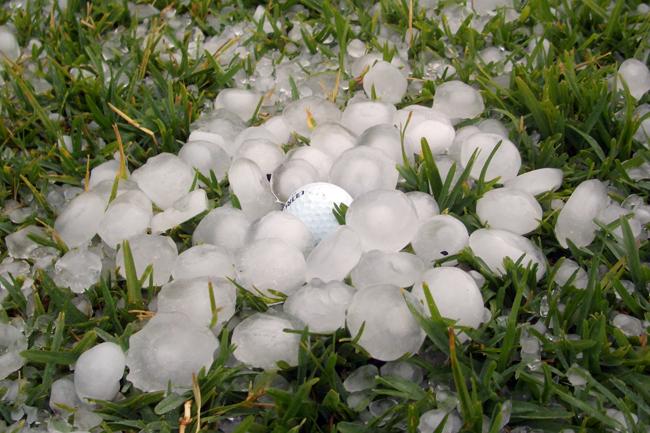
Devastated farmers have watched on in horror as crops worth millions of dollars were flattened by a thunderstorm that cut a swathe through the Riverland. An estimated 50,000 tonnes of crops including grapes, almonds, grain and stone fruit were wiped out when the freak storm hit on Friday afternoon. The total damage bill in the region has been estimated at up to $100 million — and farmers say insurance policies do not cover hail. The State Government is tight-lipped on whether it will provide assistance packages until the full damage is known, but it and the Federal Government have been proactive in lending support to the region with South Australian Senator Anne Ruston visiting the Riverland yesterday. The latest battering comes just two months after market gardeners across the Adelaide Plains lost as much as $30 million in produce from flooding in the Virginia area. Grape grower John ‘Yianni” Koutouzis said about 10 minutes of hail had wiped out the entire 30ha of wine and table grapes at his family’s Berri farm about 4pm on Friday. “We were out in the fields irrigating when we saw huge lightning in the distance and the wind picked up. We all ran for cover in the shed when the hail started to come down,” he said. “The hail was the size of golf balls and was coming in horizontally like it was fired from a machinegun. It was like being in a war zone.” “We were trying to yell to each other to get to cover but couldn’t hear over the sound of the hail on the tin roof. We honestly were fearing for our lives.” “It was terrible seeing my mum and dad crying, we’ve never experienced this before and now we’re left wondering what we do with no income this season. “We’re stuck, it’s a really, really bad situation.” Mr Koutouzis said insurance would not cover the damage because it had not been caused to harvested grapes. Neighbour, and apricot and peach grower, Daniel Singh, said he estimated the hailstorm caused more than $140,000 damage in the few minutes it lasted. “We came outside and saw all the fruit on the ground. I can’t believe it myself, there was only five weeks until harvest,” he said. “Some pieces of fruit are still on the tree but they are all big marks on them. There was no warning, we expected 5-10 mm of rain but no mention of anything else.” Liebich Family Vineyards owner Steve Liebich said he had lost almost two-thirds of his 6000 tonnes of grapes across his seven wineries between Cadell and Waikerie. Mr Liebich said he was devastated about the wreckage, which he predicted would cost his company $1 million in lost revenue. “Whether that becomes $1.2 million or $1.5 million in damage we don’t know but it’s a big loss,” he said. “It’s not easy to deal with but it’s what you expect when you’re a farmer. We’re nothing if not resilient.” Mr Liebich said a lack of hail cover meant most farmers wouldn’t have insurance cover. “My dad’s been farming since the 1960s and he’s never seen hail. We know people who’ve had hail cover all their lives and got rid of it a couple of years ago only for this to hit,” he said. Bureau of Meteorology senior forecaster Tom Boeck said almost 70,000 lightening strikes were reported across SA in the 24 hours to 9am on Saturday. State Emergency Service volunteers responded to about 400 calls in the 24 hours after the storms began to hit about 4pm Friday. Adelaide’s eastern suburbs, the Hills and parts of the Riverland — including Berri, Barmera and Waikerie — were among the hardest hit. Source - www.heraldsun.com.au/

14.11.2016

Australia - Damage bill from freak storm to hit $100 million

HUNDREDS of cars and homes damaged by Friday’s freak storm will be assessed by insurers from Monday as the statewide damage bill soars to $100 million. The RAA, one of the state’s biggest insurers, has been inundated with more than 1200 claims since the storm struck and is conservatively estimating its liability for damaged properties and vehicles at $2 million. Total losses in the Riverland, where 10-minute deluges of golf-ball-sized hail stripped grape vines as well as citrus, stone fruit and almond trees, was estimated to reach $100 million. The State Government says it will assist farmers but is still considering how a package will be formulated. [caption id="" align="alignnone" width="650"] Storm damaged vines on a vineyard owned by Sue Miller at Ramco, in the Riverland.[/caption] In the city, homes and vehicles were pummelled by hail when the wild storm whipped through about 4.30pm on Friday. RAA insurance claim manager Hayley Cain said about 1200 insurance claims had been made since 5pm on Friday. “We’re expecting more claims (today) in excess of $2 million which is a very conservative figure,” Ms Cain said. “Until the cars are assessed we won’t know how many are write-offs, but if there’s more than three panels damaged, the repair bill goes up. “So we’re expecting the number to go up further both in the amount of claims and damages.” Agriculture Minister Leon Bignell, who visited the Riverland on Sunday, said the storm had been “indiscriminate”, flattening the livelihood of some farmers, while other crops went untouched. “In 10 minutes, this huge storm destroyed an entire year’s work — it’s quite devastating for these growers,” he said. He said the Government would help those affected but exactly how a financial package would work was still being considered. The loss of produce in the Riverland, one of the state’s biggest foodbowls, is expected to eventually lead to higher prices for consumers for some items. About 150 properties in the Murraylands were still without power at 6pm on Sunday after losing supply during the height of the storm on Friday night. SA Power Networks was working to restore power to the affected areas, which had been delayed because of safety concerns, with supply expected to be returned by Monday morning. Wind gusts in excess of 90km/h across parts of the state during the weekend also caused havoc. State Emergency Service volunteers responded to more than 550 call outs since the storm hit on Friday, mostly for fallen trees and damaged roofs. The mercury in Adelaide on Sunday reached a miserly 17.1C, the coldest November day in the city since 2010. The Adelaide Hills copped the biggest drenching in the 24 hours until 9am on Sunday, with Verdun recording 44mm of rainfall, while 39mm was dumped at Inglewood. Port Pirie father Michael Ogston, 43, spent Sunday at Brighton beach to celebrate his birthday with his children Elysha, 12, Jasmine, 11, and six-year-old Holly. “It was a bit blowy but it was still a nice day,” he said. A high of 19C with a morning shower or two is forecast in the city for Monday. [caption id="" align="alignnone" width="640"] AUS AU: Adelaide Pelted With Golf Ball Sized Hail November 11[/caption]

14.11.2016

Australia - Mildura growers suffer 'significant damage' to crops as enormous hail, wind and rain hits

For more than three decades Mildura grape grower Kevin Leach has insured the yearly crop that is his livelihood. Until this year. And when hailstones larger than golf balls smashed through the state's north west in a 15-minute super storm on Friday night, 30 acres of his Chardonnay crop was almost completely wiped out. Mr Leach, who supplies grapes to Treasury Wines, Lindeman's and Stanley Wines lost "well over $100,000" by his own reckoning. "For 32 years I've always insured my crop and this is the first time I haven't, now I'll have to live with that," he said of his decision, which was brought about by rising premiums. [caption id="" align="alignnone" width="620"] Kevin Leach pictured at his family property with devastated crops. Photo: Casey Ridings[/caption] He was just one of many farmers counting a heavy cost on Saturday after the wild storms destroyed stone fruit, wheat and other crops in and around Mildura. The storm struck at about 7.40pm. Within six minutes, the area received 20mm of rain. "It got all eerie; you could see the build up of the clouds and the hail started falling gently but once the wind came it really struck," Mr Leach said. "You could ... hardly see, it was that thick. I was at the house and the noise was just deafening. [caption id="" align="alignnone" width="620"] Kevin Leach pictured at his family property with devastated crops from the storm that hit Mildura overnight  Photo: Casey Ridings[/caption] "As soon as the hail stopped we walked outside.  It was mushy and there was lots of water on the ground. "Even in the bunches that did survive – they've got a lot of damage and by tomorrow afternoon they'll be dying off quickly. [caption id="" align="alignnone" width="620"] Red Cliffs farmer Hardeep Singh's almond crop was wiped out in  Photo: Hardeep Singh[/caption] "There's not a lot you can do; the crop's gone, it won't come back again." Mr Leach, who runs the vineyard with his wife, said he would not know the full extent of the damage until Monday, when suppliers visit the vineyards. He has more crop 500m down the road from his property, which he is yet to see. "The reality hasn't sunk in yet. It'll be a little while yet," he said. The hail, fierce winds and heavy bursts of rain caused enormous damage to north-west Victoria, leaving fruit growers in the region devastated. "Because of the hail, the wind and the rain, farmers, stone fruit growers and grain growers have sustained significant damage to their crop," a State Emergency Service spokeswoman said. "There are a lot of agencies going out to assess the impact today, including SES, CFA, government departments, agricultural experts; lots of people are heading there and helping out." Red Cliffs, just outside Mildura, was one of the worst-affected parts of Victoria. The Bureau of Meteorology said the storm, accompanied by "huge hail and wind gusts of around 96km/h", had also devastated Merbein and central Mildura. "They ended up receiving 30mm of rain, and the bulk of that fell within 15 minutes," Bureau forecaster Michael Efron said. Red Cliffs almond farmer Hardeep Singh said his $580,000 crop, which wasn't insured, was almost completely wiped out by the storm. His house, where his parents and brother also live, flooded from the rain and hail. "It was just intense," he said. "You couldn't step outside. Our house windows broke as well, and then it just completely wiped the full crop off. "A lot of the trees are actually damaged so they've lost a lot of the next year's crop bud, so it might be a two-year cycle [before the next crop]." Mr Singh said it had been "devastating"  waking up to see all the almonds on the ground. "It's literally like we're harvesting them, but we're not." Across Victoria there were 430 calls to SES for assistance between Friday night and Saturday morning – 380 of those were in the Mildura area. "Most of them were for building damage, roofs damaged with tin coming off roofs, and tiles coming off roofs," the SES spokeswoman said. "So when that wind and hail came through, buildings were damaged, and heavy rain saw many properties affected by water coming into them. "The next category was trees down and there were lots of trees down." Due to the high volume of calls in the area, she advised people to be patient and call their insurance company as soon as they can. Reports of a tornado or "mini-tornado" around Mildura were unconfirmed, Mr Efron said. "For now it was a severe thunderstorm, we have to do an analysis of the damage path before we can confirm it was a tornado," he said. By Saturday afternoon conditions in the north-west had eased, and a deep low pressure system had moved south. "That will move eastwards over the next 24 to 36 hours, but over victoria we are still likely to see some showers and thunderstorms today over eastern parts of the state, especially across Gippsland," he said. The storm completely missed Melbourne, with only 2mm of rain falling up until 9am on Saturday. "Conditions for Melbourne you could described as quite muggy and humid today, with that low moving eastwards," Mr Efron said. "The winds will pick up this afternoon, increasing to around 35 to 45km/h. The bayside areas will be worst hit by those winds. "We will see conditions tending to be more wintry into Sunday. Over the next 24 to 36 hours I think we're looking at 10 to 20mm for the Melbourne area." The SES warned people inspecting their properties for storm damage to be extra careful. "Climbing on roofs and ladders is something we would not encourage, in some areas there is a lot of debris so we would encourage residents to take care when cleaning up to avoid injury," the spokeswoman said. The next warm beachgoing day will be Thursday, with no rain or wind – temperatures will be in their late 20s in the south of the state, and up to 30 degrees in the north. Source - http://www.theage.com.au

14.11.2016

Australia - Freak storm destroys horticulture and cereal crops, leaving farmers with no income for next 18 months

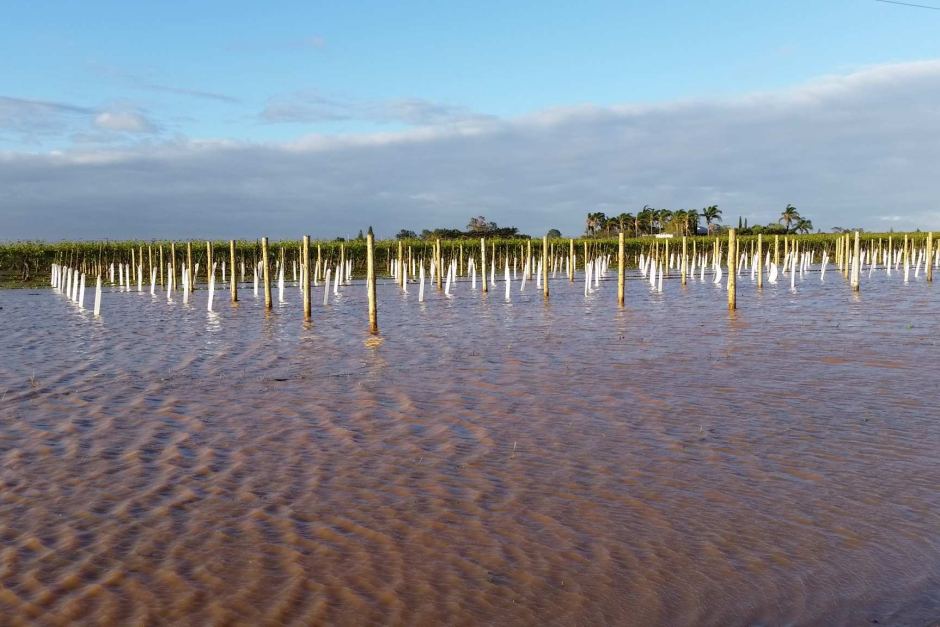
[caption id="" align="alignnone" width="700"] PHOTO: Table grapes sit under water at Irymple. (Merryl Whyte) MAP: Mildura 3500[/caption] More than 12 months' production and the livelihoods of some producers across South Australia, Victoria and New South Wales has been lost after a freak storm and a 'mini tornado' struck on Friday night. Huge hail stones and winds up to 100 kilometres per hour ravaged the region, damaging fruit, flooding crops and ripping leaves and bark from orchards. Berri farmer John Koutouzis was out at his farm when the storm cell hit and had to take shelter. He described the hail hitting the shed as sounding like machine gun fire. "All of a sudden we just got hit by wind and a bit of rain which turned in to a freak, almost like a tornado," he said. "It was terrible, we were out at the farm and we had to run under the cover of the sheds just to protect ourselves from the huge hailstorms. "We have 80 acres [32 hectares] of vineyards, a mix of table and wine grapes. "It's totally wiped out. 100 per cent, All bunches are on the ground. [It's] unbelievable, nothing can be used. "It's like a machine harvester has gone through it and just shaken everything off." [caption id="" align="alignnone" width="700"] PHOTO: These nectarines were destined for the export markets but have been destroyed by hail.  (Tom Nancarrow )[/caption] 'Lucky' to only lose half of crop Mildura table grape grower Vince Cirillo said he was one of the 'lucky ones', only losing around half his crop. Mr Cirillo called for financial assistance from local, state and federal governments to help growers who have lost their livelihoods. He said the damage could have flow on effects to the rest of the industry, with reduced supply likely at harvest time. "We've had probably about 50 to 60 [per cent crop loss]," he said. "It's got this year's damage for the fruit that's already on the vines and it's damaged the canes for the following year. "You've got to nurture the vines for another 12 months with no financial reward at the end of it. It becomes very depressing. "You've got to do what you can just to break even and then you've got to worry about the following season, you've got to worry about your financial commitment to the banks and put food on the table." [caption id="" align="alignnone" width="700"] PHOTO: Almonds knocked off trees after the freak storm (Supplied: Facebook)[/caption] Mr Cirillo said the damage would affect the wider community with less produce to pick and pack and a large drop in the agriculture industry's income. "The whole community is affected, there's less work that would have been done, projects get delayed or cancelled," he said. "You've got to rejig the whole 12-18 months just to see how you'll go forward. "Me personally, I think I'm one of the lucky ones compared to what I've heard around the Cardross, Red Cliffs, Paringi areas I really feel for those growers. "I hope there's some financial assistance for them." [caption id="" align="alignnone" width="700"] PHOTO: John Cirillo in his wind and hail damaged table grapes.  (Emma Brown)[/caption] 'No time to play politics': Senator Assistant Agriculture Minister Anne Ruston toured South Australia's Riverland after the storm. She said it was politician's responsibility to work together to help those impacted by the storm. "Anybody who wants to play politics with this should be shot. "This isn't about politics. This is about making sure we collectively do whatever we can to help these guys through a tight spot. "Whether that be coming up with grants. The best way we've got to be able to deliver an outcome for these guys is working together." Source - http://www.abc.net.au

14.11.2016

India - Crop insurance scheme would have prevented distress of farmers

BJP State president Tamilisai Soundararajan on Saturday charged the State government with neglecting the welfare of the farmers by not accepting the Central government-sponsored crop insurance scheme. Addressing the media here, Ms. Soundararajan stated that the BJP was all for protecting the interests of the Tamil Nadu farmers. The Centre had taken the right stand in positively intervening in the proposed Siruvani dam issue, coal bed methane project that were vital to the farmers’ welfare. With the State failing to implement the new crop insurance scheme, farmers were not getting the real benefits of crop insurance. This had a direct bearing on the difficulties of delta farmers and now there have been deaths of grief-stricken farmers due to crop failure, she charged. The BJP leader acknowledged that small traders, merchants, farmers and public were facing trouble due to demonetisation. She urged the public to remain calm for the time being and see the benefits accruing to them due to the stringent efforts being taken by the Narendra Modi government against black money. Source - http://www.thehindu.com/

14.11.2016

India - Last date for rabi crop insurance premium

The State Government in consultation with various departments, bankers and insurance companies has decided the last dates for payment of premium for crops cultivated in the Rabi season and allotted districts to two insurance companies. In a coordination committee meeting conducted by Secretary (Agriculture) C. Parthasarathi with the officials of related departments and the representatives of banks, and others, it was decided to notify paddy, maize, jowar, greengram, blackgram, groundnut, sunflower, chilli, onion, bengalgram and mango crops for coverage under crop insurance schemes. Paddy, maize, jowar, greengram, blackgram, groundnut, sunflower, chilli, onion and bengalgram would be covered under Pradhan Mantri Fasal Bima Yojna and mango under weather-based crop insurance scheme. Last date for payment of crop insurance premium for mango, maize and bengalgram would be December 14, while it would be December 31 for remaining crops. Source - http://www.thehindu.com

14.11.2016

Canada - Crop insurance pays on claims for 2016

Inclement weather over the summer and throughout the fall has extended the harvest season and impacted quality on crops, particularly lentils, peas and wheat. Losses in quality and quantity are insurable under the Crop Insurance Program. The Saskatchewan Crop Insurance Corporation reminds producers the sooner they submit their production declaration and file their claim, the sooner SCIC can assess the claim and issue a payment. Producers are reminded the deadline to complete their production declaration and file a claim is November 15. Post-harvest claims are filed when a producer’s actual crop yield and/or quality does not meet their coverage level. To date the Crop Insurance program has paid 887 post-harvest claims providing $43 million in support.  The five-year average (2011-2015) for post- harvest claims is 7,520 paid providing $170 million in payments. Even if a producer is not in a claim position it is important to complete their production declaration. This information helps producers build their individual coverage as it reflects their growing experience over the past ten years and impacts a producer’s overall coverage. Ease of filing from a home computer or a mobile device can be realized online with CropConnect. Through CropConnect producers can file all their production and register a claim. Producers can also complete their form, mailed to them in September, and return it to their local Crop Insurance office by mail, fax, walk-in or phone. Source - http://www.yorktonthisweek.com

11.11.2016

India - Rain deficit shrinks tea crop

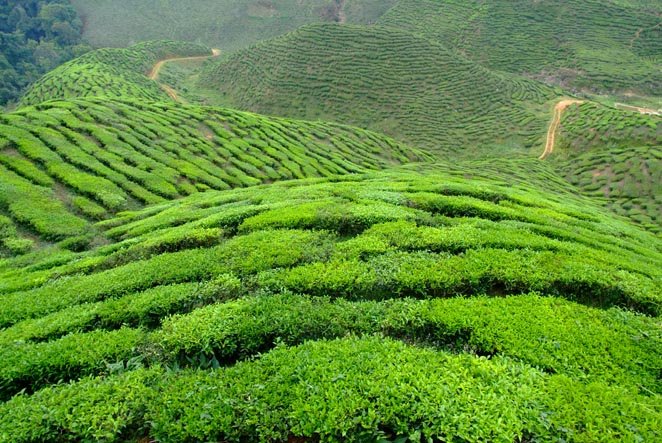
After the South-West monsoon, with the North-East monsoon also playing truant, tea growers in South India are staring at the prospect of a major crop loss this year. The South-West monsoon deficit had already impacted output, resulting in a firm trend in tea prices. Officials at the United Planters’ Association of Southern India (Upasi) — the apex body of tea growers — expect the overall output in the region to drop by over 15 per cent. South India, where tea is grown on about 1.19 lakh hectares across Tamil Nadu, Kerala and Karnataka, produces around 230 million kg (mkg), accounting for a fifth of the country’s total output of 1,200 mkg. Ramesh Bhojarajan, Secretary, Nilgiris Tea Growers Association, also pegs the crop loss, so far, at approximately 30 per cent. “Somehow, the prices in the South are holding up as compared to the North because of the crop failure. We are paying ₹16-17/kg for the ordinary leaf as compared to a maximum of ₹10 paid last year for the same,” Bhojarajan added. Scanty rains While admitting that the rainfall failure has impacted output in the region, Tea Board officials said the exact crop loss could not be quantified at this juncture. However, the price prospects are looking good and quality is expected to improve, they added. “In the Nilgiris, the largest tea producing district, the output is down by 30-35 per cent due to the failure of both the monsoons,” said B Radhakrishnan, Director, Upasi Tea Research Institute, Valparai. “The North-East monsoon has been only 30 per cent of last year. Assuming the rains pick up during the remaining part of the North East monsoon period, it would be difficult to make up for the production losses,” Radhakrishnan added. Rainfall in most of the tea growing areas ranged between 53 and 92 cm in the January-October period as compared to 153-162 cm the previous year, said N Dharmaraj, Chief Executive, Harrisons Malayalam, and past President, Upasi. The South Indian crop has registered an almost 15 per cent drop in the January-September period, by 19 million kg, vis-a-vis higher the North Indian production, at 43.2 mkg. Price outlook The forecast for the October-January (which was 20 mkg last year) looked ominously low and could well end up in the region of 15 mkg. The prices for 2016, so far, stood at ₹106/kg compared with ₹83 last year. With a further drop expected in output as well as the North Indian season coming to an end, prices are expected to go up by at least another ₹10. Retailers have already increased prices by 5-8 per cent, Dharmaraj added. Officials at Forbes, Ewart & Figgis, tea auctioneers in Kochi, said that prices started moving up in the last fortnight by around ₹2 per kg for dust grades, and touching ₹115.64 for CTC leaf. The Kerala government’s declaration of a drought might also influence the prices in the coming weeks. According to officials, tea exporters will be at receiving end due to low arrivals, forcing them to buy at higher prices. Prices may rise further following the decision of North Indian buyers to impose a 10-15 per cent hike in packed tea. However, in Coimbatore, contrary to the perception about a drop in tea production volumes, the quantities offered at the auctions are actually going up, say industry sources. The offered quantities at the auction centre in Coimbatore have actually risen as compared to the previous year, hovering around 5-5.5 lakh kg a week. The prices have shot up 25-30 per cent in the past year. Tea leaf, which was quoting at ₹70 a kg last year, rose to ₹96 this year, while the price per kg of tea dust rose from ₹87 to ₹103, on an average. “We expect that prospects will be better during the January-February period for the industry as North Indian production will be closed due to winter. This will benefit the sector with prices both for North Indian and South Indian tea moving up further,” said Dharmendra D Vora, committee member, Tea Buyers Association. The retail tea market is holding on without any significant change of late, says Cherian George, Head of Tea Business, Harrisons Malayalam Ltd. The average price in the retail market is hovering at ₹100-120, while the loose tea market is at ₹180 per kg. Drip irrigation However, prices have now started moving up, registering a 2-3 per cent increase since November because of the shortage in South Indian production. This is expected to continue till the end of the season, in March, he added. In fact, due to the drought, some growers have even faced higher losses. “We estimate the production loss in our estates at around 47 per cent,” said Lakshmanan N, of Golden Hills Estates Pvt Ltd in Coonoor. As the rainfall pattern has been erratic over the past few years, planters are being forced to look at alternatives such as drip irrigation to sustain their production levels. However, the high cost of installing drip irrigation infrastructure is prohibiting the planters to adopt such systems. The government should look at providing long-term financing solutions to planters willing to install the drip irrigation systems, Lakshmanan added. On the possibility of artificial irrigation, Dharmaraj said the sources of irrigation have completely dried up, ruling out prospects of any overhead irrigation. Drip irrigation, which delivers substantial water economy, is not an option for tea, considering the high density of population of tea and consequent heavy capital expenditure, which the industry can ill afford, he said. Source - http://www.thehindubusinessline.com

11.11.2016

South Africa - Farmers to receive R212m in drought support

The Department of Agriculture, Forestry and Fisheries has allocated R212 million to assist provinces that have been severely affected by the drought.. R29 million has been allocated to the Eastern Cape, Free State R31 million, KwaZulu-Natal R23 million, Limpopo R28 million, Mpumalanga R26 million, Northern Cape R25 million, North West R38 million and the Western Cape allocation is R12 million. “The Western Cape has declared a local state of disaster in three municipalities - Central Karoo, Eden and the West Coast. Gauteng is the only province that has not yet declared a state of drought disaster,” the department said in statement on Monday 7 Nov. During the 2015/16 financial year, the national Department of Agriculture allocated R263 million towards drought relief through reprioritising the Comprehensive Agricultural Support Programme (CASP). Provincial Departments of Agriculture made R198 million available through their equitable share funding. While some parts of the country are experiencing some rain, the department noted that the country, in its entirety, is receiving below average rainfall compared to previous seasons, due to the El Nino. Most rivers are not flowing normally and dam levels are at their lowest in a decade. Source - http://www.freshplaza.com

11.11.2016

India - Paddy in 601 ha hit by pests, weeds

Paddy cultivation in 601 hectares in the district has been affected by pest attack and weeds, according to estimates prepared by the Department of Agriculture. The estimates were prepared recently after conducting a survey using modern tools such as helicam. Elappulli, a disease-affecting leaves of the plant, caused damage to the crop in 350 hectares in Ambalappuzha and Punnapra. Farming in 176 ha has been affected by pest attack while weeds caused damage to crops in 75 ha. The survey to assess the loss to crops was conducted in the presence of farmers. Compensation The data will be handed over to the respective Krishi officers who will receive applications from farmers for compensation announced by the government. The compensation would be credited in the bank accounts of farmers, according to officials. Source - http://www.thehindu.com

11.11.2016

Canada - Alberta’s farmers scramble to recoup harvests

About a quarter of Alberta’s crops currently remain unharvested due to snow and heavy downpours that disrupted previous harvest attempts. The region’s farmers want to gather as much as they can while the weather has stabilized—and before the crop insurance payouts hit next spring. “The weather has changed for us now, as you can see. It’s blue sky, and we got a very strong Chinook wind. That is really, really helping out the grain farmers around,” farmer Greg Hawkwood told CBC News. Hawkwood’s wheat crop was covered in snow just a few weeks ago. At present, he is recovering as much barley, canola and wheat as possible before another snowfall hits. “Mother Nature is our boss, and whatever she throws at us, we just deal with it,” he said. Farmers like Hawkwood are worried that even if they can manage to harvest the remaining unharvested crops, they might still suffer large financial losses. “Because it’s been laid down for so long, and we’ve had all the moisture and the snow and that stuff, we’ve lost grade on it. It’ll probably end up as a feed wheat,” he explained. Hawkwood detailed that farmers budget their operations on the grade of the grain; any dip in quality would translate to significant losses that would scare even financiers. “You hear rumours out there that a lot of the banks are getting nervous now, because a lot of the farmers now, this is the time when they sit down with their banker and plan for next year,” Hawkwood stated. CBC News reported that two Edmonton-area counties declared states of agricultural disaster following the devastation wet weather had on their crops. “It’s not surprising, especially when maybe within those counties over 50% of the crop is not harvested,” commented Alberta Federation of Agriculture president Lynn Jacobson. “If they have unharvested crops, then the payout under crop insurance regulations will basically be next spring. That’s gonna cause a financial crunch for a lot of people.” Source - http://www.insurancebusiness.ca

11.11.2016

New Zealand - New advisory group on smart agriculture established

A new technical advisory group is being created to advise the Ministry of Primary Industries on how to accelerate the use of smart agriculture technology, Ministers Amy Adams and Nathan Guy, have announced today 10 November. “Technology has major potential to support higher productivity and more sustainable use of natural resources in farming,” says Primary Industries Minister Nathan Guy. “It can be used in a wide range of applications, such as using soil moisture sensors to fine-tune irrigation, monitoring animal health and fertility, and determining the perfect time to harvest fruit and crops. Monitoring and measuring is now an important part of managing natural resources sustainably. “We know there are some exciting advances in agricultural science and technology coming from our CRIs and universities, as well as some great commercial tools already available. But for farmers, it can be difficult to know what tools are right for them, and to judge how much to invest. We want to understand how we can better support farmers to make those decisions.” The Government’s $2 billion rollout of Ultra-Fast Broadband (UFB) and the Rural Broadband Initiative (RBI) is one of the biggest infrastructure projects ever undertaken in New Zealand, and is bringing improved connectivity to New Zealanders. “We have major initiatives underway on both rural broadband and mobile coverage, and we want to ensure that we do what we can so farmers get access to the communications infrastructure they need,” says Communications Minister Amy Adams. “While the Government can rollout world-class infrastructure, it’s up to New Zealanders to take up the opportunities that connectivity brings.” Membership of the group will be confirmed before the end of the year and have broad representation from across the primary industries. The announcement was made by the Ministers while hosting an event on smart agriculture at the Canterbury A&P Show today.

10.11.2016

Africa - Fertilisers can help farmers battle climate change

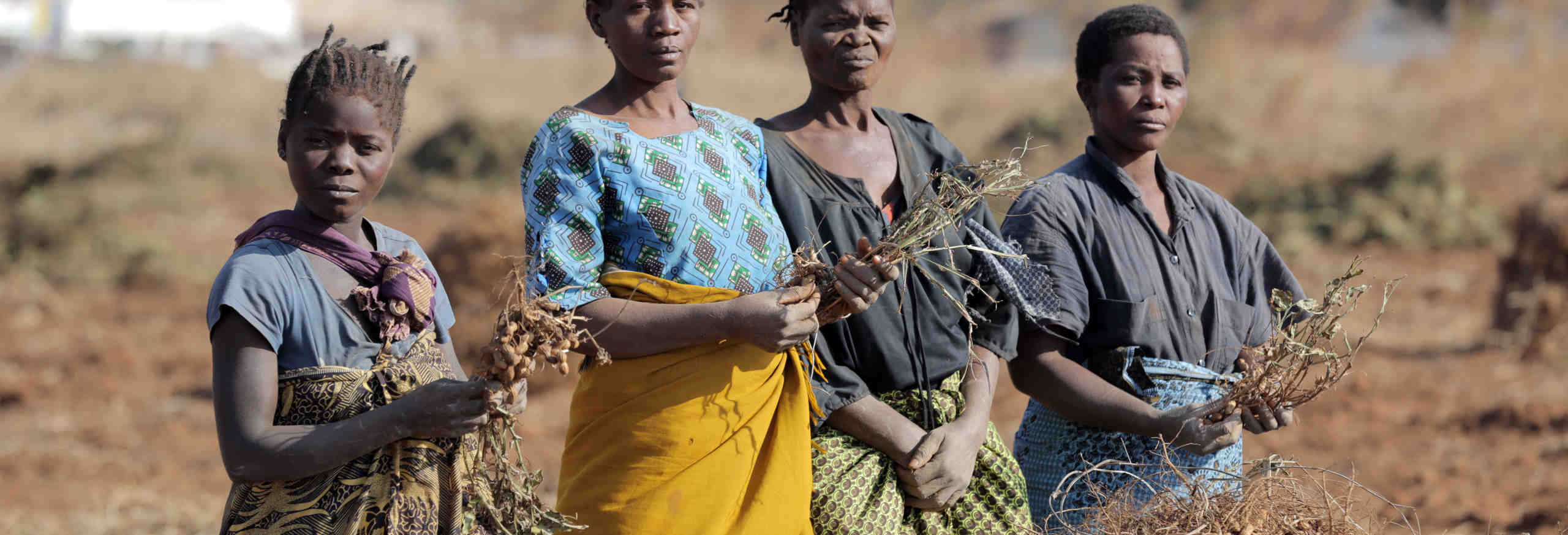
Ten years ago, a group of 53 African ministers of agriculture met in Abuja, Nigeria to discuss what they referred to as “Africa’s fertiliser crisis” They shared their collective observations on the state of the continent’s agricultural production systems at the time, agreeing unanimously that “bold and urgent action” would be needed if the sector were to play its part in tackling the widespread rural poverty, hunger and malnutrition facing its population. Crop yields in Africa were only 10-25 percent of the yields found in the developed world, leaving the continent dependent on billions of dollars worth of food imports. No great surprise, fertiliser use was also around 10 percent of the global average. Around two-thirds of Africa’s soils were thought to be degraded, causing an estimated $4 billion in GDP losses on the continent each year. African leaders knew these losses were untenable, given high levels of poverty in a rapidly expanding population. In response, they called for a systematic increase in average fertiliser use – from 8kg per hectare to 50kg per hectare by the year 2015. Fast forward to 2016, and another African city – this time in Marrakesh, Morocco – is playing host to another important meeting: the annual UN climate talks. Thousands of delegates will descend to discuss how to reduce anthropogenic greenhouse gas emissions, while building the resilience of societies and economies against global warming. Food security in Africa will be a key concern at the conference with the Moroccan government launching its AAA initiative, which focuses on Adaptation in African Agriculture. African farmers are among the principal victims of extreme temperatures and weather events, which are expected to worsen as a result of climate change. As just one example, the recent devastating El Niño-induced drought left millions in Southern and Eastern Africa in need of food assistance when crops failed across the region. It is therefore the ideal moment to revisit the issue of Africa’s fertiliser crisis, and determine how to move forward on the agenda set in Abuja ten years ago in a “climate-smart” way. Climate-smart agriculture requires agricultural practices that provide the “triple win” of boosting productivity and livelihoods, increasing resilience and minimising greenhouse gas emissions. Fertilisers play a crucial role in all three areas. Food security in Africa will simply not be achievable without fertilisers. Vast tracts of Africa’s arable land lack the nutrients needed to grow healthy crops. Applying appropriate fertilisers according to soil type will not only improve soil conditions, but also enhance the productivity of food crops as yields increase. By helping farmers to crop more crops on less land, fertilisers also help farmers spare more forests and pastures from conversion to farmland – one of the biggest single drivers of climate change. And nutrient-rich, healthy soils tend also to be more resilient under stressful growing conditions, which reduces crop losses and helps farmers adapt. CARBON FOOTPRINT It is important to recognise that mineral fertilisers do have a carbon footprint, estimated at 2.5 percent of global greenhouse gas emissions, but consider this: Fertilisers are also responsible for around 50 percent of our total crop production worldwide. And considering that the agricultural sector as a whole represents 12 percent of all greenhouse gas emissions, fertilisers’ contribution starts to seem negligible. Nonetheless, the fertiliser sector continues to be committed to reducing its carbon footprint globally by promoting farming techniques that allow for better nutrient uptake: 4R Nutrient Stewardship, a management technique that makes best use of site- and crop-specific practices in the four areas of nutrient management (using the right nutrient source at the right rate, at the right time and in the right place), and Integrated Soil Fertility Management which recommends using organic sources of nutrients that are available on-farm (e.g. animal manure and/or crop residues) and then supplementing them with manufactured fertilisers to sustainably increase yields. In Africa, however, the most urgent priority is to ensure that the continent’s millions of farmers have sufficient access to both sources of nutrients in order to redress soil degradation and boost yields. This requires everyone’s support. The African leaders who met back in 2006 called for “immediate steps to accelerate investment in infrastructure, particularly transport, fiscal incentives, strengthening farmers’ organisations, and other measures to improve output market incentives”. Progress on this is being made. The African Fertiliser and Agribusiness Partnership (AFAP), for instance, is investing in wholesale rural infrastructure by developing better inland storage and distribution facilities for fertiliser and supporting “hub” agrodealers. These agrodealers often have better access to credit (for the initial purchase of inputs) as well as more capacity and incentives to provide the right advice to farmers. As such, they can provide the right products consistently and at scale to retail outlets, farmer groups and cooperatives. There are many tools and technologies available that are appropriate even for the smallest-scale African farmers. Soil testing devices such as the SoilCares scanner can give recommendations on which fertilisers to use within 30 minutes of running a test. Other techniques such as microdosing – in which very small amounts of fertiliser are applied next to the rooting zone of the crop – help reduce waste and lower costs. Digital tools, such as the GreenSeeker, can analyse the level of nitrogen in a crop, and guide a farmer on how much fertiliser to apply to optimise crop growth. Simple colour charts that allow farmers to monitor the nutritional status of plant leaves can do a similar job. Specialty fertilisers that are blended according to local soil needs are also key – with results from Ethiopia having already boosted yields by up to 65 percent. And yet, already a year after the deadline for the Abuja Declaration has expired, African fertiliser use is still nowhere near its target of 50kg per hectare. In fact, it’s only about 13kg per hectare on average and with lots of variation from region to region. If agriculture is to become a viable livelihood for the growing African population – the majority of whom will be young people – it needs to become more productive, and more lucrative. Fertilisers remain essential to this. Healthy soils can build a foundation on which to build a thriving agriculture sector in Africa, and by reviving the momentum to restore them, we can make food security and resilience to climate change on the continent a reality. Source - http://news.trust.org

10.11.2016

Canada - Alberta farmers race against Mother Nature to salvage harvest while warm weather holds

An estimated 25 per cent of Alberta's crops are still unharvested, but farmers just north of Calgary have been gifted a narrow window of opportunity by Mother Nature to rectify that, and now they're hustling to save what they can. Early snow and heavy downpours disrupted this year's harvest plans in many regions. In Madden, Alta., farmer Greg Hawkwood's wheat crop was blanketed by snow just a few weeks ago. "The weather has changed for us now, as you can see. It's blue sky, and we got a very strong Chinook wind. That is really, really helping out the grain farmers around," Hawkwood said. His and many of the surrounding fields are buzzing with activity as combine drivers hustle to salvage as much barley, canola and wheat as possible before the next snow hits. "Mother Nature is our boss, and whatever she throws at us, we just deal with it," Hawkwood said. [caption id="" align="alignnone" width="544"] After a wet and stormy summer, Alberta farmers race against Mother Nature to salvage what crops they can before the next snow hits. (Dave Gilson/CBC)[/caption] Downgraded to feed quality Calvin Bushfield works on a combine crew in Madden and says that if the weather holds over the next four days, his team should be able to clear a handful of fields in the area. "Everybody's just trying to get as much done as we can," he said. But despite the last-minute blitz, he and many farmers like him are still bracing themselves for big financial losses. "Because it's been laid down for so long, and we've had all the moisture and the snow and that stuff, we've lost grade on it. It'll probably end up as a feed wheat," Hawkwood said. Most farmers price and budget their farming operation on number one grade grain, Hawkwood said, so the significant drop in quality is a hard pill to swallow. "You hear rumours out there that a lot of the banks are getting nervous now, because a lot of the farmers now, this is the time when they sit down with their banker and plan for next year," Hawkwood said. [caption id="" align="alignnone" width="555"] Scott Hawkwood works with his father, Greg, to clear the fields on their family farm before the warm November weather turns. (Dave Gilson/CBC)[/caption] Dire news further north This past week, two Edmonton-area counties declared states of agricultural disaster because of the impact of wet weather on their crops "It's not surprising, especially when maybe within those counties over 50 per cent of the crop is not harvested," said Lynn Jacobson, president of the Alberta Federation of Agriculture. "If they have unharvested crops, then the payout under crop insurance regulations will basically be next spring. That's gonna cause a financial crunch for a lot of people." Jacobson said every producer's situation will be different, but younger producers burdened by higher debt loads will be hit harder than those who have been in the business for decades. "Is it dire for some people? Yes, it will be, for some people. Other people will be okay." [caption id="" align="alignnone" width="502"] 'The harvest being so delayed and drawn out, and the quality of the grain's going down. Agriculture this year took a bit of a beating,' says Hawkwood. (Dave Gilson)[/caption] Source - http://www.cbc.ca

828
of 1225