After the South-West monsoon, with the North-East monsoon also playing truant, tea growers in South India are staring at the prospect of a major crop loss this year. The South-West monsoon deficit had already impacted output, resulting in a firm trend in tea prices. Officials at the United Planters’ Association of Southern India (Upasi) — the apex body of tea growers — expect the overall output in the region to drop by over 15 per cent.
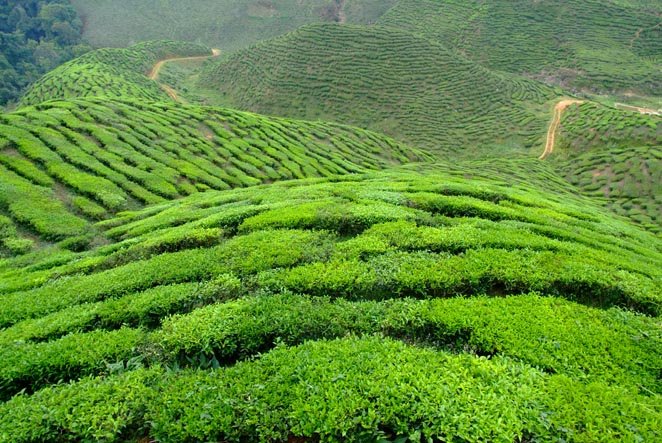
South India, where tea is grown on about 1.19 lakh hectares across Tamil Nadu, Kerala and Karnataka, produces around 230 million kg (mkg), accounting for a fifth of the country’s total output of 1,200 mkg.
Ramesh Bhojarajan, Secretary, Nilgiris Tea Growers Association, also pegs the crop loss, so far, at approximately 30 per cent. “Somehow, the prices in the South are holding up as compared to the North because of the crop failure. We are paying ₹16-17/kg for the ordinary leaf as compared to a maximum of ₹10 paid last year for the same,” Bhojarajan added.
Scanty rainsWhile admitting that the rainfall failure has impacted output in the region, Tea Board officials said the exact crop loss could not be quantified at this juncture. However, the price prospects are looking good and quality is expected to improve, they added.
“In the Nilgiris, the largest tea producing district, the output is down by 30-35 per cent due to the failure of both the monsoons,” said B Radhakrishnan, Director, Upasi Tea Research Institute, Valparai.
“The North-East monsoon has been only 30 per cent of last year. Assuming the rains pick up during the remaining part of the North East monsoon period, it would be difficult to make up for the production losses,” Radhakrishnan added.
Rainfall in most of the tea growing areas ranged between 53 and 92 cm in the January-October period as compared to 153-162 cm the previous year, said N Dharmaraj, Chief Executive, Harrisons Malayalam, and past President, Upasi.
The South Indian crop has registered an almost 15 per cent drop in the January-September period, by 19 million kg, vis-a-vis higher the North Indian production, at 43.2 mkg.
Price outlookThe forecast for the October-January (which was 20 mkg last year) looked ominously low and could well end up in the region of 15 mkg. The prices for 2016, so far, stood at ₹106/kg compared with ₹83 last year.
With a further drop expected in output as well as the North Indian season coming to an end, prices are expected to go up by at least another ₹10. Retailers have already increased prices by 5-8 per cent, Dharmaraj added.
Officials at Forbes, Ewart & Figgis, tea auctioneers in Kochi, said that prices started moving up in the last fortnight by around ₹2 per kg for dust grades, and touching ₹115.64 for CTC leaf.
The Kerala government’s declaration of a drought might also influence the prices in the coming weeks. According to officials, tea exporters will be at receiving end due to low arrivals, forcing them to buy at higher prices.
Prices may rise further following the decision of North Indian buyers to impose a 10-15 per cent hike in packed tea.
However, in Coimbatore, contrary to the perception about a drop in tea production volumes, the quantities offered at the auctions are actually going up, say industry sources. The offered quantities at the auction centre in Coimbatore have actually risen as compared to the previous year, hovering around 5-5.5 lakh kg a week.
The prices have shot up 25-30 per cent in the past year. Tea leaf, which was quoting at ₹70 a kg last year, rose to ₹96 this year, while the price per kg of tea dust rose from ₹87 to ₹103, on an average. “We expect that prospects will be better during the January-February period for the industry as North Indian production will be closed due to winter. This will benefit the sector with prices both for North Indian and South Indian tea moving up further,” said Dharmendra D Vora, committee member, Tea Buyers Association.
The retail tea market is holding on without any significant change of late, says Cherian George, Head of Tea Business, Harrisons Malayalam Ltd.
The average price in the retail market is hovering at ₹100-120, while the loose tea market is at ₹180 per kg.
Drip irrigationHowever, prices have now started moving up, registering a 2-3 per cent increase since November because of the shortage in South Indian production.
This is expected to continue till the end of the season, in March, he added. In fact, due to the drought, some growers have even faced higher losses. “We estimate the production loss in our estates at around 47 per cent,” said Lakshmanan N, of Golden Hills Estates Pvt Ltd in Coonoor.
As the rainfall pattern has been erratic over the past few years, planters are being forced to look at alternatives such as drip irrigation to sustain their production levels.
However, the high cost of installing drip irrigation infrastructure is prohibiting the planters to adopt such systems. The government should look at providing long-term financing solutions to planters willing to install the drip irrigation systems, Lakshmanan added.
On the possibility of artificial irrigation, Dharmaraj said the sources of irrigation have completely dried up, ruling out prospects of any overhead irrigation. Drip irrigation, which delivers substantial water economy, is not an option for tea, considering the high density of population of tea and consequent heavy capital expenditure, which the industry can ill afford, he said.
Source - http://www.thehindubusinessline.com