

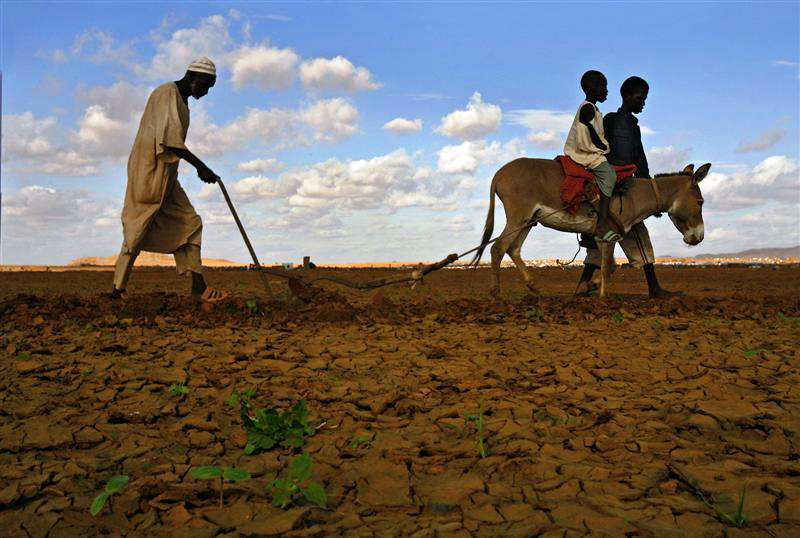
Africa - Fertilisers can help farmers battle climate change
10.11.2016 322 views
Ten years ago, a group of 53 African ministers of agriculture met in Abuja, Nigeria to discuss what they referred to as “Africa’s fertiliser crisis”
They shared their collective observations on the state of the continent’s agricultural production systems at the time, agreeing unanimously that “bold and urgent action” would be needed if the sector were to play its part in tackling the widespread rural poverty, hunger and malnutrition facing its population.
Crop yields in Africa were only 10-25 percent of the yields found in the developed world, leaving the continent dependent on billions of dollars worth of food imports. No great surprise, fertiliser use was also around 10 percent of the global average. Around two-thirds of Africa’s soils were thought to be degraded, causing an estimated $4 billion in GDP losses on the continent each year.
African leaders knew these losses were untenable, given high levels of poverty in a rapidly expanding population. In response, they called for a systematic increase in average fertiliser use – from 8kg per hectare to 50kg per hectare by the year 2015.
Fast forward to 2016, and another African city – this time in Marrakesh, Morocco – is playing host to another important meeting: the annual UN climate talks. Thousands of delegates will descend to discuss how to reduce anthropogenic greenhouse gas emissions, while building the resilience of societies and economies against global warming.
Food security in Africa will be a key concern at the conference with the Moroccan government launching its AAA initiative, which focuses on Adaptation in African Agriculture.
African farmers are among the principal victims of extreme temperatures and weather events, which are expected to worsen as a result of climate change. As just one example, the recent devastating El Niño-induced drought left millions in Southern and Eastern Africa in need of food assistance when crops failed across the region.
It is therefore the ideal moment to revisit the issue of Africa’s fertiliser crisis, and determine how to move forward on the agenda set in Abuja ten years ago in a “climate-smart” way.
Climate-smart agriculture requires agricultural practices that provide the “triple win” of boosting productivity and livelihoods, increasing resilience and minimising greenhouse gas emissions. Fertilisers play a crucial role in all three areas.
Food security in Africa will simply not be achievable without fertilisers. Vast tracts of Africa’s arable land lack the nutrients needed to grow healthy crops. Applying appropriate fertilisers according to soil type will not only improve soil conditions, but also enhance the productivity of food crops as yields increase.
By helping farmers to crop more crops on less land, fertilisers also help farmers spare more forests and pastures from conversion to farmland – one of the biggest single drivers of climate change. And nutrient-rich, healthy soils tend also to be more resilient under stressful growing conditions, which reduces crop losses and helps farmers adapt.
CARBON FOOTPRINT
It is important to recognise that mineral fertilisers do have a carbon footprint, estimated at 2.5 percent of global greenhouse gas emissions, but consider this: Fertilisers are also responsible for around 50 percent of our total crop production worldwide. And considering that the agricultural sector as a whole represents 12 percent of all greenhouse gas emissions, fertilisers’ contribution starts to seem negligible.
Nonetheless, the fertiliser sector continues to be committed to reducing its carbon footprint globally by promoting farming techniques that allow for better nutrient uptake: 4R Nutrient Stewardship, a management technique that makes best use of site- and crop-specific practices in the four areas of nutrient management (using the right nutrient source at the right rate, at the right time and in the right place), and Integrated Soil Fertility Management which recommends using organic sources of nutrients that are available on-farm (e.g. animal manure and/or crop residues) and then supplementing them with manufactured fertilisers to sustainably increase yields.
In Africa, however, the most urgent priority is to ensure that the continent’s millions of farmers have sufficient access to both sources of nutrients in order to redress soil degradation and boost yields.
This requires everyone’s support. The African leaders who met back in 2006 called for “immediate steps to accelerate investment in infrastructure, particularly transport, fiscal incentives, strengthening farmers’ organisations, and other measures to improve output market incentives”.
Progress on this is being made. The African Fertiliser and Agribusiness Partnership (AFAP), for instance, is investing in wholesale rural infrastructure by developing better inland storage and distribution facilities for fertiliser and supporting “hub” agrodealers.
These agrodealers often have better access to credit (for the initial purchase of inputs) as well as more capacity and incentives to provide the right advice to farmers. As such, they can provide the right products consistently and at scale to retail outlets, farmer groups and cooperatives.
There are many tools and technologies available that are appropriate even for the smallest-scale African farmers.
Soil testing devices such as the SoilCares scanner can give recommendations on which fertilisers to use within 30 minutes of running a test. Other techniques such as microdosing – in which very small amounts of fertiliser are applied next to the rooting zone of the crop – help reduce waste and lower costs. Digital tools, such as the GreenSeeker, can analyse the level of nitrogen in a crop, and guide a farmer on how much fertiliser to apply to optimise crop growth. Simple colour charts that allow farmers to monitor the nutritional status of plant leaves can do a similar job. Specialty fertilisers that are blended according to local soil needs are also key – with results from Ethiopia having already boosted yields by up to 65 percent.
And yet, already a year after the deadline for the Abuja Declaration has expired, African fertiliser use is still nowhere near its target of 50kg per hectare. In fact, it’s only about 13kg per hectare on average and with lots of variation from region to region. If agriculture is to become a viable livelihood for the growing African population – the majority of whom will be young people – it needs to become more productive, and more lucrative. Fertilisers remain essential to this.
Healthy soils can build a foundation on which to build a thriving agriculture sector in Africa, and by reviving the momentum to restore them, we can make food security and resilience to climate change on the continent a reality.
Source - http://news.trust.org
EVENTS

ScaleAgData Stakeholder Engagement Event
22.10.2024The ScaleAgData project is pleased to invite you to our second stakeholder event. Building on the discussions and connections formed during our first webinar, this event will focus on fostering collaboration among stakeholders, providing updates on our project’s progress, and outlining future opportunities for engagement.
RISK EVENTS

Moldova - May frosts caused heavy damage to fruit orchards
10.05.2026The first frosty nights of May have significantly worsened estimates of damage to Moldova's fruit sector from spring frosts. According to initial assessments by fruit market operators, between a quarter and a third of the country's total orchard area was seriously affected.
04.06.2026

India - Delhi raises crop damage compensation after 10 years by over 50% to Rs 75,000 per hectare
In a major relief for farmers, the Delhi government has increased compensation for crop loss caused by rain and hailstorms from Rs 20,000 per acre to Rs 75,000 per hectare.
04.06.2026

Why Tech-Driven Agro-Insurance Has Stumbled in Ethiopia
For decades, Ethiopia’s agricultural sector has remained trapped in a dangerous paradox.
04.06.2026

UK - Rural crime cost Wales £2.2m last year despite fall in offences
Rural crime cost Wales an estimated £2.2 million last year, with organised criminals continuing to target tractors, livestock and farming equipment despite an overall fall in offences, according to a new report.
04.06.2026

Kenyan Agro-Insurance Startup, Pula Raises US$ 20 Million in Series B Round
Pula, a Kenyan startup that offers insurance to small-scale farmers, aims to serve more than 100 million farmers in Africa after raising US$ 20 million in its Series B round.
04.06.2026

USA - USDA announces $52M to boost public access to private lands for hunting, fishing
The U.S. Department of Agriculture is announcing $52 million to help state and tribal governments encourage private landowners to allow public access to their land for hunting, fishing and other wildlife-dependent recreation through the Voluntary Public Access and Habitat Incentive Program (VPA-HIP).
04.06.2026

Hope Grows in Malawi’s Grain Stores as Farmers Battle Post-Harvest Losses
Some grain rots in poorly ventilated storage. Some is eaten by pests. Some is damaged during drying or transportation before it ever reaches the market.
03.06.2026

Canada - AFSC extends several northern Alberta seeding dates for 2026
Alberta’s Agriculture Financial Services Corp. (AFSC) is extending the recommended seeding dates in the province’s northeast, northwest and Peace regions for several crops for the 2026 growing season only.
03.06.2026

India - Elephants run amok in Konaje agricultural farm, cause massive crop damage
A herd of elephants, including calves, wreaked havoc on an agricultural farm belonging to Yashodhara Gowda at Pallattadka in Konaje village of Kadaba taluk.
