NEWS
844
of 1225
News
13.09.2016

Australia - Invasive bird species damages fruit and veg

Residents across Australia's East Coast are being called on by a Queensland man to help trap an invasive bird species that has engaged in an aggressive territorial takeover. The bird has the potential to spread avian malaria, as well as damage fruit, vegetable and cereal crops, reports abc.net.au. Often described as "flying rats", or the "cane toads of the sky", the Indian myna is considered one of world's 100 most invasive species. Fraser Coast Wildlife Preservation Society member, John Williams, said we have every reason to be concerned about the threat posed to native species by the Indian Myna. "From one breeding pair, within five years they have the potential for reaching nearly 13,000 birds, that's how quickly their population grows," Mr Williams said. "Once they've reached a critical mass then their expansion is just an explosion, all of a sudden you'll see them everywhere, there won't be any other birds.'' In the 1860s the Indian myna was deliberately introduced into Melbourne's market gardens to keep down insects. Source - http://www.freshplaza.com/

13.09.2016

Australia - New app tells growers when plants need watering

Horticulture Innovation Australia (Hort Innovation) is joining forces with agriculture technology company The Yield to deliver an exciting new tool for growers – a mobile app designed to help guide irrigation decisions. Hort Innovation Research and Investments General Manager, David Moore, said that knowing when and how much to irrigate crops can be a challenge for growers, particularly because only a portion currently use moisture probes to make these decisions on their land. “This new app will harness the power of technology to take away some of the uncertainty growers face when deciding when the best time to irrigate is, and how much water might be needed,” he said. “It’s a simple, easy-to-use solution that will help growers improve irrigation efficiency, with flow-on effects for crop yields, profitability and sustainability.” With a focus on brassicas, carrots, lettuce and leafy vegetables, initially the app will allow growers to enter a location, crop type and crop growth stage to get a quick and easy estimate of vegetable crop water use and soil water balance. Ultimately growers will be able to simply enter a planting date for their crops and have crop growth stages adjusted automatically, with the new app providing crop-specific water balance predictions. To do this the app will use information from the Bureau of Meteorology and newly developed ‘crop coefficient’ data and modelling from this research project. This research project is being funded by Horticulture Innovation Australia Limited using the vegetable industry levy with co-investment from The Yield and funds from the Australian Government. The app will also have the ability to draw from on-farm microclimate data and analytics where growers have on-farm sensors. The models enabling the app will be developed in partnership with The Queensland University of Technology, a leading research organisation in the field of bioinformatics and data analytics. Ros Harvey, Managing Director of The Yield, said the app will continue to be developed together with growers to ensure that it is easy to use, with a selection of Tasmanian and Queensland growers already taking the trial app for a spin. “The Yield is excited to be partnering with Hort Innovation and its growers in co-creating this irrigation tool,” she said. The first release of the app is expected in October this year, with a basic free version and a paid subscription service with added functionality to be available for iOS, Android and Windows platforms. This project is agile science in action,” Ros said. “Instead of waiting three years for research outcomes, we will progressively release updates as the research progresses. This gets results out of the lab and into growers’ hands quicker.” Source - http://www.freshplaza.com

13.09.2016

USA - Feds helping farmers

Brandon Willis has good timing. He spent a few days in Florida at the end of August talking to farmers, nursery owners and insurance representatives about how crop insurance can benefit farmers, who are always at the mercy of natural disasters. One week after his visit, just such a disaster occurred. Hurricane Hermine struck the Sunshine State, the first time in more than a decade that Florida suffered a direct hit. "Crop insurance keeps a lot of farmers in business," Willis said during a telephone interview on Sept. 9. That's particularly true in Florida, where the farmers with whom Willis met let him know their stark reality: "One hurricane will literally put them out of business." Willis, the administrator of the federal U.S. Agriculture Department's Risk Management Agency, said the feds want to hear from people on the front lines. That's why teams from his agency have made several fact-finding trips in recent months. The late August Florida trip took officials to Lake City, Inverness, Gainesville, Orlando, Lakeland and Lake Alfred. They talked. They listened. Willis said a planning meeting will be convened soon to debrief and figure out next steps. Federally subsidized crop insurance is a big topic of interest in the agricultural world. Nationwide, farmers had $102.4 billion of crop coverage in 2015. That includes $3 billion in Florida, where $46.4 million was paid out in claims. In addition to listening, Willis also wants to spread the word about the relatively new Whole-Farm Revenue Protection program and other insurance products. Whole-Farm Revenue Protection, as the name suggests, covers all the crops on smaller, diversified farms. The program, which started last year, had 1,103 policies nationwide. The feds also have a special program for organic agriculture; it oversaw almost $650 million in federal insurance coverage last year. Source - http://www.ocala.com

13.09.2016

India - Boon for farmers as crop insurance to go hitech with drones, apps

Farmers may soon expect some help from the skies for speedy settlement of claims in crop insurance, thanks to drones. Insurers are working on deployment of drones besides a real time mobile application to address issues in claim settlement. As part of the Pradhan Mantri Fasal Bima Yojana (PMFBY), deployment of drones has been permitted to estimate crop losses in localised calamities and also map productivity. Talks with tech providers “We are in talks with technology providers and other stakeholders for using drones to estimate seasonal impact on crops and localised calamities which is vital for claim settlement,’’ Ashish Agarwal, Head-Agricultural Business, Bajaj Allianz General Insurance, told BusinessLine. Bajaj Allianz is implementing new crop insurance scheme in four states of Bihar, Haryana, Telangana and Andhra Pradesh. According to sources, other major general insurers are also conducting research on use of drones though some are yet to spell out progress officially. Data synchronisation “We are working on using drones in yield assessment and to exactly find out crop signatures by synchronising data collected by drones with satellite images”, said a top executive of a private general insurance company which is a major player in implementation of PMFBY. According to industry estimates, the prices of a drone with a high end camera range from approximately ₹7,000 to ₹25,000. However, its depends on the nature of use, area to be covered and accompanying technology solutions required. Insurers generally lease drones to survey a cluster and it may cost around ₹1 lakh for a cluster of areas/district. According to a senior govt official, a real time mobile application has also been readied to be piloted by state government officials and insurers. “One of the challenges in agri insurance is the time taken to settle claims as the traditional crop cutting experiment is a long process,’’ Agarwal said. To assess productivity This experiment is done in select areas by the department of agriculture and insurance company officials to arrive at crop productivity. This would be used as a benchmark to arrive at any decision on crop failure to enable payment claims. The new app will allow the officials to upload data directly to a central server which makes the process speedier, he added. Training sessions The government has made it mandatory for all state government officials to use the app and is currently conducting training sessions for officials of different states. Launched in Jan 2016, PMFBY is now on in all states except in Punjab and four north-eastern states for Kharif and Rabi seasons. At present, it is being executed by 11 public and private sector insurers. The total premium to be generated is estimated at ₹18,000 crore for the year. Source - http://www.thehindubusinessline.com

12.09.2016

USA - State farmers' flood loss said to hit $46.4M

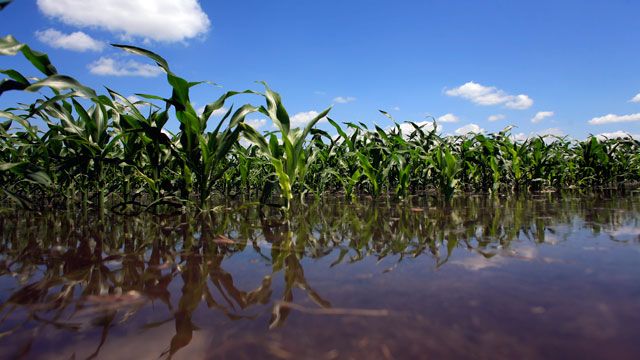
Steady rain in August caused about $46.4 million in damage to Arkansas row crops, the University of Arkansas System's Division of Agriculture said Friday. Rice was hardest hit, with $18.6 million in losses. Damage to cotton was estimated at $11.5 million; soybeans, $10.7 million; and grain sorghum, $5.6 million. The flooding came at a time of low commodity prices and falling incomes for farmers, said farmer Jerry Morgan Jr. Morgan worked 4,400 acres in Lawrence County until two weeks of rain in August and an overflowing Black River and its tributaries took away 3,100 of them. Vast expanses of farmland in northeast Arkansas went under water twice this year -- at planting time this spring and at the start of harvest in August, Morgan said. Farmers replanted what was destroyed in May and thought they had recovered, he said. "But there's no way to recover from this loss," Morgan, 58, said. "A lot of farmers won't make it." Of his 4,400 acres, "I'll be able to run a combine through about 1,300 of them," he said. "The rest of them are pretty much gone." Farmers who receive payments through crop insurance will be lucky if the check is enough to cover production costs, he said. "There'll be no money to live on, nothing for the house payment, nothing to pay the rent, nothing to pay the bank," Morgan said. "It's very stressful and very disheartening." The estimates likely are conservative and don't include damage to specialty crops and vegetable and fruit farms, said the report's authors, Eric Wailes, a UA professor in economics and agribusiness, and Brad Watkins, a professor and economist with the UA System's research and extension service. A complete tally won't be known until farmers complete the harvest late this fall. Wailes and Watkins compiled the damage estimates by working with extension service specialists across the state and comparing forecasts of crop production by the U.S. Department of Agriculture with the USDA's weekly crop progress and condition reports. A lot of the crops were in or near harvest stage when the rain started falling, and kept falling, dampening what had been a good growing season for most farmers across the state. "It absolutely seemed like a very good growing season, maybe not record-breaking, but still a very good year," Jarrod Hardke, an extension service rice specialist said Friday. Just 2 percent of the state's 1.5 million acres of rice had been harvested when the rain began, Hardke said. Arkansas is the nation's largest rice producer. Ultimately, 40,000 acres of rice were damaged -- mostly in just three counties: Randolph, at 15,000 acres; Craighead, at 10,000 acres, and Lawrence at 8,000 acres. Northeast Arkansas received 12 inches of rain in August, some 7 inches more than normal. About 20,000 of those acres are a total loss because of flooding, Hardke said. "Grain that is submerged is considered to be adulterated and cannot enter the food chain," Hardke said. "You can consider it a 100 percent loss for those acres." Some of that grain could be harvested and segregated for nonhuman consumption, but it would bring much lower prices, Hardke said. Soybean farmers were optimistic about their crops -- until the August rains, said Jeremy Ross, an extension service specialist in soybeans, said. A little more than 3 million acres of soybeans were planted in Arkansas this year. Of the $10.7 million in statewide soybean losses, farmers in Lawrence and Randolph counties, again, sustained the most damage. "Many of these fields will have significant yield loss ranging from 50 to 100 percent," Ross wrote in his assessment. Arkansas farmers planted 370,000 acres of cotton this year, up from 210,000 acres the year before, and most of them didn't see flooding, according to the UA System report. Cotton wasn't near harvest time, and the closed bolls stayed on their stalks. "There are still reasons to be optimistic about this crop," cotton specialist Bill Robertson wrote. Cotton planted early in the growing season -- late March and early April -- sustained the most damage, Robertson said, but early-planted cotton makes up only 1 percent of the state's total cotton crop. Most of the cotton damage was from diseases brought on by wet and cloudy conditions. The UA System experts said corn losses outside Lawrence and Randolph counties appeared to be minor. Farmers this year planted 750,000 acres of corn. The quality of grain is acceptable, Jason Kelley, an extension service grain specialist, said in his assessment. Grain sorghum was planted on 40,000 acres this year and, at $3.50 a bushel, had a value of $14 million. The steady rain, however, caused the grain to sprout, likely lowering the per-bushel price to about $1.75 on 80 percent of those acres, Kelley said. A year ago, Arkansas farmers planted 450,000 acres of grain sorghum, but they dropped the acreage this year because of lower demand from the crop's biggest importer, China. Damage to peanuts -- a small but growing crop in the state -- was minor because they're primarily grown on well-drained soils in Mississippi County, said Travis Faske, an extension service plant pathologist. Arkansas farmers planted 20,000 acres of peanuts this year, a record. While the UA System report didn't put out an estimate for specialty crops, it said one producer lost 500 acres of cantaloupes with a market value of $1.5 million. "Other small farmers with cooperative contracts with grocery stores that market local produce had significant or complete losses and could not deliver on contracts," the report said. Morgan, the Lawrence County farmer, has worked hard at bringing the plight of farmers in northeast Arkansas to the attention of elected officials. "We need help beyond low-interest loans," he said. Farmers filled the Lynn community center one night about 10 days ago to talk about the challenges they face. "We've been farming here our whole life and never before have we seen this kind of flooding," Morgan said. In 2013, the Black River hit flood stage, at 19 feet but stopped rising. This year, it crested at 23 feet. "You'd have to go back to 1915 to see what the Black River was like this year," he said. Morgan recalled that the rain began Friday, Aug. 12, and continued nonstop into the evening of Aug. 14, when he went to church. He found his brother in a pew. "I told him, 'We've got to get into the fields,"' Morgan said. They retrieved several irrigation pumps from their farms along the swollen and churning Black River near Powhatan. "The first water we hit was a foot deep -- and that was from rainwater that was dumped in just two days," he said. "That alone would have been a lot of damage, but then we had five straight days of floods. We worked all night in the rain, the flood and the mud to save what equipment we could." Wailes, one of the two authors of the crop-loss report, said statewide damage this year likely won't approach the $400 million in crop damage caused by heavy rains in late 2009. "That came in the middle of the harvest, and everybody was deluged," he said. "This time it was at the very beginning of rice. We weren't even into beans and cotton. So it's not that bad statewide, but on a level of farm to farm, it's absolutely bad. Some have absolutely been wiped out." Source - http://www.arkansasonline.com

12.09.2016

USA - Farm bill should promote competition, not handouts

Comedian Brian Regan had a great standup bit back in the day: “I heard that the government will pay certain farmers to not grow corn. Wow. Where’s my check?” Sadly, U.S. agriculture policy really is that misguided — and far less funny. Every few years, Congress passes a farm bill packed with pork, special-interest handouts and increased federal spending, not to mention agricultural subsidies: taxpayer dollars to financially aid agricultural producers of certain goods. Why do agricultural producers need these massive subsidies to manage risk? Other businesses with major risks do just fine without such government intervention. First off, it’s worth noting that most agricultural production comes from large producers. Based on the last Census of Agriculture, just 4 percent of farms accounted for 67 percent of all agricultural sales. It’s not surprising then that the vast majority of agricultural subsidies go to large business operations — not exactly starving homesteaders. In the 1940s, agricultural subsidies acted as a type of social welfare because of the deep poverty of farmers. That’s far from the situation today. Farm households have greater median income than nonfarm households and 10 times the median wealth of all U.S. households. As for the demise of family farms? That’s a bit overstated, when 99 percent of farms are family farms, and the total number of farms has remained consistent, at about 2.1 million over the past 25-30 years. Second, these subsidies bring with them a lot of unintended consequences. Farmers are often incentivized to “farm” the subsidies themselves, by growing crops where they can maximize their subsidies instead of meeting the demands of the market. Subsidies also discourage innovation, distort prices and crowd out solutions that could be available to farmers. It may surprise Americans that their government essentially dictates the price of sugar, raising it artificially by limiting the amount of sugar that is sold. But even that doesn’t cover how absurd agricultural subsidies have become. They’re no longer just a safety net: Farmers can have a bumper crop and receive federal crop insurance indemnities. A major new program protects against shallow losses, which means farmers are shielded from shallow (or minor) dips in the amount of money they had expected. Much of these dips would be attributed to ordinary business risk in any other industry. But farmers are no less capable than other businesses in managing their risk. They already utilize many private risk-management tools: use of off-farm income, diversification of their crops and business, hedging, and insurance (federal crop insurance is just one way of managing risk, and it is only one type of insurance that farmers buy). There’s a growing consensus that this price and revenue protection is not only bad economics for agriculture, but also bad for the adaptability of the industry as a whole. The Organization for Economic Co-operation and Development has noted: Governments have often assumed that the answer to farming risk lies in stabilizing prices. In fact, by doing this they may actually increase the variability of income and have the opposite effect. … Price interventions will isolate farmers from underlying market fundamentals such as high prices that signal a negative supply shock or low prices that signal oversupply. A new Heritage Foundation report recommends moving away from subsidies, but not all at once. The battle here is against federal intervention, not farmers who have been forced to rely on it. To help smooth the transition, deep yield losses for farmers would still be covered. The federal crop insurance program would be strengthened by properly focusing the program back on what it was supposed to cover: disasters and yield losses. In other words, the taxpayer-funded safety net for agriculture would become just a safety net, as it should be, not a wholesale insulation from normal market forces. A healthy, subsidy-free agriculture sector will be more adaptable and resistant to disaster than one which has never had to compete in an open marketplace. As for the millions of American taxpayers currently burdened with the risk of this industry, I’ll steal from an English writer long ago: “For what were all these country patriots born? To hunt, and vote, and raise the price of corn?” For all our sakes, I hope not. Source - http://www.bendbulletin.com

12.09.2016

India - No crop insurance claim against drought

Farmers in Rewa district, who paid insurance premium for their crops, are running from pillar to post after suffering damages because there is no provision of seeking claim against loss on account of drought."I paid Rs2,667 to Agriculture Insurance Company of India Limited against crop insurance on July 9. I went for soybean cultivation on majority of the four hectares of land with some parts for pulses," said Anand Kumar Sharma of Chachai village."There was excessive rain in our district in July-end and early August. But, since then there has been no shower and crops were damaged. When I tried to get claim against the loss, I was baffled to see that there is no option if damage is due to drought," he said.The form that farmers use for making claims has provision only if crop is damaged due to storm, heavy rain, unseasonal rain, landslide, hail or water logging."On contacting district collector, I was directed to district agriculture officer who asked me to write a complaint to the insurance company. I do not know what to do," Sharma said. Company officials say norms are same across the country. Source - http://timesofindia.indiatimes.com

12.09.2016

Nepal - Demand up for agri insurance products

Demand for agriculture-related insurance products is on the rise, as the government subsidy on the premium amount has worked as an incentive for those engaged in the agriculture sector to purchase these schemes. Non-life insurance companies insured agricultural assets worth Rs6 billion in the last fiscal year that ended in mid-July, as against Rs3.2 billion recorded in fiscal year 2014-15, according to the latest data of the Insurance Board (IB), the insurance sector regulator. “Demand for agriculture-related insurance products is growing rapidly because the government is offering subsidy on premium of these insurance policies,” said IB Deputy Director Kundan Aryal. The government currently offers subsidy equivalent to 75 percent of the premium amount. In the last fiscal year, policyholders paid Rs276.7 million in premium, of which Rs207.5 million came in the form of subsidy from the government. In 2014-15, the premium collection hovered around Rs142.5 million. Non-life insurers have been selling various agricultural insurance schemes since the introduction of the Crops, Livestock and Poultry Insurance Directive in January 2013. These schemes can be purchased by paying an annual premium equivalent to 5 to 6 percent of the sum insured. These schemes then provide protection to assets, such as crops, poultry, livestock and fisheries, against various risks, such as losses caused by diseases and natural disaster. Last fiscal year, the non-life insurance companies provided protection to livestock worth Rs4.7 billion, up 89 percent than in 2014-15. This amount makes up 78 percent of the agricultural assets insured by insurance companies last fiscal. These assets were insured by collecting a premium of Rs232.9 million. The companies also insured poultry worth Rs564.4 million—a growth of 43 percent than in 2014-15. In the same year, crops worth Rs438.7 million were also insured, up 198 percent year-on-year. Also, fisheries worth Rs290 million were insured, as against Rs168.2 million in 2014-15. Last year, the biggest chunk, or 29.41 percent, of the agricultural assets were insured by NLG Insurance, followed by Siddhartha Insurance (15.88 percent) and Shikhar Insurance (9.52 percent), show the IB data. Source - http://kathmandupost.ekantipur.com

12.09.2016

India - HDFC ERGO expects rich harvest from PM’s crop insurance scheme

HDFC ERGO General Insurance (HDFC ERGO) is hopeful of outpacing industry in revenue growth terms this fiscal too, a top company official said. The private general insurer, which has recorded 22 per cent growth in revenues till August this fiscal, sees crop insurance as significant growth driver this year. “This year our significant growth driver will be crop insurance given that the new scheme is in place. We have been a meaningful player (in crop insurance) already in last four years and operating in eight States,” Ritesh Kumar, Managing Director & CEO, HDFC ERGO, told BusinessLine here. HDFC ERGO plans to scale up its operations on the crop insurance front. It is widely expected that crop insurance portfolio of general insurers will record a three-fold increase this fiscal and HDFC ERGO is looking to ride on this opportunity thrown up by Pradhan Mantri Fasal Bima Yojana. Kumar expects the general insurance industry to grow at least 25 per cent this fiscal, noting that industry will this year see its highest growth rate ever. “This year too, we will grow faster than industry”, he said. Listing plans Kumar also said that HDFC ERGO was not immediately looking at any listing, even while noting that it was a shareholders’ call. On capital raising for business growth, Kumar said the company may have to look at it this fiscal. Already, HDFC ERGO was raising capital to fund the ₹551 crore acquisition of L&T General Insurance, which has just been completed. “We are raising capital for the recent acquisition. There could potentially be need for more. We will decide on an optimal route”, he said. More acquisitions Kumar said HDFC ERGO may also examine the subordinate bonds route now that the insurance regulator has permitted it. Asked if HDFC ERGO plans to go in for more acquisitions, Kumar pointed out that the company had only recently closed its ₹551 crore deal to acquire L&T General Insurance. “First we need to integrate this entity (L&T Insurance). If good opportunities presents itself before us, we will certainly look at more. Never say never. As such, there is no reason to close the door (for inorganic growth),” he said. Balanced growth While HDFC ERGO expects crop insurance to be a significant growth driver, the company sees continued growth in other segments, such as motor and health insurance. “If you look at our past, we had grown across all segments. So we see a balanced growth this year, too”, Kumar said. Source - http://www.thehindubusinessline.com

12.09.2016

Nigeria - States in arrears of subsidy to NAIC

Some states government are indebted to the Nigerian Agricultural Insurance Corporation (NAIC) in paying subsidy to the company. NAIC is currently the only insurance company that government subsidized it agricultural insurance for the country’s crop and livestock farmers. The Deputy General Manager, Business Development at the NAIC, Mr Bashiru Martins, lamented at the media retreat organised by the Insurance Industry Consultative Council for Insurance correspondents, in Abeokuta, Ogun State penultimate Wednesday. Though he did mention the amount of subsidy owed or the number of states indebted to the company while he wished that the government to make its agric Insurance subsidy effective through regular subsidy payments. Martins said the demands have become necessary because of the importance of agriculture in national economic development of Nigeria and the fact that agric business by its nature is a very risky business. Some of the risks associated with agriculture as floods as witnessed in different parts of the country now on yearly basis, vagaries in weather conditions, fire disasters, communal clashes, market failure, price changes, unsteady rainfall pattern, policy changes, land losses as well as pest and diseases. He said insurance itself is a risk management tool while risk by its nature has to do with uncertainties arguing therefore that insurance is needed most by farmers to preserve their produce and reman in business. Being a government owned insurance company, it is enjoying government subsidy, which enables it support small holder famers across the country. But analysts say that liberalising the sector will encourage other players that have requisite skills for agric insurance to invest and expand to the grassroots, where most farmers are concentrated. Although the government had in the years past contributed  its quota in this regard by bearing part of farmers’ insurance cost  through subsidised agric insurance scheme, which was provided by the Nigerian Agricultural Insurance Corporation (NAIC), insurance experts and economists said  there is need for government to take further steps in subsidising agric insurance premium for covers provided by commercial insurers. According to him, “The government can do better to encourage Nigerians to take insurance when they face risk than giving them intervention funds as it is currently doing.” He warned that disaster does not discriminate; therefore Nigerians of all classes should embrace insurance especially agric insurance irrespective of size of their farms. Martins said, The corporation has been carrying out sensitisation programmes among farmers in different parts of the country , in zones, sates and farm settlements and has been spending a lot of resources on that as well as on development of suitable products for farmers.” He said the corporation is currently working on some strategic business initiatives such as new insurance software to facilitate its operational processes (improve turnaround time),fund committed to research and development of new products as well as distribution models. Martins also said NAIC is working on a process of conceptualising and designing a template for communication strategy and is currently discussing with reinsurers of international repute for a robust and adequate programmes for portfolio risks, especially for the new emerging agric challenges and opportunities. Source - http://www.vanguardngr.com

12.09.2016

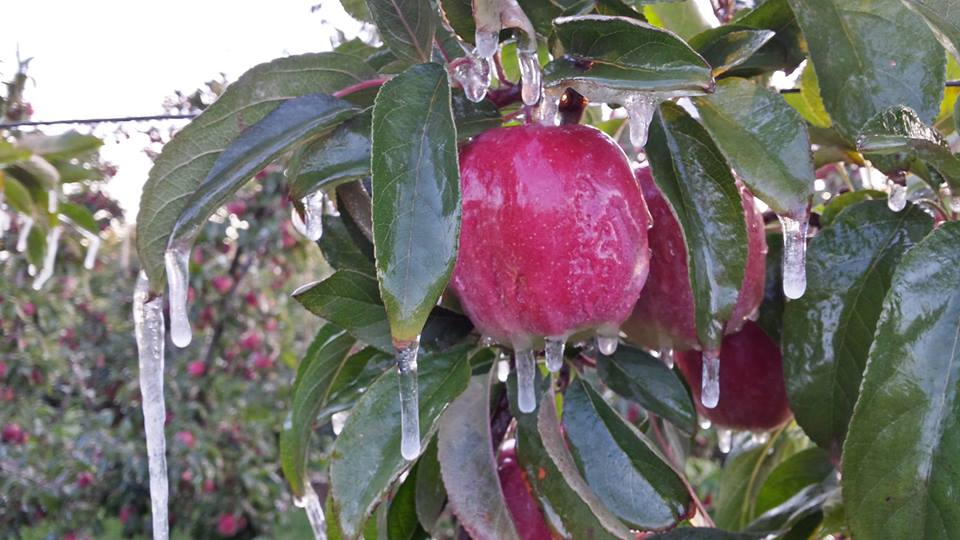
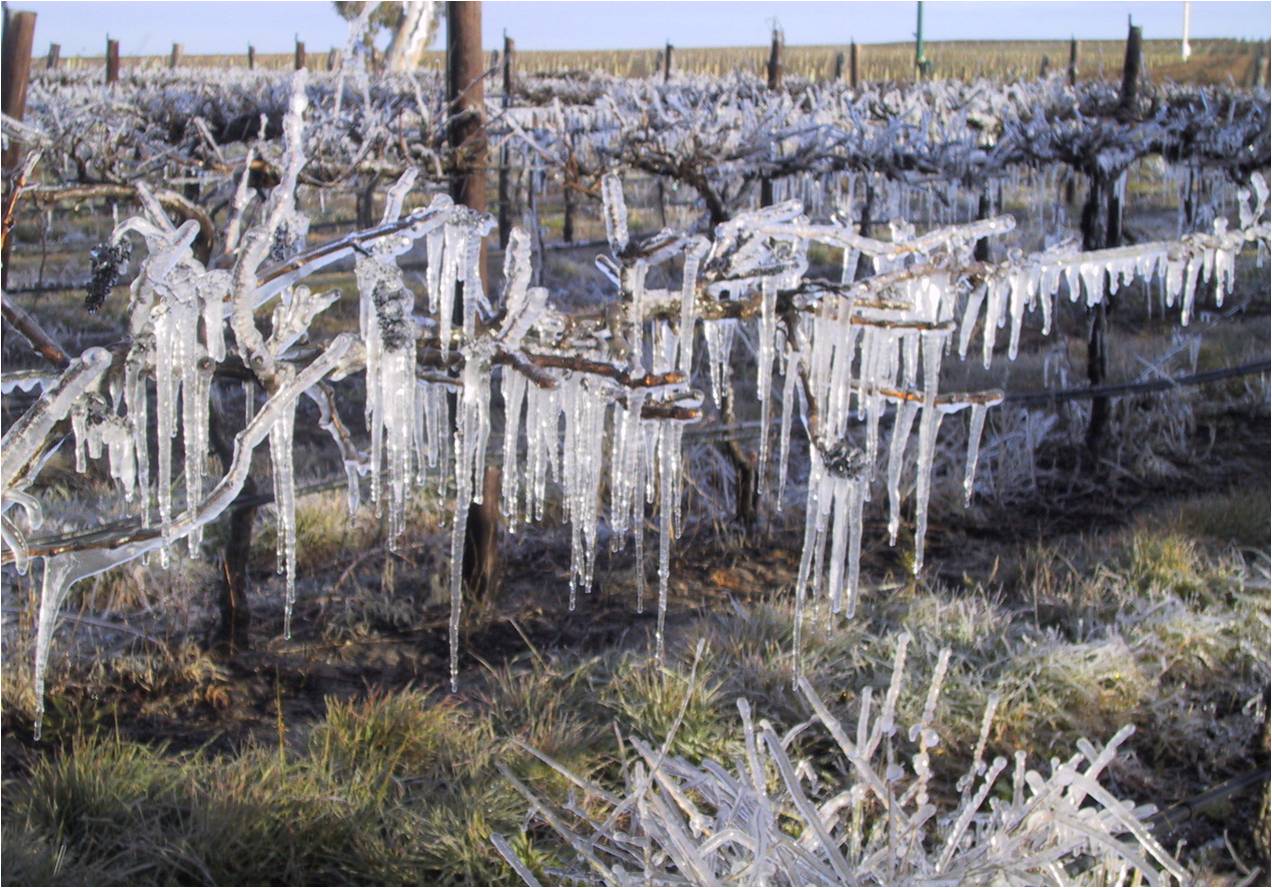
Argentina - Frost damages fruit production

This weekend's low temperatures, which lasted more than ten hours and reached 10 degrees below zero in some areas of the Rio Negro valley, affected plum, peach, nectarine, and cherry crops. "There were people turning on the heating equipment to fight frost from 8:30 p.m," stated producer Hugo Galeano. The percentages of loss in blooms was estimated at between 70 and 100 percent in farms located throughout the Rio Negro valley, including the ones on the Colorado River, where the frost lasted more than 10 hours. "These are nights in which producers spend nearly five thousand pesos in fuel to fight the frost," said Galeano. The farmers had to defend their plantations for four consecutive nights. The percentage data collected by the chamber producers indicate that 10 percent of the surface is protected with sprinklers and that up to 80 percent of the farmers defended their crops from the frost with fires or by flooding them with water - the rest either had specialist equipment or just trusted to fate. According to the civil defence of the province, "the weather conditions are expected to be good across the provincial territory and a front from the southwest will be arriving towards the weekend. Thus, there will be rainfall in the mountains for the first days and weather conditions should improve during the week." Night temperatures will be below zero in the southern region. In turn, the National Roads Department asked drivers to take extra precautions when driving through the highlands, on route 40 between El Bolson and Villa Mascardi, because of the presence of ice on certain sector - the effect of the heavy frosts - as well as on the rest of the roads. Source - http://www.freshplaza.com/

09.09.2016

USA - Reforming America’s farm supports without hurting midsized farms

While the American agricultural landscape has changed dramatically over the past century, the federal farm support system still largely reflects an outdated view of how farms contribute to American society, leading to bloated programs and unnecessary spending, according to a new R Street policy short by Senior Fellow Lori Sanders. “Nostalgia and sentimentality help to explain the generally broad public support for federal agriculture subsidies,” Sanders writes. “That same support presents a tough uphill climb for those who would like to rein in the ballooning costs of these programs and end their market-distorting effects.” Examples of waste that has cropped into the program include the expansion of crop insurance eligibility from a handful of staple commodity crops to more than 130 today and the consistent propping up of industrial-scale farms, with the top 20 percent of farms in America receiving 73 percent of premium-support payments. Sanders concludes: “It’s time to shake the view that farm supports, as currently structured, exist mainly to support small and midsized farms and to place more reasonable restrictions on farm-support programs.” Source - http://www.rstreet.org

09.09.2016

Country Financial app makes crop claims easier

Crop claims now can be submitted from the field with a new smartphone app. Country Financial’s crop insurance customers can download the free Unity Mobile app and have it ready if an unforeseen event occurs. “The app allows you to access any document available that’s associated with your crop insurance policy,” said Andrew Mizell, Country crop intelligence analyst. “You could be watching your yield monitor in the combine, understanding what your guarantee is for crop in insurance on that piece of land and if it doesn’t look right, if it looks a little low, you have the ability now instead of stopping and calling your agent, you can file the claim via your smartphone.” Beyond submitting and tracking an existing claim through the app, crop customers also can review previous claims and policy information. In further versions, they can also have the ability to pay their crop insurance premiums. Farmers or landowners can get the Unity Mobile app by visiting countrycrop.com to create an account and gain access to app credentials and then go to App Store or Google Play with their smartphone to download the free app. Farmers without smartphones can create an account and access the same functions at countrycrop.com. “Just like everything else in agriculture, the bar is moving, everything is progressing and we’re trying to make it easier for the producer anyway we can,” Mizell said. Source - http://agrinews-pubs.com

09.09.2016

Chile - Frost ruins 40% of the almond crops

Chile is being affected by an intense cold snap and during the first four days of September the frost decimated the production of almonds and other fruits. The damage has been worsened by the dryness of the land, as it hardly rained in August. "Many crops have been damaged. Almonds were the worst affected and have already curdled, but there's also much damage to plums and cherries, which are in full bloom," said Jorge Ovalle Madrid, a producer from the region. The almond season began with their bloom in mid-August, but the frost froze 40% of the fruits. "This damage has been quantified and it is visible. We took all the harvest from the trees and 40% of the almonds were frozen," Ovalle said. The worst affected regions were the IV, V and VI regions in the central area of the country, which has 90% of Chile's almond production, as well as other fruits, such as plums, peaches, and kiwis. Ovalle is very concerned because 80% or 90% of his production is currently in bloom. Apart from the intense cold wave, weather conditions are excellent and the skies are clear. "We do not know when this great mass of cold air from the south will end," said the producer. Source - http://www.freshplaza.com/

09.09.2016

Canada - September rain comes too late for farmers

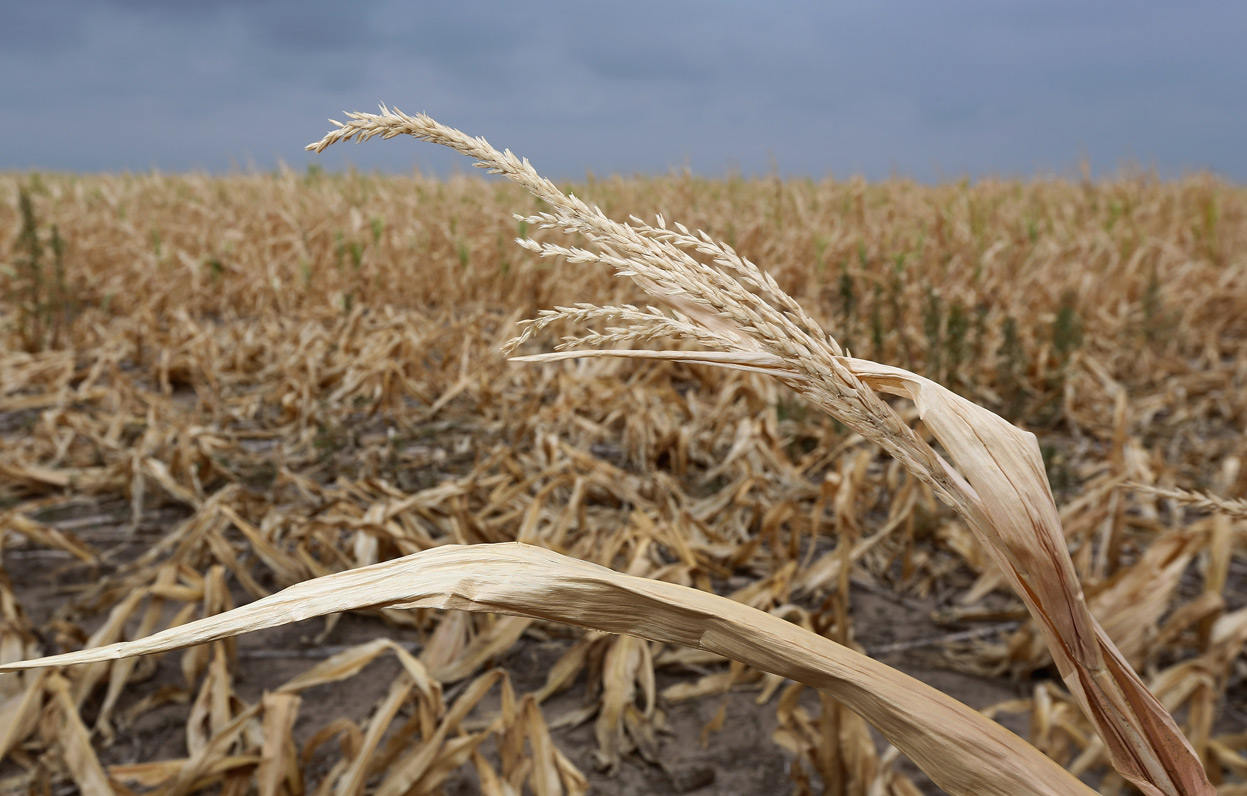
Despite some soggy days over the last few weeks, a hot, dry summer has taken its toll on fields and crops across the province. In the past 24-hours the fields at Chappell Farms have received about 21 millimetres of rain – the most they've seen in two weeks.  It could help squash and pumpkins a lot, but the dry summer Ontario has seen will still have an impact. “Consumers can expect to pay more and the quality may not be exactly what were used to,” says Pauline Chappell. Farmer Ed Pridham has been working around crops for most of his life, and says this has been the driest year he has ever seen. “We’ve had very little rain when we needed it. Our early planted crops like corn and soybeans in early May came up well. Stuff planted in later May came up poorly and from there it has been way too dry.” Next to corn and soybeans, Pridham grows everything from wheat to alfalfa at his Stayner farm. He says months of dry weather will likely mean a poor yield for corn and soybeans. He’s expecting the same for hay. “Some corn won’t be worth harvesting,” he says. “Everyone’s been scrambling to get enough hay for feeding for winter.” The only solace right now is that this late summer rain will help with the hay seeding process for next year. There are programs available to farmers to help them recover from a bad year. Some of those are offered through the government, or through insurance companies. However, Pridham fears there won’t be enough money to help make up for the loss. “We participate in crop insurance and there’s a risk management program, which I don’t know if it has enough money in the pot to make up for what we’re short.” Source - http://barrie.ctvnews.ca

09.09.2016

India - Crops in hundreds of acres submerged in Jhajjar villages

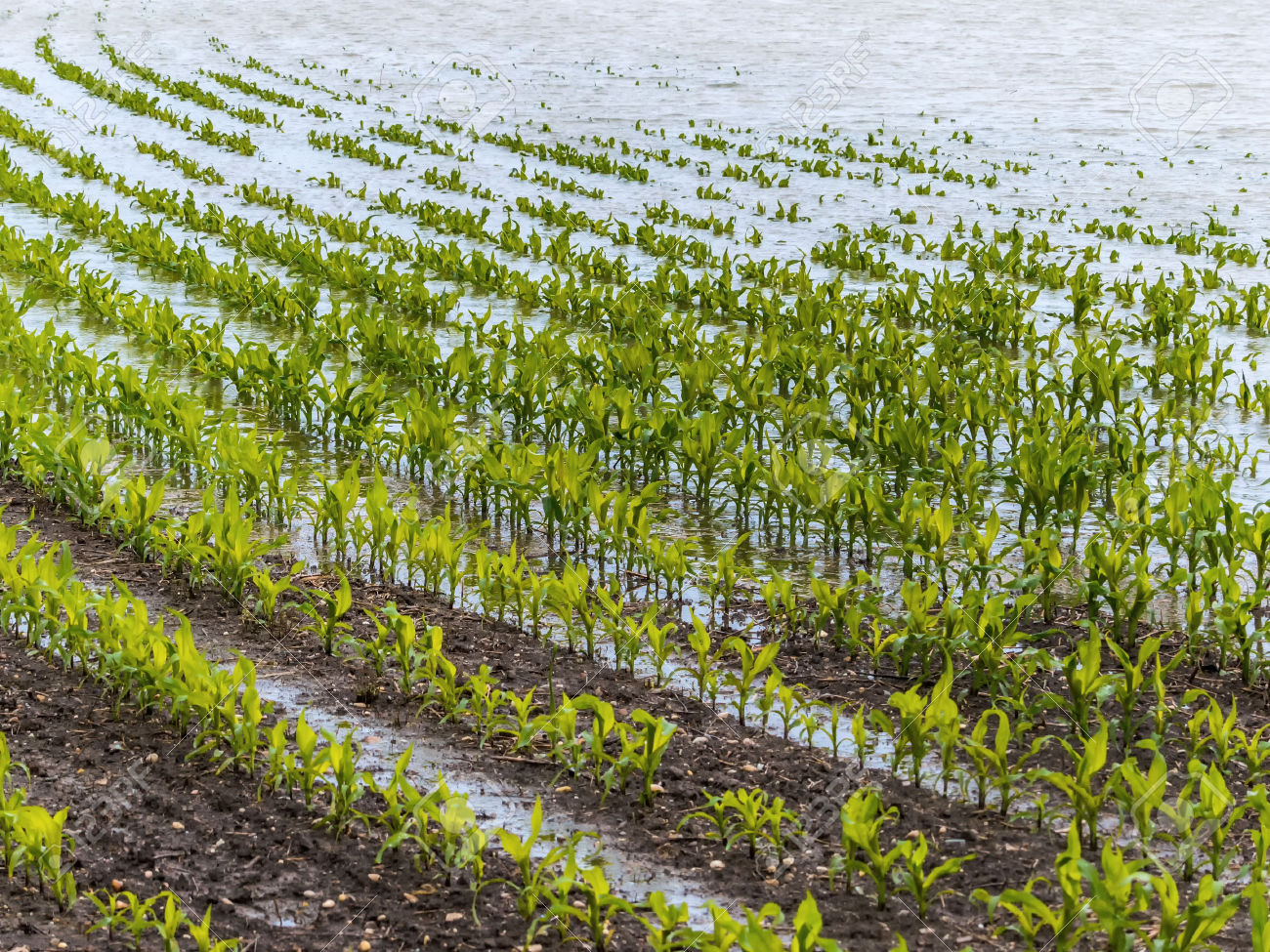
Rainwater submerged hundreds of acres of agricultural land in several villages of the district. “Entire paddy, bajra and cotton crops spread over 400 acres in our village have been damaged due to accumulation of water for the past one month. Farmers are under acute stress as proper arrangements have not been made to drain out water from the fields. Even, special girdawari has not been ordered to assess the losses,” said Manjeet, sarpanch of Godhri village. Ravi Kumar, husband of Pharipur village sarpanch Nisha, said: “Besides the agricultural land, rainwater has also flooded residential areas in the village. Pump sets have been installed to remove the water, but they are proving insufficient.” Meanwhile, farmers in a meeting held under the aegis of the All-India Kisan Sabha (AIKS) here today threatened to launch a campaign if stagnant water was not drained out from the fields and residential areas. Inderjit Singh, state vice-president, AIKS, flayed the authorities for their ‘failure’ to check stray cattle menace. Later, the farmers submitted a memorandum to Deputy Commissioner RC Bidhan seeking necessary steps to remove water from the villages and special girdawari of the damaged crops. “The problem of waterlogging has deprived large numbers of farmers of their livelihood in several villages. Adequate compensation should be given under the crop insurance scheme to the affected farmers,” said Inderjit. He said Godhari, Mangawas, Dighal, Lakriya, Dhandhlan, Gangtan, Bhambhewa, Dhaud, Behrana, Aachhej and Phadipur villages were facing the problem of waterlogging. Inderjit said that they had also apprised the DC of the problem of stray cattle causing road mishaps and damage to standing crops. The DC asked them to submit damage claims with the Deputy Director (Agriculture), he added. Source - http://www.tribuneindia.com

844
of 1225