NEWS
853
of 1225
News
30.06.2016

Bulgaria - 30 million Euro subsidies for expansion of small farms

Small farms will be able to expand with a new kind of European agricultural subsidy. Farmers working with animals, fruits, vegetables etc. will receive grants of up to 15 thousand Euro to allow the size of the holding to grow by at least 20%. The period for the submission of applications will last from 4 July to 12 August. The total budget allocated for the programme amounts to 30 million Euro, which will go to at least 2,000 farms. A key condition is that the farm should already exist and have plans to grow, as specified by the Ministry of Agriculture and Forestry (MAF). According to the approved special regulation measure 6.3 "Launch of aid for the development of small farms', applicants can be individuals registered as farmers, including sole traders (ET), a sole limited liability company (Ltd), limited liability companies (LLC) with up to 50 employees, or cooperatives registered under the Cooperatives Act. Each approved applicant may receive a maximum to the equivalent of € 15,000 for five years. The payment of aid is to be carried out in two stages: the first amount (€ 10,000) will be obtained after signing a contract for the provision of financial assistance, and the second (€ 5,000) will be paid out after inspection by the Paying Agency, which will assess whether the business plan is executed correctly. Source - www.freshplaza.com

30.06.2016

Peru - Hail pelts apples; puts bite in crop quality

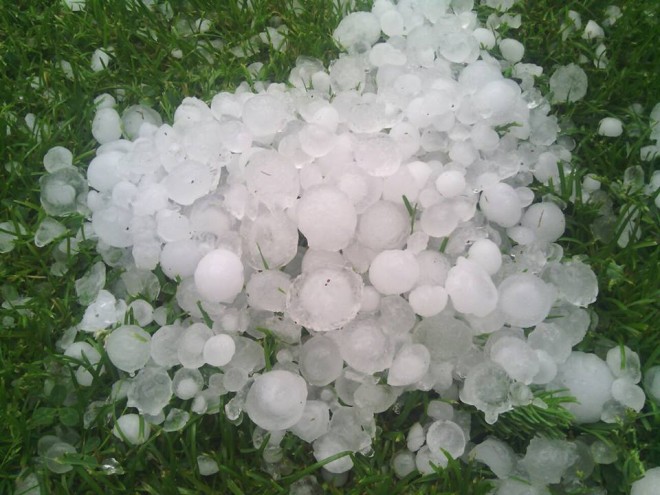
Hail during Tuesday's storms damaged hundreds of acres of incipient apples at Forrence Orchards' three largest farms. Co-Owner Mason Forrence estimated that 225 acres at the Stafford Farm on Mannix Road are "completely gone," while about 135 acres at the Valcour Farm experienced marginal damage. "The jury's still out; we've got cuts as big as your little finger," he said of the apples growing on Valcour. And at the main farm on State Route 22, around 423 acres were affected by the punishing bits of ice. "It’s what we call a dirty crop," Forrence said. "What that means is some we won’t harvest, some will go right to sauce, and if the sauce companies won’t take it, it goes to juice. "Every class, the price drops lower and lower. It’s bad." 'QUITE A BLOW' Northern Orchard, also in Peru, also got nailed by the hail. That business lost about 100 acres of apples, said Albert Mulbury, who owns the orchard with his wife, Cindy; son, Jesse; and daughter, Jenna. "It's quite a blow," he said Wednesday. "It's 20 percent of our production." If the damaged apples end up juice, he said, the orchard will earn just an eighth of the value of the fresh-market, high-quality fruit Northern Orchards aims to produce. "We couldn't pay the bills if they all went to juice." CROP INSURANCE Northern Orchard already suffered at the hand of nature this year, as unseasonable early warmth brought buds out on some trees too soon, only to freeze and die when cold weather returned. Evidence of that is no apples on the lower branches of the trees, he said. "You'd almost call it spring-winter injury." And adding to that the hail damage, he said, "it's a challenging year." Northern Orchard does have crop insurance that pays about 50 percent of losses, Mulbury said. But while that will help, the costs to harvest this year's yield will be the same whether the apples are prime specimens or fit only for juice. And the orchard needs to keep its equipment up-to-date and be able to compete with producers from other prime apple-growing regions. "The food business is so labor intensive," Mulbury said. At present, as Northern is still operating its packing house, shipping out last season's fruit, the orchard employs 40 locals, along with 20 migrant workers from Jamaica. 5 CENTS Forrence and his family felt lucky when they started the spring with fruit growing on the trees, as many orchards in western New York lost theirs to frost. "We thought we were going to have a nice crop." As of Wednesday evening, they were still assessing how much of their fruit had been badly damaged. "We don't have any idea yet but it's a high percentage," Forrence said. He estimated that those apples would be devalued from 40 cents to 5 cents per pound. VULNERABLE At this time of the year, apples measure an inch to 1 1/2 inches in diameter, Forrence said, "large enough to easily succumb to hail." He said both their honeycrisp crop, a popular variety, and their McIntosh apples were hurt severely. But the type of apple is immaterial, Forrence continued, as every variety is vulnerable to the hail. The Forrences have already made contact with sauce companies, but if the hail went deep enough into the apples, it may not be possible to get rid of bruises, which come through as dark spots in the sauce. "Then it goes to juice, which is the bottom of the barrel. "It's part of the game." Source - www.pressrepublican.com

30.06.2016

Canada - Organic farm outside Calgary loses entire harvest in hail storm

Jorge Mendoza has been running the Rio Frio Farm near Okotoks, Alta. for 10 years and has never seen a hail storm like the one that devastated his crops Tuesday. He looked at his plot of 3,000 onions after the storm, and there was nothing left. “Before the storm the plants were over a foot high. Now it’s completely gone,” Mendoza said. “In some places there was a foot of hail.” He looks after 26 acres of vegetables and berries and said 80 per cent of the crop was wiped out in 25 minutes. “The summer is basically gone. It’s July already, so most of our vegetables take quite a bit of time to make. So I don’t think we’ll be able to do much this year.” The farm supplies World Wide Specialty Foods and Community Natural Foods in Calgary. It had just been inspected and pre-certified as an organic farm a few weeks ago. The storm was very powerful but also selective. The Saskatoon Farm–just three kilometres away–wasn’t touched. Global’s weather specialist Paul Dunphy said the storm system could have been more damaging. “It was seeded, which means it could have been a lot worse if it hadn’t been. This is pretty typical stuff for Calgary and southern Alberta in the summertime. This is, after all, ‘hailstone alley.'” Rio Frio also grows hay and canola which wasn’t spared either. Mendoza says the farm doesn’t carry crop insurance and now he just has to pick up and start over. “There is not much we can do about it…Mother Nature. My next thing is just to clean up and keep going. Don’t give up–what else?” Source - globalnews.ca

30.06.2016

USA - Flooding in West Virginia impacts state's agriculture

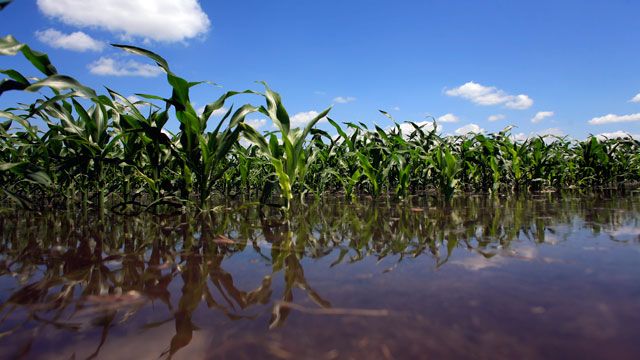
The deadly floods in West Virginia dealt a blow to the state's agribusiness industry, with losses likely to exceed $10 million, officials said. The state Agriculture Department said the full extent of the damage to the farm sector was still being tallied. "Cattle and hay will probably be the most affected items," said Buddy Davidson, a department spokesman. "Hay is our number one crop and it is typically used on the farm to feed the cattle in the wintertime." The flooding has claimed at least 23 lives statewide since last week, and at one point led Gov. Earl Ray Tomblin to declare a state of emergency in 44 of the state's 55 counties. Three hard-hit counties — Greenbrier, Kanawha and Nicholas — initially received presidential disaster declarations that allowed them to receive grants and other federal relief resources. Preliminary ag damage estimates are in the "tens and tens of millions (of dollars)," said Davidson. "We will keep our fingers crossed and see what happens. From what we're hearing … it appears less severe than it might have been." Most of the damage is in West Virginia's central and southeast regions, where cattle and hay operations are located. The eastern panhandle, where corn, soy beans and poultry operations are concentrated, received some rainfall but was not as hard hit, according to Davidson. Overall, agriculture commodities represent nearly $1 billion in cash receipts to the West Virginia economy, according to U.S. Department of Agriculture figures. Livestock-related sectors account for almost 80 percent of the total, while the remainder is largely from crops such as hay, corn, soy beans, wheat and apples. According to Davidson, county officials are doing surveys statewide and coordinating with the USDA's local Farm Service Agency for disaster relief assistance, including emergency loans. Eight counties submitted preliminary damage estimates, and he expects "a few more" to provide information on impacts. Tomblin announced in a Twitter posting late Tuesday that the Federal Emergency Management Agency expanded federal disaster declarations to include Fayette, Clay, Roane, Summers and Monroe counties. Declarations are pending for Webster and Pocahontas counties. Meantime, the state's ag agency cautioned farmers and home growers that there's a risk of harmful bacteria in crops that made contact with floodwaters as well as contamination of soils for up to a year. For one, bacteria such as listeria campylobacter can persist in soil for up to a year. The historic floods led the PGA Tour, the professional golf organization, on Saturday to announce cancellation of the upcoming Greenbrier Classic tournament planned to start July 7 at the Greenbrier Resort in White Sulphur Springs. The PGA Tour this week announced a $100,000 donation to the American Red Cross for disaster assistance in West Virginia. Source - www.cnbc.com

30.06.2016

USA - USDA finalizes insurance provisions of 2014 farm bill

USDA’s Risk Management Agency yesterday announced that the final safety net provisions of the 2014 Farm Bill, which provide farmers and ranchers protection from weather disasters, market volatility and other risk factors, are now in place. With this announcement, RMA has finalized an interim rule that completes provisions such as enterprise units for irrigated and non-irrigated crops, adjustment in actual production history to establish insurable yields, crop production on native sod, beginning farmer and rancher provisions, coverage levels by practice, and the authority to correct errors. “The Farm Bill directed us to make some changes that would strengthen the safety net we provide for America’s farmers and ranchers,” RMA Administrator Brandon Willis said. “These safety net options will help ensure that America’s hard working farmers and ranchers, and their families are able to better manage risks so that they can continue to farm even after years of severe weather.” RMA began implementing the provisions under an interim rule for the 2015 crop year. Today’s action enables RMA to continue to offer and expand on the Farm Bill provisions for the federal crop insurance program. USDA received more than 350 public comments on the interim rule published July 1, 2014. Based on that feedback, RMA made changes to one part of the rule –the native sod provisions. The final rule clarifies an exception that allows producers to break up to five acres of native sod and not receive reduced premium subsidy on coverage of native sod acreage. All other provisions of the final rule remain unchanged. A copy of the final rule goes on display today at the Federal Register at https://www.federalregister.gov/ Source - farmfutures.com

29.06.2016

Vietnam - More than 6,500ha of veg hit by drought

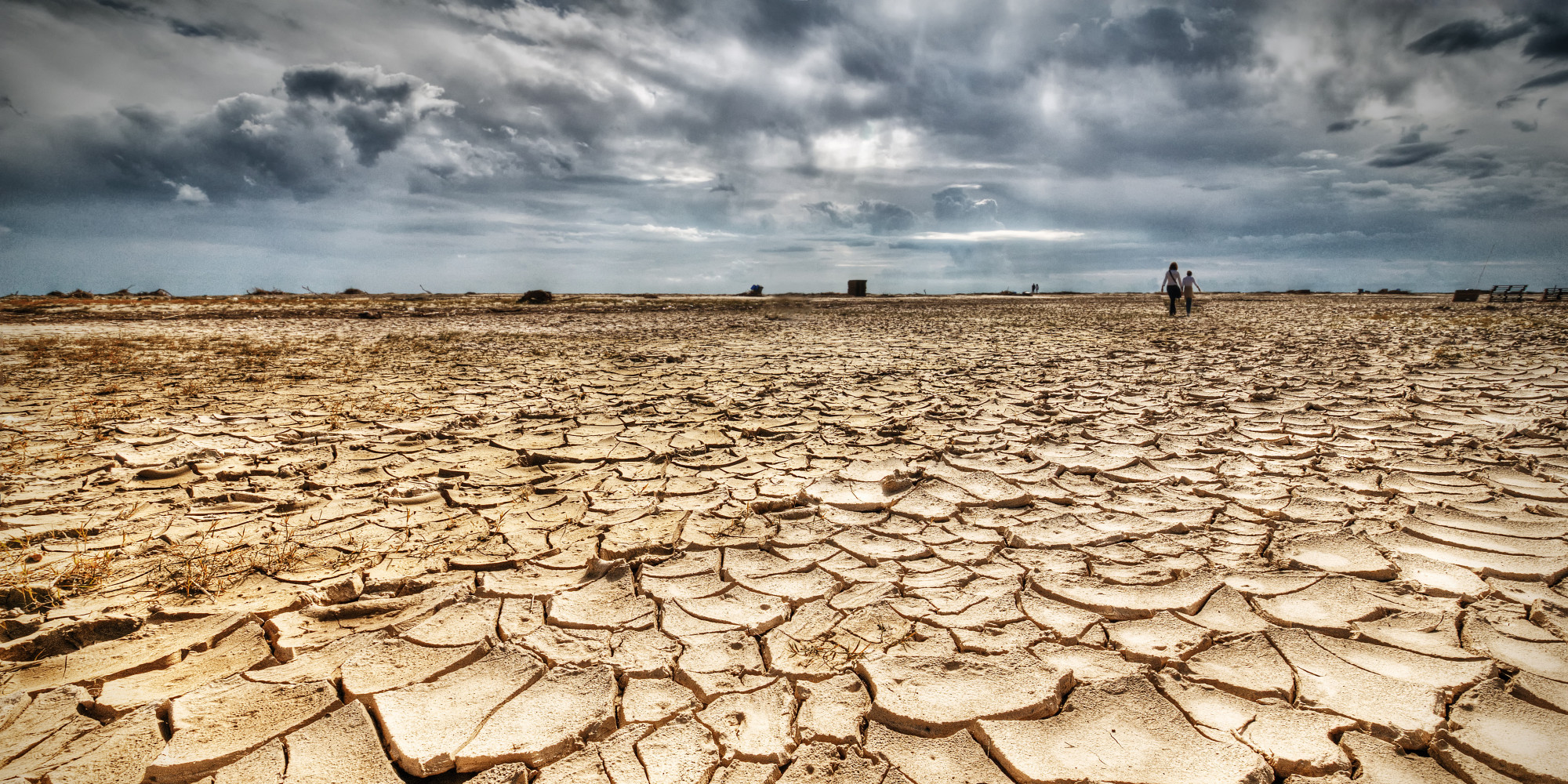
Severe and prolonged drought, as well as salt water intrusion in the last dry season have caused losses of more than 4.7 trillion VND (US$215 million) in Vietnam's Mekong Delta, the Southwest Region Steering Committee has reported. More than 221,000ha of rice, 6,500ha of vegetables and 26,500ha of fruits and industrial trees were affected, Vietnam News Agency (VNA) reported the committee as saying. Rains have now begun in the delta and farmers are growing new vegetable crops and the autumn-winter rice crop and farming shrimp. Farmers whose fields were affected are likely to earn only around 10 million VND (US$455) a hectare, down by nearly half compared to those whose fields were not affected, according to local agriculture departments. Farmers have to harvest flattened fields by hand since harvesters cannot be used on them. Traders are not keen to buy from such fields. Source - http://www.freshplaza.com

29.06.2016

Netherlands - Farmers say June storms have devastated crops, farm buildings

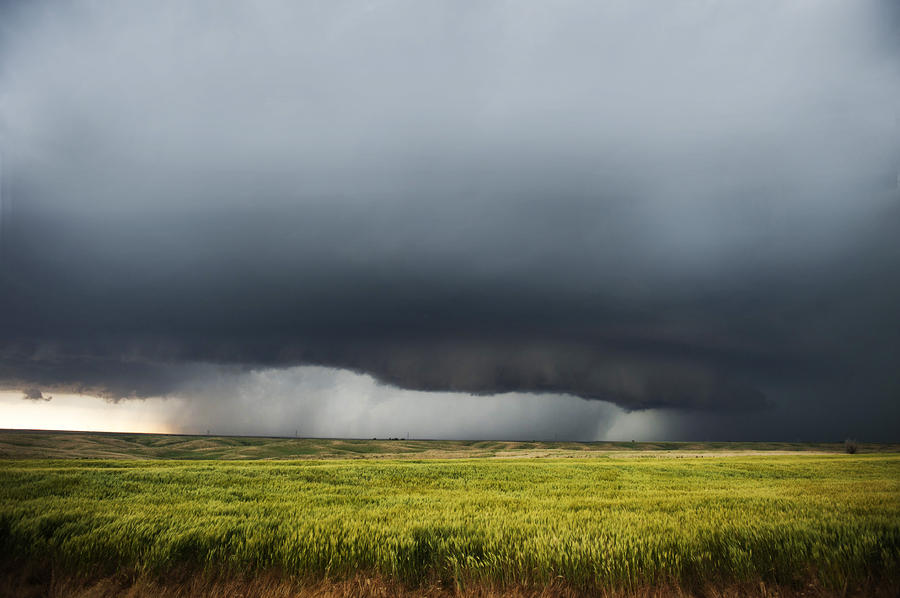
Farmers in the south east of the Netherlands say June’s storms have caused up to €500m worth of damage to crops this year and are calling on the government to declare a national emergency. That would make it easier for the hardest hit farms to apply for extra help and to protect firms which risk going bust, farming organisations say. It would also make it easier to clean up the damage. In some places, giant hailstones destroyed farm buildings and greenhouses as well as crops. The real picture won’t become clear for a few months when the impact on the harvest of wheat and other crops takes place, the organisations say. Farmers have already submitted claims totalling €130m because of damage to crops, primarily in Limburg and Noord-Brabant, according to the insurers association Verbond van Verzekeraars. Source - http://www.dutchnews.nl

29.06.2016

USA - Grassley Asks Vilsack to Fix Crop Insurance, Cover Crops Glitches

Farmers in Iowa have been running into difficulties with crop insurance potentially becoming void with the use of cover crops, Sen. Charles Grassley, R-Iowa, said during a press conference with agriculture journalists Tuesday. The concerns he has heard from producers in his state prompted Grassley to ask U.S. Agriculture Secretary Tom Vilsack to make needed adjustments to the federal crop insurance program, he said, in order to ensure farmers can expand the use of cover crops without fears of losing insurance coverage. In a letter to Vilsack Tuesday the senator expressed concern about how the USDA’s Risk Management Agency approaches the use of over-seeding, in particular, when it comes to corn. “As you know, the use of cover crops is rapidly expanding throughout the Midwest,” Grassley said in the letter. “Many farmers looking to improve their soil and prevent heavy rains from leaching nutrients out of fields have invested in this conservation practice over the last several years. RMA currently refers to the Natural Resources Conservation Service’s cover crop termination guidelines to offer interested farmers guidance for using cover crops. “While the guidelines are clear regarding how to terminate cover crops before planting an insured crop, they are ambiguous regarding over-seeding.” Specifically, Grassley told Vilsack the NRCS guidelines state that “over-seeding or inter-seeding can occur at an appropriate time for the cover crop and germination, or into an existing crop at a time that will not impact the yield or harvest of the insured crop.” Over-seeding is considered to be an important option for planting cover crops on land in the upper Midwest for a number of reasons. “The process expands the planting window that is otherwise limited to the time between harvest and the first hard freeze,” Grassley said in the letter. “Over-seeding allows cover crops to achieve more growth in the fall, which is key to the benefits they offer farmers and landowners. “I have heard from producers that confusing exists between RMA and crop insurance companies regarding policies for over-seeding cover crops. In fact, some farmers have been told their crop insurance policies could be voided if they over-seed cover crops into corn. Therefore, I ask that RMA clarify the rules for over-seeding, perhaps by specifying a growth stage an insured crop should reach before over-seeding is acceptable.” Grassley told reporters he’s not surprised there are a few glitches when it comes to cover crop use and insurance as the use of cover crops continues to grow. “I am confident RMA will be able to sort it out,” Grassley said. Source - https://www.dtnpf.com

29.06.2016

India - Point of Sales Persons can now sell crop insurance schemes

Regulator IRDAI allowed Point of Sales Persons on non-life insurers to solicit the three government sponsored crops insurance schemes. Pradhan Mantri Fasal Bima Yojna (PMFBY), Weather-Based Crop Insurance Scheme (WBCIS) and Coconut Palm Insurance Scheme (CPIS) can now be solicited and procured through Point of Sales Persons of non-life insurers. "The Authority, removes cap on sum insured for the above mentioned government sponsored crop insurance schemes," Insurance Regulatory and Development Authority of India said in a circular. The insurers wishing to solicit and procure the three government sponsored crop insurance schemes through Point of Sales Persons will have to follow the prescribed procedure. Point of Sales Persons can solicit and market only certain pre-underwritten products approved by the IRDAI. The Agriculture Ministry has empanelled 11 private sector companies and state-owned Agriculture Insurance Company (AIC) to implement the PMFBY. It is also actively considering to empanel four state-run general insurance companies. Under the PMFBY, farmers' premium has been kept lower at 1.5-2 per cent for foodgrains and oilseed crops and up to 5 per cent for horticultural and cotton crops. There will not be a cap on the premium and 25 per cent of the likely claim will be settled directly in farmers accounts. The new scheme aims to increase the insurance coverage to 50 per cent of the total crop area of 194.40 million hectares, from the existing level of about 25-27 per cent. Source - http://www.moneycontrol.com

29.06.2016

USA - Soybean Ease Ahead Of US Acreage Report, Wheat Up After Losses

US soybeans slid on Wednesday with the market snapping two sessions of strong gains on expectations that a US government report will show farmers increased acreage for this year's soybean crop. Corn eased in step with soybeans although losses were limited ahead of the US Department of Agriculture's (USDA) annual acreage report, while wheat gained after three days of decline. The most-active soybean contract on the Chicago Board of Trade fell 0.5 percent to $11.15 a bushel by 0243 GMT while corn lost 0.2 percent to $3.93-1/2 a bushel. Wheat added 0.3 percent to $4.58-1/2 a bushel. "Corn and soybeans have been supported by forecasts of hot and dry weather in the US Midwest," said Kaname Gokon at brokerage Okato Shoji in Tokyo. "The USDA acreage report is expected to be bearish for soybeans as it is likely to show farmers planted more beans at the expense of corn." US farmers planted 92.9 million acres with corn this year, according to analysts' estimates ahead of the release of the agency's annual acreage report. This compares with 93.6 million forecast by the USDA in March. Analysts have raised estimate for soybean acres to 83.8 million from the USDA's March estimate of 82.65 million acres. Corn and soybean prices are being underpinned by outlook for hot weather in the weeks ahead and strong demand. Temperatures in the US Midwest are forecast to hit near 100 degrees Fahrenheit (38 Celsius) late next week as the corn crop begins pollinating. Corn pollinating under the stress of high temperatures often causes severe yield reductions at harvest. The USDA on Monday afternoon said the soybean crop was rated 72 percent good to excellent, down 1 percentage point from a week earlier. It also reported that exporters sold 150,000 tonnes of U.S soybeans for delivery to unknown destinations. In bullish news, US corn export sales have outpaced last year as steady buying by Mexico helped to offset sluggish early-season purchases by traditional Asian customers like South Korea and Japan. Commodity funds were net buyers of CBOT soybean futures contracts on Tuesday and net sellers of corn and wheat, traders said. Traders estimated that funds bought 6,000 soybean contracts and sold 7,000 corn contracts. Estimates for wheat ranged from net even to sold 2,000 contracts. Source - http://www.brecorder.com

28.06.2016

Poland - Drone use set to boom

The drone revolution is disrupting industries ranging from agriculture to filmmaking, according to a new study by PwC. It says the emerging global market for business services using drones is valued at over $127bn. With drones poised to have an impact on business operations of companies in a broad range of industry sectors, PwC has also established in Poland a global centre of excellence that uses drones and data analytics to help clients solve their business challenges. This is the first PwC team of its kind anywhere in the world. Olga Grygier-Siddons, chief executive, PwC in Central and Eastern Europe, says: ““For a long time, business success in our region has been based on cost competitiveness, but now there is a real desire on the part of our clients and colleagues to compete instead on value, created through innovation.” The application of drone technologies in existing business processes is allowing companies from those industries to create new business and operating models. Each industry has diverse needs, and as a consequence requires different types of drone-powered solutions and various drone functionalities. Some of them value flight speed and payload capacity, while others wish to concentrate on solutions delivering high-quality, real-time data in a cost-effective way. Michal Mazur, partner and head of Drone Powered Solutions at PwC for Central and Eastern Europe, says: “We are currently in discussion with several major companies from a wide range of industries about how they can use drones to improve their business processes. This got us thinking about the potential value of the global drone-powered solutions market. With an estimated market value of over $127 bn in commercial applications, drones are making the transition from novelty item to indispensable business tool.” According to the PwC report Clarity from above, the addressable market value of drone powered solutions is over $127 bn. This is the value of current business services and labour that are likely to be replaced in the very near future by drone powered solutions, according to PwC predictions. The industry with the best prospects for drone applications is infrastructure, with total addressable market value of approx. $45.2 bn. Worldwide, drones equipped with cameras and sensors provide companies with more comprehensive data. They are also are involved in the transport and precise operational activities, exerting an increasing influence on business strategies of enterprises. Drone-powered solutions are best suited to sectors that require both mobility and a high quality of data. Specifically, businesses that manage assets dispersed over large areas have a long history of issues that new drone powered solutions can address. Large-scale capital projects, infrastructure maintenance and agriculture can all benefit greatly from the integration of drones into day-to-day business. Insurance and mining will find potential process improvements as they gain new levels of data quality and accessibility. And the entire transport industry will surely change its concept of last-mile delivery. One of the primary usage of drones is to supervise the ongoing investments and maintenance of existing infrastructure. Drones are also used in transport, for last mile services, as well as in agriculture, not only gathering and quickly analyzing data on land and crops, but also doing precise spraying of plants. Piotr Romanowski, business advisory leader, PwC in Central and Eastern Europe, says: “At PwC, we are expanding our business advisory capabilities to help clients across the full life cycle of their business projects, from strategy through execution. The implementation of business projects now involves a strong technology component. That is why we are investing in becoming more technology enabled, through acquisitions of specialised technology companies such as Outbox and through the development of our own technology services, such as our Drone Powered Solutions team.” Drone Powered Solutions is the name of a newly established PwC global centre of excellence focusing on the use of drone technology and data analytics in business. It was established in Poland – a country which in 2013 became the first in the world to introduce a complete legal framework and institutions regulating the commercial use of drones. The team has carried out a number of commercial projects for clients in Poland. While they sub-contract the actual piloting of the drones themselves, all the other drone powered technologies have been developed within PwC, such as a geospatial data imaging app that allows the team to present clients with data gathered by drones in a simple and intuitive way on mobile devices. Source - https://www.aggregateresearch.com

28.06.2016

China - Hurricane ravages cultivation area

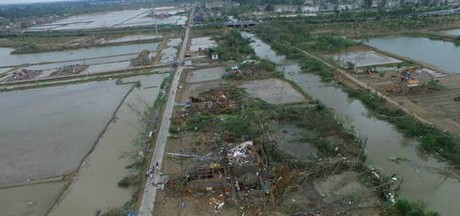
The area around Yancheng city, Funing and Sheyang county suffered from a heavy tempest with hail, strong winds and local hurricanes. According to a Jiangsu news conference, 98 people lost their lives and 846 people were wounded. Many inhabitants of the region lost their house in the storm and also a considerable amount of trees were eradicated. The roofs of factories were blown off or damaged and water and electricity installations were destroyed. The calamity for the inhabitants of the region is enormous. 8004 inhabitants have no housing, 8 factories were destroyed and 3200 hectares of cultivation tents were damaged. The surface area and degree of the calamity is still being processed statistically. Source - http://www.freshplaza.com

28.06.2016

UK - Spot stress and treat to stop Alternaria infection

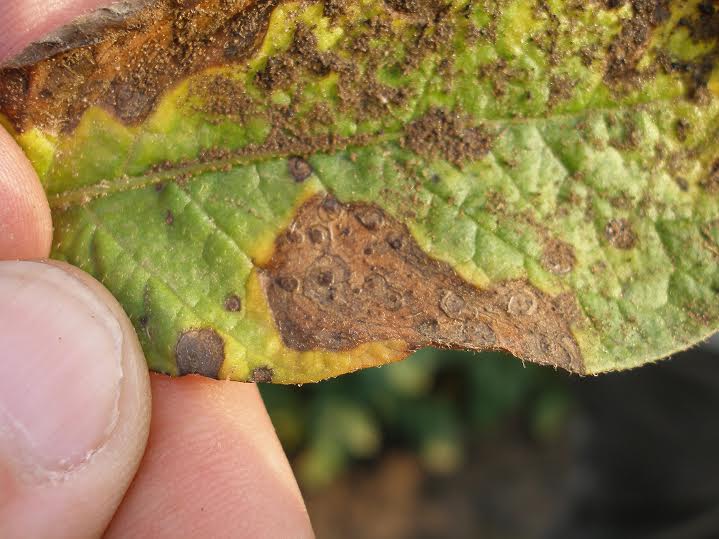
Potato growers should now be looking at potential stress factors on crops to instigate effective Alternaria prevention, before the increasingly prevalent pathogen hits. But with blight pressure running so high this season, that should combine the best foliar blight control active, with the highest possible level of Alternaria protection, by applying Amphore Plus, advocates Syngenta Field Technical Manager, Douglas Dyas. He warns that there is a high proportion of varieties commonly accepted as being especially susceptible to Alternaria in the ground this season, which must be treated as a priority. However, NIAB leaf testing last season highlighted that all varieties can be infected, especially under stress conditions. Potato agronomists have pinpointed poor seedbeds and the slow start to the season is likely to have impeded root growth, which will make crops more susceptible to stress. Soil pest damage to roots and nutrient deficiency are also recognised as key factors that could predispose crops to stress. "Alternaria leaf spots typically appear from the end of June, into July," reports Douglas. "Usually followed by the highly pathogenetic A.solani from mid-July onwards - which can decimate whole fields within days of initial infection. "An early start to the Amphore Plus programme has proven to be most effective in preventing infection and stopping early crop loss," he advises. Douglas points out that Amphore Plus contains the full dose of the industry-leading single-active blight fungicide, Revus, in combination with the key Alternaria active, difenoconazole. "Crucially, the pre-mixed formulation contains 20% more active per hectare than the maximum permitted for growers to tank-mix as straights. "Furthermore, the one-can solution is quick and easy to use when spray operators are under immense pressure to maintain blight application intervals during the catchy weather conditions," he adds. "It can save valuable time during sprayer turnaround that enables more acres to be covered. “Like the renowned Revus, Amphore Plus is also extremely rainfast and provides just as effective blight protection between applications, which could prove especially valuable if the heavy rainstorms and wet conditions persist.” Leaf tissue tests by NIAB last year revealed 20 of the 57 samples collected contained the highly aggressive A. solani which is a specific pathogen of potatoes and solanaceae plants, along with 30 infected with the earlier hitting, but less damaging, A. alternata that results in a multitude of leaf spots – although it’s difficult to differentiate the two at an early stage in the field, points out Douglas. Potato agronomists agree that the incidence of Alternaria is increasing in the UK, for a number of reasons including more susceptible varieties; changeable weather conditions; a reduction in the use of mancozeb in blight programmes and shorter rotations that could increase the carry-over of disease. Douglas Dyas added: "Anything that puts stress on the potato plant will increase the risk of Alternaria attack. "The earlier that it hits the greater the potential loss of yield, and the greater the chance of A. solani affecting tuber quality for storage. "Growers should be looking at all agronomy aspects to minimise the impact of stress, as well as starting Amphore Plus earlier and maintaining Alternaria control through the season." Source - https://www.farminguk.com

28.06.2016

India - Farmers unaware of features of crop insurance

In the last 18 months, the Narendra Modi government had devised very many number of welfare schemes exclusively for farm workers, says Union Minister Pon Radhakrishnan. In the last 18 months, the Narendra Modi government had devised very many number of welfare schemes exclusively for farm workers, said Union Minister Pon Radhakrishnan here on Sunday. Speaking at the inaugural function of crop insurance awareness programme for farmers at the Gandhigram Rural Institute organised by the Indian Council for Agricultural Research, he said that the schemes were expected to enhance the earnings of small and marginal farmers in the country that in the next five years it would go up phenomenally. The Union government would not confine by just giving assistance, but provide infrastructure, which would improve the standards of living of farmers. Naming a few of the projects, Mr. Radhakrishnan said that by giving adequate support to farmers at the times of crises, they would come forward to carry on with agriculture. This was the first step to stop migration from villages. Many farmers were unaware of the features of the crop insurance. Through such camps, he hoped the ryots would be educated. The “Prime Minister's Fasal Yojana” is being launched from this kharif season for which the Union government had entered into an agreement with the State governments. The premium to be paid under the scheme was paltry that it would benefit a large number of policy holders. The financial burden of the States would also be shared by the Centre. For the first time in the country, with the aid of mobile phones and satellite, the extent of crop damage had been gauged and compensation provided for the farmers.  Source - http://www.thehindu.com

28.06.2016

India - State convention of cane growers on July 5

The State convention of the Sugarcane Growers’ Association will be held in Mysuru on July 5 to seek policy changes from the government on agricultural issues to benefit farmers. The thrust will be on amending rules under the Pradhan Mantri Fasal Bima Yojana (PMFBY) so as to include commercial crops like sugarcane under the newly launched crop insurance scheme. Sugarcane and a few other commercial crops, including silk, have been left out of the ambit of the PMFBY and the association members want these two crops to be brought under its purview to benefit the farmers. “In Karnataka, there are lakhs of sugarcane cultivators and about 2 lakh hectares, which was brought under sugarcane, withered due to drought this year. It would have provided succour to farmers had the crop insurance scheme not kept sugarcane out of its purview on the grounds that it is a commercial crop,” said Atihalli Devaraj, secretary of the association. The same applies to sericulture, which is not under the crop insurance scheme, he added. The farmers are also seeking a revision in the Fair and Remunerative Price (FRP) for sugarcane from nearly Rs. 2,300 to Rs. 3,000 in view of the escalation in the cost of cultivation. Revamp sought Association president .Kurubur Shanthakumar called for a total revamp of the lending policies of the government and suggested that banks should be authorised to lend up to 75 per cent of the land value mortgaged by the farmers to avail loan instead of pegging the loan amount to the cultivation cost and the area of cultivation. A change in the lending policies will help arrest the wave of suicides of farmers due to financial stress created by agricultural crisis, said Mr. Shanthakumar. The association will also seek an amendment to the banking laws regarding agricultural loan, which stipulates repayment within a year to avail zero per cent interest. “But the gestation period of sugarcane is longer and the cycle — from sowing to harvesting, crushing and payment from the factories to the farmers — take about 18 months and hence sugarcane cultivators should be given that option',” said Mr. Shanthakumar. Thrust will be on amending rules under PMFBY to include sugarcane under crop insurance scheme  Source - http://www.thehindu.com

28.06.2016

Thailand - Navakij Insurance cuts income target amid tough competition

NAVAKIJ Insurance (NKI) plans to cut its target for premium income this year from the Bt3.5 billion hoped for earlier as a result of the fierce competition in the motor-insurance segment and the short-term effects of changes to its internal procedures. However, the new target will not be finalised until the company knows the outcome of two deals for provision of rice-crop insurance and another deal with a bank, said Saran Wanglee, vice president for business development. In the first quarter, NKI reported premium income of Bt642.70 million, plunging by 16 per cent from the same period last year mainly because of a 20-per-cent drop in revenue from motor insurance. Saran said the unimpressive income figure for the first quarter was partly due to losing several million baht worth of business to competitors. Apart from the intense competition in the motor-insurance sector, Saran explained that the company had attempted to improve its internal processes to improve the loss ratio in that sector, which resulted in less new premium income in the first quarter than expected. "One change we made was to increase premiums for first-class motor insurance and to screen new customers more rigidly. But we are happy because we are trying hard to reduce the loss ratio," he said. Last year, NKI recorded premium income of Bt3.36 billion, of which Bt2.4 billion was from motor insurance, but the high loss ratio for this segment had encouraged the company to rethink the underwriting process. As the head of business development, Saran has revamped several internal processes such as the commission standards for agents and brokers of second-class motor insurance. "We might lose agents who will lose benefits from the commission changes, but the company wants to get quality policyholders," he said. Moreover, the company sent a warning to sales channels that acquire customers who have unusual claims. "We are not stopping the claims but the warning is a way to tell the sales [personnel] that if they do nothing, the underwriting team has the authority to cancel the policies of those customers, or the company will consider refusing to renew their policies," he said. Saran believes the company will bear fruit from the improvements to its internal processes next year. Meanwhile, NKI will attempt to drive up the income proportion from non-motor insurance premiums to 40 per cent from the current 28 per cent. To that end, it will partner with more banks as a channel to access retail customers. At present, NKI has partnerships with TMB Bank, Government Housing Bank, the Small and Medium Enterprise Development Bank, Thanachart Bank and Bangkok Commercial Asset Management. Source - http://www.nationmultimedia.com/

853
of 1225