NEWS
852
of 1225
News
04.07.2016

Tanzania - Robust insurance strategy coming to boost farming

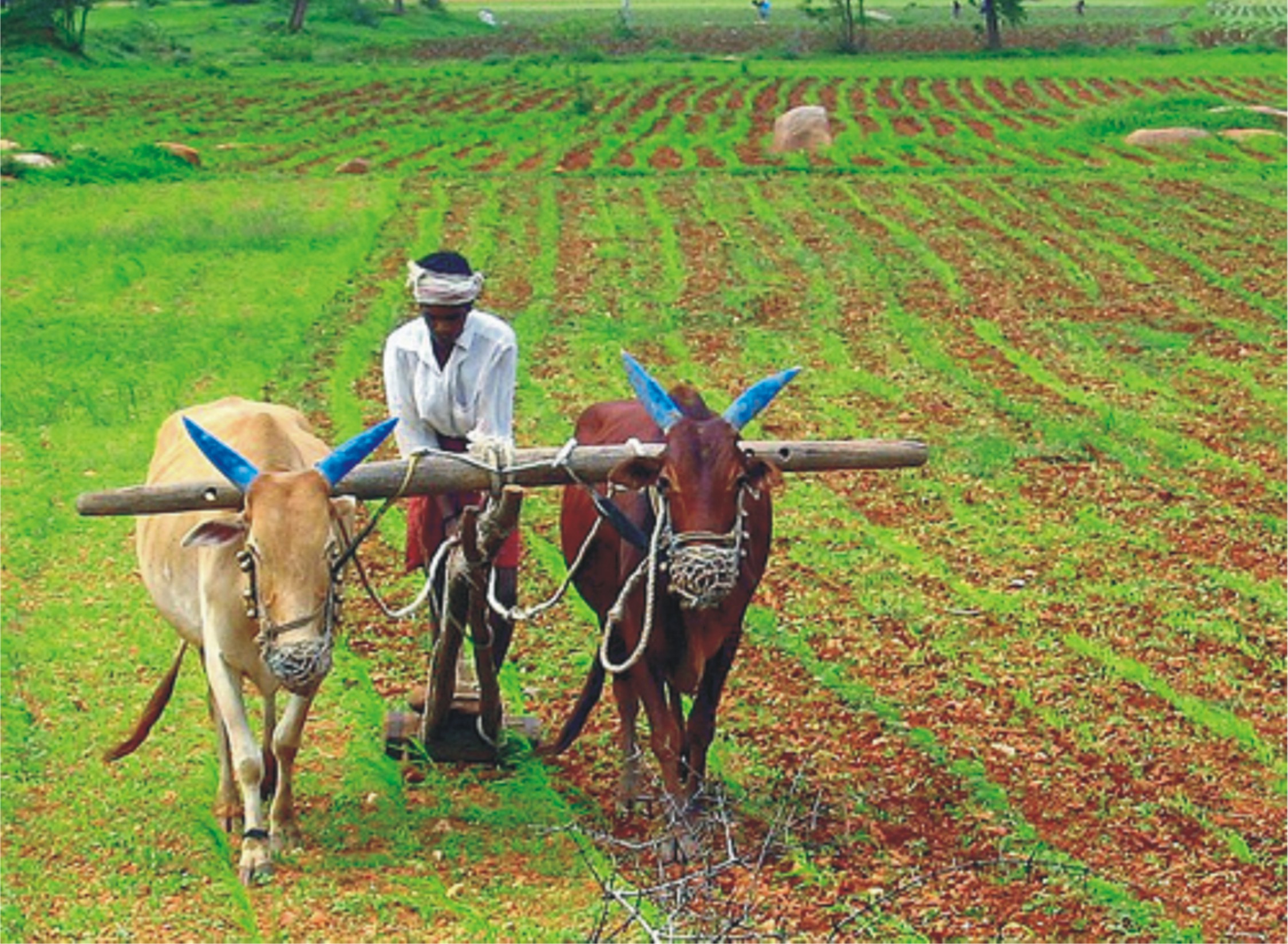
Plans are underway to draw up an insurance strategy on agriculture in Tanzania. According to the Commissioner of Insurance, Mr Israel Kamuzora, a meeting of insurance stakeholders was recently conducted to discuss the strategy.It is hoped that by having the strategy, agriculture will be stimulated. Agriculture is Tanzania's economy mainstay, accounting for nearly 30 per cent of the gross domestic product. Sixty-seven per cent of the workforce was employed in the sector in 2014. Most Tanzanian farmers are smallholders; few families cultivate more than two hectares. Around 20 per cent of farmers use ox-ploughs, 10 per cent use tractors and the rest till the land by hoes. The sector grew at 2.6 per cent in 2014, down from 3.1 per cent the previous year. "Tira [Tanzania Insurance Regulatory Authority] expects that the strategy will be in place within three years," Mr Kamuzora says. Various agro-insurance models are being used around the world, but Tanzania is looking for the one that fits in its environment. One of them is that which makes the government or the state as a sole insurer, the second one is when the government subsidises premiums but does not own the insurance business venture and the third is when the government provides re-insurance services but primary cover is provided by primary companies. Mr Kamuzora says the second model is used in the US, France, Spain and Italy where governments mobilise resources to subsidise premiums for efficient and effective running of agro-insurance businesses. The third model is used in India. "Tanzania has no vibrant agricultural insurance package and we aim at having the right model." The head of Agriculture and Rural Finance for Financial Sector Deepening Trust, Mr Mwombeki Baregu, says a government-led national agriculture insurance strategy will be in place to improve farm production. "Preliminary discussions have been held with a number of development partners to support the implementation of a large-scale PPP [public-private partnership] for agriculture insurance in Tanzania and assist Tira in policy capacity building," Mr Baregu says. Outassurance managing director Priscilla Karobia supports such initiative but says since the running of agricultural insurance schemes is complex and there are risks, it is important to design packages that are friendly to smallholder farmers. World Bank official Chloe Dugger says for agro-insurance schemes to be successful, they must be rooted from PPPs. He speaks about Brazil, India, Spain, Turkey and the US which have succeeded in agro-insurance. Tanzania's small-scale farmers who account for the largest chunk of farmers are dependent on rain-fed farming and their crops are prone to calamities brought about by unfriendly weather which include droughts and destructive floods. The experts say that since rains have been largely unreliable in the last few years mainly due to global warming and climate change and small-scale farmers have often seen their efforts go to waste and a life-threatening famine zoom in. Insurance cover can cushion looming hunger when subsistence farmers lose their crops. Jubilee Insurance one time announced its intention to introduce crop insurance in Tanzania to cover farmers in times of short rainfall but wanted the government to support it in weather and rain monitoring facilities. The firm wanted the government supported in rain gauges, weather index and other required facilities which would help in measuring rainfall. In Kenya, the company offers multi-peril crop insurance cover for all commercial field crops including wheat, maize, barley, rice, tea crop, coffee, sugar cane, tobacco, all horticultural crops, floriculture and tree crop. Earlier this year, Jubilee also partnered with six insurance companies and the government of Kenya to cover smallholder maize farmers against poor yields as a result of adverse climatic conditions, diseases and damage by insects. The launch of the product is in partnership with the Government of Kenya, who would grant a 50 per cent subsidy on Insurance premium for up to five acres per farmer. The Area Yield Index Insurance covers farmers against shortfall in yield below 80 per cent from the expected harvest during the policy period. Source - allafrica.com
04.07.2016

USA - Corn farmers struggle with rain, heat

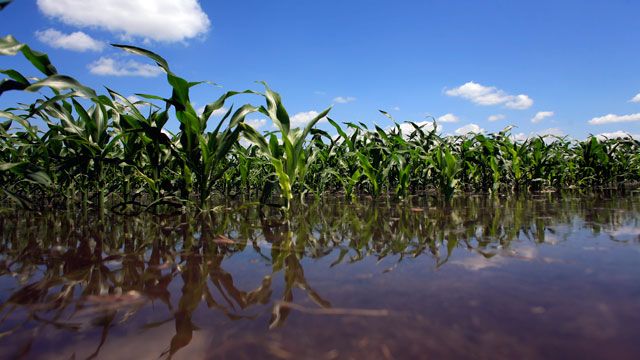
The farmland east and south of Temple is filled with hundreds of acres of corn. Row after row of long green stalks point to the sky, some wilting in the summer sun. The harvest is coming, but it’s been a long tough season for local corn farmers. Almost 50 percent of corn crops across Bell County had to be replanted after heavy rainfall during the spring washed out the seeds and fertilizer and damaged growing crops, agriculture experts said. “We estimated that 35,000 acres in Bell County had to be replanted,” Lyle Zoeller, Bell County extension agent said. “There is probably about 65 to 70,000 acres of corn in the county. So that is a significant economic impact for Bell County’s corn production.” Robert Fleming, longtime owner of Fleming Grain and Cattle, is one of the farmers across the region hit with a devastating loss. “This is the first time in my career that I had to replant 40 percent of my acres because of the heavy rainfall,” Fleming said. Fleming describes his corn crop this year with one word — “ugly.” For 25 years his production has included wheat, corn and running cattle. He operates in four counties: Bell, Falls, Limestone and Freestone. Of his nearly 2,000 acres of corn, he had to replant 800 acres in a tedious and tiring effort to be ready for harvest near the July timeline.  “The first crop was severely wiped out from the wet weather and the ground was being restricted of oxygen so the seeds couldn’t emerge,” Fleming said. “Economically, it was terrible.” Flooding was costly for farmers Fleming said it was a huge expense to replant the crop which set him behind schedule. “When you have these multi-inch rainfall events on freshly planted corn crops …it can’t take that kind of water — nothing can,” Fleming said. According to the National Weather Service, rainfall totals for the Temple area are more than six inches above average for this time of year. Of the region’s total rainfall of 24.3 inches, the Temple area received 18.7 inches from just February to the end of May. “When we plant we just need timely showers,” he said. “Because of our heavy black ground we don’t require a whole lot, but just normal rainfall.” Fleming said it costs him almost $70 an acre for the corn seeds alone. That means this year he spent an unbudgeted $56,000 on seeds to replant 800 acres. He said he spent $16 an acre on extra fertilizer. Those costs don’t include running equipment and the grueling time spent on labor. The biggest hit he said he will see will be at harvest time with a subpar yield. He said he expects to lose at least $100 an acre for replanting and the loss in yield. He said at harvest he is expecting some good corn, some fair corn and a lot of “very, very poor corn.” “It is all about timing and what Mother Nature wants to throw at us,” Fleming said. “It is nothing we did genetic-wise, the variety of corn or time of year we planted.” Zoeller said corn farmers typically start planting corn in February. But said after the unprecedented spring rains, they had to replant several acres during the second half of March through the first week of April.  “It is not uncommon for portions of fields that may have a low spot, or uncommon to have to replant pieces or corners, but typically we don’t have full fields being replanted.” Last spring, Zoeller said conditions were similar. “We have two wet springs in a row where it is not typical to have so much moisture on corn,” Zoeller said. Saturated soil caused more problems Replanting was the first issue. The second issue came with overly saturated soils, Zoeller said. “For a lengthy period of time,” he said. “We lost a whole lot of our fertilizer. Nitrogen is extremely water-soluble and will leak out beneath the plant root zone or it will denitrify and we will lose it back into the atmosphere.” Zoeller said the result was losing a tremendous amount of fertility in those fields. He said many of the corn producers went back and reapplied nitrogen fertilizer in May, which in turn revived several acres of the crop. Fleming said he first planted on Feb. 20 and it took about 10 days to finish planting. He said the last four days of planting were for nothing because his crops were hit with five inches of rainfall in a single night after the work was done. “We had a ground temperature that was cold and the cold rain on top of it,” he said. “So it seals off the ground and there is no oxygen.” He said he called that “practice planting” and joked he might as well have gone on vacation during that time instead.  “We knew the forecast was in for rain and we were trying to get through,” he said. “It was just the stage the seeds were in when they got that cold heavy rainfall. So that caused the bad germination.” “So we had to go in there and destroy what little crop came up,” Fleming said. “Plow it up and start all over again.” Production delays resulted from replanting Fleming said it set him back almost 30 days from schedule, which is now a concern as the corn attempts to pollinate during the hot weather. “Our yield on the late corn is surely not going to be what it was on the early corn that we didn’t destroy,” Fleming said. Zoeller said most of these corn producers diversify their agricultural enterprises to manage risks. “That is why most producers don’t just produce one commodity,” Zoeller said. “So if cropping is not going good right now maybe beef cattle is and that is what they can rely on for a while.” He said they often grow crops that are on different timelines like wheat and corn. Wheat is planted in October and harvested in May. Corn is planted in February and harvested in July. “We plant more corn than anything else,” Zoeller said. “For us, the timing of the excess moisture was most significant on the corn.” Zoeller said after dealing with droughts from 2010 to 2012 farmers are trying to bounce back from two extremes. Summer showers now welcome Fleming said with the replanted corn, right now they are desperately in need of showers especially as the temperatures continue to rise. “The older corn is not that critical but the rain would provide a little more yield,” he said. “The later corn we replanted — the 40 percent — needs rain today…it needed rain last week.” Fleming said when he planted his wheat crop during the fall some of it was also damaged by rain. “This multi-inch rainfall is just killing us,” he said. Fleming said farmers have a safety net through the Federal Crop Insurance Corp. with a program that helps protect their fields in cases like this. “But I have not seen a dime yet,” he said uncertain about the delay. “My company, I suspect, they are probably going to take it out of the premium.” Fleming said after the middle of June the rain just “shut off on them.” Farming is no doubt frustrating at times, Fleming said, adding it is up to “Mother Nature and the good Lord to provide for you.” Source - www.tdtnews.com

04.07.2016

Italia - Hailstorm in Abruzzo damages potatoes and leafy veg

A short yet strong hailstorm hit the Avezzano area on June 27th. It is the third hailstorm in Abruzzo in just a few weeks. According to Coldiretti, salad, spinach, carrots, red chicory and potatoes have been damaged. Local producer Raffaele Torti reported that "for what concerns potatoes, it is the top part of the plants that has been damaged and it will be possible to salvage the produce. Harvesting is expected to start in late July." "For what concerns chicory, spinach, red chicory and lettuce, we had hoped prices would grow a bit considering the bad weather that also hit other areas in Italy and abroad but it is difficult to sell even what is left." In the meantime, Coldiretti is investigating to assess the damage. Source - www.freshplaza.com

04.07.2016

Turkey - Hail hits apricot harvest

The apricot harvest has begun in Igdir in the eastern Anatolia region. The apricots grown there are known for their juiciness and mainly sent to big cities such as Istanbul, Ankara, Izmir, Erzurum and Bursa. Apricot purchaser Gunduz Yildirim explains: ‘’This year hail has damaged the fruits. Igdir’s department of agriculture reports that farmers have suffered 80% losses. Fruit hit by hail is sold to fruit juice factories for 0.60 lira. This doesn’t even cover worker costs. Depending on quality, the fruit sent to cities is sold for between 1.5 lira to 2.5 lira from the orchards and in the cities it is sold for between 3 to 5 lira.’’ Apricot grower Turgay Bagra, said in a statement, that Turkey’s first open land apricots are harvested in Igdir. This year, from the 1,200 hectares of apricot orchards around 10,000 tons of the fruit will be harvested. The fruit is currently being sent to the domestic market. (1 Turkish Lira=0.31 Euro) Source - www.freshplaza.com

04.07.2016

USA - Farmers review damage after hail

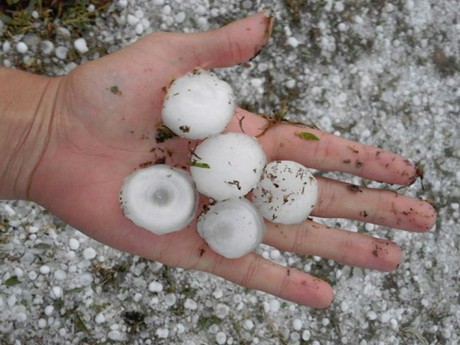
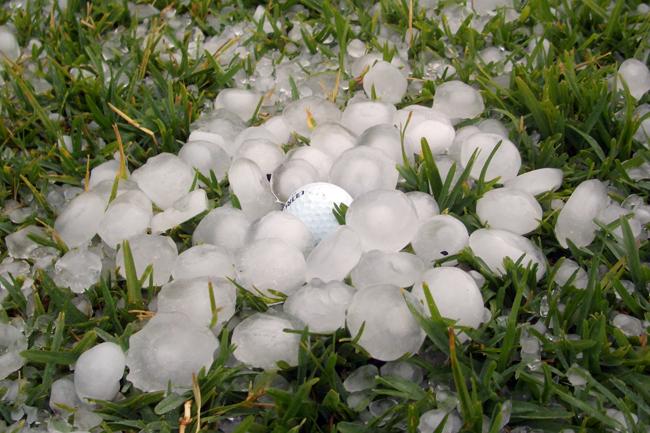
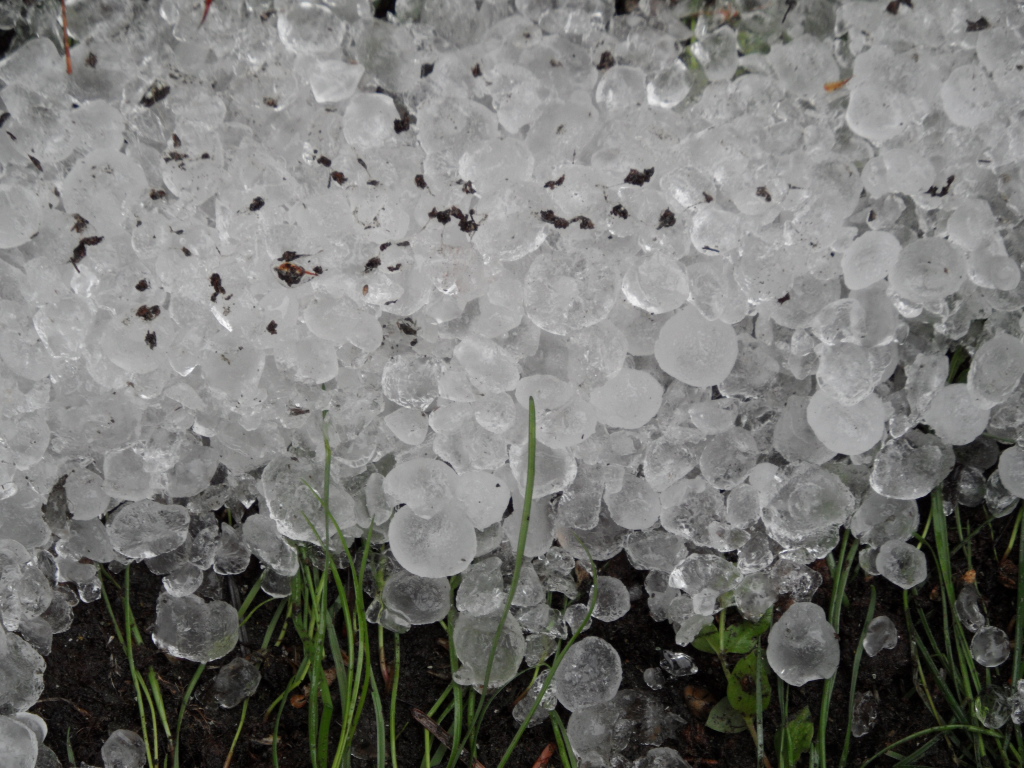
Following devastating hail, several farmers are reviewing the damage of their crops. Several people reported downed trees and wind damage in the Denver area, but farther north, the hail slammed crops. Near the intersection of Larrabee Avenue (Highway 63) and 210th Street, the remains of some crops were barely recognizable, especially on the west side of the highway. Farmers in the area had corn and soybeans planted. Experts reviewing the area say some of the corn crops could be salvaged for livestock, but it's far too late to replant. However, experts were debating whether it's too late in the year to replant the soybeans. Farmers with soybeans say they have a few days to decide whether to replant soybeans to wait for the soil to dry. Several farmers in the area say they had insurance, but weren't directly covered for hail damaged. Source - www.kwwl.com

04.07.2016

India - Govt allows state-run general insurers to sell PM's crop insurance schemes

Government has now allowed all the four public sector general insurers to participate in its ambitious farm insurance schemes -- the Pradhan Mantri Fasal Bima Yojana (PMFBY) and Unified Package Insurance Scheme -- with potential of over $2.5 billion in premium collection. The government had kicked off the scheme on June 1 without involving any of the four public sector general insurers, who control almost 50 per cent of the market. Only 11 private sector players were allowed to participate as they have better experience in crop insurance schemes, an area which state-run companies were almost eschewing so far. The PMFBY has replaced the existing two crop insurance schemes -- the National Agricultural Insurance Scheme (NAIS) and the Modified NAIS. For Kharif crops, the premium charged would be up to 2 per cent of the sum insured, while for Rabi crops, the premium will be up to 1.5 per cent. "We have been allowed to participate in these schemes. Now that Kharif crop season has already begun, we will participate in the Rabi season," the country's largest general insurer New India Assurance's Chairman G Srinivasan told PTI. Its peer National Insurance Company is also gearing up for the scheme. "We are getting ready to participate in the scheme. We are working with Agricultural Insurance Company (AIC) as they are providing us technical knowhow on the subject," its Chairman and Managing Director Sanath Kumar said. "I do believe that it will be a profitable venture as it has been priced on the basis of actuarial calculation which will ensure the insurers get the right price for providing cover," he said. According to Kumar, the states have already floated tenders for the scheme for Kharif season. "Still, I do believe that we will be able to participate in the forthcoming Rabi crops," he said. However, a central government official said even for Kharif crops, the state-owned general insurers can provide cover in association with AIC. The state-run non-life insurers have a massive presence in rural and semi-urban areas compared to their private sector counterparts, which will help increase the reach of PMFBY, he said. As of now, AIC is the sole state-run company which has been providing the coverage. Now, all the four state-owned companies will associate with AIC to provide cover under the schemes. Their participation will also ensure that the scheme benefits both loanee and non-loanee farmers as the premium is quite low. "We have already crossed the mark of 24-25 per cent of coverage of crop loan and now we are aiming at achieving 40 per cent by the fiscal end," he said. SBI General Insurance is looking at doubling its crop insurance cover during the current fiscal. "We have underwritten premium to the tune of Rs 100 crore in the crop insurance segment in the last fiscal and we are looking at doubling our crop insurance cover during the current fiscal thanks to PMFBY," SBI General Insurance Managing Director Pushan Mahapatra said. Talking about state-run general insurers joining the bandwagon, he said, "More number of players will bring better competition and better risk management practices." State-run reinsurer GIC Re plans to become the world's second largest agriculture reinsurer due to its participation in PMFBY. "Our share as reinsurer in PMFBY is already at 30-40 per cent. But we want to make it to above 50 per cent by March so as to become the world's second largest reinsurer," GIC Re Chairperson Alice G Vaidyan said. Source - economictimes.indiatimes.com

04.07.2016

India - Last date for enrolment under crop insurance scheme extended

The State government has extended the last date for enrolment under the Weather-based Crop Insurance Scheme for horticulture crops for the current monsoon season from June 30 to July 10, following the approval given by the Union government for time extension. The government had sought extension of time to enable more farmers to join the scheme. A release from the Horticulture Department here said that areca and black pepper have been notified as horticulture crops covered under the insurance scheme. Enrolment under the scheme is compulsory for farmers who have availed themselves of crop loans from banks, while it is optional for those who have not taken crop loans. Those having availed of loans have to pay premium through the bank from which the advance has been disbursed and others may pay the premium through the bank in which they have a savings bank account. Insurance amount Enrolled areca growers would get Rs. 1.25 lakh insurance amount per hectare (2.5 acres) in the event of crop loss due to natural vagaries. While the total premium would be Rs. 12,500 per hectare for the season, the farmer has to pay Rs. 6,250 and the balance would equally be shared by the Union and State governments. Similarly, crop insurance available for black pepper would be Rs. 37,500 per hectare with a premium of Rs. 3,750. The farmer has to pay half of the premium and the two governments would share the balance. 230 GPs The scheme would be implemented in 230 gram panchayats coming under all hoblis of Dakshina Kannada, except Mangaluru A Hobli, the release said. Tata AIG General Insurance Company Ltd. has been nominated as the insurance company for the district. Crop loss insurance would be settled on the basis of weather records maintained by rain gauges established at gram panchayats by the India Meteorological Department and agricultural universities. Enrolment procedure Farmers who have not taken crop loans have to submit RTC, savings bank account pass book, Aadhaar number or any other identity proof and a self-declared crop letter of the land along with the application to pay the premium. Crop loss insurance would be settled through Aadhaar Card-enabled RTGS/ NEFT. Source - www.thehindu.com

01.07.2016

Tanzania - Crop insurance sure to boost farmers, economy

Tanzania is gearing up efforts for a strategy that will extend insurance coverage to agriculture sector. The idea is to ensure farmers get covered so that they cut down the amount of loss they tend to incurs in the event of calamities such as floods and drought. Farmers put a lot effort, yet they often end up frustrated when their produce is hit by disasters at the late stage. The experts say that, since rains have been largely unreliable mainly due to global warming and climate change, small-scale farmers have often seen their efforts go to waste. Insuring farmers is, therefore, a very important move, considering that agriculture, especially smallholder farming, employs about 70 per cent of Tanzania's population. Agriculture is also Tanzania's economic mainstay, accounting for nearly 30 per cent of the gross domestic product (GDP). So, covering farmers with crop insurance for instance, will not only ensure yields to them but also improves the national economy. However, an important point to note here is that the government needs to take the lead in pushing for such development because insurance firms may not do it alone. At one time, Jubilee Insurance Tanzania wanted to introduce crop insurance cover, but it needed government support in monitoring the weather and rainfall. The company offered support in rain gauges, weather index and other, required facilities which would help in measuring rainfall. In Kenya for example, the government recently partnered with some insurance companies through Jubilee Insurance to cover smallholder maize farmers against poor yields as a result of adverse climatic conditions, diseases and damage by insects. The government of Kenya would grant a 50 per cent subsidy on insurance premium for up to five acres per farmer. The insurance covers farmers against shortfall in yield below 80 per cent from the expected harvest during the policy period. Agriculture insurance is therefore needed for Tanzania's sustainable economic growth. TACKLE CLIMATE CHANGE IMPACT The government and environmentalists have on various occasions been encouraging people to mitigate climate change so that whatever they do is environment friendly and complies with sustainable development for both current and future generations. In the 17 newly formulated 'Sustainable Development Goals 2030', this falls under Goal 13--Take urgent action to combat climate change and its impacts. Climate change mitigation is important because Tanzania will not be spared from climate change effects such as sea level rise, high temperatures, protracted drought, frequent epidemics, floods and food insecurity. If not addressed, it means the money that is supposed to be spent on development is spent on mitigating climate change effects to avoid further adversities. In order to build technical capacity, the UK, through 'Decentralised Climate Finance', will support Tanzania with Sh18 billion to mitigate the impact of climate change--that is preparedness for climate change disasters. Eighteen regions from the Mainland and the Isles will benefit from this support - 15 and three pilot districts from Tanzania Mainland and Zanzibar respectively. We hope that the money will be spent as intended so that the people living in areas that are most hit by climate change effects are helped on time to avoid further disasters. However, the efforts against climate change effects need the involvement and cooperation of all. Source - allafrica.com

01.07.2016

Mexico - Melon production down 50% due to water shortage

More than two weeks after the melon harvest started in the municipality of San Pedro some producers have recorded a 40 to 50 percent decrease in yields. As a result, they expect it will be a difficult season, as they won't profit as expected. According to producers, the delay in the watering cycle caused by the poor distribution of liquid in the irrigation modules, negatively affected the growth of their plants. Additionally,  only three people are currently buying the melons produced in San Pedro because most buyers are still moving the fruit produced in Matamoros. The price of melon averages 3 pesos per kilo, but producers feel like it were lower because they have to cover production costs with a lower production. "We would make some profit if we sold our product at 5 pesos per kilo," said Jose Luis Vazquez, a producer from the ejido San Miguel. Vasquez said he produced melons on 1.5 hectares, which would normally yield a little more than one ton per day, but that this year he was only produce about 600 kilos of melons a day. Under the best conditions, producers can harvest up to 40 tons of melons per hectare. Yesterday, Vasquez was unable to sell his production because the marketers didn't receive his fruit, as they were only loading 3 trucks. Source - www.freshplaza.com

01.07.2016

India - Software launched for online crop insurance registration

Chief Minister Siddaramaiah launched Samrakshane , a software application for online registration of farmers for crop insurance scheme. This software is a combination of the Karnataka Raita Suraksha Pradhana Mantri Fasal Bima Yojana (PMFBY) and the restructured Weather-Based Crop Insurance Scheme (WBCIS). The Centre has launched this for providing financial support to farmers suffering from crop loss or damage arising out of unforeseen events and disasters. For this purpose, Rs. 675.38 crore was earmarked as the State’s share. The government has removed the cap on premium to reduce the burden of farmers. The premium share of the farmer in PMFBY will be 1.5 per cent to 2 per cent for all foodgrains and oil seed crops, 5 per cent in annual commercial or annual horticultural crops. The government aims to cover 50 per cent of the farmers. It is anticipated that due to the low premium, more farmers will enrol. Data on each of the farmers need to be monitored and managed at different stages of crop growth till a final payment is made. In view of these, the State government has developed Samrakshane for end-to-end automation of the crop insurance process. Source - www.thehindu.com

01.07.2016

Ghana - Fruit flies causing crop losses

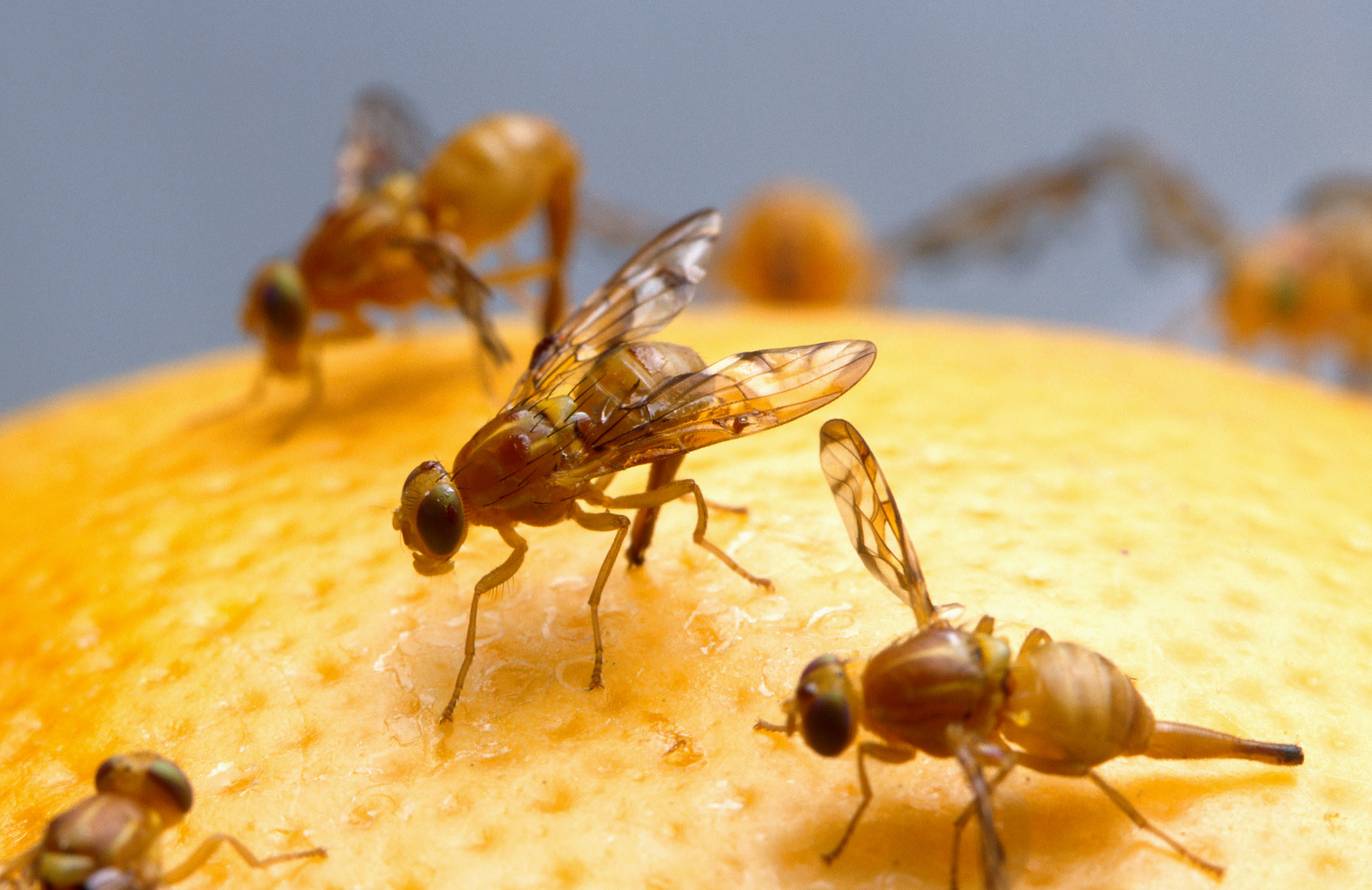
Across the Volta Region, farmers growing high value horticultural crops, such as oranges, mangoes and vegetables, are suffering due to crop losses caused by fruit fly infestations. The flies lay eggs in the fruits causing them to fall prematurely with worms in them. Resource-poor and commercial farmers in the district told that since 2014, they had lost over 70 per cent yield to the attack by the flies. Mr Patrick Beseh, of the Plant Protection and Regulatory Services Directorate of the Ministry of Food and Agriculture, in charge of the Plant Health Rally, "Plantwise" initiative, advised the farmers to regularly collect fallen fruits and dispose of them properly. Mr Theophilus Zottorgloh, the Volta Regional Deputy Co-ordinator, "Plantwise" initiative, said reports indicate that a good number of farmers had abandoned their farms due to the infestation. He said the situation had caused some farmers to lose thousands of Ghana cedis affecting the living conditions of thousands of people. "Plantwise" initiative is under the auspices of Centre for Agriculture and Biosciences, an inter-governmental non-governmental organisation working with agriculture extension officers known under the project as "Plant Doctors" to find solutions to pests and diseases especially reducing yields of resource-poor farmers. Source - www.freshplaza.com

01.07.2016

Belgium - Damage to potato harvest can't be estimated at the moment

Stories about large losses in harvest in the Belgian sector due to the heavy rainfall are circulating in various media. "However no percentage can be tied to this at the moment, they are still too busy with the total damage inventory. It's impossible to estimate for the entire country, as it differs per region and even per plot. In vegetables this indication is made much more quickly. Thankfully there isn't a panic reaction in the potato sector yet, apart from among those affected," says Romain Cools of Belgapom. "In Antwerp, De Kempen, Limburg and north east Flanders the damage is generally worse than in other regions, where the damage is more local." Disease pressure "At the moment there are three issues in play: first of all there are plots or part thereof that have been written off because there was water on it for too long. What the effective damage will be, won't be known until later. There is also anxiety over how high the dry dust level in the harvest of new potatoes will be. We still have a few weeks to go before this becomes clear. Due to the rain the disease pressure of phythophthora is strongly present. Not all plots can be treated as well." Better weather coming "Good growing weather is expected for the coming weeks: dry and around 20 degrees," so everything could look different soon. There was an area expansion of 15% calculated in Flanders, but due to the exceptional rainfall there will probably not be an excessive harvest this season. The question is also: will we need it? As far as the free market is concerned a harvest too large could have a negative influence. This is separate from the fact that many growers have been hit hard." Source - www.freshplaza.com

01.07.2016

Czech Republic - From bad to worse for apple growers

It has been a struggle for apple growers this season in the Czech Republic. A Czech grower located in the hardest hit region of Moravia, reported as high as 50% losses for this year's crop. Along with being dry, the region saw temperatures dropping to five degrees below zero in the last weeks of April, which proved too much for the traditional fruit. The national Fruit Growers Union has estimated losses of around 400 million crowns this season, country wide. Damages are also reported in the warmer regions of Bohemia, where stone fruits and apple trees were in bloom at the time of the frosts. The apricot harvest will be the most severely hit, with the year-on-year drop estimated at 68 percent to a mere 709 tonnes. The country’s peach harvest is expected to drop by 67 percent to 421 tones. From bad to worse The last few years have been a struggle for growers and these weather losses are adding insult to injury on the back on declining demand for fresh apples. According to a USDA GAIN Report published in 2015, 'The reason for the decline in consumption is a stronger interest in new fruits and growing consumer purchasing power as well as wider range of fruit choices available in stores. Young people in the urban areas prefer new and exotic fruits such as kiwi, pineapple, kumquat, and passion fruit.' Harvested areas are also seeing a decline year on year, with 7,624 HA for apples and 681 HA for pears in 2015, compared to 8,721 HA of apples and 704 HA of pears in 2014. The declining trend in areas and numbers of fruit trees is attributed to older fruit trees and a lack of capital to renew orchards. Apples not the only fruit affected Fruit prices are expected to remain largely unaffected by lower production, estimated around 17%, which also hit other fruits such as stone fruits (apricots, peaches, plums) and strawberries. “Prices in the Czech Republic are affected mainly by the European market. If the prices go up, it is not because of a lower harvest in the Czech Republic, but because of the situation in other countries,” Martin Ludvik, head of the Fruit Growers Union. Frosts have also taken their toll on the strawberry harvest, which is expected to fall by 30 percent to some 2,300 tonnes. The only fruit not to be hit by the late frosts are cherries, because they are not grown in the areas affected. Hail storms which hit Bohemia at the end of May and early June in the central, east and southern regions, could also affect this year's harvest volumes. Source - www.freshplaza.com

01.07.2016

India - Crop insurance: Rs 2,450 cr to 4 worst-hit Marathwada districts

The four worst-hit districts of Marathwada have cornered more than 50 per cent of the total Rs 4,205 crore funds under the crop insurance loan for the year 2015-16. The crop insurance funds, which have already been deposited in the accounts of the farmers, have provided the much-needed relief to the farmers of Marathwada facing drought for the fourth consecutive year. The crop insurance disbursed is highest in Beed district (Rs 893 crore), Latur (Rs 604.59 crore), Parbhani (Rs 488.65 crore) and Osmanabad (Rs 465.51 crore). The total crop insurance allocation in these four districts comes to Rs 2,450.75 crore out of the total Rs 4,205 crore given to farmers across Maharashtra. The crop insurance has helped the government provide relief to 1.13 crore farmers covering 74 lakh hectares of land. Notwithstanding the delay in arrival of the monsoon across the state, progress in the crop insurance disbursement appears to have equipped the farmers with funds that would help them meet the challenges of agriculture in the kharif season. “Under the crop insurance, 82 lakh farmers have already been given the funds. The process of bringing the remaining would be completed in the next few weeks,” according to reports from the ministry of agriculture. The new guidelines of the Centre under the Pradhan Mantri Fasal Bima Yojna, which allows crop insurance to farmers for both pre- and post-harvest crop losses, is being aggressively pushed by the state to restore the confidence of farmers, especially in the 14 worst drought-hit districts. Apart from water crisis (hydrolic drought) in 15,500 villages, there was agriculture drought in 12,500 villages. Thus, 28,000 villages out of 40,000 were facing drought. While acknowledging the need for greater investments to help farmers become self-reliant, Chief Minister Devendra Fadnavis said, “The allocation of Rs 4,205 crore under crop insurance is highest ever the state government has provided in one year.” Putting it in perspective, he said, “In the last 15 years, the total funds released under National Crop Insurance was Rs 4,737 crore. While we are not here to walk the credit, all I can reassure is that my government is absolutely committed to the welfare of the farmers of Maharashtra.” Last week, the state government cautioned farmers not to rush sowing and wait for the full-fledged monsoons to arrive in their respective districts. Another significant decision relates to increase of fresh crop loans by 31 per cent this year at Rs 54,000 crore from last year’s Rs 40,000 crore. In view of reports of lackadaisical approach of district cooperative banks to allocate fresh crop loans to farmers for kharif has prompted the government to urge NABARD to intervene in the matter. The chief minister has also taken up the issue with Union Finance Minister Arun Jaitley. The regionwise crop loan disbursement shows 29 per cent increase in the cotton belt of Vidarbha region. In terms of funds, it has increased from Rs 8,423 crore (2015-16) to Rs 10,842 crore (2016-17). In Marathwada, it would be a 37 per cent increase in crop loans. The amount has risen from Rs 9,193 crore to Rs 12,578 crore; in Western Maharashtra (including parts of North Maharashtra) it shows a 37 per cent (the highest) increase. The funds have been hiked from Rs 21,831 crore to Rs 28,778 crore. In Konkan, it is marginal, from Rs 1,078 crore to Rs 1,134 crore. The ministry of agriculture has already made the provisions on both seeds and fertilisers. Their estimate is, the total seeds required would be 14 lakh quintal. But they have stocked 17 lakh quintals. Source - indianexpress.com

30.06.2016

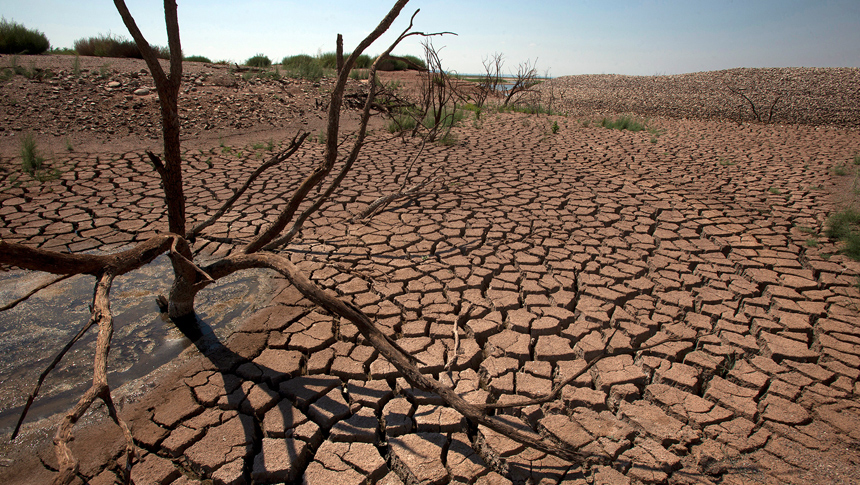
Cuba - Drought prompts debate on irrigation problems

Five gargantuan modern irrigation machines water the state farm of La Yuraguana covering 138 hectares in the northeastern province of Holguín, the third largest province in Cuba. However, “sometimes they cannot even be switched on, due to the low water level,” said farm manager Edilberto Pupo. “The last three years have been very stressful due to lack of rainfall. We take our irrigation water from a reservoir that has practically run dry,” Pupo told IPS. In 2008 La Yuraguana received new irrigation equipment financed by international aid. Central pivot machines are a form of overhead water sprinkler that imitates the action of rain. The machinery is assembled in Cuba using European parts. Since late 2014 Cuba has endured the worst drought of the past 115 years. The extremely dry weather has sounded an alarm call drawing attention to the urgent need to modernise and change water management practices in response to climate challenges, and to other problems such as water wastage from leaky supply networks, inefficient water storage and conservation policies and absence of water metering at the point of use. National reforms begun in 2008 have not yet achieved the hoped-for lift-off in agricultural production. Farming, however, is the main consumer of water in this Caribbean country, responsible for using 65 percent of the island’s total fresh water supply for irrigation, fish farming and livestock. Future difficulties loom on the horizon, because droughts are becoming more seasonal in nature in the Caribbean region due to climate change, according to a new report by the Food and Agriculture Organization of the United Nations (FAO) published June 21. “Agriculture is the most likely sector to be impacted, with serious economic and social consequences,” the FAO report says. “Most of Caribbean agriculture is rainfed, and demand for fresh water is increasing with irrigation use becoming more widespread in the region.” The Caribbean region accounts for seven of the world’s top 36 water-stressed countries, FAO said. The eastern part of Cuba suffers most from droughts, and its population, alongside small farmers in Holguín province, has its own methods of addressing the problem of lack of rainfall. They say that in extreme droughts, irrigation equipment is of little use. “At the most critical time we had to plant resistant crops like yucca (cassava) and plantains (starchy bananas that require cooking) that can survive until it rains,” Pupo said, speaking about the cooperative farm which sells vegetables, grains, fruit and root crops to the city of Holguín’s 287,800 people. La Yuraguana employs 93 workers, 14 of whom are women. Its 2016 production target is 840 tonnes of food, for direct sale to markets in the city of Holguín, in the adjacent municipality. “We hope Saint Peter will come to our aid, that the rains will come and fill the reservoir, so that we can water our crops and keep on producing,” said Pérez. Devout rural folk call on Saint Peter, whose feast day is June 29, to intercede on their behalf because they believe the saint is able to bring rain. Cuba’s total agricultural land area is about 6.24 million hectares out of its total surface of nearly 11 million hectares. Only 460,000 hectares of arable land is under irrigation, mostly with outdated equipment and technology, according to the government report titled “Panorama uso de la tierra. Cuba 2015” (Overview of land use: Cuba 2015). At present only about 11 percent of the land used to raise crops is irrigated, but FAO forecasts that by 2020 the area equipped for irrigation will nearly double, to some 875,600 hectares, through a programme launched in 2011 to modernise machinery and reorganise farm irrigation and drainage. Use of irrigation increases average crop yields by up to 30 percent, experts say. Cuban authorities want to boost local production in order to reduce expenditure on purchasing imported food to meet demand from the island’s 11.2 million people, and from the influx of tourists – there were three million visitors to Cuba in 2015. The bill for imported food is two billion dollars a year. Agricultural scientist Theodor Friedrich, the FAO representative in Cuba, told IPS that “irrigation is not the answer to drought.” This Caribbean island “should curb the use of irrigation rather than extend it,” he warned, because exploiting water sources, especially underground aquifers, could lead to “degradation and accelerated salinisation of water resources.” A better course of action, he said, is to “implement water conservation measures at once, including the reduction of leakage losses throughout the piped water distribution network, avoidance of all forms of sprinkling irrigation, watering the soil directly and irrigating according to the particular needs of the crop, not forgetting to take into account long-range meteorological forecasts.” In Friedrich’s view, sustainable solutions must be based “on soil management” and conservation techniques. He pointed out that eco-friendly organic agriculture “achieves greater production yields with less water and opens up the soil so that rainwater can infiltrate to the fullest depths and refill aquifers.” Cuba is not blessed with any large lakes or rivers, and so is reliant on rainfall, captured in 242 dammed reservoirs and dozens of artificial minilakes. Local experts agree with FAO’s Friedrich that over-exploitation of underground water reserves should be discouraged because of the risk of causing salinisation and losing fresh water sources. The present drought in Cuba was triggered by the El Niño/Southern Oscillation (ENSO) climate phenomenon, which has had devastating effects in Latin America this year. Shortage of water has affected 75 percent of Cuban territory, according to official sources, with the worst effects being felt in Santiago de Cuba, a province adjacent to Holguín. In spite of steps taken to put the water consumption needs of people before agricultural and industrial uses, one million people experienced some limitation on their access to water in May, said the state National Institute of Water Resources. On June 20, the European Union announced an additional grant of 100,000 Euros (US$113,000) to Cuba via the Red Cross, as disaster relief for 10,000 drought victims in Santiago de Cuba. The funds are intended to improve access to safe drinking water and to deliver transport equipment, reservoirs and materials for water treatment and quality control. However, many of those responsible for the agriculture and small farming sectors still see irrigation as the key to boosting production. “Yields under irrigation when necessary are much higher than when one just waits for nature to take its course,” said Abdul González, deputy mayor in charge of agriculture for the municipal government of Holguín. Unfortunately “80 percent of our land under crops lacks irrigation,” he told IPS. “Small farmers from all forms of agricultural production (state, private and cooperative) are demanding irrigation systems. Some of them resort to home made tanks and ditches to mitigate the negative impacts of the drought,” he said. At the Eduardo R. Chibás Credit and Service Cooperative, not far from La Yuraguana, Virgilio Díaz, one of the cooperative’s beneficial owners who grows garlic, maize, sweet potato, papaya and sorghum on his 22-acre plot, ascribed much of his success to the irrigation system bought in 2010 by the 140-member cooperative. “Income went up by over 70 percent: we raised salaries; I was able to request a lease on more land and I built a new house,” Díaz said. He and five other workers between them produce 200 tonnes of food a year, when the climate is favourable. Source - www.caribbean360.com

30.06.2016

Hungary - Considerable hail damage to cucumbers and other crops

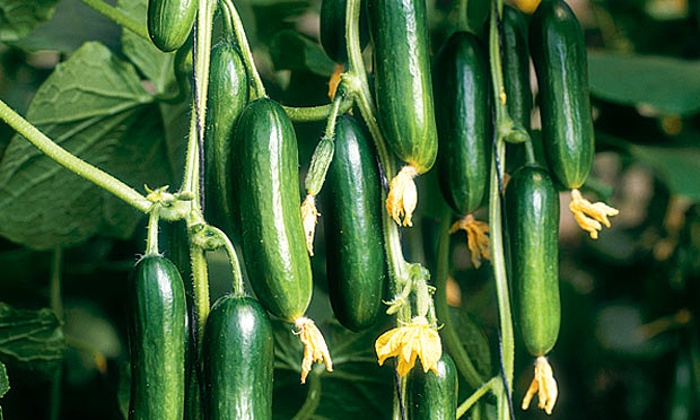
Hail has caused significant damage east of the Szabolcs-Szatmár-Bereg county, in the districts of Csenger and Fehérgyarmat, reported the president of the Hungarian Fruit and Vegetable Interprofessional Organisation and Product Board (FruitVeB), Ledó Ferenc, last Friday. Mr Ferenc stated that around 280-300 hectares of cucumbers were almost completely destroyed. According to experts, 75 percent of the plantations may recover from the ravages of the ice, but a significant yield loss is expected. The president of FruitVeB reminded 95 percent of the cucumbers intended for canning are supplied by small farms and family gardens and run by local authorities within the framework of the public works programs. Because of this, the hail damage could result in major social problems, given the expected loss of income. The two districts have a total of about 4,000 hectares of orchards, of which about 2,800 hectares are devoted to apples, 500 to cherries and 300 to plums, among other crops. About 70 percent of the plantations have been affected by the hail. The extent of damage oscillates between 30 and 100 percent. In cases where the shoots and buds have been hit by the ice (about 20 percent of the plantations), next year's crop may have also been affected, stated Mr Ferenc. Source - www.freshplaza.com

852
of 1225