NEWS
851
of 1225
News
07.07.2016

Canada - Lack of rain threatens corn, bean crop

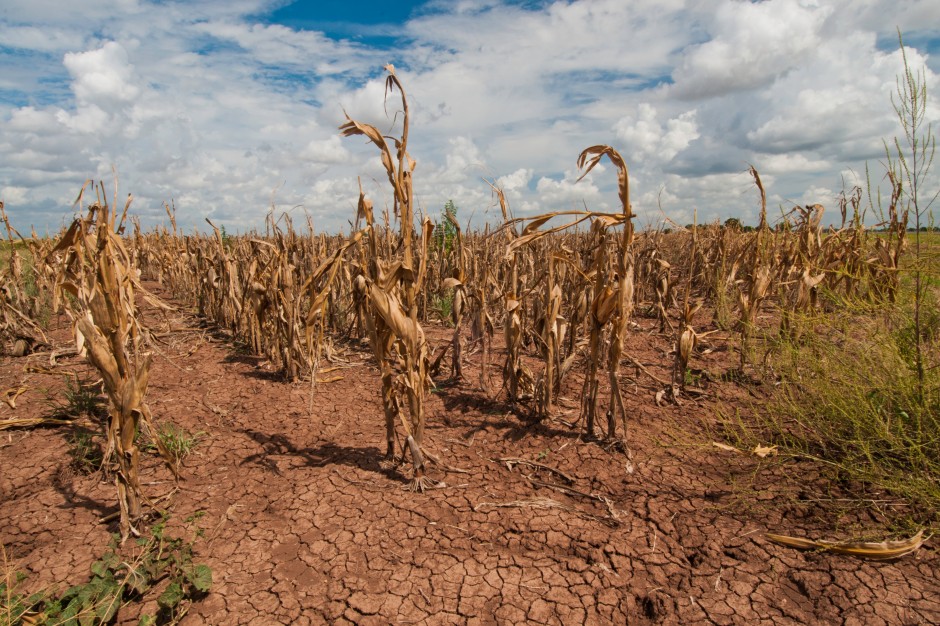
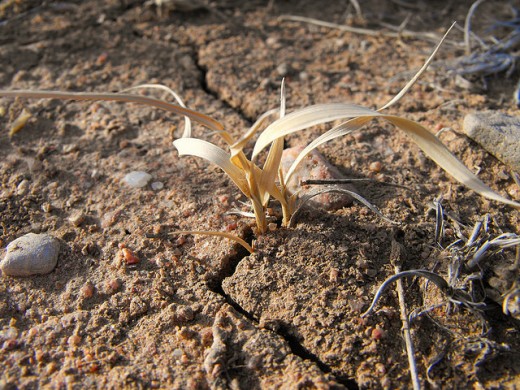
The lack of rain has become critical for farmers. Jim Partridge, President of the Simcoe County Federation of Agriculture, says if there isn't rain soon farmers are going to lose crops, adding the corn and beans are really drying out. A sprinkle here and a shower there won't suffice. Partridge says what's needed is a good soaking rain, an all-day or an all-night two inch rain. A poor harvest is money lost to area farmers. Partridge says farmers invest $200 to $500 dollars an acre in a crop in the spring and the potential to lose all that can seriously affect the farm operation. He says if a farmer has a thousand acres that's a loss of half a million dollars. Source - www.bayshorebroadcasting.ca

07.07.2016

Canada - Insecticides blamed for mass bee deaths

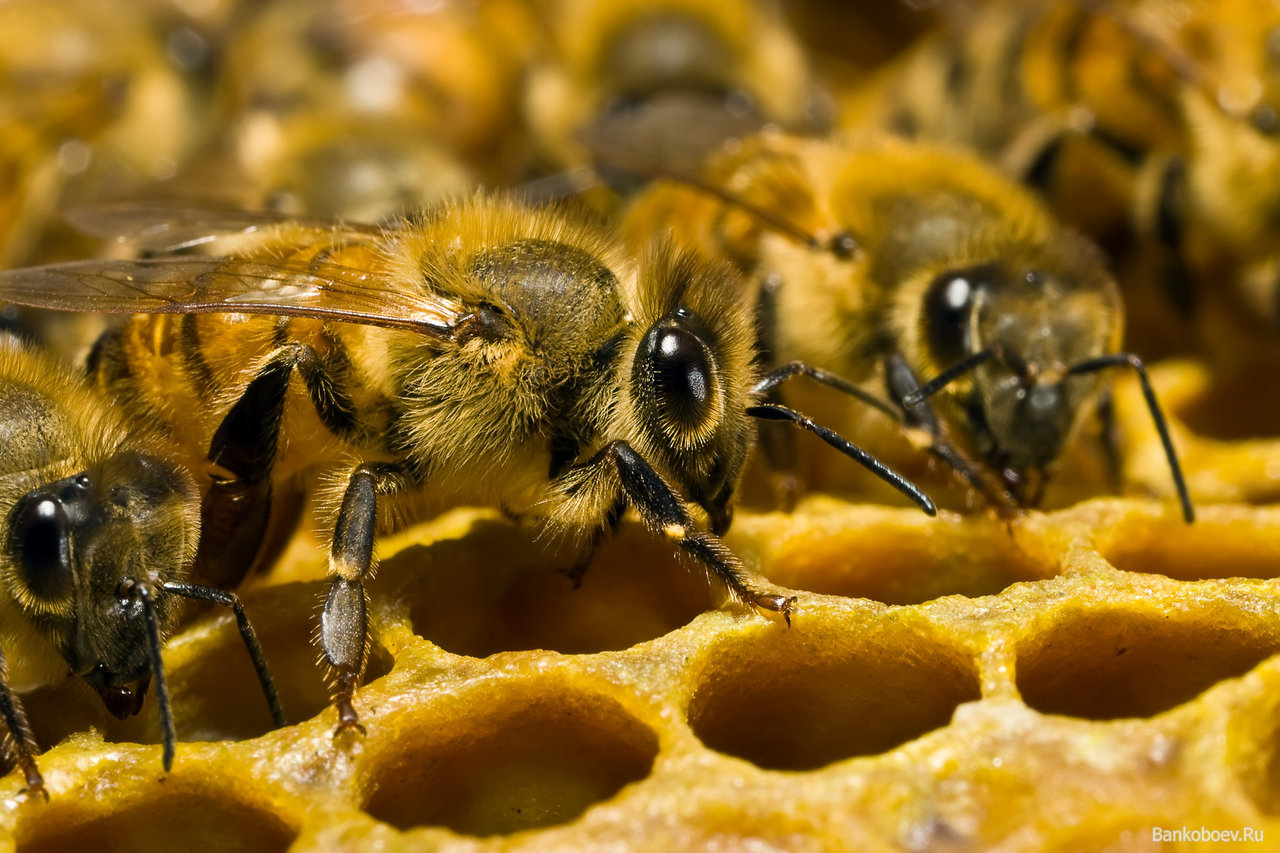
When Sharon, Ont. beekeeper James Murray went out to check on his bees last week he was in for a shock: dead bees in front of his hives. “I thought that was odd. All the bees were shaking,” he said. The situation worsened when he discovered 17 hives were ruined, and it appeared the bees had clearly been affected by something, Murray said. “It was horrible. I cried,” he said. “I lost a lot of money. … I was just devastated.” With up to 60,000 bees in each hive, that’s a loss of one million honeybees. Murray summoned a provincial bee inspector, who visited the local hives and said the mass deaths are the worst he has seen, Murray said. While samples have been sent to a lab for further analysis, Murray believes neonicotinoids — a new class of agricultural insecticide, chemically related to nicotine and used to kill sap-feeding insects such as aphids and to protect corn and soybean seeds — are to blame for the bee deaths. Murray and beekeepers across Ontario have fallen on difficult times in recent years. According to the province, in the winter of 2013-2014, bee deaths in Ontario reached a staggering 58 per cent. The generally accepted level by those who care for and breed bees is 15 per cent. The culprits for the rapid rise in deaths, according to beekeepers, the province and myriad scientists, are neonicotinoids. Residents of Sharon, a community north of Newmarket, can attest to the huge amount of dust in the air this year, a byproduct of construction. Murray said it is especially bad this year because it has been so dry. He believes the neonicotinoids most likely got into the dust and infected several bees which then brought the toxin home and poisoned the other hives. “(The use of neonicotinoid-treated seeds) needs to be reduced,” he said. Last year, Ontario was the first jurisdiction in North America to enforce rules to reduce the number of acres planted with neonicotinoid-treated corn and soybean seeds by 80 per cent by 2017. The Grain Farmers of Ontario appealed the decision but the Ontario Court of Appeal ruled against grain farmers earlier this year. The Ontario law stipulates farmers must plant half their soybean and corn crops in 2016 without neonicotinoids and that neonicotinoids will be banned in 2017 unless farmers can show their fields are infested with crop-eating worms and insects. That reduction can’t come soon enough for Murray, who says beekeepers are finding it difficult to sustain a living because they have to constantly replace their stock of bees. “People don’t understand the amount of money that goes into having bees,” he said. Murray was part of the breeding program operated through the University of Guelph. His Ontario stock bees were extremely disease resistant. “To get good stock like that cost a lot of money. Those bees are worth more than the common bee,” he said. Murray will not receive compensation or insurance for the loss of his 17 hives, but he vows to rebuild. The numbers add up pretty quickly, as he estimates a hive costs about $250, the bees cost $200 and the lost crop from the hive, about $1,000. “Multiply that by 17,” he said. “This is why the beekeeping industry is dying.” That should worry people because bees are needed for a lot of Canada’s food production, most notably fruit that requires pollination. Ontario Beekeepers Association vice-president Andre Fly calls what happened to Murray unfortunate. “It’s a big loss. It took years for him to build up that stock,” Fly said. If this happened on a dairy farm, there would be outrage, but when it comes to bees, people seem to turn a blind eye, Fly said. Source - www.thestar.com

07.07.2016

Europe - Heavy rains hit spring barley crops

Heavy rainfall has taken a toll on spring barley crops in northwestern Europe, mainly in France where the harvest was seen sharply below last year's. But a bumper crop was expected in top producer Spain and Britain expected a good harvest. Spring barley, mostly used to make beer ingredient malt, suffered from a prolonged lack of sunshine in France until early July, adding to damage caused by rain in May and June, Strategie Grains said on Wednesday. The consultancy plans to cut its estimate for the French crop in its July report due next week, analyst Benoit Fayaud said. In its last estimate the consultancy had pegged France's 2016 spring barley harvest 5.4 percent lower than last year at 2.8 million tonnes. "We think the situation of spring barley has worsened since because there was rain during flowering early June and a lack of sunshine," he said. "The European crop will be average (in volume) everywhere but in France it will be particularly bad." Farm office FranceAgriMer cut spring barley's crop ratings last week, estimating 71 percent of the crop in good or excellent condition compared to 76 percent the previous week. In Germany repeated rain has sparked concern about possible loss of spring barley quality. "I think Germany is facing a reasonable spring barley harvest in tonnage terms but there is a question mark about how much of the crop will reach malting quality and really no reliable estimates about this yet," a German analyst said. "However it is still too early to talk about definite damage and things could change if we get a return to dry, sunny weather which has been absent in June." Germany's spring barley harvest will fall 1.5 percent on the year to 1.96 million tonnes after a reduction in planted area, Germany's farm cooperatives association forecast. In the EU's largest producer of the grain, Spain, the picture was very different from the north, with yields expected to be excellent after nearly ideal weather throughout the season. Strategie Grains last month pegged the crop up more than 40 percent on 2015 at 8.1 million tonnes, boosted by higher yields. The outlook was also good in Britain, where the majority of the barley crop is spring-sown, making it the EU's second largest producer. "The prospects for spring barley are pretty good," analyst Susan Twining of crop consultants ADAS said, noting the crops had established well this year. Britain's spring barley is expected between 650,000 to 700,000 hectares, compared with 659,000 last year. Harvest begins in early August in the UK. Source - www.dailymail.co.uk

07.07.2016

India - Drought hits 25% vineyards in dist

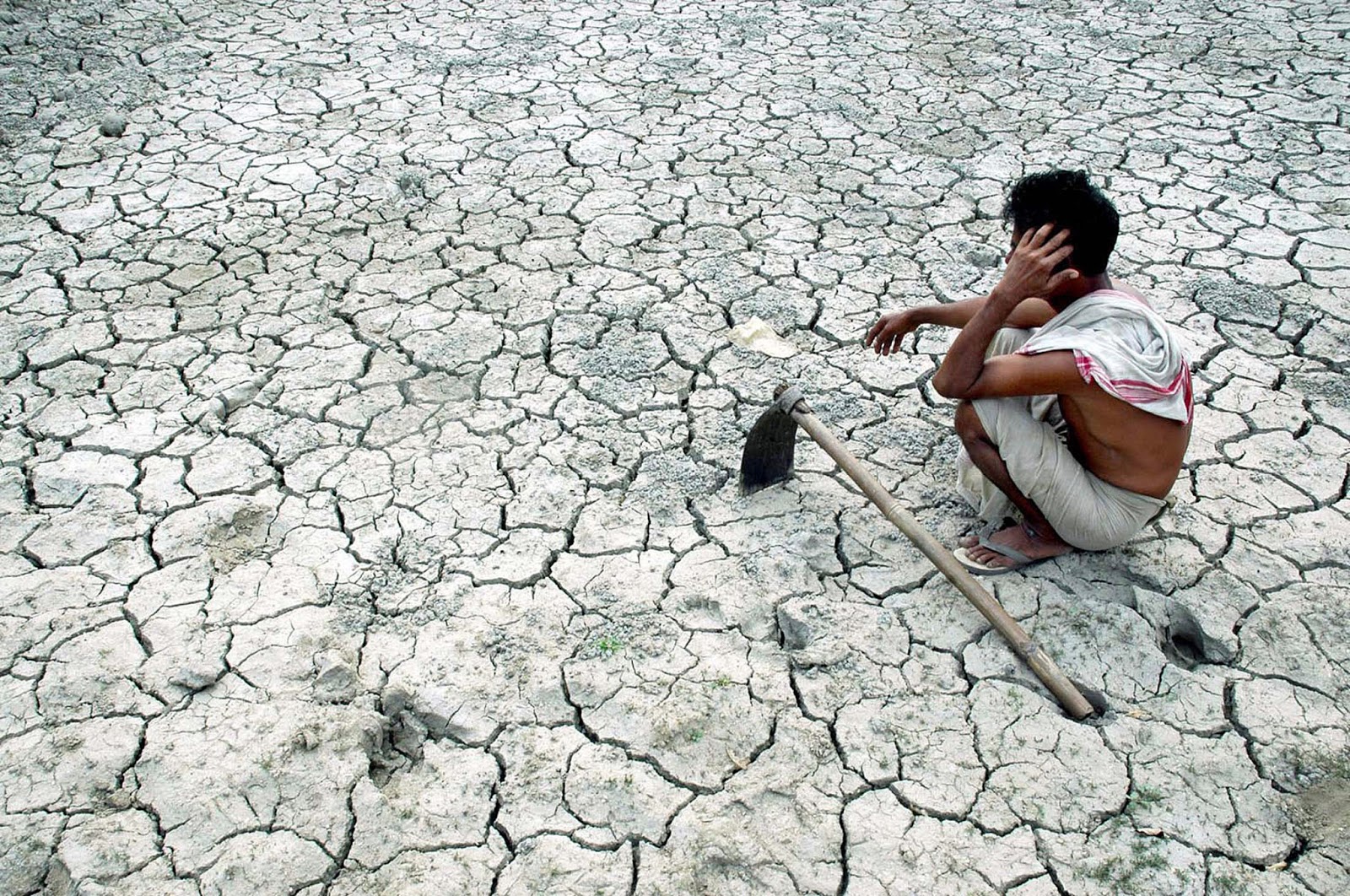
Grape-growers are bracing for a bitter harvest after the acute drought left 25% of the vineyards in the district severely affected. Severe drought in the district from April to June, when grapes reach flowering stage, has affected 25% of the total 1.75 lakh acres of vineyards in the district. The size and weight of fruits over 40,000 acres is expected to be affected by 30%, which would have its bearing on the quality of fruit. Manik Patil, Nashik divisional president of Maharashtra Rajya Draksha Bagayatdar Sangh (MRDBS), said, "There was acute water scarcity between April and June. This is the period when grapes are in flowering stages. Around 25% or 40,000 acre of vineyards in the district have been badly affected due to scarcity of water." He added, "The size of grapes, its quality and yield is likely to be affected due to the severe water scarcity. There will be around 30% losses in size and weight that may be around 1.20 lakh metric tonnes." Members of the state-level association of grape-growers are looking forward to a better grape season next year, after the recent rains. "The recent rains will benefit vineyards in the district. At present, there are no major activities in vineyards after the April pruning. Pruning may begin in Satana tehsil of the district, where early harvest is taken. Grape harvest begins there in November-December, while in rest of the tehsils, it begins in January and February," Patil said. The total area under grape plantation in the state is 3 lakh acre, including 1.75 lakh acre in Nashik district. Nashik district contributes 90% of the total grape exports from the state. The unseasonal rains, hails and drought have been affecting the vineyards in the district for the past few years. In 2014-15, the unseasonal rains and hails had severely affected 30% of the total vineyards in the district. The grape production in the district had declined from 14 lakh metric tonnes in 2013-14 to 10 metric tonnes in 2014-15. The next grape season 2015-16 turned to be better for the grape-growers in the district due to better climate as grape production in the district increased by 60% to 16 lakh metric tonnes, which was the highest-ever grape production. Moreover, grape export from the district also doubled to 1.08 lakh metric tonnes in 2015-16 grape season, against 49,768 metric tonnes during the previous season. But the effects of drought on 25% of the district vineyards are likely to affect grape production by 1.20 lakh metric tonnes. Source - timesofindia.indiatimes.com

06.07.2016

Egypt to cultivate digital data from agricultural sector

A program that will provide electronic “smart cards” to Egypt’s farmers aims to eliminate administrative corruption within the Ministry of Agriculture, prevent its employees from tampering with paper documents and ensure that subsidies reach the proper recipients. Agriculture and Land Reclamation Minister Essam Fayed said sometimes intermediaries insert themselves between the ministry and farmers, seeking to exploit the latter and intercept their benefits. In some cases, he said, merchants have been known to represent themselves as farmers so they can import large quantities of flour and receive subsidies. The Agriculture Ministry will start its pilot program in the governorate of Isma’iliyah, Fayed told Al-Monitor. The Ministries of Finance and Planning are supplying 357.5 million Egyptian pounds ($40.2 million) for the project. The Ministry of Communications and Information Technology will supply technical consulting, and the Military Production Ministry will provide technical support and communications services, including a 24-hour support line. The electronic cards will store information including a farmer’s name, identification number and agricultural land holdings. This will not only help farmers receive the subsidies they are entitled to, but it will also help to establish a vast database and provide precise information for state agricultural planning and design purposes. The Military and Agriculture Ministries signed a cooperation protocol June 19 agreeing to the project. This comes in the wake of successive crises to hit the Egyptian agricultural sector and its farmers. Among those are the lack of health insurance or social welfare, black market control of fertilizer supplies and the lack of arable lands at reasonable prices. To these might be added of late the irrigation crisis, which portends harsh conditions in a crucial sector that encompasses 52% of the Egyptian labor force. Ahmad Abu al-Yazid, the head of the services sector at the Agriculture Ministry, told Al-Monitor that providing a precise national database of all agricultural holdings, as well as enumerating and locating agricultural produce during various seasons, will help decision-makers direct the sector. The database also will facilitate adding farmers to the country’s health insurance project. It is fairly common in Egypt for farmers to rent plots of land, Abu al-Yazid pointed out. In such instances, all the risks and vagaries of farming fall on the renters. This must be taken into account when the new database is drawn up so that the actual farmers' rights are not neglected and the database keeps in step with existing laws concerning non-ownership of land available for agricultural reclamation. The state previously adopted a similar program for exchanging food supplies but did not involve the Ministry of Military Production. Abu al-Yazid said that this time, the experience and capabilities of the Ministry of Military Production, "in addition to the gravity and secrecy the figures on agricultural land ownership [have for] national security," led the government to choose the military ministry to run the project instead of the private sector. Farid Wasil, the head of Egypt’s Farmers Union, told Al-Monitor that electronic information storage helps guarantee farmers’ subsidies and support. “The paper card was an example of this support being squandered at times and not reaching those farmers who were entitled to it,” he said. Now, farmers will have more choices about how and when they use their subsidies and “the freedom to take any kind of fertilizer or seeds whenever they like and without [letting] this support go to waste.” The card will also benefit the state because the resulting database will keep track of land holdings and the types of cultivated lands, which represents an advancement for Egypt’s agricultural sector. The state will have to provide training for farmers and employees, Wasil pointed out. The system will cost millions of dollars, and without the training, the system will fail, he said. The cards can’t simply be handed out without first training a cadre of farmers and members of agricultural associations, who need to be assigned beforehand to deal with the cards. The system will require the right tools to tie those associations together and manage them. Wasil noted that the Agriculture Ministry has agreed to convene an assembly next week to develop administrative procedures for just that purpose. The cards must serve the purpose for which they were developed, Wasil said, and the ministry will need to help farmers market their produce. As one example, he said cotton planting this year accounts for only 90,000 acres, compared with 500,000 acres in 2010. He attributed the difference to farmers incurring heavy losses from their inability to market their goods. The use of modern technology to improve the conditions of the Egyptian farmer is one step on the part of the Egyptian government. Officials hope it’s a sign that help might also be on the way for many other problems that have nothing to do with smart cards, such as farmers’ bank debts and the lack of means for selling their crops. Source - www.al-monitor.com

06.07.2016

Netherlands - Extreme rainfall triggers first Phytophthora cases in the potato fields

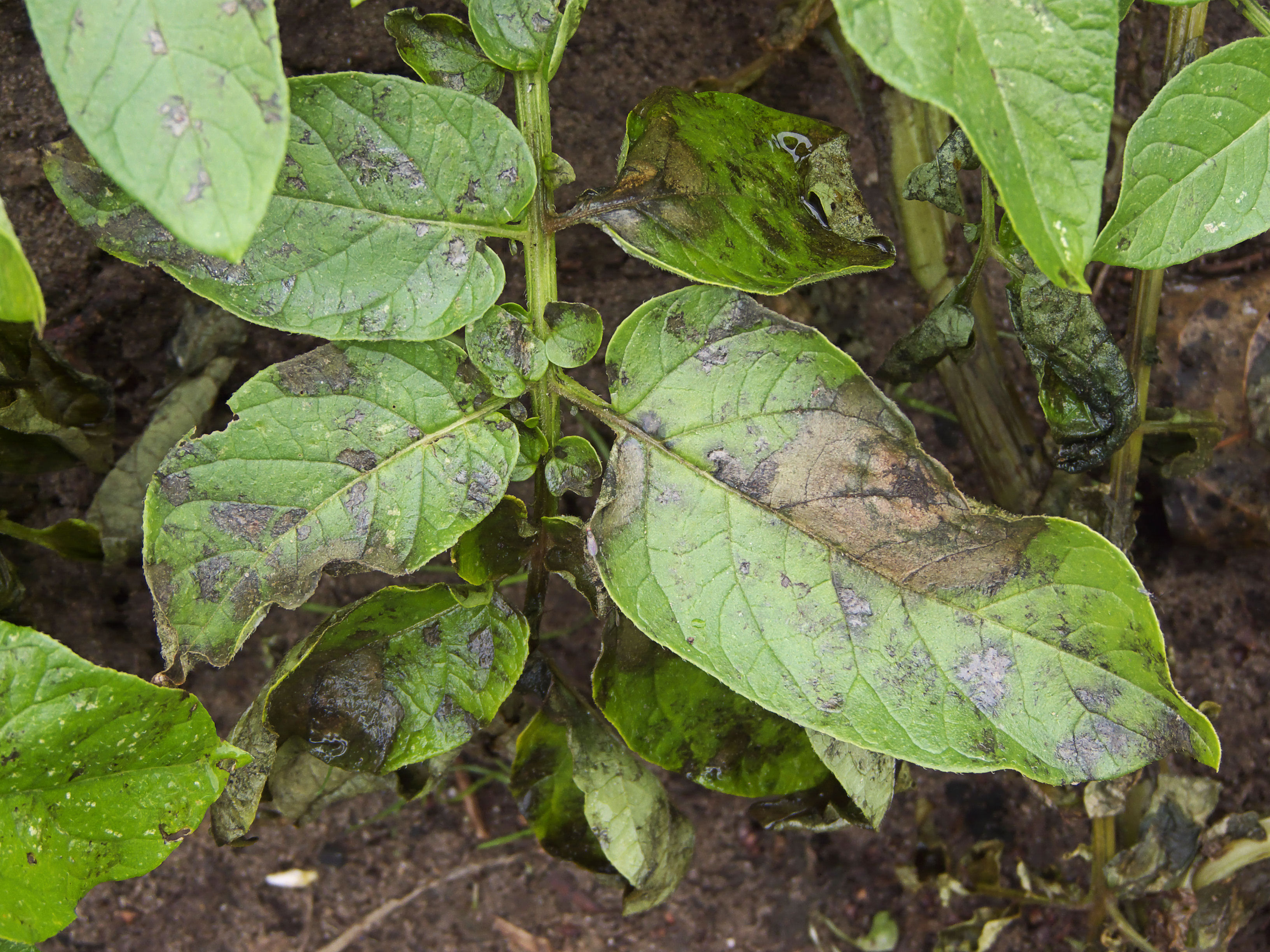
Every once in a while the potato disease Phytophthora crops up in the Netherlands, and this year is no exception; the first reports have already started trickling in. Especially potato farmers in the South of the Netherlands are worried. Christoffel den Herder of Delphy: “Due to the unseasonable weather conditions with its extreme rainfall this month, you cannot do much against this disease. With organic cultivation you can, at most, hope to avoid an outbreak by starting the cultivation process as early as possible.” “Or by switching to Phytophthora resistant potato varieties, but then the entire chain needs to cooperate, even more than they do now.” Reports of Phytophthora By now, Twitter is being flooded with reports from farmers who found Phytophthora in their potato plants. It didn't go unnoticed. Jan van Hoogen, general manager of Agrico: “Our fieldwork employees already established an outbreak of Phytophthora on 14 June. An alert was sent out right away to notify our members, so that they, where possible, could take measures to limit a consequential loss.” Christoffel den Herder, who works as senior advisor organic agriculture for Delphy, says excrescences of this outbreak can mostly be felt in the south of the Netherlands: “South of Flevoland, where the flowering season just finished, the disease has already reached an advanced stage.” Persistent rainfall disastrous Christoffel den Herder continues: “The weather conditions in recent weeks were not very helpful either.” “You might expect conventional cultivation in whatever circumstances could better withstand Phytophthora than organic cultivation, because of the availability of pesticides, but that is not always the case.” “Pesticides can only be effective when the weather stays dry for three weeks after using them. In the absence of stable weather the fungus had free reign in the South. You cannot do anything about it. Just as when onions get mildew, the air is full of spores.” Phytophthora clings to every plant that is susceptible to it and as the wind blows, any crop that crosses its path. Because you cannot place your hopes in better weather circumstance as an organic cultivator – dry weather can curb further growth of the fungus but never completely remedy it – the consequences for this product group are much more rigorous. Jan van Hoogen: “Once the potato plant is affected, pretty much your only option is to burn off the green. The potatoes stop growing when you do that, but it is the only way to exterminate the fungus.” Den Herder: “If the disease is still in an early stage and only the leaves are affected, it might not yet be the end of the story. It is a different story when the fungus enters the ground because of persistent rainfall, it then affects the tubers. Once the tubers are affected, chances are the batch will be very difficult to store after harvesting.” Preventing late blight You cannot fall back on pesticides in the organic cultivation. Christoffel den Herder: “You can therefore at most try to stay ahead of the outbreak by starting the cultivation process as early in the season as possible. Using preventive cultivation measures you can hope your plants have developed as much as possible when Phytophthora arrives.” “The pressure of the disease increases over time. It is advisable to germinate the potatoes beforehand, to plant them early, and also to regulate manuring well.” “When potatoes are then planted, they grow much faster, and you could possibly stay ahead of the outbreak as much as possible.” Resistant potato varieties Christoffel Den Herder: “Because hardly any methods exist to combat the disease in organic cultivation, it is necessary to use Phytophthora resistant potato varieties more often,” Jan Van Hoogen agrees: “Organic growers need those kinds of strains most of all. They are at their wit’s end with each new outbreak, because up till now they were powerless to do anything.” “Agrico is the first party to market a Phytophthora resistant strain to take away that uncertainty. That process started 60 years ago already, so it truly is a long-winded process.” “And we still can not sit back, because the resistance might be broken. As with antibiotics for medical purposes, the strains of the fungus are continuously changing, and as agriculturalist you end up in a rat race. You have to keep developing.” Christoffel Den Herder: “We have the know-how, but the consumer needs to accept the product.” “By now, cultivators are convinced of this pragmatic approach, but the chain itself is still a bit reserved. Potato varieties, colours and cooking characteristics are unique for each variety, and wholesalers, supermarkets and consumers always have a certain image in mind. It is completely different with onions, to many, an onion is just an onion.” “People have got so used to potatoes having a specific combination of product characteristics, such as flavour, look, firmness and texture of the skin for example, and Phytophthora resistant varieties cannot always completely facilitate these. Perhaps it is just a matter of time. Besides, new resistant varieties are being developed all the time to fulfill those wishes.” Source - www.potatopro.com

06.07.2016

Canada - Harvests suffer from dry weather in Ontario

The dry weather over the last few weeks is making life difficult for farmers in Ontario. Daniel Mainville, from Beaulieu Farm in Grand Sudbury is expecting to lose money, despite watering his strawberries and raspberries everyday. He says that “There is probably a 10 to 15% decrease already, after three or four days of production” and that “This year is probably the worst in the last ten years”. Eric Blondin, from Three Forks Farms in Warren says that vegetable producers have also suffered from the drought. He explains that “It was really difficult for seed germination. And, it took us two to three more weeks for lettuce and spinach to be ready.” However, he says that he is lucky as he has access to a well. Source - www.freshplaza.com

06.07.2016

USA - Heavy precipitation, hail damage reported Colorado

Heavy storms the week ending July 3 resulted in improved moisture conditions and marginally reduced field activity while heat units continued to push crop development, according to USDA’s National Agricultural Statistics Service, Mountain Regional Field Office, Colorado. In addition to locally heavy precipitation, reporters observed numerous hail producing storms in eastern counties. Consequently, localized hail damage to crops was noted in multiple counties in eastern Colorado. Development of winter wheat was ahead of last year and the average while harvesting activities continued behind last year and average. Winter wheat crop conditions are rated 66 percent good to excellent, compared with 53 percent good to excellent last year. Stored feed supplies were rated 3 percent short, 80 percent adequate, and 17 percent surplus. Sheep death loss was 8 percent heavy, 67 percent average and 25 percent light. Cattle death loss was 80 percent average and 20 percent light. Source - www.hpj.com

06.07.2016

USA - High winds cause damage in some areas Oklahoma

Oklahoma received a fair amount of rain throughout the state for the week ending July 3, in stark contrast to the previous week, according to USDA’s National Agricultural Statistics Service, Southern Plains Regional Field Office, Oklahoma. According to the Mesonet, the rains were a welcome change but winds of 70 mph or higher caused a lot of damage, mostly in the North Central, West Central, and Southwest districts. Despite the rainfall, 6 percent of the state was in moderate drought and 22 percent was classified as abnormally dry, up 5 percent since last week. Temperatures ranged from 58 degrees at Kenton on June 29 to 101 degrees at Grandfield on July 2. Precipitation ranged from 0.41 of an inch in the South Central district to 3.01 inches in the Northeast district. Soil temperature averages ranged from 76 degrees at Kenton on July 3 to 95 degrees at Clayton on June 28. Statewide air temperatures averaged in the low 80s across the state. Topsoil and subsoil moisture conditions were rated mostly adequate to short. 5.2 days suitable for fieldwork. Source - www.hpj.com

06.07.2016

USA - Fruit fly outbreak cost growers $4.1 million

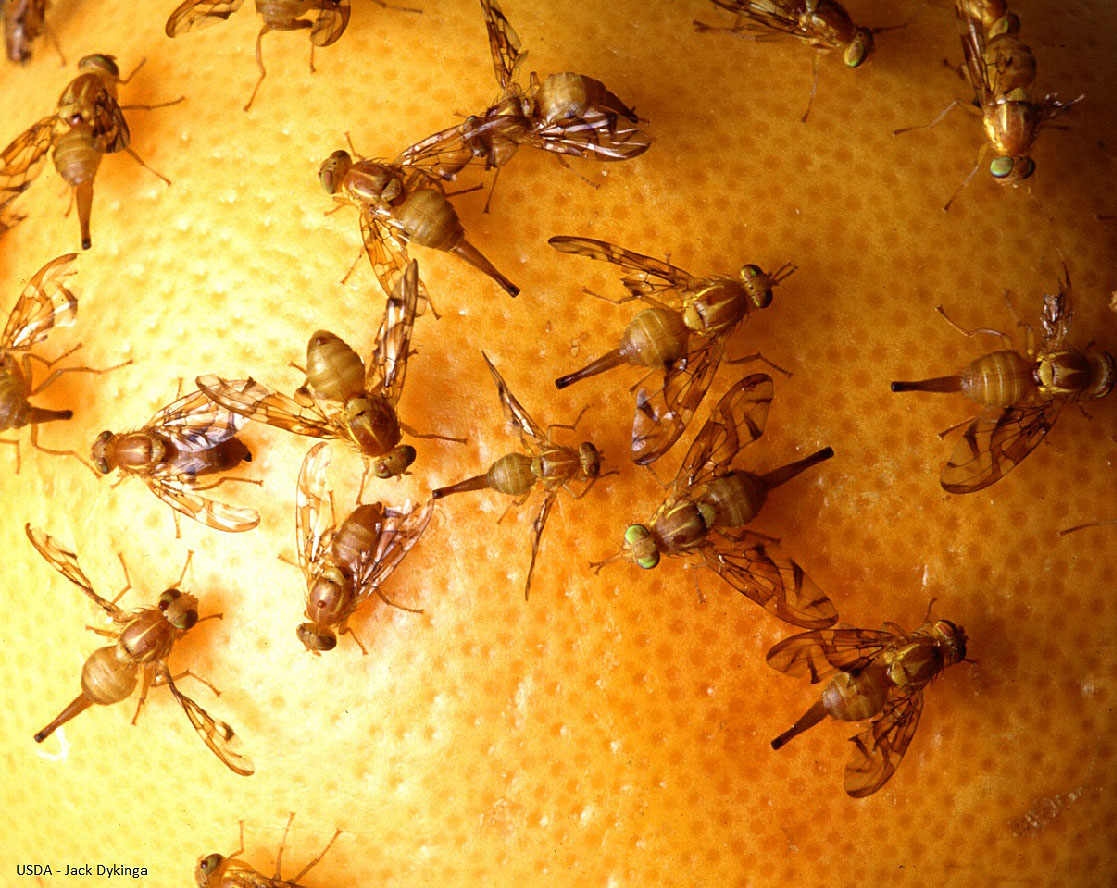
University of Florida Institute of Food and Agricultural Sciences economists estimate the Oriental fruit fly outbreak last year caused at least $4.1 million in direct crop damages in Miami-Dade County, but the damage could have been far worse, UF/IFAS researchers say. In the new report, UF/IFAS researchers and the chief economist for the Florida Department of Agriculture and Consumer Services, compiled three scenarios for crop losses: optimistic, mid-range and pessimistic. So, although the optimistic scenario reports direct crop damage at $4.1 million, the pessimistic one shows that the loss could have been $23 million. Edward “Gilly” Evans, a UF/IFAS professor of food and resource economics, said the $4.1 million loss that he and his colleagues estimated was a conservative one and does not reflect the full economic impact on the economy due to the multiplier effect. In addition to these costs, approximately $1.5 million was spent by state and local agencies in a joint effort to control the outbreak. The direct crop losses came as a result of the quarantine protocol and a potential non-planting response by growers in Miami-Dade County. But UF/IFAS faculty credit quick, decisive actions by FDACS, UF/IFAS and the U.S. Department of Agriculture for limiting the reach of the fruit fly. Among other things, the UF/IFAS Tropical Research and Education Center provided logistics, acting as the hub for the entire operation, Evans said. “Although there was certainly a cost to growers in the regulated area, all of Florida agriculture would have been negatively impacted if the pest had expanded its reach,” said Amanda Hodges, associate Extension scientist in the UF/IFAS entomology department. “Other states and countries would have stopped outgoing shipments of Florida’s agricultural products. At the very least, this pest would have cost millions if not billions of dollars if it had made a home here. “Although many insects and diseases will not result in an eradication program, fruit flies generally will,” said Hodges, director of the UF/IFAS doctor of plant medicine program. “In fact, the state of Florida and the USDA have personnel who monitor fruit flies throughout the year. The state of Florida and USDA are the lead agencies for eradication programs in Florida, and fruit fly eradication efforts here are among the most successful in the world.” In addition to the crop loss, the new UF/IFAS report says the fruit fly outbreak caused between $10.7 million and $58.5 million in overall economic losses. Here’s how the damage occurs. The fruit fly feeds on more than 400 crops, including many grown in Florida. Once established, the insect may cause 25 to 50 percent losses in food-crop harvests. In August 2015, fruit flies began to appear in south Miami-Dade County monitoring traps, prompting FDACS to impose a temporary quarantine on 99 square miles that include an agriculture-dependent area known as The Redland. Altogether, the county’s agricultural activities generate $1.6 billion in revenues each year. Blair Siegfried, professor and chair of the UF/IFAS entomology department, said there is little anyone can do to prevent another outbreak other than to be vigilant in detection efforts and prepare for an outbreak if it’s detected. “Each potential invading species has a unique set of circumstances related to the pest biology and the environment where it is detected,” Siegfried said. “In some cases, eradication may be possible, while in others, learning to manage the pest may be the best we can do.” Source - www.newswise.com

05.07.2016

Nigeria - Tomato Ebola continues to spread to other vegetables

As the outcry against the ravaging Tuta absoluta disease of tomato continues to resonate in West Africa (Nigeria), farmers locally need to take precaution to avoid losses due to this menace. Tuta absoluta which is also known as Tomato Ebola, is a devastating pest of tomato. This pest is crossing borders and devastating tomato production in both protected and open fields. The infestation of Tuta absoluta has also been reported on potato and common beans. Tuta absoluta pest spreads quickly; it has a high reproductive potential and a life cycle that can take between 24 to 76 days, depending on the environmental conditions. Their activity is concentrated in the early morning and dusk; during the rest of the day they remain hidden among the leaves. Adult lifespan ranges between 10 and 15 days for females and six to seven days for males. The female lays the eggs mainly on the leaves, although they can also be found on stems and sepals. Eggs are laid isolated, thus facilitating their distribution on the crop. What is even worrying is that, Tuta absoluta is a very puzzling pest to control. Effectiveness of chemical control is limited due to insect’s nature of damage as well as its rapid capability of development of insecticide resistant strains. Once you apply the chemical for the first time, it might work but, by the next planting season the moths will regroup and because it is a three-pronged attack – larva, pupa and the moth itself – it can position itself in the cravats of the tomato that the insecticide spray may not reach. Another issue is that “larva is found in the ground and it operates at night such that when you are spraying in the day it is already sleeping – it has gone away.” The use of biological factors are still largely under development and not ready to combat this pest effectively and in a cost effective way. Sex pheromone trap can be used as an early detection tool. Mass trapping and lure and kill application of pheromone has been found effective to control Tuta absoluta. The damage The larvae of Tuta absoluta mine the leaves producing large galleries and burrow into the fruit, causing a substantial loss of tomato production in protected and open fields. The damage can reach up to 100 per cent. This pest damage occurs throughout the entire growing cycle of tomatoes and has a high reproduction capability as adult female can lay hundreds of eggs during her life time. Good agricultural practices In tomato, infestation is found on apical buds, leaves, and stems, flowers and fruits, on which the black frass is visible. On potato, mainly aerial parts are attacked. Many approaches can be adopted to tackle this pest. First approach is to attack the insect itself at the reproduction stage from the egg to adult. It’s not about attacking at the point of attack, but killing the egg before hatching, that is completely wiping it off from the farm. Crop rotation Entomologist report can be used to identify the species of the pest, because it’s possible that the species that can survive in Nyeri and Kirinyaga for example, might not survive in Rarieda because of the varied temperatures. Good agricultural practices is the safest way to control Tuta. Crop rotation, crop removal and selective removal and destruction of infested plants are just a few cultural practices. The wild host plants should also be removed to prevent further buildup of a potential population. The use of pheromone traps is a reliable method to detect presence of the pest. Pheromone trap gives early warning of infestation and also shows the density of the insect infestation. Mass trapping helps to reduce population in greenhouses. The technique involves placing a higher number of traps in the crop field in various strategic positions to remove a sufficiently high proportion of male insects from the pest population. It should be used in combination with other control measures to achieve tolerable level of damage and reduce reliance on insecticides. Mass trapping is a potential option for open field production. Lure and kill is another promising approach to control the male adults of Tuta absoluta with minimum amount of insecticide application. The technique reduces the mating incidence therefore reducing the number of viable eggs. Based on sustained release matrix, the product can release the pheromone over a long period normally over 6-8 weeks while sustaining the activity of the contact insecticide throughout the same period. The idea of providing chemicals to combat the pest is not the best, rather, a long-term approach should be deployed by studying the life cycle and involve all entomologists who will provide a plan to eradicate it totally. The immediate control is use of chemicals, which is not a sure bet. Source - fruitworldmedia.com

05.07.2016

Canada - Manitoba Crop Report and Crop Weather report

The warmer and drier weather conditions were welcomed by Manitoba producers. All crop types, particularly the warm season crops including grain corn and soybeans, are benefiting from the warmer weather. The more favourable weather conditions are allowing some acres impacted by excess moisture to recover. However, continuing wet field conditions and symptoms of excess moisture continue to be noted across most regions. As fields continue to dry, the impact of the excessive moisture to yield potentials become more evident. Fungicide applications are also on-going, with many producers opting for aerial application where fields remain too wet for ground application. Sporadic rainfall, high humidity and excessive moisture continue to impact first cut haying operations in areas, although producers were able to make progress. Southwest Region Most of the Southwest Region received rainfall over the past week. There was 15 to 50 mm of precipitation, with larger amounts coming in thunderstorms and in the south and eastern parts of the region. Water lying in fields is starting to cause crop to yellow and impact growth. Cereal crops continue to progress under good growing conditions. Many earlier seeded fields are done flowering and have received a fungicide application. Later seeded fields are starting to head. Winter wheat and fall rye are in the head filling stage. Crop appears to be average to above average. Canola is in various stages throughout the region with early seeded canola in full bloom and has had fungicide applied for sclerotina. Later seeded canola is starting to bolt. Crop is in good to excellent condition. Soybeans are in the fourth to fifth trifoliate stage and are doing well. Some fields have plants that are yellowing due to moisture stress. Flax is in early flower stage and producers are scouting for fungicide application. Sunflowers and corn are in the vegetative stages and is progressing well in the warm, humid conditions. Hay yields are average to above average with some harvesting issues due to wet conditions; some producers are opting to silage. Alfalfa weevil is causing damage in some areas. Pastures are rated in good condition with the recent rainfall. Dugouts are 90 per cent full. Northwest Region There was rainfall throughout the Northwest Region over the weekend, with amounts ranging from 10 mm in The Pas, up to 48 mm in parts of the Roblin area and from 17 to 100 mm in the Swan River Valley. There was severe winds and heavy rain early Monday in the Swan River area but possible impact on crops are not yet known. For the most part, crops throughout the region are advancing nicely and are in good to excellent condition, with the exception of those crops recovering from excessive moisture and recent rainfall events. With regards to crop stage of growth, regionally, 20 per cent of the wheat is elongating and 80 per cent is heading. Canola growth has progressed rapidly over the past week although growth stage is, to some extent, variable within the same areas. Approximately 10 per cent of the later seeded canola is at the rosette stage, 40 per cent of the canola in the region is bolting and 50 per cent of the canola is flowering. Approximately 20 per cent of the field peas are in the vegetative stage of growth and 80 per cent are blooming. Most of the soybeans are in the vegetative stage of growth with some fields in flower. Herbicide treatments are generally complete throughout the region. Fungicide applications to spring wheat and canola fields are being made where disease risk exists. Reports of insect and disease damage are limited. Significant rainfall this past week slowed haying progress down. Many producers are waiting prior to cutting and those fields already cut have not been dry enough to bale with the frequent rains. Warm, dry weather is needed this week to dry up fields. In areas where showers were more scattered around Ste. Rose and McCreary, some fields were dry enough for baling. Silaging of alfalfa grass fields continues as well. Pasture growth is abundant with adequate water for livestock. Central Region Temperatures were variable this past week in the Central Region, but good crop growth was still seen. There was lower accumulation of rain for much of the region, but impact of previous heavy rains continues to be an issue. Showers continue to interfere with pesticide applications and haying operations, but some weather breaks allowed for many acres to see aerial fungicide applications. Highest amounts of rainfall in the region: Somerset 20 mm; Manitou 30 mm; and Notre Dame reported up to 100 mm. Scattered reports of hail continue, with some crop damage reported in the Somerset, Swan Lake and Notre Dame areas in Wednesday’s storm. Some areas saw additional accumulations of up to 15 mm on the weekend. Hail claims continue to be made for damage done in earlier storms. Excess moisture continues to be the concern; more advanced crops have been better able to handle higher rainfall amounts, although stand thinning is evident in those crops as well. Yellowing of crop due to excess moisture is evident. Standing water is still prevalent in lower spots of fields. Ruts are visible in fields where herbicide applications had to be made in less than perfect conditions; these will present challenges at harvest. Ground rigs are struggling to make fungicide applications as fields are soft. Cereals are growing rapidly and stem elongation has begun in all of the later seeded fields. Heading stage is reached in all spring cereals, dependent on seeding date. Fungicide applications continue, both to flag leaf and to headed wheat. Timing for fusarium head blight is a challenge due to uneven crop stages. Lodging is reported in some of the earliest seeded fields; a result of high winds and thunderstorm activity. The most advanced wheat fields have fully formed kernels. The later seeded canola is growing rapidly, and most acres are bolting to early flower stages. Podding is seen in the most advanced fields. Fungicide applications continue as the crop comes into the correct stage. Where stands are not as good, particularly due to excess moisture and/or earlier frost injury, fungicide applications are not planned. Corn is growing rapidly. Uniformity of stand is inconsistent in many fields. Soybeans are as advanced as the seventh trifoliate stage, depending on seeding date. Iron chlorois deficiency is noticeable in a number of fields, and some varietal differences are noted. Nodulation appears to be successful and nitrogen fixation has begun. Flowering has started. Second herbicide applications continue where timing and weed pressure warrant. Flowering in peas continues and podding has begun. Stands look good where excess moisture is not an issue. Plants in low areas are starting to die back; more losses will be seen as soils dry due to poor/damaged roots. Fall rye and winter wheat are progressing well. Fields are in good to excellent condition as they continue to mature. Fall rye harvest is expected to begin in the next two weeks. Diamondback moth trapping is now complete; numbers to date are generally low to moderate for the region. Bertha armyworm trap numbers are low to moderate. Some minor grasshopper feeding reported. Pea aphids are being found during scouting, but numbers are below threshold. Monitoring continues in headed cereals. Although higher numbers of English grain aphid and bird-cherry oat aphid have been seen in some crop canopies since early May, presence of beneficial predators are keeping numbers below threshold. Forages are growing quickly. Alfalfa is blooming and tame grasses are heading out. Haying continues; some are ensiling due to the frequent rains. The moisture has generally been beneficial to the hay and pasture, although some fields are quite wet. Average yields expected for first cut hay: alfalfa 1.5 to 2 tons per acre; grass/alfalfa 1.75 tons per acre; other tame hay 1.5 tons per acre. Up to 40 per cent of cutting and baling operations were not done last week due to rain events, and putting up dry hay continues to be a significant challenge. Livestock water supply is adequate. Eastern Region Rainfall accumulations in the Eastern Region were minimal over the past week. Field operations resumed as good drying weather prevailed. In northern districts, where more rain has fallen in past weeks, fields have also dried significantly and field operations resumed. However, producers were making ruts as conditions were still wet but passable. Loss of yield potential due to excess moisture continues to occur across the Eastern Region. Winter cereals range from milk stage to early dough stage. Spring cereals range from head emergence to flowering. Canola development ranges from early to full flowering. Field peas are flowering. Most soybeans range from the third to sixth trifoliate leaf stage; plants have begun to flower. The yellowing in soybeans, attributed to excess moisture, iron deficiency chlorosis and transitional N deficiency symptoms, has begun to dissipate. Corn ranges from V12 to V13 and is looking very good. First pass herbicide applications are complete in the Eastern Region. Second pass of glyphosate in soybeans will continue in northern districts where possible. Fungicide applications targeted at fusarium head blight suppression in spring cereals will wrap up later this week. Fungicide applications on canola are on-going. Up to 25 per cent of planned fungicide applications may be cancelled in northern districts because of the loss in yield potential caused by the recent excessive rainfall. Across the region, the majority of hay land and pasture land is rated in good condition. Hay harvest continues, with most of the hay harvested as silage with very little as dry hay due to the wet conditions. First cut haying progress is reported as 15 per cent baled or silaged with an additional 10 per cent cut and the remainder of the crop still standing. Quality is rated as mostly good with alfalfa hay yielding 2 tons per acre and grass/alfalfa hay yielding 1.75 tons per acre. Pastures are in good shape with livestock grazing high spots in the fields as the low spots are saturated. Availability of livestock water is adequate. Interlake Region Warm temperatures and scattered showers were experienced throughout the Interlake Region last week. Rainfall amounts ranged from 5 to 35 mm. The majority of the week’s precipitation came on Sunday when a storm system moved in from the south. Arborg and Inwood received the highest amounts ranging from 20 to 35 mm while the rest of the Interlake Region received 5 to 15 mm. Parts of the South Interlake are still dealing with moisture issues from previous week’s rainfall. Spraying continues as producers have started applying fungicides to spring wheat fields to suppress fusarium head blight. Spring cereals range from four to six leaf stage to heading. Some cereals planted for greenfeed in the North Interlake are at the two to four leaf stage. Winter wheat fields have finished flowering and are mostly in the milk stage. Canola staging varies from seedling to 30 to 40 per cent flowering. With ample moisture and warm temperatures soybeans and corn have developed rapidly. Corn staging ranges from V10 to V12. Soybeans are starting to yellow in areas due to moisture and iron chlorosis deficiency. Soybean staging varies from third to fifth trifoliate stage, and fields that were seeded later are at first to second trifoliate stage. Majority of timothy seed fields have flowered. Alfalfa seed fields continue to flower as producers should complete bee release this week. Spraying fungicides on crops in areas of South and North Interlake is occurring by airplane to avoid making ruts in fields. Hopefully, with warm temperatures and dry conditions producers should be able to get back into fields mid-week. In some fields, producers are considering not spraying fungicides due to the poor crop conditions. Haying has been hampered by periodic rains preventing hay from drying and curing. Alfalfa weevil pressure continues in some fields, and maturity of alfalfa is reducing hay quality. Native and grass hay yields continue to increase. Grasshopper damage so far is minimal. Pastures are in good condition. Source - www.manitobacooperator.ca

05.07.2016

Canada - Alberta’s severe weather spikes crop damage claims

More than 1700 insurance claims have been filed by Alberta farmers bearing the brunt of severe weather. Hail and tornado level winds have damaged crops across central and Southern Alberta. “We do our hail claims by month so at the end of June we had just over 1200 claims so we are starting off July with almost 500” Nikki Booth, Agricultural Financial Services Corp., stated. Alberta has battled several weeks of severe weather. Severe thunderstorm warnings were issued just after noon, Monday, for central regions including the Red Deer, Ponoka, Innisfail and Stettler area and then extended south to include Airdrie, Cochrane, Olds and Sundre at around 12:40 p.m. Throughout the afternoon watches and warnings continued to extend south and east, with some areas flipping between the two as cells continued to track across the province. As of 7:54 p.m. all warnings in the province had been reduced to watches, with the only affected areas being east central regions. By 10 p.m., all watches had been dropped as well. Earlier in the day Environment Canada warned that conditions are favourable for the development of funnel clouds in the central regions. Source - globalnews.ca

05.07.2016

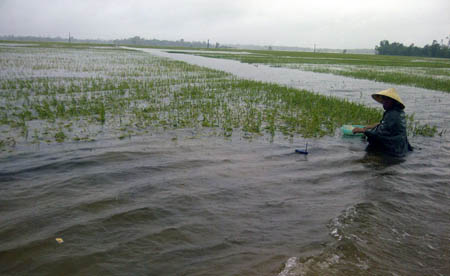
China - Rain, floods wipe out crops

Severe recent flooding across central and southern China has killed around 100 people, damaged more than 1.5 million hectares of cropland and led to direct economic losses of more than 20 billion yuan ($3 billion), the government has said. Chinese Premier Li Keqiang traveled on Tuesday to Anhui, one of the hardest-hit provinces, where he met residents and encouraged officials to do everything they could to protect lives and livelihoods. Li was also to visit Hunan province. Weather forecasts predicted more downpours during what is traditionally China's flood season. The Ministry of Civil Affairs said on its website 1.34 million hectares of cropland had been damaged and another 157,800 hectares had been destroyed by Monday morning, resulting in direct economic losses of 20.43 billion yuan. It was not clear how that would affect the summer grain harvest, which was expected to reach 140 million tonnes this year. The stormy weather also took a toll on farm animals. In Anhui, the flooding killed some 7,100 hogs, 215 bulls and 5.14 million fowl. In one city, around 3 tonnes of gasoline and diesel leaked from a gas station early on Monday, contaminating floodwater that flowed into a nearby river, it said. Water in 43 rivers in the middle and lower reaches of the Yangtze River had exceeded warning levels and patrols were monitoring dykes, Xinhua quoted Chen Guiya, an official with the Yangtze River Water Resources Commission, as saying. Source - www.reuters.com

05.07.2016

Ukraine - Winter and spring grain crops conditions

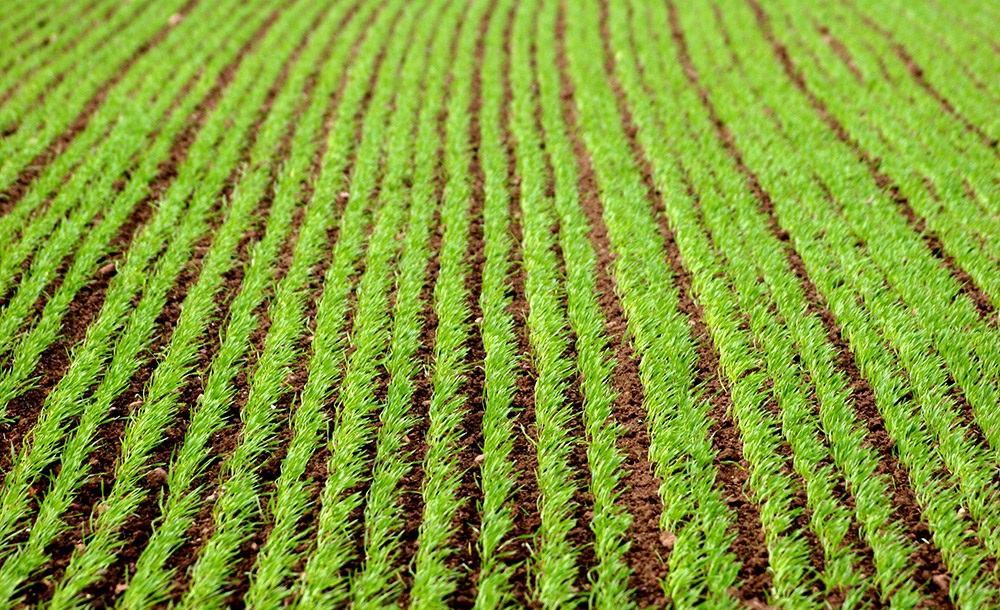
During June 21-30 hot weather was observed in Ukraine. In the daytime air temperature increased to a maximum 31-37°C and dropped to a minimum 10-18°C. Under such conditions early grain crops ripening was faster than usual. Almost all winter wheat in Kherson region is at the end of wax – beginning of full ripeness stage, which is on average 4-6 days earlier than usual. Depending on forecrops, fertilizers and plants growing conditions, grain humidity ranges 16-24%. Winter barley is currently in the phase of full ripeness, almost a week earlier than usual. Barley humidity is now 11-14%. Corn is currently undergoing a leaves formation stage. Plants height ranges 68-134 cm. Corn plants condition is good. High air temperature during the last ten days of June contributed to intensive growth and development of grain crops in the northern regions of Ukraine. Winter crops conditions are satisfactory in most districts of Sumy region. Winter barley of early and optimal sowing terms is currently in the wax ripeness phase, and plants of late sowing – in milky ripeness stage. Early seeded winter wheat is at the beginning of wax ripeness stage, while wheat of optimum and late sowing – in milky ripeness stage. Source - www.blackseagrain.net

05.07.2016

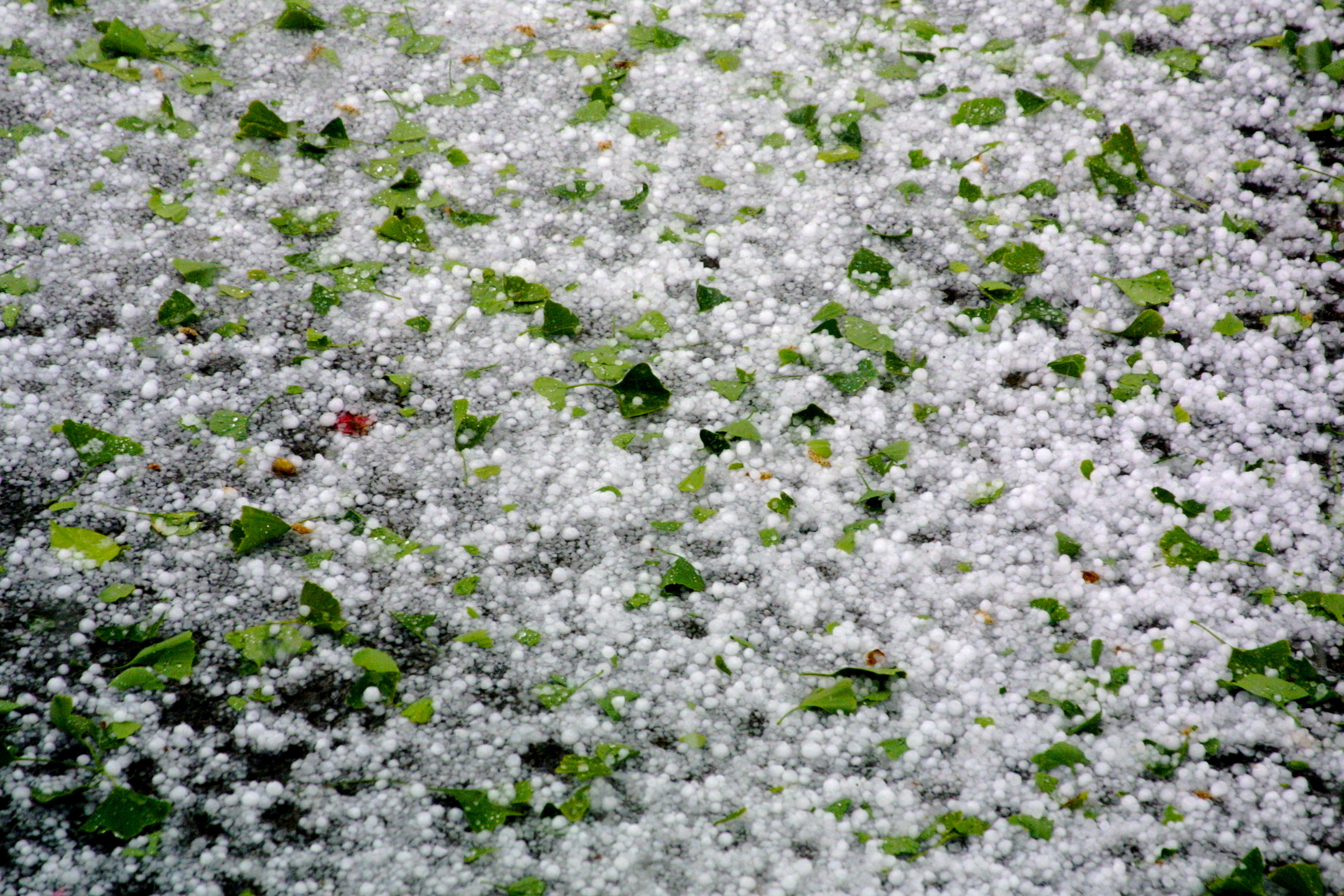
Canada - Golf ball-sized hail hits Kindersley as severe weather moves out of Saskatchewan

The long weekend left a big mess to clean up as severe weather swept through southern Saskatchewan. Environment Canada meteorologist Dan Fulton says severe weather began on Friday when funnel clouds were reported in southwest Saskatchewan. One even touched down in a farmer's field west of Biggar. "(Sunday) night we had quite an active system as a cluster of storms developed in west central Saskatchewan and marched across Saskatchewan," Fulton said Monday morning. That cluster brought baseball-sized hail to Kindersley, winds reaching 110 kilometres per hour north of Regina, and 24 millimetres - about one inch - of rain in one hour to the Spiritwood area. "My wife asked what those sounds were - we have tin buildings and a tin roof on the house - you could just hear 'bang, bang' and then all of a sudden, when we looked out we could see some big ones hit the ground," said Curtis Kornelson, who has a farm near Kindersley. The hail destroyed 1,200 acres of his durum crop Sunday night. "Our area is known for storms in the past. It's been quite a few years since the last hail storm of this extent, but we definitely carry hail insurance" said Kornelson. Source - ckom.com

851
of 1225