NEWS
850
of 1225
News
12.07.2016

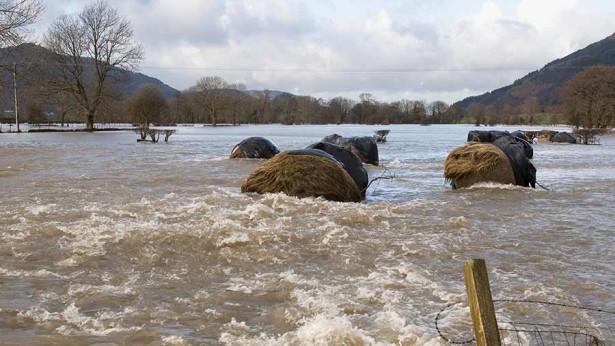
Europe - Update on dramatic crop damages

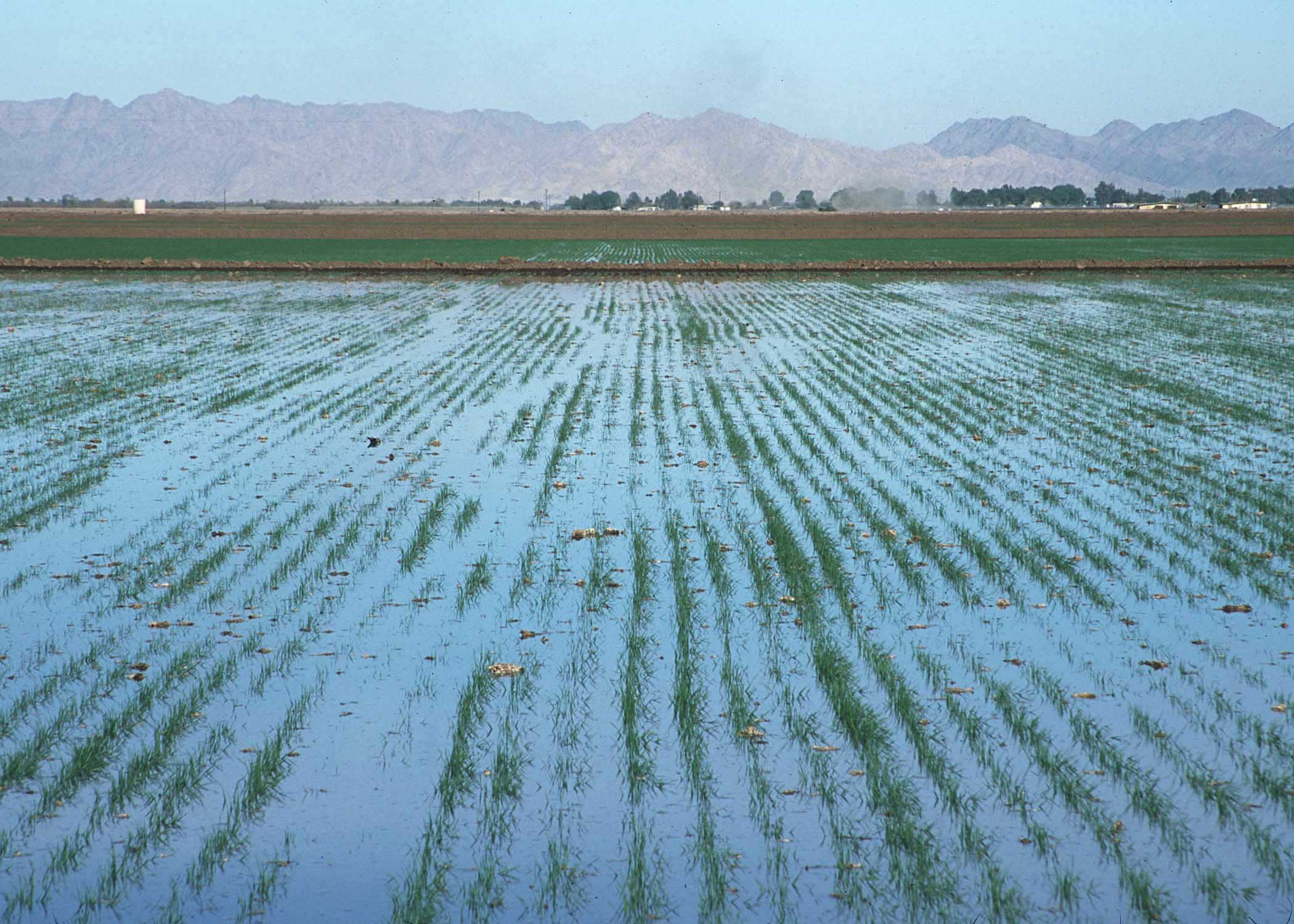
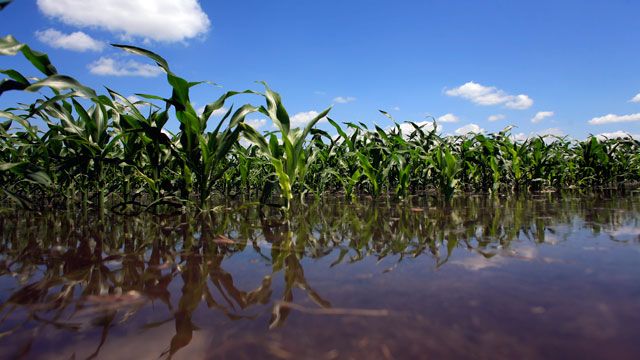
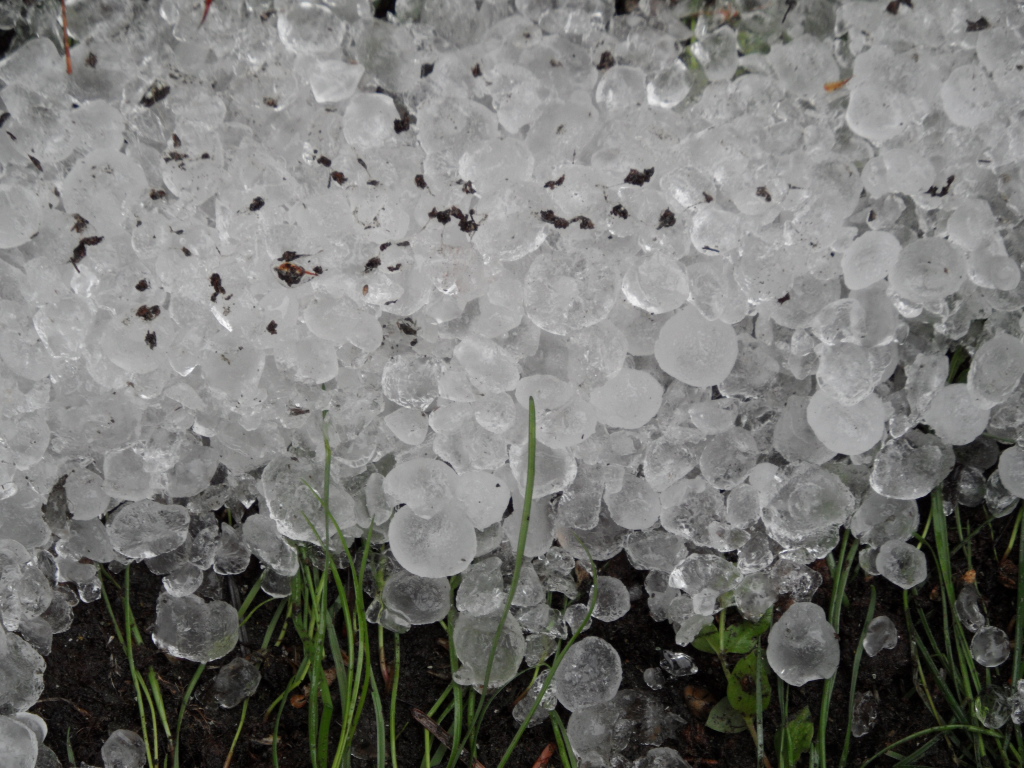
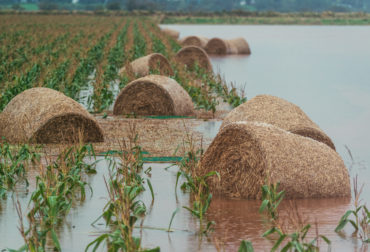
Processors and farmers face severe losses in the major European growing areas for several crops but especially for peas and carrots. France, Belgium, the Netherlands, Germany, the UK and Denmark are heavily affected due to the prolonged unfavourable weather conditions, heavy rains and hail during late May, throughout June and in early July. This year’s crop situation is the worst it has been in the last 40 years, with rainfall records for June broken in several of these countries: Belgium, the UK, France and (the south-east) of the Netherlands. Growers, together with processors, are unable to give any volume-indications at this stage as the bad weather continues and field yields continue to decrease. For peas and carrots it is clear that a significant part of the crop has been totally lost. The sowing of green beans has been dramatically delayed, with 80% of the volume that should already be in the ground at this time, still waiting to be sown. Both farmers and processors are doing their utmost to fix the expected volume-losses, but the situation looks very grim. The reason for this extraordinary delay in sowing is because farmers’ machinery cannot travel on the water logged fields, and because the soil structure has been destroyed during the harvesting of early summer crops. Information on expected crop volumes will be made available when the situation becomes clearer. Source - http://www.freshplaza.com

12.07.2016

Germany - Too cold and wet for fresh produce

The fruit and vegetable production in Germany has been delayed for two weeks because of the cold weather, according to the harvesting report of the 'Deutschen Bauernverband' (DBV). Extreme weather conditions, including heavy rainfall, storms, and hailstorms, have delayed the growth in certain areas and complicated the harvest. The humid weather results in an increased risk of pests in the areas concerned. The asparagus season ended on the 24th of June. It was too cold for the asparagus for a large part of the season, causing the harvest to be 10 to 15 percent smaller than last year in Germany. According to a preliminary estimate, about 100,000 tons of asparagus shoots were harvested (2015: 114,000). The prices around Pentecost were higher than last year, but afterwards they were well below the level of last year. The asparagus season had a fluctuating harvest. Photograph: Bauern- und Winzerverband Rheinland-Pfalz Süd e.V. The strawberry season is in full swing. Because of the cold weather, a 10% smaller harvest than last year is expected, which is about 150,000 tonnes. In some areas, there are serious problems because of the weather. The prices are on the same level as last year. Stone fruit: The first cherries are on the market, the start of the season in the south of Germany, however, has gone down the drain. The cherries have burst due to a high water uptake, and the cherry fruit fly and spotted-wing drosophila cause a lot of trouble. They can reproduce easily because of the weather. In general, for all varieties of stone fruit from cherries, plums, to Mirabelle plums, an average harvest is expected. Last year's large harvest will not be surpassed this year. Top fruit: The apple and pear trees are now in the 'June fall', so it is hard to determine a harvest forecast. The developments are so far, so good, excepting the hailstorm damage in some areas. Lettuce, cauliflower, and broccoli: The harvest elapses evenly, some areas suffer from wet weather conditions. The prices were in the beginning of the season above last year’s level, but from the beginning of June below this level.

11.07.2016

China - Making agriculture resilient to bad weather

Climate variability is increasing the frequency and intensity of extreme weather events such as droughts and floods. Linked to El Niño, the recent floods in Central and Southern China are a reminder to the negative impacts of climate change-it is feared the floods are the worst in decades. These severe and devastating floods have costly impacts. According to media reports, about 33 million people have been affected so far, close to 200 have lost their lives and more than 40 are missing. The economic losses have been just as distressing. More than 50,000 homes have been destroyed, forcing many to evacuate, and about 1.9 million hectares of cropland damaged, leading to losses of over 38 billion yuan ($5.7 billion). Many farmers have had to abandon their property and livestock. And there is little doubt food security and nutrition of poor households will be affected. Recurring floods increase the vulnerability of the poor, especially small farmers. Extreme weather events threaten not only their livelihoods, but also their food security and nutrition. It is true that China has made tremendous progress in coping with weather shocks. The infrastructure, such as flood control facilities, was strengthened following the devastating floods of 1998. By subsidizing agricultural insurance, the government also has ensured that smallholders are protected, making their incomes more resilient. Additionally, climate adaptation was incorporated into the country's National Comprehensive Agriculture Development Program. Yet China's agriculture sector remains vulnerable and smallholders continue to face high weather-related risks. So more needs to be done. How can China's agriculture sector be made more resilient? It is important to continue to invest in infrastructure such as flood control and irrigation, and the development of drought-tolerant crop varieties. Just as importantly, disaster insurance and agricultural insurance will continue to play a big role. Scaling up agricultural insurance is particularly needed to safeguard farmers against weather shocks. Agricultural insurance uptake or reach of smallholders has been low because of several reasons. For example, insurance products are not tailored to farmers' needs. Many crop insurance schemes offer low indemnity (at the most, 200 to 300 yuan per mu or 666 square meters). And many farmers don't have enough confidence in the current insurance system, because it lacks transparency and there is a high likelihood of fraud. Moreover, insurance companies lack incentives to design products that fit farmers' needs and follow the right procedures because of high transaction costs. Also, agricultural insurance premiums in China have increased tremendously since 2007-gross written premiums rose from $89 million in 2007 to $5.1 billion in 2014. There is a clear need for better coordination and an efficient mechanism to protect small farmers while incentivizing insurance companies to meet their needs. In the United States, for example, the government administers the National Flood Insurance Program while private insurers manage policies and process claims. Through the Standard Reinsurance Agreement and Livestock Price Reinsurance Agreement, the US government provides reinsurance and subsidies on eligible crop insurance contracts offered by insurance companies. Private sector involvement is critical to scale up agricultural insurance in China. Incentives that reduce transaction costs could improve transparency, lessen the risks of fraud and increase uptake by farmers. Greater experimentation, improvements in product design and implementation of more innovative products can also help promote gains for farmers and insurers. Developing index-based weather insurance, for example, can allow farmers to receive compensation based on the value of a specific weather variable. Researchers from International Food Policy Research Institute propose offering an array of products, known as "weather securities", to reduce the complexity of and customize index insurance for farmers with different risk profiles, which would increase farmers' understanding of and demand for insurance. There is an immediate need for China to take precautionary measures against weather-related agricultural risks. The last few years have shown that natural disasters are some of the biggest threats to China's agricultural productivity, food security and people's nutrition. To build the resilience of small farmers, the provision of agricultural insurance at scale with government support together with market-based mechanisms is the key. Source - http://usa.chinadaily.com.cn

11.07.2016

USA - House subcommittee explores ag drone usage

The House Agriculture Committee’s Subcommittee on General Farm Commodities and Risk Management held a hearing June 23 to educate members about innovations in agricultural imagery and technology. Rep. Frank Lucas, R-OK, served as acting chairman of the committee for the hearing. It was the second hearing in a series examining big data and its role in agriculture. The subcommittee heard from a variety of stakeholders about using satellites, manned airplanes and unmanned aerial systems (drones) as a way to collect imagery that farmers can leverage to make better business and conservation decisions for their farms. As technology continues to evolve, the witnesses stressed the importance of maintaining the privacy of individual farmers and ranchers, and ensuring their data is protected. “Imagery was one of the first forms of Big Data in agriculture, and it serves as the foundation for a host of other innovations,” Lucas said in his opening statement. “Whether it’s satellites, airplanes or drones, each of these tools has a role to play and farmers can choose the product that best fits their needs. With that imagery, farmers are able to see maps of their fields and make better decisions about how they manage their farm, including decisions about fertilizing more efficiently, addressing pests and disease, and timeliness of planting and harvest. “Imagery is the foundation for precision agriculture, and the innovations we heard about today are building blocks for more improvements to come.” Rep. Gwen Graham, D-FL, filling in for subcommittee Ranking Member Tim Walz, D-MN, who was on funeral leave, said in her opening statement: “It is a tough time to be a farmer in America. The farm economy is struggling and farmers are being forced to do more with less. As members of this committee, our role is to protect our existing agricultural infrastructure while exploring new ways to make it work more effectively and efficiently. “Aerial imaging is at the forefront of innovation in agriculture. This technology has already proven to be an important tool for agriculture agencies and it has great potential to make farming operations more streamlined and efficient. I look forward to hearing today how we can safely harness this technology to benefit individual farmers and farm programs like crop insurance and others. “Thank you to our panel of witnesses for being here today. They represent the different sectors of the aerial data collection industry and their testimony will shed light on the realm of applications for this technology in agriculture. I look forward to hearing from each of you.” Among the witnesses at the hearing were UAS service providers from across the country. One was Robert Blair, a Kendrick, Idaho, farmer and vice president for agriculture at Measure, a drone as a service company. Blair, who has been a proponent of the use of UAVs on his own farm, told the subcommittee he has not used a drone on his farm since June 18, 2014, when the FAA defined what constituted as commercial versus hobby UAV operations. “Instead, I have complied with the rules and had certified pilots operating under FAA Section 333 exemptions to gather data over my farm,” Blair said. “An example of the distinction made between commercial and hobby use is that while I can fly a UAV over my property and take all of the pictures and video I want, the moment I use that information to make management decisions, I am a commercial UAV operator.” Over the years, Blair said he has been asked many times, “Who will be flying UAVs: the farmer or a service provider?” He said with his experience in the industry, he sees a future of service providers flying for agriculture. “Farmers, ranchers, crop advisors and agronomists have enough on their plate, let alone becoming an aviation expert, remote sensing expert, software expert and/or geographic information systems expert. Instead, UAV service providers like Measure can collect the data to make the jobs of those with boots on the ground easier. A crop advisor friend stated, ‘I am currently managing 20,000 acres and with your service I could double the acres along with having better information for the farmer.’” Blair reminded the subcommittee new FAA rules were announced June 21 that hold provisions beneficial for agriculture, such as obtaining a remote pilot certificate instead of needing a full pilot’s license and not being required to have a visual observer. Both of these provisions will save costs making it less expensive to conduct business. “However, I believe UAV service providers like Measure will still be needed due to the time required for flying, processing imagery and trying to make the imagery into actionable information. Operating safely is a priority of Measure and we will use highly trained and certified pilots to carry out flights,” Blair said. While the new rules are a major milestone for the UAV industry, Blair said there is still work that needs to be done. “Beyond line of sight operation will be needed to cover the millions of agriculture acres in the United States in a timely manner. Rules to fly at night with thermal cameras can collect data with higher accuracy due to the cooler evening temperatures. Also, further clarification is needed to conduct aerial application of pesticides with UAVs,” Blair said. House Agriculture Committee Chairman Mike Conaway, R-TX, added at the end of the hearing: “American farmers and ranchers are utilizing technology to produce more and better food and fiber products with fewer inputs than ever before. While the imagery and mapping technology we discussed today paves the way for additional increases in farm productivity and efficiency, it continues to be the foundation on which we administer our farm and conservation programs. “I appreciate today’s panel of witnesses for sharing their expertise on this important topic, and I look forward to continuing to explore the role of Big Data in agriculture.” Source - http://www.hpj.com

11.07.2016

Nepal - IB amends agri insurance directive

Livestock farmers, who have purchased insurance products to provide cover to their farm animals, will not be entitled to compensation for losses triggered within 15 days of the purchase of the policy beginning July 16, the Insurance Board (IB), the insurance sector regulator, has said. Amending the Crop, Livestock and Poultry Insurance Directive, the IB has added a provision on ‘waiting period’ of 15 days for livestock insurance business, which enables non-life insurance companies to deny payment against losses accumulated by policyholders in the first 15 days of purchase of the product. This provision, which will come into effect from the beginning of the next fiscal year, or July 16, however, will apply exclusively to losses triggered by diseases. This means policyholders can still demand for compensation if their animals die of other causes, such as natural disaster, within 15 days of purchase of insurance policy. “We had to resort to this measure because it became difficult for insurers to determine whether livestock, especially the imported ones, were free from disease at the time of policy’s issuance,” IB Deputy Director Kundan Sapkota told The Himalayan Times. “We probably would not have added this provision in the directive had the quarantine checks been stringent in the country.” The IB enforced Crops, Livestock and Poultry Insurance Directive in January 2013, making it mandatory for all non-life insurance companies to sell various agriculture-related insurance products, including livestock. These livestock insurance products can be bought by paying annual premium equivalent to five per cent of the sum insured. The sum insured for livestock depends on types of animals policyholders are rearing. For instance, maximum sum insured for high-breed dairy cow and buffalo has been fixed at Rs 150,000 and Rs 125,000, respectively. Sum insured for water buffalo and ox raised for reproductive purpose, on the other hand, has been fixed at Rs 70,000, while insurance coverage for water buffaloes and oxen used for transportation purpose has been fixed at Rs 40,000. Similarly, sum insured for sheep and goats raised for meat production has been fixed at Rs 8,000. As per the IB, policyholders can claim for up to 90 per cent of the sum insured in compensation if their animals die. This provision, however, has a downside, as policyholders cannot recoup all the losses even if market value of the animals they were rearing was higher than the sum insured. To partially address this problem, the IB has now introduced a provision, which enables policyholders and insurance companies to determine sum of insured cows and buffaloes based on market price and other technical factors. Similar method can be followed to fix the insurance coverage for calves and kids, says the revised IB directive issued today. But there is a caveat. Policyholders who have purchased insurance products for calves and kids will get compensation based on three factors — the age of the animal, number of months it takes to reach puberty and number of months the animal survived after issuance of the policy, adds the directive. This means if a newborn calf, covered by insurance of, say, Rs 25,000 and expected to reach puberty in 30 months, dies after two months of its birth, then the policyholder will be entitled to maximum compensation of Rs 1,666.67. This implies the compensation amount will be calculated by dividing sum insured by number of months it takes to reach puberty and multiplying this result by the number of months the animal survived. The IB has also said policyholders can claim for 30 per cent of sum insured as compensation if dairy animals cannot produce milk. Earlier, the coverage for such incident stood at 50 per cent of the sum insured. “But policyholders, who have not filed any claim, can now demand for ‘no-claim’ discount,” says the directive. As per this provision, policyholders who have not filed any claim within a year of purchasing the policy, from July 16 onwards, can buy next year’s policy at a discount of five per cent. The no-claim discount rate has been fixed at seven per cent of the premium for those who have not filed any claim for two consecutive years and 10 per cent for those who have not filed any claim for three consecutive years. Meanwhile, the IB has said losses under crop insurance will not be covered if farmers use seeds that were not certified by the government. “This, however, does not apply to locally produced seeds,” says the directive. Source - http://thehimalayantimes.com

11.07.2016

Spain - Storms affected 20,000 hectares of crops in Extremadura

The agricultural organization, La Union Extremadura, has urgently requested de minimis aid so that the producers from Vegas del Guadiana can cope with the catastrophic damage caused by the storms last Wednesday that, according to their calculations, affected 20,000 hectares of tomato, corn, and stone fruit. As a result of the continuous disasters, this organization asked to have an urgent meeting with the Ministry of Agriculture to study the possibility of granting aid to the affected farms, as an important part of these crops were not insured. "The insurance policies do not cover all the damage, they have a grace period, or had already paid a previous affectation, so they won't cover this new damage," stated the general secretary of the Union, Florentina Miron. In this regard, she said that EU member states had the legal capacity to grant aid for a maximum amount of 15,000 euro in three years, which made it possible to grant aid to the producers because of the adverse weather there had been this campaign. Throughout this campaign there have been torrential rains in May that ruined crops, wind gusts above 80 kilometers per hour that swept the crops on Sunday July 3, a hailstorm last Wednesday, and producers are expecting a new storm on this Thursday. Source - elperiodicoextremadura.com

11.07.2016

UK - A big storm as the weekend dawned failed to deliver what the London-area farm belt needs

The monster downpour that hit the London region just before the weekend, plunging the area into pre-sunset darkness, fell short of what parched farmers in Southwestern Ontario’s farm belt say they need. One of the nation’s richest farming areas has been withering under moderate drought conditions, and all-important cash crops like corn and soybeans are bearing the brunt of it, said Barry Senft, chief executdive of the Grain Farmers of Ontario. “(The rain) helped out some farmers, but overall there’re still a lot of farmers that are in some challenging growing situations,” he said. Unless there’s more rain — and fast — there will be a financial fallout, he added. One to three inches of rain over a two-day period is what Senft said he hopes for. Corn, he said, will be most affected by the dry weather, but with enough rain it could recover. The area soybean crop should also be fine, provided there’s good rain in the next few weeks, he said. The immediate outlook doesn’t look too sunny for farmers, though. Sweltering temperatures in the high 20s and low 30s are forecast until Tuesday. Some relief could come Wednesday, with showers forecast until Friday. “It’s the best of times and the worst of times,” said Ontario Federation of Agriculture president Don McCabe. “The London area and portions of the southwest are very fortunate to have received good water, but it’s not enough to remove concerns for the longer term.” And the concern isn’t just for the region’s largest cash crops. Farmers are also worried about other crops that have higher market value, such as peaches, cherries, peas and sweet corn. “Any rain right now is a good rain because right now our crops are continuing to develop and some crops are coming in to their harvest state,” said McCabe. Wheat is about to be harvested, so a healthy rainfall won’t be enough to help it now, added McCabe. If the hot, dry weather persists, many Ontario famers may have to fall back on their crop insurance. About 75 per cent of Ontario farmers are enrolled in the insurance program “for exactly this reason,” said Senft. Source - http://www.lfpress.com/

11.07.2016

Spain - Hail caused total losses in apple and pear in Aragon

Even though there hasn't been an assessment from Agroseguro, it's safe to say that the hailstorm that hit Maluenda, Paracuellos, and Miedes, in the region of Calatayud, on Monday virtually destroyed 100% of the pear and apple harvest. According to Francisco Ponce, a member of the Regional Executive of UAGA, some farmers have already reported the loss of their entire apple and pear crops, which also have lost their leaves. The weight of the hail also caused damage to the anti-hail nets that protected the trees on some farms. On Tuesday morning, Ponce said, the nets still had remnants of hail. It only rained in Calatayud and, although there was a large volume of water, 34 liters in 28 minutes, cherry crops were not affected. The head of planning of Calatayud, Mercedes Sarrate, inspected the most affected areas to assess the damage. In a statement, Sarrate said the floods in the low areas of the city had been lower than in previous year because of the change of sanitation networks and that the ditch of Pozas had also evacuated the waters well. Sarrate said there were moments of chaos during the storm because there had been much water in a short time, but that she hadn't observed any damage. The rainfall registered in Calatayud was 45.2 liters per square meter, in Tarazona 21.2 liters per square meter, and in La Almunia de Doña Godina 16.2. Rainfall was also recorded in Sos del Rey Catolico (11.1 l /m2) and in Ejea de los Caballeros 9.4. According to the Meteorological Agency, there were early morning rains mainly in the province of Huesca, 42.4 liters per square meter in Seira, 33 in Benasque, 31.4 in Bielsa, 28.8 in Biescas, and 22.4  in Ainsa. In Zaragoza the rainfall left 9.2 liters. Source - http://www.freshplaza.com/

08.07.2016

Canada - Wheat streak mosaic virus discovery raises alarms for Alberta growers

Wheat streak mosaic virus has appeared in southern Alberta winter wheat crops, with potential to infect spring wheat. Spread by the wheat curl mite, the virus initially appears as light green or yellow streaks running parallel to leaf veins, and can limit production, depending on severity. “We’ve confirmed it in probably a dozen fields and we’ve heard that people have seen symptoms of it, or what looks like it, in dozens more. And in a few of the fields, it’s severe, so it’s definitely around,” said Alberta Agriculture crop pathologist Mike Harding. “We had maybe a dozen or so fields last year that were confirmed to have wheat streak mosaic but we’ve got many, many more than that this year. It has really kind of had a break-out year.” There are no in-crop treatments available for wheat streak mosaic virus and no effective insecticide treatment for wheat curl mites. The tiny mites can’t be seen without the aid of a hand lens or microscope and are able to hide and avoid chemical treatments. Harding said some Alberta farmers who identified the virus early were able to disc down their wheat crops and plant early season canola, which is not a host to the virus. However, that is not an option at this point in the season. “If the wheat crop is to be grown for grain and you discover that you have a very severe case of wheat streak mosaic, you could take it off as green feed or silage, so then you could still get something for it rather than run the risk of losing the grain crop to the virus,” Harding said. Other than those options, the remaining strategy is to remove any green plant tissue so the mites don’t survive to carry the virus into next year. For that reason, farmers may want to delay planting winter wheat this fall. “Neither the virus nor the vector would normally survive our winters unless they have a green bridge,” said Harding, “so the best chance for us to manage this would be in the fall, where we avoid seeding winter wheat early, adjacent to wheat fields that are infected with wheat streak mosaic. And also making sure that we control volunteers in fields that had wheat streak mosaic.” Wheat curl mites do not have wings, so they rely on wind to travel to new feeding areas. They can multiply rapidly in hot, dry weather but dry out quickly when not protected by host plants. Wheat streak mosaic virus is already causing severe crop loss in Montana and North Dakota. Mary Burrows, a plant pathologist at Montana State University, said she has seen 100 percent winter wheat crop loss in some fields this year and estimates 55 to 85 percent yield loss in spring wheat crops in some parts of the state. “Some guys are haying the fields and then spraying glyphosate to control any green material,” said Burrows. She noted cheat grass and downy brome are also hosts for the mite and the virus, so weed control is an important weapon. Burrows is telling Montana farmers to delay winter wheat planting this fall until Oct. 1. They would normally plant in early September but they should instead take time to eliminate potential mite and virus hosts. Conditions last year combined to create ideal conditions for an outbreak this year in Montana, Burrows said. “We had widespread hail last fall in about three or four counties … in the primary winter wheat production area, and then followed by low wheat prices, causing guys not to apply Roundup to control their green bridge. “And then a mild fall, early planting because of timely moisture and an open winter, which basically made a big, old mess.” Burrows and Harding recommend crop testing to properly identify the virus because it shares early symptoms with some other crop problems. It is sometimes confused with stripe rust but the latter produces orange pustules. Harding said stripe rust has been reported in southern Alberta this year but so far it is limited. “That’s good news but it’s important to still be on the lookout for that disease because it can be quite explosive.” Source - www.producer.com

08.07.2016

France - Bad weather for Poitou melons

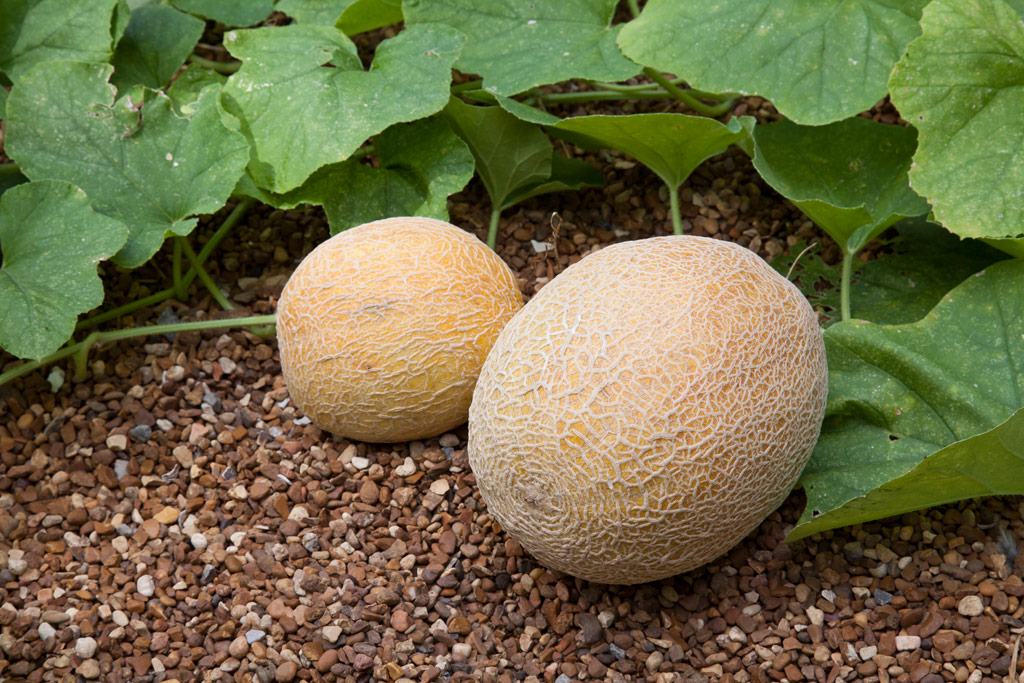
Following the frost in April, then the rain, cold and lack of sun, melon producers in the Poitou-Charentes are worried. Tony Thibault has a 58 hectare farm in the Vienne (80% of the Poitou-Charentes melon production is in the Vienne and Deux-Sèvres), he says that the harvest would normally have started at the end of June, “but this year with the bad weather, it hasn’t been possible, the melons have not yet reached maturity”. Tony Thibault explains that “The melons need a few more days of sun to be good” and that they are still too small. Despite melons normally being available right at the start of July, they will be 15 or so days late this year. However, for producers the delay isn’t the biggest of their worries. Tony Thibault believes he has lost between 30-40% of his production on some plots. “The humidity has favoured disease, our farm has been effected by over 6 different diseases since April”. Source - www.freshplaza.com

08.07.2016

China - Yangshan honey peaches flooded

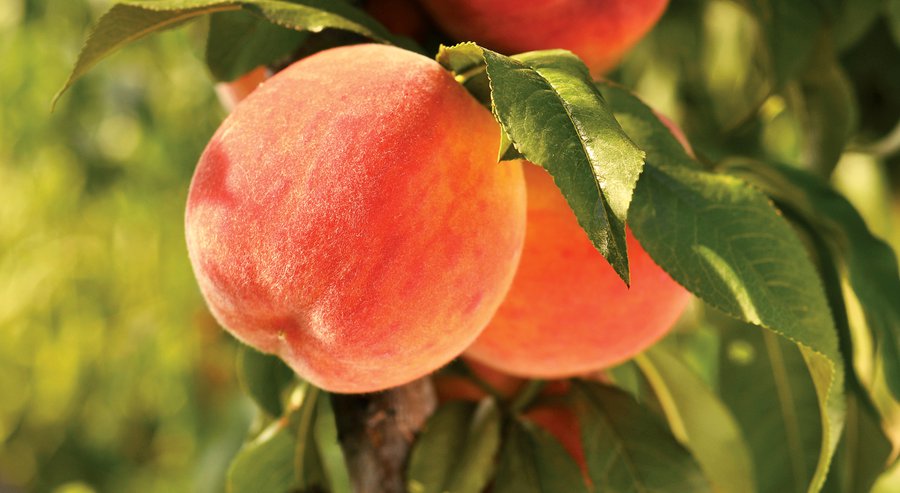
Heavy rainfall in the Yangtze delta these last days has flooded part of the fruit orchards in Wuxi, Yangshan county. Mr. Wang cultivates honey peaches in Yangshan like his father before him. He says that now is the time that mid-season varieties go on sale. But they are less sweet because of the rain. Earlier this year, the Yangshan honey peaches already suffered from the spring colds, blooming later and bearing less fruits. So the sales period was delayed and the production volume reduced. Fruit farmers estimated a loss of 10% to 15%. "But the rain drowned some fruit trees and ruined some of the peaches. So the loss will be worse than expected before, some 30% to 40%," says Mr. Wang. Not only the production volume suffers from the rain. "If rain falls on the honey peaches after harvesting, the peaches start to rot within hours or the next day at the latest. It means more losses in the sales department." "All we can hope for now, is that less rain will fall in July and August. Only sunny weather makes the peaches sweet and tasty." Source - www.freshplaza.com

08.07.2016

USA - Hail, Wind Devastate Some Nebraska Farms

Some farmers face damages in the millions, after being hit by punishing storms two nights in a row. Roger Shafer says there's no use crying over spilled milk, at his farm on the Adams / Hall County line, west of Hansen. He hopes soybeans will pull through and still give him a shot at harvesting something this fall. But back to back storms have taken a toll. "We had two nights of it. First night was basically a hail storm; second night was more of wind and hail situation," he said. "One of them chewed it up, the other blew it down." Corn that's leaning might stand back up, but agronomists say the combination of wind and hail punished nodes on the plant, and that can be a recipe for disaster. Farmers will now need to watch for disease and protect every plant that's still standing, because damaged plants are now more susceptible to disease. Shafer said, "The question is now, what do you do with what's left? Do you try to raise what's left or let it go? Who knows. We'll see what the future brings, I guess." Agronomist Calvin Rupe of Aurora Cooperative scouted crops in the area around Prosser and Juniata on Thursday. He said corn that was a matter of days from tasseling over your head, has been mowed down, and now stands just thigh–high. Some will be cut for silage. Others will be a total loss, covered by crop insurance. Extension Educator Jenny Rees of York County reports corn damage around Henderson as well, with green snap in the corn stalks. In many cases, the crops were looking great, and farmers have already invested a lot of time and money to get to this point. Based on university crop production figures, an acre of corn can be an investment of $500 on up for a season. Now instead of harvesting corn to take to the elevator, farmers like Roger Shafer talk to their banker and insurance agent. Source - www.nebraska.tv

08.07.2016

Canada - Hail simulator helps determine crop recovery expectations

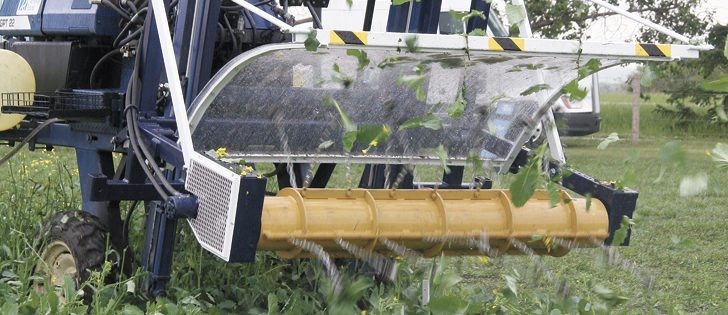
A made-in- Alberta invention is researching hail damage and recovery in wheat, canola and pulses. Invented by Ken Cole of Farming Smarter in Lethbridge in 2015, the concept is simple. Chains with golf balls on the ends are attached to a rotating drum. The drum can be mounted on a small tractor or a unit used for working on small research plots. The speed and rotation of the drum can be controlled to simulate hail damage from zero to 100 percent. “There was a research need to simulate hail to answer those questions like yield, recovery attempts and now, people are interested in it when it comes to breeding,” said Rodney Werezuk of Alberta Innovates Technology Futures at Vegreville. Plant breeders are developing shatter resistant varieties to prevent hail from smashing canola pods, and this machine can test mature crops to assess pod damage. Werezuk had previously simulated hail damage by manually beating the crop with chains or throwing rocks, but that was not practical. With this machine, more golf balls can be added or the crop can be hammered with heavy chains. Alberta Innovates, Alberta Pulse Growers and Alberta Financial Services Corp., which provides hail insurance, are working to together with units at Fahler, Vegreville and Lethbridge. The unit was demonstrated on canola plots during CanolaPalooza at Lacombe June 28. The units can move through the crops and beat them down, and researchers will then assess damage and watch to see if later applications of fungicide or micronutrients make a difference in plant recovery. “The point is to assess hail damage and the yield loss attributed to the amount of hail damage at different stages of the crop,” said Tom Penner of AFSC. “We can never determine the damage of these plants when we are in the field because they recover so well,” he said. The corporation hopes to create a chart that shows expected plant recovery at different levels of loss about 10 days after the event. It may also be used to train hail adjusters. Data should be analyzed by the end of the year followed with practical information to help farmers make better decisions about crop recovery. Geography will also be considered. “Part of the way the crop responds to hail is due to the environment,” Werezuk said. “The weather in Fahler is different from Lethbridge, so you might find a difference between the sites.” Insurance companies consider Alberta to be the most hail prone in Canada. Source - www.producer.com

08.07.2016

USA - Orchard owners report no peaches growing this season due to winter weather

“Weird weather” is one thing, but no peaches this summer? That’s the pits, for peach lovers and local peach growers alike. “Just leaves,” was the way Albert “Chip” Hager puts it, when asked about his crop from about 3 acres in Shelburne that would have sold at Hager’s Farm Market. He figures he lost “in the neighborhood of $50,000” worth of peaches. Apples are a little hardier and survived without much problem, say some growers. But peaches were nipped in the bud. For David Shearer of Pine Hill Orchards, who typically picks on 300 to 500 bushels of peaches, his orchard of five to six acres yielded just five blossoms, none of which yielded fruit. “Everybody is asking every day, ‘When will the peaches be in?’ I tell them, ‘They may not be.’” Any peaches that customers find anywhere, from here southward to maybe Long Island or New Jersey, will be suspicious as to origin … and probably pricey, as well. “It happened to everybody around here,” says Shearer. “Usually, peaches can tolerate up to -15 (degrees) when they’re dormant. This year, it got so cold so fast, it killed all the peaches. Maybe the cruelest joke was that it happened on Valentine’s Day weekend: unseasonable temperatures, which had reached near 60 degrees, plummeted to -20F overnight. The previous winter, Shearer recalls, temperatures also dropped as low, but the difference from what they had been wasn’t as much of a shock, so there was a “decent crop.” He has been looking around for growers who might have been spared the kind of damage so that he can have some peaches to sell at the Pine Hill market, and he may have to turn to frozen peaches or fruit sold through a distributor to make some of the peach cider and jam he usually produces. At Hamilton Orchard in New Salem, Bruce Darling said there are no peaches on its 40 trees. “December was all warm,” Darling recalls, “so the blossoms started to come out. They puffed up a little. But then they froze hard. Usually, we have peaches toward the end of July or (early) August.” At Clarkdale Fruit Farms in Deerfield, 10 acres of peaches — about 2,000 trees got hit. “There’s nothing,” said Ben Clark. “That’s a major impact for us. That’s our early crop.” The same February chill also wiped out the farm’s crops of apricots, nectarines and plums and “greatly reduced” its cherry crop, Clark said. And a snowstorm the first week in April affected some varieties of apples, he said. The losses are hard to swallow, say growers like Shearer. “The downer is that’s our early season. It helps pay the bills,” he said. While he’s insured, that will only pay for lost expenses spent on growing the crop, not for lost income. “They don’t give you money for what you didn’t make,” Shearer said. The Farm Services Agency of the U.S. Department of Agriculture has applied for a statewide disaster designation not only because of the loss of an estimated $4 million worth of peaches from 327 acres, but also for other tree fruit, grapes and blueberry crop loss during this harvest season, said James Newland, the agency’s Franklin County executive director. There’s not likely to be a determination before the close of the season this fall, said Newland, to assure that the crop losses caused by the “flip-flop between frost and freeze, and warm” aren’t merely estimates. Because of changes in the 2014 Farm Bill, what used to be a disaster assistance program now is simply a loan program for farmers who suffer a crop loss of more than 30 percent on a single crop. Source - www.recorder.com

07.07.2016

USA - West Virginia farm families recover from flood damages

“Think about your home for a minute. Can you imagine strangers coming in and carrying items out in plastic bags and placing them along the side of the road?” Terry Hudson described the reality his neighbors are facing after losing practically everything in the devastating floods that washed out farms and homes in West Virginia June 23. Neighbors left in despair Hudson, who owns Hudson Farms CSA, located just outside of Charleston, Kanawha County, said “karma smiled down on us,” having only a few branches and scraps washed up on his property.  But his neighbors, just a half a mile away, suffered devastating blows to their home and property. Rounding up as many workers as he could on his farm, Hudson and his team set to work, mucking out houses and helping locals remove debris from their property. He said as they cleaned out an elderly woman’s house, bagging her damaged items up and carrying them out to the street, “she just sat there and stared out into the yard all day.” The flood waters that ripped through several West Virginia counties destroyed  and damaged more than 4,000 homes, damaged 125 businesses and caused $36 million in damages, according to state officials. Kanawha, Greenbrier, Nicholas, Fayette, Clay, Roane, Summers, Monroe, Pocahontas, Webster, Lincoln and Jackson counties were placed under an emergency status. “Some areas received 5-7 inches of rain in a matter of minutes,” said Brian Sparks, West Virginia University Extension agent for Fayette and Nicholas Counties. He saw streets littered with everything from mattresses to insulation, and some streets, including major highways, were completely washed out. “It’s just unreal — the push of this water,” he said. While some homes were completely wiped out, others were left standing, filled with 5 inches of mud, water and a putrid smell — possibly from sewage, said Hudson.  “I can’t really explain the depth of it,” he said. “It’s kind of like you’re in a war zone.” Damage report A flood damage report, compiled by the West Virginia Farm Service Agency (FSA), July 1, notes that 31 counties reported some level of storm damage and 5,300 farms were affected by flood waters, said Travis Wilfong, communications coordinator for the West Virginia Farm Service Agency. The report also noted more than $3 million in crop, forage and pasture land damage and a loss of 700 head of livestock. Wilfong noted these numbers continue to increase as farmers continue to assess their land damages. “When these damages happen, the first thing people are concerned with are their homes,” he said. “Once they get their feet on the ground they start to assess the damages.” “Our farmers lost their crops, their livestock, their high tunnels,” said Spencer Moss, executive director of the West Virginia Food & Farm Coalition (WVFFC).  The WVFFC is made up of mostly small, sustainable farms, which Moss said encompasses most of the farm communities in West Virginia. They have pretty much lost their growing season and possibly their livelihood, said Moss. A release from the West Virginia Department of Agriculture (WVDA) warned producers that flood water could be contaminated with E. coli and Salmonella, which takes up to 90 days for the bacteria to leave the soil. Other bacteria, like Listeria, could remain longer. Producers were urged to get rid of any produce that came in contact with the water and avoid any new planting activity until after that window. “Fields are pretty much ruined,” said Sparks. “They have so much silt and debris on their fields and you don’t know what came through there.” From flooded pastures, to down crops and even vegetable gardens, Sparks and his team are working to inform producers of the potential hazards of the flood waters that crossed their property. Fields of crops lay flattened and littered with debris following the flood waters that ravaged through parts of West Virginia. Producers are warned to not eat or feed any produce or hay that has been in contact with flood waters because of possible contamination. Not as bad as they thought As the water slowly begins to recede, and damages continue to be assessed, officials and farmers are noting the damages and losses are not as bad as they initially thought. Snuffer said, while many farms throughout the affected counties did experience significant damage, “we initially thought it was going to be a lot worse.” There were many fields that experienced water damages and crops were affected, but livestock loss rates were low. Many producers worried they had lost their livestock, but it turns out, “the fencing was destroyed and the livestock left,” said Snuffer. Producers are finding their animals slowly returning from cover in the mountains, he added. Sparks added, “we definitely had some damage, but I think most of it was confined to the small towns and villages.” Many farmers are finding, the livestock they thought they lost to flood waters had only retreated to higher ground once fences were washed away. Slowly the animals are returning to their home farms. Source - www.farmanddairy.com

07.07.2016

USA - NY farmers to get access to crop insurance for malt barley

New York farmers who want to grow malting barley for the growing craft beer industry are getting some help from the U.S. Department of Agriculture. U.S. Sen. Kirsten Gillibrand says starting next year, crop insurance will be available for malting barley in four New York counties. If a farmer who has a contract to sell malting barley has a crop failure, the insurance can pay up to 1.85 times the established market price for the loss. The state's farm brewing law passed in 2012 requires that a certain percentage of grain used in production must be grown in New York. But the state's climate makes it risky to grow barley of the quality needed for malting. The craft brewing industry says crop insurance will help increase barley production in New York. Source - www.mysanantonio.com

850
of 1225