

China - Making agriculture resilient to bad weather
11.07.2016 351 views
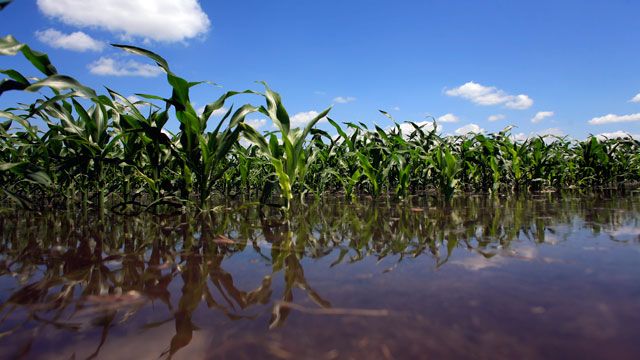
Climate variability is increasing the frequency and intensity of extreme weather events such as droughts and floods. Linked to El Niño, the recent floods in Central and Southern China are a reminder to the negative impacts of climate change-it is feared the floods are the worst in decades.
These severe and devastating floods have costly impacts. According to media reports, about 33 million people have been affected so far, close to 200 have lost their lives and more than 40 are missing. The economic losses have been just as distressing. More than 50,000 homes have been destroyed, forcing many to evacuate, and about 1.9 million hectares of cropland damaged, leading to losses of over 38 billion yuan ($5.7 billion). Many farmers have had to abandon their property and livestock. And there is little doubt food security and nutrition of poor households will be affected.
Recurring floods increase the vulnerability of the poor, especially small farmers. Extreme weather events threaten not only their livelihoods, but also their food security and nutrition. It is true that China has made tremendous progress in coping with weather shocks. The infrastructure, such as flood control facilities, was strengthened following the devastating floods of 1998. By subsidizing agricultural insurance, the government also has ensured that smallholders are protected, making their incomes more resilient. Additionally, climate adaptation was incorporated into the country's National Comprehensive Agriculture Development Program.
Yet China's agriculture sector remains vulnerable and smallholders continue to face high weather-related risks. So more needs to be done.
How can China's agriculture sector be made more resilient? It is important to continue to invest in infrastructure such as flood control and irrigation, and the development of drought-tolerant crop varieties. Just as importantly, disaster insurance and agricultural insurance will continue to play a big role. Scaling up agricultural insurance is particularly needed to safeguard farmers against weather shocks.
Agricultural insurance uptake or reach of smallholders has been low because of several reasons. For example, insurance products are not tailored to farmers' needs. Many crop insurance schemes offer low indemnity (at the most, 200 to 300 yuan per mu or 666 square meters). And many farmers don't have enough confidence in the current insurance system, because it lacks transparency and there is a high likelihood of fraud.
Moreover, insurance companies lack incentives to design products that fit farmers' needs and follow the right procedures because of high transaction costs. Also, agricultural insurance premiums in China have increased tremendously since 2007-gross written premiums rose from $89 million in 2007 to $5.1 billion in 2014.
There is a clear need for better coordination and an efficient mechanism to protect small farmers while incentivizing insurance companies to meet their needs. In the United States, for example, the government administers the National Flood Insurance Program while private insurers manage policies and process claims. Through the Standard Reinsurance Agreement and Livestock Price Reinsurance Agreement, the US government provides reinsurance and subsidies on eligible crop insurance contracts offered by insurance companies.
Private sector involvement is critical to scale up agricultural insurance in China. Incentives that reduce transaction costs could improve transparency, lessen the risks of fraud and increase uptake by farmers. Greater experimentation, improvements in product design and implementation of more innovative products can also help promote gains for farmers and insurers. Developing index-based weather insurance, for example, can allow farmers to receive compensation based on the value of a specific weather variable. Researchers from International Food Policy Research Institute propose offering an array of products, known as "weather securities", to reduce the complexity of and customize index insurance for farmers with different risk profiles, which would increase farmers' understanding of and demand for insurance.
There is an immediate need for China to take precautionary measures against weather-related agricultural risks. The last few years have shown that natural disasters are some of the biggest threats to China's agricultural productivity, food security and people's nutrition. To build the resilience of small farmers, the provision of agricultural insurance at scale with government support together with market-based mechanisms is the key.
Source - http://usa.chinadaily.com.cn
EVENTS

ScaleAgData Stakeholder Engagement Event
22.10.2024The ScaleAgData project is pleased to invite you to our second stakeholder event. Building on the discussions and connections formed during our first webinar, this event will focus on fostering collaboration among stakeholders, providing updates on our project’s progress, and outlining future opportunities for engagement.
RISK EVENTS

Moldova - May frosts caused heavy damage to fruit orchards
10.05.2026The first frosty nights of May have significantly worsened estimates of damage to Moldova's fruit sector from spring frosts. According to initial assessments by fruit market operators, between a quarter and a third of the country's total orchard area was seriously affected.
04.06.2026

India - Delhi raises crop damage compensation after 10 years by over 50% to Rs 75,000 per hectare
In a major relief for farmers, the Delhi government has increased compensation for crop loss caused by rain and hailstorms from Rs 20,000 per acre to Rs 75,000 per hectare.
04.06.2026

Why Tech-Driven Agro-Insurance Has Stumbled in Ethiopia
For decades, Ethiopia’s agricultural sector has remained trapped in a dangerous paradox.
04.06.2026

UK - Rural crime cost Wales £2.2m last year despite fall in offences
Rural crime cost Wales an estimated £2.2 million last year, with organised criminals continuing to target tractors, livestock and farming equipment despite an overall fall in offences, according to a new report.
04.06.2026

Kenyan Agro-Insurance Startup, Pula Raises US$ 20 Million in Series B Round
Pula, a Kenyan startup that offers insurance to small-scale farmers, aims to serve more than 100 million farmers in Africa after raising US$ 20 million in its Series B round.
04.06.2026

USA - USDA announces $52M to boost public access to private lands for hunting, fishing
The U.S. Department of Agriculture is announcing $52 million to help state and tribal governments encourage private landowners to allow public access to their land for hunting, fishing and other wildlife-dependent recreation through the Voluntary Public Access and Habitat Incentive Program (VPA-HIP).
04.06.2026

Hope Grows in Malawi’s Grain Stores as Farmers Battle Post-Harvest Losses
Some grain rots in poorly ventilated storage. Some is eaten by pests. Some is damaged during drying or transportation before it ever reaches the market.
03.06.2026

Canada - AFSC extends several northern Alberta seeding dates for 2026
Alberta’s Agriculture Financial Services Corp. (AFSC) is extending the recommended seeding dates in the province’s northeast, northwest and Peace regions for several crops for the 2026 growing season only.
03.06.2026

India - Elephants run amok in Konaje agricultural farm, cause massive crop damage
A herd of elephants, including calves, wreaked havoc on an agricultural farm belonging to Yashodhara Gowda at Pallattadka in Konaje village of Kadaba taluk.
