

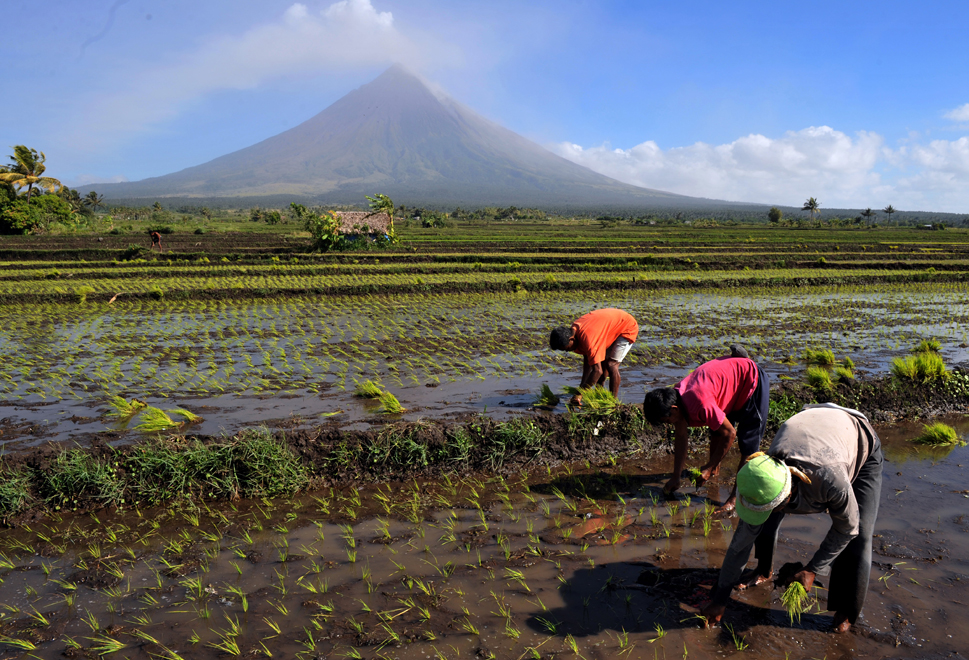
Nepal - IB amends agri insurance directive
11.07.2016 515 views
Livestock farmers, who have purchased insurance products to provide cover to their farm animals, will not be entitled to compensation for losses triggered within 15 days of the purchase of the policy beginning July 16, the Insurance Board (IB), the insurance sector regulator, has said.
Amending the Crop, Livestock and Poultry Insurance Directive, the IB has added a provision on ‘waiting period’ of 15 days for livestock insurance business, which enables non-life insurance companies to deny payment against losses accumulated by policyholders in the first 15 days of purchase of the product.
This provision, which will come into effect from the beginning of the next fiscal year, or July 16, however, will apply exclusively to losses triggered by diseases. This means policyholders can still demand for compensation if their animals die of other causes, such as natural disaster, within 15 days of purchase of insurance policy.
“We had to resort to this measure because it became difficult for insurers to determine whether livestock, especially the imported ones, were free from disease at the time of policy’s issuance,” IB Deputy Director Kundan Sapkota told The Himalayan Times. “We probably would not have added this provision in the directive had the quarantine checks been stringent in the country.”
The IB enforced Crops, Livestock and Poultry Insurance Directive in January 2013, making it mandatory for all non-life insurance companies to sell various agriculture-related insurance products, including livestock.
These livestock insurance products can be bought by paying annual premium equivalent to five per cent of the sum insured.
The sum insured for livestock depends on types of animals policyholders are rearing.
For instance, maximum sum insured for high-breed dairy cow and buffalo has been fixed at Rs 150,000 and Rs 125,000, respectively. Sum insured for water buffalo and ox raised for reproductive purpose, on the other hand, has been fixed at Rs 70,000, while insurance coverage for water buffaloes and oxen used for transportation purpose has been fixed at Rs 40,000. Similarly, sum insured for sheep and goats raised for meat production has been fixed at Rs 8,000.
As per the IB, policyholders can claim for up to 90 per cent of the sum insured in compensation if their animals die. This provision, however, has a downside, as policyholders cannot recoup all the losses even if market value of the animals they were rearing was higher than the sum insured.
To partially address this problem, the IB has now introduced a provision, which enables policyholders and insurance companies to determine sum of insured cows and buffaloes based on market price and other technical factors.
Similar method can be followed to fix the insurance coverage for calves and kids, says the revised IB directive issued today. But there is a caveat. Policyholders who have purchased insurance products for calves and kids will get compensation based on three factors — the age of the animal, number of months it takes to reach puberty and number of months the animal survived after issuance of the policy, adds the directive.
This means if a newborn calf, covered by insurance of, say, Rs 25,000 and expected to reach puberty in 30 months, dies after two months of its birth, then the policyholder will be entitled to maximum compensation of Rs 1,666.67. This implies the compensation amount will be calculated by dividing sum insured by number of months it takes to reach puberty and multiplying this result by the number of months the animal survived.
The IB has also said policyholders can claim for 30 per cent of sum insured as compensation if dairy animals cannot produce milk. Earlier, the coverage for such incident stood at 50 per cent of the sum insured.
“But policyholders, who have not filed any claim, can now demand for ‘no-claim’ discount,” says the
directive.
As per this provision, policyholders who have not filed any claim within a year of purchasing the policy, from July 16 onwards, can buy next year’s policy at a discount of five per cent. The no-claim discount rate has been fixed at seven per cent of the premium for those who have not filed any claim for two consecutive years and 10 per cent for those who have not filed any claim for three consecutive years.
Meanwhile, the IB has said losses under crop insurance will not be covered if farmers use seeds that were not certified by the government. “This, however, does not apply to locally produced seeds,” says the directive.
Source - http://thehimalayantimes.com
EVENTS

ScaleAgData Stakeholder Engagement Event
22.10.2024The ScaleAgData project is pleased to invite you to our second stakeholder event. Building on the discussions and connections formed during our first webinar, this event will focus on fostering collaboration among stakeholders, providing updates on our project’s progress, and outlining future opportunities for engagement.
RISK EVENTS

Moldova - May frosts caused heavy damage to fruit orchards
10.05.2026The first frosty nights of May have significantly worsened estimates of damage to Moldova's fruit sector from spring frosts. According to initial assessments by fruit market operators, between a quarter and a third of the country's total orchard area was seriously affected.
04.06.2026

India - Delhi raises crop damage compensation after 10 years by over 50% to Rs 75,000 per hectare
In a major relief for farmers, the Delhi government has increased compensation for crop loss caused by rain and hailstorms from Rs 20,000 per acre to Rs 75,000 per hectare.
04.06.2026

Why Tech-Driven Agro-Insurance Has Stumbled in Ethiopia
For decades, Ethiopia’s agricultural sector has remained trapped in a dangerous paradox.
04.06.2026
UK - Rural crime cost Wales £2.2m last year despite fall in offences
Rural crime cost Wales an estimated £2.2 million last year, with organised criminals continuing to target tractors, livestock and farming equipment despite an overall fall in offences, according to a new report.
04.06.2026

Kenyan Agro-Insurance Startup, Pula Raises US$ 20 Million in Series B Round
Pula, a Kenyan startup that offers insurance to small-scale farmers, aims to serve more than 100 million farmers in Africa after raising US$ 20 million in its Series B round.
04.06.2026
USA - USDA announces $52M to boost public access to private lands for hunting, fishing
The U.S. Department of Agriculture is announcing $52 million to help state and tribal governments encourage private landowners to allow public access to their land for hunting, fishing and other wildlife-dependent recreation through the Voluntary Public Access and Habitat Incentive Program (VPA-HIP).
04.06.2026

Hope Grows in Malawi’s Grain Stores as Farmers Battle Post-Harvest Losses
Some grain rots in poorly ventilated storage. Some is eaten by pests. Some is damaged during drying or transportation before it ever reaches the market.
03.06.2026
Canada - AFSC extends several northern Alberta seeding dates for 2026
Alberta’s Agriculture Financial Services Corp. (AFSC) is extending the recommended seeding dates in the province’s northeast, northwest and Peace regions for several crops for the 2026 growing season only.
03.06.2026

India - Elephants run amok in Konaje agricultural farm, cause massive crop damage
A herd of elephants, including calves, wreaked havoc on an agricultural farm belonging to Yashodhara Gowda at Pallattadka in Konaje village of Kadaba taluk.
