

USA - House subcommittee explores ag drone usage
11.07.2016 355 views
The House Agriculture Committee’s Subcommittee on General Farm Commodities and Risk Management held a hearing June 23 to educate members about innovations in agricultural imagery and technology. Rep. Frank Lucas, R-OK, served as acting chairman of the committee for the hearing.
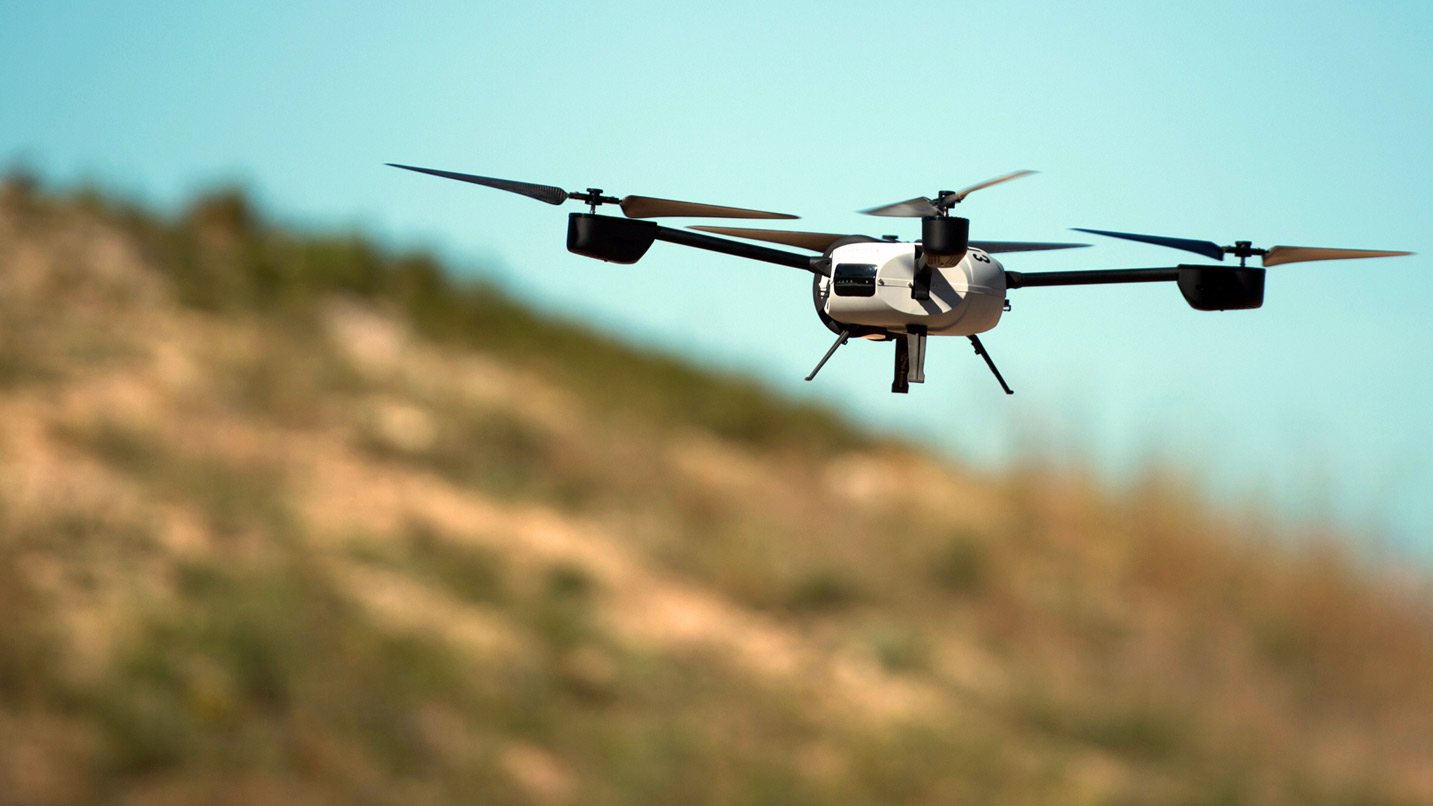
It was the second hearing in a series examining big data and its role in agriculture. The subcommittee heard from a variety of stakeholders about using satellites, manned airplanes and unmanned aerial systems (drones) as a way to collect imagery that farmers can leverage to make better business and conservation decisions for their farms.
As technology continues to evolve, the witnesses stressed the importance of maintaining the privacy of individual farmers and ranchers, and ensuring their data is protected.
“Imagery was one of the first forms of Big Data in agriculture, and it serves as the foundation for a host of other innovations,” Lucas said in his opening statement. “Whether it’s satellites, airplanes or drones, each of these tools has a role to play and farmers can choose the product that best fits their needs. With that imagery, farmers are able to see maps of their fields and make better decisions about how they manage their farm, including decisions about fertilizing more efficiently, addressing pests and disease, and timeliness of planting and harvest.
“Imagery is the foundation for precision agriculture, and the innovations we heard about today are building blocks for more improvements to come.”
Rep. Gwen Graham, D-FL, filling in for subcommittee Ranking Member Tim Walz, D-MN, who was on funeral leave, said in her opening statement: “It is a tough time to be a farmer in America. The farm economy is struggling and farmers are being forced to do more with less. As members of this committee, our role is to protect our existing agricultural infrastructure while exploring new ways to make it work more effectively and efficiently.
“Aerial imaging is at the forefront of innovation in agriculture. This technology has already proven to be an important tool for agriculture agencies and it has great potential to make farming operations more streamlined and efficient. I look forward to hearing today how we can safely harness this technology to benefit individual farmers and farm programs like crop insurance and others.
“Thank you to our panel of witnesses for being here today. They represent the different sectors of the aerial data collection industry and their testimony will shed light on the realm of applications for this technology in agriculture. I look forward to hearing from each of you.”
Among the witnesses at the hearing were UAS service providers from across the country. One was Robert Blair, a Kendrick, Idaho, farmer and vice president for agriculture at Measure, a drone as a service company.
Blair, who has been a proponent of the use of UAVs on his own farm, told the subcommittee he has not used a drone on his farm since June 18, 2014, when the FAA defined what constituted as commercial versus hobby UAV operations. “Instead, I have complied with the rules and had certified pilots operating under FAA Section 333 exemptions to gather data over my farm,” Blair said. “An example of the distinction made between commercial and hobby use is that while I can fly a UAV over my property and take all of the pictures and video I want, the moment I use that information to make management decisions, I am a commercial UAV operator.”
Over the years, Blair said he has been asked many times, “Who will be flying UAVs: the farmer or a service provider?” He said with his experience in the industry, he sees a future of service providers flying for agriculture.
“Farmers, ranchers, crop advisors and agronomists have enough on their plate, let alone becoming an aviation expert, remote sensing expert, software expert and/or geographic information systems expert. Instead, UAV service providers like Measure can collect the data to make the jobs of those with boots on the ground easier. A crop advisor friend stated, ‘I am currently managing 20,000 acres and with your service I could double the acres along with having better information for the farmer.’”
Blair reminded the subcommittee new FAA rules were announced June 21 that hold provisions beneficial for agriculture, such as obtaining a remote pilot certificate instead of needing a full pilot’s license and not being required to have a visual observer. Both of these provisions will save costs making it less expensive to conduct business.
“However, I believe UAV service providers like Measure will still be needed due to the time required for flying, processing imagery and trying to make the imagery into actionable information. Operating safely is a priority of Measure and we will use highly trained and certified pilots to carry out flights,” Blair said.
While the new rules are a major milestone for the UAV industry, Blair said there is still work that needs to be done.
“Beyond line of sight operation will be needed to cover the millions of agriculture acres in the United States in a timely manner. Rules to fly at night with thermal cameras can collect data with higher accuracy due to the cooler evening temperatures. Also, further clarification is needed to conduct aerial application of pesticides with UAVs,” Blair said.
House Agriculture Committee Chairman Mike Conaway, R-TX, added at the end of the hearing: “American farmers and ranchers are utilizing technology to produce more and better food and fiber products with fewer inputs than ever before. While the imagery and mapping technology we discussed today paves the way for additional increases in farm productivity and efficiency, it continues to be the foundation on which we administer our farm and conservation programs.
“I appreciate today’s panel of witnesses for sharing their expertise on this important topic, and I look forward to continuing to explore the role of Big Data in agriculture.”
Source - http://www.hpj.com
EVENTS

ScaleAgData Stakeholder Engagement Event
22.10.2024The ScaleAgData project is pleased to invite you to our second stakeholder event. Building on the discussions and connections formed during our first webinar, this event will focus on fostering collaboration among stakeholders, providing updates on our project’s progress, and outlining future opportunities for engagement.
RISK EVENTS

Moldova - May frosts caused heavy damage to fruit orchards
10.05.2026The first frosty nights of May have significantly worsened estimates of damage to Moldova's fruit sector from spring frosts. According to initial assessments by fruit market operators, between a quarter and a third of the country's total orchard area was seriously affected.
04.06.2026

India - Delhi raises crop damage compensation after 10 years by over 50% to Rs 75,000 per hectare
In a major relief for farmers, the Delhi government has increased compensation for crop loss caused by rain and hailstorms from Rs 20,000 per acre to Rs 75,000 per hectare.
04.06.2026

Why Tech-Driven Agro-Insurance Has Stumbled in Ethiopia
For decades, Ethiopia’s agricultural sector has remained trapped in a dangerous paradox.
04.06.2026

UK - Rural crime cost Wales £2.2m last year despite fall in offences
Rural crime cost Wales an estimated £2.2 million last year, with organised criminals continuing to target tractors, livestock and farming equipment despite an overall fall in offences, according to a new report.
04.06.2026

Kenyan Agro-Insurance Startup, Pula Raises US$ 20 Million in Series B Round
Pula, a Kenyan startup that offers insurance to small-scale farmers, aims to serve more than 100 million farmers in Africa after raising US$ 20 million in its Series B round.
04.06.2026

USA - USDA announces $52M to boost public access to private lands for hunting, fishing
The U.S. Department of Agriculture is announcing $52 million to help state and tribal governments encourage private landowners to allow public access to their land for hunting, fishing and other wildlife-dependent recreation through the Voluntary Public Access and Habitat Incentive Program (VPA-HIP).
04.06.2026

Hope Grows in Malawi’s Grain Stores as Farmers Battle Post-Harvest Losses
Some grain rots in poorly ventilated storage. Some is eaten by pests. Some is damaged during drying or transportation before it ever reaches the market.
03.06.2026

Canada - AFSC extends several northern Alberta seeding dates for 2026
Alberta’s Agriculture Financial Services Corp. (AFSC) is extending the recommended seeding dates in the province’s northeast, northwest and Peace regions for several crops for the 2026 growing season only.
03.06.2026

India - Elephants run amok in Konaje agricultural farm, cause massive crop damage
A herd of elephants, including calves, wreaked havoc on an agricultural farm belonging to Yashodhara Gowda at Pallattadka in Konaje village of Kadaba taluk.
