

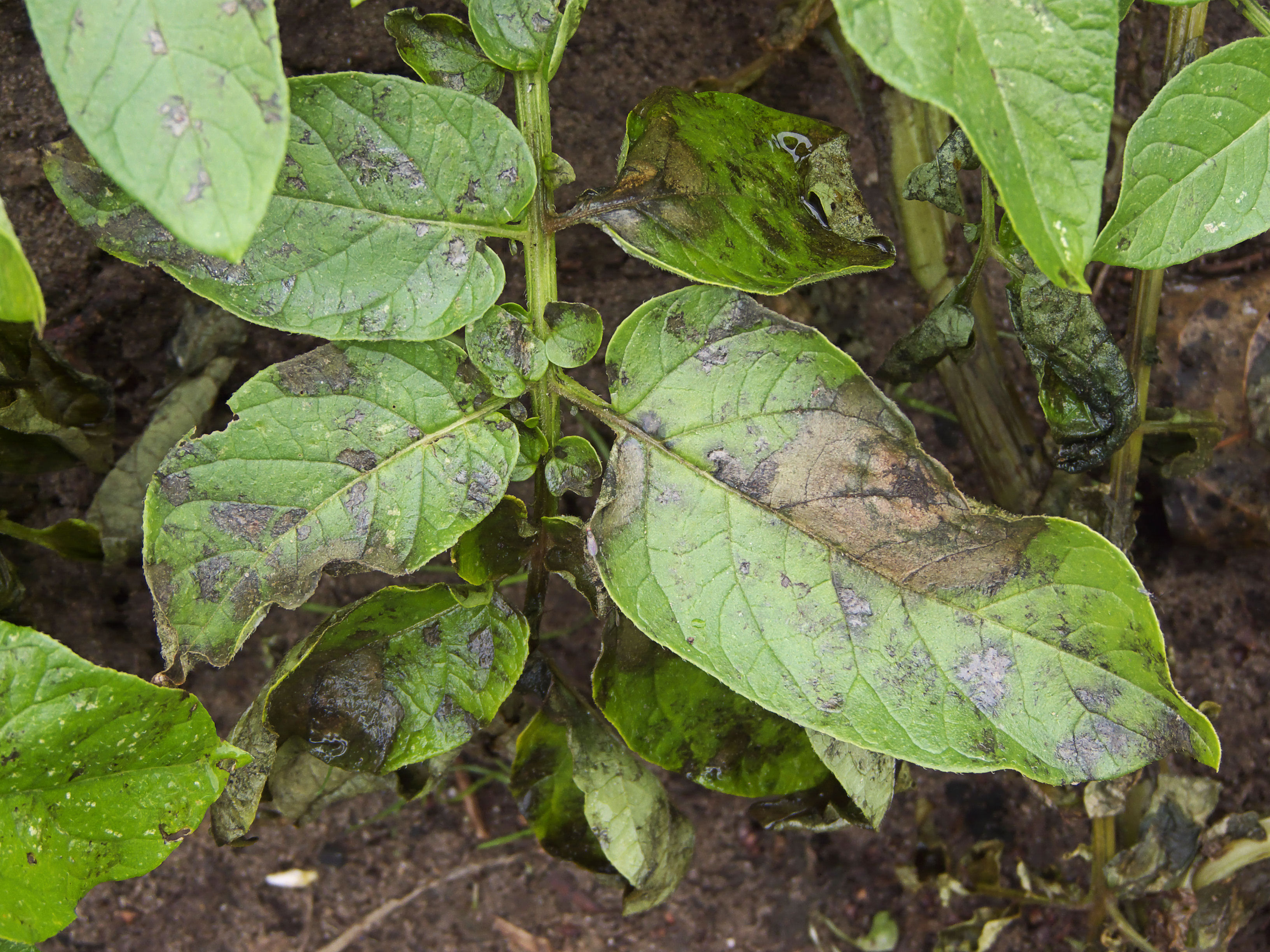
Netherlands - Extreme rainfall triggers first Phytophthora cases in the potato fields
06.07.2016 356 views
Every once in a while the potato disease Phytophthora crops up in the Netherlands, and this year is no exception; the first reports have already started trickling in.
Especially potato farmers in the South of the Netherlands are worried.
Christoffel den Herder of Delphy:
“Due to the unseasonable weather conditions with its extreme rainfall this month, you cannot do much against this disease. With organic cultivation you can, at most, hope to avoid an outbreak by starting the cultivation process as early as possible.”
“Or by switching to Phytophthora resistant potato varieties, but then the entire chain needs to cooperate, even more than they do now.”
Reports of Phytophthora
By now, Twitter is being flooded with reports from farmers who found Phytophthora in their potato plants. It didn't go unnoticed.
Jan van Hoogen, general manager of Agrico:
“Our fieldwork employees already established an outbreak of Phytophthora on 14 June. An alert was sent out right away to notify our members, so that they, where possible, could take measures to limit a consequential loss.”
Christoffel den Herder, who works as senior advisor organic agriculture for Delphy, says excrescences of this outbreak can mostly be felt in the south of the Netherlands:
“South of Flevoland, where the flowering season just finished, the disease has already reached an advanced stage.”
Persistent rainfall disastrous
Christoffel den Herder continues:
“The weather conditions in recent weeks were not very helpful either.”
“You might expect conventional cultivation in whatever circumstances could better withstand Phytophthora than organic cultivation, because of the availability of pesticides, but that is not always the case.”
“Pesticides can only be effective when the weather stays dry for three weeks after using them. In the absence of stable weather the fungus had free reign in the South. You cannot do anything about it. Just as when onions get mildew, the air is full of spores.”
Phytophthora clings to every plant that is susceptible to it and as the wind blows, any crop that crosses its path.
Because you cannot place your hopes in better weather circumstance as an organic cultivator – dry weather can curb further growth of the fungus but never completely remedy it – the consequences for this product group are much more rigorous. Jan van Hoogen:
“Once the potato plant is affected, pretty much your only option is to burn off the green. The potatoes stop growing when you do that, but it is the only way to exterminate the fungus.”
Den Herder:
“If the disease is still in an early stage and only the leaves are affected, it might not yet be the end of the story. It is a different story when the fungus enters the ground because of persistent rainfall, it then affects the tubers. Once the tubers are affected, chances are the batch will be very difficult to store after harvesting.”
Preventing late blight
You cannot fall back on pesticides in the organic cultivation.
Christoffel den Herder:
“You can therefore at most try to stay ahead of the outbreak by starting the cultivation process as early in the season as possible. Using preventive cultivation measures you can hope your plants have developed as much as possible when Phytophthora arrives.”
“The pressure of the disease increases over time. It is advisable to germinate the potatoes beforehand, to plant them early, and also to regulate manuring well.”
“When potatoes are then planted, they grow much faster, and you could possibly stay ahead of the outbreak as much as possible.”
Resistant potato varieties
Christoffel Den Herder:
“Because hardly any methods exist to combat the disease in organic cultivation, it is necessary to use Phytophthora resistant potato varieties more often,”
Jan Van Hoogen agrees:
“Organic growers need those kinds of strains most of all. They are at their wit’s end with each new outbreak, because up till now they were powerless to do anything.”
“Agrico is the first party to market a Phytophthora resistant strain to take away that uncertainty. That process started 60 years ago already, so it truly is a long-winded process.”
“And we still can not sit back, because the resistance might be broken. As with antibiotics for medical purposes, the strains of the fungus are continuously changing, and as agriculturalist you end up in a rat race. You have to keep developing.”
Christoffel Den Herder:
“We have the know-how, but the consumer needs to accept the product.”
“By now, cultivators are convinced of this pragmatic approach, but the chain itself is still a bit reserved. Potato varieties, colours and cooking characteristics are unique for each variety, and wholesalers, supermarkets and consumers always have a certain image in mind. It is completely different with onions, to many, an onion is just an onion.”
“People have got so used to potatoes having a specific combination of product characteristics, such as flavour, look, firmness and texture of the skin for example, and Phytophthora resistant varieties cannot always completely facilitate these. Perhaps it is just a matter of time. Besides, new resistant varieties are being developed all the time to fulfill those wishes.”
Source - www.potatopro.com
EVENTS

ScaleAgData Stakeholder Engagement Event
22.10.2024The ScaleAgData project is pleased to invite you to our second stakeholder event. Building on the discussions and connections formed during our first webinar, this event will focus on fostering collaboration among stakeholders, providing updates on our project’s progress, and outlining future opportunities for engagement.
RISK EVENTS

Moldova - May frosts caused heavy damage to fruit orchards
10.05.2026The first frosty nights of May have significantly worsened estimates of damage to Moldova's fruit sector from spring frosts. According to initial assessments by fruit market operators, between a quarter and a third of the country's total orchard area was seriously affected.
04.06.2026

India - Delhi raises crop damage compensation after 10 years by over 50% to Rs 75,000 per hectare
In a major relief for farmers, the Delhi government has increased compensation for crop loss caused by rain and hailstorms from Rs 20,000 per acre to Rs 75,000 per hectare.
04.06.2026

Why Tech-Driven Agro-Insurance Has Stumbled in Ethiopia
For decades, Ethiopia’s agricultural sector has remained trapped in a dangerous paradox.
04.06.2026
UK - Rural crime cost Wales £2.2m last year despite fall in offences
Rural crime cost Wales an estimated £2.2 million last year, with organised criminals continuing to target tractors, livestock and farming equipment despite an overall fall in offences, according to a new report.
04.06.2026

Kenyan Agro-Insurance Startup, Pula Raises US$ 20 Million in Series B Round
Pula, a Kenyan startup that offers insurance to small-scale farmers, aims to serve more than 100 million farmers in Africa after raising US$ 20 million in its Series B round.
04.06.2026
USA - USDA announces $52M to boost public access to private lands for hunting, fishing
The U.S. Department of Agriculture is announcing $52 million to help state and tribal governments encourage private landowners to allow public access to their land for hunting, fishing and other wildlife-dependent recreation through the Voluntary Public Access and Habitat Incentive Program (VPA-HIP).
04.06.2026

Hope Grows in Malawi’s Grain Stores as Farmers Battle Post-Harvest Losses
Some grain rots in poorly ventilated storage. Some is eaten by pests. Some is damaged during drying or transportation before it ever reaches the market.
03.06.2026
Canada - AFSC extends several northern Alberta seeding dates for 2026
Alberta’s Agriculture Financial Services Corp. (AFSC) is extending the recommended seeding dates in the province’s northeast, northwest and Peace regions for several crops for the 2026 growing season only.
03.06.2026

India - Elephants run amok in Konaje agricultural farm, cause massive crop damage
A herd of elephants, including calves, wreaked havoc on an agricultural farm belonging to Yashodhara Gowda at Pallattadka in Konaje village of Kadaba taluk.
