NEWS
903
of 1224
News
16.12.2015

USA - Tobacco farmers suspected of crop insurance fraud

Federal investigators say they believe Central Kentucky tobacco farmers, crop insurance agents, tobacco warehouse owners and others conspired to defraud thousands and possibly millions of dollars from the U.S. Department of Agriculture's program that insures crops. The Lexington Herald-Leader reports that the U.S. District Court in Lexington released more than 400 pages of search warrant applications and other documents Monday outlining the ongoing investigation. Last week, federal investigators searched several sites in Mount Sterling, including several tobacco warehouses and an insurance agency, to seize evidence. Investigators say certain producers consistently underreported their tobacco production in order to cause an insurable loss payment, with some never even planting their crops. No charges have been filed so far. Source - www.agweb.com

16.12.2015

Colombia - Drought damages fruits in Bolívar

"The overall balance for the horticultural sector in the Colombian department of Bolivar in 2015 can be considered negative, compared to previous years, due to the impact of El Niño." According to Luis Carlos Álvarez Montes, coordinator of Asohofrucol Bolívar, this negative outlook for the department's fruit and vegetable sector affects traditional crops like mangoes, yam, bananas, avocados, hot peppers, citrus fruit and pineapples. The prevailing climate changes in the region have affected the vegetative and productive development of crops such as yam, which suffered delays in the harvest, leading to atypical circumstances in the crop's agronomic management, especially in Montes Maria, said the union leader. Mangoes In 2014, the mango production in the north of Bolívar reached 3,200 tonnes (of the Hilaza variety) and was marketed by Postobón, CEA, Bazurto market, Barranquilla, Medellin and Cali, AOL. Production in 2015 has dropped by 40% (1,280 tonnes) due to the impact of water stress, which affected the fruit's quality and size. This has led to the presence of pests and diseases such as sooty mold, anthracnose, ants, aphids and termites, among others. Asohofrucol, through its technical facilitators, has implemented mitigation strategies and phytosanitary monitoring to prevent the impact of such pests and diseases and tackle adverse agro-climatic and sanitary conditions. The severe weather conditions killed seedlings in the municipality of Bonito, in El Carmen de Bolívar. Chili peppers The production of chili peppers in the department of Bolívar concentrates in the municipalities of San Jacinto and El Carmen de Bolívar. The crop has suffered delays in the setting, as the agro-climatic conditions have been adverse. Yam Around 7,000 hectares are devoted to the production of yam, subject to seed availability; the planting was carried out during the third and fourth weeks of May and there has been a substantial increase in the acreage planted with the new diamond variety (+30%, 2,100 hectares). Citrus fruits (orange) 80 hectares are devoted to citrus fruit production in the municipality of Margarita, in San Jose. 50 hectares were scheduled to be established in March, but this did not happen due to adverse environmental factors. Of the 12,000 seedlings that were expected to be given for these 50 hectares through the Seed Plan (a program which Corpoica has with the Ministry of Agriculture), only 3,000 seedlings were delivered. It is worth noting that, of the 16,320 seedlings planted, 7% (1,142 seedlings) have been affected, i.e. will have to be replanted. Source - www.freshplaza.com

16.12.2015

Importance of monitoring grain bins over winter months

Now that the winter snow has finally arrived, it's time for another reminder for farmers to make sure they take the time to monitor grain bins on a regular basis. With the variable weather conditions at harvest in some areas, it’s very important to monitor the stored grain closely. Producers want to make sure the stored crop is not losing condition — especially canola. Warren Ward is an Agronomy Specialist with the Canola Council of Canada, and he says ideally you want to see eight per cent moisture or less, with temperatures at 15 degrees Celsius or cooler. "At those levels we would expect to see canola stored fairly well throughout the winter. Some of the issues that can happen, though, are that you could have high green seed content or potentially some green plant material or wheat seeds that went into the bin as well, and those can be where hot spots start to form in the bin," he says. Temperature probes or cables can prove very helpful, while some producers prefer to just turn the grain on a regular basis. Ward says knowing the condition of canola when going into the bin can be useful. "I think most people do have a good idea of what condition the canola went into the bin at. So you know if it did go in a little bit hotter than during the heat of harvest or maybe it did go in with a little bit higher moisture content. I think generally people have a good idea of which bins are going to be more at risk. Again it can pop up in a bin that you wouldn't expect a problem in." For producers that may have an issue of heated canola, Wards says there are a few buyers that will handle it, noting there is a list of potential customers in the November Canola Watch. Source - www.pembinavalleyonline.com

16.12.2015

USA - Farmers able to apply for flooding assistance

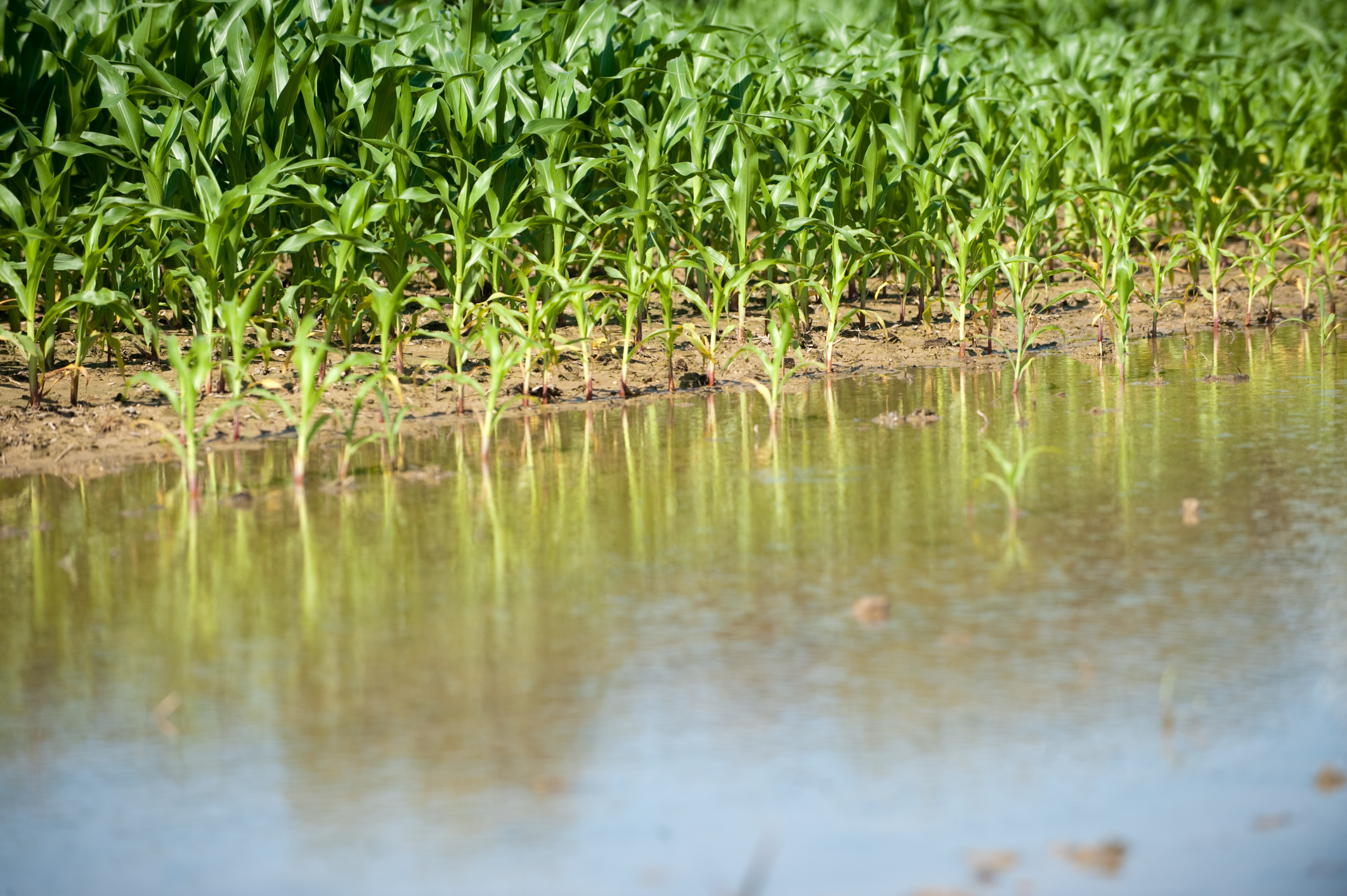
FEMA said farmers who suffered losses during recent floods may now be eligible to apply for emergency funding. Some farmers are still feeling the effects of October’s flooding. One Rio Grande Valley farmer told he welcomes the federal help. Gary Busse is a part of a long line of farmers. His family has more than 1,500 acres of land. Busse said most farmers complain about dealing with a drought. This has changed since the heavy storms in October. "These last two years have been just clobbered for farmers,” Busse said. “Our expenses are up, our costs are up and our production is down.” Busse’s farm was hit hard by the flooding. He said he’s had up to 19 inches of rain on his land. “We would have started it in September, October,” he said. “We're running behind and every little shower throws us out for a couple of weeks or months." Production is being delayed on Busse’s farm. "When you don't get your crop in on time, the expenses go up, the insect problems go up, chances of a hurricane catching up before you get it harvested go up," Busse said. Busse and other farmers in declared disaster areas can now receive disaster assistance from the Farm Service Agency and the Small Business Administration. FEMA will also assist all victims at each recovery center. “We will provide them the information, we'll advise them, give them the documentation they need, such as pamphlets, and the number needed,” said FEMA spokesperson Alberto Pillot. Busse said he will look into how the government agencies will help keep his product alive. “If we can do something that'll increase our chances of survival, we'll definitely use it,” Busse said. Pillot said they have not had any farmers register yet. They could be eligible for up to $500,000 in loans. Source - www.krgv.com

15.12.2015

USA - Court documents allege conspiracy to defraud federal crop insurance program in Kentucky

Federal investigators say they have probable cause to believe that a conspiracy existed to defraud thousands and possibly millions of dollars from the government-backed program that insures crops, according to court records released Monday in Lexington. The alleged conspiracy involved Central Kentucky tobacco farmers, crop insurance agents, crop insurance adjustors, tobacco warehouse owners/employees and others. More than 400 pages of search warrant applications and other documents outlining the alleged conspiracy were released by U.S. District Court. The scheme allegedly involved profiting from false insurance claims for losses of tobacco. The investigation appears similar to a 2011 case in North Carolina where tobacco farmers and insurance agents pleaded guilty to a conspiracy in which farmers fraudulently claimed crop losses and collected insurance money but profited from selling their tobacco harvest. The documents name several individuals but because no charges have been filed and no indictments have been issued, the Herald-Leader is not naming those individuals. Last week, federal investigators searched several sites in Mount Sterling, including several tobacco warehouses and an insurance agency, and seized evidence such as bank records, tobacco crop photos, laptop computers, hard drives and crop insurance documents. Kyle Edelen, spokesman for Kerry B. Harvey, U.S. attorney for the Eastern District of Kentucky, said the investigation is continuing. “What we can say, generally speaking – there are many considerations governing when a court filing is sealed, such as: whether or not it might compromise the ongoing investigation, the safety of informants, or jeopardizing the destruction of evidence,” Edelen wrote in an email. The Central Kentucky investigation appears to have started in 2012 when the Risk Management Agency, an arm of the U.S. Department of Agriculture, received a tip that a Nicholas County farmer had been committing crop insurance fraud with the help of an insurance agent and an insurance adjustor. The allegation was that the farmer received $68,000 on a corn crop that was not even planted. Another complaint alleged that the Nicholas County farmer had 400 acres insured in other farmers’ names. In 2013, another anonymous complaint alleged that a Mount Sterling insurance agent approached a farmer and offered to “give them a good insurance claim.” The agent allegedly offered to do an appraisal for a small amount, and then the farmer could “sell his tobacco for cash or destroy it.” The farmer was to pay the agent 25 percent of the proceeds. The investigation also determined that certain producers consistently under reported their tobacco production in order to cause an insurable loss payment. There was also evidence that certain producers funneled money through different accounts to conceal their source and nature. Satellite imagery indicated the fields in which one Nicholas County farmer reported as being planted in tobacco “were actually forested land or pasture,” wrote Jefferey S. Monnin, a special agent with the U.S. Department of Agriculture’s Office of Inspector General. A personal visit to the land in question showed that the field “was heavily wooded with mature trees and very steep in nature,” and that there was no evidence of any past field preparation or crop growth. With the growth of mature trees on the field, shade would not allow the growth of crops, especially tobacco. Monnin wrote that the land “was incapable of producing any type of agricultural product.” Another producer had received $1 million in crop insurance indemnity payments since 1999, but had applied for food stamp assistance in 2008 “and is still receiving assistance,” Monnin wrote. The federal crop insurance program was created during the Depression in the 1930s as a way to keep farmers from going bankrupt because of a bad growing season. The U.S. Department of Agriculture pays private insurers to sell and manage policies, but taxpayers are on the hook for most of the losses. USDA requires tobacco growers to take out crop insurance ahead of the growing season but payment on those policies is not due until after the harvest. If the crop is damaged by bad weather, the farmer is paid the difference between the value of his diminished harvest and the amount of the policy. The Mount Sterling case isn’t the first in Kentucky involving crop insurance fraud. In April, a Monroe County farmer pleaded guilty in Bowling Green to charges of crop insurance fraud totaling $711,958. According to a plea agreement, that Monroe County farmer, aided and abetted by others, admitted to knowingly making false statements and reports on insurance claims. The Council for Burley Tobacco, based in Lexington, addressed the abuse of crop insurance in a statement in late August. The council noted that in 2013 extreme weather conditions resulted in the loss of crops across the state and the filing of 7,000 bale claims in the Tobacco Administrative Grading Service program that growing season. Yet in 2014, when weather conditions improved and the tobacco fields flourished, there were more than 60,000 bale claims in the TAGS program. More than $56 million was paid out to farmers in indemnity payments in 2014, which accounted for 17.8 percent of the income from the 2014 burley tobacco crop. “This level of abuse, whether intentional or not, has to end,” the burley council said in its statement. Source -  http://www.kentucky.com

15.12.2015

USA - FSA offers storm help

The storms that hit Henderson County in late October caused considerable flooding in the area, but the Farm Service Agency may be able to help. The FSA announced Monday applications for emergency farm loans for losses caused by severe storms, tornados, straight-line winds, and flooding that occurred between Oct. 22, through Oct. 31, are being accepted at the Farm Service Agency office located in Tyler as of Monday.  The peak of the precipitation in Henderson County came on Oct. 24, when Athens recorded 10.38 inches of rain. Henderson County is one of 42 counties in Texas recently named by President Obama as eligible for loans to cover part of actual production and/or physical losses resulting from the disaster. FSA official Joseph Grier stated that farmers may be eligible for loans of up to 100 percent of their actual losses, or the operating loan needed to continue the agricultural business, whichever is less. For farmers unable to obtain credit from private commercial lenders, the interest rate is 2.375 percent. “As a general rule, a farmer must have suffered at least a 30-percent loss of crop production, or suffered any physical loss to be eligible for a FSA emergency loan under the disaster designation,” Grier said. Producers participating in the Federal Crop Insurance Program will have to consider proceeds from those programs in determining their production loss.  Additionally, any insurance proceeds received by producers as a result of the physical loss must be considered in determining their total loss. “Applications for loans under this emergency designation will be accepted until July 25, 2016, but farmers should apply as soon as possible,” Grier said. “Delays in applying could create backlogs in processing, with possible delays into the new farming seasons.” FSA is a credit agency of the U.S. Department of Agriculture. It is authorized to provide disaster emergency loans to recognized farms who work at, and rely on farming for a substantial part of their living. Eligibility is extended to individual farms who meet U.S. citizenship requirements, and to farming partnerships, corporations or cooperatives in which U.S. citizenship requirements are met by individuals holding a majority interest. Source - http://www.athensreview.com

15.12.2015

India - Banks seek affordable crop insurance to prevent farmer suicides

Farmer suicides in India can reduce if the government modifies the crop insurance scheme by making the premiums more affordable and with a wider coverage of crops, experts say. "The present crop insurance is not farmer-centric but area-centric, and the claims given by insurance companies often fall short of the losses incurred. The involvement of state governments also makes it time-consuming to settle claims. There is a need to restructure the present schemes," said a government official. Corp insurance in the present form in India is unable to address the issues of the farmer suicides as many small and marginal farmers are not in a position to pay premiums, and losses due to hailstorms and cloudbursts are add-on products, requiring additional higher premiums. Banks have been doing their bit by restructuring their agri loans. State Bank of India (SBI) restructured Rs 560 crore of Kisan Credit Card (KCC) loans to help farmers tide over natural calamities during 2015-16. Though KCC is a comprehensive product, it covers only crops notified by the government. "If the crops are not notified then they are outside the ambit of insurance coverage, which is resulting in losses for the farmers leading to loss of lives .We have directed banks to undertake awareness programmes so that farmers renew their insurance on time," said the official. Banks like SBI suggested that KCC should cover all the crops raised annually instead of restricting coverage to selective crops and specific seasons like kharif and rabi. The bank suggested that the government should bear the whole crop insurance premium for small farmers and marginal farmers, while premium for add-ons should be kept higher to be borne by farmers. They said a uniform crop insurance should be fixed for all crops. Although while arriving at the scale of finance for crop loans, insurance premium is factored in it, the premium in respect of cotton, onion and sugar is very high at 21%, 17% and 8.50%, respectively. A study conducted by SBI on weather-based crop insurance showed that premiums are exorbitantly high, natural calamities like hailstorm and cloudburst are add-on products with very high premiums. Last year, grapes in Nashik district were severely damaged due to hailstorm during February-March 2015. However, as per the insurance coverage, unseasonal rains during October 14- January 15 were covered, but not hailstorm. As a result, farmers faced severe losses. According to statistics by Nabard during 2014-15 banks have disbursed loans of Rs 8,40,643 crore as against a target of Rs 800,000 crore, of this SBI alone accounted for agri-loan outstanding of Rs 119,782 crore.

15.12.2015

India - 90% farmers in Bhopal yet to get drought relief

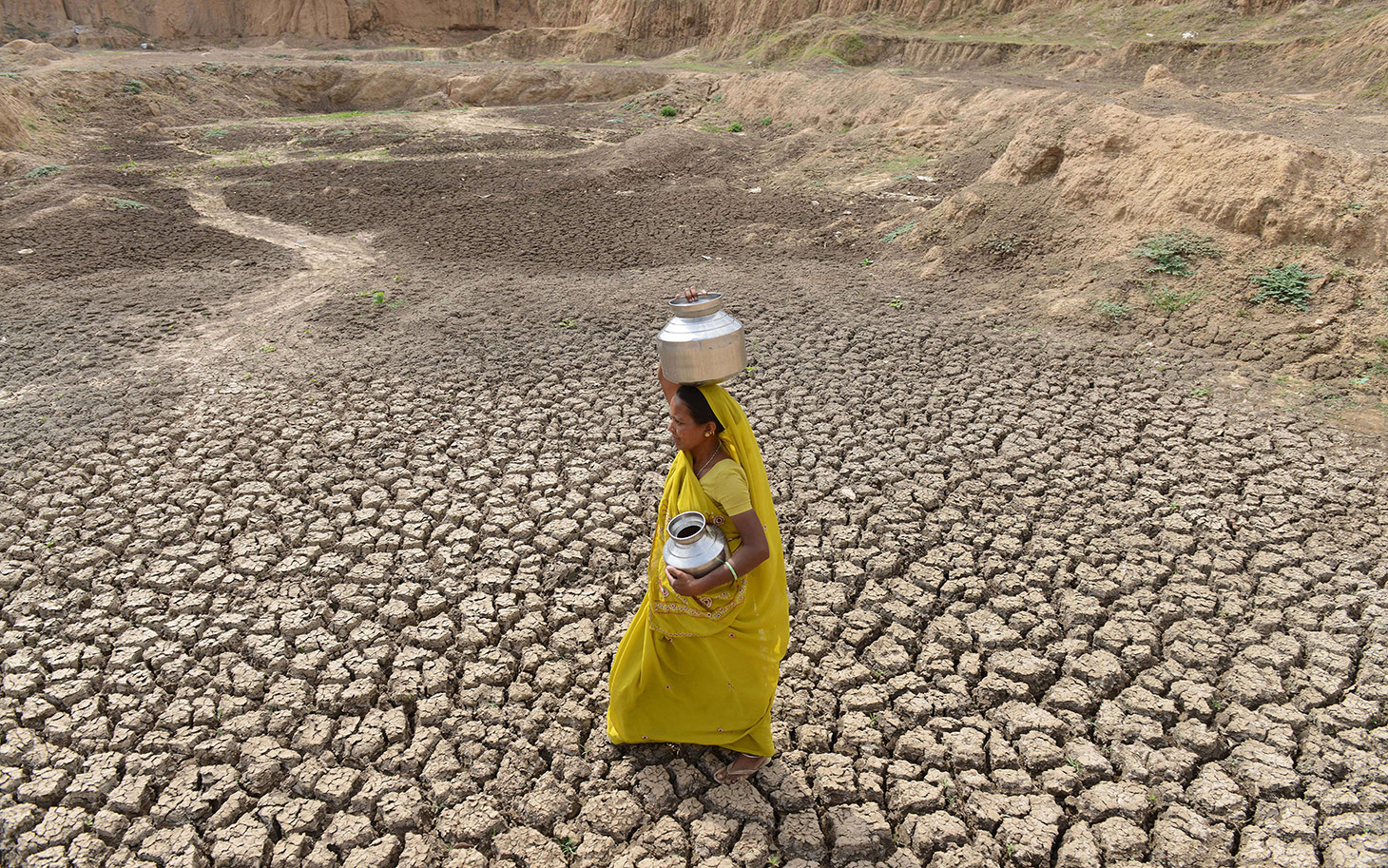
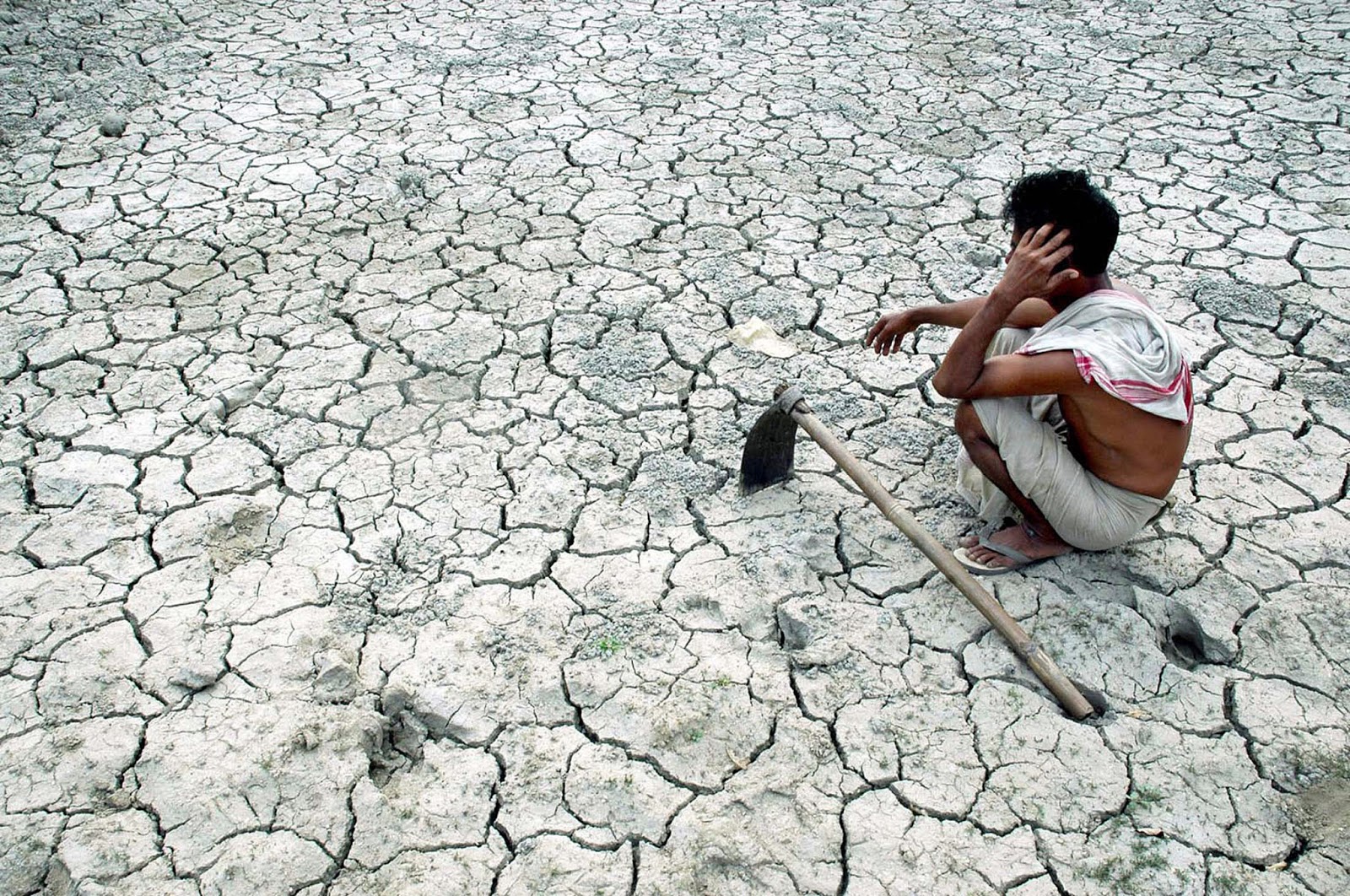
About 90% of farmers affected by drought in Bhopal are yet to receive compensation against crop losses. District administration admitted on Monday that just about 10% of the driought-hit farmers have actually been compensated in the district. On paper some 1.25 lakh farmers have been compensated in Bhopal district. Madhya Pradesh government announced a drought relief package worth Rs 86 crore for the district of which around Rs 78 crore has been deposited in co-operative banks, yet to be distributed among farmers. "We have asked farmers to open zero-balance accounts and claim relief money from the banks directly," said additional district magistrict (ADM) Vikas Singh. District administration's policy is a direct deviation from announcements of MP government that claimed to provide immediate disbursal of relief to farmers for affected crops, compensation and insurance money. There are an estimated 1,25,159 farmers in Bhopal district who applied for relief after one of the worst drought in years. Many of these farmers are debt-ridden. This Diwali, Madhya Pradesh announced a Rs 1,049 crore relief package for drought-hit farmers who suffered crop losses. Chief minister Shivraj Singh Chouhan had earlier promised farmers that compensation amount would reach them by Diwali. Government instructed district collectors to deposit compensation in the bank accounts of affected farmers' through core banking system. "Tall claims of every person having a bank account has been exposed. Tehsildars could identify only 10% of beneficiaries having bank accounts. To show the government relief has been distributed the money has been transferred to about 34 co-operative bank branches in Bhopal," said a disgruntled farmer, seeking anonymity. Officials now claim all tehsildars have been asked to co-ordinate with the banks and ensure all drought-affected farmers get the relief money. An estimated 65% of farmers have bank accounts. Source - http://timesofindia.indiatimes.com

15.12.2015

India - Farmers to get receipt of crop insurance premium

Madhya Pradesh Co-operative and Panchayat Minister Gopal Bhargava on Monday assured the Assembly that receipts will be provided to farmers for the premium paid by them under crop insurance scheme. Raising the issue during the Question Hour, Congress legislator Sachin Yadav said farmers were not getting any proof of the premium they were paying under the crop insurance scheme. Mr Yadav was joined by senior Congress member Ramniwas Rawat who said that the issue was very important given that during distress the farmers were finding it difficult to claim the crop insurance. Agriculture Minister Gaurishanker Bisen assured the members that he would look into the issue, admitting that farmers were not getting receipt against premium. Dissatisfied with Mr Bisen’s reply, Congress member Nishank Kumar Jain alleged that under the garb of crop insurance scheme, farmers were being cheated by the agriculture department and cooperative banks as they were not getting any document or receipt against payment of premium. Following mounting pressure from the Opposition, Speaker Sitasharan Sharma intervened and said the issue needed to be addressed, as it was linked to farmers. Minister Gopal Bhargava then assured the House that farmers will get receipt and required documents against payment of premium under crop insurance policy. The directive in this regard would be issued today itself, he added. Source - http://www.thehindu.com

15.12.2015

Israel - Potato crop damaged by frost

Last weekend, Israel was struck by a sudden cold spell which brought frost conditions to several parts of the country, causing serious damages to fruit and vegetable crops. The lost production could be worth up to 15 million shekels (3.55 million Euro), as estimated by KANAT, the national insurance fund for weather damages in agriculture, which received upwards of 200 reports of damages in just two days. Most of the damage has been registered in the Negev, especially to potato crops, and losses to producers in the region are estimated at about NIS 10 million (2.37 million Euro). Routinely in cases of frost, the most damages are inflicted on crops grown in open fields, such as potatoes, peppers, and tomatoes, and indeed that is where the majority of reports were recorded. Potatoes were most severely damaged as a large portion of the production comes from the southern region of the country which was hit with widespread frost. Frost events are not unusual in Israel, however, it is most common for such cold spells to occur in the middle of winter (late December to February) and to be limited to certain areas, primarily in the northern part of the country. This effectively caught some growers unprepared and may have intensified the damages. According to KANAT chief executive, Dudi Ginzburg, roughly a quarter of damages to fresh produce in Israel in the last decade comes from frost; in 2014 alone, some 60 million shekels were paid out due to frost damages. He added that on top of the lost production, frost also damages the growth and development of crops, indicating that the damages could continue to be felt in the future. Source - www.freshplaza.com

14.12.2015

India - C'garh govt to release Rs 134.60 cr for drought-hit farmers

Chhattisgarh government today decided to release Rs 134.60 crore as compensation for the drought- affected farmers in the state. According to official sources, following the announcement made by Chief Minister Raman Singh in this regard today, the Revenue and Disaster Management Department immediately issued orders. "Barring Balodabazar and Sarguja districts, farmers from the remaining 25 drought-hit districts will be given a total compensation of Rs 134.60 crore for the loss of crop due to drought. Directions have been given to disburse the amount to the affected farmers immediately," an official said. Priority will be given to the farmers whose crops have suffered losses between 67 and 100 per cent, followed by 50-67 per cent and lastly 33 to 50 per cent crop loss. "The Divisional Commissioners have been directed to take a regular review of the disbursal," the official said. Directions have also been given by the government to set up 'Kisaan Mitaan' centres for giving necessary suggestions to farmers in distress. This facility will be available on toll-free numbers. Source - http://www.business-standard.com

14.12.2015

Indonesia - Balinese farmers insure 4,000 hectares of rice fields

As many as 4,000 hectares of rice fields belonging to Balinese farmers are included in the rice farming insurance program for the planting period of October 2015-March 2016, an official has said. "Our previous target this year is 11 thousand hectares of rice fields, but only 4,000 hectares can be insured due to limited time," Head of Bali Provincial Agriculture and Foodstuffs affairs office Ida Bagus Wisnuardhana said here on Sunday. Thus, if the crop failure occurs due to floods or pest attacks after the rice fields have been insured, the farmer can get the claim of Rp6 million per hectare, he stated. In addition, the farmers should not pay the entire premium because 80 percent of it is subsidized through the state budget. The amount of the premium per hectare is Rp 180 thousand, but 80 percent (Rp144 thousand per hectare) is covered through the state budget. "Thus, the farmer concerned only has to pay Rp36 thousand per hectare in every planting season," Wisnuardhana pointed out. Source - http://www.antaranews.com

14.12.2015

India - Farmers in drought prone areas: No need for additional package

A debt-ridden BJP-led Maharashtra government is unwilling to announce any special financial package for farmers in drought prone areas despite its own ally Shiv Sena as well as opposition Congress and NCP taking an aggressive stand on the issue in the ongoing session of the state legislature. Finance Minister Sudhir Mungantiwar said his government has already proposed more than Rs 7,000 crore for farmers and there is no need of an additional package. The first week of the winter session had been completely washed out in the ruckus created by the Opposition over a package for farmers. The Opposition expects a package of at least Rs 10,000 crore but Chief Minister Devendra Fadnavis is firm on long term measures instead of a short term package for farmers. Mungantiwar, too, said that the government has already proposed in the budget a huge amount for farmers through supplementary demands. “We have proposed Rs 4,200 crore to tackle drought, Rs 944.92 crore as state’s share to give relief to farmers affected by natural calamities, Rs 227 crore to continue the Food Security mission, Rs 93 crore for a comprehensive crop insurance scheme through supplementary demands,” he said. He added that these measures have already been taken for farmers and hence there is no need of announcing a separate package for them. Rubbishing the Opposition’s charge that BJP government is not serious about farmers, Mungantiwar said, “These are sufficient provisions and the results will prove how serious we are about farmers.” Radhakrishna Vikhe Patil, Opposition leader in the State Assembly said, “More than 3,000 farmers have committed suicide during the BJP regime and still the chief minister and finance minister are not announcing a package. This is shameful.” Dhananjay Munde, Opposition leader in the State Legislative Council too echoed Patil’s views. Another Congress leader Sanjay Dutt claimed that Fadnavis was trapped between senior ministers of his own party while on the other hand, leaders from his ally Shiv Sena were also criticising him over various issues including drought and farmers suicide. Dutt claimed that Mungantiwar and Agriculture and Relief and Rehabilitation minister Eknath Khadse are targeting those not supporting Fadnavis. However, Mungantiwar denied the allegations. “Being the CM, Fadnavis has supreme powers and using his powers, he can consider announcing a package. My duty is to make provisions of the amount that is announced by him,” Mungantiwar said. Source - http://indianexpress.com

14.12.2015

India - KRRS seeks compensation from seed companies for Bt Cotton crop loss

The Karnataka Rajya Raitha Sangha (KRRS) has demanded that the State government ensure that seed companies that had sold Bt Cotton seeds pay compensation to farmers who incurred heavy losses due to pest attack. KRRS State secretary Amaranna Gudihal told presspersons here on Sunday that more than 50 per cent of Bt Cotton crop was destroyed due to pink bollworm pest attack. “Believing Bt Cotton’s pest resistance claims by seed producers, most of the cotton growers have cultivated Bt cotton this year. However, the crop was completely destroyed in pink bollworm attack in many parts of the State including Raichur, one of the major cotton-growing districts. As per our estimate, over 50 per cent of Bt Cotton in the State has been destroyed,” Mr. Gudihal said. He also warned that the Bt Cotton farmers might take extreme steps such as committing suicide if the government did not intervene and ensure release of compensation. “Farmers have spent between Rs. 25,000 and Rs. 30,000 for cultivating Bt Cotton on each acre. The seed producing companies should be held responsible for the heavy losses and they should be compelled to pay compensation to the affected farmers. Two farmers — one in Raichur and other in Yadgir — have committed suicide after their Bt Cotton crop was completely destroyed in bollworm attack. If the government does not ensure release of compensation that is equal to at least the cost of cultivation, such suicides will rise in the days to come,” he said. Slamming the Department of Water Resources for its “mismanagement” of water distribution along the Narayanpur Right-Bank Canal (NRBC) and Tungabhadra Left-Bank Canal (TLBC), Mr. Gudihal alleged that cotton, chilli, jowar, gram and other standing crops on vast tracts of land at tail-end areas of NRBC and TLBC were withering due to water shortage. “There is enough water in Narayanpur and Tungabhadra reservoirs. Most of the water released by these dams was being grabbed by farmers at the upper reaches for unauthorised land causing severe shortage of water for the authorised land at the lower reaches. Standing crops on over 45,000 acres in Deodurg taluk alone are withering. Irrigation officials are not doing anything though they know everything,” he said. Mr. Gudihal said that his organisation would mobilise farmers to hold a decentralised agitation outside the offices of Deputy Commissioners in district headquarters on Tuesday. Farmers' leaders Lakshman Gowda Kadagamdoddi, Huligeppa Jalibenchi, Mallanna Dinni, Narasappa Vakrani, and Doddabasavana Gowda Ballatagi were present. Source - http://www.thehindu.com

14.12.2015

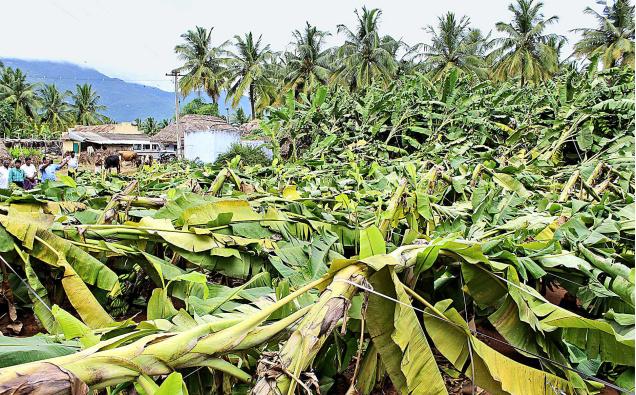
Mexico - Coahuayana banana sector receives compensations for damage

About 200 banana producers benefited from the aid granted through the Support Program for Climatological Contingencies (PACC), which was launched under the instructions of Governor Silvano Aureoles Conejo by the Secretary of Rural Development and Agribusiness, Israel Tentory García, in the municipality of Coahuayana. According to a statement, the funds granted will cover 1,379 hectares of banana plantations which were affected by hurricane Patricia last October; an acreage which can be expanded to 2,029 hectares, with a total of more than 5 million pesos available, explained Tentory García, who handed out these resources in the framework of the Sixteenth National Congress of Banana Producers 2015. He stressed that bananas are one of the most consumed fruits in Mexico and the world. "The domestic production totals more than 2 million tonnes, with the state of Michoacan as the fifth largest producer, supplying more than 147,000 tonnes per year." Coahuayana is the municipality with the greatest productivity, accounting for 83 percent of the state's total production, followed by Parácuaro, Lázaro Cárdenas and Apatzingán, which together produce 12 percent of this fruit. The remaining 5 percent is grown in other municipalities. Tentory García announced that resources worth 17.1 million pesos will be granted in the Coast region, according to the PACC, and in concurrent programs with SAGARPA, the Strategic Project for Food Security (PESA) and Extensionismo Rural (Rural Extensionism). Source - http://www.freshplaza.com/

14.12.2015

India - Satellite images help in crop management

Soon after the recent rains hit hard the costal districts, Tamil Nadu Agricultural University (TNAU), Coimbatore, calculated how much cultivated area was inundated. It also estimated the loss of paddy in Tiruvallur, Kancheepuram, Cuddalore and other districts. The University’s quick assessment and communication to the State Government is the result of the work it has been doing for four years now using images obtained from European Space Agency’s Sentinel 1A satellite. Tie-up The University’s access to the satellite images follows a tie-up under the ‘Remote Sensing Information for Insurance on Crops in Emerging Economies’ project with the Swedish Developmental Council, International Rice Research Institute and Sarmap of Switzerland. The engagement with the European Space Agency is for accessing the satellite images and with the other two agencies for technology (software) to process the images and develop yield model, says S. Pazhanivelan, professor, Department of Remote Sensing and GIS, TNAU. Various uses The University uses the images to identify crops, estimate area of cultivation, prepare seasonability map (track the start, end and progress of agriculture seasons), phenology map (various stages of crop) and yield map (estimate the yield). The images, and the data deciphered there from will help the State Government frame policies and farmers get precise inputs and also quick disbursement of crop insurance, says Vice-Chancellor K. Ramasamy. Help to govt. By studying the progress in cultivation from the satellite images, the government will be in a better position to decide the area that needs fertilizers and inputs on a priority basis, Mr. Pazhanivelan explains. Again, by estimating the yield, the government will be in a position to decide how many paddy procurement centres it should open. As for farmers, the process of availing of crop insurance will be easy as the satellite images will serve as proof of crop damage. Until now, the farmers will get compensation only if there is crop loss in the entire firka , he points out. Soil conditions, nutrients The farmers will also get to learn about soil conditions and nutrients needed. The Vice-Chancellor adds: in the event of monsoon or drought, the satellite images will help the government with the extent of damages. This will ensure that the government take decision without delay. Source - http://www.thehindu.com

903
of 1224