NEWS
906
of 1224
News
04.12.2015

USA - Transportation bill would undo billions in crop insurance savings

The FAST Act (Fixing America’s Surface Transportation Act) is aptly named, but for all the wrong reasons. The process for getting to final passage for the federal transportation bill actually has been incredibly long and winding, full of stopgap measures and bumps in the road. But one thing about the bill certainly is “fast.” Tucked neatly away in Sec. 32205, on Page 1,143 of the 1,301-page bill, is a repeal of Sec. 201 of the Bipartisan Budget Act of 2015, passed in early November. For taxpayer advocates, Sec. 201 was one of that bill’s strongest selling points. It ordered the Department of Agriculture to renegotiate the Standard Reinsurance Agreement the federal government has with private insurers who participate in the federal crop insurance program. It would push their taxpayer-guaranteed rate of return down from 14 percent to 8.9 percent. This small reduction actually goes a long way. The agriculture portion of the farm bill is vastly over budget, to the tune of more than $5 billion in 2014 alone. Despite Big Ag’s cries that their programs deliver taxpayer savings, a large chunk of the supposed savings from the latest farm bill already have been squandered on higher-than-expected payouts from our overly generous farm programs. That’s why free-market advocates from Citizens against Government Waste to FreedomWorks to the National Taxpayers Union came out in force to support renegotiation. The Heritage Foundation lauded the provision as real savings in a package they otherwise termed a “colossal step” away from fiscal restraint. Unfortunately, it seems Big Ag is about to win the day, and in the most backhanded way – by attaching a seven-line provision to a completely unrelated bill. However, there may be hope on the horizon. Sen. Jeff Flake, R-Ariz., plans to raise a budget point of order against the act, rightly pointing out that this vehicle is inappropriate for such a provision. It’s refreshing to see a senator so ready to fight for his taxpayers and stand up against the baseless claims of corporate agriculture interests. An 8.9 percent guaranteed rate of return would be the envy of any industry, and as our friends at the Environmental Working Group point out, the cuts amount to about $300 million per year, split between 17 companies currently enjoying comfortable profit margins. With Republican majorities in both halls of Congress, it shouldn’t be difficult to see taxpayer savings upheld once they cross the finish line. It would be a particular shame to see the savings evaporate in exactly one month. Unfortunately, as evidenced by this provision and the reauthorization of the Export-Import Bank, permanent victories appear to be elusive with this crop of Republicans. Source - http://www.rstreet.org
03.12.2015

USA - New Insurance Provision to Benefit Farmers

A new yield exclusion provision for calculating crop insurance coverage. The provision is coming to the aid of farmers just when they need it most. The new arrangement benefits wheat growers more than anyone else, explains a leading crop insurance analyst. Here’s how it works: If the average county yield for a crop drops 50 percent or more below average, a farmer can exclude that year from their production history. More than one year can be dropped, as long as it meets the criteria. That means farmers get more coverage just by staying at their current coverage level. It also means farmers can raise their yield guarantee without paying more for the additional coverage. The yield exclusion provision was included in the 2014 Farm Bill at the insistence of Congressman Frank Lucas of Oklahoma. Lucas operates a farm in far western Oklahoma, the epicenter of the Dust Bowl. Source - http://hppr.org

03.12.2015

USA - Farmers Sentenced for Conspiracy to Commit Fraud in Connection with Federal Crop Insurance and Federal Crop Disaster Programs

U.S. Attorney Timothy Q. Purdon announced that on March 9, 2015, Aaron A. Johnson and Derek M. Johnson were sentenced before U.S. District Judge Ralph R. Erickson to serve four years and 18 months respectively for conspiracy to commit fraud in connection with Federal Crop Insurance and Federal Crop Disaster Programs; making false statements to the United States Department of Agriculture, acting through the Risk Management Agency (RMA); and, making false statements to federal law enforcement authorities. The two brothers farmed potatoes near Northwood, ND from at least as early as 2002 until about January 20, 2010, and thereafter. The guilty verdicts were returned Dec. 11, 2014, at the conclusion of a two week jury trial. The brothers’ scheme involved intentionally destroying and damaging potato crops, in order to obtain federal crop insurance indemnities and federal crop disaster benefits, over a period of years. As part of the scheme, the brothers intentionally poisoned their potato seed during planting. They intentionally destroyed or neglected their growing crops in the field and intentionally destroyed potatoes in storage. The brothers applied concentrated nitrogen fertilizer and septic system products such as Rid-X and Flush to their potato seed prior to planting; they intentionally destroyed their growing potatoes using cultivator equipment; intentionally left potatoes in the field during harvest. They added septic system products such as Rid-X and Flush to water and sprayed it on top of potatoes in storage; purchased and resold unused farm chemicals that were intended to protect the crop but never used; they sprayed water on fields in order to fool neighbors and others into thinking they cared for the crop; they added frozen potatoes to the top of the stored potato pile and used a portable heater to increase warehouse temperatures in order to regulate the rate of potato Soft Rot; they did all of this in advance of filing claims for lost potato production and stored potato crops over a period of years. The brothers and their farming operations received millions of dollars in federal crop insurance indemnities, subsidized crop insurance premiums and federal disaster benefits. Judge Erickson also sentenced the Johnson brothers to five years supervised release and jointly pay restitution and forfeiture of .$932,000 The case was investigated by the United States Department of Agriculture and the Risk Management Agency Assistant U.S. Attorney Clare Hochhalter and Assistant U. S. Attorney Nick Chase prosecuted the case. Source - http://www.justice.gov

03.12.2015

USA - Commercial market for drones in agriculture is robust

The market for commercial drone use in American agriculture has been recognized by aviation and agriculture experts. But some specifics remain up in the air. Farmers at the 2015 Virginia Farm Bureau Federation Annual Convention in Norfolk posed numerous questions. Among them were “Who owns the data that (drones) collect on private land?”, “Will there be regulatory training for operators, like there is for pilots?” and “If you find a drone in your soybean field, is it yours?” Darryl Jenkins, chairman of the American Aviation Institute, delivered the convention’s keynote address on “The Future of Drones and Your Farm.” Jenkins is founder of the George Washington University Aviation Institute and a past professor at GWU and Embry Riddle Aeronautical University. He also is a consultant to airlines and aviation companies, an airline analyst and author of the Handbook of Airline Economics. The market for unmanned aerosystems in agriculture is “a decent market” to say the least, he noted. “We thought (commercial drones) would be used primarily in agriculture, but every day I get a note about new uses for drones.” In agriculture specifically, Jenkins said, “you’re going to see drones, and you’re going to see them soon and they’re going to become ubiquitous.” Proposed Federation Aviation Administration rules, he noted, will establish regulations sufficient for commercial drone use on smaller and medium-size farms. He cited a recent study conducted for the American Farm Bureau Federation that found farmers will, on average, enjoy a $10-per-acre increase in revenue by using drones. That figure will vary, he said, because per-acre value varies among U.S. crops. He cited his own research that found only 5 percent of U.S. farmers have made up their minds to use drones to collect information on their crops. The devices can be used to survey evapotranspiration, surface and root-zone soil moisture and crop health features like chlorophyll levels and canopy volumes, Jenkins said. “We can measure all sorts of things in your field,” generating data that he said will be “the next big Green Revolution.” Questions remain, he noted, on who will own that data. But precision agriculture operators can use it to create prescriptive maps of fields and then tailor how, when and where they irrigate or apply products like fertilizer. Drone owners most likely will be required to register themselves as such with the FAA, and commercial operators most likely will be required to hold a license and maintain certification and a flight logbook, Jenkins said. With 128,000 members in 88 county Farm Bureaus, VFBF is Virginia’s largest farmers’ advocacy group. Farm Bureau is a non-governmental, nonpartisan, voluntary organization committed to supporting Virginia’s agriculture industry and preserving the Virginia way of life. Source - http://augustafreepress.com

03.12.2015

India - Cabinet defers decision on new crop insurance scheme

Cabinet today deferred the decision on new crop insurance scheme, which aims to keep premium burden on farmers below 3 per cent, seeking more discussions on the issue. "The Cabinet deferred the decision on new crop insurance scheme proposal of the Agriculture Ministry. The decision was deferred as it wanted more discussion on the issue," sources said. The decision could not be taken in the absence of Home Minister Rajnath Singh, who contributed significant inputs to the new scheme, they added. In a Cabinet note, the Agriculture Ministry has proposed a premium of 3 per cent required to be paid by farmers. And for the benefit of farmers in vulnerable and disaster-prone areas, the ministry has recommended premiums without any cap unlike the existing scheme MNAIS. Of the total premium fixed by the insurers under the existing crop insurance schemes NAIS and MNAIS, farmers are presently paying a premium of up to 3.5 per cent and 8 per cent, respectively, and the rest is borne by the government. On an average, insurance firms are charging an overall premium in the range 1 to 20 per cent for crops. Under the Modified National Agricultural Insurance Scheme (MNAIS), premiums are capped at 13 per cent in most vulnerable areas for kharif crops, while at 11 per cent for rabi crops. The ministry has proposed rolling out of the proposed scheme in the ongoing rabi season that started from October. About 20 per cent (40.27 million hectare) of the total farm land is insured under the existing schemes, as per government data. Maximum area insured is in Rajasthan at 12.26 million hectare, followed by Bihar, Karnataka, Maharashtra, Gujarat, Uttar Pradesh and Andhra Pradesh. Major crops insured are oilseeds, rice, wheat, pulses and coarse grains. The Centre is implementing various farm insurance schemes since 1985 to insulate farmers against agri-risks. At present, it is offering three crop insurance schemes -- National Agricultural Insurance Scheme (NAIS), Modified NAIS and weather-based crop insurance scheme. Source - http://economictimes.indiatimes.com

03.12.2015

Australia - Macadamia crop damage isolated following storms

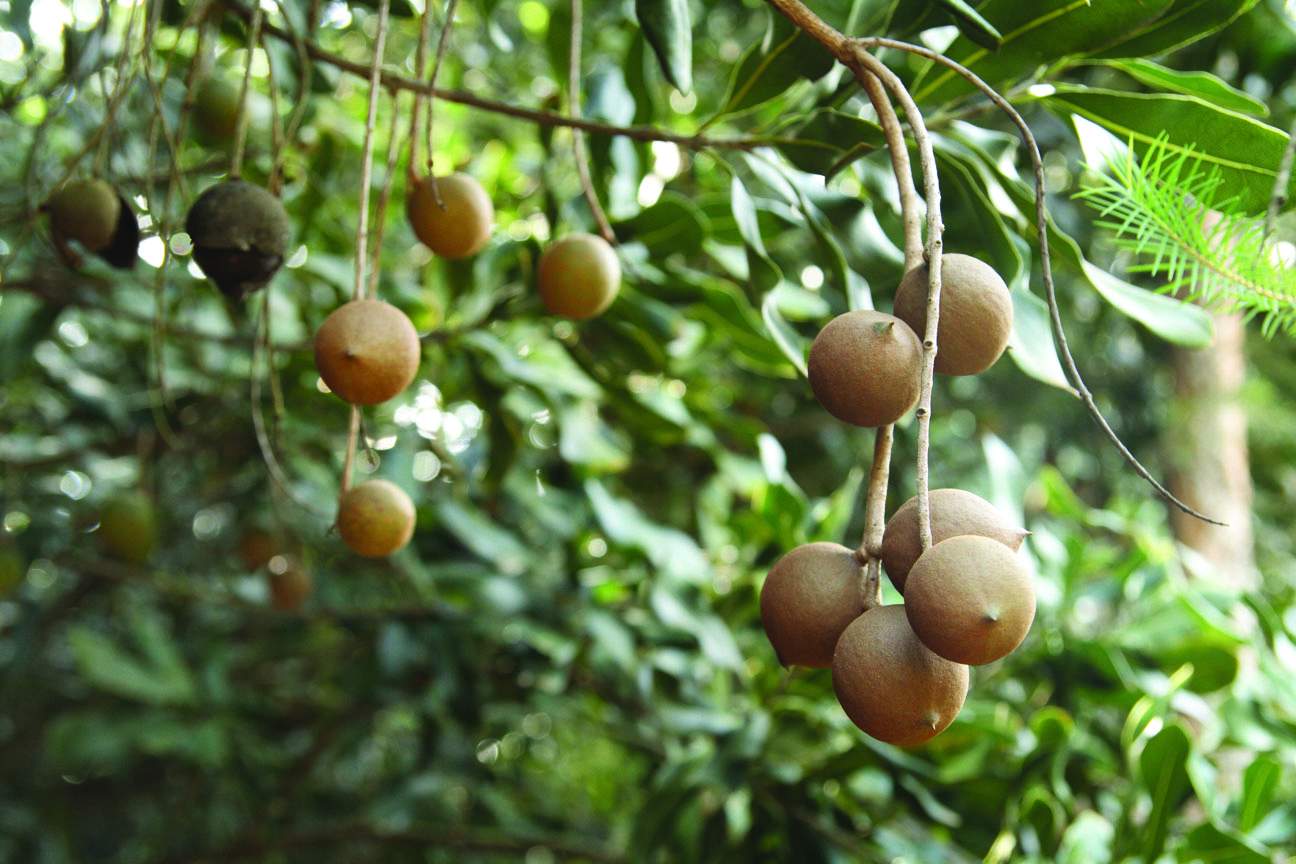
Macadamia farms have isolated storm damage, with crop losses varying between 5% and 50%, but supply is still consistent following severe thunder storms over the weekend along the NSW North Coast, and Queensland. “Those farms that have been hit are badly affected, but at this stage the extent of the damage should not have a major affect on the Australian crop,” says Jolyon Burnett, CEO of the Australian Macadamia Society.   Thankfully the storms came after the record macadamia harvest reported recently, and off the back of a successful promotional campaign in China, where macadamia exports are set to boom. The major production area, the Alstonville Plateau, did not have significant damage according to initial reports. The hardest hit regions were Dunoon, Rosebank and Numulgi, Mr Burnett says.   Around 50 farms could have experienced damage from the storms, Mr Burnett estimates, and there should be no impact to exports or prices. “There is plenty of time for clean up before harvest and the damage does not appear widespread enough to affect the total crop.”   Even farmers who have to go through a major clean up will not have any trouble getting ready for the 2016 harvest, so the feeling among industry insiders is still a positive one, Mr Burnett says. “Demand is strong across all markets, both domestic and export and prices look to be remaining firm.”   Ultimately, while there have been some crop losses, it isn’t possible to quantify whether the 2016 harvest will be significantly down on 2015, Mr Burnett says. “There are still 3 months to go before harvest and a few weeks left of what is considered “storm” season, so it is too early to be making firm pronouncements on the 2016 crop.”   Source -  http://www.freshplaza.com

03.12.2015

Zimbabwe - Adapting Tobacco Growing to Climate Change

The Zimbabwe Meteorological Department (MET) said the country is likely to be affected by the El Nino weather phenomenon this farming season. El Nino is usually characterised by droughts and already the MET department has forecasted normal to below normal rainfall in all tobacco growing areas. Faced as we are with this impending problem, both growers and authorities cannot afford to sit on their laurels and do nothing. The realities of climate change are a new and growers should adapt otherwise they ignore the new realities at their own peril. We cannot stand and wish this away but instead, we need to adjust and adapt to the erratic weather pattern through good agronomic practices that reduce exposure to the harsh climatic conditions. Irrigation should become the country's focus as it is no longer an option for government and individual farmers, but a must. Farming can never be allowed to be done as if we are still in 10 000 B.C. era. Tobacco Industry and Marketing Board (TIMB) and its financing partners in an effort to mitigate the effects of climate change have established a revolving fund for the development of small holder drip irrigation systems. Interested tobacco growers can make inquiries at any of our TIMB offices. Growers are encouraged to adopt conservation farming techniques, which include early ploughing (winter ploughing) and use of minimum tillage. Minimum tillage helps to keep the soil covered and protected with cover crops for a longer period of time and this helps in reducing soil erosion as well as preserves soil moisture. Other water conservation techniques such as potholing and mulching can be practiced. Growers are also encouraged to adopt the float tray system of producing seedlings as less water is used under this system. Other potential adaptation mechanisms for the tobacco industry include strengthening research into breeding drought and other weather vagaries tolerant varieties. The tobacco industry and insurance sectors are also called upon to classify drought as a risk as opposed to the current classification as an uncertainty. Classification of drought as a risk in tobacco farming will lead to insurers developing innovative tobacco crop insurance schemes for small holder farmers. Crop insurance will hedge growers in years of crop failure. In addition, risk zoning of areas could be useful in informing extension and tobacco promotion initiatives with marginal or unsuitable areas diversifying into other crops and not growing tobacco. Overall, it is very important to strengthen institutional capacities to respond to crop failures and advise growers on appropriate actions to reduce the impact of climate change. Source - http://allafrica.com

02.12.2015

USA - Proposed cuts would chip away at crop insurance

Crop insurance coverage is often critical for obtaining loans, conducting forward contracting arrangements and financing input purchases, routine business activities that are all likely to become much more difficult for farmers in the months ahead. “We had a pretty good fall harvest and that offset some of the lower prices,” said Kansas State University ag economist Art Barnaby at a series of crop insurance workshops hosted by Kansas, Colorado, Nebraska and Oklahoma recently. “More likely the crunch will be tougher next year.” Indeed, the agriculture sector is bracing for the toughest operating environment in at least a decade and doing it without the traditional farm support program originally designed to offer a buffer against extended periods of low commodity prices. That’s why a recent congressional proposal intended to shave a few million more dollars from the crop insurance program by capping the government’s share of premiums and enforcing stiffer means testing on participants was quickly criticized by a diverse coalition of groups. “There are more players here than you might initially think,” Barnaby said of the crop insurance coalition. “You have a bunch of people who have a dog in this fight.” His list includes not just crop insurance underwriters and agents, but also ag lenders, commodity brokers, grain elevator managers, equipment dealers, some federal employees, rural main street merchants and more. Capping the government’s share would shift more of the premium expense to farmers, who are already subject to high insurance rates in erratic weather regions like the Central Plains. Meanwhile, eliminating premium subsidies for farmers with an adjusted gross income of more than $250,000 could affect farmers who operate on just a few thousand acres, Barnaby noted. “Realistically, to be a full-time farmer requires 2,500 acres in a lot of areas. When you have $400,000 combines, full-time farmers farming a quarter-section is not realistic,” he said. Legislation introduced as the “Assisting Family Farmers through Insurance Reform Act” would also cap insurance companies’ administrative and operating costs and eliminate the Harvest Price Option, a forward hedging-type mechanism that has been popular with farmers. These cuts are being considered in addition to an original $3 billion cut included in the budget agreement earlier this fall that would have reduced the targeted rate of return for insurance providers from 14.5 percent to 8.9 percent. Ag leaders in Congress managed to broker an eleventh hour compromise to have it stripped out in the omnibus spending bill, but that process won’t be completed until later in December. Currently there are about 17 approved crop insurance providers operating nationally, but not all are active in every state or region, Barnaby said. “I personally think you are going to see consolidation of agents, because those commissions have already been cut,” he said. “I think we will see fewer of them out there, and consolidation of insurance providers, too.” Insurance providers that are losing money might initially be slow to withdraw from the marketplace, creating a lag effect, but more of the impact could be felt over time, he said. “Iowa won’t have a shortage of agents for the foreseeable future, but in more marginal areas — New Mexico, for example — it could become a problem,” Barnaby said. Drought policies, particularly in the Plains states, could also become increasingly difficult to write, he added. The long-term outcome might in some ways mirror what is already happening with the federal health insurance exchange created under the Affordable Care Act. As a lack of actuary soundness forces more providers to drop out of the system, options are becoming fewer and insurance premiums are jumping by double-digit percentages. While support for maintaining the federal crop insurance program goes beyond the mainstream farm groups, it also has formidable foes that have relentlessly attacked it, among them budget hawk legislators in Congress and the Environmental Working Group. While insurance protection is considered most essential to young or beginning farmers who carry the most debt exposure, the program’s impact on those same farmers has been questioned by some. According to the Nebraska-based Center for Rural Affairs, for example, subsidized crop insurance gets bid into land prices and rental rates, making it more difficult for small and beginning farmers to obtain access to farmland. All of the criticism is somewhat confounding to Barnaby, who considers the public-private crop insurance model more workable than most government approaches. “I personally think the crop insurance story has been a pretty good one,” he said. For one thing, everyone knows the rules in advance with a crop insurance contract and can plan accordingly, as opposed to traditional farm supports that are subject to the whim of lawmakers. Taxpayers benefit from that certainty, too. Barnaby singled out a recent Farm Service Agency revision that allows farmers who farm in multiple counties to recalculate payments based on the physical location of each tract of their farm. “The amount of money that goes into the commodity title (of the Farm Bill) will go up as a result,” Barnaby observed. “You can’t do that with a crop insurance contract. You can’t change the rules after the fact just because it’s politically popular.” Source - http://www.agjournalonline.com

02.12.2015

Australia - Ladyfinger bananas survived hailstorms, revive Coffs region

The hailstorms affecting Northern New South Wales and South East Queensland have not deterred the area’s banana growers. “We had a downpour on Sunday in particular, and we’ve experienced a few of the recent storms, but it was quick and we’ve come through it pretty safe,” says Woolgoolga banana farmer Jaswinder Singh. “We might lose a couple of trees here and there, but nothing serious or significant.” The banana plantation in the area will not lose volume following the recent weather, but harvest has been difficult the last two years due to the weather conditions in the months leading up to harvest, Mr Singh says. “We already had a dry April and May that marked our fruit, and a dry lead up to Christmas last year, so we are suffering from that rather than the recent weather.” The Singh family grows mainly ladyfinger bananas, which can produce a higher return than traditional Cavendish when the fruit is unblemished and premium grade. “Within the next month or so we’ll start harvesting on our new plantation we’ve purchased, and hopefully we’ll see some improvement but it takes until the third harvest or so for the plants to reach full production.” The amount of work involved in harvesting and packing a niche variety such as lady finger bananas deters a lot of others, Mr Singh says, but the family business has a plan to produce the right quality and the right volume to remain profitable. Competition in the area has lessened and other farmers are turning to berries to sustain their businesses. “There is only a handful of banana growers left in this region, most have moved up north to Queensland if they haven’t started growing berries in hothouses.” Moving forward, as the newer plantations reach full production, Mr Singh remains optimistic that market prices will remain strong for ladyfinger bananas in particular. “We really have top quality fruit, and produce top quality but because it’s been market recently prices haven’t been what they were. We’re hoping that will change.” Source - http://www.freshplaza.com

02.12.2015

USA - Highway deal reverses crop insurance cut

Congressional leaders are using a compromise highway bill to reverse a $3 billion cut to crop insurers that was included in the two-year budget agreement. The conference agreement on the transportation measure is expected to clear Congress this week to prevent programs from expiring on Friday. “It's a big win for agriculture,,, This is a big deal to get this thing fixed,” said House Agriculture Chairman Mike Conaway, R-Texas. Before votes on the budget deal, House GOP leaders, including the incoming speaker, Paul Ryan of Wisconsin, and Senate Republican Leader Mitch McConnell of Kentucky, had agreed to reverse the cut but hadn't said how it would be done. A House aide said Tuesday that the $3 billion cut would be replaced through a Federal reserve dividend cut for big banks. Conaway had said a condition of his agreement with the House leadership was that the $3 billion wouldn't be taken from any other agriculture programs. In a joint industry statement Tuesday, the Crop Insurance and Reinsurance Bureau, American Association of Crop Insurers and the National Crop Insurance Service said the budget legislation “contained a disastrous provision that would have devastated crop insurance as we know it today, harming U.S. farmers and taxpayers alike.” The conference report includes language that specifically repeals the insurance cut as of Nov. 2, the date the budget agreement was enacted. The back-dated repeal date was important to ensure that there was no way the existence of the language in the budget deal could ever be used to justify legally carrying out the cut, said David Graves, president of the American Association of Crop Insurers. The budget agreement would have required the Agriculture Department to cap the insurance companies' rate of return at 8.9 percent, down from the current 14.5 percent. The cut was supposed to be made through renegotiating the Federal Crop Insurance Corporation's Standard Reinsurance Agreement (SRA) with the companies. Since 2011 the rate of return has varied from a loss of 15 percent in fiscal 2012, a drought year, to a gain of 13 percent in fiscal 2014. Insurance companies argue that their real rate of return is closer to 4 percent. If the provision is not reversed this month, USDA would technically be required to cancel the SRA as of Dec. 31, Graves said. A leading critic of the crop insurance program, the Environmental Working Group, said that the cut wouldn't have done nothing to hurt farmers.  “Congress should reject efforts to roll back the reasonable cuts included in the budget deal. With plenty of support from the American taxpayer, crop insurance companies and agents have enjoyed $11 billion in profits over the last decade,” said Colin O'Neil, the group's agriculture policy director. Source - http://www.agri-pulse.com

02.12.2015

India - Step taken by the Government for Welfare of Farmers

The Department of Agriculture and Cooperation and the Ministry of Agriculture have been renamed as the Department of Agriculture, Cooperation and Farmers Welfare (DAC&FW) and the Ministry of Agriculture and Farmers Welfare respectively. With a view to focus on the issues of farmers welfare, the DAC&FW has created a separate Division called 'Farmers Welfare' under the charge of a senior officer. The Government believes, that farmers' welfare will improve if there is increase in net income from the farms. With this end in view, the approach is to reduce cost of cultivation, enable higher yield per unit and realize remunerative prices. Some of the important new initiatives in this context are: Soil Health Card (SHC) scheme by which the farmers can know the exact nutrient level available in their soils which will ensure judicious use of fertilizer application and save money. The balanced use of fertilizer will also enhance productivity and ensure higher returns to the farmers. Similarly, Neem Coated Urea is being promoted to regulate use urea, enhance its availability to the crop and cut on cost. The entire quantity of domestically manufactured is now neem coated. Paramparagat Krishi Vikas Yojana (PKVY) is being implemented with a view to promoting organic farming in the country. This will improve soil health and organic matter content and increase net income of the farmer so as to realize premium prices. The Pradhan Mantri Krishi Sinchai Yojana (PMKSY) is another innovative scheme to expand cultivated area with assured irrigation, reduce wastage of water and improve water use efficiency. In order to promote reforms of the agricultural marketing sector and to provide a common electronic platform deployable in selected regulated markets across the country, national scheme called 'National Agriculture Market' (NAM) has been introduced. The proposed new National Crop Insurance Scheme will protect the interest of farmers with a broader coverage towards crop losses and other such natural calamities. This is an intervention to cover the risks involved in farming. The State Governments are primarily responsible for development of the agriculture sector. However, the Government of India supplements the efforts of the States through appropriate policy measures and budgetary support. Various programmes/ schemes/missions for the development of agriculture sector are being implemented in a decentralized manner with flexibility to State Governments to formulate and implement appropriate projects to suit their specific requirements. Some of the important schemes/programmes implemented as Centrally Sponsored Schemes are National Food Security Mission (NFSM); Mission for Integrated Development of Horticulture (MIDH); National Mission on Oilseeds & Oil Palm (NMOOP); National Mission for Sustainable Agriculture (NMSA); National Mission on Agricultural Extension & Technology (NMAET); National Crop Insurance Programme (NCIP); Unified National Agriculture Markets; and Rashtriya Krishi Vikas Yojana (RKVY). Other measures taken for the benefit of the farmers include enhancement in the Minimum Support Prices (MSP) to eliminate distress sale of agricultural produce by farmers, support to the farmers from time to time like debt waiver/relief, interest subvention on crop loans, revival package for strengthening Short Term Rural Cooperative Credit Structure, etc This information was given by the Minister of State for Agriculture & Farmers Welfare Sh. Mohanbhai Kalyanjibhai Kundaria in Lok Sabha today. Source - http://www.business-standard.com

02.12.2015

USA - Sen. Pat Roberts and other farm state lawmakers work to protect ‘Obamacare for our corn’

Congress is hurtling toward another budget crisis. It has to pass a catch-all spending bill by Dec. 11 because it has, once again, failed to approve a single regular spending bill for any federal department. But it has other work to do as well. It is thinking about extending a long list of tax breaks. It may try to repeal Obamacare. Members want to talk about blocking the resettlement of Syrian refugees and defunding Planned Parenthood. And — quietly — lawmakers are expected to restore recent spending cuts to federal crop insurance, a taxpayer-supported program that doles out cash to participating farmers and insurance companies. In October, Congress cut $3 billion from the crop insurance program. The savings, spread out over 10 years, would come from imposing a lower limit on the profits participating insurance companies could earn. You might think farm state lawmakers, legendary critics of bloated federal spending, would support a modest reduction in crop insurance. Cutting just $3 billion from a budget expected to exceed $48 trillion over the next decade seems pretty reasonable, and achievable. You would be wrong. Sen. Pat Roberts, a Kansas Republican, exploded when the cuts were proposed. “Farmers and ranchers have done more than their fair share to reduce government spending,” he said. Roberts demanded — and got — a promise that Congress would reconsider the $3 billion cut sometime before the end of the year. That reconsideration is just a few days away. Restoring the crop insurance cut is now expected to be a policy rider on a new highway spending bill, and a final vote may come this week. Not everyone is happy with restoring the cuts. “The companies that benefit from the heavily subsidized federal crop insurance program make huge profits, pay their top executives millions of dollars annually and can easily afford to pull in their belts,” said a recent statement from a social welfare charity called the Environmental Working Group. Taxpayers pay part of the premiums for farmers who buy crop insurance, the group points out, and can cover some of the losses of insurance companies who sell the coverage. Taxpayers also cover the companies’ administrative costs — $13.5 billion over the past 10 years. Maybe the scheme sounds familiar. “That’s just Obamacare for our corn,” satirist Stephen Colbert once said. Roberts and many of his farm state colleagues have bitterly attacked Obamacare, voting repeatedly to repeal the law. Yet they’ve never really explained why subsidies for sick people are evil but subsidies for farmers and insurance companies are essential. Maybe we’ll hear that explanation before the government shuts down, perhaps later this month. Source - http://www.kansascity.com

01.12.2015

John Deere Financial income forecast to slip in 2016 as agricultural downturn triggers staff layoffs and quest for “more durable business model”

John Deere Financial Services reported net income of $153.0 million for the fourth quarter of 2015 (to Oct 31) and $632.9 million for the year. This compares with $172.2 million and $624.5 million respectively in 2014. Lower results for Q4 were primarily due to the unfavorable effects of foreign-currency exchange translation, and higher losses on residual values primarily for construction-equipment operating leases, partially offset by lower selling, administrative and general expenses. Results for full-year 2015 improved due to growth in the average credit portfolio, the previously announced crop insurance sale and higher crop insurance margins experienced prior to divestiture, and lower selling, administrative and general expenses. These factors were partially offset by the unfavorable effects of foreign-currency exchange translation, less-favorable financing spreads, and higher losses on residual values primarily for construction-equipment operating leases. The results come as its parent, Deere & Company, reports a weakness in global markets for farm and construction equipment which has led to a decline in sales and earnings for quarter and full year. Worldwide net sales and revenues for Deere & Company products decreased 25%, to $6.715 billion, for the fourth quarter and were down 20%, to $28.863 billion, for the full year. Net sales of the equipment operations were $5.932 billion for the quarter and $25.775 billion for the year, compared with $8.043 billion and $32.961 billion for the same periods in 2014. "Adept execution" Samuel R. Allen, chairman and chief executive officer stressed defensively: "John Deere has completed a successful year in the face of further weakness in the global agricultural sector and a slowdown in construction-equipment markets. "Sales and earnings for the year were the sixth-highest in company history, a notable achievement in light of the challenging market conditions we experienced. The company's performance benefited from the adept execution of our business plans and disciplined cost management. As a result, Deere remains well-positioned to serve its customers while continuing to make investments in quality and innovation that are designed to drive growth in the future." Nevertheless, the financial news was followed by a statement from the company that it had informed “approximately 220 employees at John Deere Seeding and Cylinder in Moline, Illinois, that they will be placed on indefinite layoff, effective February 15, 2016”. Employees were informed of the layoff today in meetings at the Moline facility. The layoffs reflect Deere’s forecast that agricultural machinery sales will decrease in fiscal year 2016. Deere said the actions are taken to align the size of the manufacturing workforce at individual factories with market demand for products made at each specific location. In the past, manufacturing employees at John Deere Seeding and Cylinder have experienced seasonal layoffs in the spring and returned to work in the fall. Today's announcement is an indefinite layoff with no specific call-back date. Equipment net sales in the US and Canada decreased 23% for Q4 and 18% for the full year. Outside the US and Canada, net sales fell 31% for the quarter and were down 28% for the year. Allen forecast that company equipment sales are projected to decrease about 7% for fiscal 2016 and to be down about 11% for the first quarter compared with year-ago periods. "Although our forecast calls for lower results in the year ahead, the outlook represents a level of performance that is considerably better than we have experienced in previous downturns," he said. "This shows the continuing success of our efforts to establish a more durable business model and a wider range of revenue sources." Financial Services forecast to dip in 2016 Fiscal-year 2016 net income attributable to Deere & Company for the financial services operations is expected to be approximately $550 million. The outlook reflects less-favorable financing spreads and an increased provision for credit losses. Additionally, 2015 results benefited from a gain on the sale of the crop insurance business. Source - http://www.assetfinanceinternational.com

01.12.2015

USA - Broad coalition urges Congress to uphold crop insurance promises

A coalition of 49 groups representing farm interests, equipment manufacturers, banks, insurance companies, credit lenders and other entities have joined in urging Congressional leadership to keep their promise to American farmers to not cut crop insurance or other farm programs through the omnibus appropriations act. “We urge you to uphold the promise to make the crop insurance program whole again without re-opening the farm bill,” they wrote in the Nov. 19 letter. “The crop insurance program is a linchpin of the farm safety net and is crucial to the economic security of rural America.” The groups told the leadership that while they appreciated those members who came to the defense of crop insurance during the recent budget debate, they also wrote to express their strong support for the agreement to unwind both the policy and the cut to crop insurance during the omnibus. “We applaud assurances that any funding needed for this correction will not come out of the jurisdiction of the agriculture committees,” the letter said. The agriculture community is strongly committed to the belief that balancing the federal budget is important, which is why the industry supported the passage of the 2014 farm bill just last year that saves tens of billions of dollars. The bill is a careful balance of priorities and should not be reopened before its expiration in 2018. “Additionally, crop insurance has contributed well over $12 billion towards reducing government spending since the 2008 farm bill. For these reasons, the industries represented on this letter should not be impacted by any necessary offset.” The groups highlighted that farm spending and, specifically, crop insurance has been cut by billions to help balance the federal budget, but this cut in the budget goes too far saying it “would gut the private sector delivery” at a time when insurers are already seeing red. The groups say the crop insurance provision contained in the recently enacted budget deal would reduce private sector delivery of crop insurance by cutting USDA’s assumed target rate of return by 38 percent. Since the 2011 Standard Reinsurance Agreement was implemented by the U.S. Department of Agriculture, crop insurance providers have averaged negative net returns. “The inevitable result of this provision would be industry consolidation, reduced choice in insurance providers for all farmers and a dramatic decline in the availability and service of policies,” the letter said. The alternative to a successful crop insurance system is often ad hoc disaster assistance, which the groups say is “subject to the whim of Washington, is paid for entirely by the taxpayer, is not delivered in a timely manner and may help a producer survive a disaster but does not help manage risk. “Ad hoc disaster assistance also does not provide the confidence needed by lenders to provide farmers and ranchers the capital they need to produce our nation’s food, fuel and fiber. Today, the vast majority of cropland is protected by crop insurance, which has allowed U.S. farmers and ranchers to face back-to-back years of wide scale natural disasters without annual calls for ad hoc disaster bills. “Farmers and lawmakers agree that crop insurance is an essential risk management tool in a farmer’s risk management toolbox. As an omnibus appropriations bill is negotiated, we urge you to uphold the promise to make the crop insurance program whole again without re-opening the farm bill.” Lawmakers will need to pass an omnibus-spending bill to prevent a government shutdown by Dec. 11. That’s when a stopgap measure, known as a continuing resolution, is set to expire. Congressional leadership in October included a provision to cut crop insurance in a budget deal that was negotiated at the last minute and without any consultation with farmers and rural lawmakers. The agricultural community pushed back, and leaders from the House and Senate Agriculture Committees were able to secure an agreement to remove the harmful provision in the upcoming omnibus spending bill that’s due to be revealed and considered in early December. “But that promise is just a promise until it is included in the bill; it passes in Congress, and the president signs it into law,” said a release from the group. Source - http://www.hpj.com

01.12.2015

Australia - Farmers hit by fires face years of land rehabilitation after $40m worth of crops lost

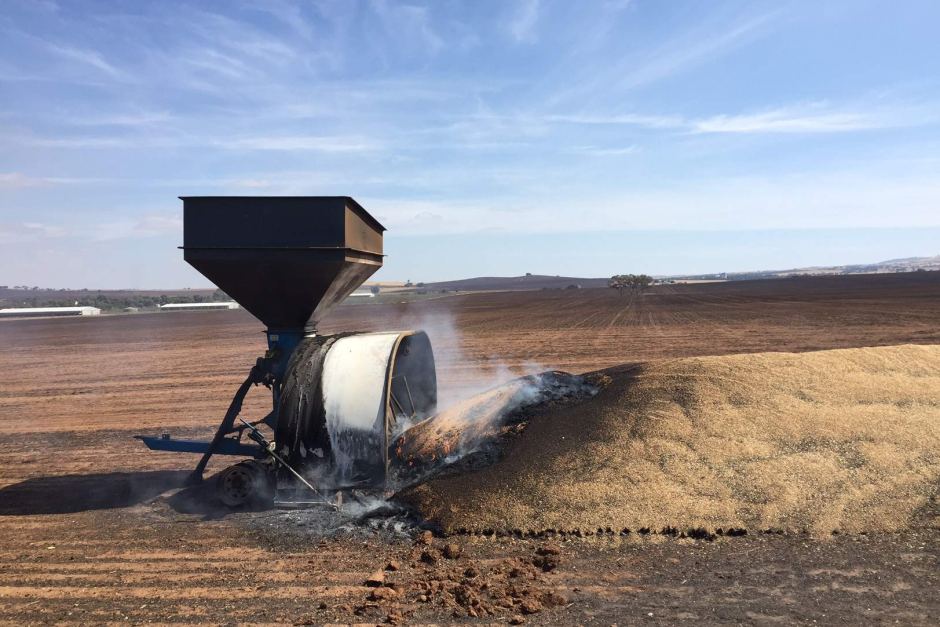
Farmers hit by the bushfire in South Australia's Mid North could be facing years of land rehabilitation to restore their properties. About $40 million of crops are thought to have been lost in the blaze north-east of Adelaide, but the fire has also razed the land — leaving farmers to battle erosion and top soil loss. The Insurance Council of Australia said the total insured losses from the fire was more than $88 million and a large part of was crop and farming claims. Mallala grain farmer Richard Konzag's farm was one of the properties in the path of the fire. "We could see the smoke to the north of our house and it looked very, very threatening," he said. "We're very fortunate, unlike a lot of other people in the area that have lost their houses and sheds, we didn't lose our house. "We lost about 230 hectares of crop and overall we had just over 700 hectares that was burnt." Most of the 85,000 hectares that the fire burned was prime cropping area. Darren Arney from Grain Producers SA said people were about half-way through harvest. "Around 120,000 tonnes [of crop] lost would be a ballpark figure," Mr Arney said. "That would have a value of around about $40 million." Most farmers will have insurance to cover the lost crops, but the damage goes beyond this year's yield. Usually stubble is left after harvest to retain soil and moisture for next year, but Mr Arney said the fire has razed the land. "Trying to minimise the impacts of erosion and loss of soil is going to be fairly important over the next six months, in the short term," he said. "But it'll take a number of years for these very productive properties to replace the carbon and the stubble and just get the agronomy working again." Mr Konzag said winds that caused the fire to spread so quickly were now blowing away valuable top soil. "Yesterday was horrendous, I was out driving around with some guys from primary industries and resources SA. At one stage there when we were driving around the visibility was down to less than 10 metres because of the dust that was flying off the fire ground," he said. The top soil loss will also affect nutrient cycles. "One of the guys from Primary Industries captured some dust that was flying off a paddock and he sent that away for testing," Mr Konzag said. "There was 400 parts per million of phosphorus, which is one of the essential nutrients for farming - we require 30 or above in our soils. "So it's very valuable top soil that we're losing." Hay and seed donations being collected Farmers in the area are meeting on Wednesday to discuss land management and soil retention measures. Many will also need seed to plant next year. Mr Arney said Grain Producers SA was organising a seed registry. "For farmers in other areas that still might be harvesting to register with us if they have got seed available either for donation or for sale," he said. People are also rallying to donate hay for livestock and Mr Konzag has been coordinating a hay collection. "People have been so generous, I've got people ringing me all the time wanting to deliver hay," he said. "Last night that a lady rang up and said I've got 14 semi-loads of hay wanting to bring over. "We've had people calling that have received hay when they have had fires in their area and are now wanting to donate hay back into this area." Underinsurance on farms a risk Insurance inspectors have already been on the ground assessing the damage. Campbell Fuller from the Insurance Council of Australia said there had been more than 600 claims. "The insurance loss is about $88.2 million and we expect these numbers will continue to rise as more claims are lodged," he said. "Crop and farming insurance are taking up a large part of the claims, as are livestock losses and things like lost machinery sheds. "So that is the bulk of the claims but that of course also includes a large number of homes that have been lost." He said the extent of any underinsurance will not be known for a little while yet. "It's a very common occurrence in these kinds of natural disasters," he said. "We do uncover large levels of non-insurance and under insurance for crops and for machinery sheds and for livestock too." Source - http://www.abc.net.au

01.12.2015

Peru - Potato farmers fight Andean weevil

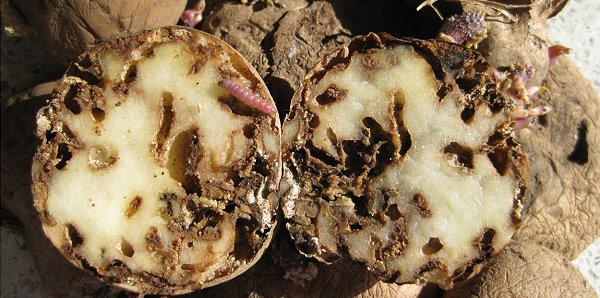
The Andean potato weevil is one of the most damaging pests affecting potato crops, especially in the highland region of the country. Therefore, and after 17 years of research, the National Institute of Agrarian Innovation (INIA) of the Ministry of Agriculture and Irrigation (MINAGRI) has developed a new technology to combat the spread of this pest, thus increasing the crop's productivity, profitability and competitiveness. If applied in an optimal and timely manner, the technology (also known as Integrated Management of the Andean weevil in Potato Crops) has a direct impact on the crop's quality and protection, as there is a decrease in the margin of damage caused by the pest. It also allows producers to achieve a higher production yield of almost 2 tons per hectare and reduces production costs, as pesticides are only used when the threshold of damage has been surpassed. This technological innovation is applicable in the areas of the Andes, because of the similarities between the weevil species and the environmental conditions. The research, which was carried out by the Agricultural Experiment Station Illpa Puno, was conducted between 1998 and 2014 in testing and economic validation plots in the towns of Yunguta, Huaych, and Wilamaya in the province of El Collao and in the locality of Tahuaco, in the province of Yunguyo, Puno department. Source - http://www.freshplaza.com

906
of 1224