NEWS
905
of 1224
News
08.12.2015

Australia - Renewable technology embraced by Narromine farmer with solar farm installation

Narromine farmer Andrew Gill has installed 400 solar panels, replacing his diesel engine, to run his irrigation bore. It is a movement that has the backing of traditionally conservative farming organisations. In the middle of a dusty paddock, surrounded by dirt and scrub, Mr Gill looks down a hole. "That's 102 metres deep, which is where we draw our water from," he said. He is referring to a bore — one of the sources of water on his family farm, south of Narromine in the central west of New South Wales. With his brothers and parents he runs livestock, winter crops and in the summer, cotton. It is an expensive business. Cotton needs a huge amount of water and at the moment, Mr Gill draws it up using a large diesel engine that once came from a truck. "We've got a very big diesel bill. Depending on the seasons, we buy into the hundreds of thousands of litres a year," he said. PHOTO: Andrew Gill uses a diesel pump to draw up bore water for his farm. (ABC News: David Mark) That means hundreds of thousands of dollars. So after years of intensive research, he has decided to try something new: A 400-panel, 100-kilowatt solar plant to run the pump. "I don't consider there's any risk in it, if we can decrease the cost of one of our greatest inputs, it's going to be a win-win," he said. Mr Gill said his mini solar farm would cost more than $200,000, but he was confident he would make the money back. "The main reason we're looking for an alternative is the cost," he said. "There are other benefits, obviously there's a big one with carbon, you know we won't have as much pollution. "There are a lot of other people looking to do things in agriculture and in the cotton industry especially to try and reduce the amount of pollution and carbon. "And if this is a small way of doing that on our farm, it's definitely a win." PHOTO: Solar installer Steve Harding and Andrew Gill stand in front of diesel pump. (ABC News: David Mark) Mr Gill is one of the farmers who has been advised by Gerry Flores, the Energy Innovation manager, with the rural lobby group, New South Wales Farmers. Mr Flores said it makes sense that farmers were breaking the stereotype of people who embrace solar and other renewable energy sources. "Renewable energy and the conservative mindset of being more independent as well, I think that matches," Mr Flores said. "What's been a bit of an issue is that a lot of the development in this, it's been attached to a political agenda. "So some people might look at renewable energy and identify at it as a green policy, or identify it as a political statement. "But we're not about that, we want to look at the financial case of an energy system that's going into the property and present to the farmers that way and just look at it from the basis of financials." Renewable technology 'no longer a niche market' Mr Flores said renewables were no longer a niche and referred to the 4.5 gigawatts of solar panels which are installed on the rooftops of Australian homes. "People are aware that this can save them money," he said. "But it's also, I think, a mentality for farmers, they want to be independent, they want to be able to say 'well this is the energy that I produce'. "So there's that mentality and the capacity to do that in farms that isn't available in a lot of metropolitan areas." Mr Gill sees renewable electricity as a fundamental part in the future of Australian farming. "From a cost point of view, it's definitely the future, oil isn't going to get any cheaper as supplies dwindle," he said. "If we want to continue doing what we're doing, we have to become more environmentally aware and anything that we can do to increase that bottom line is a win." Source - http://www.abc.net.au

08.12.2015

USA - USDA’s MIDAS Computer Program Tarnished; Overdue, Over Budget

Blake Hurst, president of the Missouri Farm Bureau, in the cab of his combine, harvesting soybeans on his family’s northern Missouri farm. He’s watching satellite monitors that shows yields, moisture content and fertilizer use. (Photo by Peggy Lowe, Harvest Public Media) USDA had a golden vision when it launched MIDAS, a computer system meant to modernize how the government pays farmers and ranchers. But things went wrong with the program early on, and now the MIDAS program has lost that golden glow.  Blake Hurst rides ten feet above his soybean field in northern Missouri, looking more like he’s playing a video game than driving a $350,000 high-tech piece of machinery. As he rolls across the land in his John Deere combine, joystick in hand, three computer monitors offer him a host of information. He knows how much fertilizer was used, the beans’ moisture content, how full the grain tank is, and that he’s getting 60 bushels an acre. All the while, Hurst, president of the Missouri Farm Bureau, fields business calls on his cell phone. And when he’s not listening to his favorite podcast about economics, he hears the monitors’ beeps, warning him if he’s not recording all this information on a thumb drive. Farming today is a high-tech business, now driven by data as the industry evolved. “It’s the story of agriculture,” Hurst said. “We get better.” Yet the government has not kept up with the farmers it has promised to serve. A computer system envisioned a decade ago to modernize how the U.S. government pays farmers and ranchers is $140 million over budget, two years overdue and just 20 percent operational. So far, the U.S. Department of Agriculture has spent $430 million on the system, a project known by the acronym MIDAS for Modernize and Innovate the Delivery of Agricultural Systems. Based in Kansas City, where the USDA’s Farm Service Agency operates its information technology hub, MIDAS is under fire from Congress and has been the subject of scathing government reports. U.S. Agriculture Secretary Tom Vilsack, called before the House Committee on Agriculture in July, admitted MIDAS’s failure, blaming a grand vision, an enormous operation and a lack of oversight. “We failed to recognize that there was a different vision in Kansas City, where some of this work was going to be done, and a different vision in (Washington) D.C.,” Vilsack said. “And as a result of that conflict, things didn’t get set up as they should have.” Vilsack placed the embattled program on hold in July 2014. The Farm Service Agency is currently using an old Web-based system that duplicates what MIDAS was supposed to accomplish, according to government audits. Farm Service Agency representatives declined several requests for interviews and a tour of the system. USDA’s Chief Information Officer, Jonathan Alboum, did not return a request seeking comment. Also faulted by government reports were a dozen unnamed contractors hired to create MIDAS. SRA International, a large public company which won the initial $500 million MIDAS contract, is based in Virginia and has an office in Kansas City. An SRA spokeswoman declined comment for this story. “Is the government at fault? Absolutely,” said David Powner of the Government Accountability Office, a congressional watchdog that has done three reports on MIDAS. “Is there a responsibility on the part of lead and sub-contractors? Absolutely. Everyone’s in it together.” A golden vision for MIDAS When planning started in 2004 during the Bush Administration, MIDAS was heralded as a way for the government to efficiently pay out the billions annually to farmers who have signed up for government safety-net programs. Since the Farm Service Agency’s inception as part of Roosevelt’s New Deal (first known as the Farm Security Administration), government payouts have been made through the agency and its 2,200 county offices currently situated across the country. In June 2010, Vilsack announced at the MIDAS kickoff in Washington D.C. that he hoped it would allow farmers to start trusting the government again by helping build “a more vibrant rural economy.” Officials said MIDAS would virtually link the Farm Service’s offices, place the 30-plus government farm programs in one system and eventually allow farmers and ranchers to access data from their home computer. Five years later, Vilsack appeared before the House Ag Committee sounding apologetic, quoting the Bible and admitting that “we didn’t measure our steps and we didn’t have as many counselors as we needed.” “When this thing was started in 2007-2008, I think the vision was pretty grand,” Vilsack said. “But I don’t think people fully appreciated the difficulty of basically implementing that in the context of a 1980 system, which is what we basically have at FSA offices.” Hurst, who was asked by congressional leaders to monitor the project and report back before the July hearing, said most farmers aren’t aware of MIDAS since it’s not operational yet. But he said he and others are frustrated by the antiquated system used by Farm Service and the USDA’s Risk Management Agency, another government program that handles crop insurance. Programs used by Farm Service (FSA) and the RMA aren’t compatible, he said. So Hurst ends up taking his crop information into the local FSA office, and then he walks it across the street to the RMA office. “I’m generating the same information three different times,” Hurst said. “I’m generating it to FSA, and then I’m taking it to an insurance agent in small-town Missouri who’s entering it by hand for RMA. “And all the time,” he said, “I’ve got a thumb drive with all that information already on it.” History of problems dating to 2006 A GAO audit published in 2008 warned of major problems with MIDAS, with the first issues popping up in 2006 and the USDA computer system shutting down entirely for a month in January 2007. The GAO found a lack of management, a failure to set performance goals and no dedicated staff to analyze the system. “The U.S. Department of Agriculture (USDA) has experienced significant problems with its information technology systems that support the delivery of benefits programs to farmers,” the 2008 GAO audit reported. A 2011 GAO audit triggered the attention of House Ag Committee Chairman Michael Conaway, R-Texas, who began an investigation in January, which confirmed previous audits. “FSA intended for the MIDAS program to modernize its delivery of programs to farmers and ranchers,” Conaway said during the July USDA oversight hearing. “Unfortunately, it’s been mismanaged as evidenced by the fact that its $140 million over budget and only contains two of the five planned core functions.” Two more reports done this year, one by the USDA’s Office of Inspector General, found little progress, inadequate contractor oversight and an added annual cost of $50 million. A 2015 GAO report went even further, finding that just 20 percent of the MIDAS program was functioning and questioning USDA’s ability to manage any IT program into the future. By June 2013, Farm Service started developing similar applications to MIDAS on its centrally-located legacy system, called Web Farm, said the GAO’s Powner. “When that was done, you’re really duplicating effort,” Powner said. “I think a key question is: why wasn’t it halted sooner?” Vilsack told Congress that the USDA has made some progress with MIDAS and that the agency has seen some benefits. One benefit is offering farmers and ranchers who own land in several counties the ability to go to a single Farm Service office to view records, which wasn’t available in the past, Vilsack said. The USDA has established a review process, Vilsack added, and he sees weekly reports on department technology. Source - http://netnebraska.org

08.12.2015

USA - Haley says she won't seek direct aid for destroyed crops

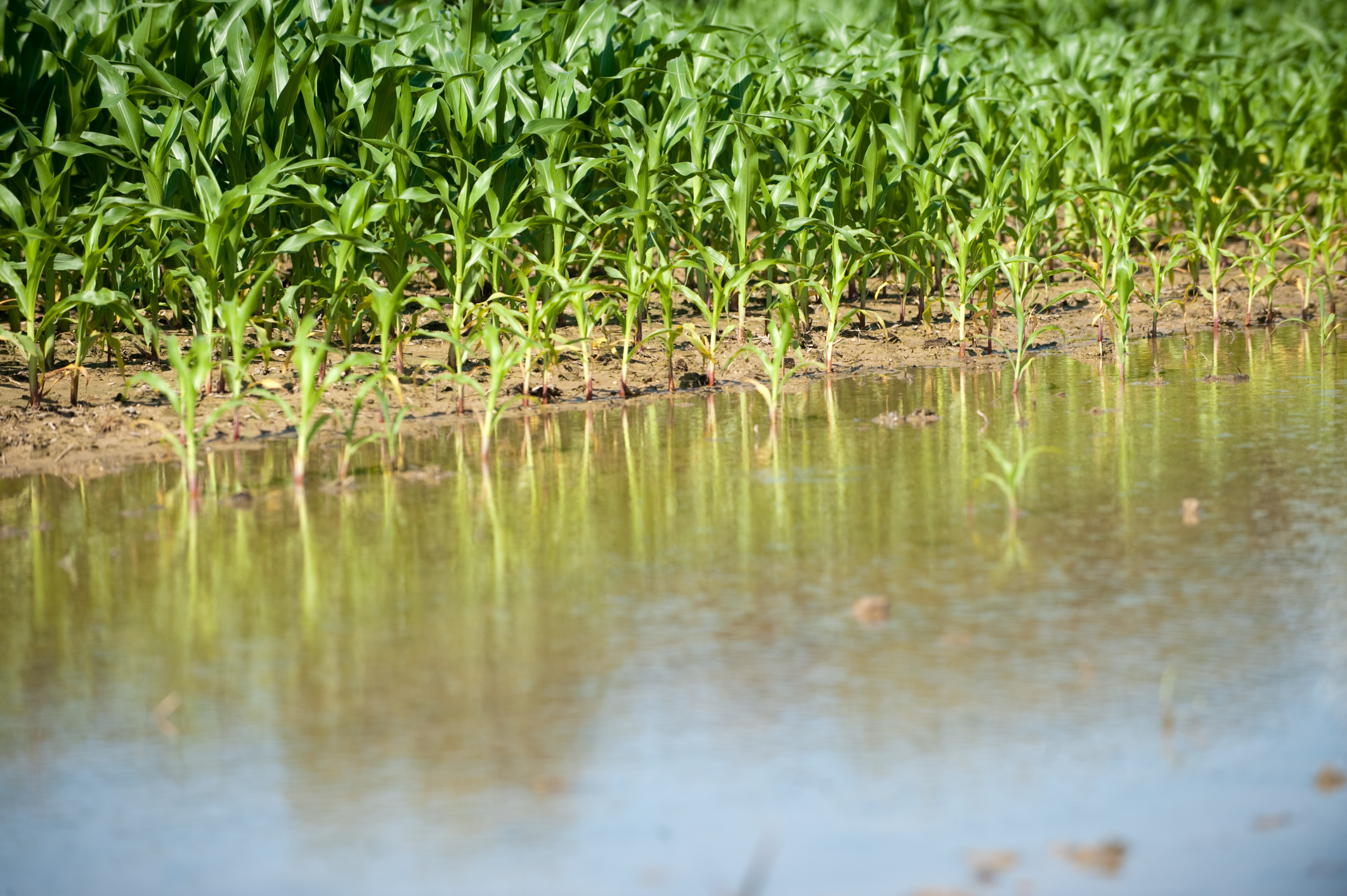
Farmers packed the Statehouse on Monday to beg Gov. Nikki Haley to ask Congress for money to offset their estimated $376 million in losses from last month's historic flooding. But the Republican governor is unwavering in her refusal. Farmers should have federally subsidized crop insurance, and under-insured farmers shouldn't be bailed out, her office said. Last week, Haley asked the state's congressional delegation for $140 million to help homeowners, many of whom had no flood insurance. Her letter did not include any direct aid for farmers. Instead, she asked the U.S. Department of Agriculture to expedite insurance payments to farmers. "The governor does not believe we should treat farmers differently than any other business owner in South Carolina," said her spokeswoman Chaney Adams. Her stance puts her at odds with GOP Agriculture Commissioner Hugh Weathers and Republican legislators. A Senate panel studying the storm's cost voted unanimously before the farmers' news conference to send Haley a letter urging her to change her mind. At the event, several Republican House members took the podium to ask her to sign the request. Even for those with insurance, payments won't come close to covering farmers' costs, Weathers said. "If every farm in South Carolina had picked the best crop insurance options available, the insurance proceeds still would not cover the basic cost of putting that acre of corn, cotton, soybeans in the ground," Weathers told the Senate panel. Losses didn't stop with the initial flooding. While the Oct. 2-5 storm that dumped 2 feet of rain on parts of the state did the bulk of the damage, the continued rainfall worsened the problem, as crops rotted in the fields, Weathers said. The estimated losses include $330 million worth of crops destroyed or damaged in the field at harvest time and $46 million in winter crops that can't be planted in the muck, Weathers said. While Haley's advocacy wouldn't automatically cause Congress to put the money in the federal budget, a request won't be seriously considered without her backing, Weathers said. "Please request the funds and help save our communities," said fourth-generation farmer Jeremy Cannon of Turbeville, who was among hundreds of farmers who crowded outside Haley's office. "There is no revenue. We need your help, and we need it fast." State Farm Bureau President Harry Ott, elected to the job Saturday, said farms are different than other small businesses. "We spend money 11 months out of the year so we can harvest one month of the year," said Ott, a St. Matthews farmer and the state House's former Democratic leader. "Unfortunately, this year the flood occurred right at harvest season." Farm loans are coming due Dec. 31, and the banks will start sending out unpaid notices in January, he said. "Without this federal assistance, there will be family farms foreclosed on, and generational farmers will find themselves with their property sold on the steps of the courthouse," Ott said. Most of the state's 25,000 farmers were affected, he said. Like other businesses, farmers can apply for emergency, low-interest loans from the federal government. But they must prove they can't get credit from a bank, while also showing they have the cash flow to pay for a loan. Many farmers already are deep in debt on fields where equipment literally can't "stand up," Weathers said. "It would sink in the mud." Rep. Mac Toole, R-West Columbia, said farmers have had the worst possible year, with devastating floods following the summer's drought. Farmers are being forced to spend more money to harvest fewer acres of crops of diminishing worth, he said. "If ever farmers needed assistance, this is the situation," he said. Source - http://www.chron.com

08.12.2015

India - Bananas worst affected by floods

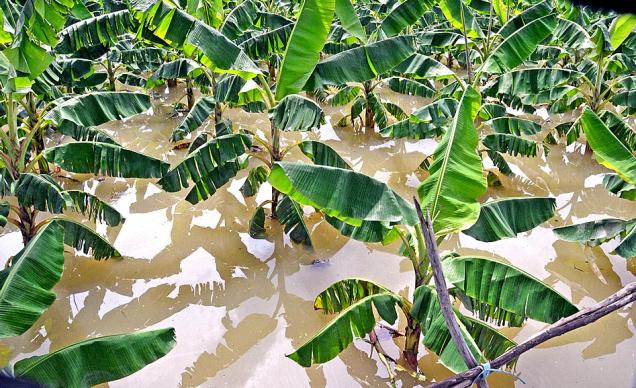
The Tamil Nadu region of India is experiencing major flooding at the moment following the wettest November in a century. The banana farmers in the region are taking the biggest hits from the downpours and are not able to get a good price for their bananas. Farmers are not willing to sell the bananas at these low prices and are not sending the bananas to market. This has led to many being destroyed. Many parts of India suffer flooding every year during the annual monsoon rains from June to September. The northeast monsoon has been particularly vigorous over southern India and more so in Tamil Nadu state, and the capital city Chennai has been devastated by the flood waters. 490 mm rain fell 1 December, the highest in 100 years. This region of India does not produce much fruit or vegetables, the biggest crop here is bananas. But Nagesh Shetty from Deccan Produce said that due to the rain and floods fewer fruits are moving into south so the demand is subdued. Oranges are one of fruits which is experiencing a glut at the moment. Girish Sarda, Marketing Manager at Seven Star explains, “Chennai has a major port supplying southern India and the distribution channels will be definitely affected, with problems on train services.” He goes on to say that the mango production in the area should not be affected as it mainly goes to the processing industry. "It remains to be seen what impact these weather conditions will have on the areas devoted to grapes, but we are expecting some showers in Nashik by next week, which is a major processing area for grapes in India. What is clear is that the weather is changing and the conditions are certainly different compared with the same period last year.” Nevertheless Sarda is expecting a good grape season. The Chennai port has seen disruptions over the last four weeks and was closed for 10 days according to Gvk Naidu, Director of Sam Agritech. "It is the hub for importing fruits, there will also be an impact on domestic products, but despite what has happened regular operation will be back soon. People don't really panic, we stay positive." According to Tarun Arora, IG International the transportation of fruit and vegetables around Chennai, it is better today. "Trucks are able to pass the city and we expect that operation will go back to normal. Chennai is an important distribution area so it was a critical situation." The water is going down now and he thinks there will be no massive impact for the coming days. Source - http://www.freshplaza.com

08.12.2015

USA - Congress restores $3bn in crop insurance funds

Congress restored an estimated $3bn to the federal crop insurance program last week with the passage of the Fixing America's Surface Transportation (FAST) Act. The return of the $3bn overturns lawmakers' decision to cut the funds as part of a bipartisan budget deal in October. Many farm groups applauded the restorationas the funds will help crop producers continue their operations in the face of a forecasted long-term downturn in the commodities market and unforeseen weather events resulting from a strong El Nino and possible La Nina. "Crop insurance is a lifeline for jobs and families across rural America. It was unfair to try forcing even deeper cuts on hardworking farmers," US senator Heidi Heitkamp (D-North Dakota) said last week. Crop insurers had already withstood $12bn in cuts since 2008 and were adamantly against an additional $3bn drop in funding. The proposed cuts would have likely led to more industry consolidation and a dramatic decline in available services, according to a joint statement from the Crop Insurance and Reinsurance Bureau, American Association of Crop Insurers, and the National Crop Insurance Service. Agricultural groupssaid the bill was a victory for rural farmers. "The draconian cuts included as part of the budget agreement, which were reversed last night, would have increased the cost of delivering the program, reduced options for producers, and ultimately made premiums more expensive," National Association of Wheat Growers president Brett Blankenship said. The crop insurance risk-management tool helps in pre-harvest marketing and can be used as collateral for loans, allowing producers to borrow money for operating costs, including fertilizer. Knowing the price floor for the projected harvest helps producers hedge their grain bid in order to receive top dollar. The 2016 base pre-harvest prices, prior to the close of price discovery in February, are $3.944 for corn, $8.873 for soybeans and $5.412 for wheat, according to the US Department of Agriculture Risk Management Agency. The 2015 harvest prices were $3.79 for corn, $8.76 for soybeans and $5.47 for wheat. Source - https://www.argusmedia.com

08.12.2015

India - For speedy crop-loss settlement, IRDA mulls use of satellite technology

The country’s insurance regulator — IRDA — is actively considering the use of satellite remote sensing technology as a mapping tool for agricultural yield estimation and crop losses in a bad monsoon year. The move, aimed at ensuring faster settlement of crop insurance losses, comes at a time when the country has experienced back-to-back monsoon failures — the first since 1986-87. IRDA has concluded a series of discussions with stakeholders in this regard, officials indicated. A number of research studies and experiments are also being undertaken by institutions associated with agriculture and rural development throughout the country, they said, adding that the use of this technology should mark a move towards speedy assessment and settlement of crop losses. The just-ended south-west monsoon season had registered an overall rainfall deficit of 14.3 per cent relative to the ‘normal’ long period average for June-September, making it a deficient monsoon. The monsoon was also deficient by 11.9 per cent in 2014 as well. At present, about 50 crop insurance products are being marketed by the Agriculture Insurance Company of India Ltd (AICIL) and other general Insurance Companies. One of the main reasons for low levels of insurance penetration in crop insurance is the lack of awareness about the insurance products and the benefits of various policies. AICIL, at present, transacts only in crop insurance business while other policies covering various risks pertaining to farmers such as agriculture implements, personal accident and livestock are extended by other general insurance companies. There are underlying problems of wholly inadequate crop insurance system, though, that do not adequately cover the risks of farmers. The existing weather and yield-based systems taken into account only the area and not the individual as a unit. As a result, this approach did not seem to represent and address the manner in which crop damage actually occurs. If crop insurance products were to be tailored to cover for a range of risks at the individual farmer level, insurance premium would inevitably increase and might need some amount of subsidy, but it could make crop insurance a more viable proposition and improve its penetration. In a bid to ensure a balanced penetration of insurance coverage in the country, the insurance regulator had come out with a regulatory framework in the form of IRDA (Obligations of Insurers to Rural or Social Sectors, 2002). Recently, it had also formulated a draft regulation — IRDAI (Obligations of Insures to Rural and Social Sectors) Regulations, 2015—in the wake of the amendments brought about to the Insurance Laws (Amendment) Act 2015, which imposed obligations on insurers towards providing insurance cover to the rural and economically weaker section of the population. The regulation mandated that the insurers had to necessarily sell a specified percentage of policies and underwrite specified percentage of gross premium underwritten with respect to life and non-life insurance companies respectively. Stringent penalties were also prescribed under the Act for non-compliance of the above provision. Source - http://indianexpress.com

07.12.2015

Sri Lanka - Govt. Converts Fertiliser Subsidy Into An Allowance

The inaugural appropriation bill of the new government that was presented in parliament recently has attracted both praise and criticism by many. Amongst the many controversial facts that are mentioned in the 2016 budget, reforms have been made to the fertiliser subsidy that is considered as one of the most discussed topics that have a direct impact on the farming community. As a country that is heavily immersed in agriculture, farmers have always been given prominence. However, in a controversial move, the present government has, in the budget 2016, decided to convert the fertiliser subsidy in to an allowance of Rs. 25,000. This decision has been widely criticised and this many includes the farmers.However, the government has claimed that the contribution made by the agricultural sector towards the country’s economy has drastically declined during  the past few years. According to  statistics, by 2014 the contribution of agriculture in the economy was only 10 percent.  It was stressed that since the amount of harvest received from one hectare is low, Sri Lanka is unable to compete in the International market. Expressing his views regarding the matter, MP Ven Athuraliye Rathana Thero has stated that the excessive use of chemical fertilisers is behind the increasing number of kidney diseases in  areas where paddy is cultivated. Accordingly, it is said that a majority of environmental issues such as water pollution is caused due to the excessive use of fertiliser. During former President Mahinda Rajapaksa’s era, the government  initiated the fertiliser subsidy system under the ‘Mahinda Chinthana’ programme. The expenses were divided between the farmer and the government as 10 percent to 90 percent The government allocated Rs. 300,000 million for the subsidy. However, due to an additional charge of Rs. 150 for insurance,  the farmers were compelled to pay Rs. 500 for the fertiliser. This scheme was subjected to criticism as allegations were made regarding the low quality of the fertiliser. Presenting the 2016 budget, the Finance Minister Ravi Karunanayake said that there was no direct connection between the fertiliser subsidy and the  production of paddy in the country.  He said that even with subsidies the farmers are still being exploited in society. Therefore, the government has proposed to offer an allowance of Rs. 25,000 to farmers who cultivate paddy lands below one hectare, for the two seasons. In 2015 the government allocated Rs. 37,000 million for the fertiliser subsidy and this year it has been increased to Rs. 37,000 million. The new allowance is given to small scale farmers who grow paddy in lands  that comprise less than one hectare for one year. Accordingly, only Rs. 12,500 will be given per season. The allocation for one acre is Rs. 5,000. One acre can produce two bushels of paddy. A sack of Urea costs Rs. 2,466 in the market. Claiming that by allowing the allowance to be decided on the ever soaring market price, the farmers have alleged that the government is trying generate extra revenue for the state by taxing the fertilisers. When calculated, only Rs. 2,500 can be allocated for one bushel of paddy and the farmers have alleged that they cannot find fertiliser for such a low price. Previously, the ‘monopoly’ on fertilisers was placed in the hands  of the  government. Even the importation of fertilisers by the private sector was done under government supervision. Farmers claim that these problems would not be solved by providing  this allowance. If the farmers decide not to use fertilisers in cultivation it would have serious effects on the harvest. However, the problems in the agricultural sector must be taken seriously since it affects the entire society in the long run. Therefore, it is the duty of the good governance government to pay attention to the farmers’ plea. At present, farmers have launched protests in the  Dambulla and Embilipitiya areas against the government’s decision. Recently, a national scheme on agriculture policy was initiated by the Minister for Agriculture Duminda Dissanayake. The subsidy on fertiliser is a key topic that must be added to the national policy. The Farmers Federation alleges that the Minister has so far been unable to respond to their requests. Attempts made by The Sunday Leader to contact the Minister were  unsuccessful. Source - http://www.thesundayleader.lk

07.12.2015

India - AP government to help farmers suffering crop loss

Andhra Pradesh agriculture minister Prathipati Pulla Rao today said the state government will support farmers who have lost their crops in the recent heavy rains. "A total of 2,60,000 hectors paddy crops were lost in the state during the recent rains. Nearly 6,000 hectors of fish and prawn cultures were damaged due to rains. The state government will give full support to farmers who have lost the crops," he told reporters. The minster took part in the Telugu Desam Party's 'Jan Chaitanya Yatra' in Gudivada Town of Krishna district. "The AP government will distribute seeds on subsidy price to all farmers. A Central team will arrive tomorrow to assess the crop loss," Rao, also the in-charge Minister for Krishna district, added. He demanded that the Centre should support farmers and sanction large amount for Andhra Pradesh. Rao further said that he along with state Home Minister Chinarajappa will visit Delhi on December 10 and ask help for the state. Source - http://timesofindia.indiatimes.com

07.12.2015

Philippines - Microinsurance products for local farmers pushed

TO HELP farmers quickly replant damaged crops due to extreme weather conditions and, thereby, help temper food inflation, the Department of Finance’s chief economist is pushing for the immediate rollout of the Insurance Commission’s agriculture microinsurance or “MicroAgri” framework. In an economic bulletin on Friday, Finance Undersecretary Gil S. Beltran said the rise in inflation to 1.1 percent in November from the record-low of 0.4 percent in the previous month “can be attributed to the sharp rise in vegetable prices as a result of Typhoon ‘Lando,’” that hit many parts of Luzon, including farms and plantations, last October. “The increase in vegetable prices contributed 0.4 percent to the total inflation rate” in November, Beltran said. Last month, the faster increases in the prices of corn, fish, meat and vegetables offset the slower rise in the prices of cheese, eggs, milk, non-alcoholic beverages and rice, the National Economic and Development Authority said on Friday. As farmers had already been replanting crops destroyed by “Lando,” Beltran said he expected the typhoon’s adverse impact on prices to wane. He said supporting farmers to quickly recover from natural disasters and calamities was important to temper food inflation. “This emphasizes the need to immediately launch the MicroAgri framework and start marketing new microinsurance products for farmers. In the future, the new microinsurance product will enable farmers to undertake replanting quickly,” he said. In October, the Insurance Commission issued MicroAgri, which “provides a clear-cut policy on agriculture insurance to encourage the private microinsurance providers to innovate and design products tailor-fitted to the needs of agricultural clients.” With the MicroAgri framework in place, the Insurance Commission was hoping to “promote and encourage the provision of agriculture microinsurance products and services that are simple, affordable and accessible to the vast of the population dependent on agriculture.” The Insurance Commission wants to leverage on the country’s strength in microinsurance—the Philippines is widely regarded as a model in microinsurance penetration, with 28 million of the 32 million insured Filipinos to date covered by cheap microinsurance plans. Source - http://business.inquirer.net

07.12.2015

Philippines - Farmers get P500K worth of crop insurance

Negrense farmers received P595,340 worth of crop insurance under the Negros First Universal Crop Insurance Program in a turn over ceremony at the Provincial Capitol Social Hall. Governor Alfredo G. Marañon, Jr. led the turn-over of checks to farmers enrolled under the program while P147,000 of the total amount were given as death benefits to the beneficiaries of the farmers, a release from the Capitol said. The beneficiaries were farmers from the cities of Bago, La Carlota and Kabankalan, and from the municipalities of Valladolid, Pulupandan, Pontevedra, San Enrique and Hinigaran. Philippine Crop Insurance Corporation president Atty. Jovy C. Bernabe, said that the NFUCIP is successfully implemented by the provincial government of Negros Occidental and more local government units plan to replicate the province’s crop insurance program in their respective LGUs. Meanwhile, Marañon said that the farmers are always the primary concern of the provincial government through the Office of the Provincial Agriculturist (OPA) as he also hopes that NFUCIP will continue to help the farmers. NFUCIP is on its fourth year of implementation which was created to mitigate the adverse effects of climate change directly affecting Negrense farmers. Based on OPA record, since 2011, the province has been providing funds with a total amount of P12 Million to cover rice crops of farmers such as rice that expanded to corn and sugarcane. Out of the total enrolled farmers, 7,466 had received indemnity claims in the amount of P32,067,585 for 7,730 hectares of damaged rice crops - See more at: http://news.pia.gov.ph/article/view/1031449459242/farmers-get-p500k-worth-of-crop-insurance#sthash.Oa9znVm1.dpuf

07.12.2015

USA - Fewer Taxpayer Giveaways Would Cut The Fat, Not ‘Cripple’ Crop Insurance

The proposed $3 billion cut in crop insurance subsidies in the recent federal budget deal would not “kill the crop insurance program,” contrary to claims by the crop insurance industry and its allies in Congress. It would merely cut the fat from the industry’s cost of doing business, according to a new analysis commissioned by EWG. The report by Dr. Bruce Babcock, agricultural economist at Iowa State University, is titled Cutting The Fat: It Won't Kill Crop Insurance. It shows that lowering the excessive rates of return enjoyed by the industry, as proposed last month in the budget agreement, would have no impact on the availability of crop insurance policies or the premiums paid by farmers. “The reality is that the cuts are a modest reduction in taxpayer support for crop insurance,” said Dr. Babcock. “Rather than devastating or killing the program, as some industry members may allege, the lower subsidies would not affect profits, but instead result in a more efficient, but still far from lean, delivery system for the insurance.” The budget agreement, signed by President Obama in November, would reduce the target rate of return for crop insurance companies from 14 percent to 8.9 percent, a margin that is still generous and well above the rate of return enjoyed by the insurance industry as a whole. Some in Congress are now attempting to reverse the cut through a rider attached to a must-pass transportation bill, which is expected to go to the House floor in the coming days. “Rhetorically, this is a Congress that applauds federal belt tightening, but in practice it hands out billions in taxpayer-funded giveaways to the crop insurance industry,” said Colin O’Neil, EWG’s director of agriculture policy. “At a time when many Americans are still tightening their belts, it seems ridiculous to think that companies headquartered in tax havens such as Bermuda and Switzerland can’t get by on a 9 percent rate of return. Congress has allowed this problem to balloon over the years, and it is high time to fix it.” Industry advocates argue that the cuts will “cripple” crop insurance companies, but Babcock’s analysis shows that the insurers’ cost of delivering each policy has ballooned from an average of $628 in 2001 to $1,670 in 2013. This increase in costs was largely the result of exorbitant increases in the wages paid to company personnel and the commissions paid to insurance agents, Babcock’s analysis found. The costs per policy not associated with loss adjustment grew by 8.5 percent a year over the period. The crop insurance industry is unique because the companies can only sell products approved by U.S. Department of Agriculture, which also sets their price. Because crop insurance companies can’t compete on price or quality of service, they compete instead for the business of independent insurance agents by offering ever higher commissions. According to “Cutting the Fat,” the average commission per policy grew by 9.1 percent a year, compared to the overall insurance industry average of 2.7 percent. In dollar terms, the average commissions paid to crop insurance agents rose from $358 per policy in 2001 to about $1,022 per policy in 2013. “When you look past the rhetoric thrown around by crop insurance companies, the reality of the situation is clear,” Babcock said. “If we can’t make these very reasonable and responsible taxpayer savings by trimming the inflated costs of crop insurance in a way that won’t hurt industry profits or farmers, what can we cut?” Source - http://www.ewg.org/

07.12.2015

USA - Soybean Association pleased with restoration of crop insurance cuts

The Senate has approved the conference report pertaining to the Surface Transportation Reauthorization Act, also known as the Highway Bill or the Fixing America’s Surface Transportation Act. The American Soybean Association (ASA) is pleased with the Senate passing this legislation, especially with the reversal of the $3 billion in crop insurance cuts originally included in the October budget deal that passed with bipartisan support. “The cut to crop insurance was a deal breaker for soybean farmers and we’re very relieved to see these cuts reversed,” Wade Cowan, ASA’s president and a farmer from Brownfield, Texas, said. “Soybean farmers across the country rely on crop insurance in times of extreme weather to ensure they can stay in business to farm in the coming year. An ill-advised $3 billion in cuts would have severely hobbled the program, and we’re happy to see them reversed.” The ASA is still concerned about attempts to cut farm bill programs in future budgeting conversations in Congress. “ASA will continue our opposition to any attempt to cut the farm bill programs in the budgeting process,” Cowan said. “These programs seem to be low-hanging fruit to lawmakers who don’t understand how important they are to the nation’s food producers, and we will continue to fight to make sure they stay whole. We thank Chairmen [Pat] Roberts (R-KS) and [Mike] Conaway (R-TX) and Ranking Members [Debbie] Stabenow (D-MI) and [Collin] Peterson (D-MI) for their continued defense of the farm safety net, and for securing the fix for this most recent grab at the crop insurance program.” The Highway Bill assures that state and local government will have funding they need for maintaining and moving forward on transportation projects. However, the bill does not allow for increased truck weights on federal interstates. Source - http://cropprotectionnews.com

04.12.2015

Mexico - Aquaculture surface to be expanded in 5000 ha in 2016

The Mexican government intends to set additional 5,000 hectares of aquaculture in the country over the next year in order to increase productivity and provide a greater supply of these products, ensured the head of the Secretariat of Agriculture, Livestock, Rural Development, Fisheries and Food (SAGARPA) José Calzada Rovirosa. On opening the 2015 Economic Forum on Fisheries and Aquaculture, the federal official said that the current surface is around 120,000 hectares, which are destined for aquaculture in national territory so the minimum has been estimated to reach around 125,000 hectares at the end of 2016. In addition, he further stressed that, according to FAO forecasts, in 2023 aquaculture production value will exceed that of fishing, hence the importance of developing the productive niche. Currently, in Mexico 70 per cent of the total catch is performed in the sea, and the remaining 30 per cent is carried out in aquaculture. But in value, Calzada Rovirosa stressed that 60 per cent corresponds to the capture fisheries and aquaculture reaches 40 per cent. SAGARPA head noted that, on instructions from President Enrique Peña Nieto, a strategic plan is driven to detonate the potential of the fisheries sector This plan includes five areas: the sector management, activity monitoring, promotion of production (which includes aquaculture), marketing and market development as well as integration of the production chain. The secretary announced that next week a working trip to China will take place with the aim of consolidating existing markets in that country as well as develop new business opportunities for Mexican producers. With regard to the ruling announced last week by the World Trade Organization (WTO) as to sustainable tuna fishing in Mexico, Calzada Rovirosa stressed that Mexico has shown in every forum that the country uses the "best fishing gear sustainably for future generations." "Precisely, what the WTO said is: Mexico is right in terms of sustainability and the right to markets," he said. He highlighted that this subsector generates 70,000 direct and indirect jobs and the value of the tuna industrialized production can reach USD 600 million. For his part, the national commissioner of Aquaculture and Fisheries, Mario Aguilar Sanchez, stated the newly released ruling by the WTO in favour of sustainable tuna fishing in Mexico is a success for the national fisheries sector, particularly fishermen, who have already proved the worth of the Code of Conduct for Responsible Fisheries. In this regard, he stressed that Mexico reiterates its support for the implementation of the Code, which for 20 years has been maintained as a reference for international aquaculture and fishing governance. Source - http://www.fis.com

04.12.2015

England - Threat of crop disease blamed on mild and wet weather by Lincolnshire farmers

Farmers are warning that a wet summer and warmer winter last year could have paved the way for more disease in crops. A cold winter is needed to help Lincolnshire crops survive any sudden frosts and disease next year, according to some county growers. They say it is impossible to tell if the recent milder weather is down to climate change. However it comes as world leaders meet in Paris for the COP21 UN climate change summit. Prime Minister David Cameron described failing crops and rising sea levels and said: "Instead of making excuses tomorrow to our children and grandchildren, we should be taking action against climate change today." Chris Wray, 36, farms wheat, oilseed rape, vining peas and linseed crops in Donington, and is the National Farmers' Union vice chairman for South Holland. He said that a warm and wet summer has increased the risk of disease in crops, and welcomed the talks in Paris. "The biggest thing we are experiencing is the unpredictable and extreme nature of the weather," he said. "Most people a generation above us will remember when a winter was a winter. It came cold and stayed cold, snowed at some point and that snow hung around. "Today it is 15 degrees and I have seen people buying Christmas trees in T-shirts. "What that means for us is the cold weather that usually kills a number of the pests and diseases doesn't happen, so we have to use chemicals to do the same job as best we can. "We seem to get milder weather for a much greater length of time, but despite causing more disease, it does mean we can produce a great deal more veg for a bigger proportion of the year locally for the country." He welcomed the talks, adding: "At the end of the day it is always good it is being spoken about, it is never a bad thing, but it is so far removed from here. "It is a case of how long it takes to filter back to us." David Armstrong, 54, who farms in Bardney, said: "It is a difficult one because the changes are miniscule. "In my recent past, in the last 10 years we have seen two bad wet years that we probably haven't seen in the previous 10 years. "We do require a normal hard winter, i.e cold. "Potatoes left in the field, and on the surface of the field, a hard frost helps kill them off so they don't become a disease risk next season. "What I would say affects us more is what decisions are made by politicians coming up with regards to climate change." Tim Casey, of J and V Casey and Son in Coningsby, farms vegetables including leeks, and said: "In the last few years we have had warm autumns but also slightly wetter and cooler summers on the whole, even though we have had hot and dry spells at times. "We do need a bit of a harder frost or some low temperatures to harden plants up. "It really is too warm for crops as they will continue to grow and get over-mature. "If it does get cold in January or February then that will be a problem as they will be susceptible to frost because they will have grown too much." Source - http://www.lincolnshireecho.co.uk

04.12.2015

Australia - Fruit growers plead to Government for help after hail storm wipes out crop

Fruit growers have taken Victorian politicians on a tour of their hail-damaged properties in an attempt to plead for assistance. Two hailstorms, one in October and one in November, hit multiple locations in the Goulburn Valley, wiping out fruit crops. The region grows over 80 per cent of Australia's pear crop and a large amount of stone fruit and apples. Agriculture Minister Labor's Jaala Pulford, Independent Member for Shepparton, Suzanna Sheed and Liberal Member for Northern Victoria, Wendy Lovell met with growers to talk about their plight. But growers were concerned the Minister did not bring her cheque book or offer them any assistance. Ms Pulford said she was just there to listen. "[I'm] mostly listening and hearing about their experience and learning a bit more about the kinds of support we can be providing," Ms Pulford said. Chair of Fruit Growers Victoria, Gary Godwill said his group, along with the Victorian Farmers Federation, had provided the Minister with a shopping list of ways the Government could help. "People who have been hit, they need immediate support to offer their employees some sort of an income," Mr Godwill said. "They need some sort of alleviation of their debt crisis. "The next problem will be what do we do in the future; we'll need some sort of help to mitigate against hail." Grower Dasha Sherif said he hoped something would come it would be a long time before he would make an income from his orchard. "We need everything to be right for another 12 months and for that following season, things need to go right to catch up," Mr Sherif said. "Fruit growers only get one income for the year. "We miss out now, so we miss out for another 12 months." Source - http://www.abc.net.au

04.12.2015

Canada - Grape crop stages late season comeback

It had been a second brutal winter, one most unkind to vineyards. During 2014, low temperatures in some parts of the region dipped below -20°C through the worst of the freeze-up. Last winter provided a repeat of those wintery extremes. Earlier this year, Niagara grape grower Bill George feared the worst. “In January and February I didn’t think we would have a crop at all, given temperatures we were seeing through the winter,” said George. “But it did turn out to be somewhat better than we expected.” Numbers continue to be down following two hard winters, but Ontario’s grape growers have still topped last year’s harvest. Grape Growers of Ontario is reporting their vineyards in the 2015 growing season have produced 52,888 tonnes of grapes with farm gate value of $62.38 million, as of Tuesday. That tonnage compares to 52,716 from the 2014 harvest that followed a more serious winter kill that hammered some vineyards. In comparison, 2013’s harvest was a record bumper crop at 80,548 tonnes, according to the Grape Growers. Niagara produces 92 per cent of a provincial grape tonnage that amounts to 69 per cent of the Canadian total. “There’s still a big gap between a normalized crop of around 67,000 tonnes (or more) we should have,” said George, who is also chair of the Grape Growers. “So I think the growers are feeling the impact of the last two winters.” Debbie Zimmerman, Grape Growers’ CEO, said tonnages were up with some varieties like Merlot, “where we thought we’d be in a situation where we’d be a lot worse … it was one of the varieties where we thought there would be a problem. “So some growers actually had a good year, compared to other growers who were definitely down anywhere to about 25 per cent. “There was varying tonnages all around us,” Zimmerman added. She said warm days in August and September also helped with the grapes, which are showing decent sugar counts — a big measure of quality. Other area tender fruit did not fare badly this year, said Kevin Ker, a research associate with Brock University’s Cool Climate Oenology and Viticulture Institute. “Stone fruits had really good cropping this year, and most of the trees come through pretty well, “said Ker, who is also an independent grape and tender fruit crop consultant. “We avoided a couple of close (frost kill) calls with crops and the season started really early. We got out of the gate fast this year.” Fruit quality was also decent, said Kerr. “And on the grape side, the yields were actually higher than expected coming out of that winter,” he said. “Those yields actually came out pretty good … September and October saved our bacon, as we had such a glorious fall.” Source - http://www.stcatharinesstandard.ca

905
of 1224