NEWS
919
of 1224
News
16.09.2015

Canada - Manitoba Crop Report and Crop Weather report[:ru]Canada - Manitoba Crop Weather report

Warmer, drier weather conditions towards the end of the week and into the weekend allowed for good harvest progress across most of Manitoba. Some areas reported light frost events Thursday and Friday. To date, minimal impact to crops has been reported largely due to temperatures and duration weren’t sufficient to cause damage, and/or crops were at or close to maturity. Soybeans, grain corn and sunflowers are maturing quickly. Silage corn harvest has started, and the first acres of soybeans have also been harvested. Seeding of winter wheat and fall continues, with the earliest seeded acres emerging. Click here for the Crop Weather Report for the week ending September 13 Southwest Region There were warm and dry weather conditions throughout the week in the Southwest Region. Light frost was recorded in some areas of the region, with little to no crop damage noted. Good harvest progress was made due to the good weather. In areas south of Highway #1, the harvest of spring cereal crops is close to complete. Yields are average to above average with good quality. In areas north of Highway #1, spring cereal harvest ranges from 50 per cent complete, where heavier precipitation amounts were recorded, up to 90 per cent complete. Yields are average to above average with good quality in most of cases, but areas that received heavy rains are reporting some yield and quality losses. Canola swathing is approaching completion for all acres. Harvest progress was noted in non-reseeded fields with yields of 35 to 55 bu/acre. Some pod bleaching due to frost is noted in low lying areas in re-seeded canola fields. The field pea harvest is complete with most yields above long term average. Flax fields continue to dry down with desiccation beginning in most fields. Soybeans continue to advance with maturities in the R6.5 to R7 stages (seed fill to capacity); early maturing varieties are approaching R8 or brown seed pod. Sunflowers are in the R7 to early R8 stage. Some producers have started to seed winter wheat and fall rye. Second cut alfalfa continues to be harvested with yields average to above average with variable to good quality depending upon rainfall. Greenfeed silage harvest continues with average to above average yields reported. Corn silage has begun with above average yields. Water levels in dugouts are at approximately 85 to 90 per cent of capacity. Northwest Region Unsettled weather conditions over the past week, along with wet field conditions from the previous weekend, caused a delay in harvest progress throughout the Northwest Region. More favorable harvest conditions arrived in time for the weekend when excellent progress was made. Overall, harvest is about 60 per cent complete for the Northwest Region. Some producers in the southern part of the region completed harvesting cereals and canola, and are now waiting on corn and beans. Soil moisture conditions are adequate in most areas and continue to be excessive in some localized areas. The wheat harvest in the Northwest Region is approximately 99 per cent complete. Reported hard red spring wheat yields are extremely variable and range from 25 to 70 bu/acre. Most reports on wheat quality range between #1 and #2. Overall, approximately 70 per cent of the canola crop has been swathed; some canola fields in the Roblin and Swan River areas may require another week before they are ready to swath. Canola harvest progress is estimated at 25 per cent complete; most progress is noted around the Dauphin area. Reported canola yields range from 30 to over 40 bu/acre. Approximately 15 per cent of the corn crop is at the blister stage of growth, 50 per cent at the milk stage, and 35 per cent at the dough stage. For soybeans, 95 per cent of the crop is at the brown pod stage. Flax development ranges from 60 per cent at the boll stage of growth and 40 per cent mature. In many cases, fall field work operations are caught up to harvest. Central Region Average to below average temperatures were seen through much of the week in the Central Region. There was no significant rainfall but standing water remains in some fields, and heavy dews are common. Light frost was reported on Thursday morning in Somerset and area, but is not expected to cause significant damage. Harvest continued where possible; good drying conditions allowed for the wetter areas to start harvesting late in the week. Some producers continue to choose fields for harvest based on how wet field conditions are. Cereal crop harvest progressed and is close to complete. Quality of cereal crops remaining in the field is declining; downgrading is largely due to mildew and sprouting. Majority of the canola harvest is also complete, with the last fields swathed and drying down, or standing and waiting for conditions to allow for straight cutting. Early yield reports are variable, with the best looking stands yielding 40 to 50 bu/acre, while the fields that struggled with excess precipitation as low as 10 to 15 bu/acre. Most pea fields are harvested. Some were delayed due to wet field conditions. Early yield reports are in the 40 to 50 bu/acre range. Flax harvest continues; yield reports range from 18 to 35 bu/acre range. Edible bean harvest continues as conditions allow, with average yields. Soybean harvest has begun, with less the 5 per cent of acres complete. Desiccation of sunflowers began last week, and continues as maturity allows. Corn is in the R5 to R6 stages, and dry down has begun. Potato digging has begun. There is good regrowth of perennial weeds post-harvest, allowing for control measures to be made in preparation for next year. Fall tillage is underway. Many were waiting for rain before starting due to the dry topsoil conditions; others are delayed due to wet conditions. Soil testing continues. Fall rye and winter wheat continue to be seeded. Some will be seeded now that moisture is adequate; in other areas, producers are waiting for field conditions to dry. Additional moisture will be welcome above the escarpment to support fall development. At this point, seeded acres are expected to be flat to slightly above last year’s acres. Hay harvest is mostly complete for second cut in southern areas, with reasonable yield and quality. Some third cut is being done, with more to follow, in the west. In the northwest part of the region, second cut haying is mostly delayed until close to a frost to avoid cutting during the critical fall period. Pasture growth has slowed or stopped, dependent on moisture conditions. Hay and pasture in areas above the escarpment would benefit from rain. Eastern Region In the Eastern Region, the weather last week was significantly cooler than the previous week with mixed cloud cover and the occasional isolated rain shower and morning fog and mist. Conditions did not become favourable for field drying and crop dry down until the weekend when sunny and warmer conditions accompanied by strong winds occurred. As a result, harvest progress and field operations such as tillage and winter wheat seeding were limited until the weekend. Producers are hoping to make significant progress this week if the weather allows. Spring wheat harvest is 90 per cent complete with an average yield of 55 bu/acre and average quality. About 65 per cent of the oat crop is harvested with an average yield of 110 bu/acre and average quality. Both wheat and oat quality were downgraded where harvest was delayed due to adverse weather conditions, particularly with oats. It is suspected that quality levels in the remaining spring cereal crops to harvest will continue to reflect this loss in quality. About 60 per cent of the canola is harvested with an average yield of 40 bu/acre and average quality. Soybeans are in the mid to late R7 growth stages with some fields recently achieving R8. Sunflowers are in the R8 and R9 growth stages and desiccation has occurred in some fields. Corn is in the dent (R5) growth stage. Pasture conditions are rated at 60 per cent good, 20 per cent fair and 20 per cent poor. Some second and third cut hay was put up at the end of the week with most of the feed put up as round bale silage. Pastures are in good condition as cows are moved to hay fields to graze. Currently, hay supplies are rated at 20 per cent surplus and 80 per cent adequate. Straw, greenfeed and feed grain supplies are all rated as adequate. Availability of livestock water is also adequate. Interlake Region In the Interlake Region, trace amounts of precipitation and mild temperatures were experienced. There were reports of a light frost on Friday morning in areas of the North Interlake region near Arborg. Harvest progress slowed due to heavy dews and small rain showers during the earlier part of the week. Excess soil moisture conditions are making harvest difficult in the South Interlake area. Harvest is estimated to be 45 to 55 per cent complete. Harvesting of spring cereals and oilseeds continued throughout the week. Spring cereals are estimated to be 60 to 65 per cent completed. The quality of some spring wheat crops are decreasing due to precipitation causing sprouting and mildew issues. Canola is estimated to be 40 to 50 per cent harvested; swathing of late seeded and reseeded canola fields swathing is still occurring. Estimated yields range from 9 to 12 bu/acre to 40 to 60 bu/acre. Soybeans are approaching maturity. Most fields are dropping leaves and in southern areas 40 to 50 per cent brown pod has occurred in some fields. Sunflowers and corn fields continue to mature. Alfalfa seed fields are being swathed and desiccated this week as plants reach maturity. The remainder of second cut haying operations is taking place, along with some native hay being harvested. Corn silage is at or near stages ready for chopping; yield potential looks to be average to above average. Pastures are still rated as good to fair in most areas. There is adequate water supply for livestock. Source - http://www.manitobacooperator.ca
16.09.2015

USA - Late frost put limit on NY apple crop

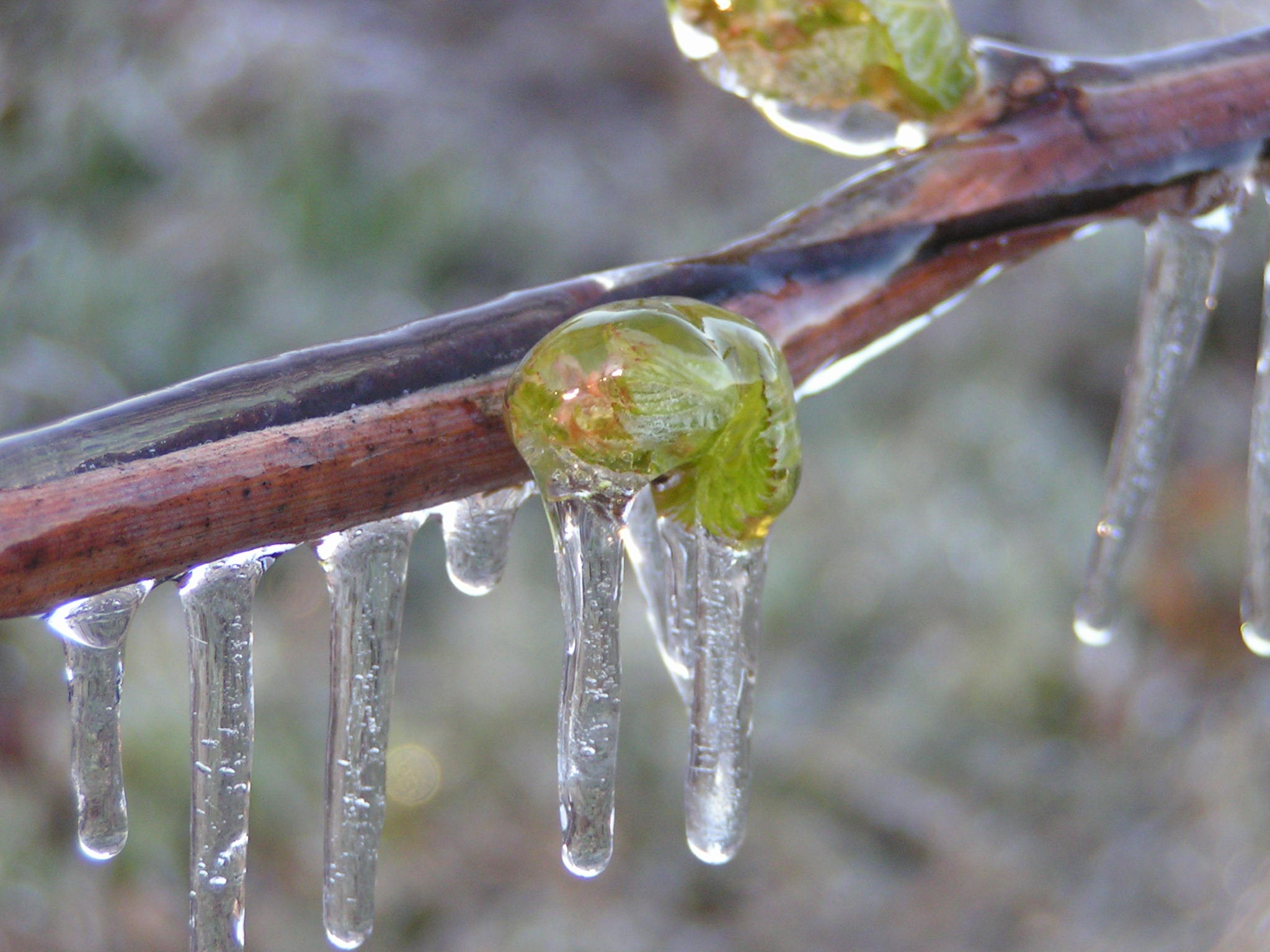
Apple production will be down this year from the average number of apples produced but there is in no way a shortage, according to New York Apple Association President Jim Allen. The average production of apples in New York state is 29 million bushels per year, as measured over a five-year period. Last year, apple production was above average and yielded slightly more than 30 million bushels of apples, Allen said. However, this year he expects that 27 million bushels will be produced, nearly a 15 percent drop from last year. Allen said the harsh winter with continual low temperatures hurt some of the buds. He also said that on May 23 there was a frost that chilled the blossoms, so the crop is smaller. The extent of the damage varied greatly across the state and depended on wind, variety and how low the temperature was in any given orchard. “Some varieties were more effected depending on what stage the flower was in,” Allen said. He said there was one particular instance where an orchard had damaged blossoms, but a half-mile away another orchard had no damage, so the results were variable. “When you have situations like that, it’s hard to give an estimate of what the crop is going to be,” Allen said. Source - http://www.freshplaza.com

16.09.2015

Italy - 39 thousand tons lost due to hailstorm

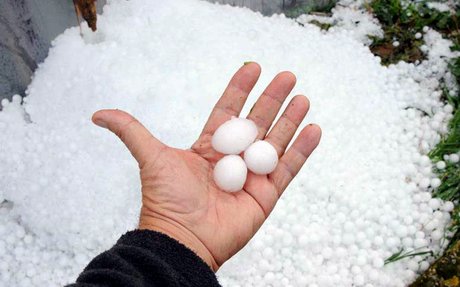
Interbranch Organisation Pera has carried out an estimate of the damage caused by the terrible hailstorm that hit the leading pear producing areas in Ferrara and Modena on 5 September 2015. The storm was particularly strong north of Modena towards Mantua and north-east of Ferrara. Pera president Gianni Amidei said that "luckily, many varieties had already been harvested, so the damage only concerns the Abate and Kaiser varieties. We have estimated a loss of around 39,000 tonnes, 13% of the Emilia Romagna production." In marketing terms, we are talking about a loss of over €40 million. Source - http://www.freshplaza.com

16.09.2015

USA - Maps visualize severity of California’s drought

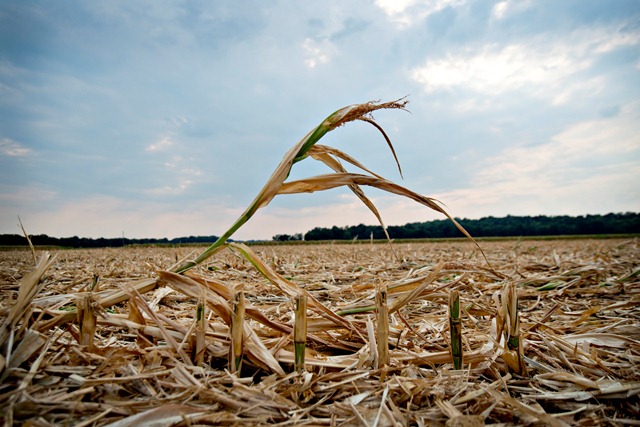
California continues to experience a massive drought, which enables wildfires to expand more rapidly. Last week’s heat wave led to a further increase of burned acreages and resulted in Governor Jerry Brown issuing a state of emergency. Firefighters continue to battle the many wildfires in the state. West of the state’s capital Sacramento, the Valley Fire in Lake County has burned more than 61,000 acres since it began on Saturday. To the East of Sacramento, the Butte Fire has burned more than 71,000 acres since it began last Wednesday. By far the biggest wildfire started with a lightning strike on July 31 and has since burned more than 138,000 acres in the national parks Sequoia and Kings Canyon. Lake County’s main agricultural crop is wine grapes, but it also grows a few thousand acres of walnuts as well as about two thousand acres of pears. The main agricultural crop for Amador and Calaveras counties, which are being hit by the Butte Fire, is wine grapes. LA Times has visualized the severity of California’s drought by showing 194 drought maps from December 2011 until September 2015. Click this link to see the maps. As a result of the drought, most reservoirs are less than 50 percent full with some nearing 20 percent of capacity. The maps show the desperate need for cooler weather and rain. Source - http://www.freshplaza.com

16.09.2015

USA - Warm, dry conditions advance field crop maturity

For the week ending Sept. 13, continued warm, dry weather advanced field crop maturity, according to the USDA’s National Agricultural Statistics Service, South Dakota Field Office, Sept. 14. Temperatures were near normal for much of the week. Most areas recorded no precipitation; however, midweek storms brought heavy rain and some hail to parts of the southeast. Producers continued seeding winter wheat, cutting silage, working livestock, and preparing for harvest. There were 6.3 days suitable for fieldwork. Topsoil moisture supplies rated 7 percent very short, 25 short, 66 adequate, and 2 surplus. Subsoil moisture supplies rated 6 percent very short, 25 short, 68 adequate, and 1 surplus. Corn condition rated 0 percent very poor, 4 poor, 19 fair, 58 good, and 19 excellent. Corn dented was at 81 percent, near 78 last year and the five-year average of 84. Mature was at 29 percent, well ahead of 9 last year, but near 25 average. Soybean condition rated 0 percent very poor, 3 poor, 21 fair, 56 good, and 20 excellent. Soybeans dropping leaves was at 52 percent, well ahead of 26 last year, but near 49 average. Winter wheat planted was at 22 percent, ahead of 13 last year and 15 average. Barley harvested was at 99 percent, ahead of 94 last year, but equal to the average. Sorghum condition rated 0 percent very poor, 4 poor, 30 fair, 59 good, and 7 excellent. Sorghum coloring was at 88 percent, ahead of 78 last year, but near 89 average. Mature rated 9 percent, near 6 last year, but behind 20 average. Harvested was at 1 percent, near 0 last year and 3 average. Sunflower condition rated 0 percent very poor, 2 poor, 20 fair, 72 good, and 6 excellent. Sunflowers ray flowers dried was at 69 percent, ahead of 57 last year, but behind 79 average. Bracts turning yellow was at 28 percent, near 26 last year, but well behind 50 average Alfalfa conditions rated 1 percent very poor, 5 poor, 26 fair, 57 good, and 11 excellent. Alfalfa hay third cutting was at 75 percent, ahead of 57 last year, but near 76 average. Fourth cutting was at 19 percent, ahead of 3 last year. Livestock, Pasture and Range Report: Pasture and range conditions were rated 2 percent very poor, 9 poor, 32 fair, 52 good, and 5 excellent. Stock water supplies rated 5 percent very short, 18 short, 74 adequate, and 3 surplus. Source - http://www.hpj.com

16.09.2015

India - Floods damage crops worth Tk 500cr in Kurigram, Bogra

Floods have damaged crops worth around Tk 500 crore on 87795 hectares of land in Kurigram and Bogra districts. Our Kurigram correspondent, quoting Shawkat Ali Sarkar, deputy director (DD) of the Department of Agriculture Extension (DAE) in the district, reports that floods have damaged crops worth around Tk four crores in the district. Aman paddy famers cultivated 1,03,291 hectares of land in nine upazilas of the district while local agriculture department had fixed 88,396 hectares this year, said a source in Kurigram DAE. The back-to-back floods inundated 507 villages of 63 unions under nine upazilas of the district and submerged 76,688 hectares of crop fields. Of them, 44,085 hectares of croplands have been damaged. Jitendra Nath Sarkar, 55, a farmer of Topamari Beel area of Belgachha union under Sadar upazila, said, “About 18 bighas of my aman paddy field have been damaged by the recent flood and downpour. As there is no scope of replanting aman paddy, I have to count a huge loss.” Abu Bakar Siddique, 24, a farmer of Farajipara village under Jattrapur union of the upazila, said, “I cultivated aman on 12 bighas of land before this flood. The whole paddy field has been damaged by floodwater. There is no scope of cultivating paddy again as the lands are still under water.” Shawkat Ali Sarkar said, “The farmers have been badly affected this season. To recover their loss, we are advising them to cultivate paddy saplings of Nabhi variety after the floodwater recedes. If the water takes longer to recede, we advise them to cultivate vegetables, mustard, pulse and ground nut.” Away in Bogra, the Department of Agriculture Extension (DAE) in Bogra has assessed the loss due to damage to crops by the recent flood in 150 villages of 25 unions under eight upazilas of the district to be around Tk 103 crore. Crops on 11, 107 hectares of land were damaged by back-to-back floods in Sonatola, Shariakandi, Dhunat, Sherpur, Gabtoli, Shajahanpur, Shibgonj and Adamdighi upazilas. DAE sources said T-aman on 10,233 hectares out of 1,85,500 hectares, seedbeds of T-aman on 173 hectares, aus on 282 hectares, vegetables on 340 hectares, and lentil on 115 hectares were damaged in the upazila. The sources added that there is no chance of planting aman on the affected land, but the farmers can recoup their losses to some extent by cultivating a new kind of local paddy, "Gainza," in the damaged cropland. Contacted, Deputy Director (DD) of DAE, Bogra, Chandi Das Kundu, said they have sent a letter to the authorities concerned, asking for Tk 7 crore for the rehabilitation of the affected farmers of the district so that they can recover their losses. District education sources said at least 111 educational institutions of Shariakandi, Dhunta, Sonatola and Shibgonj upazilas have been affected, but the total amount of losses could not be estimated till Thursday. Source - http://www.thedailystar.net

14.09.2015

India - Crop loss on 25,000 hectares in Uttara Kannada

Owing to deficient rainfall in Uttara Kannada district, there was crop loss on about 25,000 hectares so far and the estimated loss was put at Rs. 17crore, according to ZP president Saraswati Gouda. She was addressing the Karnataka Development Programme review meeting in Karwar on Friday. As per the primary survey, there was crop loss on 9,900 hectares in Mundgod taluk, 9,000 hectares in Haliyal, 5,000 hectares in Sirsi, 450 hectares in Joida, 440 hectares in Yellapur and 230 hectares in Siddapur taluk, she said. She instructed officials concerned to take action to provide seeds and fertilizers for cultivation of alternative crops, and said that notice has been sent all the gram panchayats to provide employment to people in rural areas under the Udyog Khatri Yojane. At present, there is 11 hours of load-shedding in rural areas, five-and-a-half hours of power cuts in taluks and five hours in district headquarters. She added that the load-shedding schedule was being announced in advance for the benefit of the public. Source - http://www.thehindu.com/

14.09.2015

Philippines - Farmers bear the brunt of El Nino drought

Scientists have predicted the upcoming El Nino weather pattern will be one of the strongest, if not the strongest experienced in the region, since 1997. The Philippines has since braced itself for prolonged droughts. The government has set up an El Nino task force last year, to help combat the effects of this weather phenomenon. The task force has encouraged farmers to switch to crops that require less water, but rice farmers are still having a hard time. "As of this time, our planting was delayed due to lack of water supply from the irrigation,” said Clement Salvador, a rice farmer. “What is happening, is that we are now depending on rain water. If there's no rain, we're totally at a loss." Mr Salvador is having a hard time planting his annual two rice crops, with a dry spell already delaying the planting of his first crop this year. He has also been limited to using only 20 to 30 per cent of his land. Forecasts of prolonged dry weather also means his yearly income from rice harvests will be reduced. Land usually set aside for rice fields will instead be used to plant vegetables this year, a crop farmers are unfamiliar with. Mr Salvador says that planting alternative produce will be a big risk, since many farmers have no experience on how to grow, market and sell them. He is on the same boat as an estimated 200 rice farmers who live in the area, and one of thousands nationwide who have braced themselves for a tough year. The Philippine weather bureau has announced that the drought could affect up to 32 provinces in the Philippines, particularly the northern farmland areas. The ripple effects of these are lower supplies of produce, such as rice, and possible price hikes. "When we talk about supply and demand we are going to look at how much we have in our warehouses. That’s why the national food authority is preparing on how to import some of the requirements, which might fall short in terms of local supply,” said Emerson Palad, Undersecretary in the Department of Agriculture. “Come September we will know whether we will have a big deficit or not in terms of how many farmers actually planted rice." Attempts to tackle the drought, such as cloud seeding, have also proven unsuccessful so far. These unfavourable weather conditions are expected to continue and scientists have predicted this year's El Nino could rival the record-breaking 1997 event, which saw weather patterns and temperatures wreaked havoc across the globe, from widespread droughts in the Philippines to fires in Australia. El Nino occurs on average every two to seven years, and usually lasts from between nine to 12 months. Sea surface temperatures warm up in the equatorial Pacific and cause heavy rains in some parts of the world and droughts elsewhere. Source - http://www.channelnewsasia.com

14.09.2015

Honduras - Drought affects 50% of rambutan

Argeñal Francisco is a producer of rambutan who can't remember having seen a season as bad as this one in his 14 years of being in this activity. Like him, dozens of farmers are expecting a reduction in the volume of their crops because of the drought in Honduras. "My plantation production won't be what I expected. One day, it rained, hail fell and burned most of my fruit. The taste of the fruit is simple and its size is small. We've been facing very difficult moments," said Argeñal. Rambutan production rose since the Honduran Agricultural Research Foundation (FHIA) impelled varieties with increased resistance and grafts a little more than two decades ago. "This will be a terrible year for me. I think I won't even recover my investment," said the producer. The harvest months are in August, September, October, and, to a lesser intensity, November. However, producers haven't started this process and, consequently, this season's volume is expected to be lower. "Climate change has brought delays in the bloom, which was erratic, and the drought has affected 50% of the crops compared to last year in the entire area," says Manuel Alfaro, president of the Association of Producers and Exporters of Fruits (Frutela). Perhaps 1% of the 1,000 hectares of rambutan have an irrigation system. Financing Since it is a rainy area, this exotic fruit develops the most in the Atlantic Coast. "The fruit is susceptible to water deficit, so the dry corridor does not meet the conditions to grow it," he said. Rambutan producers are expected to have a dialogue with authorities from the Ministry of Agriculture and Livestock (SAG) in the coming days to increase the range of crops benefited by financing from the Fund for the Revival of the Agricultural Sector of Honduras (Firsa). This scheme grants a preferential interest rate of 7.25% with banks. In August last year, L 1,500 million had been authorized for this purpose, and 70% of these funds were distributed for palm oil, 15% for the Bovine, Pork, and Poultry Repopulation Program, 7.5% for the Security and Food Sovereignty Program, and 7.5% for other sectors, such as the sugar cane sector. Earlier last week, president Juan Orlando Hernandez met with representatives of 14 agricultural sectors to present the immediate needs of this activity that employs a third of the economically active population (EAP) of Honduras. "I am ready to accompany them wherever they need me," said the president. Certifications Estimates are that there are six fruit packing plants employing 50 people each, not counting the jobs created during the cutting and harvesting in Honduras. As of January 25, 2003 the Department of Agriculture of the United States (USDA), through the Inspection Service for Agricultural Health (Aphis), authorized the export of Honduran rambutan to the US. Their technicians inspect the fruit to see that its shell is intact and that it is free of the Mediterranean fruit fly and other pests or diseases. "It is a fairly advanced certification process, both at the plants and on the farms, but we must remember its a new product and so far there has been no support for irrigation systems to small producers of rambutan," said Rafael Rodriguez, president of the Honduran Association of Producers and Exporters of Rambutan (Ahperambutan). In 1993, the Fhia boosted the R-134, R-162, R-167, varieties from Malaysia, Jitlee from Singapore, R-156 from Malaysia and Binjai, and Seelengkeng from Indonesia. Fruits of these varieties have characteristics that meet the requirements of the export market for fresh fruit, which requires a large, sweet aryl that detaches well from the seed. Source - http://www.freshplaza.com

14.09.2015

Canada - Spring frost decimated some apple varieties

If you want to go apple picking, you better do it sooner rather than later. The frost that hit in late May wiped out about half of Applewood Farm Winery’s crop. Applewood has 13 varieties of apples on 35 acres. “It was so cold that day. Wind was from the north. It was 2C at sunset and it just dropped like a stone from there,” Matthew Passafiume, owner of Applewood Farm Winery said. “It’s crazy you can lose a whole year’s work in eight hours,” he said. The hardest hit were the honey crisp apples. About 80 per cent of Applewood’s crop was lost. Honey crisp also happens to be the most popular, according to Passafiume. The frost was about a week later than normal, so some of the apples were already on the tree, while the rest were in bloom. “The apple is completely garbage,” Passafiume said of those that were already on the tree. Applewood also lost about 30 per cent of their strawberries. “We’re not going to break even this year. We’re going to be operating at a loss this year,” Passafiume said. Applewood not only relies on the apples for family pickers, they turn them into fruit wines. Because of the smaller crop, they may have to reduce their wine production, he said. Whitchurch-Stouffville resident James Liaros, whose family owns a nine-acre orchard the just over the border in Markham, also lost about 50 per cent of their crop due to the frost. “The loss does have some impact, but I buy and sell in large volumes, which allows for a flow of apples,” Liaros told The Sun-Tribune via email, noting he does not solely rely on his own orchard. Other provinces did not suffer the same weather damage, which means they can meet Liaros’ supply and demand needs, ensuring a stable market, he said. Liaros, who has been selling apples at the Stouffville Country Market for more than 25 years, was a 2014 Ward 4 candidate. He lost to Rick Upton. “In my opinion, I believe it will be status quo other than the high demand apples such as ambrosia, royal gala, fuji and honey crisp that may see a slight increase in price,” according to Liaros. Both growers lost more this year than in 2012 when the warm winter was followed by a deep freeze, then hot summer. “That was a once in a 100-year event and it happened again. I think we’re seeing a trend here and it’s troubling” Passafiume said. Apple picking in Applewood’s McCowan Road orchard began last weekend. “This year I don’t think we’re going to make Thanksgiving,” Passafiume said, noting they typically go to Halloween. However, not all is lost when it comes to the family fun orchard experience. Because he knew the apple crop would be so small, more pumpkins were planted so people have something to pick later in the season. Source - http://www.yorkregion.com

14.09.2015

Argentina - Rain reduces strawberry production

Strawberry production in the province this season will be complicated because autumn and winter were too rainy, humid and had many cloudy days. The rains in early fall saturated the soil and prevented producers from preparing them properly, which delayed plantings up to a month. Daniel Kirschbaum, a specialist in strawberries from the Fruit-horticulture Division of the INTA Famaillá, said the economic success of strawberry crops in the province depended mainly on the early production. "Planting later implies losing a large portion of this production, which runs from May to August, and that has prices that decrease as we approach spring," he said. As a result of the rains, he said, there have been many cases of quality and health issues in the seedlings. "Since it has been a wet year, many plants were lost because of pathogenic fungi living in the soil. The rains caused direct damage to the fruits of the plants in harvest and created predisposing conditions for botrytis, a devastating fungus that attacks the fruit in very wet and cold periods. In late August, the weather was getting drier, warm and bright, which is good for the plant, but also for the spider mite, the strawberry's biggest pest. There already are numerous pockets of this mite in local plantations," he said. Kirschbaum said that the area devoted to strawberry in the province this year had stabilized at 310 hectares. "The main factors limiting the expansion of the crop are the high production costs, the uncertainty of obtaining early varieties because of climate issues, high freight rates, low fruit industry prices, and falling exports. However, the situation is more favorable for small-scale farmers and diversified family farmers who have family labor and sell in the area and in Mercofrut. However, the surface and strawberry volumes handled in Tucuman are very low," he stated. Source - http://www.freshplaza.com

14.09.2015

Romania - Fruit and veg production to drop by 20%

Because of the heat and drought, the Romanian fruit and vegetable production this year will be smaller and more expensive. Experts say that production volumes could drop by around 20%. "Currently, the market is sufficiently supplied. The situation in August was fine because many were on holidays and consumption was lower, but demand will increase ahead of the winter," said Aurel Tanase, Executive Director of the Romanian National Interprofessional Organization of Fruits and Vegetables, Prodcom. Because of the drought and lower production, the price of vegetables and fruits has already increased, warns Aurel Tanase. "Prices are already on the rise compared to the same period last year. For example, onions, which previously cost 0.9 lei* per kilo, now stand at 2 to 2.2 lei/kilo; the same trend is true for potatoes, since this year's production will be at least 30-40% lower than last year. Potatoes are currently sold for 1.5 lei per kilo, reaching up to 2 lei, while last year the price at origin ranged between 0.5 and 0.6 lei per kilo, with a retail price of 1 leu per kilo," said Aurel Tanase. In this context, the Executive Director of Prodcom stated that financial assistance for fruit and vegetable producers affected by the impact of drought has been requested to the Ministry of Agriculture. "We met with the Ministry of Agriculture and requested focused attention on this sector. For some vegetables, high temperatures and the big difference between day and night has caused the loss of a good percentage of flowers, occasionally as much as 40%. Source - http://www.freshplaza.com

11.09.2015

Canada - Saskatchewan releases latest crop report

SOUTHEAST Well over half of the region’s crops are in the bin. Precipitation delayed harvest, which ranged from small amounts to 88 mm. Rain has bleached many cereal crops, and downgrading is expected. Some fields have secondary plant growth and new flushes of weeds. Topsoil moisture conditions for cropland, hayland and pasture are about 85 percent adequate. SOUTHWEST The area leads the province with about 60 percent of the crop harvested. Rainfall varied from small amounts to 54 mm. At 480 mm, the Mortlach area leads the province for the highest amount of precipitation since April 1. Some fields that normally are straight cut are now being swathed because of green growth. Topsoil moisture conditions for cropland, hayland and pasture are about 70 percent adequate. EAST-CENTRAL About one-quarter of the crop is in the bin, but heavy rain lodged many crops and postponed harvest. Precipitation ranged from trace amounts to 65 mm. Cereals will likely be downgraded at the elevator because moisture has bleached, stained and sprouted some crops. Topsoil moisture conditions for cropland, hayland and pasture have an average rating of about 75 percent adequate. WEST-CENTRAL One-third of the harvest is completed, and crops are yielding better than first expected. Precipitation varied from small amounts to 39 mm. Heavy winds have scattered some swaths across fields. Waterfowl are also causing problems in some areas. Topsoil moisture conditions for cropland, hayland and pasture have an average rating of 90 percent adequate. NORTHEAST Twenty percent of the crop is harvested but will be delayed with recent precipitation, which varied from 25 to 59 mm. Many fields are saturated and unable to hold equipment. Straw remains green, and there are varying crop stages and new weed flushes. Topsoil moisture conditions for cropland, hayland and pasture have an average rating of 70 percent adequate. NORTHWEST About one-quarter of the crop is in the bin. Harvest continues to be difficult in several areas, although there are reports that some fields are yielding better than first expected. Precipitation ranged from 24 to 65 mm. Strong winds blew swaths around and shelled out standing crops. Cropland, hayland and pasture moisture conditions are rated an average of 90 percent adequate. Source - http://www.producer.com

11.09.2015

USA - Upstate New York farms eligible for federal disaster aid for crop loss

Farmers in 44 counties across Upstate New York are eligible for federal disaster aid after suffering 2015 crop losses from extreme weather that included flash floods, according to the U.S. Department of Agriculture. The crop losses were the result of excessive rain, high winds, hail, lightning and tornadoes that occurred between May 1 and July 14, according to USDA Secretary Tom Vilsack, who authorized the disaster declaration. In Central New York, farmers in Onondaga, Cayuga, Oswego, Madison, Oneida and Cortland counties are eligible for the aid. The USDA also determined that farms in those counties are eligible for aid from production losses due to frost, freeze, and excessive snow that occurred from Jan. 1 through May 24. The disaster designation makes farmers eligible for federal emergency loans. Farmers in the eligible counties will have eight months to apply for emergency loan assistance, according to U.S. Rep. Richard Hanna, a Republican from Oneida County who advocated for the farmers. The other Upstate counties declared natural disaster areas from the heavy rain and associated spring and summer storms are Broome, Chautauqua and Clinton, Allegany, Cattaraugus, Chemung, Chenango, Columbia, Essex, Franklin, Jefferson, Lewis, Monroe, Delaware, Dutchess, Erie, Genesee, Greene, Ontario, Orleans, Hamilton, Herkimer, Livingston, and Niagara. Schuyler, Seneca, Orange, St. Lawrence, Steuben, Sullivan, Ulster, Wayne, Wyoming, Tioga, Tompkins, Warren, Washington and Yates. Farmers suffered crop losses due to extreme wet weather that included flash flooding from a storm that dumped 4 inches of rain on parts of the Finger Lakes in one day in June. The month was also the third-wettest on record in the Syracuse area. Source - http://www.syracuse.com/

11.09.2015

India - Dry spell could doom crops in 7 dists

The long dry spell in Jharkhand is worrying both farmers and agriculture scientists who fear crop loss, especially in seven districts, if this weather condition continues for another week. The agriculture department on Thursday convened an 'urgent meeting' of the representatives of farmers' bodies in the state, district agriculture officers and scientists of Birsa Agriculture University to assess the ground situation. The experts at the meeting said the situation was worrying in Dhanbad, Khunti, Garhwa, Palamu, East Singhbhum, West Singhbhum and Seraikela, which received less rainfall in August compared to other districts. While average rainfall in the state in July was 400mm, it came down to 238mm in August. Though some of the districts received more than 350mm of rainfall in August the average of seven districts remained below 200mm. Farmers from different districts said crops in the low-lying areas are in a better thanks to the standing water. But the medium and upland crops may suffer in terms of yield as the ground underneath has started developing cracks. Principal secretary agriculture Nitin Madan Kulkarni directed the district agriculture officers to compile the advisory of agriculture experts and circulate them among farmers in form of pamphlets. "Use every medium of communication to disseminate information to the farmers," he said. Jatashankar Choudhary, director-agriculture, said maize was sown earlier and most of the crop have reached ripening stage. "Almost 30% of the maize crop are in silking stage and in absence of rain are likely to suffer in terms of yield but the good news is that majority of the crop is ready for harvest," he said. Agriculture physicist and agro met advisor at Birsa Agriculture University Dr Abdul Wadood, however, brought some hope amid the crisis. He said a strong weather system was noticed over the Bay of Bengal that is likely to cause "good amount of rain in the state later this week". "Though we cannot be very sure about the weather condition, farmers are advised to go for irrigation with whatever water they can arrange in the proximity of fields," he said. Wadood clarified that water mixed with urea and sprinkled through sprinklers can also rejuvenate the crops and prevent losses. "Though there is lack of rain but situation is not grim as the water bodies like pons and well still have water which can be used to give one round of irrigation in case of emergency," he said. Responding to the advisory departmental secretary directed the DAOs to arrange pump sets for farmers in their respective districts so that water could be pumped to the fields from the nearest water body. Source - http://timesofindia.indiatimes.com

11.09.2015

USA - Farmers Endure Hot, Dry Weather

The following is from the Indiana Field Office of USDA's National Agricultural Statistics Service for the week ending Sept. 6. Hot and dry weather quickly pushed crops into maturity, although much of the corn and soybean fields remained stressed from the lack of sufficient moisture. Temperatures soared up in the mid-90s for many parts of the state, browning pastures and stressing livestock. Spotty rain showers provided some relief to dry areas, but overall the state remained dry. There were 6.5 days available for fieldwork, on par with last week. Corn has begun to dry down fast, but remains under 50 percent in good to excellent condition. Corn silage harvest continued this week, with some reporting disappointing yields. Growers checking fields noted cases of poor kernel depth and ear size, the resulting effects of nitrogen deficiency and lack of sunlight at critical times. Soybeans are turning color, with little change to condition. Pod counts thus far have been fewer than previously expected. Overall, there are still concerns about the stress that the dry spell has put on the crops. Some early planted corn and soybean fields have been harvested. Pastures have continued to dry out and, in some areas, have become brown and bare. Livestock has been affected by the temperatures and the dry pastures. Farmers continued to cut and bale hay, but do not believe they will make another cutting due to the slow regrowth of the fields. Mint, tomato and potato harvest is underway. As fall harvest rapidly approaches, farmers are preparing harvest equipment, cleaning out bins, flying in seed for cover crops, attending farm shows and mowing roadsides. Regionally, soybeans drop- ping leaves was 18 percent complete in the north, 21 percent in central, and 22 percent in the south. Soybeans rated in good to excellent condition was 44 percent in the north, 48 percent in central, and 46 percent in the south. By region, corn dented was 65 percent complete in the north, 63 percent in central, and 81 percent in the south. Corn matured was 13 percent in the north, 18 percent in central, and 27 percent in the south. Corn rated in good to excellent condition was 40 percent in the north, 48 percent in central, and 55 percent in the south. Topsoil moisture was rated very short, 7 percent; short, 35 percent; adequate, 52 percent; surplus, 6 percent. Subsoil moisture was rated very short, 5 percent; short, 29 percent; adequate, 61 percent; surplus, 5 percent. Source - http://www.farmers-exchange.net

919
of 1224