NEWS
918
of 1224
News
21.09.2015

Australia - Hail storm wreaks havoc

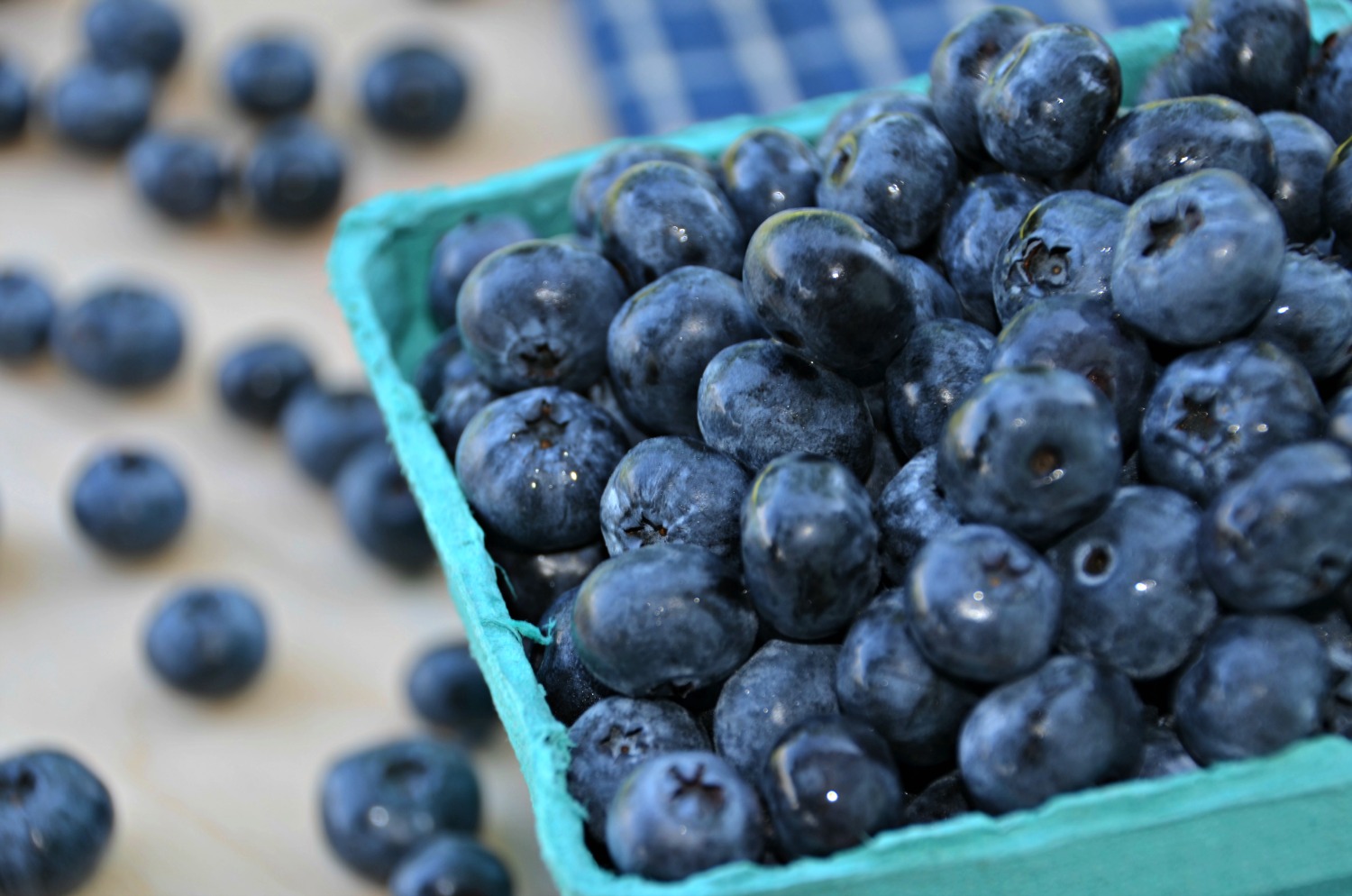
Parts of the Mid North Coast looked like snowfields after a heavy hail storm swept through the region. The storm hit Corindi's blueberry industry the hardest, causing millions in damage. Severe thunderstorms along the Mid North Coast on Thursday caused isolated damage from Foster through to Grafton. North of Coffs Harbour in Corindi, the blueberry fields were battered by the hail. "It was twenty five minutes of cricket ball size hail, plus damaging winds which devastated eighty per cent of our crop," Ganesh Singh, Director of OzGroup Berries said. "In this area we have five farms on our road, and after the storm everyone was out trying to get the hail out of their bird netting. We've lost in the order of three to four hundred thousand dollars, plus repair costs on top of that. "We've also got macadamias which were in full flower, and most of the flowers are now on the ground, so next year's crop isn't looking too good either." Raspberry, cucumber, and tomato hot houses in Corindi were also damaged. Ganesh Singh estimates that the cost of the hail storm will exceed fifty million dollars. Federal Member for Cowper Luke Hartsuyker phoned farmers on Friday morning to gauge the extent of the damage. "I will be speaking to the Federal Agriculture Minister to discuss what sort of assistance may be available given the losses being reported," he said. Source - http://www.freshplaza.com

21.09.2015

Peru - A plague affects 70% of the citrus in Puno

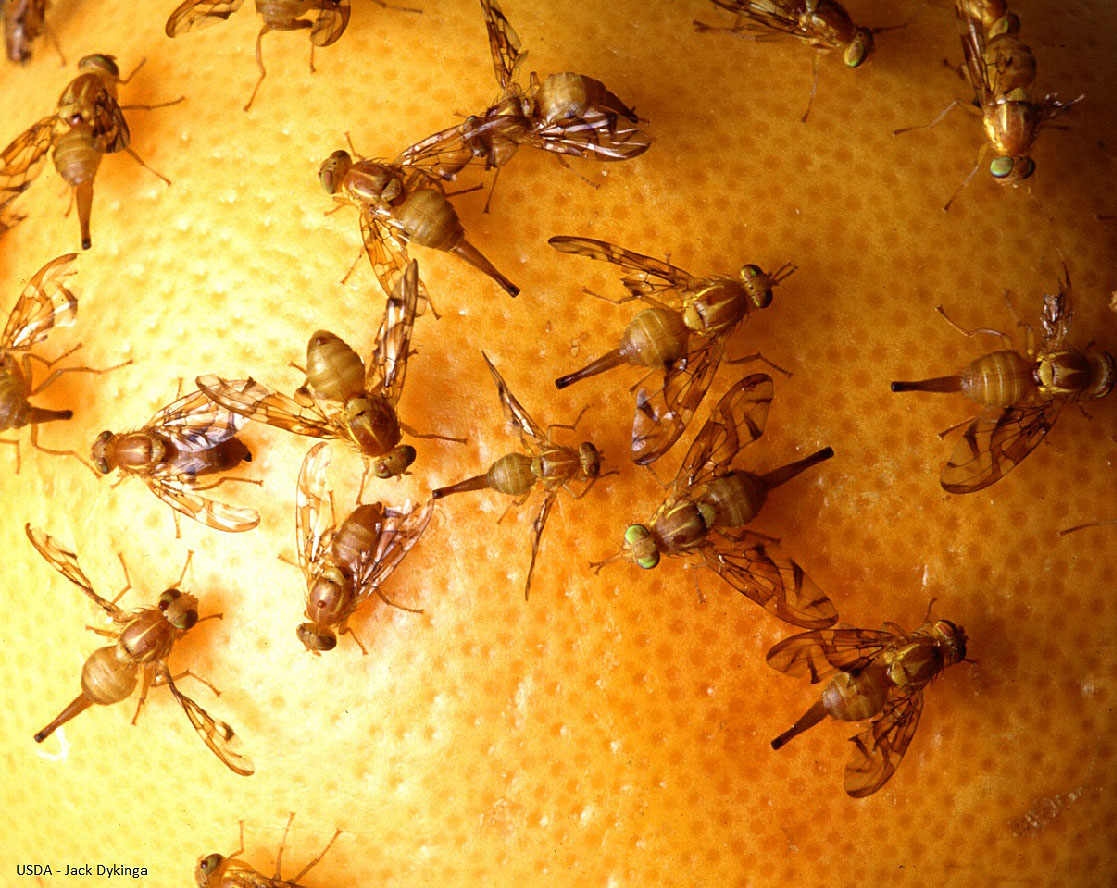
Nearly 70% of the citrus production, including oranges and mandarins, in the district of San Juan del Oro province of Sandia were significantly affected by the fruit fly plague, stated Jose Orlando Jara Cabrera, mayor of this municipality. Farmers used to produce between 50 and 80 thousand citrus per year, but now their production has decreased and stands between 8 and 10 thousand citrus per year because of this plague. "Unfortunately the regional and central authorities haven't said anything, even though we submitted all the documents and applications necessary so that they could help us," added the mayor, after saying that they had asked for help from the National Agrarian Health Service of Lima and Puno, but without any response. Cabrera said there was no plan in place to control this pest in the area, despite having executed the Fruit Regional Project, which came to an end and was currently being liquidated. "We wanted this project to be extended until December; however, the regional government gave us a negative answer," he said. Likewise, he recalled that there currently was no public investment project aimed at strengthening fruit production in the region of Puno. "The local government is the only one devoting and investing its resources to address the fruit and agricultural problem in the area," said Cabrera. One thousand farmers affected  There are about a thousand farmers engaged in the production of citrus, coffee, cocoa and others crops in the district of San Juan del Oro. Orange, mandarin, banana, pineapple, and passion fruit, among others, are sold to markets in the Puno region, mainly to the cities of Puno and Juliaca. The fruit fly and the yellow rust are the two main problems faced by farmers in the jungle town of Puno. The yellow rust affects coffee crops. In October 2014, the Presidency of the Council of Ministers (PCM) declared the state of emergency for 60 days in coffee growing areas because of the yellow rust plague. Nevertheless the problem persists at Sandia. Source - http://www.freshplaza.com

21.09.2015

India - Grape-growers seek insurance cover extension

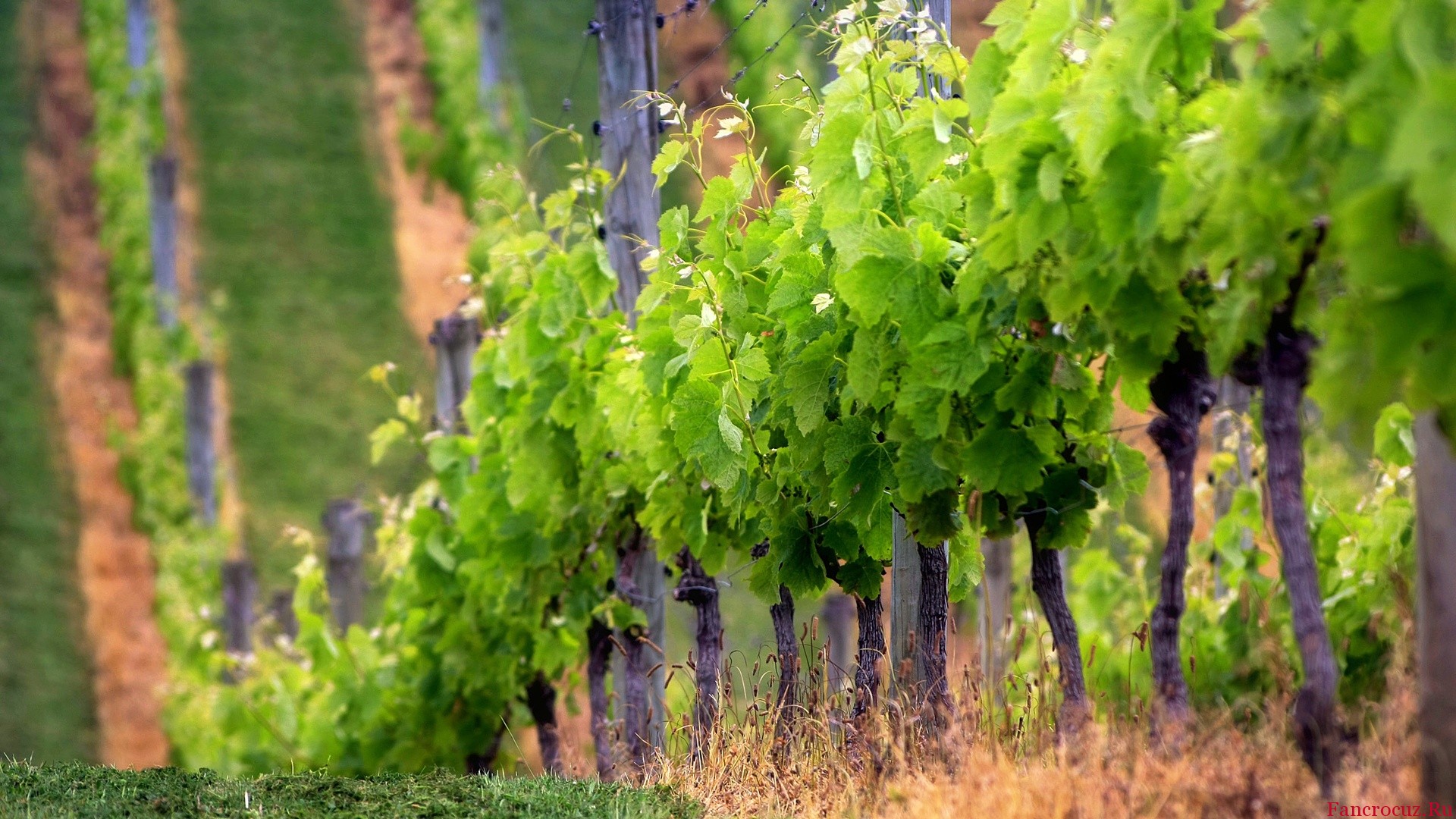
The Maharashtra Rajya Draksha Bagayatdar Sangh (MRDBS) has asked the state government to extend insurance coverage period for orchards at least up to April 30. Following pressure from the grape-growers, the state government had recently extended the insurance coverage period from January 30, 2016, to March 31. This will come into effect from November 1, 2015. As there is also a possibility of unseasonal rains and hail storms, the grape-growers' body is demanding extension of the insurance coverage period up to April 30. Speaking to TOI, Kailas Bhosle, chairman of the MRDBS central science committee, said, "For grapes, insurance coverage period was from October 15 to January 31. During the past two years, vineyards in Nashik were hit by unseasonal rains and hailstorms in February and March. Grape farm owners, however, did not get any insurance as the coverage period was up to January 31. After the matter was continuously followed up, the government recently extended the period by two months. The coverage period will now be from November 1 to March 31. However, in doing so, owners who harvest their grapes early in October will not be covered if they are hit by unseasonal rains. Grapes are harvested early in parts of the district like Satana and Bagalan." The government has launched weather-based insurance scheme for orchards. For grapes, an annual premium is Rs 9,000 per hectare, of which grape-growers have to pay half of (50 per cent) the premium, while other 50 per cent is paid by the government. The grape-growers get an insurance cover of Rs 150,000 per hectare. This also depends on the quantum of rainfall and how badly their vineyards are affected. Source - http://www.freshplaza.com

21.09.2015

Spain - Growing presence of fruit fly in Huelva's citrus[:ru]Spain: Growing presence of fruit fly in Huelva's citrus

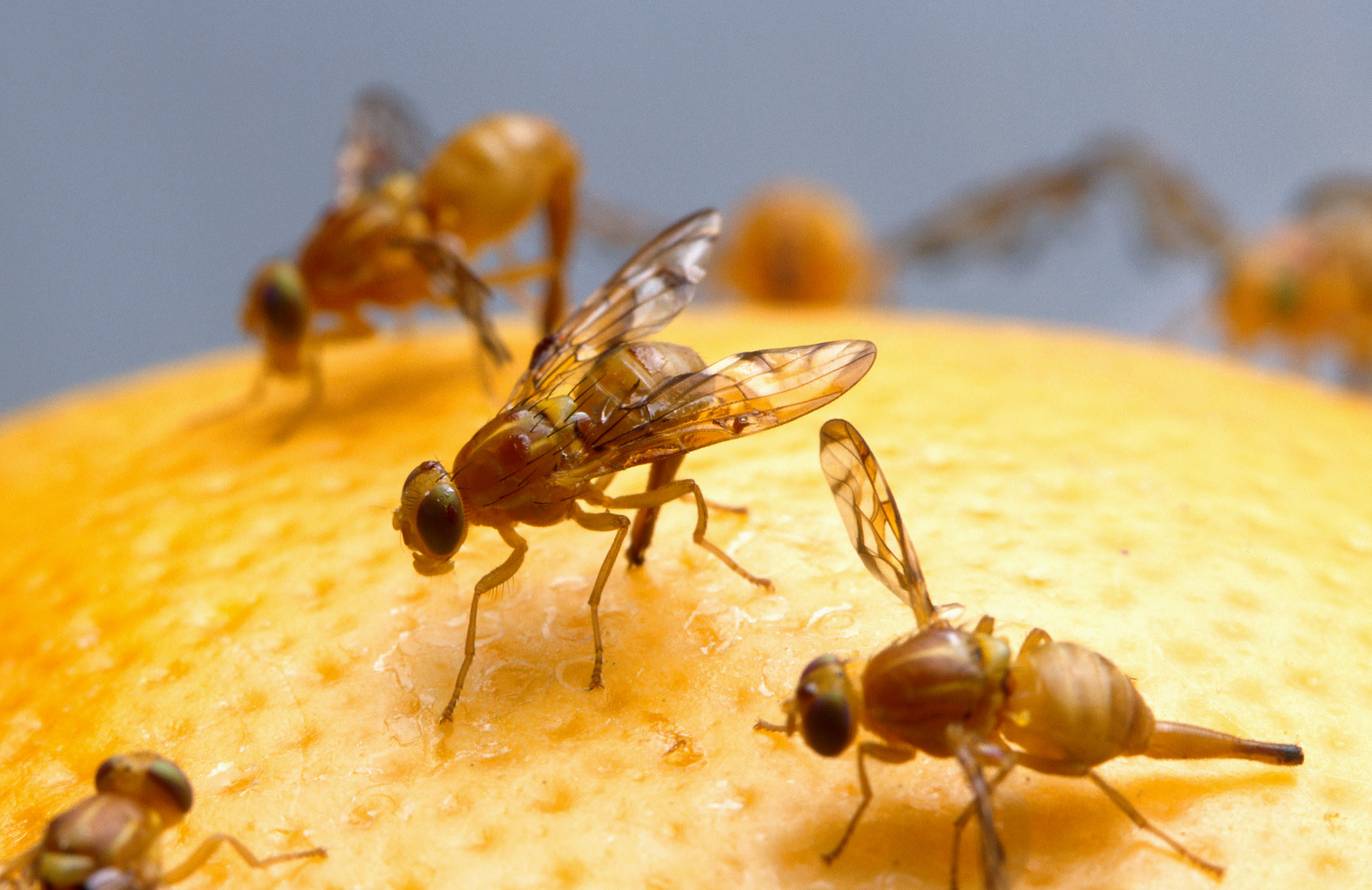
Over the last three weeks, the Phytosanitary Alert and Information System (RAIF) of the Government of Andalusia has detected a considerable increase in the fruit fly population in citrus plantations in the Coast and Andévalo Sur, so they advise mass trapping to reduce it. The Government's technicians noted in their report that as soon as the extra-early citrus varieties started ripening, and with the early varieties about to arrive, as well, a period has started in which the bite of the fruit fly (Ceratitis capitata) may adversely affect both the production and the marketing of citrus. The current weather conditions, especially in coastal provinces, with temperatures of between 16 and 32 °C and average relative humidity values of around 75%, are optimal for the insect's development; in fact, the provinces of Cadiz, Huelva and Seville have all recorded increases in the number of insects trapped. The pest causes direct damage to the crop, since the larvae feed off the pulp, as well as indirectly, once the fruit starts rotting. These fruits will end up falling to the ground, which will result in their loss. For decision-making related to the pest's population control, the RAIF recommends installing traps for the monitoring of adult insects and conducting weekly surveys of the fruit. Aspects to be taken into account include phenology, number of insects caught, presence/absence of damaged fruits and the safe use period of the active materials employed. They also advise the pest's control in fruit orchards located in the vicinity of the plots, as well as the use of mass trapping techniques when the ripening starts and during the whole process afterwards. These measures, they stress, should contribute to reducing the insect's population. Lastly, it is also essential to remove the fruit from the ground and not leave any ripe fruit on the tree, as this will help prevent new outbreaks in the future. Source - http://www.freshplaza.com

18.09.2015

UK - Bad weather sees bee farmers face worst harvest for 40 years[:ru]Great Britain - Bad weather sees bee farmers face worst harvest for 40 years

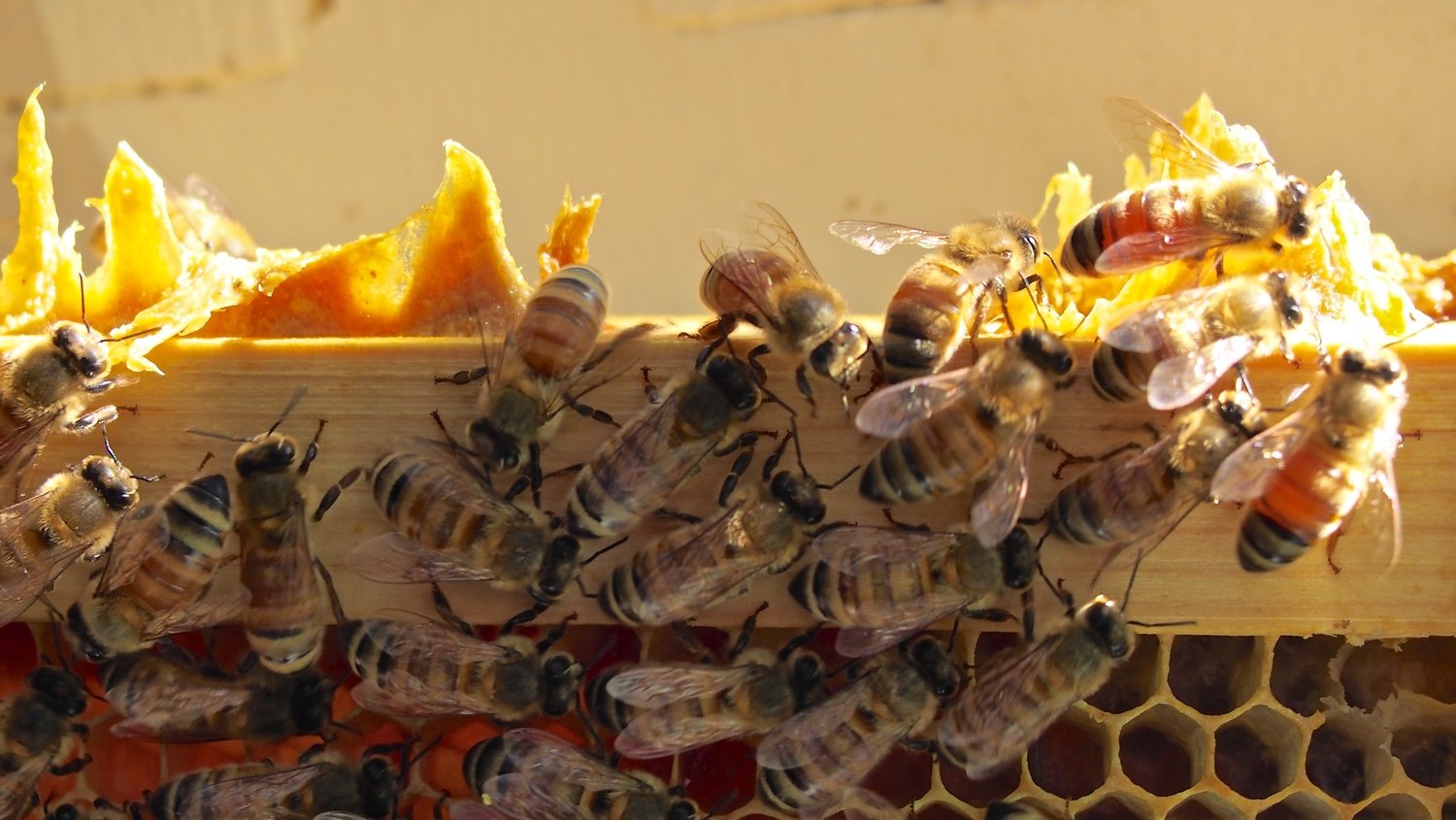
Honey production in the UK is way down this year with some bee farmers facing their worst crop for 40 years, according to the Bee Farmers’ Association. A wet summer, especially in Scotland and Wales, led to poor mating meaning queens laid fewer eggs. The picture round the country is varied, but even in the south of England where crops are usually good, there are reports of below average yields. In Scotland, however, the honey harvest has been disastrous and the crop is expected to be 50% lower than normal, said Bee Farmers’ Association (BFA) general secretary Margaret Ginman. There was under a third of the normal spring blossom honey crop and the long wet summer has meant colonies failed to build up to gather nectar for heather honey. Late heather The flowering of the heather itself was late, and not as glorious as in some years. BFA chairman David Wainwright, who farms 700 hives across England and Wales, predicts the disastrous season will leave many of the associations 400 members struggling to make ends meet. “It has been a terrible season with only a couple of weeks of good weather when small amounts of honey have come in,” he said. Weak colonies Dumfries bee farmer John Mellis, who farms about 500 hives, said the poor honey crop was not the only problem. Colonies have failed to build up so are going into winter relatively weak. “This means there are not going to be enough winter bees to sustain the hives resulting in a prediction of high winter losses,” he said. Murray McGregor, the biggest bee farmer in the country, farms about 2,700 hives and is based in Coupar Angus, Scotland. He said: “The heather has flowered late meaning that the winter bees are having to work the flowers. This spells disaster for next year. “The prospects of huge winter losses is very real. My spring crop was only 15 percent of normal. My heather crop will reach 50 percent of normal if I am lucky.” Mixed picture Neil Pont, a Lincolnshire bee farmer with 250 hives, said the picture was “really mixed”. The heather honey crop from the North York Moors has been good though the honey from pollination work was down, he explained. Bee farmers play a crucial part in agricultural pollination by transporting their hives to crops for farmers ever year. And Mr Pont said the ivy that is coming into flower will help the bees build up for the winter. Dramatic drop Bee farmer Cris Reeves, of Haughton Honey in Cheshire, said the harvest was likely to be a third of the size of last year after poor weather affected nectar flow. “Wet weather and cooler temperatures during key times of nectar production over the spring and summer have led to a dramatic drop in the amount of honey harvested this season,” he added. But stocks at Haughton Honey remain buoyant thanks to a bumper harvest in 2014. Alan Riach, vice-president of the Scottish Beekeepers Association, said: “The weather in Scotland in May and June was really chronic. “The bees broke up very slowly. It also caused a lot of problems getting our queens mated. “It was truly a dreadful year up to late July. During August, the weather improved and the bees have taken in a bit of honey. But is certainly is a mixed picture.” Pesticides NFU vice-president Guy Smith said this year’s results showed there were many variables and it made no sense to blame poor honey harvests on one factor, such as pesticide use. “In any environment there are so many variables. Just to focus on one or two and thereby think you can prove a correlation is not a sensible way to go about it,” he added. “We are fully in favour of greater research into the use of neonicotinoids and their effects in the field on bees.” Source - http://www.fwi.co.uk

18.09.2015

Fiji - Bad weather leaves farmers struggling

Fruit and vegetable production is down and prices are on the up as a result of the prolonged dry weather that has gripped the Western Division. Nature's Way Cooperative Ltd CEO Michael Brown said produce exporters in the country were reeling from the effects of the prolonged dry spell as farmers struggled to meet the heavy vegetable and crop demand. He said should the El Nino effect become more pronounced in the coming months, production would be further affected and emergency measures such as irrigation would be needed. The head of the cooperative, a company responsible for the treatment and packaging of export produce, says the weather affected primary commodities including papaya, mango, eggplant and breadfruit. He said so far, 671.837 tonnes of the four commodities had been exported to markets in New Zealand, Australia, Japan and Hong Kong. "So far, the throughput for exports is not too bad when considering the dry weather that had set in earlier with the cold weather affecting the ripening of papaya," he said. "However, in a good year the production would have been around 900 to 1000 tonnes. This shortfall is affecting the industry quite significantly as exporters are further burdened with quality issues because of weather factors. The exporters are trying to cope with the supply to their overseas markets but such problems cause a disruption to normal exports and as a result, the whole value chain gets affected. Sigatoka-based export company, Farmboy, says the dry weather has affected their ability to supply the markets. "We have temporarily stopped exporting to New Zealand due to the shortage of produce," said company head Kamlesh Prasad. He said fruits such as watermelon, which normally retailed for about $2 at this time of the year, was selling at $3.50 to $4 per kg. The Agriculture Ministry has been conducting site visits and are assisting farms that were the most affected. Source - http://www.freshplaza.com

18.09.2015

India - Crop insurance scheme a scam

Describing Weather-Based Crop Insurance (WBCIS) as a major scam, a veteran whistleblower in Chhattisgarh on Thursday demanded a high-level probe. Alleging that Raman Singh government blindly accepted private insurance companies' term sheets, with clauses heavily loaded in their favour, leading to losses to both the farmers as well as state exchequer. Armed with documents collected through Right to Information Act (RTI), veteran activist Rama Shankar Gupta told media, "As per guidelines issued by Centre and Insurance Regulatory and Development Authority (IRDA), crops have to be insured on the basis of declaration from farmers about total sowing area. However, insurance has been done on the basis of total land area as mentioned in Kisan credit card." Gupta said initially state government had prepared a term sheet for the scheme, but later a state-level committee approved another term sheet prepared and submitted by private insurance companies. He said as per state's announcement, maximum compensation for crop loss would be Rs 20,000 for paddy and Rs 15,000 for other crops per hectare. "In most cases, Rs 4,000 was debited from farmer's account and an equal amount was contributed by the state government for insuring crops in an area of 10-acre," he said adding that the issue of paddy and other crops were not taken into consideration. "Even in cases where the farmers have not sworn paddy in total area, premium was calculated on the basis of total area," he claimed. Pointing out that insurance companies have mopped up Rs 336 crore in Chhattisgarh alone, Gupta said similar schemes were being implemented in 13 other states as well. While state government carried out a publicity campaign about this scheme, Gupta said, these companies were supposed to set up weather stations at a distance of every 10km but this was not done. "Thus, the daily weather data, being provided by insurance companies to agriculture department lacked credibility," he added. Gupta said he was contemplating to move the high court, seeking a CBI probe or a court monitored SIT probe. Former legislator Virendra Pandey, who was present, said the conditions in the term sheet, accepted by state government, was something akin to 'rain betting' and not a crop insurance scheme in its true spirit. Source - http://timesofindia.indiatimes.com

18.09.2015

USA - Peach growers struggle with cold

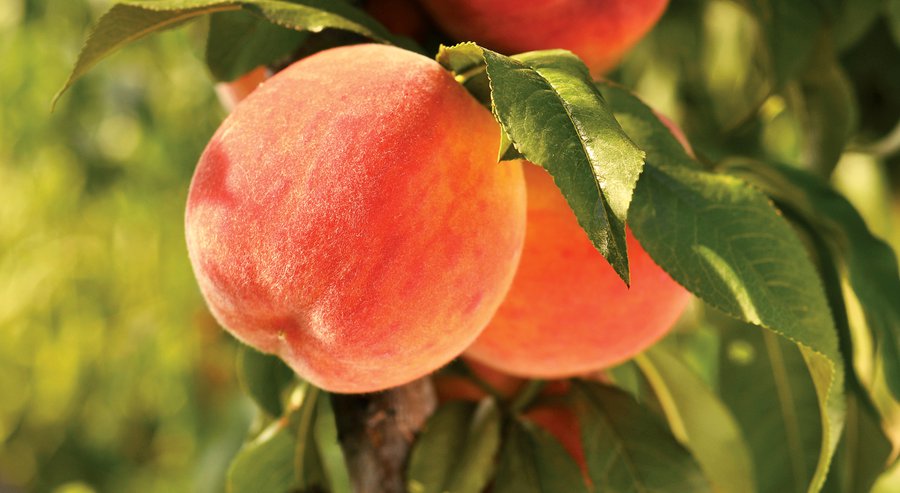
First it was a killing freeze. Then seemingly non-stop rainfall. And if that weren’t enough, an invasion of cicadas. It’s been that kind of year at Flamm Orchards, where peach and apple trees grow on about 450 acres in the rolling hills of Union County in Southern Illinois. Row-crop farmers aren’t the only ones battling Mother Nature’s many attacks this year. Peach trees suffered through frigid temperatures and heavy rainfall only to be attacked by millions of cicadas that emerged from a 13-year sleep. “We’ve only got about a 50 percent crop anyway because of winter freeze,” said owner Alan Flamm as he checked on some trees. “Peaches are a dry-weather crop and a hot-weather crop.” The fruit has received neither this season. But, as bad as it was, it could have been worse. Parts of Southern Illinois experienced the phenomenon of millions of cicadas emerging from their 13-year underground hibernation. The noisy insects swarmed to trees, where the females use their sharp tails to scrape the bark off the undersides of branches to deposit eggs. That has taken a toll on many of Flamm’s trees. The mark is a “pretty good size groove” that makes damaged limbs droop. The fruit that survived the cold snap and insect invasion has suffered because of the above-average rainfall that soaked the region. That might affect the flavor of Illinois peaches this year. Source - http://www.freshplaza.com

18.09.2015

USA - Peanut farmers challenged by white mold

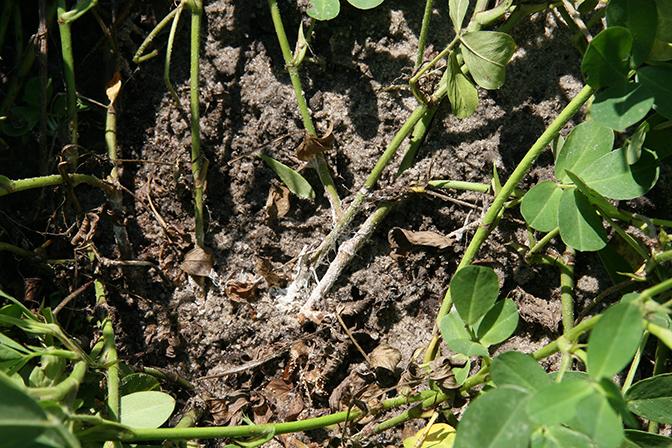
White mold disease has always been a problem for Georgia peanut farmers, according to University of Georgia plant pathologist Tim Brenneman. The disease has been even more of a nuisance due to the hot and humid weather conditions this growing season. Brenneman insists that, through proper use of the correct fungicides, white mold can be contained. "It's probably our No. 1 cause of loss due to disease in the state, and this year appears to be one of the worst years we've had in a while," Brenneman said. "The weather has been very favorable (for the disease) this year, and the variety we grow is Georgia 06G, developed by Dr. (Bill) Branch. It's a very good variety. It's extremely high yielding, which is one of the reasons our growers really like to grow it. (However), it is also really susceptible to this disease." Brenneman recommends farmers spray at night, when the plants' leaves are folded, in order to prevent white mold damage. "The fungicide is able to penetrate a lot better, especially if you do that early in the morning, while it's still dark," Brenneman said. "If there's been a dew and the foliage is wet, the fungicide gets in that dew and it runs down the stems. It will get to the ground more effectively and give you more control." Brenneman said some Georgia fields experienced up to 30 percent loss of this year's crop because of white mold. Drylnd fields see the most peanut damage as a result of white mold. "If a grower has irrigation, applying that water can help wash the fungicide down off the leaves and get it down to the soil where it needs to be," Brenneman said. "But in dryland fields, they don't have the capability to do that." Dryland fields see the most peanut damage as a result of white mold. Approximately half of the state's peanut crop is planted in dryland fields. "For some of the early planted peanuts that are very near harvest, it is probably too late to treat for white mold damage," Brenneman said. "As for the later-planted peanuts that still have about another month to six weeks to grow, those peanuts certainly need to be protected." Source - http://www.agprofessional.com

18.09.2015

New Zealand - Younger kiwifruit leaves are more susceptible to Psa

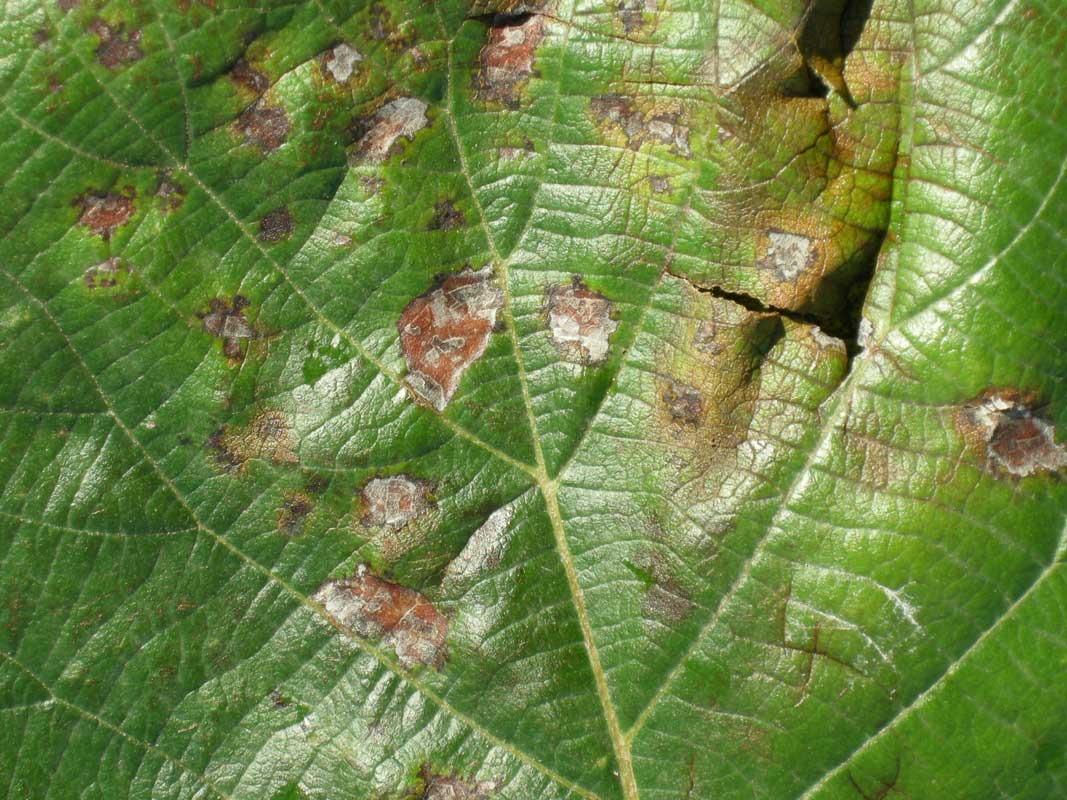
The bacterial pathogen Pseudomonas syringae pv. actinidiae (Psa) is the causal agent of kiwifruit canker, a serious disease of Actinidia species occurring in many countries around the world. It was first discovered in New Zealand in 2010 and continues to be a serious threat to the New Zealand kiwifruit industry. It has been observed that tissue age, particularly leaf age, could affect the susceptibility of kiwifruit to infection by Psa. In the field it has been observed that the younger leaves of kiwifruit vines are more susceptible to Psa. However, the influence of kiwifruit leaf age on Psa infection and symptom development has not been systematically studied. New Zealand scientists investigated the influence of leaf age on infection of Actinidia species by PSA using two approaches: (a) inoculation of potted 'Hayward' and 'Hort16A' kiwifruit plants and (b) inoculation of whole leaves in a detached leaf assay. Whole plants and detached leaves were spray inoculated with Psa biovar 3 (haplotype NZ-V; Psa-V) and maintained in a saturated environment. Flecking was evident on some of the leaves 8 days after inoculation. Many of the flecks later became necrotic spots with halos similar to the Psa leaf infections that have been observed in the field. With both methods, a higher percentage of leaves that were 1–3 weeks of age at inoculation had flecking and spotting more so than leaves of other ages. Leaves that were 7 weeks or older did not show any symptoms of infection by Psa. Overall, leaves of 'Hort16A' showed slightly more flecking and spotting than 'Hayward'. Scientists conclude that leaf age has a significant effect on infection and symptom development by Psa in both kiwifruit cultivars tested. Leaves from 1–3 weeks of age were particularly susceptible, this information on the relationship between leaf age and susceptibility to Psa not only can help in PSA management 'on orchard' but also can be useful to develop disease risk models. Source - http://www.freshplaza.com

17.09.2015

India - Crediting Crops

North Kashmir’s Sopore and South Kashmir’s Shopian – seem doing farming with liberated outlook at the moment. Behind this empowerment is the banking that has relieved the sector from traditional bottlenecks. Delhi’s Azadpur Mandi is no more calling shots by deciding fate and rate of their crop; while the commission agents aren’t demanding like before. Till five years ago, an orchardist from Sopore would avail finances from middlemen sitting in Delhi’s Azadpur Mandi. Those middlemen would first themselves avail the lump-sum credit from banks before making it available to growers at a relatively high interest rate to dismay of growers. But once the decay was detected, banks and growers came closer to oust middlemen. Out of this bonhomie, Kisan Credit Card (KCC) scheme was introduced aimed to help farmers “accessing timely and adequate credit”. One of the reasons popularising KCC among farming community was its flexibility. For instance, in view of a bad crop season, repayment can be rescheduled and extensions are offered for up to four years. The card is valid for five years and subject to annual renewals. Withdrawals are made using slips, cards and a passbook. State-run banks currently disburse short-term crop loans on KCC up to Rs 3 lakh at an annual interest rate of seven percent. “Another best thing about KCC is that,” says Mushtaq Hassan, an apple grower, “the grower has to pay only 4 percent interest if he repays the loan within a year. Banks waive off remaining 3 percent interest rate to grower’s relief.” However things weren’t always that way for the farmers. Before KCC, Hassan was a very unsure orchardist despite harvesting a ‘superior’ apple crop each season. His farming fret would stem every season because there were loans to settle, middlemen to handle and transport blues to tackle. And then, there was a looming threat of weather uncertainty. “But KCC ushered a much-needed change,” says Hassan, an orchardist from Sopore. Implemented by Commercial Banks, Cooperative Banks and Regional Rural Banks, KCC scheme gives credit to farmers for crop loans, working capital or investment credit for viable agriculture purpose. The cardholders are also covered under Personal Accident Insurance Scheme (PAIS) against accidental death/permanent disability. “All these features make it tempting for farmers,” he says. The outcome of the agricultural credit is obvious at places like Shopian Fruit Mandi. Growers there attend huge rush of buyers while staying back home. Earlier cowed down by middlemen control, growers weren’t as confident as they feel at the moment. “Agricultural credits disbursed by banks have greatly helped growers to prepare and mange their orchards better before reaping crop,” says Mir Mohammad Amin, president Shopian Mandi. “The credit has made growers primary beneficiaries.” With the result, the collective trading at Shopian Fruit Mandi during previous season registered a sale of Rs 850 crore. Like Shopian, Sopore Fruit Mandi has also reduced Azadpur Mandi’s monopoly over Kashmir apple. Spread over 400 kanals of land, it sold 30 million apple boxes earning Rs 1200 crore last year. Most growers in Sopore town too rely on credit to get a great deal out of cash crops. Besides taking care of cash crops, bank credits are aimed at to purchase assets (farm equipments), creation of assets (orchard development) and any agriculture related activity. By the end of 2015 summer, banks had disbursed Rs 6,290.16 crores in Jammu and Kashmir. Even then credits like KCC has failed to woo the entire agrarian community of the state. Many of them aren’t opening up to bank credit system, claiming “self-sufficiency”. But the government appears upbeat. The state minister for finance, Dr Haseeb Drabu says, the government has devised agricultural packages aimed at helping farming community. One model Basmati village in Jammu, one model Apple village and one model saffron village in Kashmir are coming in state, he says. “State will be disbursing agricultural loans to farmers for successfully implementing the project.” The model apple village will be provided with a small CA store, a grading and picking line and a packaging unit, Drabu says. “This village will also be given the right root stock to develop a high density orchard.” Interestingly, many fruit growers are making use of new scientific techniques and methods, like introducing high density planting system (HDPS) in their orchards. HDPS is planting at a density in excess of that gives maximum crop yield at maturity if the individual tree grows to its full natural size. Shimla known for integrated orchards has already become Kashmir’s hanging out place for farmers to avail HDPS. “I have placed order of around 300 high density plants,” says Showkat Khan, an orchardist from Shopian’s Pinjora village. In the race to produce the maximum crop, the quest for high density plantation has only peaked in farming community. Sensing the same quest, state government is setting up 1 kanal of medium to high-density orchard costs between Rs 75,000 and 175,000. To make it affordable for farmers, state government is subsidizing it up to 50 percent. The state finance minister has already announced Rs 150 crore for replanting high density apple trees. But as government keeps growing lending limit to farmers through budgetary allocations, a credit mismatch in agricultural sector was highlighted in the latest economic survey. However, despite odds, private sector banks are making moolah by effectively working at village level. Most of them are following the government’s decision to extend the Interest Subvention Scheme to short-term crop loans offered by these lenders. “This scheme allowed state-run lenders to lend crop loans at lower rates than their private sector rivals,” says Rafiq Bhat, a banker. Devised and launched to discourage distress crop sale by farmers by encouraging them to store their produce in warehouses, the scheme introduced in 2011-12 extended concessional loans to farmers against negotiable warehouse receipts. “Post harvest loans provided to small and marginal farmers would be eligible for interest subvention, period of up to six months on the same rate as available to crop loan,” Bhat, the banker, says. J&K Bank provides interest subsidy to the farmers under interest subvention scheme of GOI, Bhat continues. “The scheme was a major relief to the farmers coming in the wake of the central finance ministry’s announcement that the J&K Government retains majority stake of 53 in J&K Bank.” Termed as a “big boost to the agriculture sector of the state” by J&K Bank Chairman Mushtaq Ahmad, the scheme extends loans at softer rate of interest. It has reduced client acquisition cost, expanded customer base in villages by providing them an opportunity to market other agri-banking products, says Kaiser Altaf, an orchardist. “It offers products like micro-insurance, irrigation loans and agri-supply chain finance.” With finance ministry earmarking Rs 150 crore as a “Secure Horticulture Future” initiative to “raise the average productivity from the current level of 10MT/ha to the international level of 40-70 MT/ha”, govt is working on three-point package presently. The package is expected to flip the face of farming by setting up soil and leaf testing laboratory, incentivizing high-density orchards and check on the sale-use of spurious pesticides. Besides package, private partners are coming forward for post-harvest management of fruits, like building cold storage facilities in Industrial Estate Lassipora. But least landholdings continue to pose challenge to avail agriculture credit – even though government spent Rs 1204.90 crore to acquire 24572.35 kanals (approx) of land in last half a decade. With state running out of land, agricultural credit has seemingly failed to take off completely despite altering the style and scope of farming. Source - http://www.kashmirlife.net

17.09.2015

USA - Madera County posts record crop report

Madera County ag producers shattered previous records in 2014, recording the highest-ever crop values, a whopping $2.265 billion. County Agricultural Commissioner Stephanie McNeill delivered the good news to Madera County supervisors at their regular meeting today. Last year’s record production represented an increase of $369 million over 2013’s county crop values, McNeill told supervisors. “This is a testament to the ability of Madera County producers to adapt and increase efficiencies while facing the ongoing drought conditions,” McNeill added. In her annual report, McNeill said crop values “can vary from year to year due to the variables of production, market and weather conditions. Most of the increases over 2013 for 2014 can be attributed to strong market prices and increased production.” For the second year in a row, almonds were the county’s top crop, with a value of $771 million. Milk, which was the third-most valuable in 2013, moved up to second last year, posting a value of $414 million. And grapes, Madera’s second-highest valued crop in 2013, slipped to the number three position in 2014, with a total production value of $317 million. Source - http://www.freshplaza.com

17.09.2015

USA - Sun & salt: how solar tech can help California’s drought

In the midst of California’s ongoing drought, researchers at the University of California Advanced Solar Technologies Institute (UC Solar) at UC Merced are turning to an unlikely ally to help solve the problem of water availability for California’s farmlands: the sun. “Any adoption of solar technology will help with climate change in the long term, because it reduces our use of fossil fuels,” says Ron Durbin, executive director of UC Solar. But UC Solar’s latest project, which will be presented at the upcoming 2015 UC Solar Research Symposium, aims to show that solar technology can be of short-term help as well, by making water desalination cheaper, more accessible and cleaner. A salty problem With severe water shortages affecting California agriculture, farmers increasingly are using reclaimed irrigation water. This approach conserves water, but it comes with a problem: salt. Any use of irrigation adds salts to the soil, and each time water is reused, it gets dirtier and saltier – a problem exacerbated by the widespread use of fertilizers. Source - http://www.freshplaza.com/

17.09.2015

India - Rs 35.46-cr crop loss in C'magaluru, Kadur

Kadur taluk and three hoblis of Chikkamagaluru taluk are reeling under drought-like situation. With the withering of horticulture and agriculture crops, the district administration has estimated the loss at Rs 35.46 crore. The officials from revenue, agriculture and horticulture departments had conducted a joint survey led by tahsildar and submitted a report to the district administratoion. The district administration is likely to submit the report to State government within two days, said highly placed sources to Deccan Herald. The survey included more than 33 per cent loss of crops in two taluks. Crops on 44,354 hectares of land have been damaged incurring a loss of Rs 27.63 crore. Horticulture crops have been damaged on 5,748 hectares of land and the loss is estimated to be Rs 7.82 crore. Crops like Ragi, maize, groundnut, sunflower, sesame, cotton, potato, tomato, onion, chillies and other vegetables have been affected due to lack of rain. Crops have been affected in Lakya, Ambale Kasaba hoblis in Chikkamagaluru taluk and Birur, Sakharayapattana and Hirenallur hoblis in Kadur taluk, said an official who was part of the joint survey. Farmer Muguluvalli Gurushanthappa said “all the kharif crops have been damaged. We could not sow paddy and ragi. By looking at the market price of onion, it makes one wonder whether the loss of crops are scientifically calculated by the district administration. The officials have not visited the farmers land to conduct a survey. The loss of crops in Lakhya hobli alone would cross Rs 35 crore. There is a need to conduct the survey scientifically.” Survey report Agriculture department Joint Director M C Seetha said “The report has been prepared based on the joint survey conducted by revenue and agriculture department officials.” “The district has received only 84.4 per cent of rainfall. The district should have received 1,607.9 mm of rainfall. However, it has received only 1,357.7 mm of rainfall as on September 16. Though Kadur, Chikkamagaluru and Tarikere received more than the annual rainfall, the scanty rainfall in the month of July and August affected sowing,” said the officials. Source - http://www.deccanherald.com

17.09.2015

India - Govt likely to declare drought in 8,000 villages across Maharashtra

The Maharashtra government is likely to declare a drought in 8,000 of the state's 43,000 villages, or nearly one-fifth of the state. A declaration is expected after another eight days as the state receives initial estimates of crop loss. The Marathwada region has been worst affected, mainly the districts of Beed, Latur and Osmanabad. Portions of Jalna, Nanded and Parbhani in Marathwada have also been hit. Jalgaon in north Maharashtra as well as Satara, Sangli and Ahmadnagar in western Maharashtra and Buldhana in Vidarbha have also been impacted, state revenue minister Eknath Khadse said. This will be the second successive year of distress for Marathwada which also faced a drought in 2014. "We are waiting to see the effect of the retreating monsoon. In some cases it could help the fodder and drinking water crisis. But in Marathwada, the kharif crop has already been lost," he said. The government is continuing with its artificial rain experiment and is now focusing on inducing rain in the catchment areas of western Maharashtra. Khadse said the state had started drought relief without waiting for an official declaration of drought. "After the central drought assessment team visited the state, they released Rs 550 crore. The state has also given Rs 350 crore for drought relief," he said. The state's sub-committee on drought has sent a report to the Centre recommending that regions which recorded an average rainfall of 50% or less be declared drought-hit. Till now, the declaration of drought was based on the extent of crop loss. The state has also suggested that the term "drought-like condition" be replaced with the word "drought". Source - http://timesofindia.indiatimes.com

17.09.2015

USA - State agricultural emergency declared in Florida

Florida Commissioner of Agriculture Adam H. Putnam declared a state of agricultural emergency yesterday due to the Oriental Fruit Fly infestation in Miami-Dade County. The Oriental Fruit Fly is considered one of the most serious of the world's fruit fly pests due to its potential economic harm. It attacks more than 430 different fruits, vegetables and nuts, including: avocado, mango, mamey, loquat, lychee, longon, dragon fruit, guava, papaya, sapodilla, banana and annona. The fruit flies lay their eggs in host fruits and vegetables. Since the first detection of the Oriental Fruit Fly on Aug. 26, 2015 in Miami-Dade County, a total of 158 flies have been detected, specifically in the Redland area (156), Kendall (1) and Miami (1). “The Oriental Fruit Fly is one of the world's most destructive pests and poses a significant threat to Florida's $123 billion agriculture industry and the two million jobs it supports. Miami-Dade County's agriculture industry is a $1.6 billion industry, and we will use every weapon in our arsenal that's necessary to eradicate this pest and protect Florida agriculture and our economy,” stated Commissioner of Agriculture Adam H. Putnam. The infestation threatens the area's ability to produce the fruit and vegetables the nation has grown to rely on during the winter months, the region's overall economic health and the thousands of jobs that rely on this industry. Miami-Dade County is the state's leader in the production of tropical vegetables, tropical fruit and ornamental nurseries, and overall agricultural production generates more than $1.6 billion in annual economic impact and supports more than 11,000 jobs. It is important to note that all appropriate protocols are in place and that the fruits and vegetables introduced into the marketplace from this area are certified for movement and safe for consumption by the public. Source - http://www.freshplaza.com/

918
of 1224