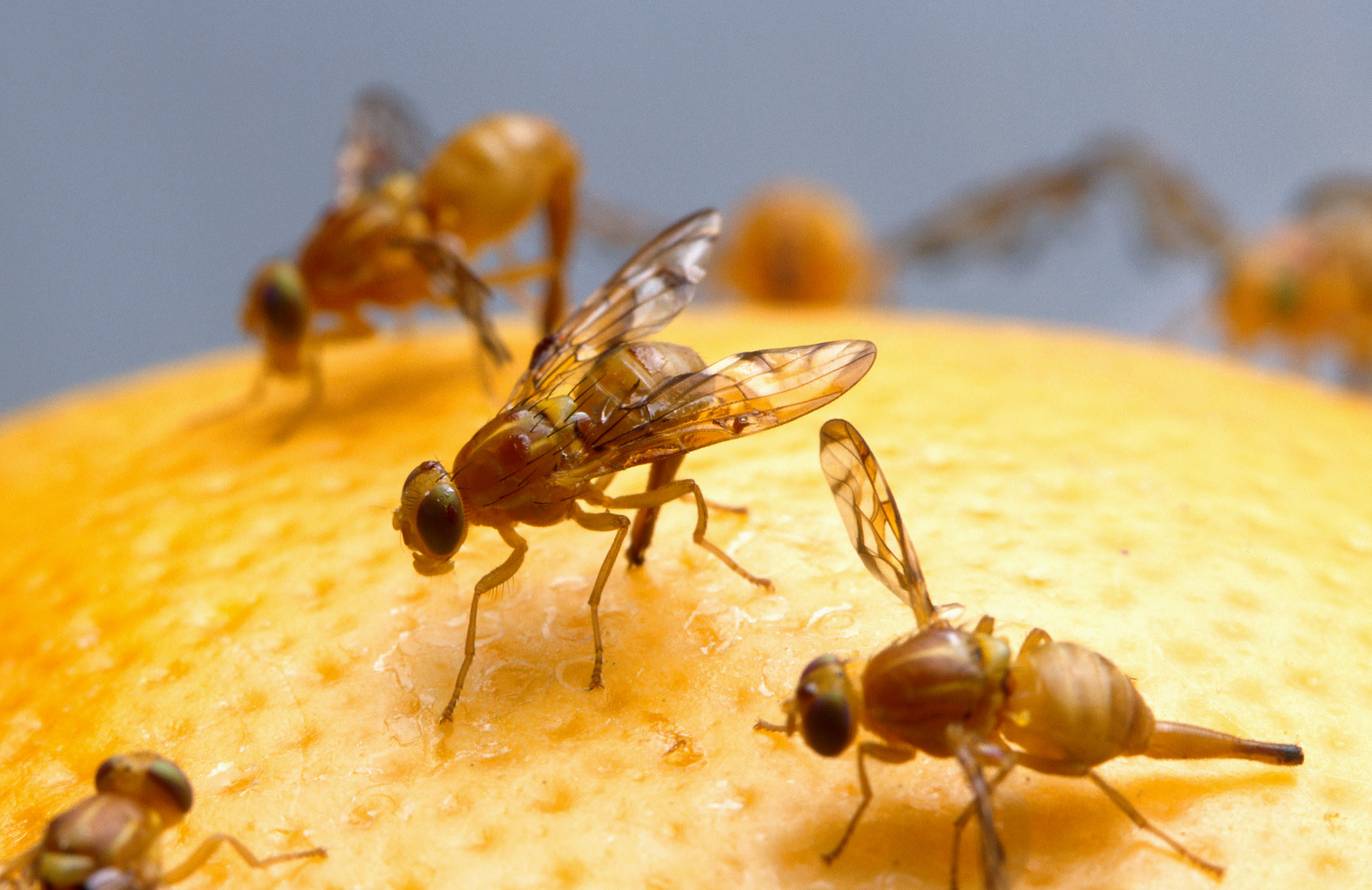
Spain - Growing presence of fruit fly in Huelva's citrus[:ru]Spain: Growing presence of fruit fly in Huelva's citrus

21.09.2015 279 views
Over the last three weeks, the Phytosanitary Alert and Information System (RAIF) of the Government of Andalusia has detected a considerable increase in the fruit fly population in citrus plantations in the Coast and Andévalo Sur, so they advise mass trapping to reduce it.
The Government's technicians noted in their report that as soon as the extra-early citrus varieties started ripening, and with the early varieties about to arrive, as well, a period has started in which the bite of the fruit fly (Ceratitis capitata) may adversely affect both the production and the marketing of citrus.
The current weather conditions, especially in coastal provinces, with temperatures of between 16 and 32 °C and average relative humidity values of around 75%, are optimal for the insect's development; in fact, the provinces of Cadiz, Huelva and Seville have all recorded increases in the number of insects trapped.
The pest causes direct damage to the crop, since the larvae feed off the pulp, as well as indirectly, once the fruit starts rotting. These fruits will end up falling to the ground, which will result in their loss.
For decision-making related to the pest's population control, the RAIF recommends installing traps for the monitoring of adult insects and conducting weekly surveys of the fruit. Aspects to be taken into account include phenology, number of insects caught, presence/absence of damaged fruits and the safe use period of the active materials employed.
They also advise the pest's control in fruit orchards located in the vicinity of the plots, as well as the use of mass trapping techniques when the ripening starts and during the whole process afterwards. These measures, they stress, should contribute to reducing the insect's population.
Lastly, it is also essential to remove the fruit from the ground and not leave any ripe fruit on the tree, as this will help prevent new outbreaks in the future.
08.01.2026

Pakistan - Balochistan Agriculture Secretary inspects vegetable seed research farm

Balochistan Secretary of Agriculture, Noor Ahmed Parkani, inspected the Vegetable Seed Breeding Division on Mastung Road. 

08.01.2026

Vietnam pushes biopesticides to support green farming

Biological plant protection products have emerged as an important solution to gradually reduce dependence on chemical pesticides, support integrated pest management (IPM), and advance ecological and organic farming.

08.01.2026

Norwegian partners launch research project to help improve salmon resilience against sea lice

Norway's Benchmark Genetics has launched a new research and innovation project that aims to develop new, scalable genetic tools that would enable Atlantic salmon to better resist sea lice through selective breeding.

08.01.2026

Bangladesh expands banana planting across Rangpur region

Banana cultivation has continued to expand across the Rangpur agricultural region of Bangladesh, supported by stable and profitable prices since 2019.

08.01.2026

New Zealand - Canterbury hail losses drive spike in wheat insurance claims

A run of severe hailstorms over the Christmas–New Year period has caused significant damage to arable crops in Canterbury, leading to a sharp increase in claims under the wheat sector’s disaster relief insurance scheme and adding to scrutiny of weather-related risk exposure.

08.01.2026

India - IRDAI focuses on covering every citizen by 2047

Chief Secretary K Vijayanand has said the Insurance Regulatory and Development Authority of India (IRDAI) is working with the goal of providing insurance cover to every citizen in the country by 2047.

07.01.2026

France halts imports of food with traces of banned pesticides

France on Wednesday officialised a ban on food imports containing traces of five pesticides currently banned in the EU, a move aimed at easing farmers' opposition to the Mercosur trade deal with four South American nations. 

07.01.2026

Australia - Roads cut off, more than 16,000 livestock lost as farmers 'lose everything’

Communities in northern Australia have had their roads cut off and face the grim task of counting livestock losses after some areas were hit with the worst flooding in decades.