NEWS
920
of 1224
News
11.09.2015

Dominican Republic - HLB reduces citrus production by 40%

The Huanglongbing (HLB), or citrus greening disease, which appeared in crops located in Luperon and Imbert, Puerto Plata, in 2008, has been spreading across the country in little more than five years, with dire results. The disease's destructive power is such that Cuba, the world's sixth largest producer, has been forced to remove 80% of the crops. In the Dominican Republic it has damaged farms in the north, south, east, north-east and south-west. The percentage of the production affected varies somewhat between the official and private sectors, but all conclude that the damage is severe. Rumour has it that around 40% of the crops may be affected, but other estimates suggest there could be more. Regardless of this, the truth is that there has been a sharp drop in the production of lemons, oranges and grapefruit, among others, since 2008, which has not only taken a toll on investments, but has also affected retail prices. For example, a lemon unit in May 2014 cost between 15 and 20 pesos, and if the buyer was lucky it could be bought for as little as 12 pesos. 50% of the production of the Citrus Consortium was affected by HLB, according to Ricardo Barceló, practically forcing the group to replant the plantations affected by the disease and look for ways to combat its spread, mainly by switching to greenhouse or controlled environment production, a system that makes production costs five times higher. These plants were brought to the country as buds in partnership with the International Regional Organization for Agricultural Health (OIRSA) and are being grown in controlled environments to ensure they are free from all kinds of diseases. In 2014, the Huanglongbing affected a total of 31,840.25 hectares of Persian lime, Valencia orange and other citrus fruits, like grapefruit, mandarins and Mexican lime, according to data from the Huanglongbing National Integrated Management Committee. Of the 31,840.25 hectares affected, 18,149 correspond to Valencia varieties, 11,781 to Persian lime and 1,910 to others, like grapefruit or mandarin. Of the country's 32 provinces, the HLB was found in 28. When a given plantation is affected by a disease, the owner of the farm has several options: switching to a different crop, trying to find a remedy or abandoning it. In the case of citrus in 2013, producers abandoned approximately 1,182 hectares. In the north-west, specifically in Dajabón, almost 19 hectares of Mexican lime were abandoned. 6.3 hectares were abandoned in San Francisco de Macoris (north-east of the country), and another 62.88 hectares in the province of Sanchez Ramírez. In the south, 6.3 hectares of limes were abandoned in Barahona and 12.6 hectares in Bahoruco. In the south-west, 37.7 hectares of Persian limes were abandoned in San Juan and 6.3 hectares in Azua. In Peravia, specifically, Bani, 6.3 hectares were abandoned. 37.7 hectares of oranges in San Cristobal and another 6.3 hectares in Monte Plata were also abandoned. This data was provided by the Ministry of Agriculture. It has spread from Asia to Honduras The Huanglongbing is caused by the bacterium Candidatus Liberibacter, originally from Asia, which attacks oranges, grapefruit and all other citrus fruits. When infected, leaves turn yellow, the fruits are deformed and dry inside and although the plant does not die, production is useless. The visible symptoms can appear between three months and five years after the tree has become infected. So far, no cure has been found for this disease, which exists not only in the Dominican Republic, but in the entire world. The disease does not affect humans, according to scientific studies. The Candidatus Liberibacter can be found across south-west Asia (where it started) all the way to Honduras, among other countries. Source - http://www.freshplaza.com

11.09.2015

Mexico - Ten thousand ha of fruit affected by hail, rain this year

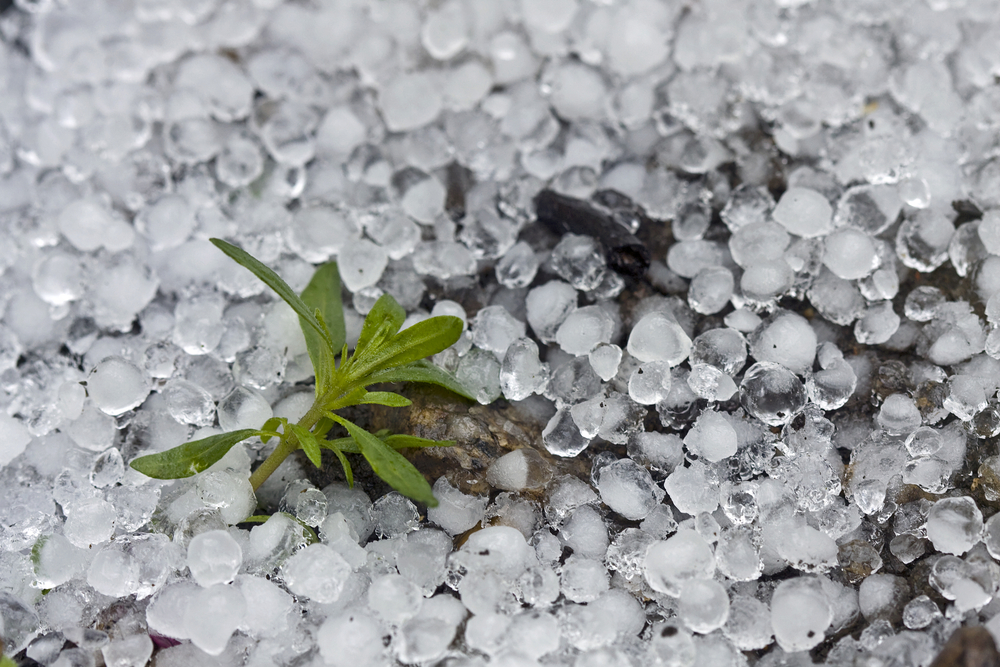
The President of the Agricultural Council Poblano (Ceagro), Francisco Alvarez Laso, stated that, so far this year, a total of 10,000 hectares of apple trees, peach, plums and pears were affected by hail and delayed heavy rains; a situation that will result in problems for producers. Alvarez Laso emphasized that the low production will affect cider producers, suppliers of companies engaged in the production of juices, and small producers who won't achieve the harvest they expected next year. Within the framework the Sixth Regional Agribusiness and Viable Projects for New Business Development Forum that is being held in the University Cultural Complex (CCU) of the Autonomous University of Puebla (BUAP), Laso also stated that more than 1,500 families in the areas of Zacatlán, Zaragoza, Teziutlán, San Salvador El Seco, Soltepec, and Mazapiltepec de Juarez had been directly affected. "It's a bad agricultural year. We have not had the rain we require. The rains seem to be starting now. We had a fairly prolonged heatwave and it didn't rain when the trees needed it. We also had many hailstorms. It was an atypical year. We could feel there would be a problem because of the presence of El Niño, but it started late. There is still the risk that, next year, we'll have early frosts and hailstorms when the plants are producing the first buds of produce. Climate change is affecting us," said the president of Ceagro. He stated that apple producers had signed farming agreements with the company Jumex; however, they had been unable to meet the 14,000-ton demand and had only delivered 2,000. "The drop in production is affecting cider producers. However, there will be enough production to meet demand in this year's holidays. What will be released in the market is what was harvested during 2014, so there could be a potential shortage next year," he concluded. Source - http://www.freshplaza.com

04.09.2015

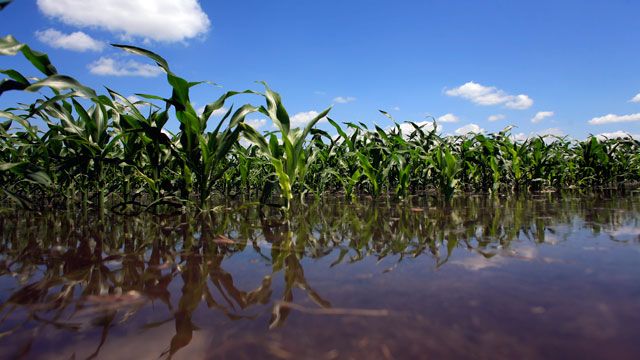
USA - Low interest loans for flooding losses are available

Delta County Emergency Management Coordinator Monty Hobbs would like citizens to be informed of low interest loans for agricultural losses due to the Spring storms and flooding. Invoked in this time frame are losses incurred from May 4 to June 22, 2015. On July 21, 2015 United States President Obama declared Red River County as a primary natural disaster area. In addition to this six other counties including: Bowie, Delta, Franklin, Lamar, Morris and Titus are named as contiguous counties where eligible family farmers may qualify for Farm Service Agency (FSA) EM loan assistance, pursuant to section 321(a) of the Consolidated Farm and Rural Development Act. Choctaw and McCurtain Counties in Oklahoma were also included in this designation. “Anyone suffering income losses such as loss of cattle, crop or hay sales and is in need of a loan to assist in recovery from those losses, may be eligible,” said DC EMC Monty Hobbs, as he posted the notices on the Delta County Courthouse doors and bulletin board. He emphasized that Delta County is not involved in the administration of the loans but just informing the public of the availability. FSA will consider each loan application on its own merits, taking into account the extent of losses, security available and repayment ability. Loan applications deadline is through March 21, 2016. Source - http://ketr.org

04.09.2015

USA - Crop Report for Week Ending August 30

Dry conditions with moderate temperatures allowed producers in Illinois 6.6 days suitable for fieldwork last week. Statewide, precipitation averaged 0.23 inches, 0.57 inches below normal for the week ending August 30. The average temperature was 66.5 degrees, 7.0 degrees below normal. Topsoil moisture supply was rated at 3% very short, 24% short, 67% adequate, and 6% surplus. Subsoil moisture supply was rated at 1% very short, 19% short, 73% adequate, and 7% surplus. Corn in the dough stage was at 95%. Corn dented reached 73%, a jump of 18% from last week. Corn mature reached 21%, 2% behind the five-year average. Corn harvest was 1% complete, compared to 3% for the five-year average. Corn condition was rated 5% very poor, 10% poor, 30% fair, 43% good, and 12% excellent. Soybeans setting pods was at 94%, an increase of 6% over last week. Soybean condition was rated 5% very poor, 12% poor, 30% fair, 43% good, and 10% excellent. Pasture and range condition was rated 2% very poor, 7% poor, 32% fair, 49% good, and 10% excellent. Source - http://www.thexradio.com

04.09.2015

Spain - Declaration of disaster area by severe hailstorm requested in Aragon

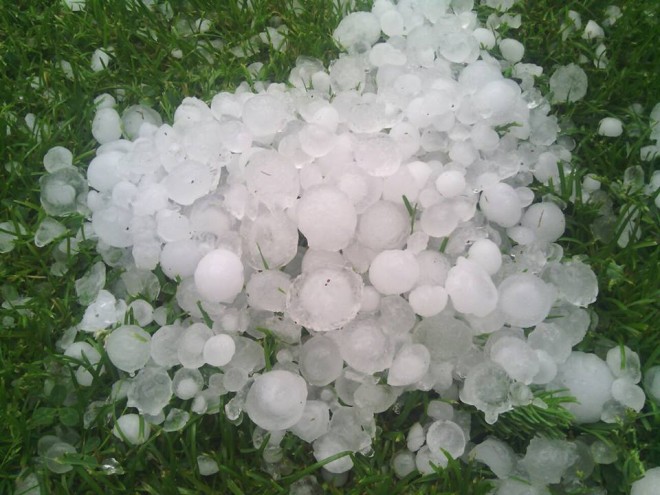
August came to an end Monday in a destructive way in the Spanish region of Aragon. After weeks recovering from the previous hailstorm, registered in mid-July, another very severe one took place in Bajo Aragon and Matarraña. Hail the size of ping pong balls caused severe damage and panic, especially in Puigmoreno, Valmuel and Torre del Compte. The Alcañiz City Council announced late on Monday that it would proceed to seek a declaration of disaster area by the DGA and the central government, so that those affected can be eligible for support. Pending a more accurate assessment of the damage caused, the Cooperative San Miguel de Puigmoreno believes the storm could have caused damage to 100% of the fields, especially on the banks of the river Regallo. Growers in Valmuel and Puigmoreno, which were recovering from a heavy hailstorm registered last July, which also affected 50% of the harvest in some cases, spoke of "a catastrophic incident. The worst thing is that growers were about to harvest the late peaches, which account for most of this fruit's production," said Joaquín Alquézar, mayor of the municipality of Puigmoreno. The hailstorm, which lasted for more than 15 minutes, hit 100% of the arable land, some 2,500 hectares, and caused damage to fruits, leaves and branches. It is worth noting that peaches represent more than 50% of the agricultural production in both towns. In fact, there were good prospects for the harvest this year, as around 5 million kilos of the fruit were estimated to qualify for the Designation of Origin Melocotón de Calanda. Furthermore, losses had been expected to range just between 20 and 30%. "Some fruit had been harvested, but most was still in the trees," said one of the victims. Regarding almonds, the harvest was expected to be 25% lower than in the previous season, so the hailstorm Monday will have further aggravated the situation. Source - http://www.freshplaza.com

04.09.2015

Netherlands - The calamity after the Dutch storm

Yesterday the growers started to inventory the damage done by the hail last Sunday night. 60 companies have now reported their damage to hail damage insurer OFH. Gert Jan van Dijk expects most to be in by now. "All the reports are from top fruit growers and there may be a few more companies today who decide to report light hail damage to the OFH." According to Van Dijk most reports are from the region of Zeeuws Vlaanderen to the Overbetuwe. "We have ascertained from reports that it is mainly companies south of the river Waal and around the Meuse  that have been hit, where the damage varies from lightly hit to completely worthless. The damage from hail manifests itself when the flesh of the fruit has been hit or a few days later through brown colourations and cork formation. This is why we are still waiting to start up appraisal work." Not just the Benelux Hail damage insurer Vereinigte Hagel was also kept busy. "The current amount of reports from top fruit growers is at 21 and the damage experts will start appraisals as soon as possible," says Jan Schreuder. "The damage varies but looks serious in a number of places." The heavy downpour - 100mm of rain in 24 hours - has also caused a lot of damage in the open ground vegetable cultivation and agriculture according to Schreuder. So close to the harvest, the dejection among growers with damage is heavy. The European insurer reports that it is not just the Benelux that was affected by the hail: "Eastern Germany, Poland and northern Italy have also been hit by the weather this year. Luckily, it isn't as bad in Lithuania, Latvia and Denmark." Damage can't be limited Siep Koning of NFO Fruit calls the situation 'very sour': "According to my information there are 80 to 100 companies who were hit lightly to very heavily by the hail. Right before the harvest the fruit is more sensitive and that makes it vulnerable. As a grower you can't do anything to limit the damage this close to the harvest." Source - http://www.freshplaza.com

04.09.2015

As El Niño intensifies global drought losses to surpass $8bn

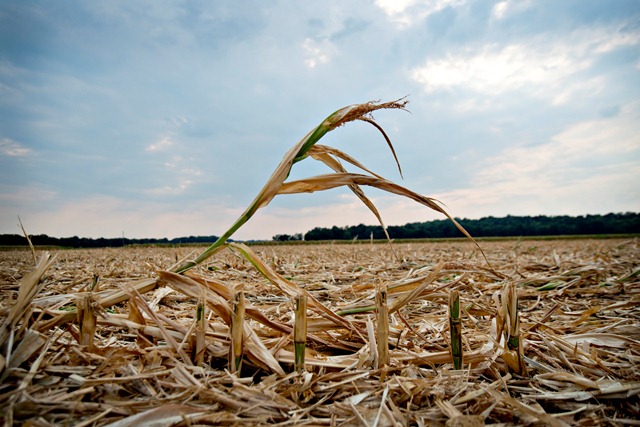
As the 2015/16 El Niño event intensifies there is an expectation that global economic losses from drought will surpass the previous forecasts of $8 billion, suggesting a growing toll for crop insurance, reinsurance and any ILS investors exposed to agricultural lines. Reinsurance broker Aon Benfield’s risk modelling specialist unit Impact Forecasting expects the becoming intense El Niño will create prolonged drought conditions in some regions, while the expectation is that rainfall and flood could be higher in others. It’s particularly hard to attribute economic or insurance losses directly to El Niño, but Impact Forecasting has made an attempt to quantify some of the impact in its latest catastrophe report for August. The report notes that severe drought conditions persisted in the western regions of the United States, with an expectation of “total economic losses expected to reach at least USD3.0 billion – mostly attributable to agricultural damage in California.” Additionally the drought conditions, whether El Niño created or not, are spreading with a number of “Caribbean and Central American nations issued alerts as droughts worsened.” Drought conditions have also been seen during August in Eastern Europe, Africa, the Caribbean, and Central America. Combined economic losses of more than USD2.6 billion were recorded in Romania, Czech Republic, and Poland alone. So the global economic toll from drought looks easily set to surpass the $8 billion forecast, resulting in a definite hit to crop insurance, reinsurance and potentially also to the collateralized reinsurers or ILS fund managers that allocate capital to crop and agriculture risks, of which there are a growing number. And El Niño is responsible for much broader impacts to weather and climate patterns and variability, resulting in a growing chance of further losses to be borne by insurers, reinsurers and ILS markets. Steve Bowen, Impact Forecasting associate director and meteorologist, explained; “As we continue to see the prospect of El Niño becoming one of the strongest in decades, more and more impacts will be apparent around the world. This is already true in the form of global drought losses, as several countries have endured a severe lack of rainfall and agricultural impacts. “On the flip side, tropical cyclone activity in the Pacific Ocean maintained its torrid pace in August due to above-average sea surface temperatures and favorable atmospheric conditions. Multiple landfalling storms in Asia-Pacific left considerable damage, and more activity is expected as we enter the peak of the cyclone season.” Indeed the Asia-Pacific typhoon season is already responsible for a significant economic hit from flooding, such as witnessed in China, which some meteorologists would say has been exacerbated by the intense El Niño conditions the globe has seen. With almost every forecast for El Niño suggesting it will be stronger and longer-lasting, the expectation is that we are looking at near record conditions. That will exacerbate the amount of economic loss caused around the world and as a result cause increasing hits to insurers, reinsurance and potentially some ILS backed contracts. Source - http://www.artemis.bm

04.09.2015

Canada - Warm, dry weather so far co-operating with this year’s harvest

Warm and relatively dry weather has allowed producers to make good progress on harvest. Twenty-nine per cent of the crop is now combined and an additional 30 per cent is swathed or ready to straight-cut. The five-year (2010-2014) average for this time of year is 14 per cent combined and 26 per cent swathed or ready to straight-cut. Regionally, producers in the southwest are furthest advanced, having 51 per cent of the crop combined. Producers in the southeast have 45 per cent of the crop combined. Twenty per cent of the crop is combined in the west-central region; 13 per cent in the northwest; 11 per cent in the east-central region; and 10 per cent in the northeast. Rainfall this past week ranged from nil to 22 mm in some southeastern areas. Provincially, topsoil moisture conditions on cropland are rated as three per cent surplus, 78 per cent adequate, 17 per cent short and two per cent very short. Hay land and pasture topsoil moisture conditions are rated as one per cent surplus, 67 per cent adequate, 27 per cent short and five per cent very short. Pasture conditions across the province are rated as four per cent excellent, 43 per cent good, 36 per cent fair, 14 per cent poor and three per cent very poor. At this time, crop reporters are indicating that 11 per cent of the forage crops did not get cut or baled, mainly due to lack of growth. The Ministry of Agriculture has a Forage, Feed and Custom Service listing for producers to advertise and source feed products. Localized hail and wind has damaged some crops and there are reports of bleaching, staining or sprouting of cereal and pulse crops in some areas. Crop reporters are indicating that yields and grades are average overall. Some winter cereals are being seeded as time allows. Source - http://www.grainews.ca

03.09.2015

USA - Current El Niño could mean more favorable weather for Midwest crops

Much-needed precipitation through the U.S. heartland this year has replenished soil moisture, refilled ponds and promises to boost crop yields, thanks to the weather phenomenon known as El Niño, according to Iowa State University agricultural climatologist Elwynn Taylor. And the benefits for the Midwest may continue into 2016. El Niño is associated with a warming of Pacific Ocean water, and tends to bring warmer, drier conditions to the northwest United States and cooler, wetter conditions to the Plains. The conditions are a far cry from the recent La Niña – the opposite of El Niño, which brought drought to the central U.S., said Taylor, who spoke at the recent Kansas State University Risk and Profit Conference. “We’ve just come out of the second strongest La Niña in recorded history, about 200 years, and that brought us a disastrous drought. That’s the drought we had in the Corn Belt in 2012. That’s the first widespread drought that we’ve had in the Corn Belt since 1988.” He likened the El Niño-La Niña phenomenon to a pendulum that swings from one extreme direction for a 14-month period and then to the extreme in the opposite direction. “Because of the rainfall and mild temperatures in the central U.S., an El Niño gives a 70 percent chance of an above trend line yield for corn and soybeans in the Corn Belt, if other factors don’t come into play,” he said, adding that when corn yields are high in the Midwest, wheat yields in northwest states tend to be below average, because El Niño tends to bring drought to those states. It’s unclear how long the current El Niño will last, but in similar situations where one has followed a strong La Niña, the El Niño has lasted a full two years rather than 14 months, which is average. “If it goes 14 months, that it gets us well into 2016. It could get us off to a good start with the crop, but it could go bad after that,” Taylor said, noting that El Niño has sometimes gone on for 24 months – even 36 months, but that’s rare. “In ancient history, they’ve gone on for four or five years, but we don’t expect to see that this time around,” he said. “With El Niño, we tend to have closer to average conditions than extremes. That is, the summer’s not oppressively hot, the winter’s not bitterly cold, and that is good news for people with cattle outside and people with winter wheat,” he said. Taylor said scientists who study El Niño and La Niña have a good record for knowing four or five months in advance what conditions are coming: “That’s good news, but it doesn’t get you all the way through a growing season.” That’s why people should pay attention, he said, adding, “We don’t get a sudden change from La Niña to El Niño. That’s a gradual one over months – a gentle change. But, when a strong El Niño ends, it can suddenly go to a La Niña condition, such as the major drought we had in 1988 that began just weeks after we went into La Niña.” That’s why risk management is so important, he said, adding that after El Niño, growers have to be ready for yields and prices to change quickly. In an Agriculture Today radio interview during the conference, Taylor said that once an El Niño ends, there is often talk of high-pressure ridges forming that block precipitation. The weather forecasts reporting those are typically focused on urban areas, especially in the New England states. “We need to pay attention to what’s going on in the Gulf of Alaska. If we have a high pressure system in the Gulf of Alaska, we’ve just cut off the rain in a line from Kansas City to Chicago and everything north of that. That’s a good chunk of Nebraska and Kansas,” he said. El Niño is the friend of the Midwest farmer, as well as the Argentine farmer, and those in southern Brazil and Uruguay and adjacent areas, he added. It is not the friend of the extreme northwest United States or the adjacent Canadian farmer, or farmers in northern Brazil. “In fact some Brazilian farmers try to cover this by owning as many acres in northern Brazil as in southern Brazil,” Taylor said. While one is suffering from El Niño, the other is benefiting from El Niño. That’s a form of risk management, by having farms in two locations.” “Also, if the Australian farmer has an enemy, it’s El Nino,” he added. Taylor said that based on studies going back hundreds of years, the upcoming year 2025 bears watching: “2025 isn’t necessarily the year we expect a “Dust Bowl” to peak, but it would be typical. The harshest years for weather for Midwest crops tend to be separated by 89 years. The worst year for the 1800s in Illinois and Iowa was 1847. Records were not kept that far back for Kansas and Nebraska. In the next century, the harshest weather year for crops was 1936. Tree rings indicate the 89-year tendency has existed for several centuries.” Taylor believes this means that weather will get increasingly volatile until we hit the extremes. “Remember, volatility goes both ways,” he said. “Years with record-high yields or yields with half of that, and that’s a disaster. During the 18 years before 2010, we had consistent yields.” “This is an advantage the farmer has, to look at what is the year’s volatility, what are the likely prices I can sell my grain at or buy my feed at this year, and what the likely low will be and the likely high,” he continued. “You’re not going to hit it exactly. Just realize this is likely to be a year that will have above trend line yields, and so we’re going to have prices that go along with a higher yield. You don’t know exactly how low they’ll go, but as long as you’re working on the correct side of the picture, you’ll make a profit. It’s hard to go bankrupt when you’re making a profit.” Taylor said weather conditions through the 2020s may be much like the volatile years during the 1980s. Farmers will always deal with risk, but Taylor said U.S. farmers have good government support. “The federal government does not want farmers to take such a beating one year that they’re not in business the next, as happened back during the Dust Bowl of the ‘30s. That’s why we have crop insurance. That is for most people their No. 1 risk management tool.” Source - http://www.agprofessional.com

03.09.2015

Denmark - Late blight wipes out area tomato crops

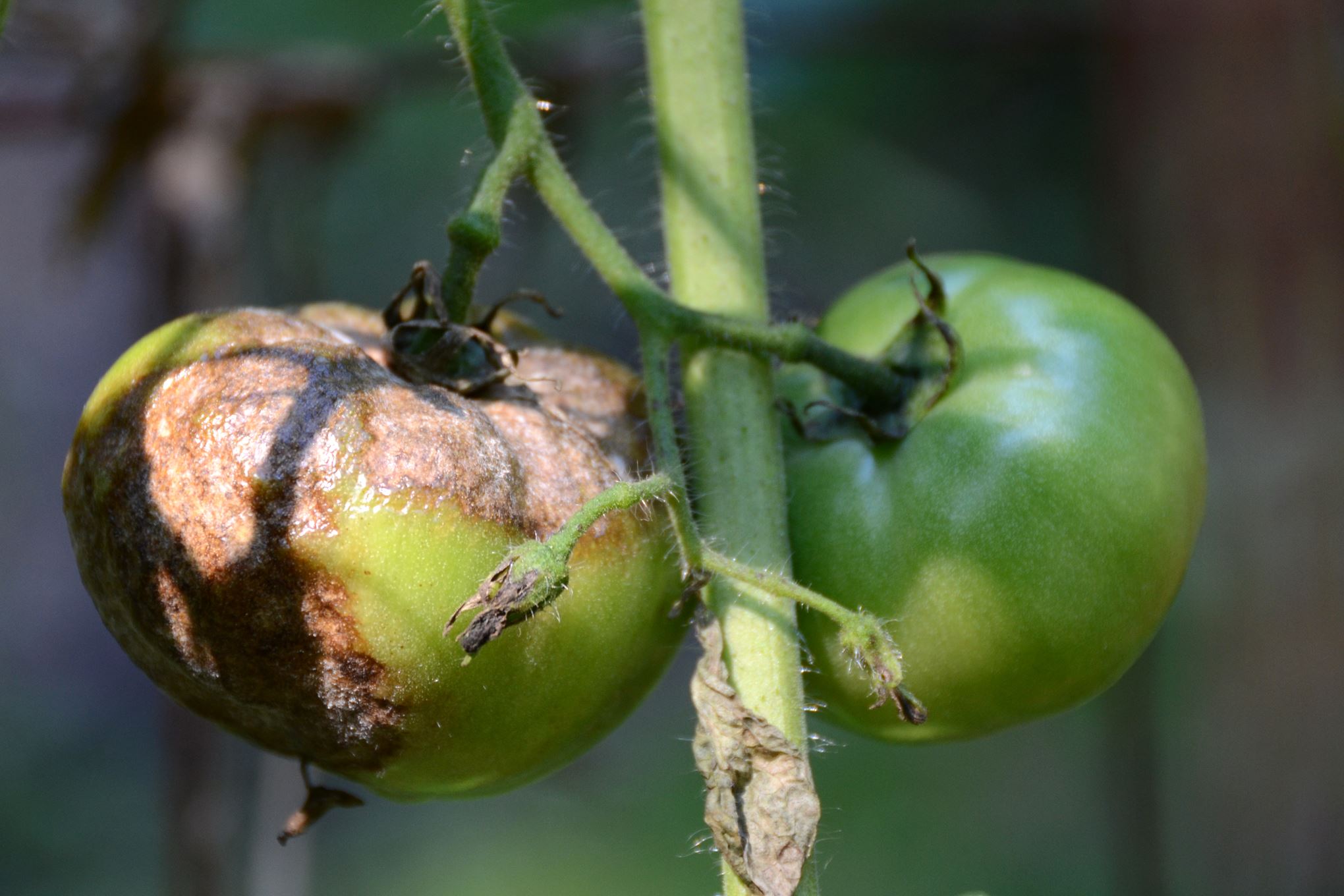
Late blight, a plant disease that can devastate tomato and potato crops, will end up costing Kellner’s BackAcre Garden $20,000, one of the owners of the Denmark commercial growing operation said. The disease made an appearance this week in two places on opposite ends of Brown County, causing UW-Extension horticulturist Vijai Pandian to sound the alarm. “Gardeners need to check for symptoms,” Pandian said Wednesday. “This isn’t just a gardener’s problem, it’s a community problem.” The disease started with two plants on Kellner’s BackAcre Garden in Denmark late last week and, in just a matter of days, wiped out most of Kellner’s 2,200 remaining tomato plants, said Nancy Kellner, co-owner of the organic garden. Late blight is a fast-moving plant disease spread by spores that can be carried in the air or transferred by contact. Aside from the operation’s initial investment in the plants, which crews start from seed indoors in the spring, the garden will lose money from loss of income, Kellner said. “My husband estimates an impact of about $10 a plant,” she said. And the Kellners need help gathering up all the diseased plants. A crew of three people spent hours working Tuesday night, but the three large piles of dead plants and diseased fruit they gathered represent just a tiny percentage of the huge field of blighted plants the Kellners need to take care of before the next rainstorm spreads the late blight spores even further. The strategy is to get the plants and fruit into piles, cover them with tarps and let the sun beat down on them, baking them and killing the spores. Only then is the stuff safe for burning or burying, Pandian said. Composting is not an option, because the spores will thrive and spread, he said. At the extreme opposite corner of Brown County, in the town of Pittsfield, the same disease wiped out 18 tomato plants in a garden shared by property owner Jack Kraszewski and his brother-in-law, Dan Hoffman of Green Bay. Hoffman had just thinned the lush, bountiful tomato crop days ago and returned this weekend to find all 18 plants dead and the tomatoes blackened, cracked and oozing. “I salvaged none of them,” Hoffman said. “Everything was dead. Completely.” Late blight is the same disease that caused the great potato famine in Ireland in the middle of the 19th century. It’s an aggressive airborne disease that can affect every plant related to the tomato, including potatoes, egg plants and peppers, Pandian said. Tomatoes and potatoes are especially susceptible, though no sign has shown up in area potatoes, he said. Late blight first shows up as white spores on the underside of leaves. Soon after, the leaf will turn brown, then black, and with days the plant itself will collapse and turn black. The tomatoes turn chocolate brown, split open and turn black. Once it is identified in an area, gardeners within a 25-mile radius need to be on high alert to protect their plants and prevent spreading the disease, Pandian said. Hoffman’s potatoes did poorly this summer but seemed to be unaffected by the late blight. But the disease took out his tomato plants in a matter of a few days. His and the Kellners' were the only two reports of the blight in Brown County this summer, but Pandian suspects there have been — and will be — many more plants affected by the disease. “Many gardeners only notice it at the very late stage, when the plant is collapsing, turning black,” Pandian said. “By that time, it’s too late. Gardeners need to check their tomatoes every day to see if there’s any sign of infection.” Spraying the plants regularly with copper-based fungicide or chlorothalonil can prevent the disease. Pandian also recommends avoiding overhead irrigation and watering the plants at the base, instead, to avoid infecting them to begin with. When the disease shows up, preventing spread is crucial, Pandian said. Don’t let the plants remain there, and don’t compost them. Put the plants and tomatoes in a black plastic garbage bag, seal it and leave it in the hot sun for at least a week, Pandian said. The spores that spread the disease will get cooked out. The plants and fruits can then be buried, burned or sent to a landfill, he said. Anyone who suspects their plants are infected can bring a sample to the UW-Extension office, 1150 Bellevue St., during regular business hours for a free diagnosis. Pandian recommended against eating the fruit if the plant shows any sign of the blight. “Usually the infected fruit has broken skin, and that can harbor pathogens,” he said. The first report of the blight this year was on June 23, in Adams County. Later reports came from Waushara, Wood, Marquette, Portage, Columbia, Fond du Lac, Polk, St. Croix , Marathon, Walworth and Kenosha counties. Brown County has had reported outbreaks every year since 2010 except last year, although Pandian says it likely happened then, too, but wasn’t reported. Source - http://www.greenbaypressgazette.com

03.09.2015

USA - Warm, dry and smoky weather prevail

Warm, dry and smoky weather prevailed throughout Montana much of the week ending Aug. 30, but a few areas received thunderstorms that produced decent moisture in some areas and damaging hail in others, according to the USDA’s National Agricultural Statistics Service, Montana Field Office, Aug. 31. Reporters commented that more precipitation will be needed in the coming weeks to ensure good winter wheat seeding conditions. Harvest of small grains continues with 93 percent of barley, 68 percent of durum wheat, 77 percent of oats, and 85 percent of spring wheat harvested this week. Pulse crops are also finishing up harvest weeks ahead of normal and lentil harvest is wrapping up with 91 percent harvested compared with a five-year average of 79 percent. Pasture and range conditions continued a seasonal decline from last week due to hot, dry weather with 21 percent rated good to excellent compared with 50 percent last year. Producers continue to move livestock off summer ranges ahead of normal with 17 percent of cattle and 17 percent of sheep moved compared with a five-year average of 8 percent and 10 percent respectively. Some reporters noted that livestock producers are shipping calves early this year due to drought. Source - http://www.hpj.com

03.09.2015

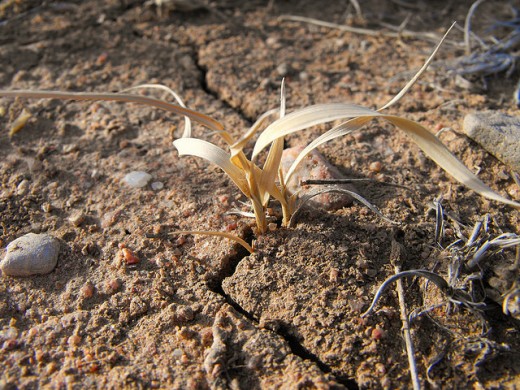
Romania - 20% lower fruit and veg production due to drought

"The fruit and vegetable sector has registered losses in production volumes of between 25 and 30% compared to last year; some of the most affected crops are potatoes, tomatoes and cucumbers," stated Aurel Tanase, General Director of Romania's National Inter-Professional Organization for Fruits and Vegetables (Prodcom). According to Tanase, the country's potato production has been 40% lower than in 2014. He said that, in the last month, Romanian potato prices have increased by 50% to 1.5 lei (0.34 Euro). The official said that last year growers planted 237,000 hectares with vegetables, of which 100,000 hectares corresponded to potatoes, according to the source. Source - http://www.freshplaza.com

03.09.2015

Ecuador - Volcano could cause farmers over $100m in damage

Cotopaxi in Ecuador continues to rumble after its first eruption in 70 years earlier this month. Over the last week, the volcano has been emitting almost constant steam-and-ash plumes punctuated by small explosions—all signs that magma is rising into the volcano. The steam-and-ash plumes have mostly been 1-2 kilometers in height and rangers in the National Park surrounding the volcano have reported a few millimeters of fine ash fall. You can check out some pictures of how this ash is impacting the local communities, where farmers have said that their livestock is beginning to feel the effects. Ash from Cotopaxi has reached as far as the Pacific Ocean during this week of unrest. Dozens of earthquakes along with constant harmonic tremor were recorded at Cotopaxi over the last day as well. Farmers in those regions grow flowers and broccoli for export, and a large eruption from Cotopaxi could cause over $100 million in damage to those crops. Ash has also put a damper already on ecotourism in the area around the volcano. Source - http://www.freshplaza.com

03.09.2015

Iran, Netherlands eye ag research cooperation

Iran and the Netherlands are going to formulate a roadmap on cooperation in agricultural research projects. The decision to launch joint research programs between Tehran and Amsterdam in agriculture was put forward in a meeting between Hooman Fathi, a ranking official at Iran’s Agriculture Ministry and new Dutch ambassador to Iran, Susanna Terstal. Based on the arrangements, an expert delegation from the Netherlands’ Wageningen University and Research Center will travel to Iran in October to prepare the roadmap. During the meeting, Fathi voiced Iran’s willingness to boost exports of agricultural products and medicinal plants to the Netherlands, expand cooperation with the European country in greenhouse industry, and make joint investment with Dutch companies in agriculture. Terstal, for her part, emphasized the necessity for technical cooperation and exchange of academic delegations between the two countries. She also invited Iran to attend a regional meeting of the Global Research Alliance (GRA) on Agricultural Greenhouse Gases, due to be held in Turkey’s Izmir. The Netherlands is the world’s second biggest exporter of agricultural products. It exports €65 billion worth of vegetables, fruit, flowers, meat and dairy products each year. This is 17.5% of total Dutch exports. One quarter goes to its largest trade partner, Germany. Accounting for 10% of the Dutch economy and employment, the agricultural and horticultural sectors play a crucial role, according to the Ministry of Economic Affairs of the Netherlands. Source - http://www.freshplaza.com
31.08.2015

P.E.I. apple crop damaged by winter weather

Mike Beamish says he had to cut down 94 of his apple trees after P.E.I.'s hard winter. "We've lost about a quarter of the orchard," said Beamish. Beamish is one of many P.E.I. apple growers whose orchard and crop have been affected by the long winter and late spring. He said the snow piled up so high it dented the roof of his barn and damaged his apple trees. The Prince Edward Island Apple Grower's Association says it has been a bad season for many growers on the Island. Apple lovers looking for their favourite apples at fruit stands this fall they may notice some differences. "They'll be a smaller crop. So both size, because a nice long growing season, the apple has enough time to get a nice size to it, but with a shorter season, because once fall comes and the tree gets ready to close down for the winter, it stops growing the apples. So if they're not very big, well that's as big as they're going to get," said Beamish. Source - http://www.freshplaza.com/

31.08.2015

India - Pinworm damages tomato crop in Kolar, Chickballapur districts

Even as the tomato farmers are reeling under huge loss due to the steep fall in prices, the cultivators are worried about the prospects of damage to their crop due to pinworm attack. Experts from a number of agricultural and horticultural farming agencies have found that pinworm, a fruit borer, is attacking the tomato crop in Kolar and Chickballapur districts where it is cultivated on a large scale. Unlike the leaf minor, which was pestering the farmers in the past by eating up only the leaves of the tomato plants, pinworm is attacking and destroying all parts of the plant, including stems, leaves and the mature fruit, thus impacting both the quality and quantity of this fruit. According to D.C. Halalingaiah, Senior Assistant Director, Horticulture Department, it is also called ‘South American Pinworm’ as it has its origin in that part of the world. “Pinworm attack on tomato plants is seen more in Kolar and Chickballapur because of dry weather condition than it is found in Bengaluru Rural and Ramanagaram,” according to Mr. Halalingaiah. He told The Hindu that though there is no effective pesticide available so far for this newly detected insect, a number of guidelines have been framed to control it. Experts from the Regional Research and Extension Division of Gandhi Krishi Vignan Kendra (GKVK), Bengaluru, and the Indian Horticultural Research Centre at Hesaraghatta in Bengaluru conducted a joint survey to assess the loss that tomato cultivators have suffered, and then they have suggested some precautionary measures to control the pinworm attack on tomato plants. Source - http://www.thehindu.com

920
of 1224