NEWS
921
of 1224
News
31.08.2015

USA - Drought stress weighs on almond crop

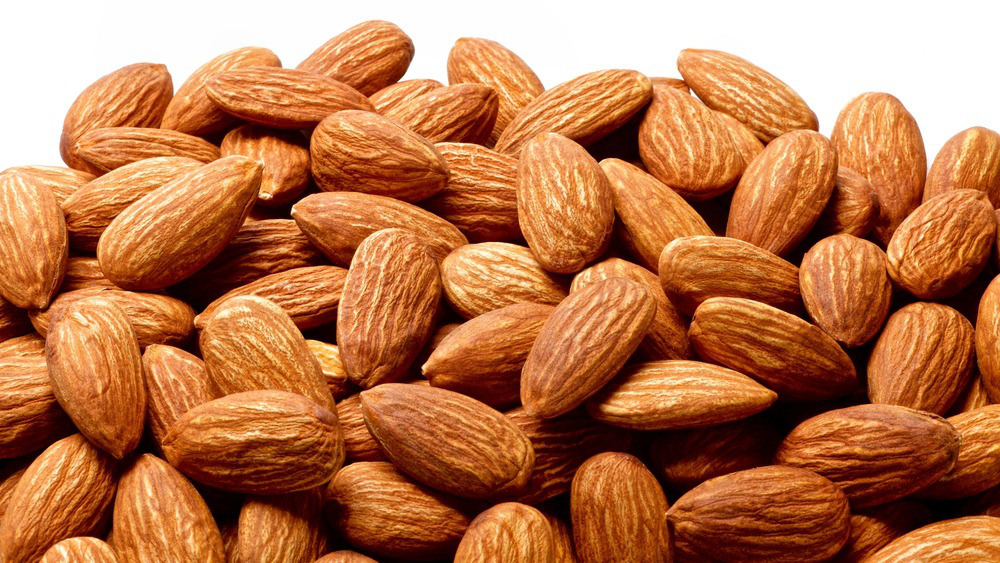
California’s annual almond harvest is running at full throttle, and area growers are busy collecting the crunchy brown nuts that comprise San Joaquin County’s No. 2 cash crop behind only wine grapes. While generally good growing conditions were reported for this season, initial indications are yields are down from previous years. Dave Phippen, a principal of Travaille & Phippen in Manteca, counts himself lucky. With a modest water cutback from the water district serving his orchards and well water to make up the difference, he said, “Our trees don’t know there’s a drought.” Still, his yields from the nonpareil variety — now being harvested and which accounts for 35 to 40 percent of all California’s almond crop — may be down 15 percent from a year ago. Based on that and reports from other areas in the state, Phippen said the statewide harvest will likely be short of the 1.8 billion pounds forecast July 1 by the U.S. Department of Agriculture and well off from the more than 2 billion pounds collected in both 2011 and 2013. Mel Machado, director of grower relations for Blue Diamond Growers, said the drought is having a more severe impact on almond growers in the southern San Joaquin Valley than in the north. But even in the north, in Stanislaus and San Joaquin counties. Late-maturing almond varieties could help make up the shortfall in nonpareil yields, but that is yet to be seen. The market for California almonds, which account for about 80 percent of the world supply, is expected to remain strong. Global demand exceeds even the 1.8 billion pound forecast, Machado said. Reports of a slowdown in the Chinese economy and the recent devaluation of China’s currency, making U.S. products more expensive there, were not seen as major factors. Source - http://www.freshplaza.com
31.08.2015

USA - California drought takes 30% of production

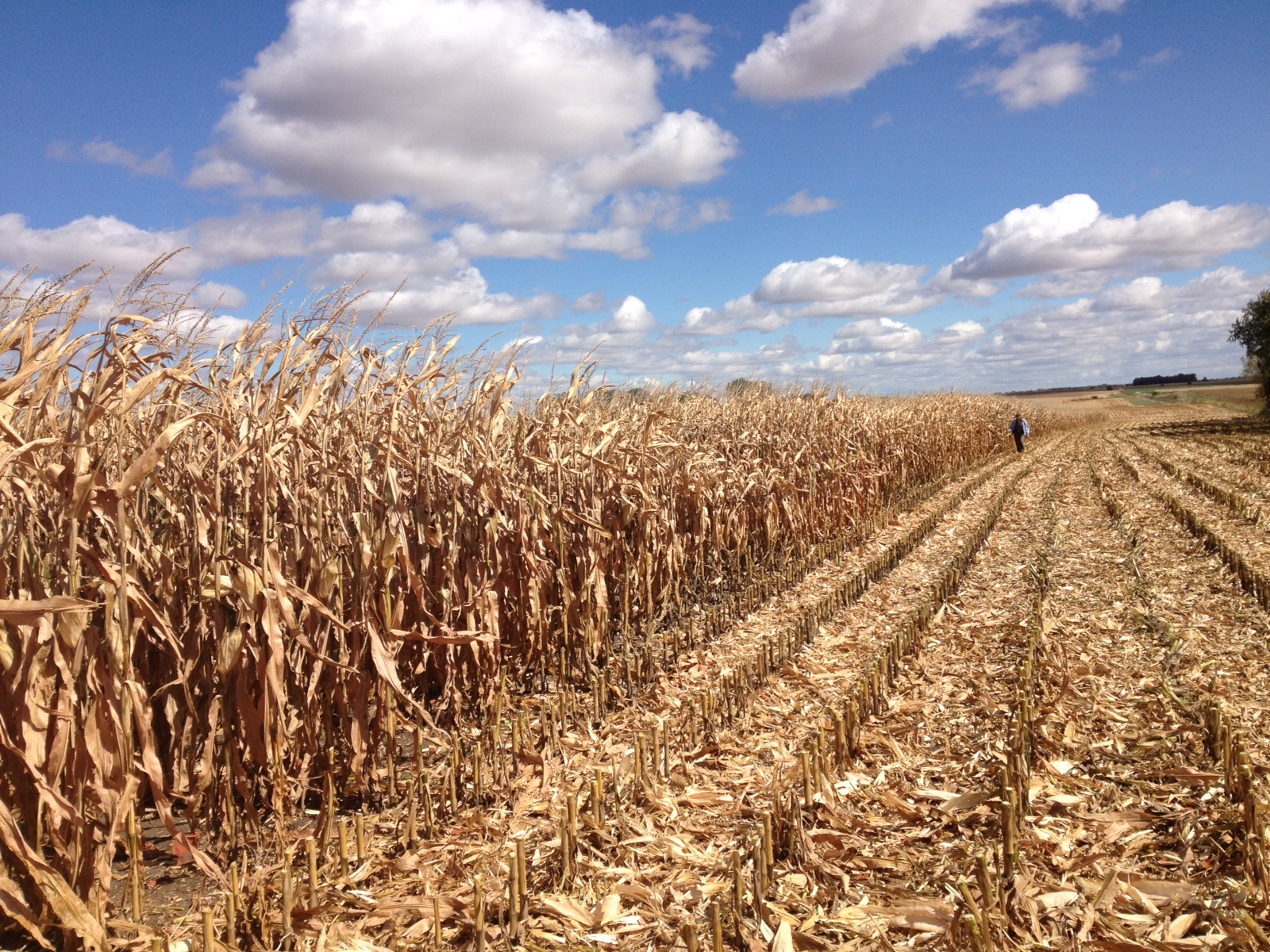
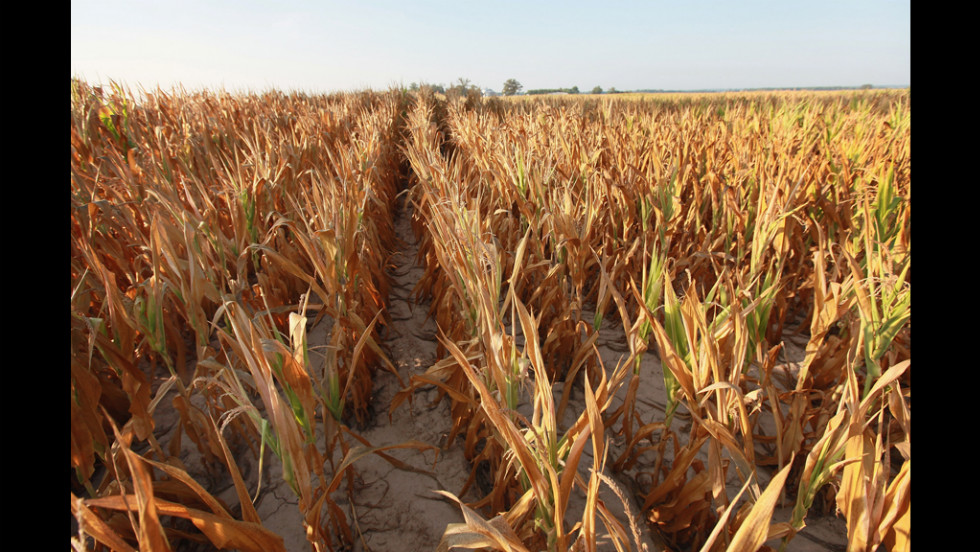
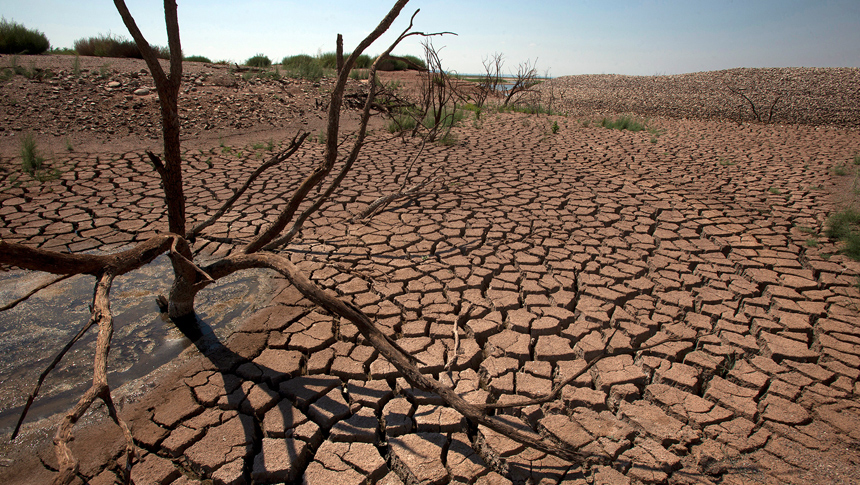
The ongoing drought in California is not relenting - taking 30% more agricultural acres and workers out of production this year than it did in 2014, according to the latest drought impact report issued by the University of California, Davis Center for Watershed Sciences. In 2015, the state of California's agricultural economy will lose $1.84 billion and 10,100 jobs, with the Central Valley being hit the hardest. But thanks to the state's enormous, but dwindling groundwater reserves, which have been able to offset approximately 70% of the surface water shortage this year, the agricultural industry remains productive, with strong global prices for fruit and nuts, shifts in growing regions, and intrastate water transfers supporting the industry. The heavy reliance on groundwater, which is forcing farmers to drill more wells and pump at deeper levels, is creating an increasing cost to farmers, with pumping greatly exceeding replenishment rates, dangerously diminishing reserves and causing water quality issues. The total impact of the drought on all sectors of the state's economy will be $2.74 billion for 2015, compared to $2.2 billion in 2014 as the surface water shortage reaches 8.7 million acre feet. This shortage will be offset by increased groundwater pumping of six million acre feet, leaving a net water shortage of 2.7 million acre feet - leading to the fallowing of 542,000 acres - 114,000 more than the 2014 estimate. If the drought continues through 2017, the effects will likely worsen by 6% over 2015 levels, with net water shortages of 2.9 million acre feet per year, with groundwater level losses and associated costs increasing. Source - http://www.freshplaza.com

31.08.2015

Belgium - 600 hectares of top fruit damaged in Haspengouw

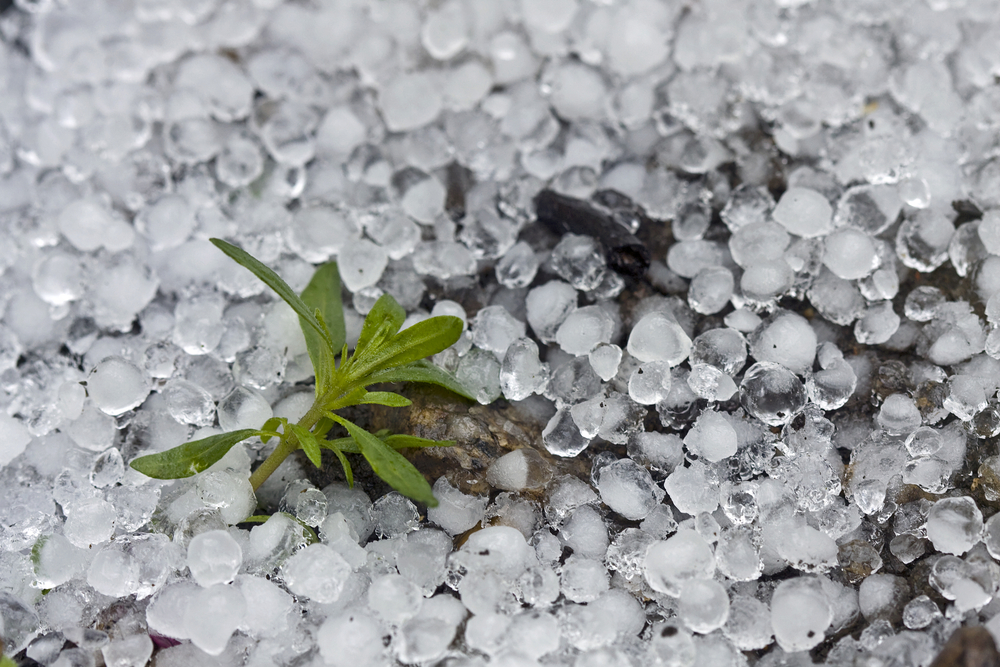
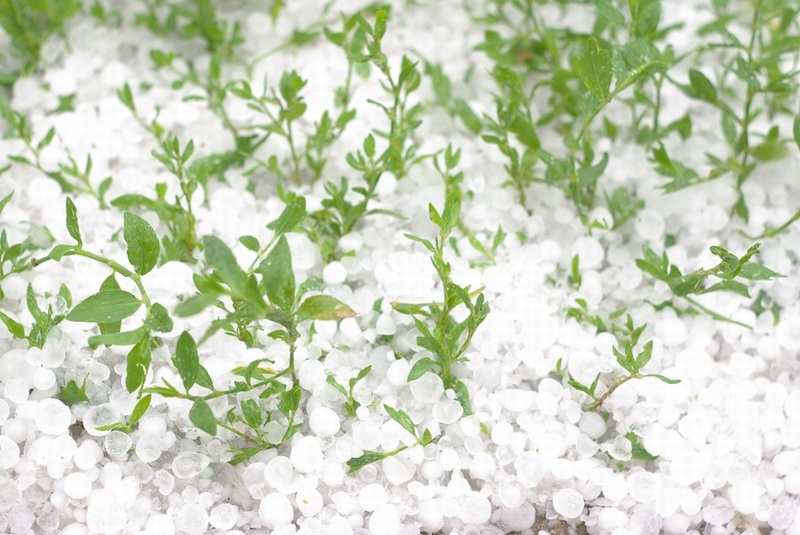
Haspengouw fruit growers were heavily affected by the hail and rain on the 13th of August. According to Luc Vanoirbeek, who has been active as an advisor with Boerenbond for almost thirty year, the situation is very serious for some growers. "This is around 600 hectares in total. That is considerable. Apples have been especially affected, as they are more vulnerable than pears." 5 to 6% In Belgium the apple area is around 7000 hectares and over 9000 for pears. Around 60% of this is in the province Limburg. The share of 600 hectares is therefore 5 to 6%. Luc indicated that this situation is not comparable to the damage during the 'Pukkelpop storm' in 2011. Back then a large area was damaged at once, but this time it is very local. Producers are at their wits ends. Some were insured, some weren't. That makes it very tough. Of course it's awful what has happened, but we also have to be realistic and conclude that some growers don't opt for insurance or protection through hail nets. The need for this hasn't hit a large part of them yet. I have almost 30 years of experience as a horticulture advisor with Boerenbond now and every time I see companies go out of business, there is hail in their history. Every time." Investing in hail nets He emphasises that, now more than ever, it is time to think about a possible stimulation to insure against hail. "What would be even better: placing hail nets. There is a lot more of this in other countries. I'm just back from a visit to South Tirol and 80% there is covered. This is also the case in the region of Bodensee. In the Netherlands and Belgium we do see the share of hail nets increasing, but it could be better. We have to do something about that! Hail is awful. It's horrible that there is nothing we can do for some growers at the moment." Production comparable Last year part of the harvest wasn't picked due to the Russian boycott. That was 600 hectares of apples and 600 for pears. Now around 600 ha has been damaged by hail, which means they will no longer be able to be traded on the fresh market. If we look at the Prognosfruit figures, the apple harvest will be less this year. Due to the hail damage we will probably end at the same level as last season, when 600 ha of apples weren't harvested. A correction in the harvest prognosis." Mood too positive? The mood in the top fruit sector is quite positive at the moment. "Last year it was very negative. A lot of people didn't know what to do after the Russia boycott. Luckily, the season recovered bit by bit and at the end of the season everyone was relieved: 'it wasn't too bad'. Now we have to make sure we don't get into the opposite way of thinking. What is important is not just to expect that it will all be okay, because this could be completely wrong. Last year we had a lot of public sympathy, including the selfies and other action, but who says they will do the same this year? People believe in it, but we have to stay careful." Source - http://www.freshplaza.com

31.08.2015

India - Government Assures Compensation to Farmers

The State Government on Saturday assured the Assembly that farmers whose crops have been affected by floods and deficit rainfall will be compensated after receiving crop loss reports from the field level. Replying to a calling attention notice of Government Chief Whip Ananta Das and other ruling BJD members, Revenue and Disaster Management Minister Bijayshree Routray said deficit rainfall has been reported from 10 districts while eight districts were affected by floods. As per the district reports, out of 314 blocks in the State, 204 have received normal rainfall while 110 blocks have experienced less than normal rainfall. Districts which received deficit rainfall (-19 per cent to -39 per cent) include Koraput, Bargarh, Balangir, Boudh, Kandhamal, Keonjhar, Sonepur, Nayagarh, Khurda and Dhenkanal. While 23 blocks have received rainfall less than 39 per cent of the normal rainfall, situation in five blocks is acute as the rainfall is less than 59 per cent. In a normal monsoon year, rainfall in August is about 356 mm. Report received till August 28 stated that the State has received about 234 mm of rain which is 27.2 per cent less than normal, the Minister told the Assembly. Reports from Collectors of flood-affected districts said crops in 41,767 hectares (ha) of land have been affected by floods and crop loss of more than 33 per cent has been reported from Balasore, Bhadrak and Jajpur. The State Government is waiting for the crop cutting reports from Revenue, Agriculture and Horticulture departments. Compensation for crop loss will be announced on the basis of crop cutting experiment, he said. The Minister assured that the Government is well prepared to meet the situation arising out of less rainfall. The State Government has set a foodgrain production target of 10.1 million tonnes (mt) for the 2015 kharif season which includes 9.51 mt of cereals and 0.587 mt of pulses. Source - http://www.newindianexpress.com

28.08.2015

Poland - Government to compensate drought-hit farmers

Thousands of drought-hit farmers in Poland will be compensated for crop losses, thanks to an emergency aid package announced by its government. Polish farmers have lost an estimated 800,000ha (2m acres) of crops and fodder after temperatures soared to 38C in July and remained high in August. As a result of the unusual dry spell, large swathes of combinable crops and pasture have been lost. More than 100,000 farms in the country have reported crops losses of 30% and above, triggering the emergency response from the government. The worst-hit areas include Mazovia, mid-western Wielkopolska, north-eastern Podlasie and the mid-eastern Lublin region. The Polish government has announced a compensation package of 500m zlotys (£86m) for thousands of growers affected by the drought. The plan includes preferential loans and tax cuts. The government has also applied to the European Commission for assistance, with a decision expected on 7 September at an EU meeting of agriculture ministers in Brussels. The drought has dealt a bitter blow to Polish farmers, who like many European farmers have been struggling with low prices, over-regulation in the EU and the impact of the Russian ban on Western food imports. Farmers in other countries in central and eastern Europe, including Romania, have also suffered serious crop losses. Source - http://www.fwi.co.uk

28.08.2015

China - Swiss Re protects cotton farmers' yields in cold weather: first programme launched

In July 2015 Swiss Re launched China's first low temperature weather index insurance (WII) programme for cotton. It has been designed as a pilot for Xinjiang Production and Construction Corps, a major farming group which reports directly to the Central Government of China. Xinjiang is the largest cotton-growing region in China, producing 3,670,000 tons in 2014. This accounted for 60% of China's total cotton production. Extreme weather menaces the crop However, the region is exposed to serious natural perils such as drought, hail, wind and low temperatures. These factors can have a severe impact on the yield and quality of the cotton produced. Although the government-subsidised MPAI (Multi Peril Agriculture Insurance) schemes cover many of these perils, yield loss from low temperature is not included due to its complexity. Cold weather has caused Chinese farmers substantial losses in recent years. To close this protection gap, Swiss Re got together with China United P&C Ltd to design a customised solution for Xinjiang Production and Construction Corps. This first pilot of the WII program will provide RMB 7,600,000 (USD 1.2 million) coverage for about 8.4 square kilometers cotton. Xinjiang Production and Construction Corps aims to expand the programme to the whole region of Xinjiang as a next step, as long as it proves effective. Moreover, a programme like this could also be used to cover other crops, such as corn, wheat and beans in Northern China. A milestone development This is a new milestone for agricultural risk coverage, and may be included in standard agriculture insurance packages in future, to complement the coverage provided by the existing MPAI schemes in China. Given the substantial demand for low temperature insurance, more large-scale agricultural groups and individual farmers in China then stand to benefit.

28.08.2015

Canada - No drought ‘disaster’ in Sask., suggests crop insurer

With Alberta’s NDP government declaring this year’s drought a “disaster,’’ allowing the Agriculture Financial Services Corp. to access more funds to pay crop insurance claims, Saskatchewan farmers may be wondering if the province is considering a similar move. But Shawn Jaques, CEO of Saskatchewan Crop Insurance Corp. (SCIC), says the situation in the two Prairie provinces is quite different — in terms of both crop conditions and crop insurance systems. As a result, he doesn’t see the need for the province to declare a “disaster,” like Alberta Agriculture Minister Oneil Carlier did last Friday. “First of all, on the crop conditions, the situation in Saskatchewan is different,’’ Jaques said in an interview Tuesday. “Crop conditions are variable here in our province.’’ Jaques said crop conditions vary from above-average to well below average depending on location, the type of crop and local weather conditions. “Certainly, on the west side, I know producers were lacking rainfall this summer and it impacted yields. The rains came later, even in the driest areas of the province, ... but it was probably too late to help crop development,’’ he said. “Having said that, on the east side of the province, there were timely rains ... and there is potential to have an average to above-average crop in many parts of eastern Saskatchewan,’’ Jaques said. By contrast, weather conditions in Alberta have been extremely dry for most of the growing season, with many counties and municipalities declaring “states of agricultural emergency’’ and seeking provincial disaster assistance. More importantly perhaps, unlike Alberta’s crop insurance system, SCIC is fully funded and able to pay out all claims without seeking additional assistance from the province. “In 2015, we’re going to collect nearly $500 million in premiums. That money is used to pay producer claims. We don’t have to go through any other steps to use that money to pay claims,” Jaques said. SCIC paid out $314 million in crop damage claims in 2014 and $133 million in 2013, a record low in claims due to the record crop of 38.4 million tonnes. While it’s too early to say whether crop insurance claims will be higher than normal this year, Jaques said SCIC will be able to handle any claims due to drought and other crop damage. “Harvest is just beginning. As producers work through harvest, we’ll have a better handle on what we’re seeing (for crop insurance claims),” he said, adding only 130 claims have been received so far this year. With crop insurance as the “first line of defence,’’ SCIC can deliver other farm safety programs if conditions warrant, Jaques said. “That’s why we have strong business risk management (BRM) programs here in Saskatchewan. SCIC delivers the crop insurance program as well as AgriStability (the federal-provincial farm safety net program that covers producers against large declines in income due to market conditions, increased costs or production losses).” In addition, the province has taken a number of steps to reduce the hardship for farmers and ranchers in drought-affected areas, including allowing access to Crown and wildlife conservation lands for pasture, allowing re-seeded or drought-damaged crops to be used as greenfeed and facilitating the purchase and sale of surplus feed grain, forage and hay. Source - http://www.leaderpost.com

28.08.2015

USA - Mid-August crop update

AGRICULTURAL AND FARM NEWS According to the United States Department of Agriculture, National Agricultural Statistics Service Aug. 17 report, topsoil moisture supplies in Minnesota were rated at 16 percent short, 81 percent adequate, and 2 percent surplus. Subsoil moisture supplies were rated at 13 percent short, 84 percent adequate, and 2 percent surplus. Locally, recent rainfall has been variable around the region. Minnesota’s corn condition rated 88 percent good to excellent and the soybean crop was rated 80 percent good to excellent. Overall, crops look good in the region in most areas, but there are areas that have received significantly less rainfall over the last month. Areas lacking rainfall will see a significant yields loss compared to other parts of the region. Continue to scout for soybean aphids until the field is at the R6 development stage. At R6 the pods are fully packed with green seed. Scout in fields that have not been treated or in fields that have already been treated to make sure that populations are not reaching the threshold level. Treat when populations reach the threshold of 250 aphids per plant when 80% of plants have aphids. At the threshold, yield loss is not yet occurring, but will if aphids are not soon controlled. Hopefully, recent rainfall and cooler conditions will slow the increase of soybean aphid populations. University of Minnesota Extension Educator Dan Martens recently highlighted waterhemp in his weekly news column. Dan works with agricultural professionals and farmers in Stearns, Benton, and Morrison Counties. Take note of weeds showing up in fields now. The attached picture shows a tall waterhemp plant, now reaching a foot or so above the crop canopy. I’m holding the white board high enough to capture the weed above the soybeans, so the 30-inch mark doesn’t mean much. These beans were about waist high. One plant this year will produce enough seed to be a significant patch next year that will be spread wider with tillage work. Patches soon become wide spread areas of fields – if not dealt with. Some people are pulling isolated weeds that have potential to become bigger problems in fields. If seed is forming now, they might even carry the weeds off the field, maybe burning them on a brush pile — if that can be done safely. We all have a limit to the amount of time we can or care to spend pulling weeds. We can do some work to actually identify what the weeds are and where they are. This is real information we discuss at our farm stores or with agronomy advisors in making plans for 2016. Waterhemp is part of the amaranth or pigweed family. It usually has a leaf that appears somewhat longer and narrower than red-root pigweed. The seed flower is different too. We have about 5 variations of pigweed in Minnesota. They can cross pollinate to create a wider variety of combinations. Waterhemp develops resistance to glyphosate more quickly than some weeds because it has male and female flowers on different plants. This offers greater genetic capacity for multiplying resistance. Other weeds that might be on a top 10 list to watch include giant ragweed, common ragweed, lambsquarter, velvetleaf, yellow nutsedge, nightshade, and kochia. Kochia is more common to the west and northwest in Minnesota. Some of these have more potential to germinate, emerge and produce seed later in the growing season. Source - http://www.crowrivermedia.com

28.08.2015

Australia - New research helps stonefruit grower’s battle brown rot

New research by Victorian scientists at the AgriBio Centre is set to increase stonefruit production by helping growers better protect their crops from brown rot. Department of Economic Development, Jobs, Transport and Resources (DEDJTR) Plant Pathologist Oscar Villalta and his team have led the development of two new tools and a control strategy to help growers predict, control and prevent brown rot losses in different Australian stonefruit production systems. “Brown rot is a destructive fungal disease which impacts on orchard profitability, fruit quality and market access, costing the Victorian stonefruit industry an average loss of $19 million in spoilt fruit each year,” Dr Villalta said. “Research into flower and fruit susceptibility conducted at DEDJTR AgriBio, has determined the key infection criteria required for brown rot infections in plums, apricots, nectarines and peaches. This data has now been used to develop and validate a new risk management tool that growers can use to target their fungicide applications for effective blossom blight and brown rot control. “The tool allows growers to more accurately predict infection periods, allowing them to choose the most appropriate fungicides and tailor spray programs for maximum effectiveness. Data from trials conducted in orchards in Victoria and New South Wales was also used to develop a rot risk tool for growers to determine the risk of brown rot before harvest and its likelihood and severity in fruit after harvest, which can help growers determine where to market their produce. Dr Villalta said both decision support tools were tested in a series of replicated and commercial field trials conducted during growing seasons since 2012. The new tools and control strategy are described in the brochure ‘Best Practices for Brown Rot Management’. This project was funded by Summerfruit Australia Ltd and the Victorian Government. Source - http://www.freshplaza.com

28.08.2015

USA - Drones to control cranberry moth

A Wisconsin research team intends to fly small unmanned aircraft systems (UAS) above cranberry marshes to control moths that damage the crop. Insect damage is a perennial problem for producers of cranberries. The fruit crop annually pumps an estimated $300 million into the economy of Wisconsin, the United States’ No. 1 producer, the Wisconsin Department of Agriculture said. Test drone flights that drop SPLAT, a pheromone-infused wax, on cranberry beds will get under way late this fall, said Shawn Steffan, University of Wisconsin-Madison professor of entomology and a U.S. Agriculture Department entomologist. The SPLAT leaves the drone the consistency of yogurt, and, eventually, hardens into a soft wax with the consistency of a children’s modeling compound, Steffan said. Steffan and his research team, together with Brian Luck, a University of Wisconsin College of Agriculture and Life Sciences extension biological engineering professor, are working to build a drone that can drop the SPLAT. Steffan’s plan is for drones to drop pheromone-infused product, which he refers to as SPLAT wax soup, onto the cranberry beds in dollops the size of Hershey’s Kisses. The dollops slowly release sex pheromones that smell like a female and because the male moths cannot differentiate between the SPLAT and female moths, many of them will die before they find a partner in their continual search for a real female moth. Using SPLAT to control moths instead of spraying insecticides on the cranberries has the potential to impact the bottom line of farmers because they will save money on applications. Typically, farmers spray insecticides two to five times during the growing season, Steffan said. Meanwhile, using the SPLAT method of control may make it easier for cranberries to enter European and Asian markets which have stricter pesticide residue levels, he said. Using SPLAT to control moths in cranberries also has environmental benefits including saving pollinators such as honey bees, from being victims of insecticides. A typical time to spray for cranberry fruit worm is when the adult moths are flying and that is the same time as cranberry bloom when the honey bees are out, Steffan noted. Source - http://www.freshplaza.com

27.08.2015

Moldova - Drought causing drop in cucumber harvest

Drought is expected to take a toll on Moldova's autumn cucumber harvest. Growers say the production will be much lower than in previous years and, therefore, prices will have to increase. Some fruit and vegetable processors claim to have foreseen this situation and had closed supply contracts in early spring. Adrian Nistreanu, an agronomist based in Straseni, predicted a yield this autumn season of about 120 tonnes of cucumbers per hectare, although the harvest will be 30 percent smaller. "Prices will consequently be higher than last year," he said. Thus, a kilo of cucumbers is expected to cost about 20 lei, which is 5 more than last year. Growers justify this in the fact that they have made large investments and the money they will earn will barely cover costs. "It has been a difficult year because of the high temperatures registered and a great number of cucumber seedlings have been lost in the second stage of production," said the President of the Association of Vegetable Producers, Mihail Paciu. Source - http://www.freshplaza.com

27.08.2015

India - Lack of rain causes major fruit, veg losses

Deputy Director of the Horticulture G. Manjunath told The Hindu that the affected crops including fruit bearing trees planted in the previous years and the one which were planted this year. The coverage of horticulture crops this year was less than 50 per cent of the targeted area and the yield from the planted crops would be drastically reduced due to the moisture stress and stunted growth. He said as against the target of 5,304.40 hectare fixed for the current year for horticulture crops, the actual coverage of the listed crops by the department was 2,033.20 hectares. Apart from this non-listed horticulture crops have been sown in another 5,000 hectares in the district. Mr. Manjunath said that as per the preliminary estimate, the horticulture crop in 3,388 hectare has suffered damages due to lack of rainfall and moisture stress. The department has taken up a detailed survey of the crop condition and extent of the exact loss would be known by this month end. The condition of the lime, sweet orange, pomegranate and mango in the sown area was average and the banana and papaya plantations had witnessed stunted growth due to moisture stress leading to low yield and delayed fruit setting. The worst affected was the vegetables and all the notified vegetable crops including tomato, chilli, onion, brinjal. Source - http://www.freshplaza.com

27.08.2015

Panama - Tomato harvest threatened by high temperatures

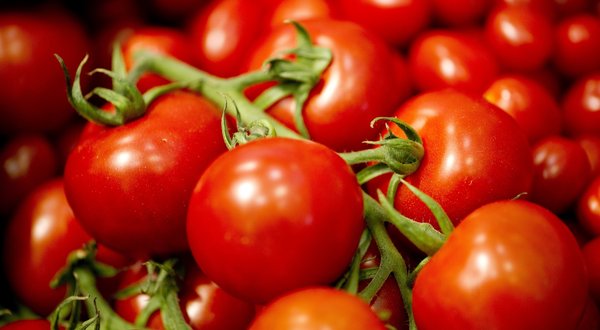
According to Celestino Rivera, a tomato producer in the province of Los Santos, if the high temperatures in the province continue, the production of industrial tomatoes for the period 2015-2016 will be jeopardized. Rivera states that there are two factors affecting tomato: the lack of water and the temperatures above 34 degrees Celsius, which leads to an increase in pests at the nurseries. "The T8 seeds we have won’t be able to resist if it doesn’t rain in September, October, and November. That’s why we think the tomato crop is in jeopardy," said Rivera. Rivera stated that, in the last harvest, they had failed to deliver the 12,000 tons quota agreed upon with the tomato processing company, and had only given them 50%; i.e. 6,000 tons. They were unable to comply because the seed they used was seriously affected by the virus known as the potato yellow mosaic. As a result, Rivera said, tomato growers from Los Santos signed a document so that the affected company could import 4,000 tons of tomato concentrate to cover what they were unable to provide because of weather problems. According to Rivera, the Government wants to be paid for this quota, but the producers believe they shouldn’t be charged because they did not meet the quota. If it rains, expectations are that nearly 130 producers will sow 280 hectares of tomatoes to deliver the 12,000 tons, he said. He also stated that 60% of the seeds that were going to be planted come from greenhouses, to avoid growing seeds with pest problems. Source - http://www.freshplaza.com
27.08.2015

Nigeria - New Alliance Cooperative investing in ag

Nigeria’s key development partners under the New Alliance Cooperative Agreement Framework/Grow Africa initiative are committed to a funding equivalent of N100bn ($500m) for the country’s agricultural sector for a three-year period, the Federal Government has said. It also stated that international and local business establishments were committed to make investments of about $4bn (N800bn) in the agricultural sector. The Permanent Secretary, Federal Ministry of Agriculture and Rural Development, Mr. Sonny Echono, disclosed this on the occasion of the validation workshop on the New Alliance Report involving Nigeria, private sector investors and its development partners. The permanent secretary, who was represented by the Director of Special Duties, FMARD, Mrs. Ademola Abiri, stated that the new alliance was a collaborative approach geared towards developing the agricultural sector of the Nigerian economy. He said, “In Nigeria’s new alliance agreement, the government is committed to 13 major policy actions in the areas of seed and fertiliser, the Bank of Agriculture, agriculture insurance, nutrition, land tilting, staple crops processing zones, commodity exchange, enterprise registration and power availability. “Key development partners including the EU, the UK, Japan, France, Germany and the US, are committed to funding equivalent to about $500m for Nigeria’s agriculture sector in the 2013 to 2016 period. International and local business establishments are committed to make investments of about $4bn in the agricultural sector.” Source - http://www.freshplaza.com

27.08.2015

Poland - Govt to compensate farmers hit by drought

Poland will pay more than 500 million zlotys ($135 million) in compensation to the thousands of farmers who have lost crops and fodder because of drought and unusually high temperatures, the agriculture minister said Tuesday. Authorities estimate tens of thousands of Polish farms involving at least 800,000 hectares (2 million acres) have lost large portions of their crops, meat and milk production as pastures have dried up. Grains, corn, vegetables, and fruit have not been growing ripe and some hydrology experts say the lost water won't be compensated until the snow thaws in the spring. Unusually high temperatures of up to 38 degrees Celsius (100 degrees Fahrenheit) hit the region in July and persisted for weeks. That brought river and groundwater levels down and restricted navigation on Europe's second largest river, the Danube in Romania, and on Poland's main Vistula River. The heat also affected Poland's power grid and cuts were briefly imposed because everyone was using fans, while hot rivers failed to properly cool the generators. Losses of over 30 percent of usual crops — a level entitling to compensation — have been confirmed in over 100,000 farms and the counting continues. The government has earmarked over 500 million zlotys for compensations. Agricultural losses were also high in countries like the Czech Republic and Romania. Source - http://www.freshplaza.com/

27.08.2015

Spain - 1,380 hectares affected by hail in Ademuz

The extent of the losses and damage caused by a hailstorm that hit Rincon de Ademuz on Saturday afternoon is still being assessed. After removing the mud that covered the city, clearing the streets and making transit possible, all concerns are now focused on the fields. The Unió de Llauradors i Ramaders (Growers and Ranchers Association) estimates that 1,380 hectares have been affected and that crop damage could exceed 800,000 Euro. Specifically, according to the Unió, 1,000 hectares correspond to almonds, 200 to apples, 100 to olive trees, 40 to cornfields, 20 to vineyards and another 20 to vegetables. They add that apples currently raise the most concerns, since they are a "greatly important" crop for the region and 80% of the production has been affected. And, even though more than 1,000 hectares of almonds have been hit, almonds "resist hail, even if they fall," and thus additional investments will be needed for the premature harvest. In the hectares devoted to vineyards and corn that have been affected 100% has been lost, and for olives this percentage amounts to 80%. For its part, the Valencian Growers Association (AVA-Asaja), has estimated the losses at more than 500,000 Euro; a lower figure to that of the Unió, although they said it could still increase because many producers had not yet been able to access their crops. AVA-Asaja reports that 600,000 kilos of apples of the Esperiega variety have been lost and estimate the percentage of fruit lost at 50%, including plums and pears. Furthermore, there is also damage to agricultural infrastructure, including blocked access roads to lands and farms, as well as clogged irrigation ditches. Source - http://www.freshplaza.com/

921
of 1224