

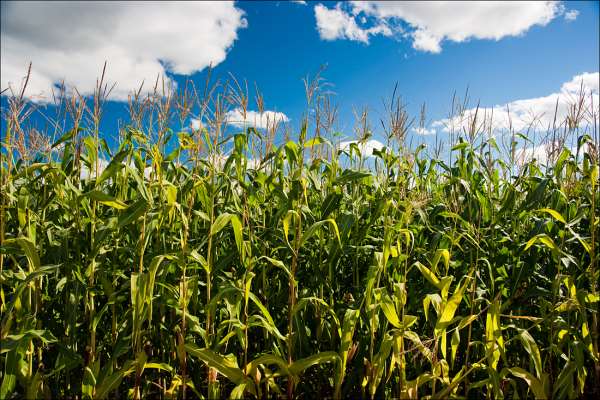
USA - Mid-August crop update
28.08.2015 435 views
AGRICULTURAL AND FARM NEWS
According to the United States Department of Agriculture, National Agricultural Statistics Service Aug. 17 report, topsoil moisture supplies in Minnesota were rated at 16 percent short, 81 percent adequate, and 2 percent surplus. Subsoil moisture supplies were rated at 13 percent short, 84 percent adequate, and 2 percent surplus. Locally, recent rainfall has been variable around the region.
Minnesota’s corn condition rated 88 percent good to excellent and the soybean crop was rated 80 percent good to excellent. Overall, crops look good in the region in most areas, but there are areas that have received significantly less rainfall over the last month. Areas lacking rainfall will see a significant yields loss compared to other parts of the region.
Continue to scout for soybean aphids until the field is at the R6 development stage. At R6 the pods are fully packed with green seed. Scout in fields that have not been treated or in fields that have already been treated to make sure that populations are not reaching the threshold level. Treat when populations reach the threshold of 250 aphids per plant when 80% of plants have aphids. At the threshold, yield loss is not yet occurring, but will if aphids are not soon controlled. Hopefully, recent rainfall and cooler conditions will slow the increase of soybean aphid populations.
University of Minnesota Extension Educator Dan Martens recently highlighted waterhemp in his weekly news column. Dan works with agricultural professionals and farmers in Stearns, Benton, and Morrison Counties.
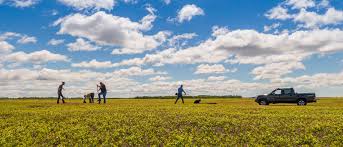
Take note of weeds showing up in fields now. The attached picture shows a tall waterhemp plant, now reaching a foot or so above the crop canopy. I’m holding the white board high enough to capture the weed above the soybeans, so the 30-inch mark doesn’t mean much. These beans were about waist high. One plant this year will produce enough seed to be a significant patch next year that will be spread wider with tillage work. Patches soon become wide spread areas of fields – if not dealt with.
Some people are pulling isolated weeds that have potential to become bigger problems in fields. If seed is forming now, they might even carry the weeds off the field, maybe burning them on a brush pile — if that can be done safely. We all have a limit to the amount of time we can or care to spend pulling weeds. We can do some work to actually identify what the weeds are and where they are. This is real information we discuss at our farm stores or with agronomy advisors in making plans for 2016.
Waterhemp is part of the amaranth or pigweed family. It usually has a leaf that appears somewhat longer and narrower than red-root pigweed. The seed flower is different too. We have about 5 variations of pigweed in Minnesota. They can cross pollinate to create a wider variety of combinations. Waterhemp develops resistance to glyphosate more quickly than some weeds because it has male and female flowers on different plants. This offers greater genetic capacity for multiplying resistance.
Other weeds that might be on a top 10 list to watch include giant ragweed, common ragweed, lambsquarter, velvetleaf, yellow nutsedge, nightshade, and kochia. Kochia is more common to the west and northwest in Minnesota. Some of these have more potential to germinate, emerge and produce seed later in the growing season.
Source - http://www.crowrivermedia.com
EVENTS

ScaleAgData Stakeholder Engagement Event
22.10.2024The ScaleAgData project is pleased to invite you to our second stakeholder event. Building on the discussions and connections formed during our first webinar, this event will focus on fostering collaboration among stakeholders, providing updates on our project’s progress, and outlining future opportunities for engagement.
RISK EVENTS

Moldova - May frosts caused heavy damage to fruit orchards
10.05.2026The first frosty nights of May have significantly worsened estimates of damage to Moldova's fruit sector from spring frosts. According to initial assessments by fruit market operators, between a quarter and a third of the country's total orchard area was seriously affected.
26.05.2026
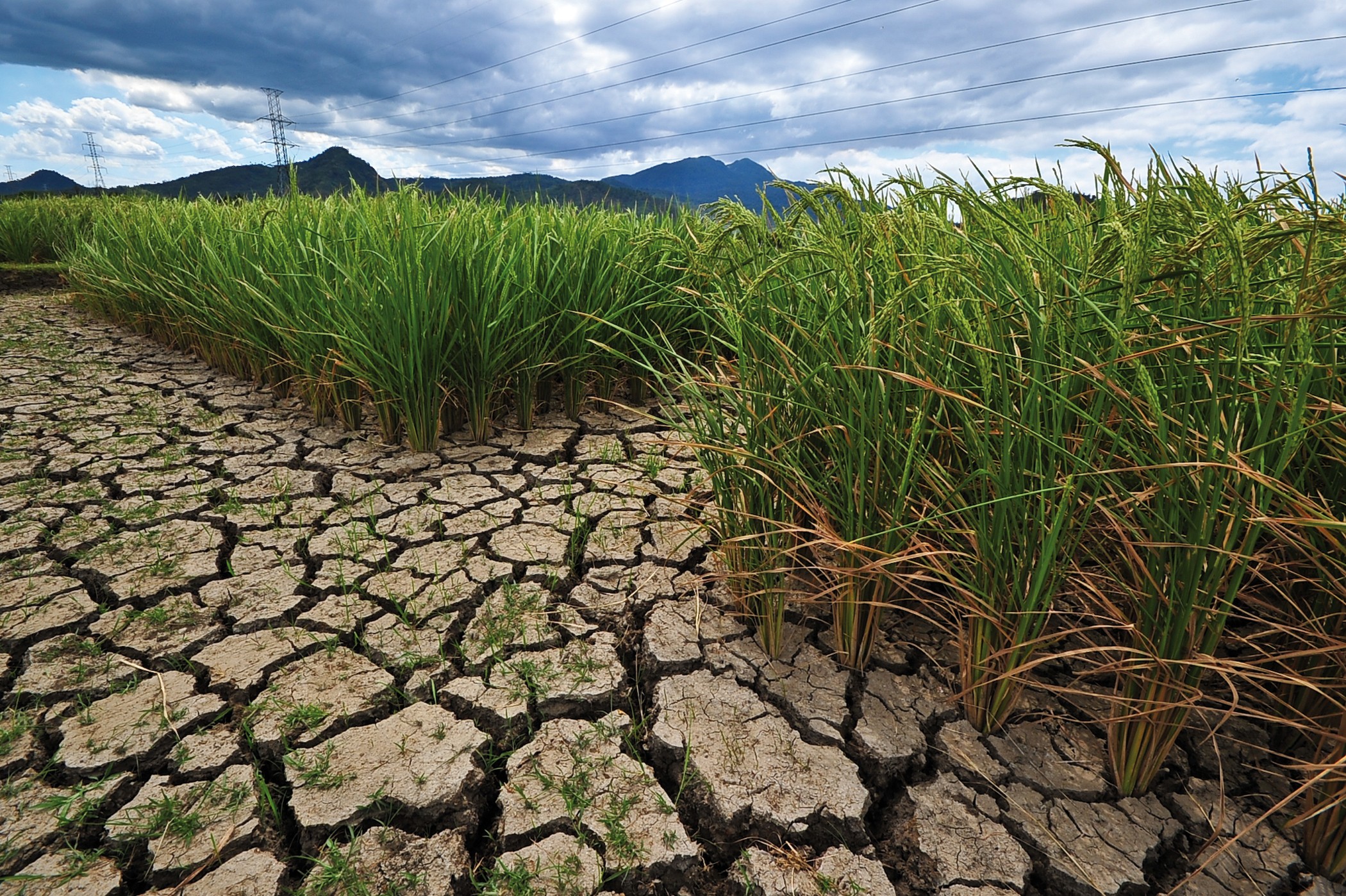
“Timac Agro Ukraine” launches crop insurance against drought
Timac Agro Ukraine, in collaboration with the insurance company PZU, has launched a crop insurance program against drought for farmers in five regions of Ukraine.
26.05.2026
Hansen announces "dialogue with the EIB on new agricultural insurance models"
Integrated European framework for climate resilience 'is on the way'.
26.05.2026
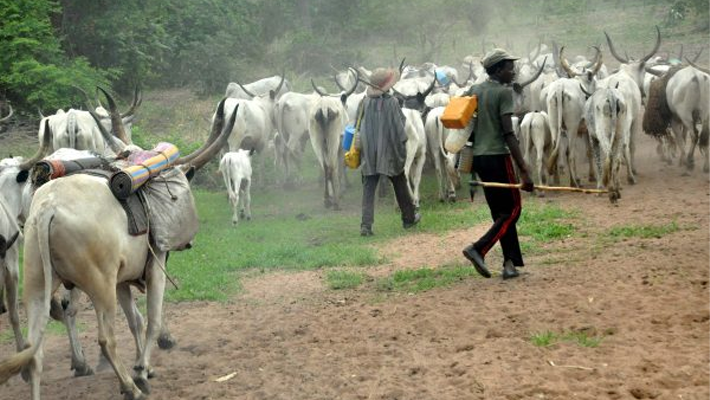
Nigeria - Oyo Steps up Enforcement Against Illegal Livestock Trading, Open Grazing
The Oyo State Government has stepped up enforcement against illegal livestock trading and open grazing, arresting offenders and impounding animals in parts of Ibadan during a fresh compliance operation.
26.05.2026
Philippines - Tacloban braces agri, health mitigation measures amid looming super El Niǹo
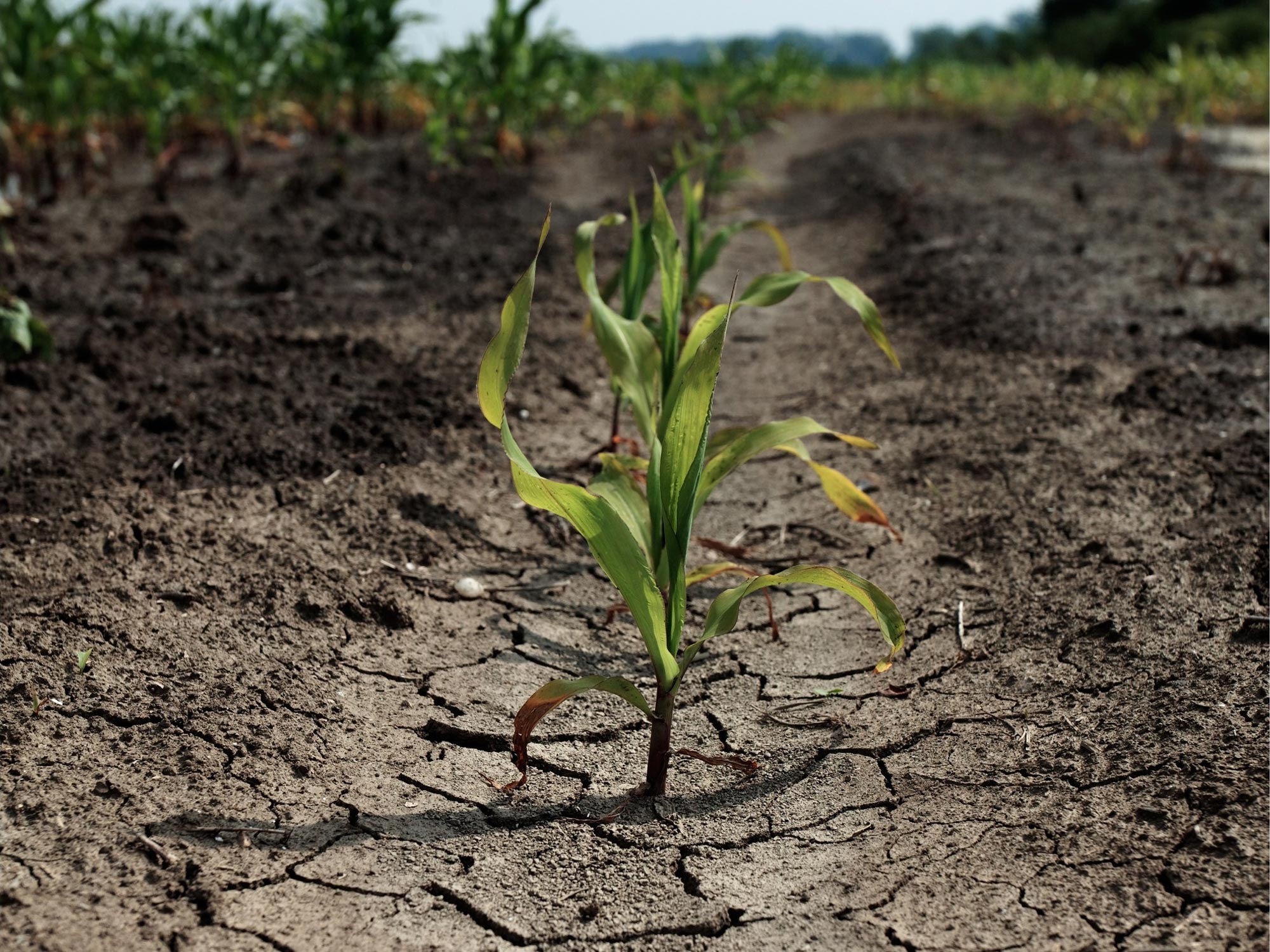
The City Government of Tacloban has intensified its preparations and mitigation measures as the threat of a possible Super El Niño continues to loom over several parts of the country, bringing concerns over prolonged dry spells, water shortages, and impacts on agriculture and public health.
26.05.2026
India - Punjab Govt Deploys 500 Teams for Special Girdawari as Rains Damage Wheat
In Punjab, to calculate the damage done to the standing crops in the fields due to the inclement weather for the last many days, the state government has formed teams of 500 officials from the agriculture department to assess losses.
26.05.2026
Brazil - Agricultural insurance plummets in Paraná, putting the sector at risk.
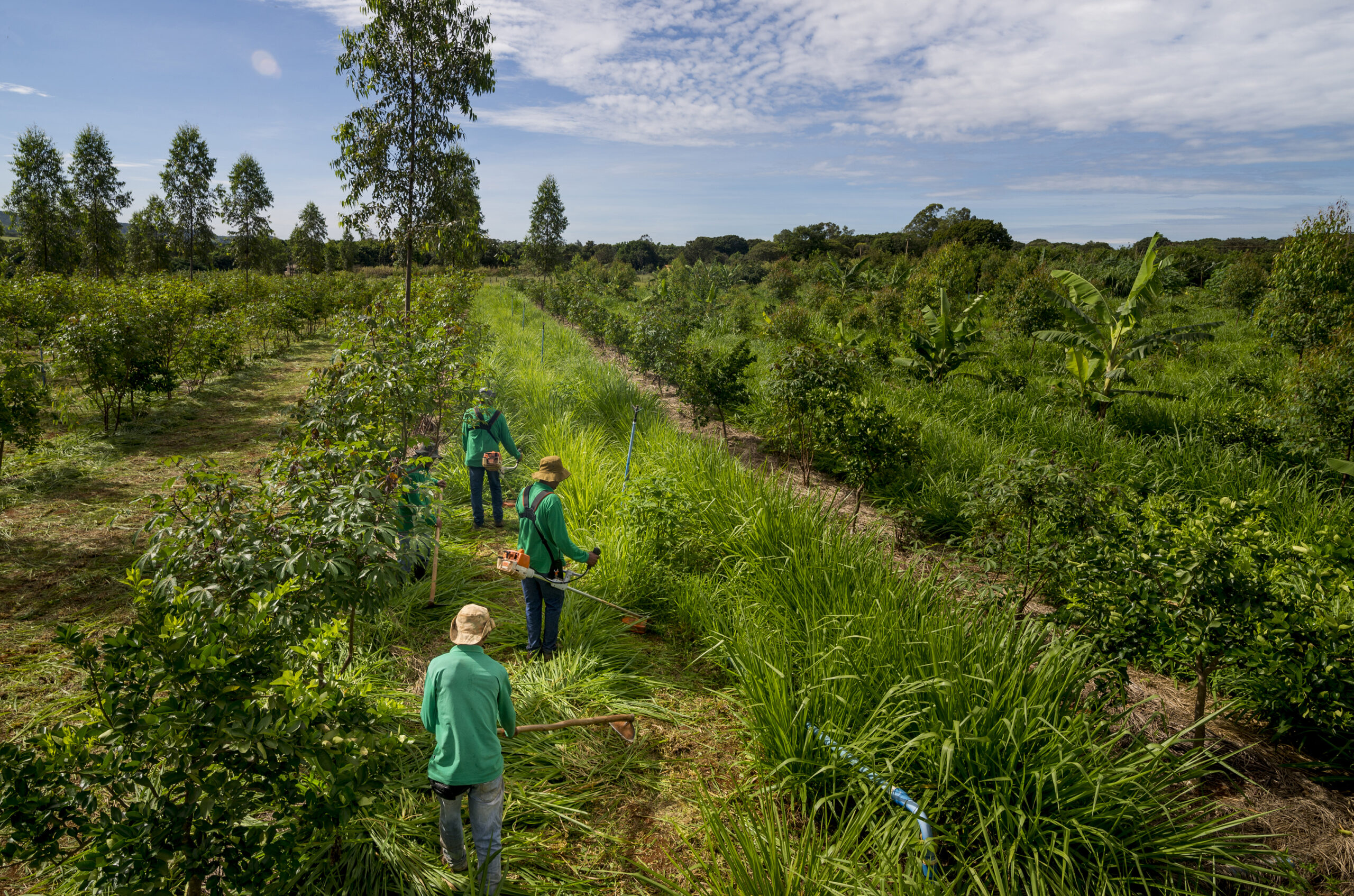
Cevio Alberto Mengarda, a soybean and corn producer in Marechal Cândido Rondon, in the western region of Paraná, followed in his father's footsteps in agriculture and today manages the family property.
25.05.2026
Algeria - CASH Assurances to diversify into agriculture insurance
CASH Assurances will launch agriculture insurance plans in June 2026, as part of its diversification strategy.
25.05.2026
U.S. specialty crop growers push for stronger Farm Bill support
Specialty crop growers in the U.S. are calling for stronger support measures in the 2026 Farm Bill, particularly around risk management, market access, and crop insurance.
