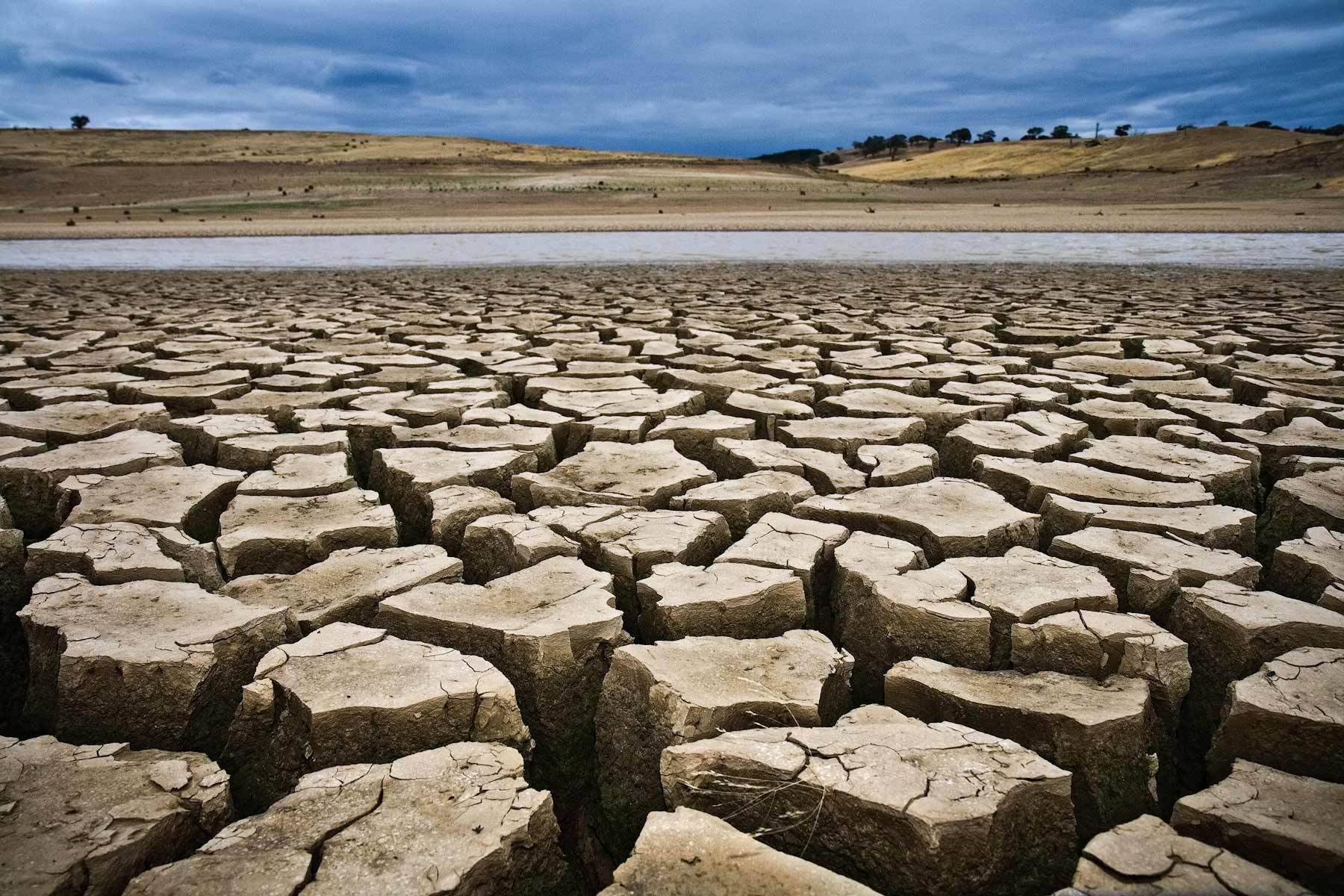
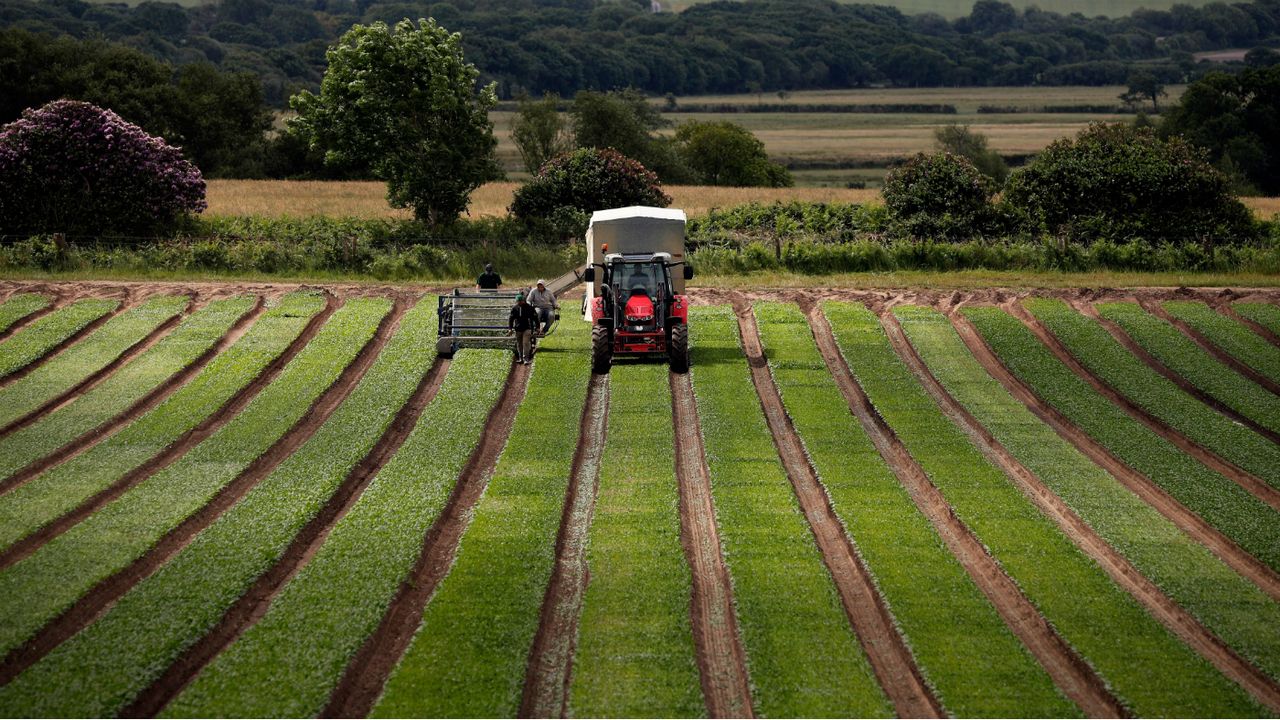
"We sow, and if the rains don’t come, the insurance allows us to still feed our children" – Aissata, a farmer in Medina Diakha, Senegal.
The current El Niño phenomena, which began in early 2015, is one of the strongest on record and is affecting the food security of a vast number of food-insecure people around the world. The World Food Programme and Oxfam America’s R4 Rural Resilience Initiative (R4) is helping farmers build their resilience to increasing risks by enabling them to access crop insurance in exchange for their labour. In total R4 is helping almost 200,000 people to manage the effects of El Niño.
As a result of El Niño-related droughts in 2015 and 2016, weather insurance payouts were triggered in Ethiopia, Senegal and Malawi. Almost 30,000 farmers and their families – 180,000 people – received over US$ 445,000 in payouts.
Aissata was one of the 3,334 farmers who received a payout in early 2016 in Senegal’s Tambacounda region, as compensation for the impact of the dry conditions experienced during the 2015 agricultural season. Aissata accessed insurance through the Insurance for Assets scheme which allowed her to work on risk reduction interventions, such as water and soil conservation assets, and receive insurance cover in exchange. By improving natural resources management, these assets help reduce the risk of disasters over time.

Ester Saizi knew she had a fallback through insurance, if her crops failed. Photo © WFP/Phillip Pemba
Ester Saizi is one of the vulnerable small-scale farmers in Malawi participating in the R4 programme. This year, Ester received insurance payouts together with 499 farmers who insured their crops against drought under R4. She joined the insurance scheme after suffering several years of losses in her crop production due to drought over the past years, including the 2014/15 growing season when 2.8 million people fell into food insecurity due to the adverse climate conditions.
Apart from insuring her crops, Ester also learned about and applied compost manure in her maize garden. As a result, despite El Niño drought effects, she still harvested some maize thanks to the moisture kept by compost manure. The insurance payout will enable her to buy additional food to supplement her harvest.
Food and Income Security
R4 is a comprehensive risk-management approach, launched by WFP and
Oxfam Americain 2011 to enable vulnerable rural households to increase their food and income security in the face of increasing climate risks. R4 combines improved resource management through asset creation (risk reduction); insurance (risk transfer); livelihoods diversification and microcredit (prudent risk taking); and savings (risk reserves). R4 currently involves 32,000 households, benefiting over 192,000 people in Ethiopia, Senegal, Malawi and
Zambia.
Payouts typically enable farmers to buy food covering the lean season, and to pay existing loans without having to sell productive assets such as oxen and agricultural tools. Some farmers also use the payout to invest in alternative livelihoods such as petty trade. According to the insurance satisfaction survey conducted in Senegal at the end of the season, they value the “protection” that insurance provides to their investments. Farmers also understand the catastrophic nature of the insurance coverage, as they see agricultural insurance as the “spare wheel of a car on which to rely during difficult times”.
In Ethiopia, 2015 was a major drought year across most of Tigray, with substantial yield losses caused by a late start of the rainfall season and significant dry spells along the whole season. In Senegal, a later than usual onset of the rains was also registered, but the season then progressed with average or higher than average rainfall towards the end. Malawi was also significantly affected by El Niño, resulting in dry conditions in the region of Balaka, where R4 is being piloted.
Meeting Farmers' Expectations
In Ethiopia, early window indexes triggered in 10 of the 12 Woredas in R4 intervention areas. The payout did not entirely meet farmers’ expectations. After several consultations the R4 country team agreed to activate the Basis Risk Fund. This complemented the insurance payouts of US$ 129,899 with US$ 234,195, which were distributed to 25,773 insured farmers in Tigray – out of the 27,668 farmers insured in Tigray and Ahmara – with an average payout sum of US$ 14 per household. The development and implementation of a basis risk strategy represents an important step in overcoming some of the challenges faced in the past in scaling up weather index insurance.
In Senegal, the early window triggered payouts in all villages except one in Tambacounda, one of the three regions where R4 is present. A field assessment confirmed that the rainy season in Woundoudou Amirou was however comparable to that in the other villages in the area. Therefore it was included in the payout group with a Basis Risk payment of 10 percent. In total, 3,334 out of 3,621 farmers received a total of US$ 80,969 in payouts, US$ 24 per household on average.
In Malawi, the R4 insurance product includes two windows: one covering the planting phase and the other covering the flowering phase. Due to the adverse conditions brought by El Niño, the first window triggered, resulting in payouts for all 500 insured farmers, for a total of US$ 3,195, US$ 6.3 per household on average.
Source - http://reliefweb.int